
Turbo Vib Aerodynamic Forcing WP 1 Aerodynamic Damping
Turbo. Vib Aerodynamic Forcing (WP 1) Aerodynamic Damping (WP 2) Maria Mayorca, KTH 2009 -04 -23 1
Outline • Aerodynamic Forcing (WP 1) - • Background and prediction methods Objectives and approach Results and conclusions Work Focus Aerodynamic Damping (WP 2) - Background Objectives and approach Results and conclusions Work Focus 2
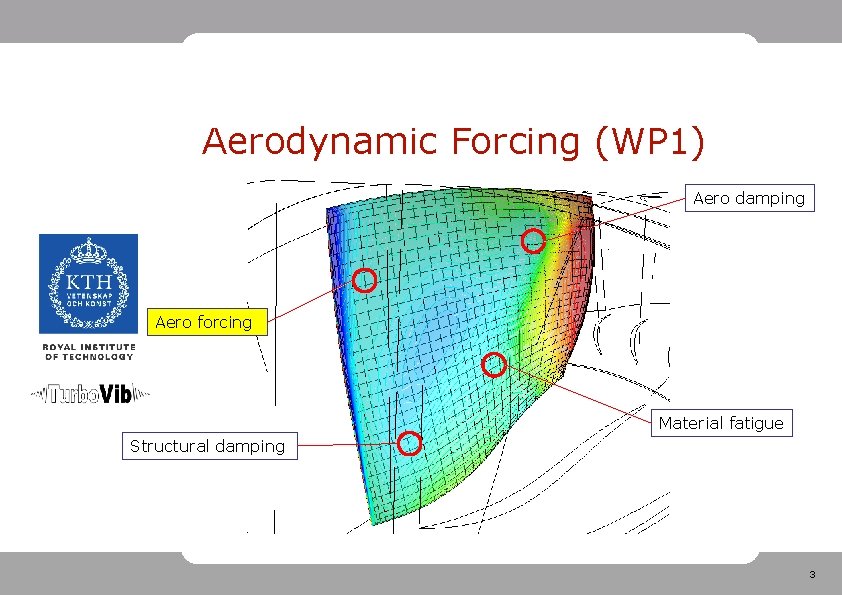
Aerodynamic Forcing (WP 1) Aero damping Aero forcing Material fatigue Structural damping 3
Where do the aerodynamic forces come from? 4
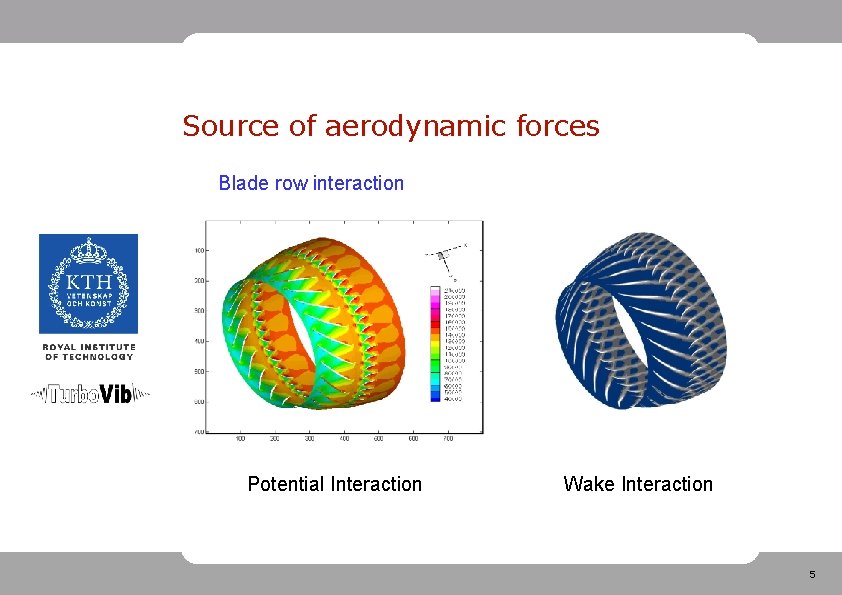
Source of aerodynamic forces Blade row interaction Potential Interaction Wake Interaction 5
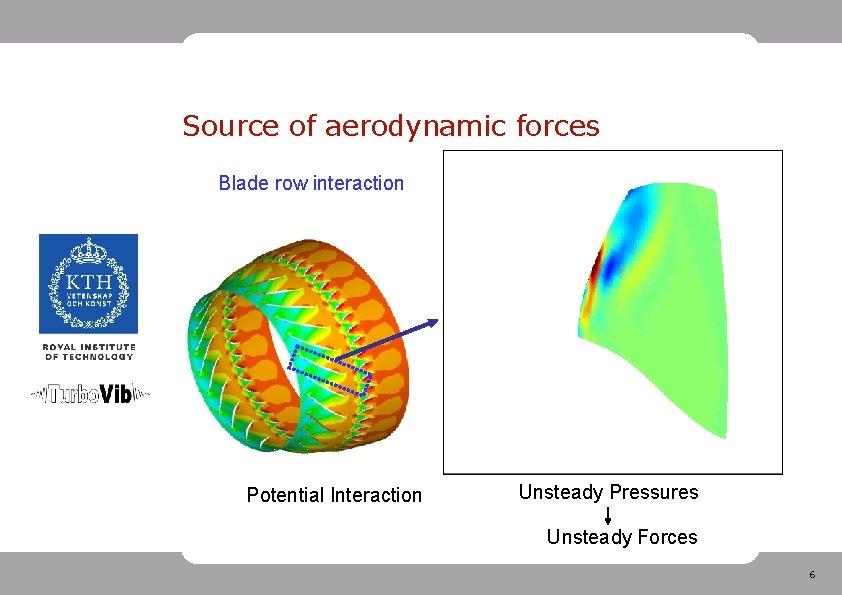
Source of aerodynamic forces Blade row interaction Potential Interaction Unsteady Pressures Unsteady Forces 6
What does it mean to calculate aerodynamic forces? 7
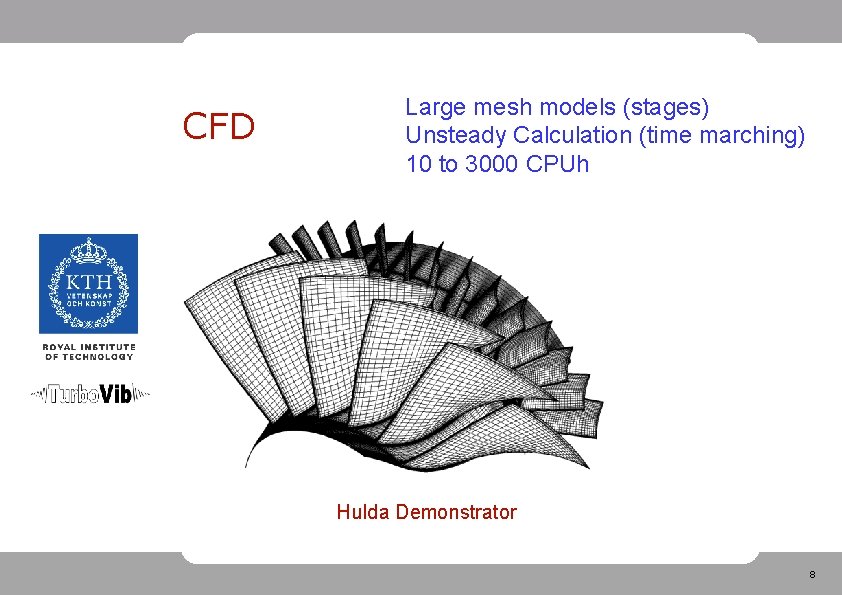
CFD Large mesh models (stages) Unsteady Calculation (time marching) 10 to 3000 CPUh Hulda Demonstrator 8
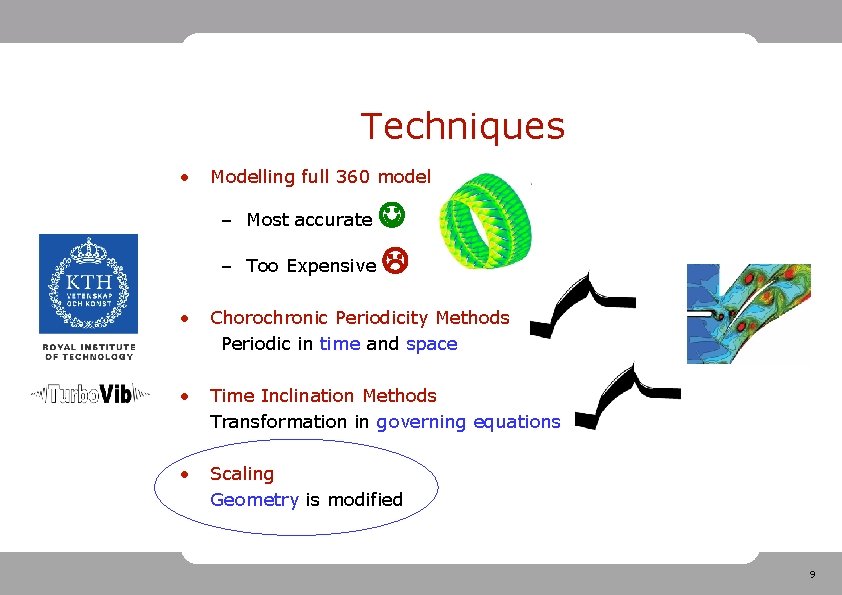
Techniques • Modelling full 360 model Too Expensive – Most accurate – • Chorochronic Periodicity Methods Periodic in time and space • Time Inclination Methods Transformation in governing equations • Scaling Geometry is modified 9
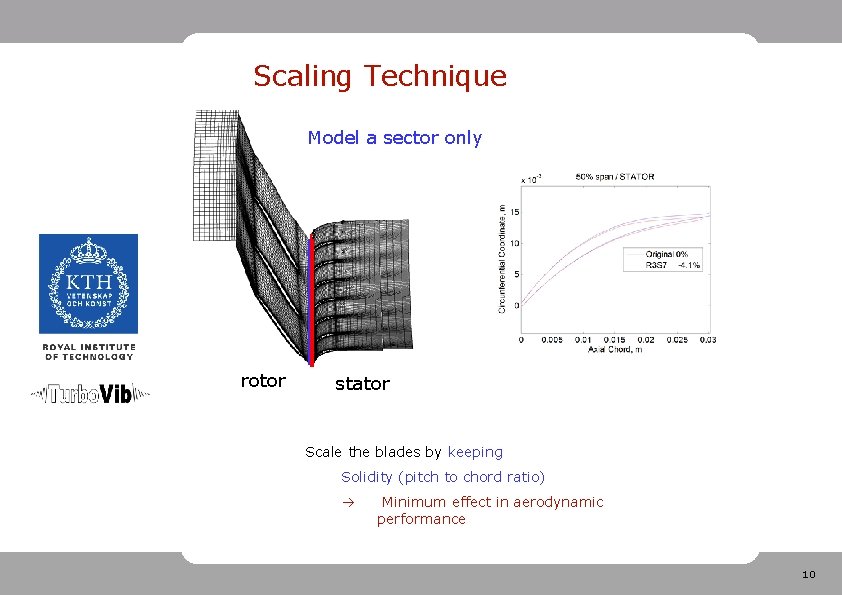
Scaling Technique Model a sector only rotor stator Scale the blades by keeping Solidity (pitch to chord ratio) Minimum effect in aerodynamic performance 10
Objective How accurate scaling blade row sectors is on the aero forcing prediction? Research Students: Maria Mayorca (Ph. D student) Jesus De Andrade (Msc thesis student) 11
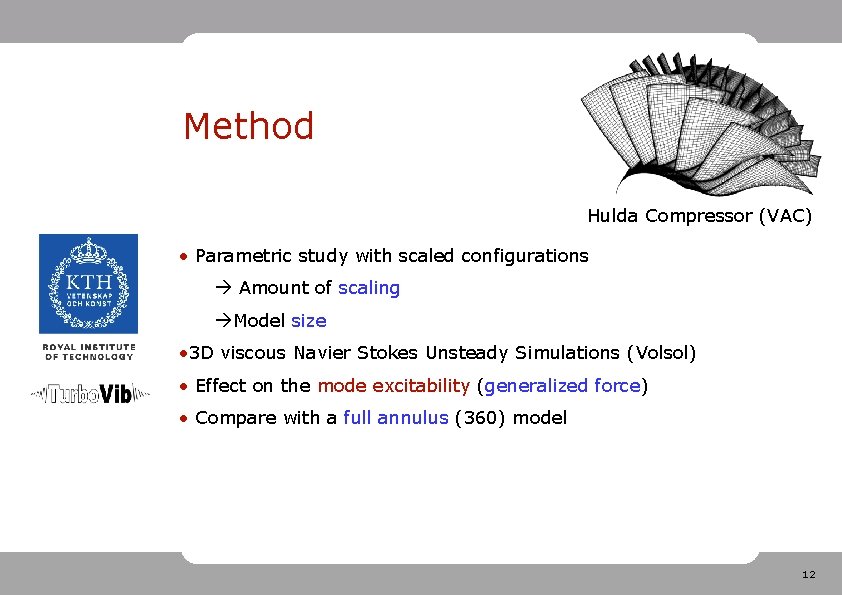
Method Hulda Compressor (VAC) • Parametric study with scaled configurations Amount of scaling Model size • 3 D viscous Navier Stokes Unsteady Simulations (Volsol) • Effect on the mode excitability (generalized force) • Compare with a full annulus (360) model 12
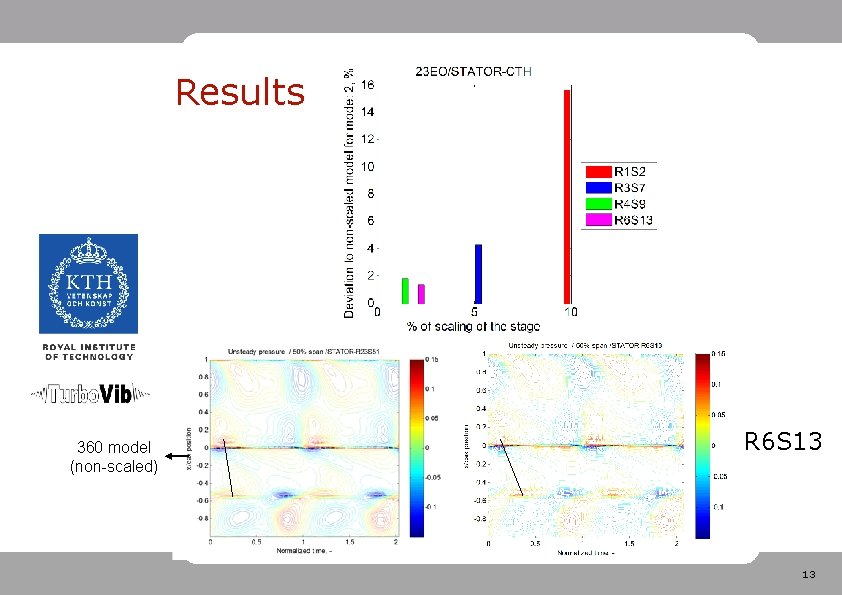
Results 360 model (non-scaled) R 6 S 13 R 4 S 9 R 3 S 7 R 1 S 2 13
Conclusion It is suggested to not exceed 5% total scaling ratio when performing aerodynamic forcing predictions for the investigated type of machine Paper will be presented in TURBO EXPO 2009 * It has been recommended for publication in Journal of Turbomachinery 14
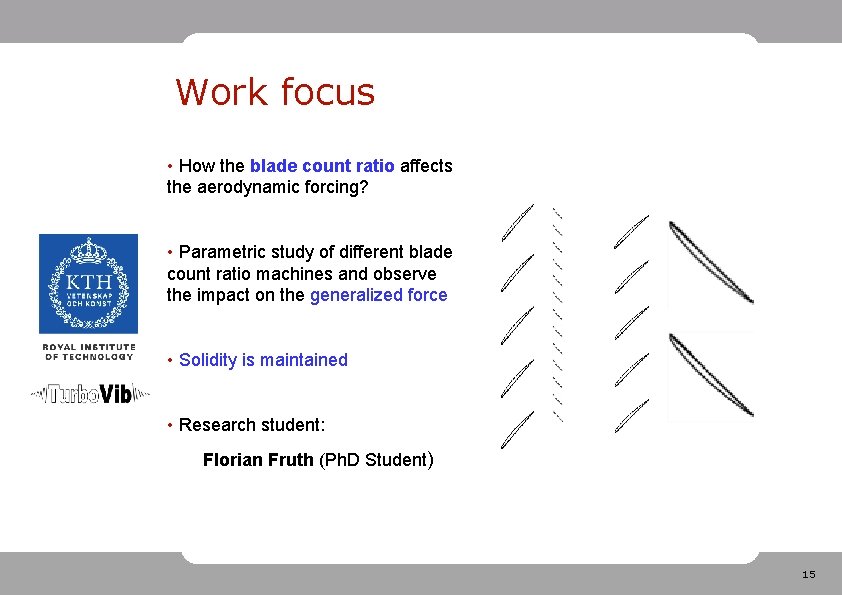
Work focus • How the blade count ratio affects the aerodynamic forcing? • Parametric study of different blade count ratio machines and observe the impact on the generalized force • Solidity is maintained • Research student: Florian Fruth (Ph. D Student) 15
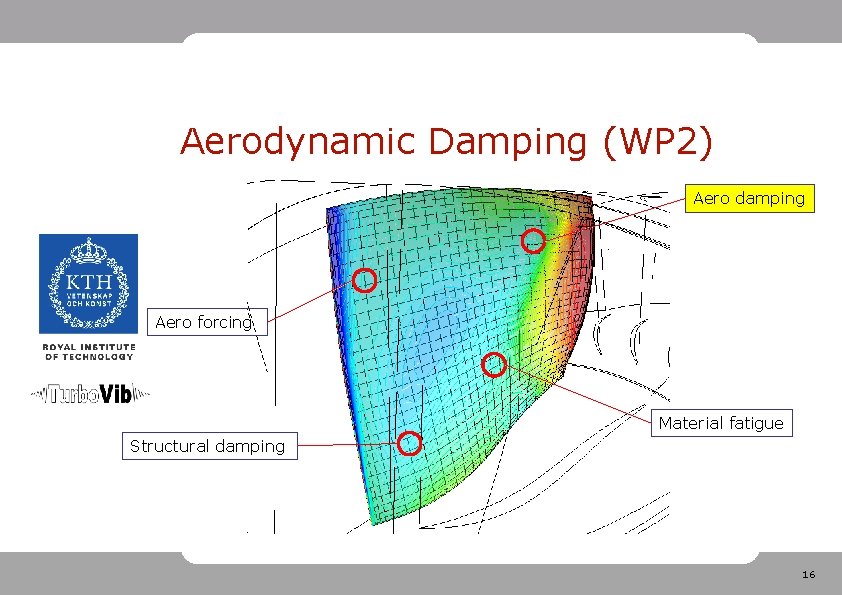
Aerodynamic Damping (WP 2) Aero damping Aero forcing Material fatigue Structural damping 16
Where does the aero damping come from? 17
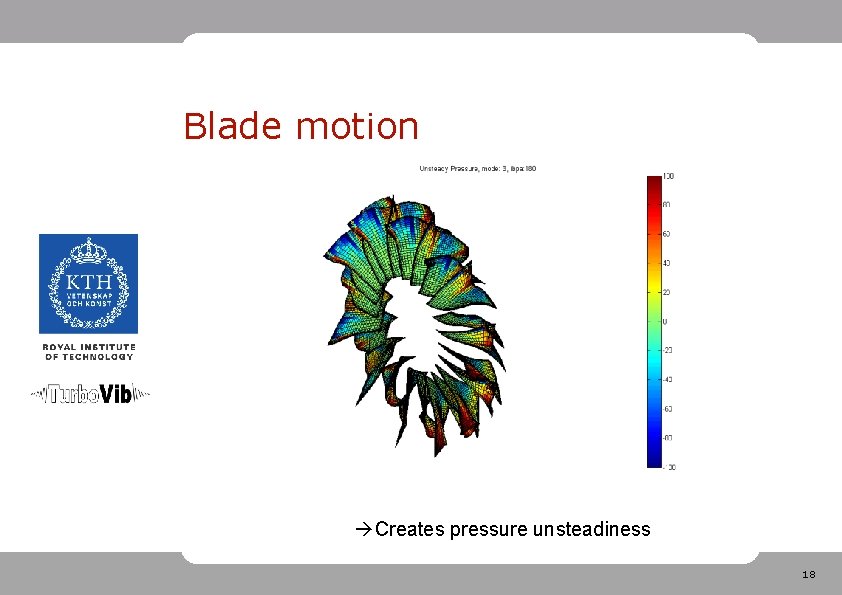
Blade motion Creates pressure unsteadiness 18
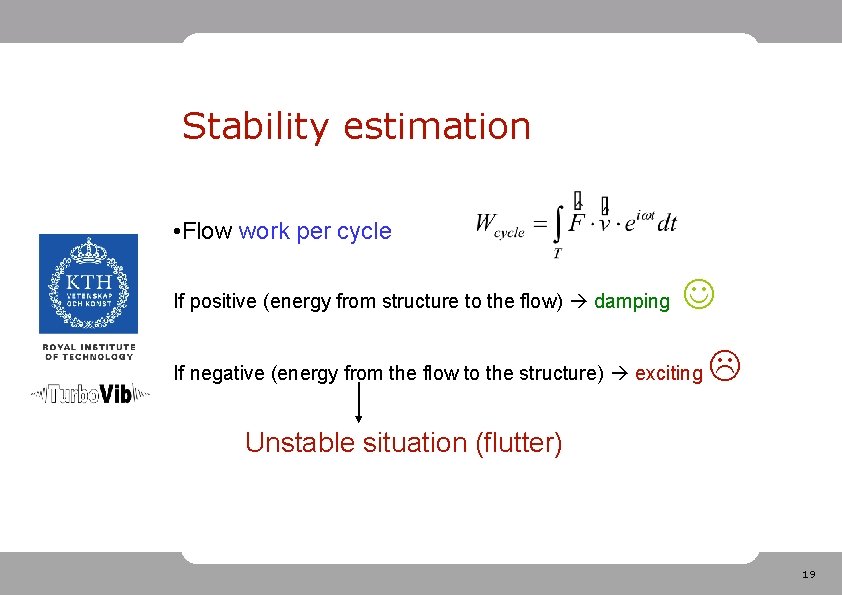
Stability estimation • Flow work per cycle If positive (energy from structure to the flow) damping If negative (energy from the flow to the structure) exciting Unstable situation (flutter) 19
What does it mean to calculate aero damping? 20
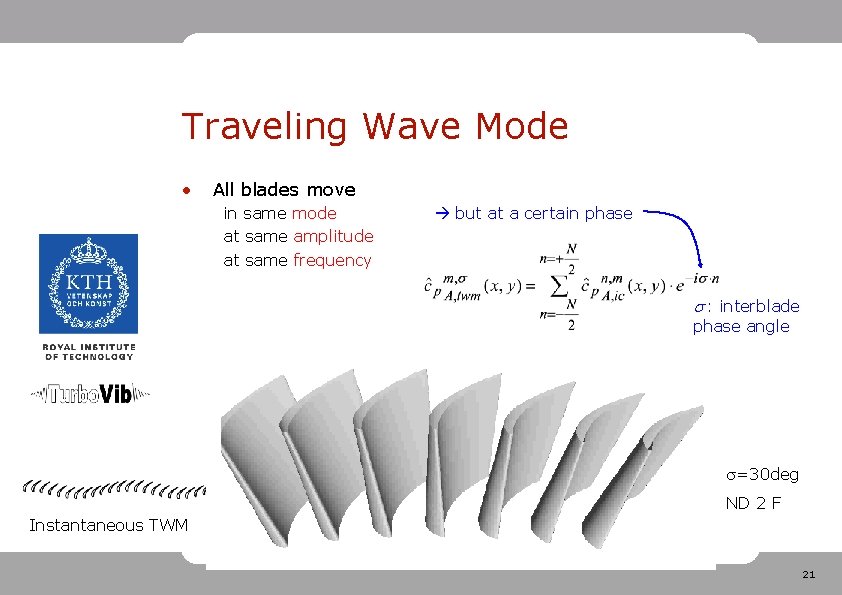
Traveling Wave Mode • All blades move in same mode at same amplitude at same frequency but at a certain phase s : interblade phase angle s=30 deg ND 2 F Instantaneous TWM 21
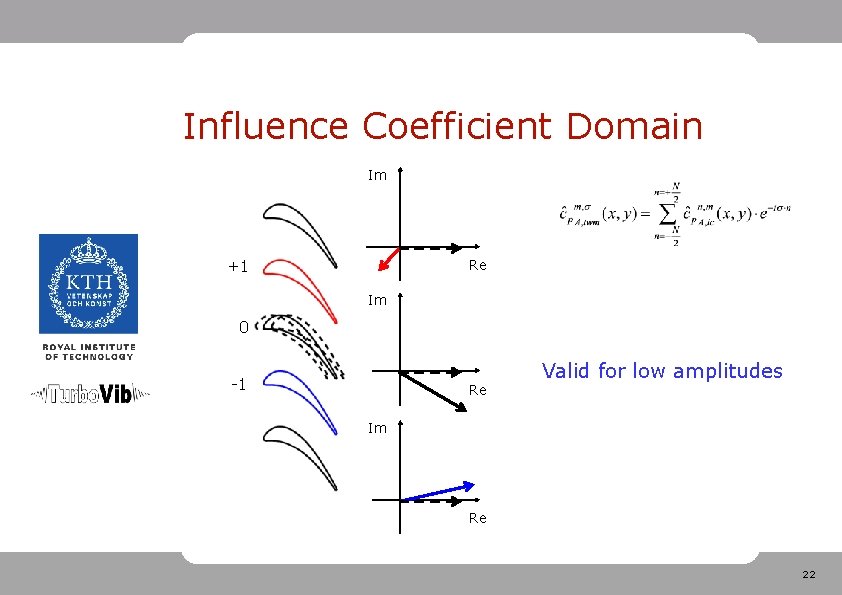
Influence Coefficient Domain Im Re +1 Im 0 -1 Re Valid for low amplitudes Im Re 22
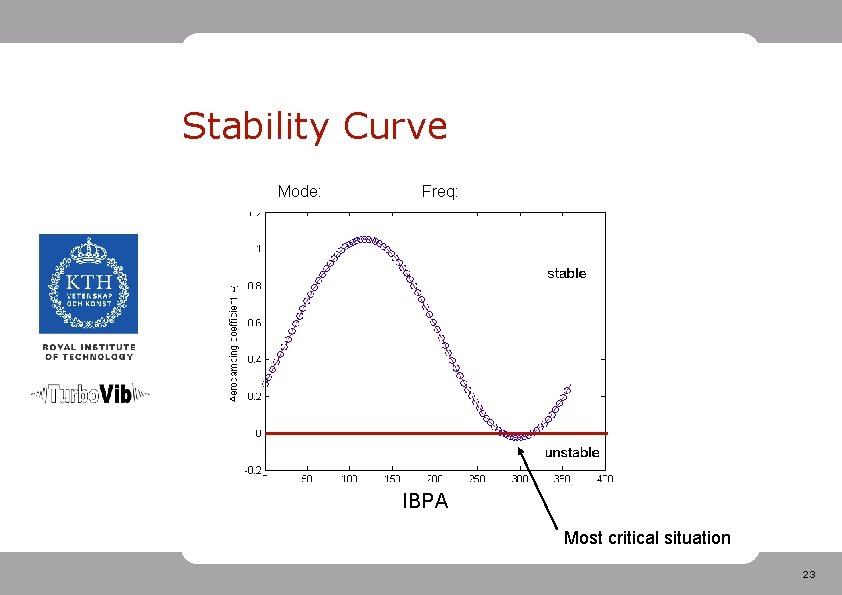
Stability Curve Mode: Freq: IBPA Most critical situation 23
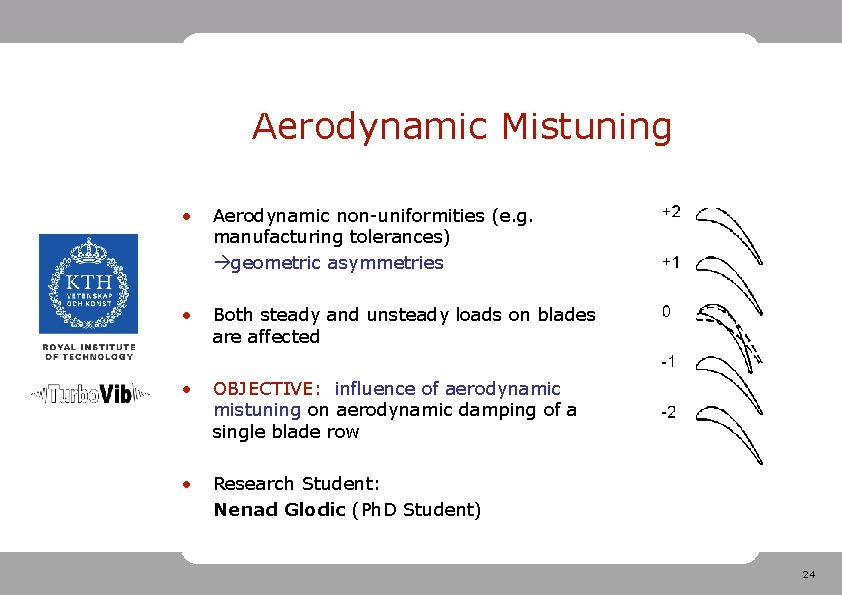
Aerodynamic Mistuning • Aerodynamic non-uniformities (e. g. manufacturing tolerances) geometric asymmetries • Both steady and unsteady loads on blades are affected • OBJECTIVE: influence of aerodynamic mistuning on aerodynamic damping of a single blade row • Research Student: Nenad Glodic (Ph. D Student) 24
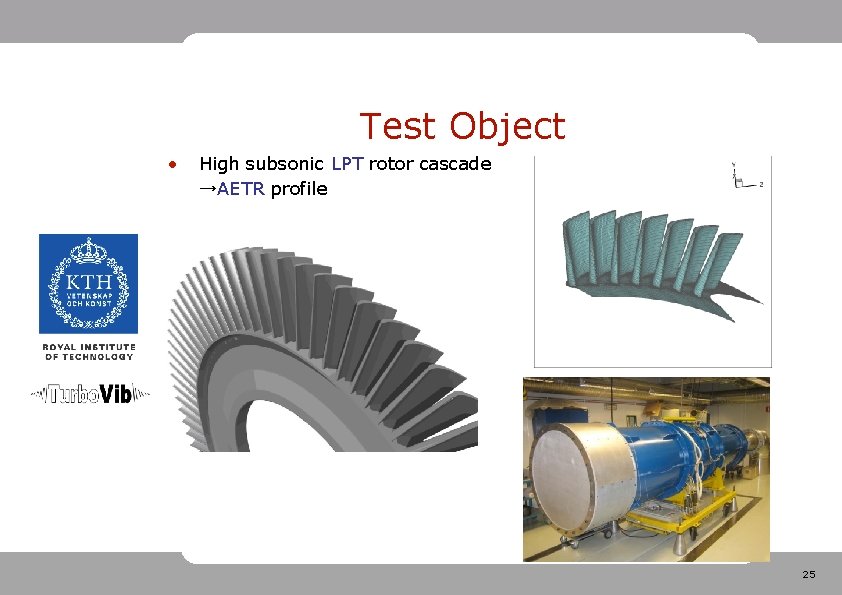
Test Object • High subsonic LPT rotor cascade →AETR profile 25
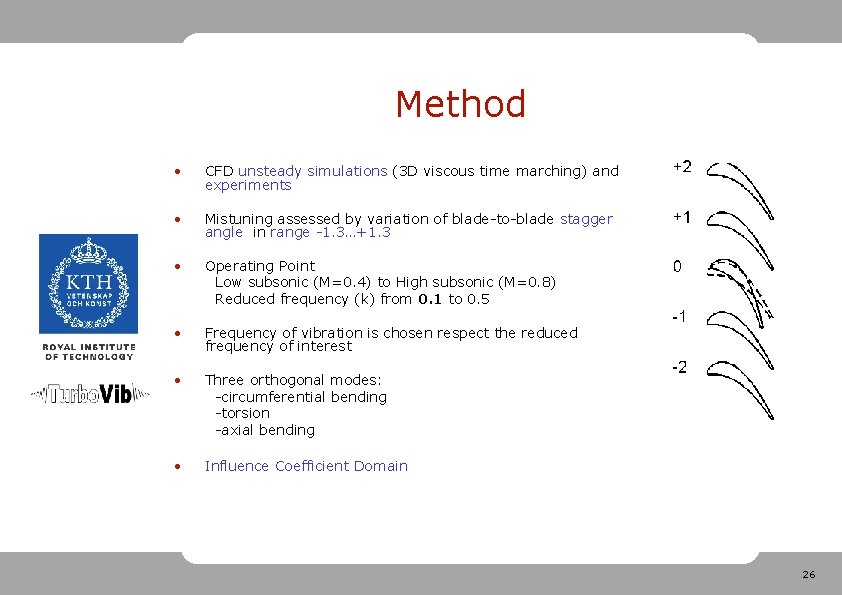
Method • CFD unsteady simulations (3 D viscous time marching) and experiments • Mistuning assessed by variation of blade-to-blade stagger angle in range -1. 3…+1. 3 • Operating Point Low subsonic (M=0. 4) to High subsonic (M=0. 8) Reduced frequency (k) from 0. 1 to 0. 5 • Frequency of vibration is chosen respect the reduced frequency of interest • Three orthogonal modes: -circumferential bending -torsion -axial bending • Influence Coefficient Domain 26
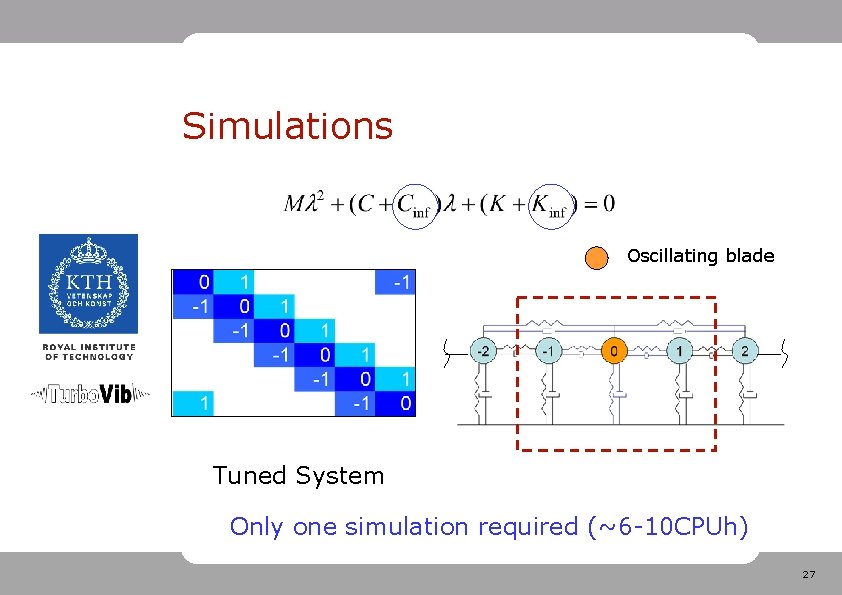
Simulations Oscillating blade Tuned System Only one simulation required (~6 -10 CPUh) 27
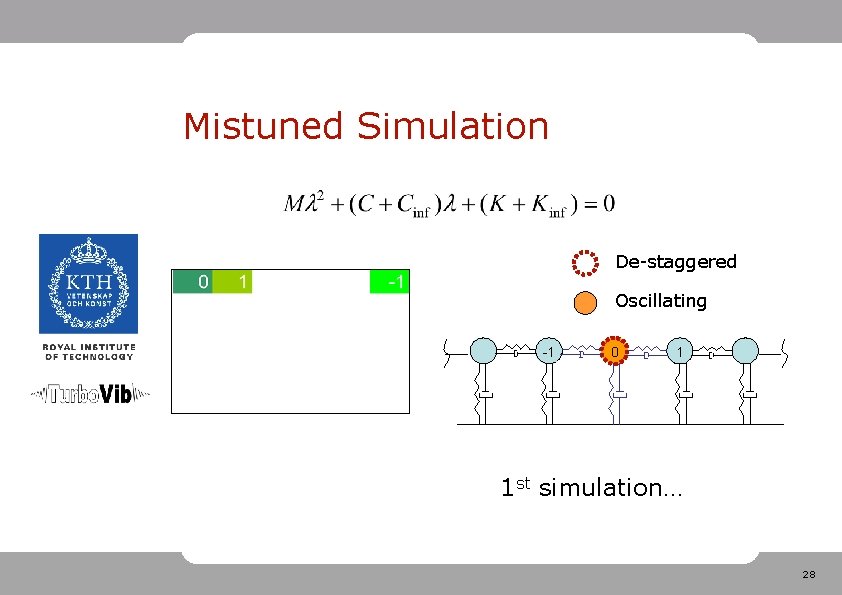
Mistuned Simulation De-staggered Oscillating -1 0 1 1 st simulation… 28
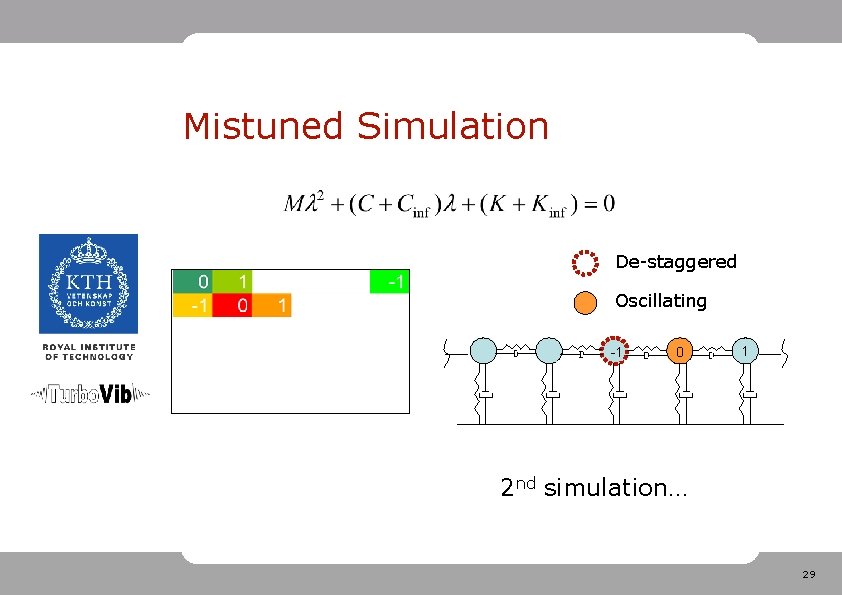
Mistuned Simulation De-staggered Oscillating -1 0 1 2 nd simulation… 29
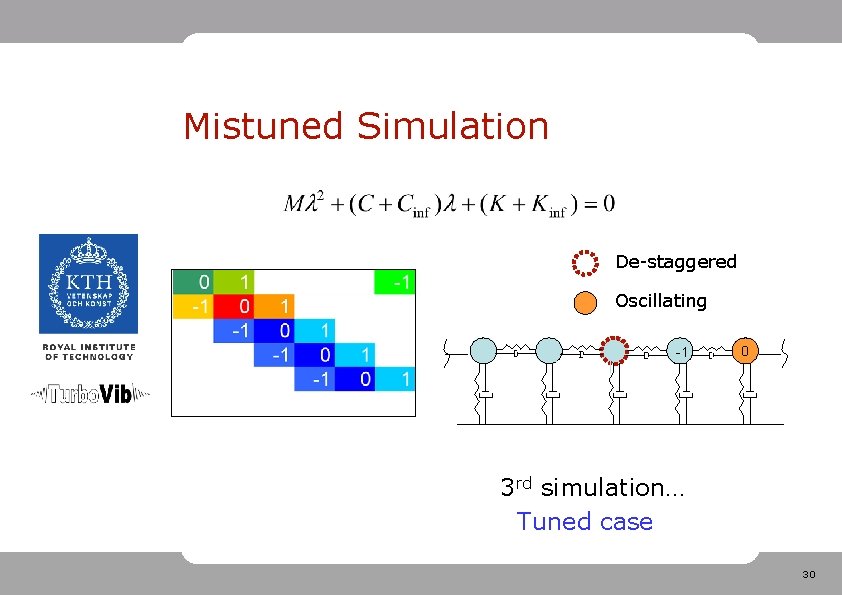
Mistuned Simulation De-staggered Oscillating -1 0 3 rd simulation… Tuned case 30
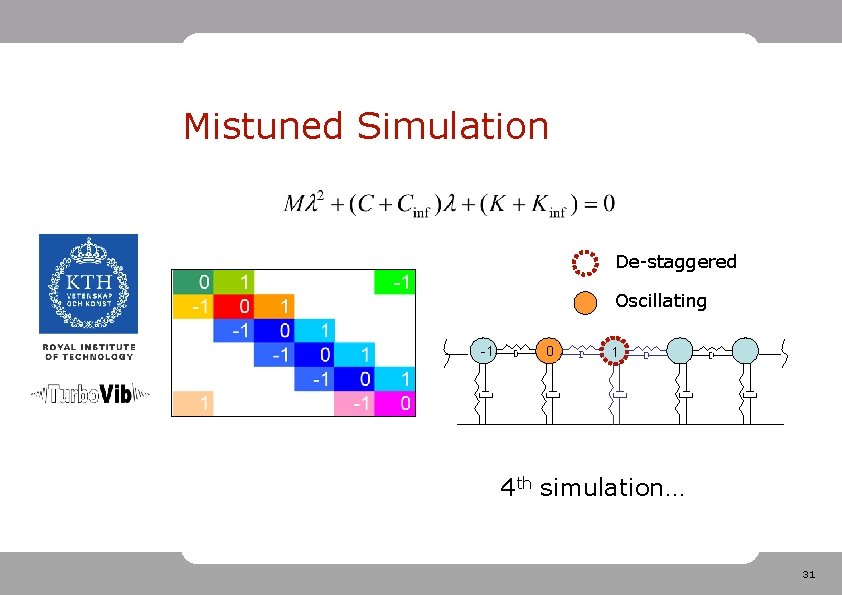
Mistuned Simulation De-staggered Oscillating -1 0 1 4 th simulation… 31
For each mistuned configuration several simulations are necessary! 32
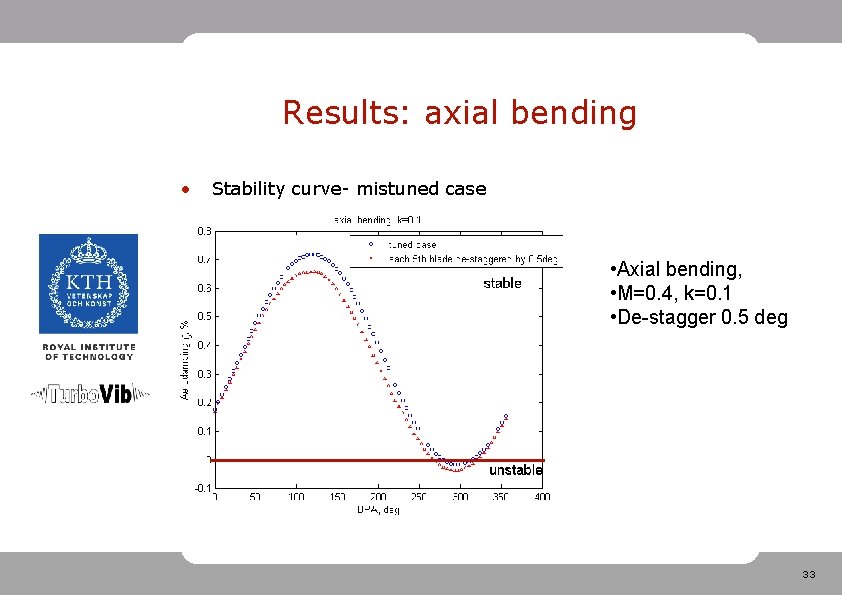
Results: axial bending • Stability curve- mistuned case • Axial bending, • M=0. 4, k=0. 1 • De-stagger 0. 5 deg 33
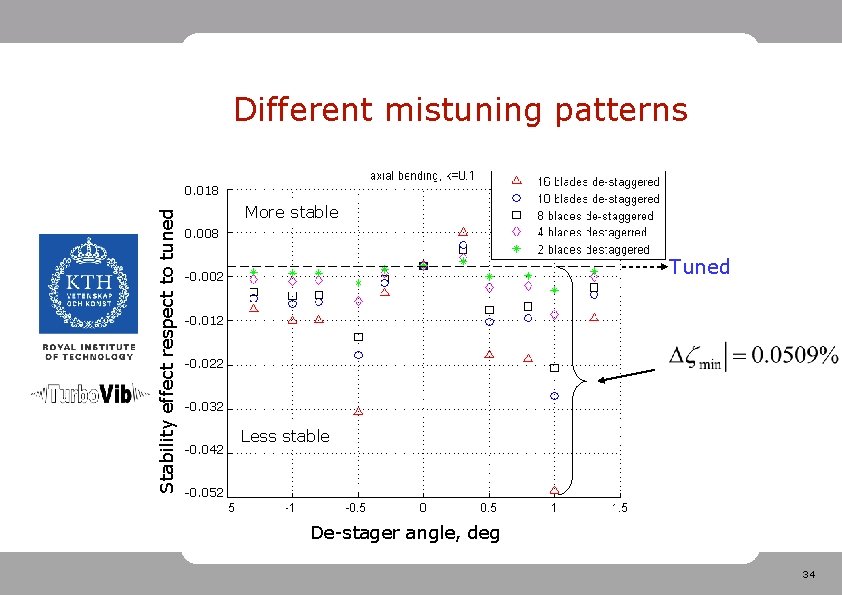
Different mistuning patterns Stability effect respect to tuned 0. 018 More stable 0. 008 Tuned -0. 002 -0. 012 -0. 022 -0. 032 -0. 042 Less stable -0. 052 De-stager angle, deg 34
Conclusions and work focus • Simulations at K=0. 1 have been computed for three different modes and different mistuned patterns • Model for influence of aerodynamic mistuning on the overall aerodynamic damping is being developed. Include effects of random mistuning →probabilistic analysis • Other operating points will be addressed (higher reduced frequency) • Validation→ experimental testing and TWM simulations with introduced mistuning • The transonic turbine is now being analyzed 35
- Slides: 35