
Tunnel Tactics developed in partnership with THE BUILT
Tunnel Tactics developed in partnership with
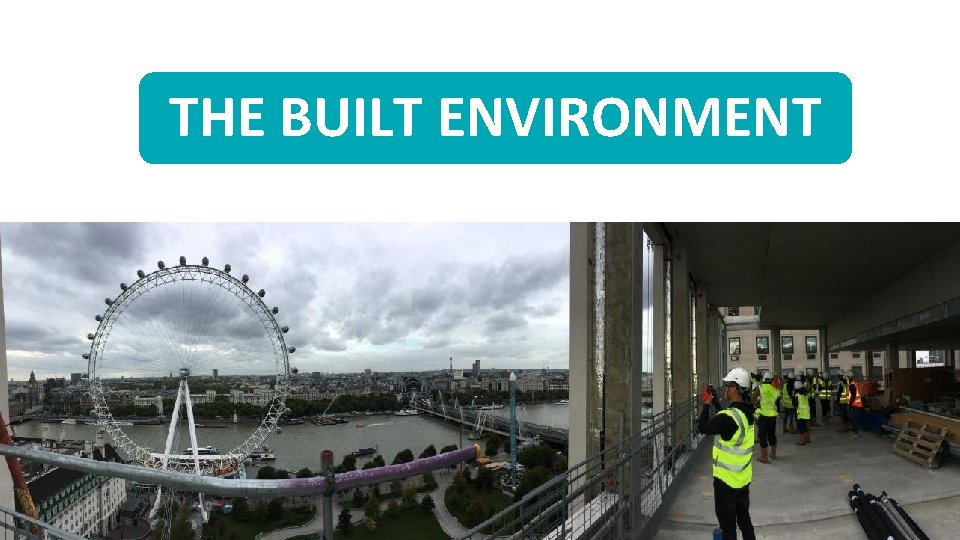
THE BUILT ENVIRONMENT
All about me • My name is Bethany and I work in Quantity Surveying. (Add your photo)) Education and career path University of Reading: Quantity Surveying BSs – 2011 -2014 Work experience Mace Commercial Management - 2013 Joined the Mace Graduate Scheme – 2014 Promoted to Assistant Manager – 2015 • Within my role I manage the cost of a project throughout all the stages of design and construction and make sure a client is paying a fair amount. • The key skills I find useful for my role are good communication and negotiation skills, work well in a team, skills in excel and measuring buildings. Why did I choose to go into construction? What do I like most about my role? “I have always enjoyed maths and working as a Quantity Surveyor allows me to use my maths and apply it to something I can see. ” “I like that I am able to work on multiple interesting projects and work with lots of different people. ”
The human-made space in which people live, work, and play on a What do we mean when we say day-to-day basis ‘The Built Environment’? “When my placement ended, I felt incredibly motivated and eager to do all that’s necessary to work in this field of work in the near future. ”
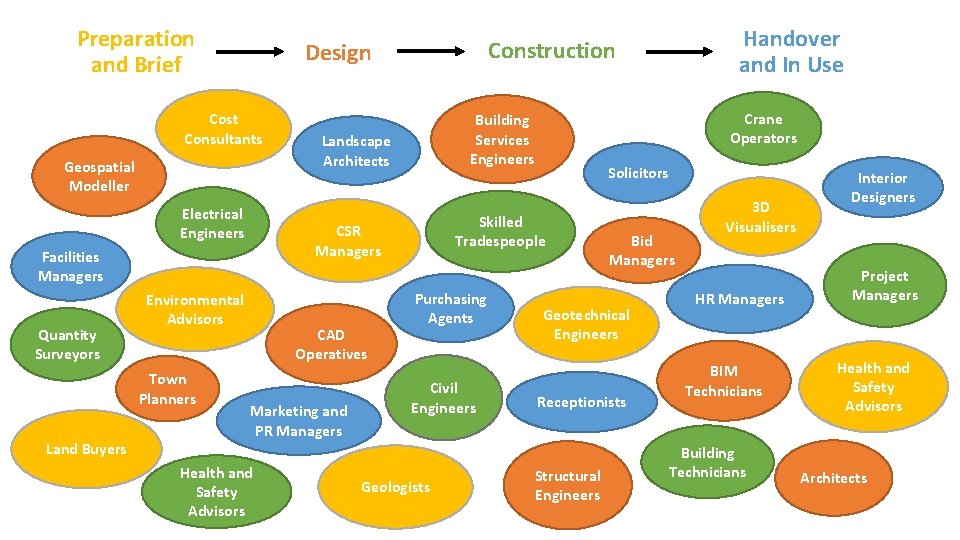
Preparation and Brief Cost Consultants Geospatial Modeller Electrical Engineers Quantity Surveyors Environmental Advisors Town Planners Land Buyers Landscape Architects CAD Operatives Marketing and PR Managers Health and Safety Advisors Crane Operators Building Services Engineers Solicitors Skilled Tradespeople CSR Managers Facilities Managers Handover and In Use Construction Design Purchasing Agents Civil Engineers Geologists Bid Managers Geotechnical Engineers Receptionists Structural Engineers 3 D Visualisers HR Managers BIM Technicians Building Technicians Interior Designers Project Managers Health and Safety Advisors Architects

What will construction look like in the future?
It’s worth thinking about a career in the Built Environment! “When my placement ended, I felt incredibly motivated and eager to do all that’s necessary to work in this field of work in the near future. ”
What links Tideway & the River Thames? River Thames A company owned by several larger companies A river that flows through southern England including London Tideway is building the Thames Tideway Tunnel – London's new super sewer!
The Thames Tideway Tunnel What exactly is it? • A 25 km ‘Super Sewer’ under the Thames to stop millions of tonnes pollution getting into the river as well as completely new areas of public space. Why is it needed? • In 1858, Victorian engineer, Sir Joseph Bazalgette built a sewage system under the Thames that could accommodate 4 m people but London now has 9 m. When it rains, raw sewage flows directly into the Thames as it is the only way to stop homes and streets from flooding when the existing Victorian sewers overflow. How long will it take to build? • Work started in 2016 and is due to finish in 2024 How much will it cost? • The tunnel is set to cost £ 3. 8 bn to complete with Thames Water’s 15 million wastewater customers paying no more than an extra £ 25 per year.
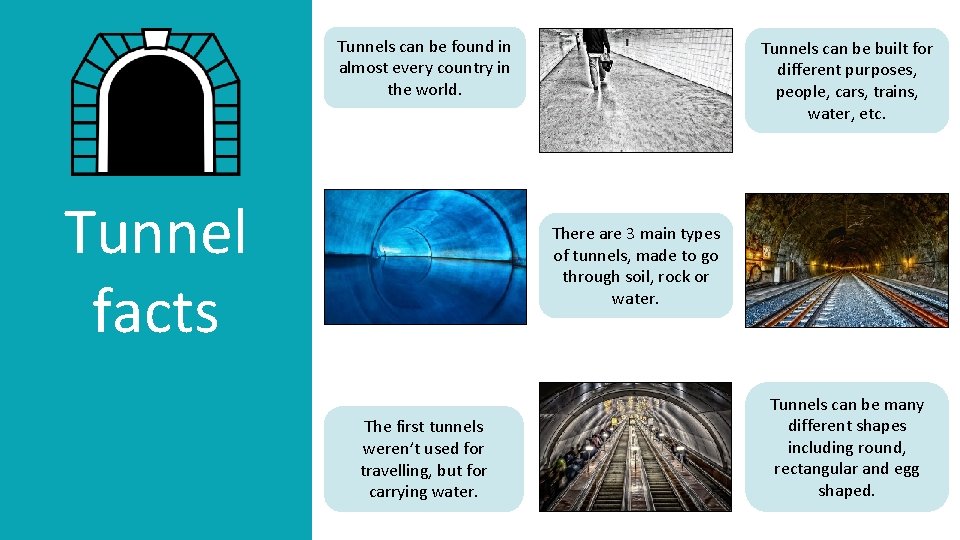
Tunnels can be found in almost every country in the world. Tunnel facts Tunnels can be built for different purposes, people, cars, trains, water, etc. There are 3 main types of tunnels, made to go through soil, rock or water. The first tunnels weren’t used for travelling, but for carrying water. Tunnels can be many different shapes including round, rectangular and egg shaped.
Tunnel related careers works out exactly how much a building costs to make and are in charge of all the finances Quantity Surveyor Apprentice Tunnelling Operative Civil Engineer Environmental Advisor Geotechnical Engineer Crane Operative builds the underground tunnels needed for services such as rail lines and water works plans, designs and manages construction projects ensures that construction projects meet with environmental regulations and targets analyses soil, rock, groundwater and other earth material before construction projects uses heavy machinery to lift/move materials on a site
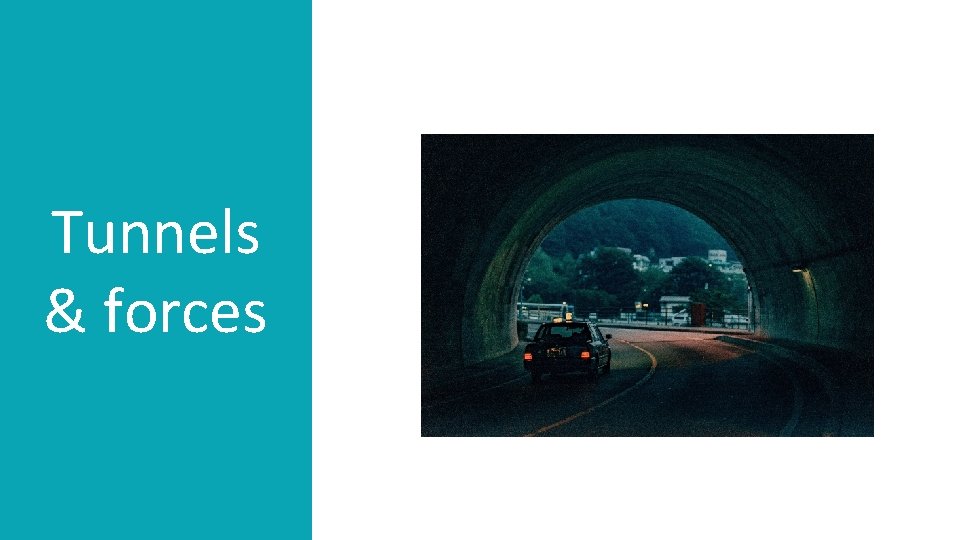
Tunnels & forces
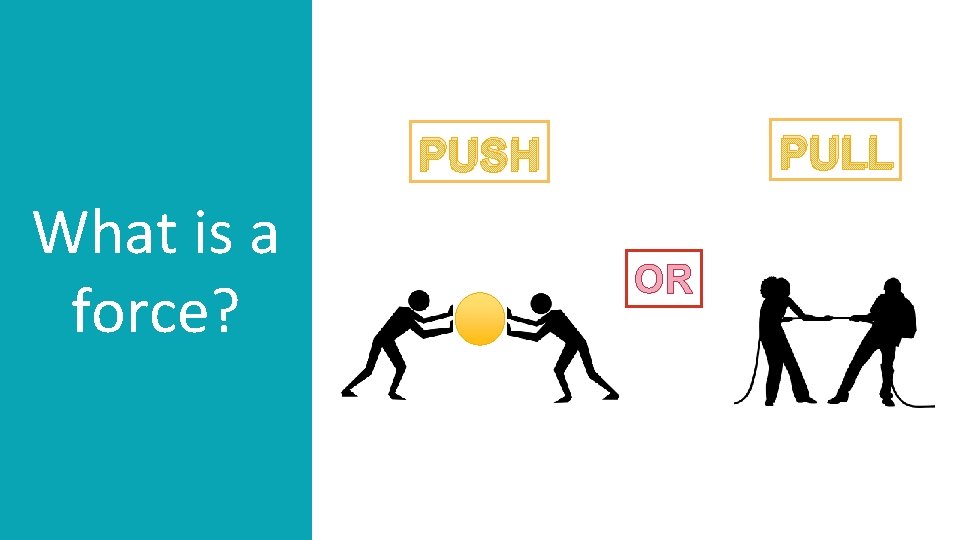
PULL PUSH What is a force? OR
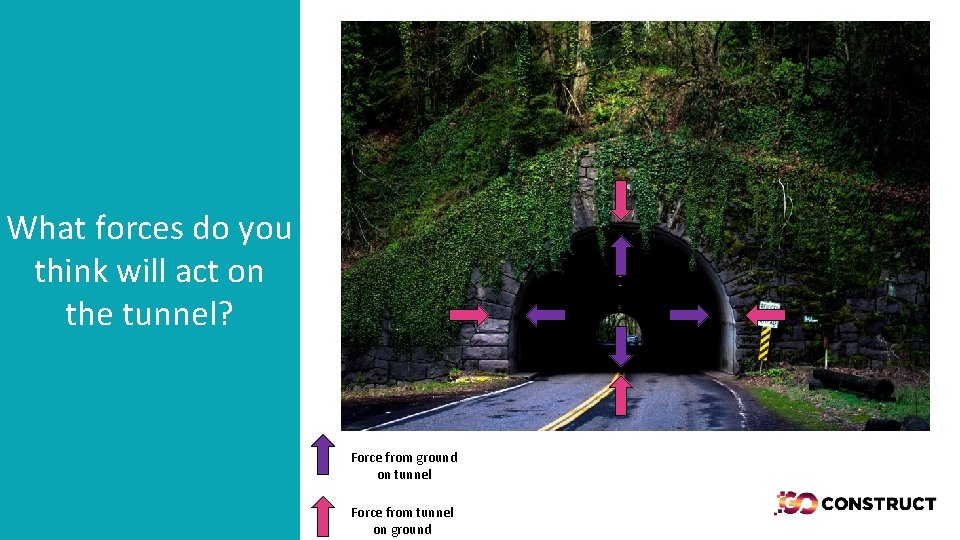
What forces do you think will act on the tunnel? Force from ground on tunnel Force from tunnel on ground
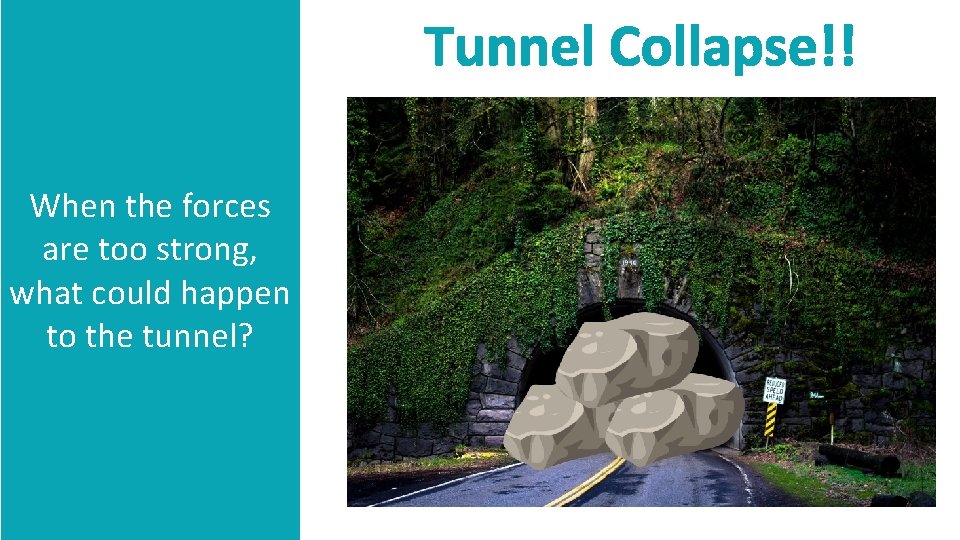
Tunnel Collapse!! When the forces are too strong, what could happen to the tunnel?
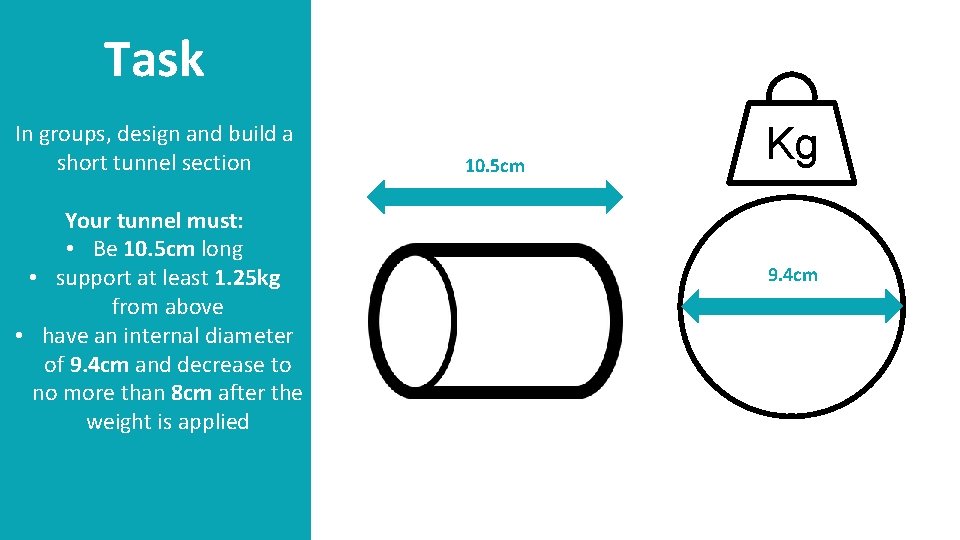
Task In groups, design and build a short tunnel section Your tunnel must: • Be 10. 5 cm long • support at least 1. 25 kg from above • have an internal diameter of 9. 4 cm and decrease to no more than 8 cm after the weight is applied 1 KG 10. 5 cm Kg 9. 4 cm
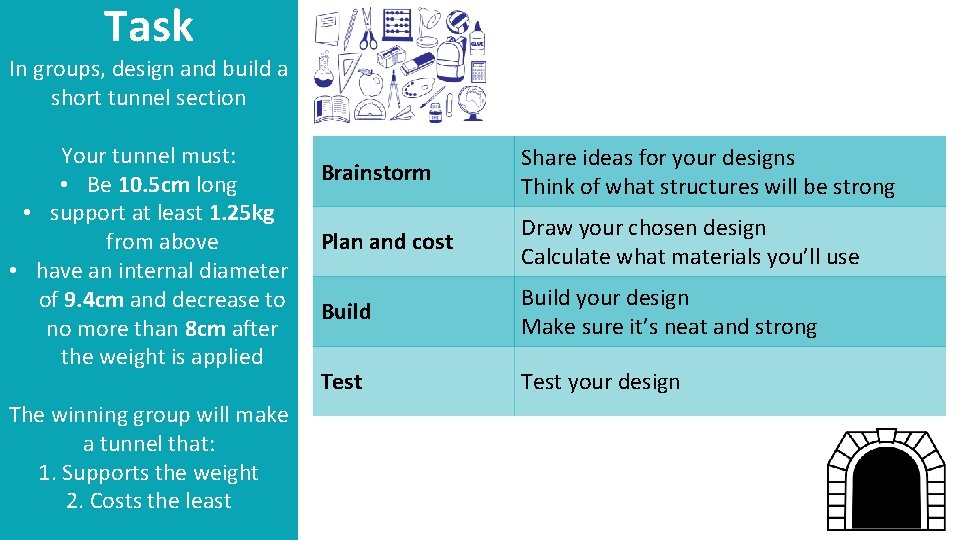
Task In groups, design and build a short tunnel section Your tunnel must: • Be 10. 5 cm long • support at least 1. 25 kg from above • have an internal diameter of 9. 4 cm and decrease to no more than 8 cm after the weight is applied The winning group will make a tunnel that: 1. Supports the weight 2. Costs the least Brainstorm Share ideas for your designs Think of what structures will be strong Plan and cost Draw your chosen design Calculate what materials you’ll use Build your design Make sure it’s neat and strong Test your design
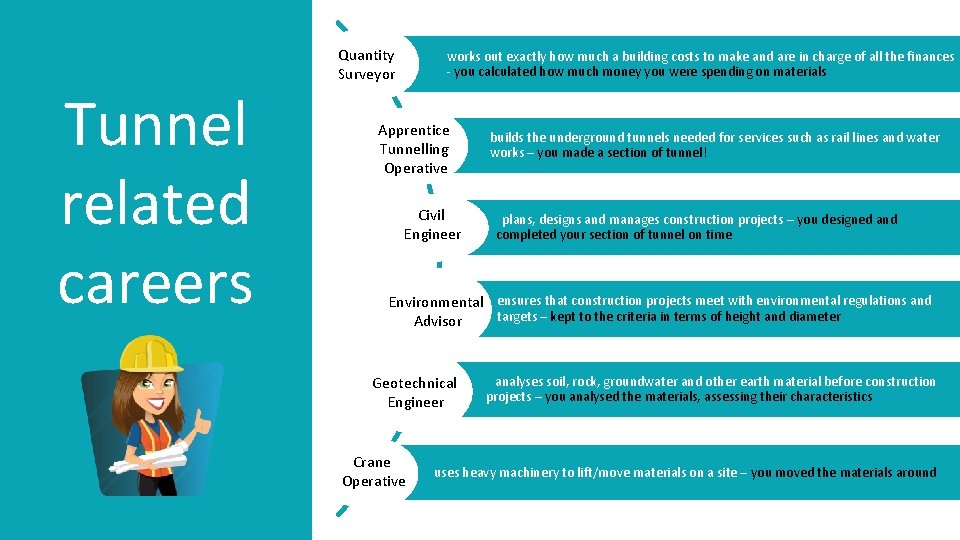
Tunnel related careers Quantity Surveyor works out exactly how much a building costs to make and are in charge of all the finances - you calculated how much money you were spending on materials Apprentice Tunnelling Operative Civil Engineer builds the underground tunnels needed for services such as rail lines and water works – you made a section of tunnel! plans, designs and manages construction projects – you designed and completed your section of tunnel on time Environmental ensures that construction projects meet with environmental regulations and targets – kept to the criteria in terms of height and diameter Advisor Geotechnical Engineer Crane Operative analyses soil, rock, groundwater and other earth material before construction projects – you analysed the materials, assessing their characteristics uses heavy machinery to lift/move materials on a site – you moved the materials around
- Slides: 18