
Tuned Mass Damper for Railway Noise Control Wilson

- Slides: 42
Tuned Mass Damper for Railway Noise Control Wilson Ho and Banting Wong Wilson Acoustics Limited David England MTR Corporation
Contents 1. 2. 3. 4. 5. 6. 7. Introduction Working Principle Damper Development History Decay Rate Measurement Trackside N&V Measurement Saloon Noise Measurement Summary Wilson Acoustics Limited www. wal. hk
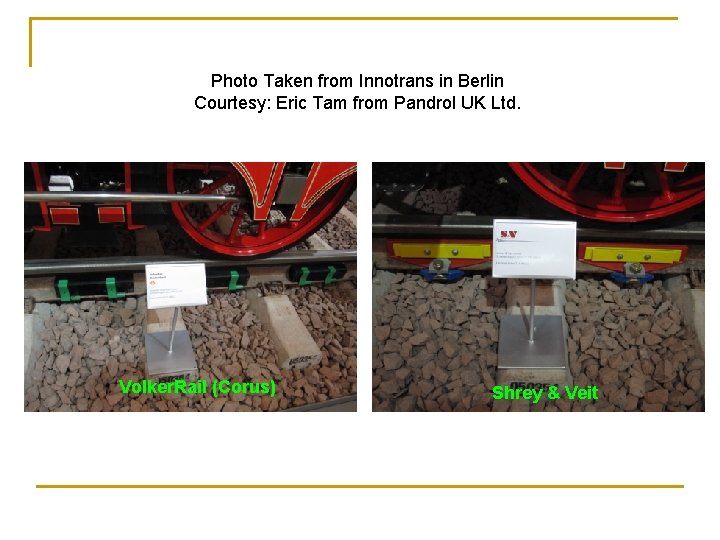
Photo Taken from Innotrans in Berlin Courtesy: Eric Tam from Pandrol UK Ltd. Volker. Rail (Corus) Shrey & Veit
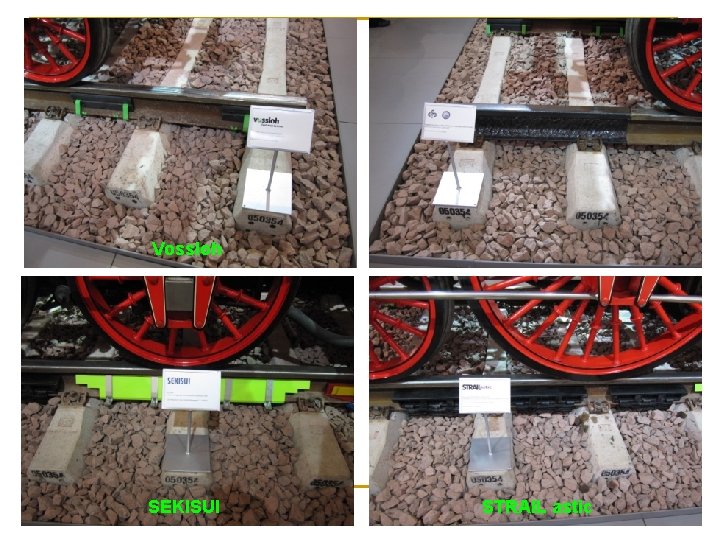
Vossloh SEKISUI STRAIL astic
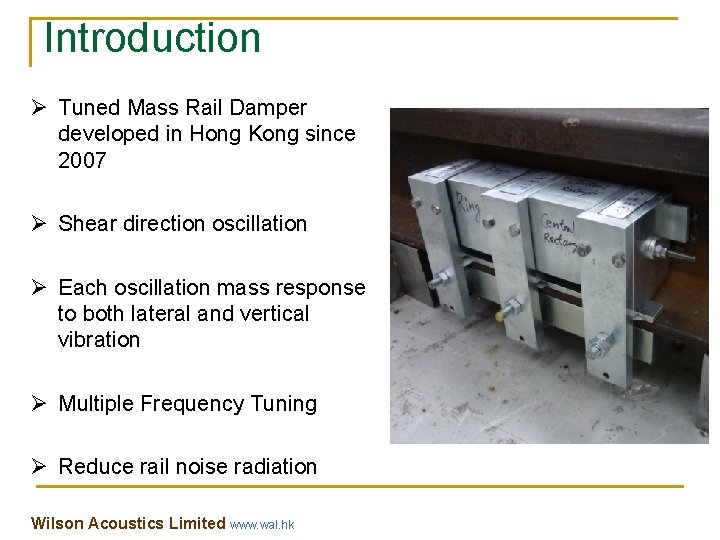
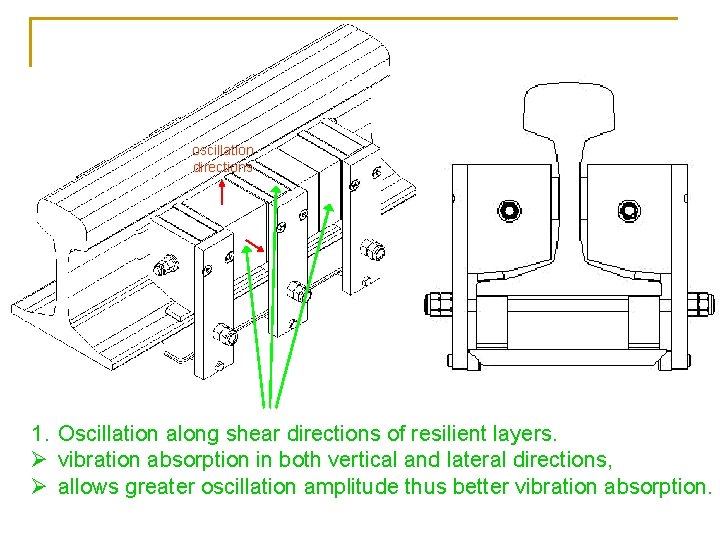
Introduction Ø Tuned Mass Rail Damper developed in Hong Kong since 2007 Ø Shear direction oscillation Ø Each oscillation mass response to both lateral and vertical vibration Ø Multiple Frequency Tuning Ø Reduce rail noise radiation Wilson Acoustics Limited www. wal. hk
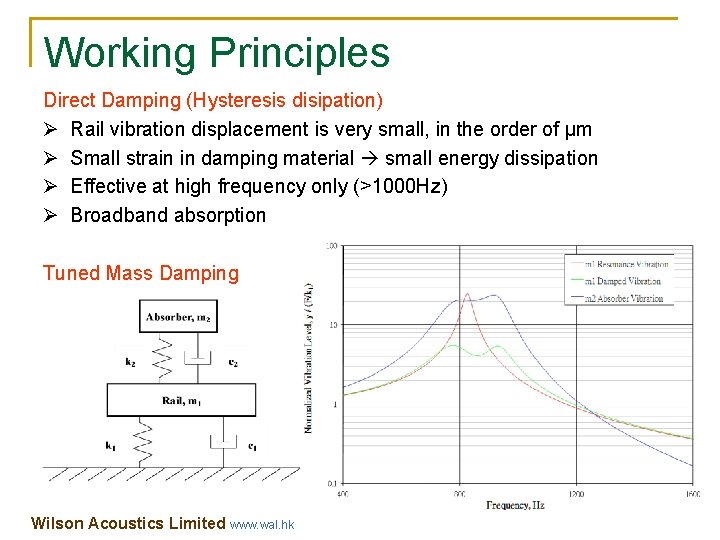
Working Principles Direct Damping (Hysteresis disipation) Ø Rail vibration displacement is very small, in the order of μm Ø Small strain in damping material small energy dissipation Ø Effective at high frequency only (>1000 Hz) Ø Broadband absorption Tuned Mass Damping Wilson Acoustics Limited www. wal. hk
Wilson Acoustics Limited www. wal. hk
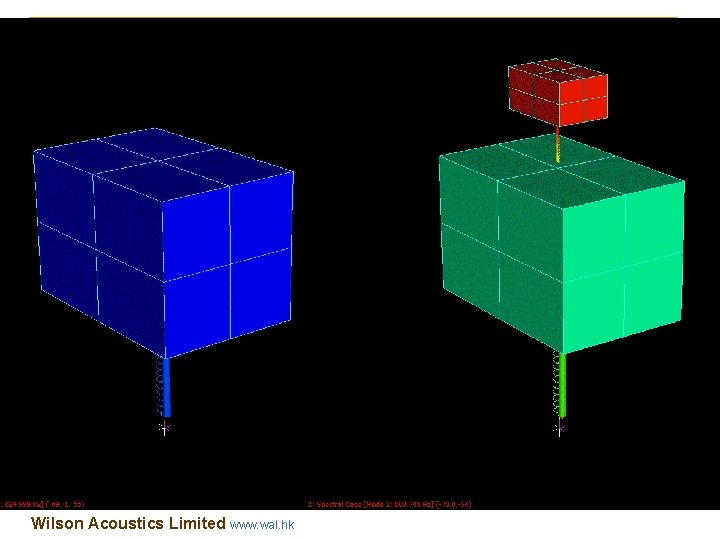
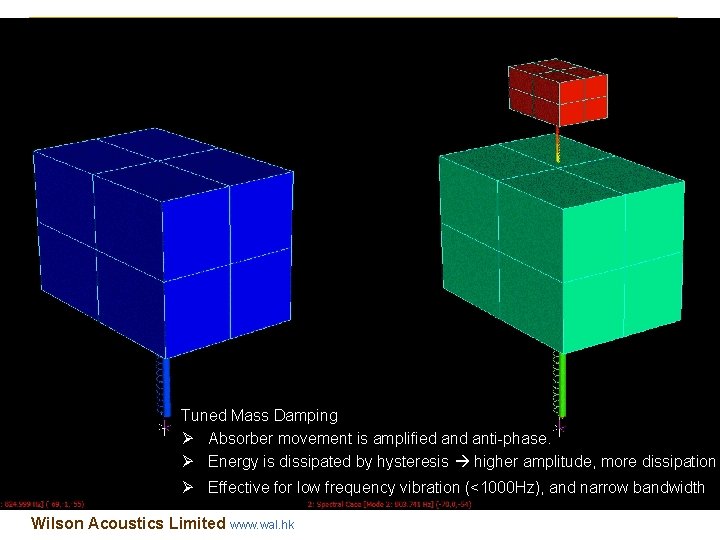
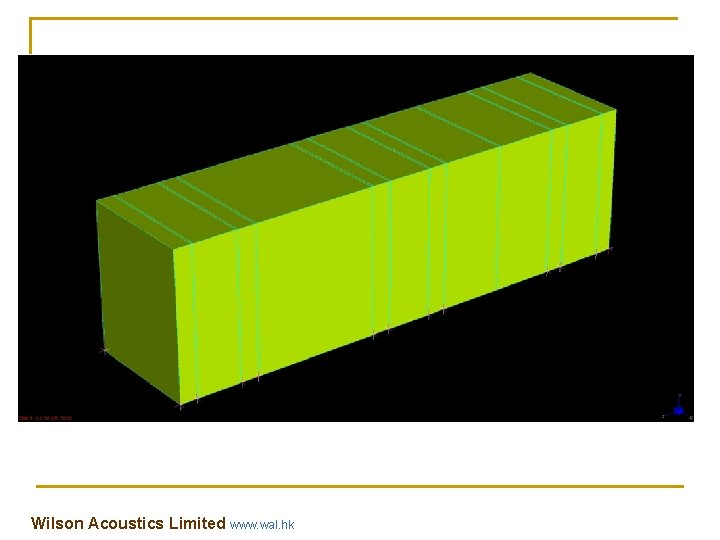
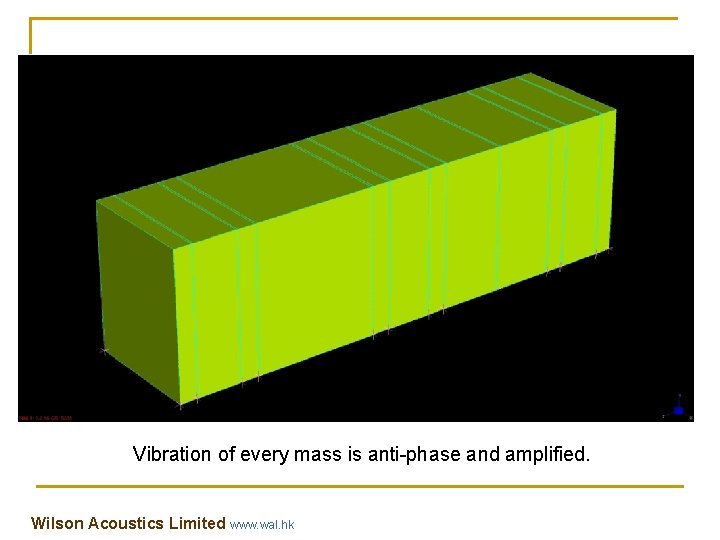
Tuned Mass Damping Ø Absorber movement is amplified anti-phase. Ø Energy is dissipated by hysteresis higher amplitude, more dissipation Ø Effective for low frequency vibration (<1000 Hz), and narrow bandwidth Wilson Acoustics Limited www. wal. hk
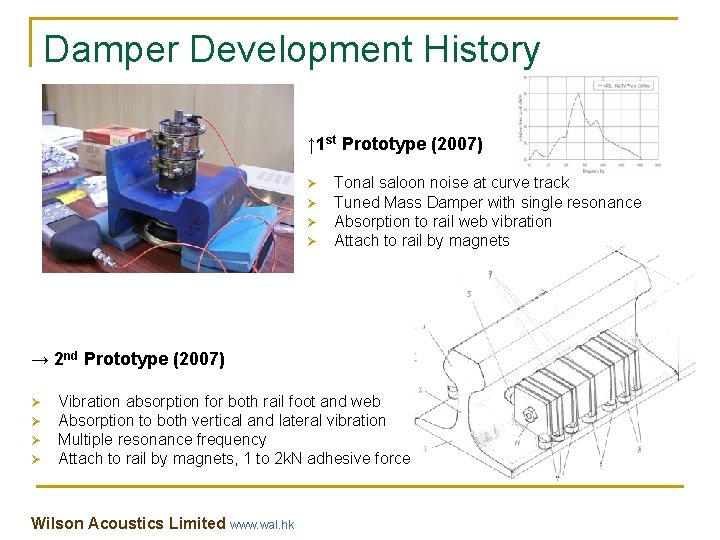
Damper Development History ↑ 1 st Prototype (2007) Ø Ø Tonal saloon noise at curve track Tuned Mass Damper with single resonance Absorption to rail web vibration Attach to rail by magnets → 2 nd Prototype (2007) Ø Ø Vibration absorption for both rail foot and web Absorption to both vertical and lateral vibration Multiple resonance frequency Attach to rail by magnets, 1 to 2 k. N adhesive force Wilson Acoustics Limited www. wal. hk
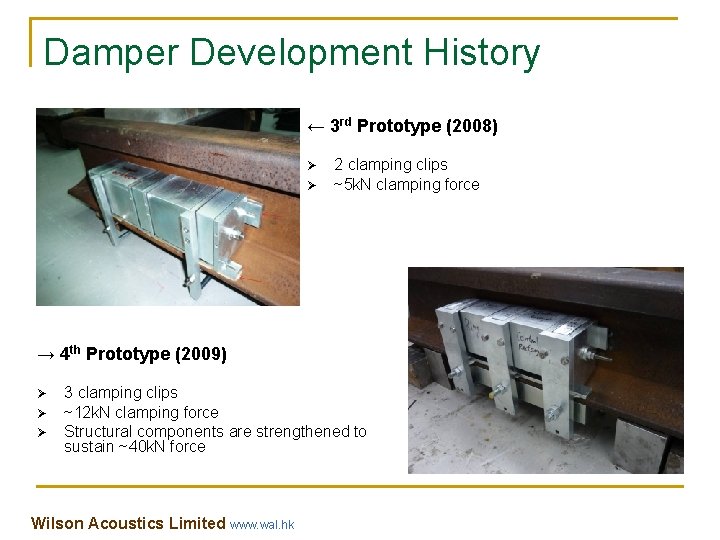
Damper Development History ← 3 rd Prototype (2008) Ø Ø 2 clamping clips ~5 k. N clamping force → 4 th Prototype (2009) Ø Ø Ø 3 clamping clips ~12 k. N clamping force Structural components are strengthened to sustain ~40 k. N force Wilson Acoustics Limited www. wal. hk
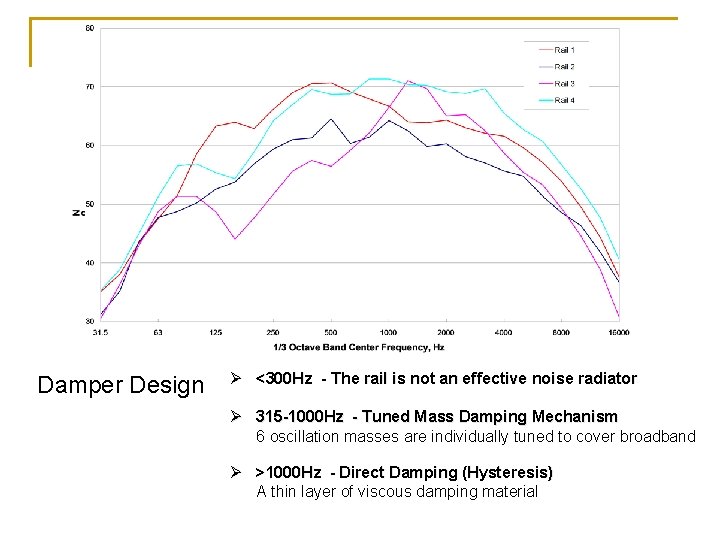
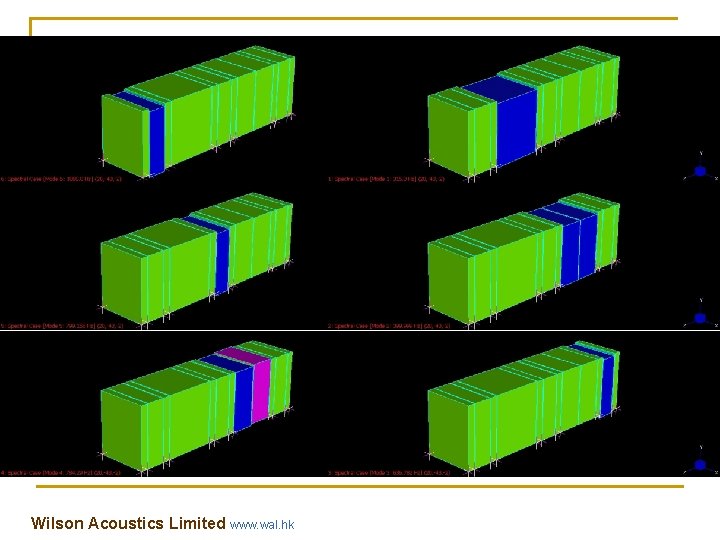
Damper Design Ø <300 Hz - The rail is not an effective noise radiator Ø 315 -1000 Hz - Tuned Mass Damping Mechanism 6 oscillation masses are individually tuned to cover broadband Ø >1000 Hz - Direct Damping (Hysteresis) A thin layer of viscous damping material
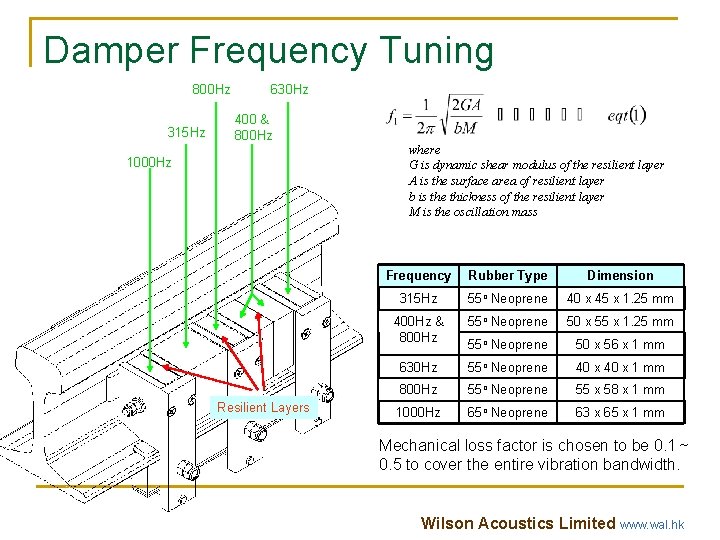
Damper Frequency Tuning 800 Hz 315 Hz 630 Hz 400 & 800 Hz 1000 Hz Resilient Layers where G is dynamic shear modulus of the resilient layer A is the surface area of resilient layer b is the thickness of the resilient layer M is the oscillation mass Frequency Rubber Type Dimension 315 Hz 55 o Neoprene 40 x 45 x 1. 25 mm 400 Hz & 800 Hz 55 o Neoprene 50 x 55 x 1. 25 mm 55 o Neoprene 50 x 56 x 1 mm 630 Hz 55 o Neoprene 40 x 1 mm 800 Hz 55 o Neoprene 55 x 58 x 1 mm 1000 Hz 65 o Neoprene 63 x 65 x 1 mm Mechanical loss factor is chosen to be 0. 1 ~ 0. 5 to cover the entire vibration bandwidth. Wilson Acoustics Limited www. wal. hk
Wilson Acoustics Limited www. wal. hk
Wilson Acoustics Limited www. wal. hk
Vibration of every mass is anti-phase and amplified. Wilson Acoustics Limited www. wal. hk
Wilson Acoustics Limited www. wal. hk
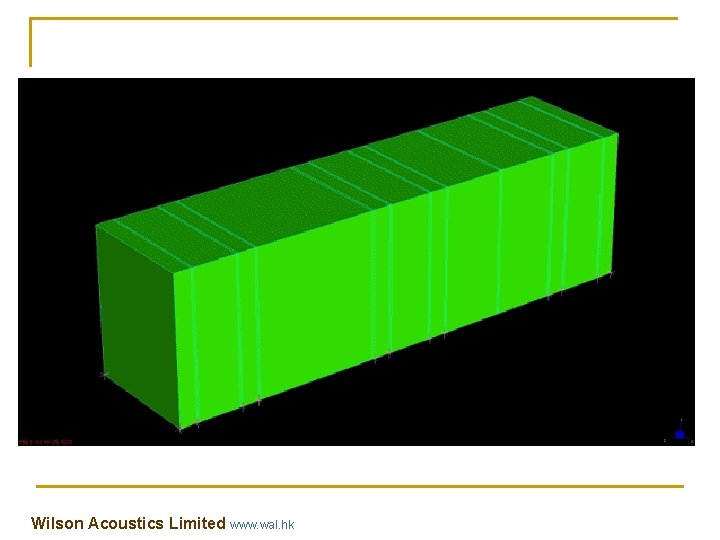
oscillation directions 1. Oscillation along shear directions of resilient layers. Ø vibration absorption in both vertical and lateral directions, Ø allows greater oscillation amplitude thus better vibration absorption.
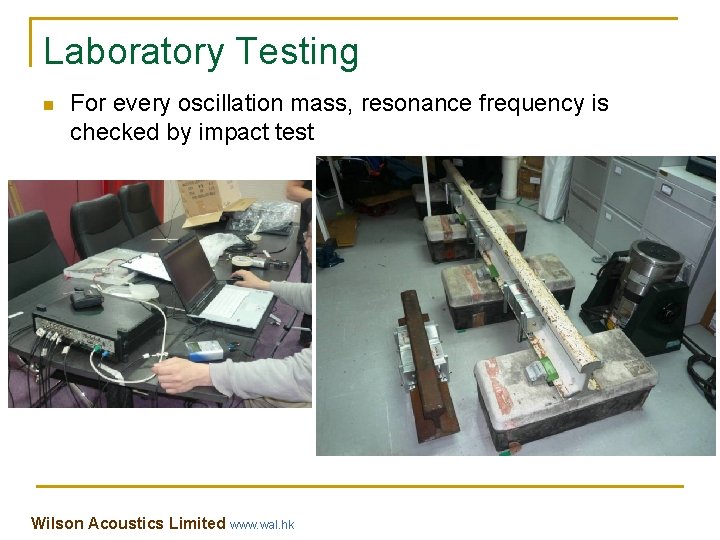
Laboratory Testing n For every oscillation mass, resonance frequency is checked by impact test Wilson Acoustics Limited www. wal. hk
Contents 1. 2. 3. 4. 5. 6. 7. Introduction Working Principle Damper Development History Decay Rate Measurement Trackside N&V Measurement Saloon Noise Measurement Summary Wilson Acoustics Limited www. wal. hk
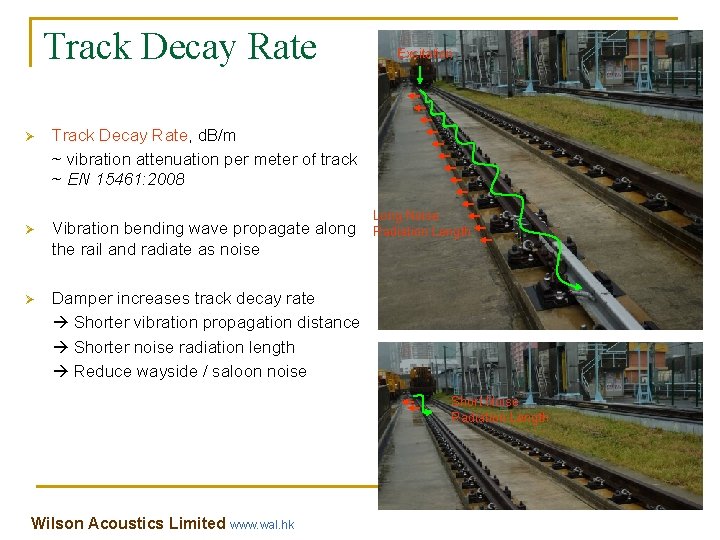
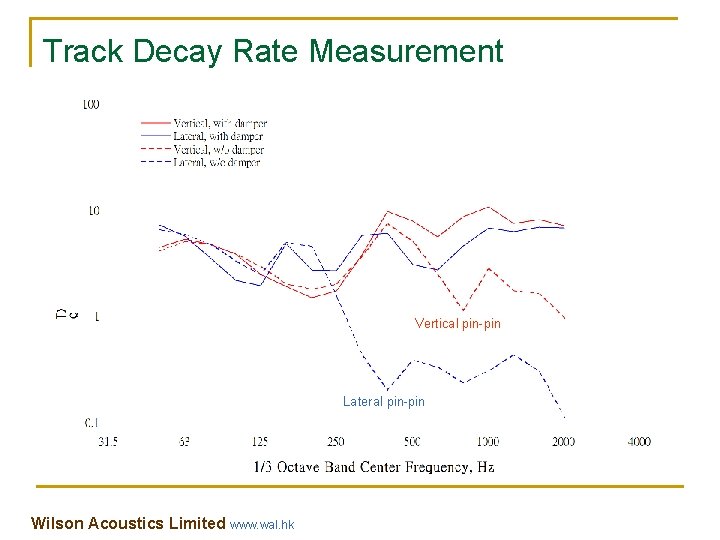
Track Decay Rate Ø Track Decay Rate, d. B/m ~ vibration attenuation per meter of track ~ EN 15461: 2008 Ø Vibration bending wave propagate along the rail and radiate as noise Ø Damper increases track decay rate Shorter vibration propagation distance Shorter noise radiation length Reduce wayside / saloon noise Excitation Long Noise Radiation Length Short Noise Radiation Length Wilson Acoustics Limited www. wal. hk
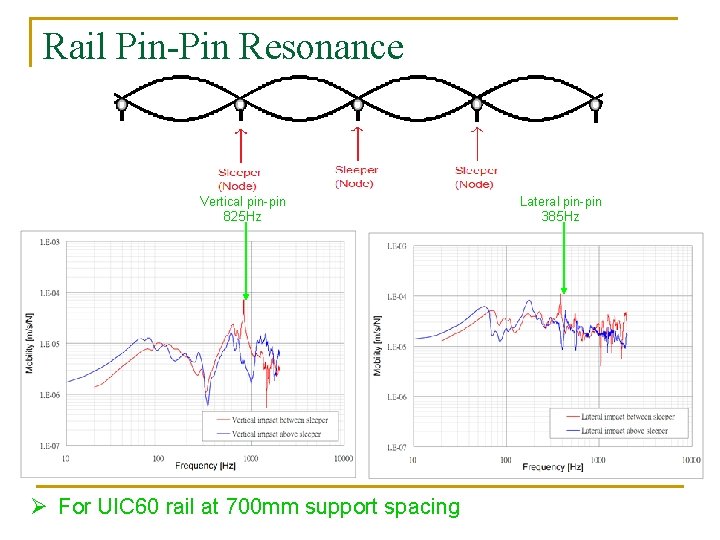
Rail Pin-Pin Resonance Vertical pin-pin 825 Hz Ø For UIC 60 rail at 700 mm support spacing Lateral pin-pin 385 Hz
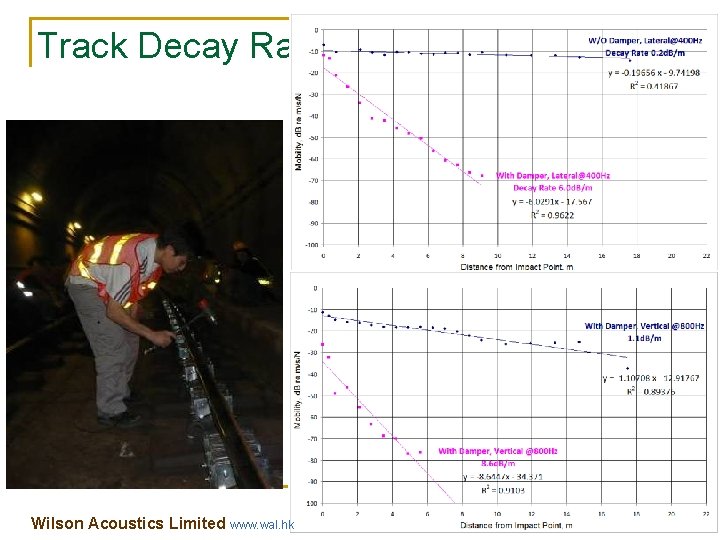
Track Decay Rate Wilson Acoustics Limited www. wal. hk
Track Decay Rate Measurement Vertical pin-pin Lateral pin-pin Wilson Acoustics Limited www. wal. hk
Contents 1. 2. 3. 4. 5. 6. 7. Introduction Working Principle Damper Development History Decay Rate Measurement Trackside N&V Measurement Saloon Noise Measurement Summary Wilson Acoustics Limited www. wal. hk
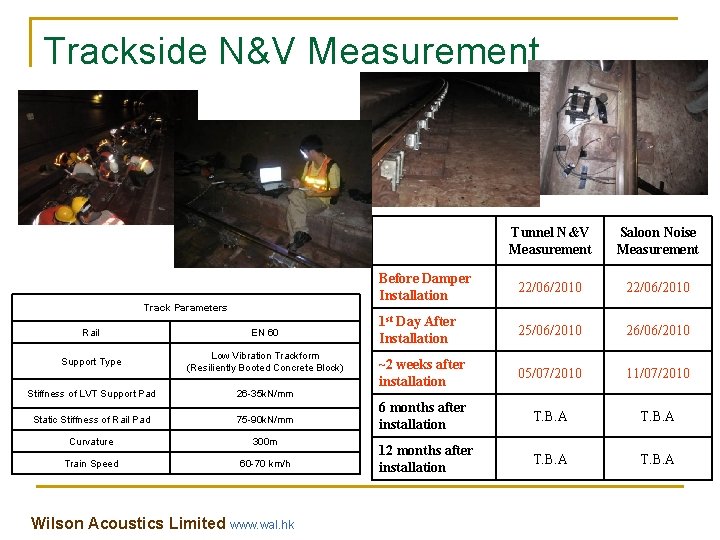
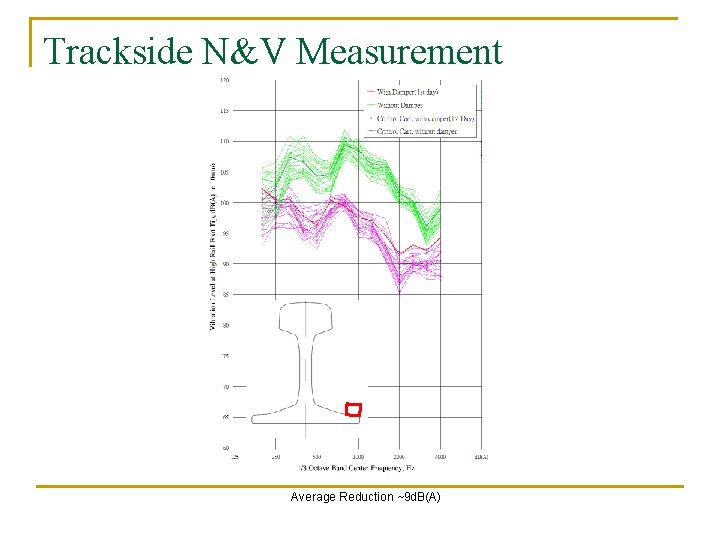
Trackside N&V Measurement Track Parameters Rail EN 60 Support Type Low Vibration Trackform (Resiliently Booted Concrete Block) Stiffness of LVT Support Pad 26 -35 k. N/mm Static Stiffness of Rail Pad 75 -90 k. N/mm Curvature 300 m Train Speed 60 -70 km/h Wilson Acoustics Limited www. wal. hk Tunnel N&V Measurement Saloon Noise Measurement Before Damper Installation 22/06/2010 1 st Day After Installation 25/06/2010 26/06/2010 ~2 weeks after installation 05/07/2010 11/07/2010 6 months after installation T. B. A 12 months after installation T. B. A
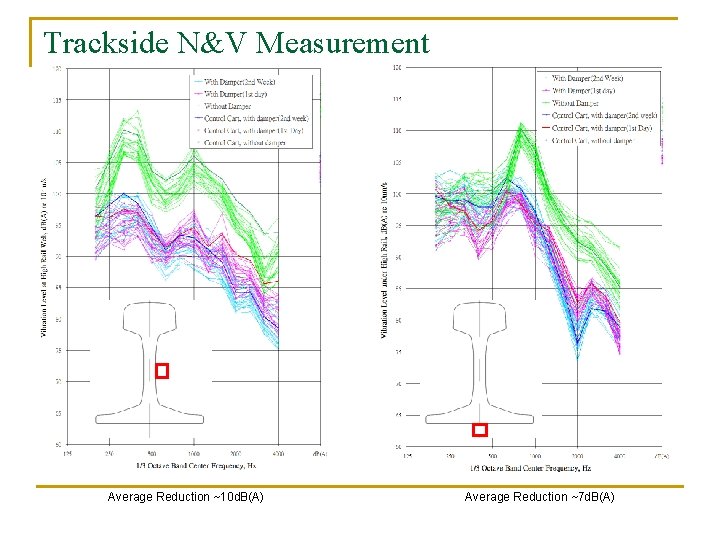
Trackside N&V Measurement Average Reduction ~10 d. B(A) Average Reduction ~7 d. B(A)
Trackside N&V Measurement Average Reduction ~9 d. B(A)
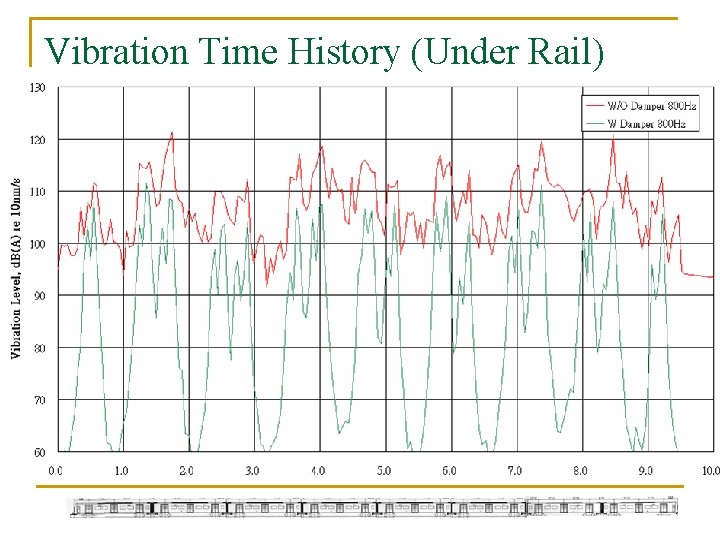
Vibration Time History (Under Rail)
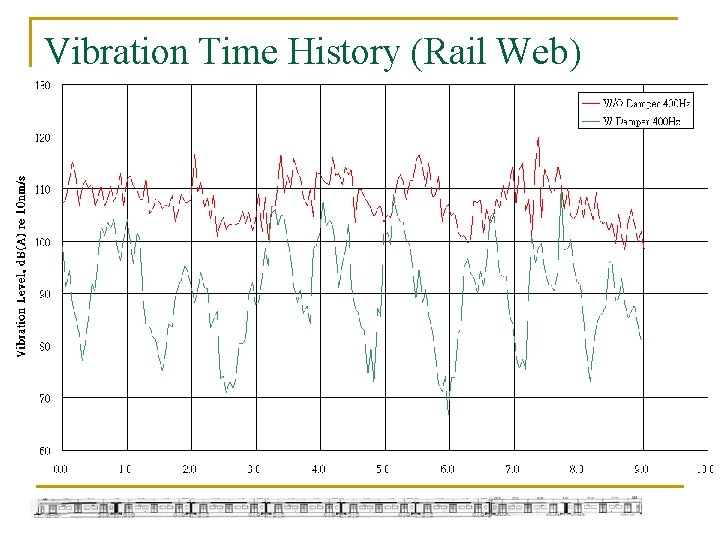
Vibration Time History (Rail Web)
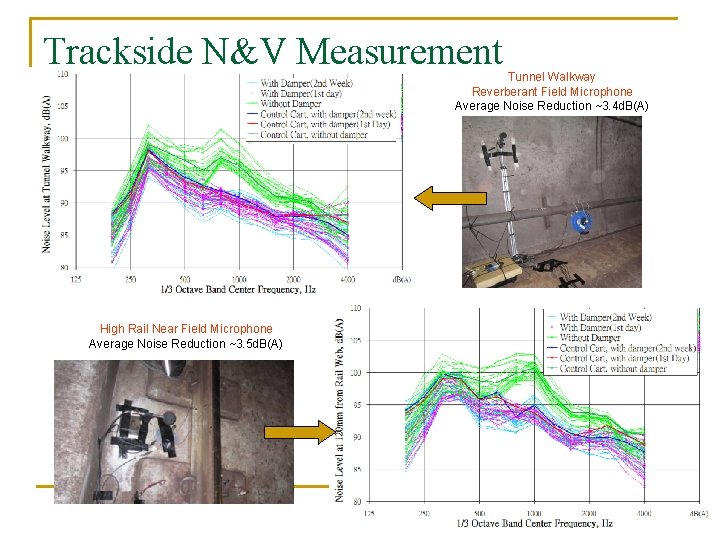
Trackside N&V Measurement Tunnel Walkway Reverberant Field Microphone Average Noise Reduction ~3. 4 d. B(A) High Rail Near Field Microphone Average Noise Reduction ~3. 5 d. B(A)
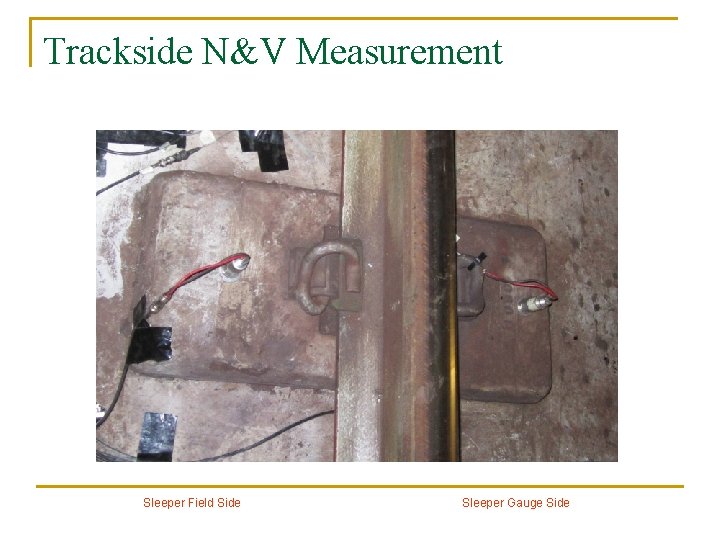
Trackside N&V Measurement Sleeper Field Side Sleeper Gauge Side
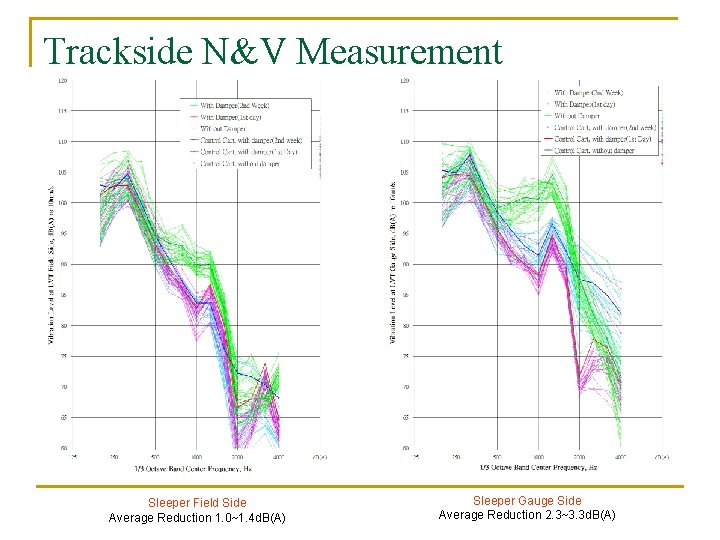
Trackside N&V Measurement Sleeper Field Side Average Reduction 1. 0~1. 4 d. B(A) Sleeper Gauge Side Average Reduction 2. 3~3. 3 d. B(A)
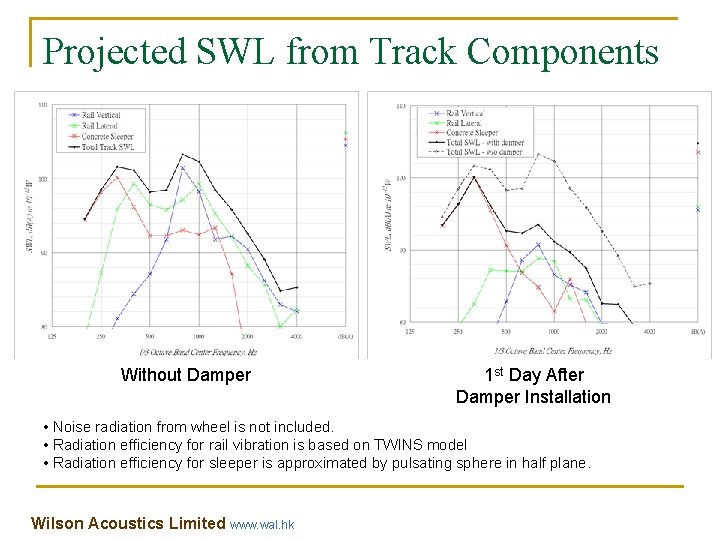
Projected SWL from Track Components Without Damper 1 st Day After Damper Installation • Noise radiation from wheel is not included. • Radiation efficiency for rail vibration is based on TWINS model • Radiation efficiency for sleeper is approximated by pulsating sphere in half plane. Wilson Acoustics Limited www. wal. hk
Contents 1. 2. 3. 4. 5. 6. 7. Introduction Working Principle Damper Development History Decay Rate Measurement Trackside N&V Measurement Saloon Noise Measurement Summary Wilson Acoustics Limited www. wal. hk
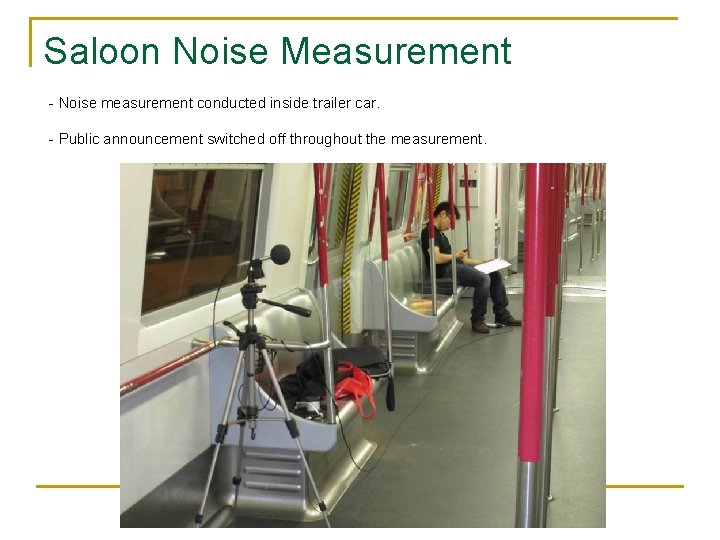
Saloon Noise Measurement - Noise measurement conducted inside trailer car. - Public announcement switched off throughout the measurement.
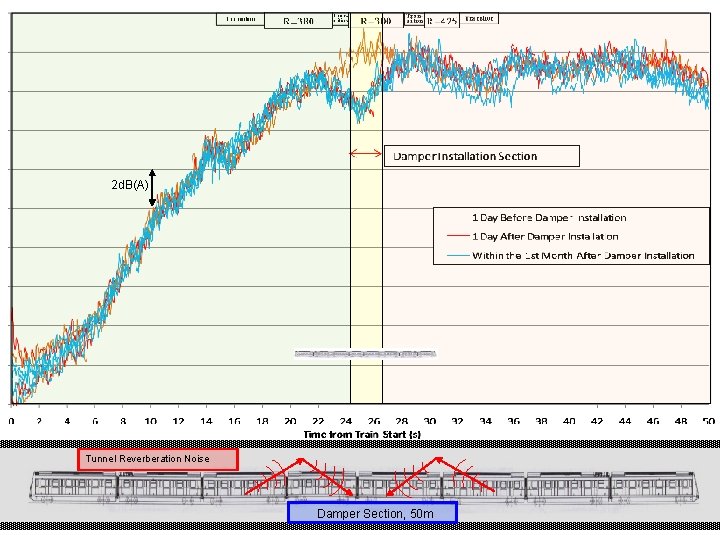
Figure 4. 1 Saloon Noise Level Time History 2 d. B(A) Tunnel Reverberation Noise Damper Section, 50 m
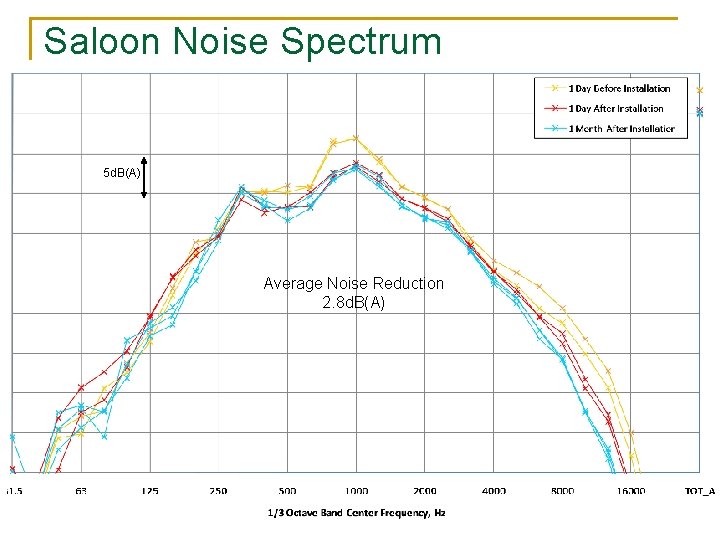
Saloon Noise Spectrum 5 d. B(A) Average Noise Reduction 2. 8 d. B(A)
Contents 1. 2. 3. 4. 5. 6. 7. Introduction Working Principle Damper Development History Decay Rate Measurement Trackside N&V Measurement Saloon Noise Measurement Summary Wilson Acoustics Limited www. wal. hk
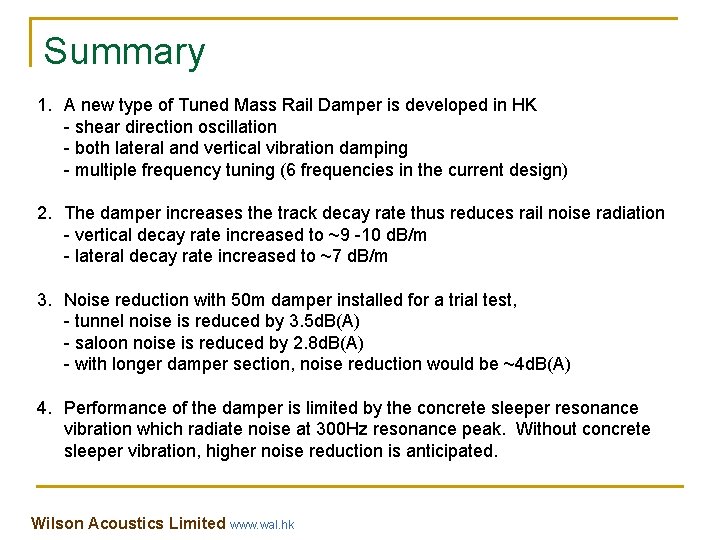
Summary 1. A new type of Tuned Mass Rail Damper is developed in HK - shear direction oscillation - both lateral and vertical vibration damping - multiple frequency tuning (6 frequencies in the current design) 2. The damper increases the track decay rate thus reduces rail noise radiation - vertical decay rate increased to ~9 -10 d. B/m - lateral decay rate increased to ~7 d. B/m 3. Noise reduction with 50 m damper installed for a trial test, - tunnel noise is reduced by 3. 5 d. B(A) - saloon noise is reduced by 2. 8 d. B(A) - with longer damper section, noise reduction would be ~4 d. B(A) 4. Performance of the damper is limited by the concrete sleeper resonance vibration which radiate noise at 300 Hz resonance peak. Without concrete sleeper vibration, higher noise reduction is anticipated. Wilson Acoustics Limited www. wal. hk
Wilson Acoustics Limited www. wal. hk