
Tundra Boreal Forest By Christopher Snider JD Linsler

Tundra & Boreal Forest By : Christopher Snider & JD Linsler
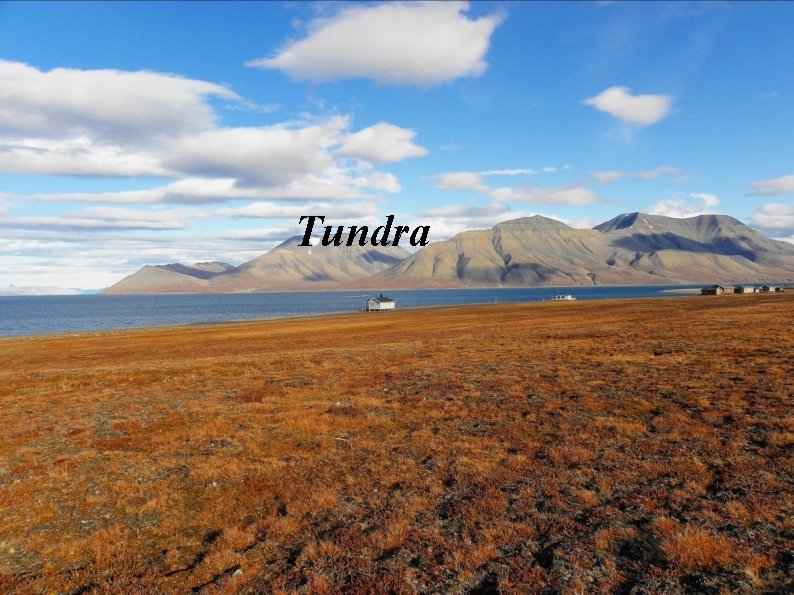
Tundra
Arctic Tundra Arctic tundra occurs in the far Northern Hemisphere, north of the taiga belt. The word "tundra" usually refers only to the areas where the subsoil is permafrost, or permanently frozen soil. Permafrost tundra includes vast areas of northern Russia and Canada. There are two main seasons, winter and summer, in the polar tundra areas. During the winter it is very cold and dark, with the average temperature around − 28 °C (− 18 °F), sometimes dipping as low as − 50 °C (− 58 °F). Generally daytime temperatures during the summer rise to about 12 °C (54 °F) but can often drop to 3 °C (37 °F) or even below freezing.
Arctic Tundra Cont. The tundra is a very windy area, with winds often blowing upwards of 50– 100 km/h (30– 60 mph). However, in terms of precipitation, it is desert-like, with only about 15– 25 cm (6– 10 in) falling per year (the summer is typically the season of maximum precipitation) The biodiversity of the tundras is low: 1, 700 species of vascular plants and only 48 land mammals can be found, although millions of birds migrate there each year for the marshes. There also a few fish species such as the flatfish. There are few species with large populations. Notable animals in the Arctic tundra include caribou (reindeer), musk ox, arctic hare, arctic fox, snowy owl, lemmings, and polar bears (only the extreme north). Tundra is largely devoid of amphibians such as frogs or lizards.
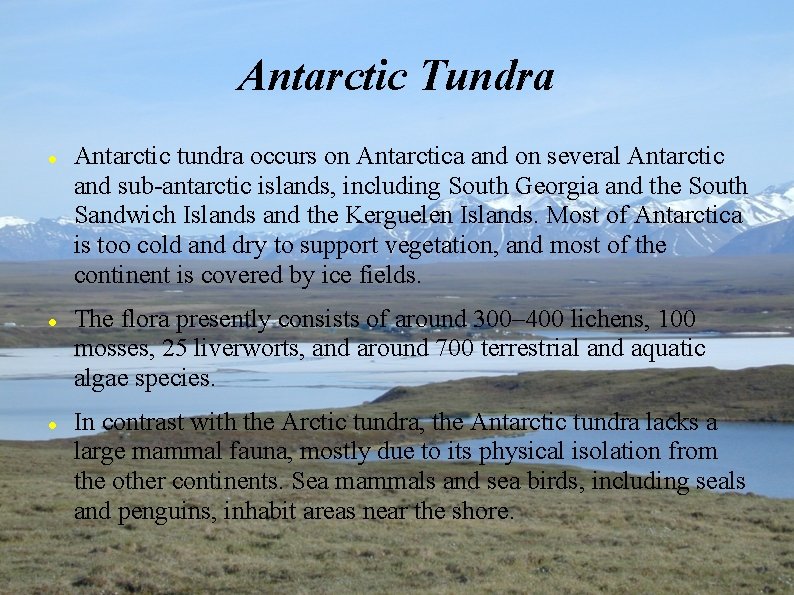
Antarctic Tundra Antarctic tundra occurs on Antarctica and on several Antarctic and sub-antarctic islands, including South Georgia and the South Sandwich Islands and the Kerguelen Islands. Most of Antarctica is too cold and dry to support vegetation, and most of the continent is covered by ice fields. The flora presently consists of around 300– 400 lichens, 100 mosses, 25 liverworts, and around 700 terrestrial and aquatic algae species. In contrast with the Arctic tundra, the Antarctic tundra lacks a large mammal fauna, mostly due to its physical isolation from the other continents. Sea mammals and sea birds, including seals and penguins, inhabit areas near the shore.
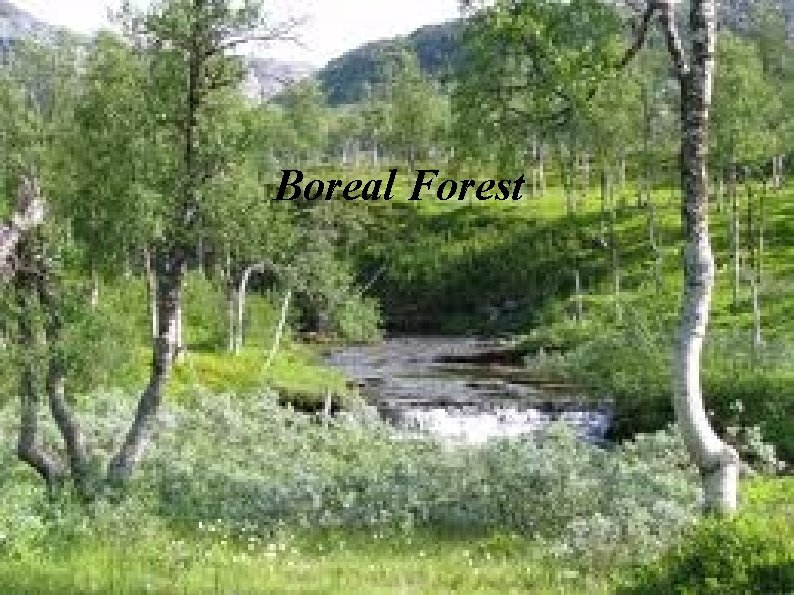
Boreal Forest
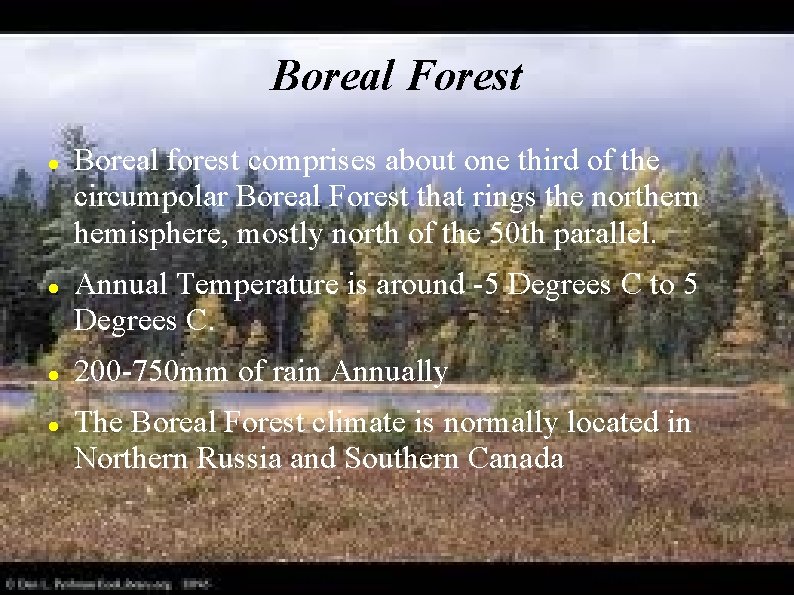
Boreal Forest Boreal forest comprises about one third of the circumpolar Boreal Forest that rings the northern hemisphere, mostly north of the 50 th parallel. Annual Temperature is around -5 Degrees C to 5 Degrees C. 200 -750 mm of rain Annually The Boreal Forest climate is normally located in Northern Russia and Southern Canada
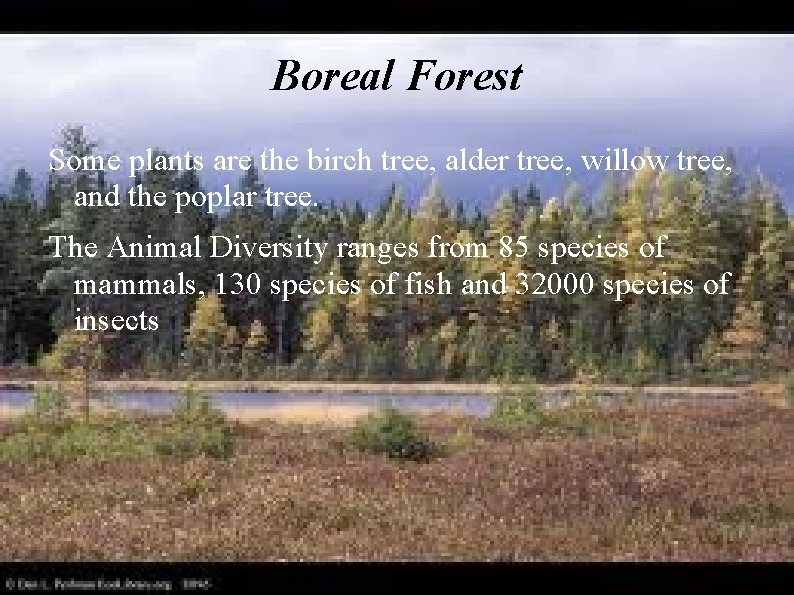
Boreal Forest Some plants are the birch tree, alder tree, willow tree, and the poplar tree. The Animal Diversity ranges from 85 species of mammals, 130 species of fish and 32000 species of insects
- Slides: 8