
Tuna Helicopters You need to understand there are
![Landing 1] Heli approaching “set up point” bias to true wind 2] Heli matching](https://slidetodoc.com/presentation_image_h/0348df5a8e744ae317bce144f75da7d7/image-6.jpg "Landing 1] Heli approaching “set up point” bias to true wind 2] Heli matching")
![Take Off 1] RRPM in green, frictions off, before final tie down off (Mechanic](https://slidetodoc.com/presentation_image_h/0348df5a8e744ae317bce144f75da7d7/image-13.jpg "Take Off 1] RRPM in green, frictions off, before final tie down off (Mechanic")
- Slides: 46
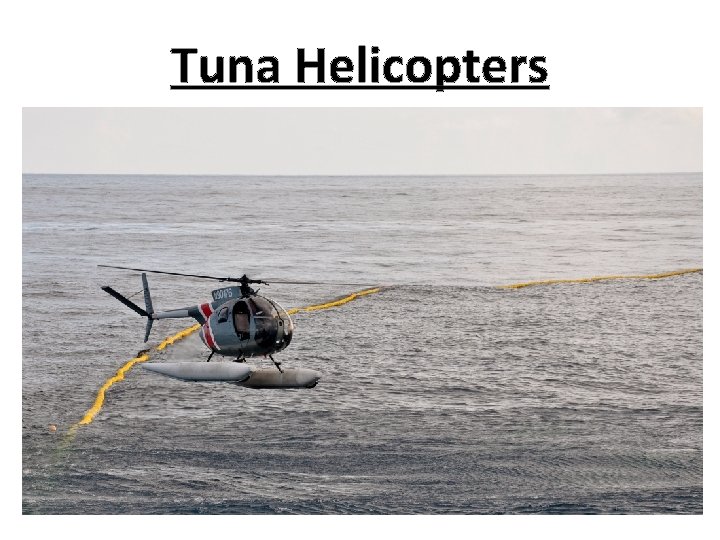
Tuna Helicopters
You need to understand there are many ways to do everything and no one way will work in all the situations you find yourself. Everything in here is only, ‘My Take’ on things, gained after working for Hansen Helicopters, on Fair Victory, during the last 7 months. Boats are a very dynamic environment and everything must to be tailored to the conditions at the time. Every boat, every takeoff and every landing will be different. Feel free you use any or all of this and adapt it as you wish to suit your needs and experience. My advice is, talk to every pilot you can and take what is useful from each of them. Some will agree with me, but others will tell you there is only ‘Their Way’, and if you do it any differently, you will die. What I have put in here is as accurate as I can be, to the way I fly. So far it has kept me alive, there is no guarantee it will do the same for you. Most tuna helicopter accidents are pilot error. I hope each of you find at least some of this useful. “Listen to everybody, learn from all of them”. Ralph Greenaway 02/03/10
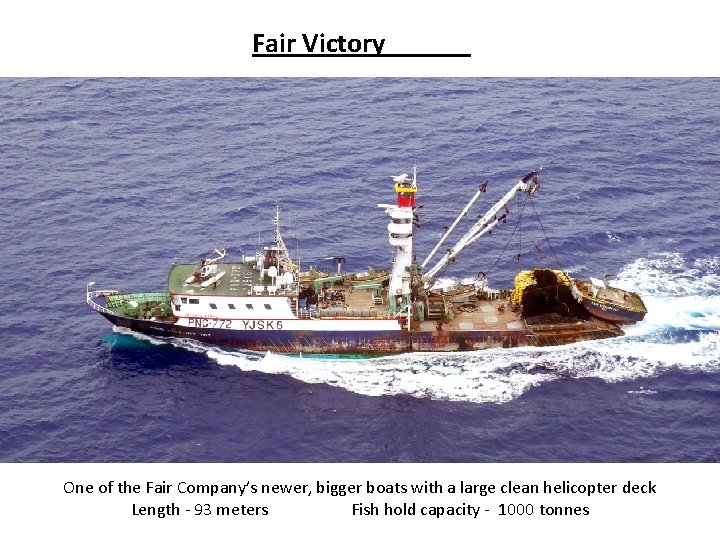
Fair Victory One of the Fair Company’s newer, bigger boats with a large clean helicopter deck Length - 93 meters Fish hold capacity - 1000 tonnes
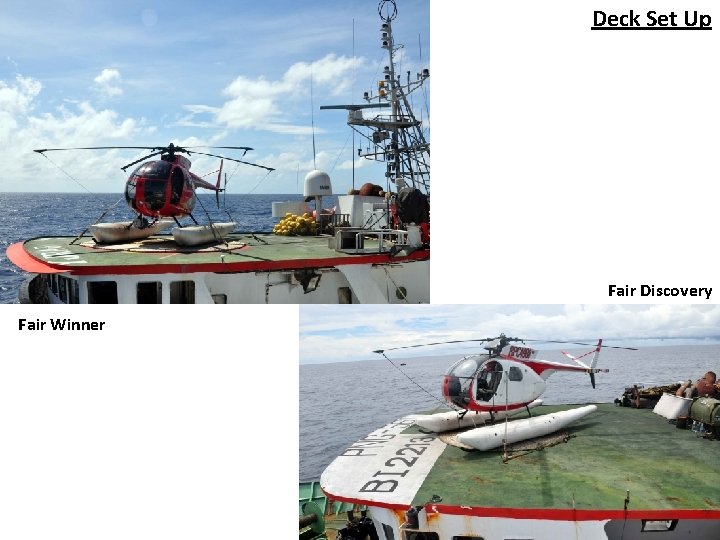
Deck Set Up Fair Discovery Fair Winner
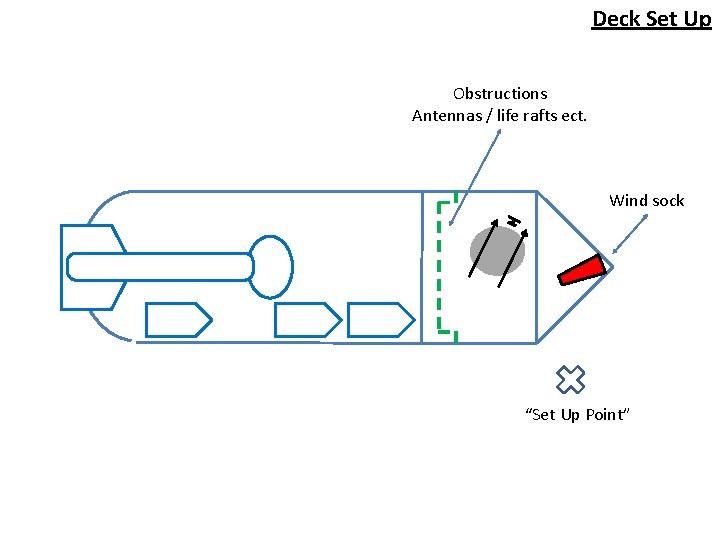
Deck Set Up Obstructions Antennas / life rafts ect. Wind sock “Set Up Point”
Landing 1] Heli approaching “set up point” bias to true wind 2] Heli matching boat speed, rotated to final landing angle, all power / pedal in ( hang off and get feel for boats movement in waves until happy to commit ) (My boat gives 3 large pitches followed by lull then 3 more large pitches) 3] Heli zero speeded to deck (ignore true wind, fly relative wind) ( ensure enough height to clear decks maximum lift due to wave action ) ( before DP engine failure = water landing , after DP committed to deck ) ( Attempt to time landing for boat at top of wave, with deck as level as possible ) “Do not hover, commit and land or Go around” “Do not back up over deck, go around” 3 DP Line “If in doubt go around” (RRPM in green until first tie down is on) (from 1 -2 I fly relative to water) (from 2 -3 I fly relative to deck) 1 2 With practice transition from 1 -3 becomes smooth Only pausing at 2 in bad weather [1]
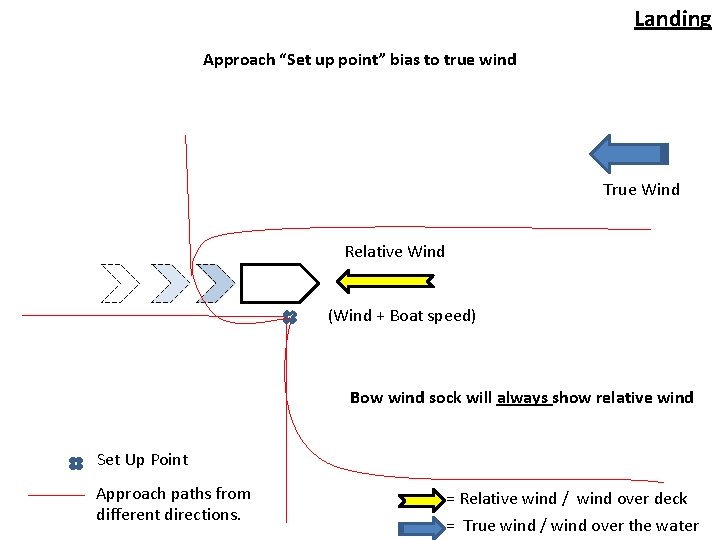
Landing Approach “Set up point” bias to true wind True Wind Relative Wind (Wind + Boat speed) Bow wind sock will always show relative wind Set Up Point Approach paths from different directions. = Relative wind / wind over deck = True wind / wind over the water
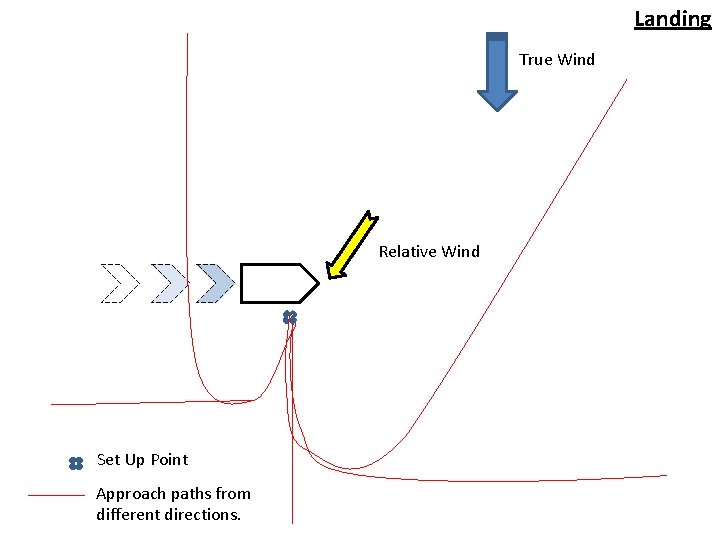
Landing True Wind Relative Wind Set Up Point Approach paths from different directions.
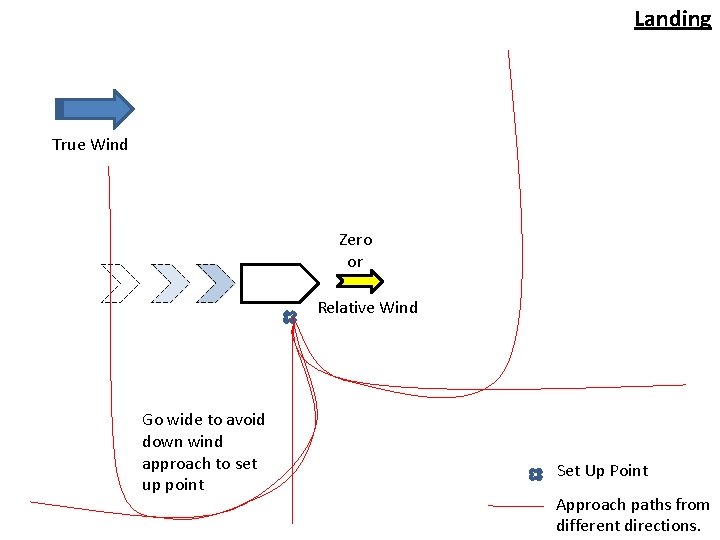
Landing True Wind Zero or Relative Wind Go wide to avoid down wind approach to set up point Set Up Point Approach paths from different directions.
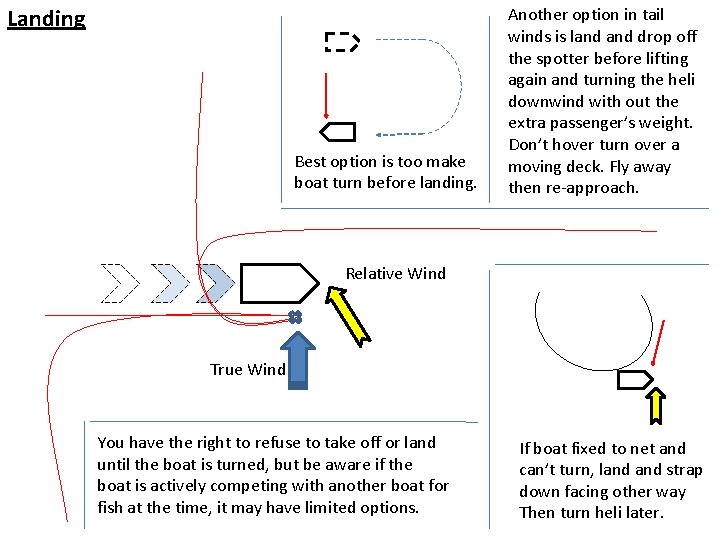
Landing Best option is too make boat turn before landing. Another option in tail winds is land drop off the spotter before lifting again and turning the heli downwind with out the extra passenger’s weight. Don’t hover turn over a moving deck. Fly away then re-approach. Relative Wind True Wind You have the right to refuse to take off or land until the boat is turned, but be aware if the boat is actively competing with another boat for fish at the time, it may have limited options. If boat fixed to net and can’t turn, land strap down facing other way Then turn heli later.
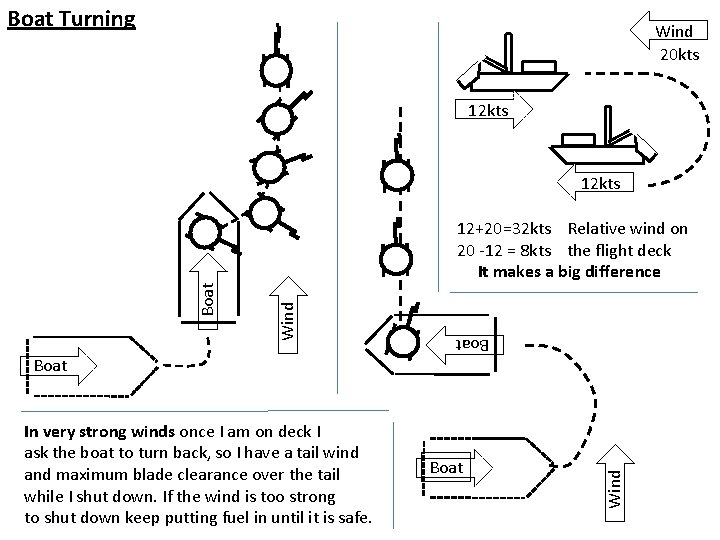
Boat Turning Wind 20 kts 12 kts In very strong winds once I am on deck I ask the boat to turn back, so I have a tail wind and maximum blade clearance over the tail while I shut down. If the wind is too strong to shut down keep putting fuel in until it is safe. Boat Wind Boat 12+20=32 kts Relative wind on 20 -12 = 8 kts the flight deck It makes a big difference
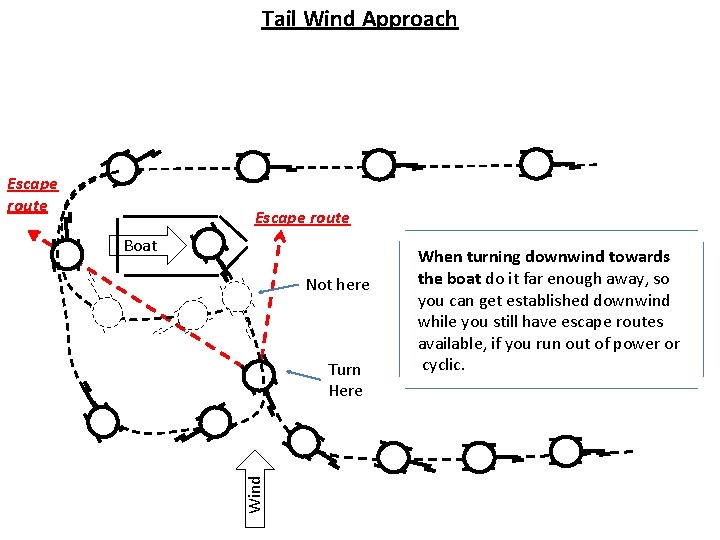
Tail Wind Approach Escape route Boat Not here Wind Turn Here When turning downwind towards the boat do it far enough away, so you can get established downwind while you still have escape routes available, if you run out of power or cyclic.
Take Off 1] RRPM in green, frictions off, before final tie down off (Mechanic stands in front of heli and signals “clear”) (Don’t trust him check yourself) (Mechanic clear of deck, in stair well before lift off) (Heli light on skids and balanced) (Time lift for top of wave with deck as level as possible) (Heli up to 3 ft hover) (Momentary pause to check heli snag free) 2] Fly clear of deck matching boats speed (Fly relative wind) (Head out of the door watching deck until TR clear) (Keep boat in sight until well clear) 3] Establish normal climb out (from 1 -2 I fly relative to deck) (from 2 I fly relative to water) (If strong tailwind ask the boat to turn) 3 3 2 DP Line 1 [[[ A lot of pilots have died because tie downs were left in place during take off ]]]
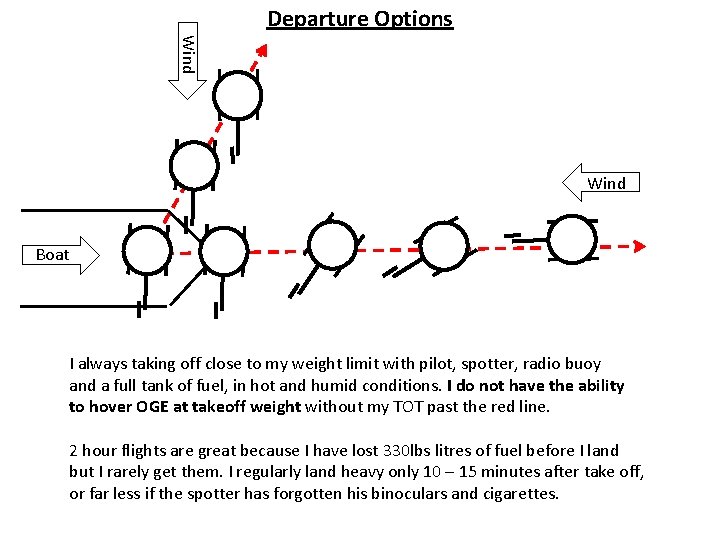
Departure Options Wind Boat I always taking off close to my weight limit with pilot, spotter, radio buoy and a full tank of fuel, in hot and humid conditions. I do not have the ability to hover OGE at takeoff weight without my TOT past the red line. 2 hour flights are great because I have lost 330 lbs litres of fuel before I land but I rarely get them. I regularly land heavy only 10 – 15 minutes after take off, or far less if the spotter has forgotten his binoculars and cigarettes.
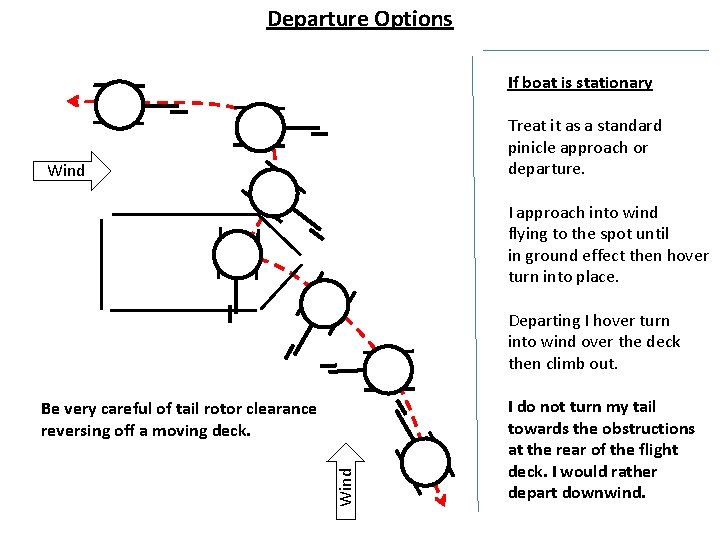
Departure Options If boat is stationary Treat it as a standard pinicle approach or departure. Wind I approach into wind flying to the spot until in ground effect then hover turn into place. Departing I hover turn into wind over the deck then climb out. Wind Be very careful of tail rotor clearance reversing off a moving deck. I do not turn my tail towards the obstructions at the rear of the flight deck. I would rather depart downwind.
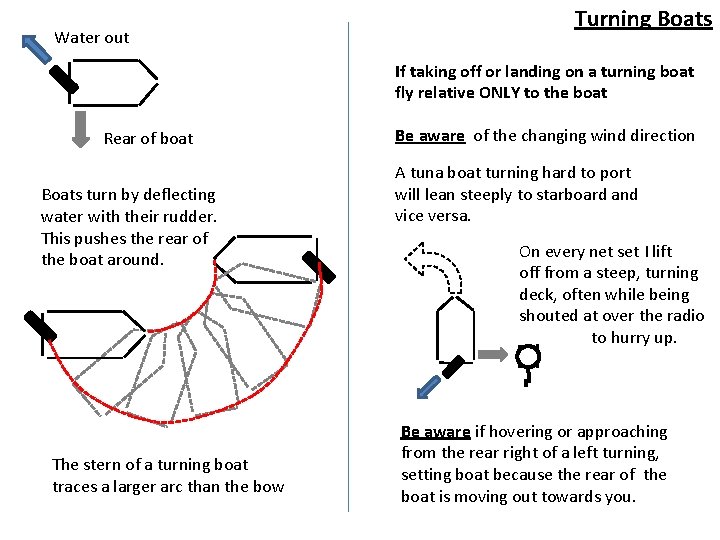
Water out Turning Boats If taking off or landing on a turning boat fly relative ONLY to the boat Rear of boat Boats turn by deflecting water with their rudder. This pushes the rear of the boat around. The stern of a turning boat traces a larger arc than the bow Be aware of the changing wind direction A tuna boat turning hard to port will lean steeply to starboard and vice versa. On every net set I lift off from a steep, turning deck, often while being shouted at over the radio to hurry up. Be aware if hovering or approaching from the rear right of a left turning, setting boat because the rear of the boat is moving out towards you.
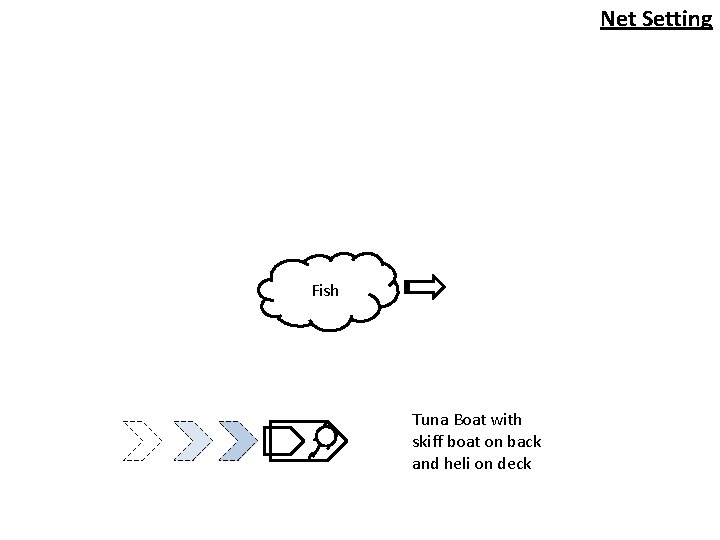
Net Setting Fish Tuna Boat with skiff boat on back and heli on deck
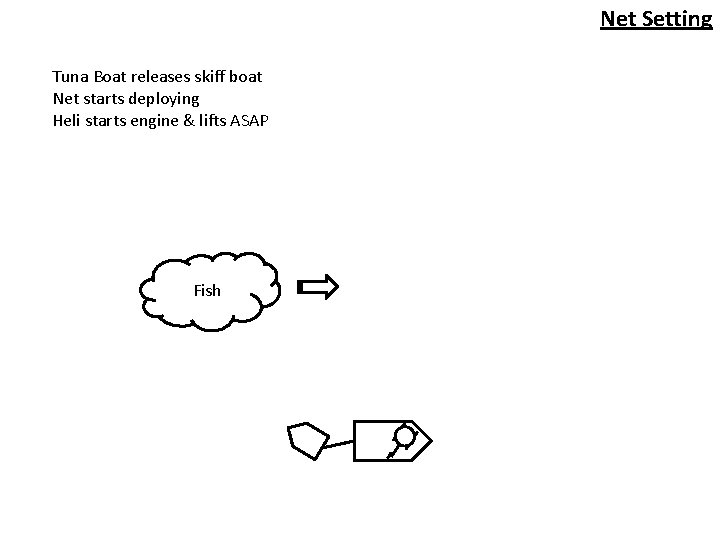
Net Setting Tuna Boat releases skiff boat Net starts deploying Heli starts engine & lifts ASAP Fish
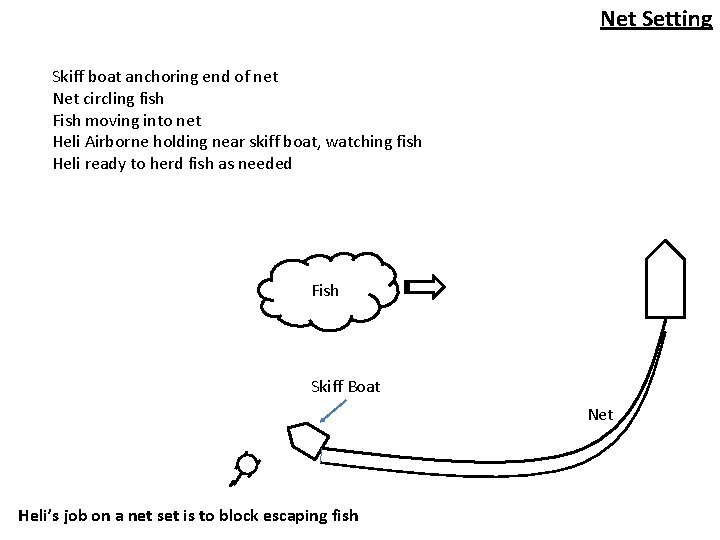
Net Setting Skiff boat anchoring end of net Net circling fish Fish moving into net Heli Airborne holding near skiff boat, watching fish Heli ready to herd fish as needed Fish Skiff Boat Net Heli’s job on a net set is to block escaping fish
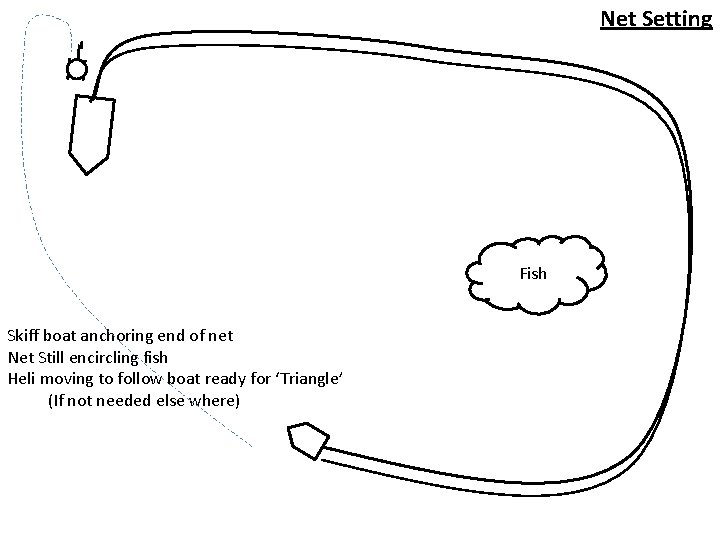
Net Setting Fish Skiff boat anchoring end of net Net Still encircling fish Heli moving to follow boat ready for ‘Triangle’ (If not needed else where)
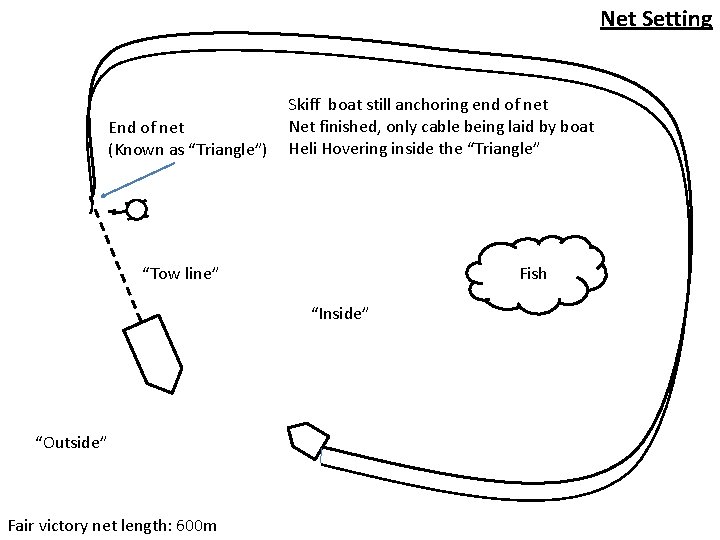
Net Setting End of net (Known as “Triangle”) Skiff boat still anchoring end of net Net finished, only cable being laid by boat Heli Hovering inside the “Triangle” “Tow line” Fish “Inside” “Outside” Fair victory net length: 600 m
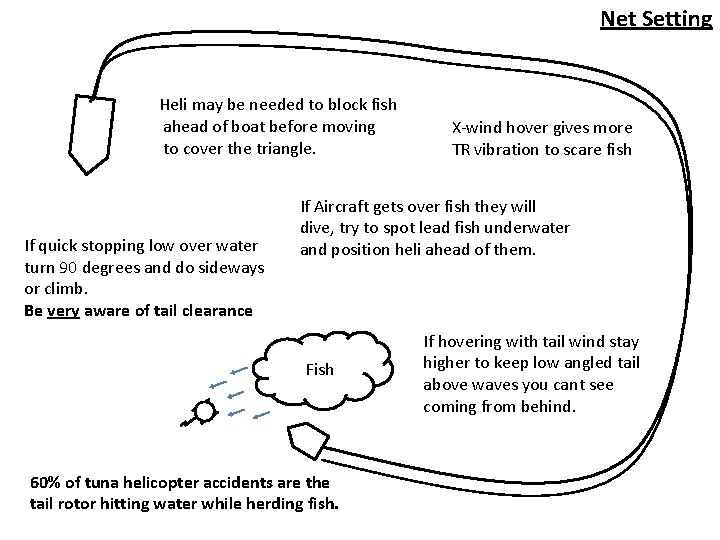
Net Setting Heli may be needed to block fish ahead of boat before moving to cover the triangle. If quick stopping low over water turn 90 degrees and do sideways or climb. Be very aware of tail clearance X-wind hover gives more TR vibration to scare fish If Aircraft gets over fish they will dive, try to spot lead fish underwater and position heli ahead of them. Fish 60% of tuna helicopter accidents are the tail rotor hitting water while herding fish. If hovering with tail wind stay higher to keep low angled tail above waves you cant see coming from behind.
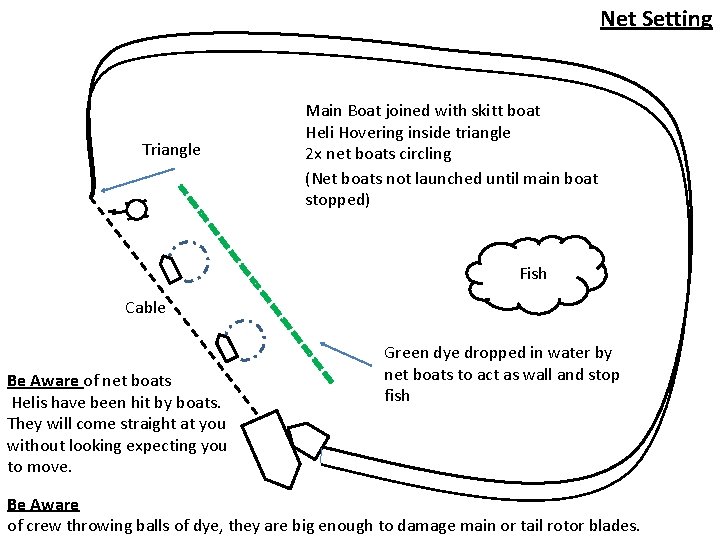
Net Setting Triangle Main Boat joined with skitt boat Heli Hovering inside triangle 2 x net boats circling (Net boats not launched until main boat stopped) Fish Cable Be Aware of net boats Helis have been hit by boats. They will come straight at you without looking expecting you to move. Green dye dropped in water by net boats to act as wall and stop fish Be Aware of crew throwing balls of dye, they are big enough to damage main or tail rotor blades.
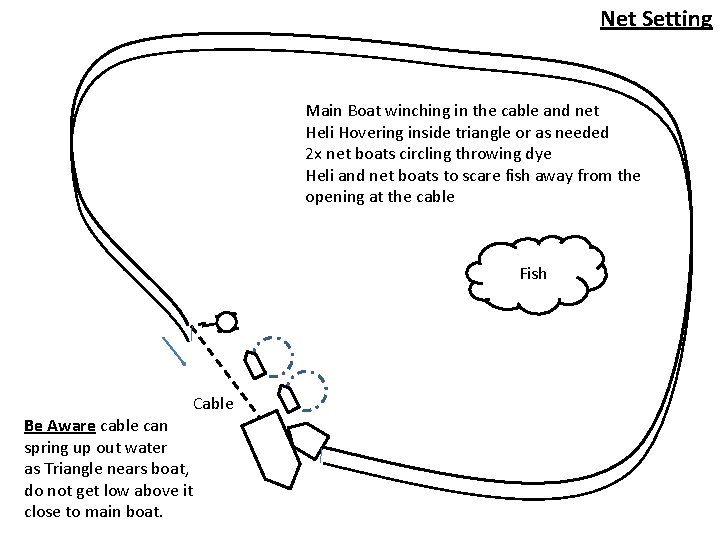
Net Setting Main Boat winching in the cable and net Heli Hovering inside triangle or as needed 2 x net boats circling throwing dye Heli and net boats to scare fish away from the opening at the cable Fish Cable Be Aware cable can spring up out water as Triangle nears boat, do not get low above it close to main boat.
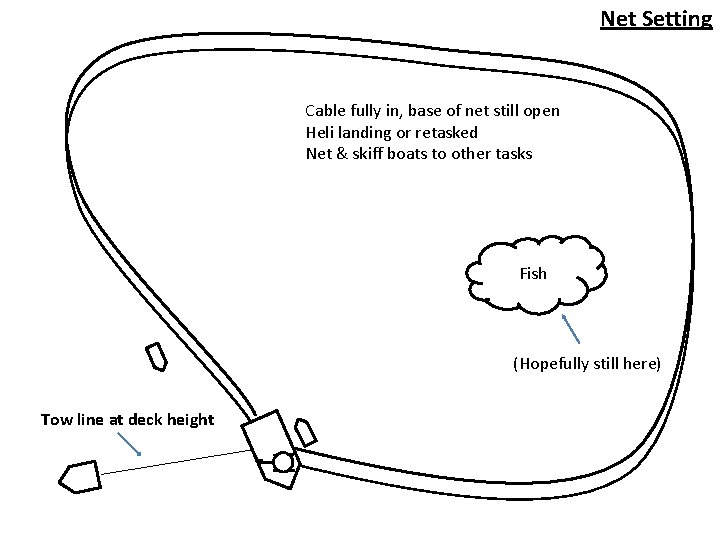
Net Setting Cable fully in, base of net still open Heli landing or retasked Net & skiff boats to other tasks Fish (Hopefully still here) Tow line at deck height
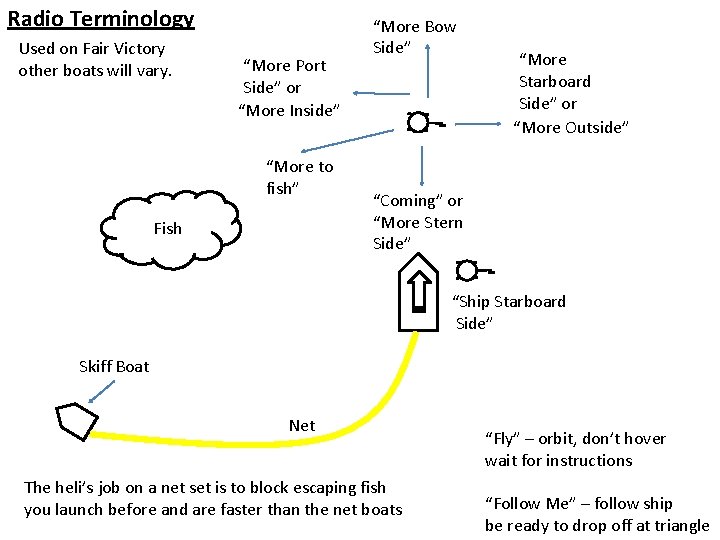
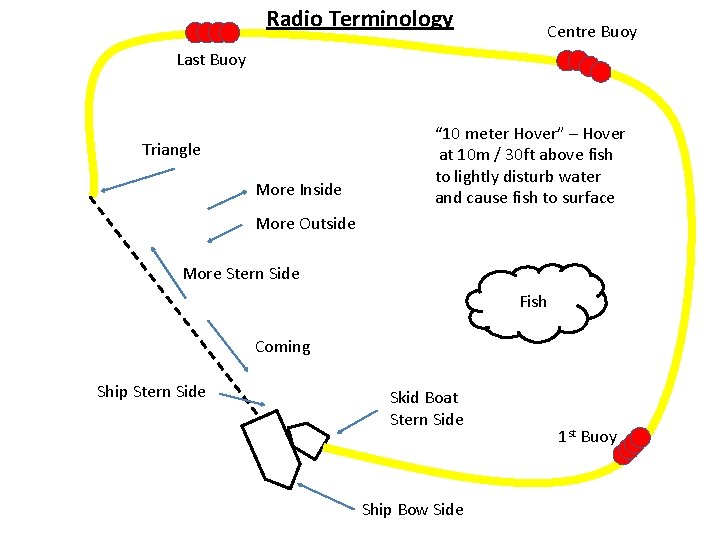
Radio Terminology Used on Fair Victory other boats will vary. “More Port Side” or “More Inside” “More to fish” Fish “More Bow Side” “More Starboard Side” or “More Outside” “Coming” or “More Stern Side” “Ship Starboard Side” Skiff Boat Net The heli’s job on a net set is to block escaping fish you launch before and are faster than the net boats “Fly” – orbit, don’t hover wait for instructions “Follow Me” – follow ship be ready to drop off at triangle
Radio Terminology Centre Buoy Last Buoy Triangle More Inside “ 10 meter Hover” – Hover at 10 m / 30 ft above fish to lightly disturb water and cause fish to surface More Outside More Stern Side Fish Coming Ship Stern Side Skid Boat Stern Side Ship Bow Side 1 st Buoy
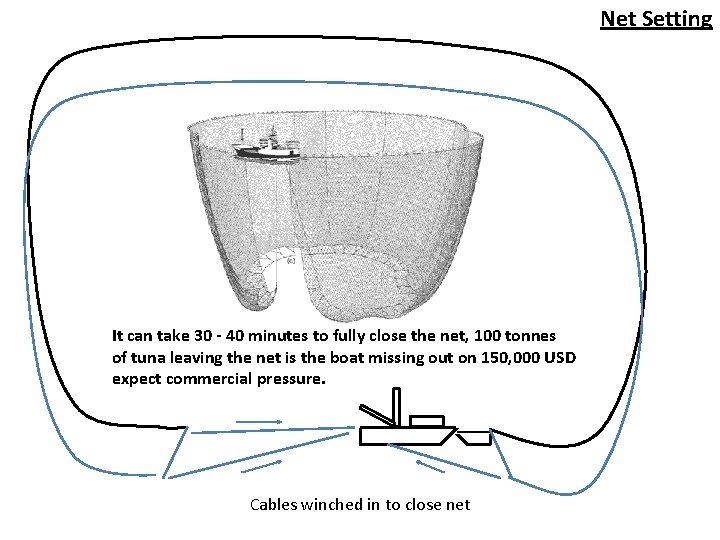
Net Setting It can take 30 - 40 minutes to fully close the net, 100 tonnes of tuna leaving the net is the boat missing out on 150, 000 USD expect commercial pressure. Cables winched in to close net
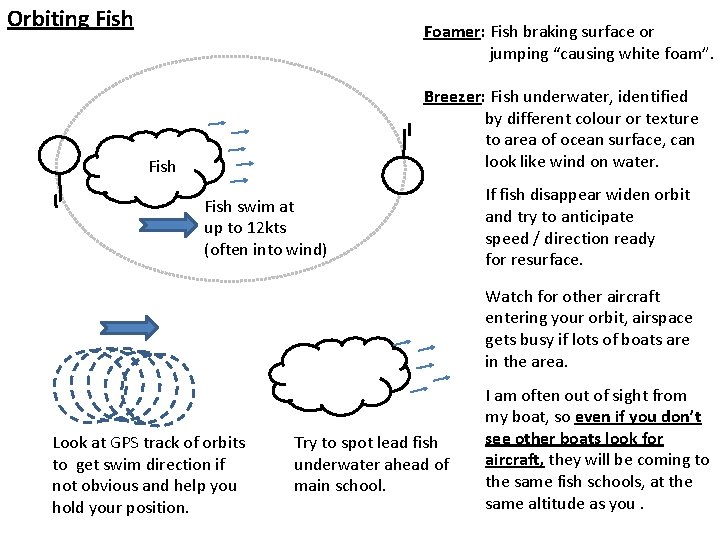
Orbiting Fish Foamer: Fish braking surface or jumping “causing white foam”. Breezer: Fish underwater, identified by different colour or texture to area of ocean surface, can look like wind on water. Fish swim at up to 12 kts (often into wind) If fish disappear widen orbit and try to anticipate speed / direction ready for resurface. Watch for other aircraft entering your orbit, airspace gets busy if lots of boats are in the area. Look at GPS track of orbits to get swim direction if not obvious and help you hold your position. Try to spot lead fish underwater ahead of main school. I am often out of sight from my boat, so even if you don’t see other boats look for aircraft, they will be coming to the same fish schools, at the same altitude as you.
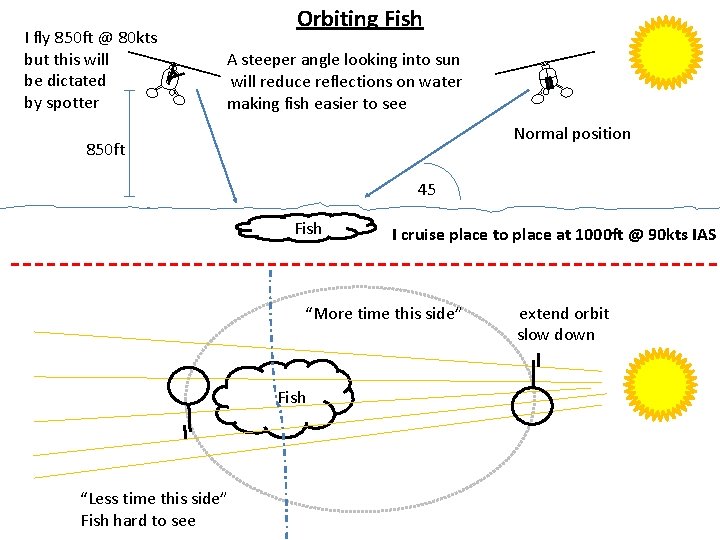
I fly 850 ft @ 80 kts but this will be dictated by spotter Orbiting Fish A steeper angle looking into sun will reduce reflections on water making fish easier to see Normal position 850 ft 45 Fish I cruise place to place at 1000 ft @ 90 kts IAS “More time this side” Fish “Less time this side” Fish hard to see extend orbit slow down
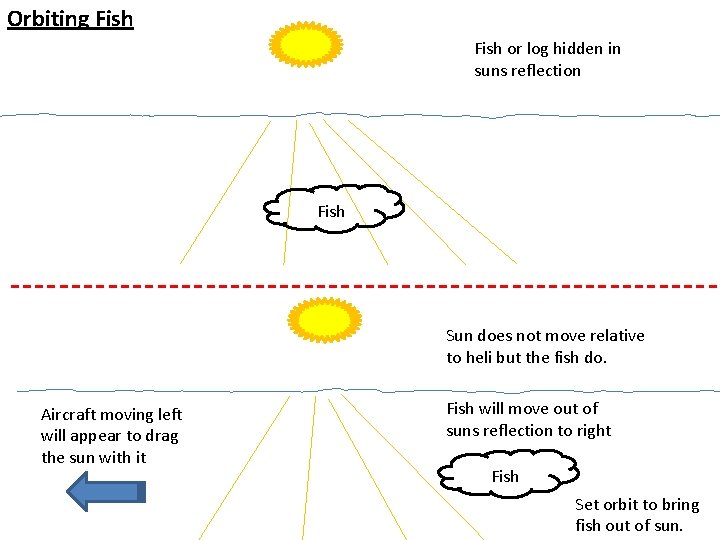
Orbiting Fish or log hidden in suns reflection Fish Sun does not move relative to heli but the fish do. Aircraft moving left will appear to drag the sun with it Fish will move out of suns reflection to right Fish Set orbit to bring fish out of sun.
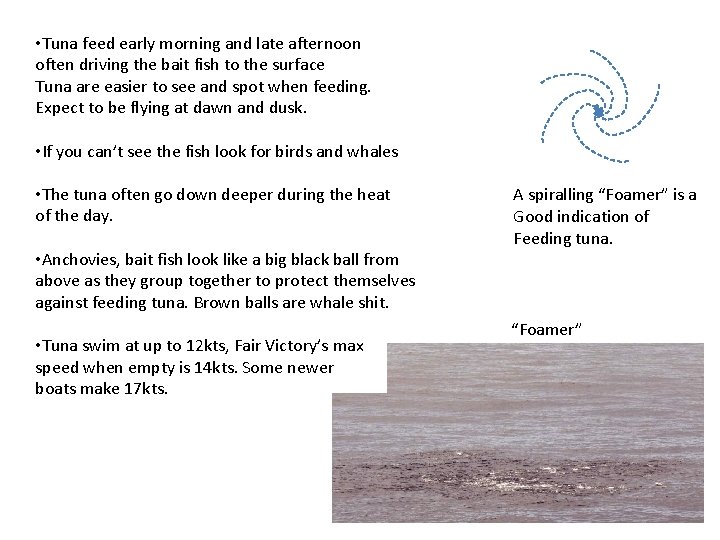
• Tuna feed early morning and late afternoon often driving the bait fish to the surface Tuna are easier to see and spot when feeding. Expect to be flying at dawn and dusk. • If you can’t see the fish look for birds and whales • The tuna often go down deeper during the heat of the day. • Anchovies, bait fish look like a big black ball from above as they group together to protect themselves against feeding tuna. Brown balls are whale shit. • Tuna swim at up to 12 kts, Fair Victory’s max speed when empty is 14 kts. Some newer boats make 17 kts. A spiralling “Foamer” is a Good indication of Feeding tuna. “Foamer”
• The predominant wind direction over the Pacific within a few degrees north or south of the equator is Easterly. Westerly winds usually bring bad weather. • The wind direction normally stays constant for a 2 hour flight. Assess wind direction before takeoff so you know where it is when you need it. • Winds above 10 kts produce white caps making the wind direction easier to assess. • Light winds can be difficult to assess, if approaching a hover open water and unsure of wind direction approach as if down wind to be safe. • November to April is the wet season in the Pacific Islands • Wave direction if often different from local wind direction The waves my have been formed by a storm 1000’s of miles away. • Wind speed and direction can change dramatically near cumulus clouds with or without visible rain. Expect turbulence approaching even small cumulus cloud. The greater the vertical rise of the cloud the greater the effects. • Most rain is isolated showers try to box around rather than fly through rain although it is not always possible to avoid it all.
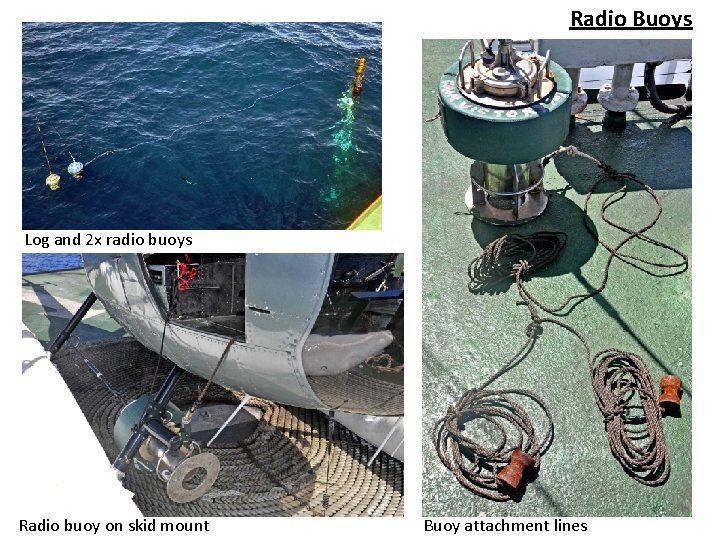
Radio Buoys Log and 2 x radio buoys Radio buoy on skid mount Buoy attachment lines
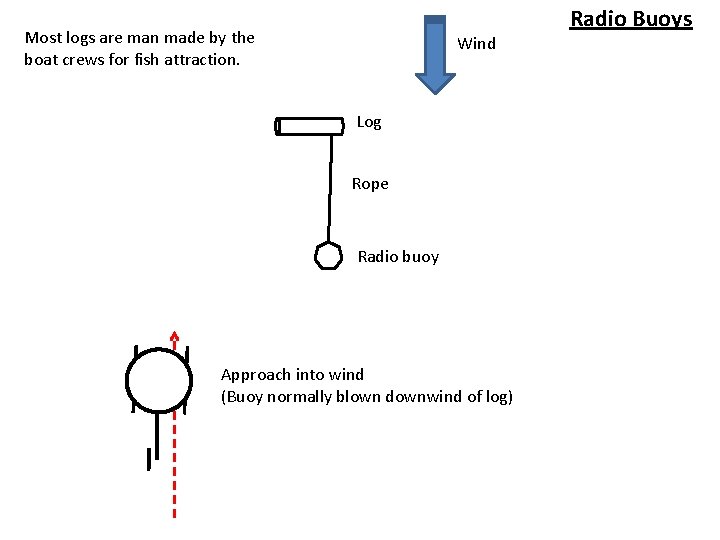
Most logs are man made by the boat crews for fish attraction. Wind Log Rope Radio buoy Approach into wind (Buoy normally blown downwind of log) Radio Buoys
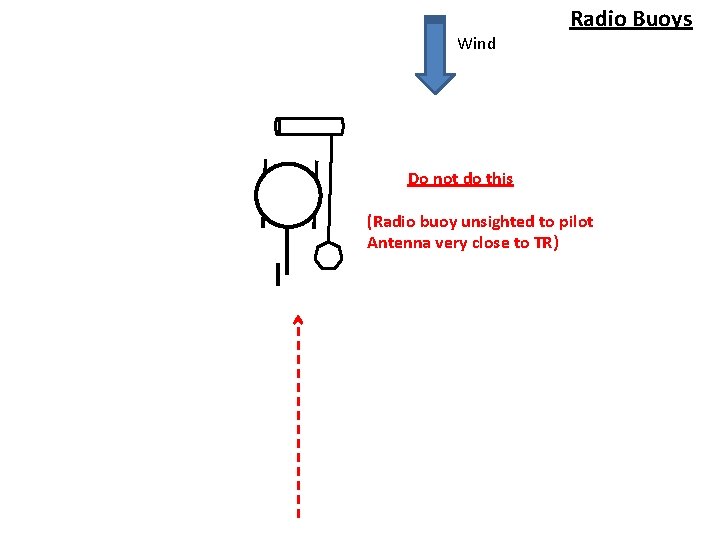
Wind Radio Buoys Do not do this (Radio buoy unsighted to pilot Antenna very close to TR)
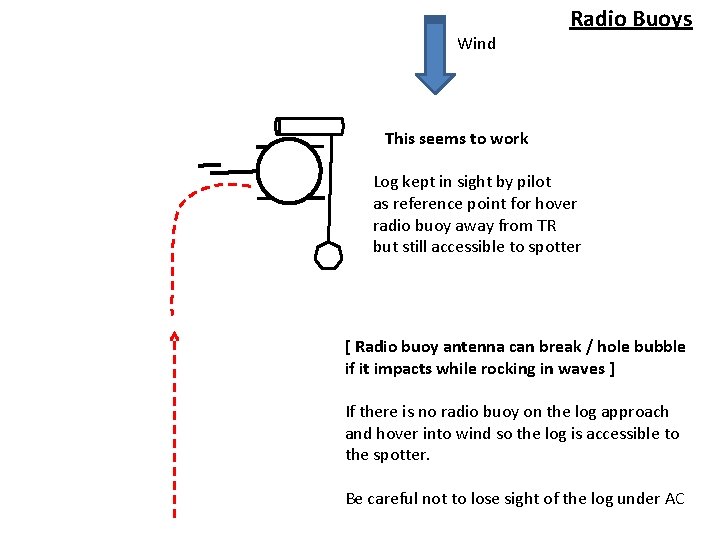
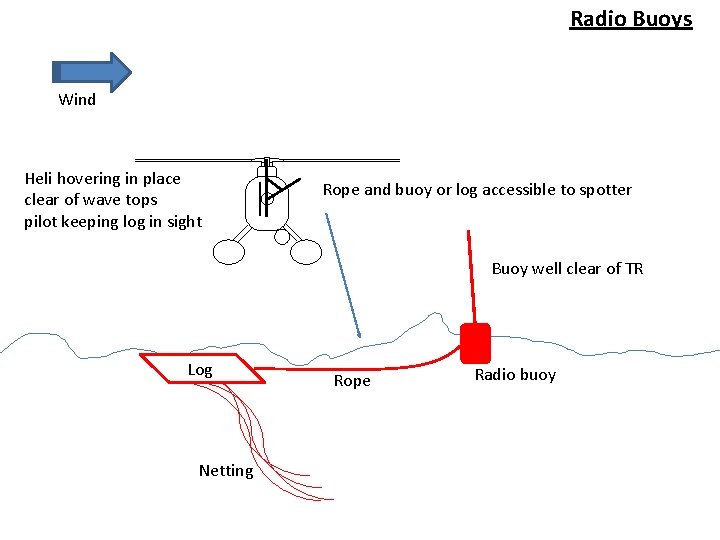
Wind Radio Buoys This seems to work Log kept in sight by pilot as reference point for hover radio buoy away from TR but still accessible to spotter [ Radio buoy antenna can break / hole bubble if it impacts while rocking in waves ] If there is no radio buoy on the log approach and hover into wind so the log is accessible to the spotter. Be careful not to lose sight of the log under AC
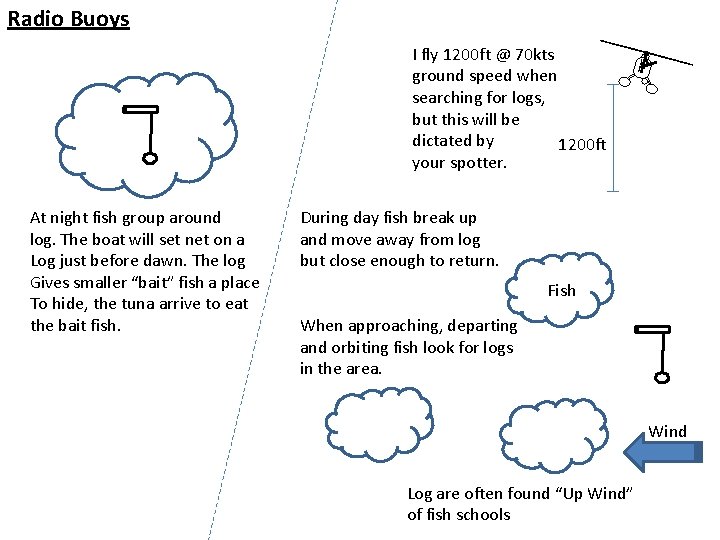
Radio Buoys I fly 1200 ft @ 70 kts ground speed when searching for logs, but this will be dictated by 1200 ft your spotter. At night fish group around log. The boat will set net on a Log just before dawn. The log Gives smaller “bait” fish a place To hide, the tuna arrive to eat the bait fish. During day fish break up and move away from log but close enough to return. Fish When approaching, departing and orbiting fish look for logs in the area. Wind Log are often found “Up Wind” of fish schools
Radio Buoys Wind Heli hovering in place clear of wave tops pilot keeping log in sight Rope and buoy or log accessible to spotter Buoy well clear of TR Log Netting Rope Radio buoy
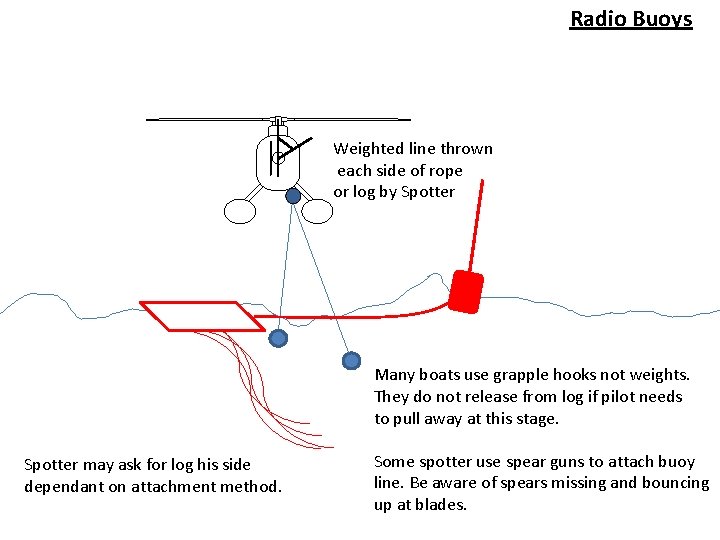
Radio Buoys Weighted line thrown each side of rope or log by Spotter Many boats use grapple hooks not weights. They do not release from log if pilot needs to pull away at this stage. Spotter may ask for log his side dependant on attachment method. Some spotter use spear guns to attach buoy line. Be aware of spears missing and bouncing up at blades.
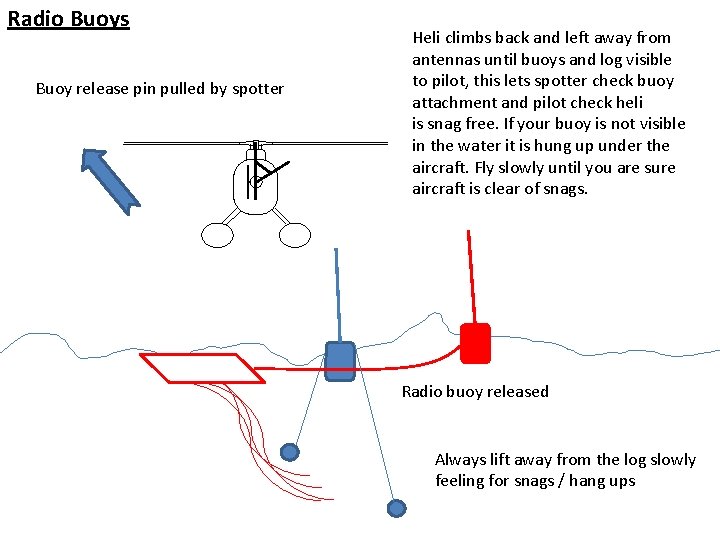
Radio Buoys Buoy release pin pulled by spotter Heli climbs back and left away from antennas until buoys and log visible to pilot, this lets spotter check buoy attachment and pilot check heli is snag free. If your buoy is not visible in the water it is hung up under the aircraft. Fly slowly until you are sure aircraft is clear of snags. Radio buoy released Always lift away from the log slowly feeling for snags / hang ups
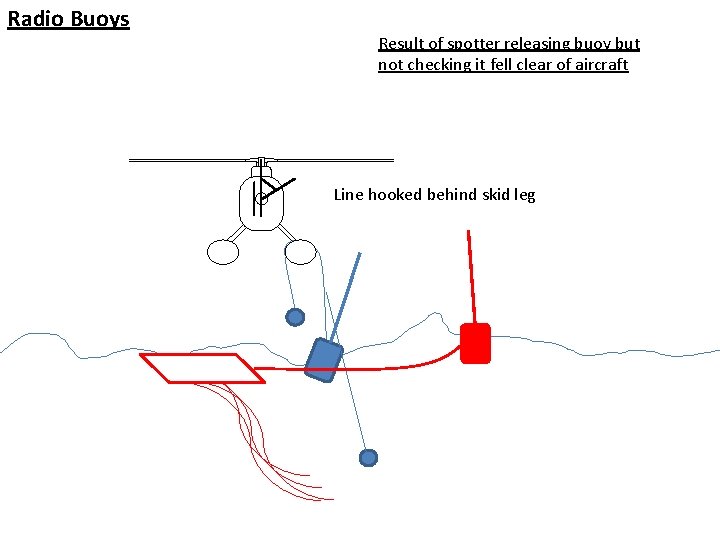
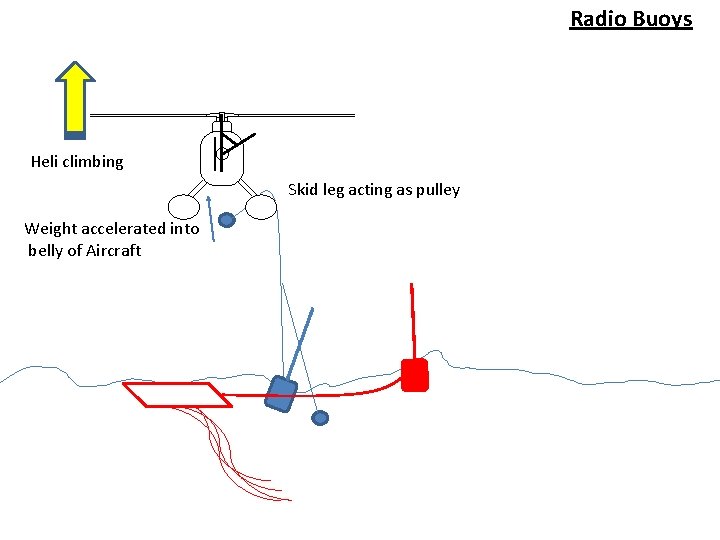
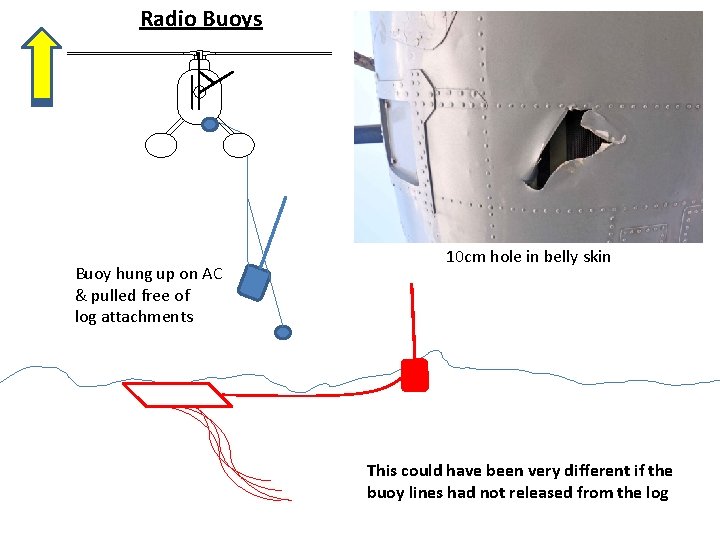
Radio Buoys Result of spotter releasing buoy but not checking it fell clear of aircraft Line hooked behind skid leg
Radio Buoys Heli climbing Skid leg acting as pulley Weight accelerated into belly of Aircraft
Radio Buoys Buoy hung up on AC & pulled free of log attachments 10 cm hole in belly skin This could have been very different if the buoy lines had not released from the log
My Daily Routine I get up at first light, 30 mins before sunrise, to get the heli washed, uncovered and pre flighted. I feel it is more important for me to pre flight than it is for the mechanic as I am the PIC sat in the seat. I usually beat the mechanic there and have her washed with the covers off before he arrives, The mechanic double checks my pre flight when he arrives. [I am still trying to train him to bring coffee] I often fly on net sets in the morning with the sun still below the horizon it is good to be ready early. Depending on location I am out of bed at 04: 30 and in the air before 05: 00. Sunrise time changes every day, it moves 4 minutes for every 1 degree East or West your boat moves. We compressor wash and post flight every evening so the morning is just a check that nothing has changed. If the weather is crap I put the doors and covers back on, if it is good I leave them off. I post flight after every flight so I know the helicopter is ready to go. I always put at least one blade tie on if we leave the flight deck. Wind speeds can change by 25 knts if the boat turns through 180 degrees. If I have hovered on a net set then I wash the whole aircraft in fresh water as soon as I land, if not then she just gets washed in fresh water morning and night. After sunset or when the Fish Master has told me we are done flying for the day, the mechanic and I post flight, compressor wash and then ground run. After the ground run we put on the doors and wash the aircraft again in fresh water before the covers and blade ties go on for the night. I check on the heli many times each day, the last thing I do before I go to bed at night is walk around the aircraft. If the weather is bad enough to wake me at night then I get up and check the heli. Security is officially the mechanics job but I am PIC and I lose out on flying if there is a problem. The worse the weather gets the less the mechanic goes outside to check, if you want the heli checked do it yourself.
Radio Channels Aviation radio 123. 45 Pilot chat net, most pilots monitor this during shut down if other boats are in the area or call other pilots while they are shutting down. I listen to it in flight but can’t chat as we are running 3 other radios. Marine radio Ch 16 156. 800 Should be monitored by every boat at sea Ch 17 156. 850 Mechanic chat net Ch 19 156. 950 Alternate If you need to speak to another pilot and can’t raise them on 123. 45 or Ch 17 call the ships bridge on Ch 16 and ask for “Pilot” then ask them to switch channels. If you want a conversation the boats can’t monitor use 123. 45 in the aircraft then only other tuna pilots and 747’s crossing the pacific will be able to listening in. Don’t bitch about boat crew on a marine radio unless you want it to get back to them. Tunaseiners. com has some interesting tuna boat and helicopter articles.