
TUMORS OF THE URINARY BLADER AND COLLECTING SYSTEM

TUMORS OF THE URINARY BLADER AND COLLECTING SYSTEM Usual Type -Transitional Cell Carcinoma (TCC) Or Urothelial Neoplasm DR SUBHAN ALI R ASSISTANT PROFESSOR
Introduction Bladder cancer accounts for approximately 7% of cancers and 3% of cancer mortality in the United States. About 95% of bladder tumors are of epithelial origin, the remainder being mesenchymal tumors.
Most epithelial tumors are urothelial (transitional cell) type and are thus interchangeably called urothelial or transitional tumors, but squamous and glandular carcinomas also occur. We focus on urothelial tumors and touch briefly on the others.
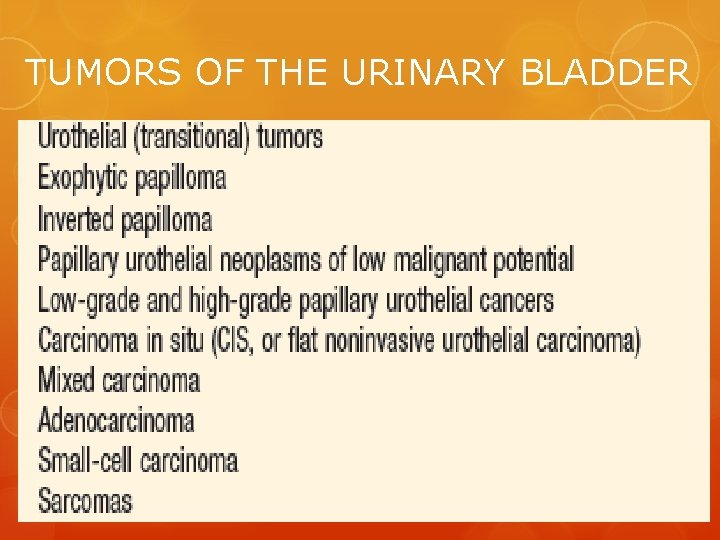
TUMORS OF THE URINARY BLADDER
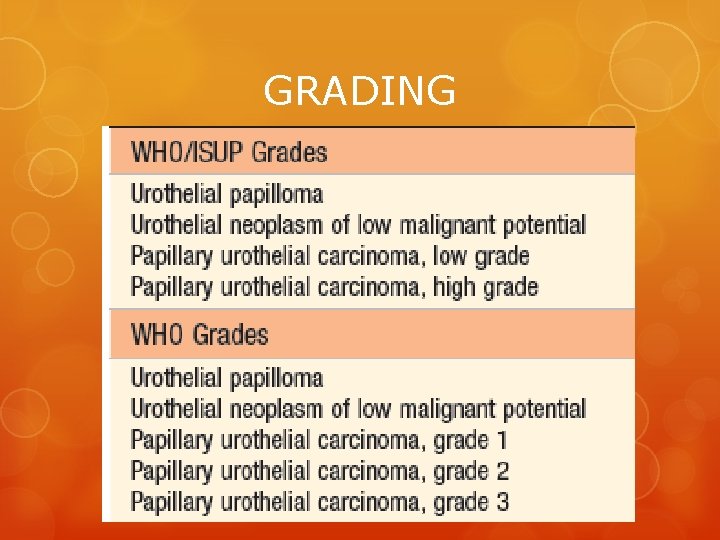
GRADING

EPIDEMINOLOGY The incidence of carcinoma of the bladder is higher in men than in women, in developed than in developing nations, and in urban than in rural dwellers. The male-to-female ratio for urothelial tumors is approximately 3 : 1. About 80% of patients are between 50 and 80 years of age. Bladder cancer, with rare exceptions, is not familial.
PATHOGENESIS Cigarette smoking Exposure to: – beta naphthylamine, Chronic cystitis, Schistosomiasis Drugs such as cyclophosphamide Irradiation

TO AVOID CANCER
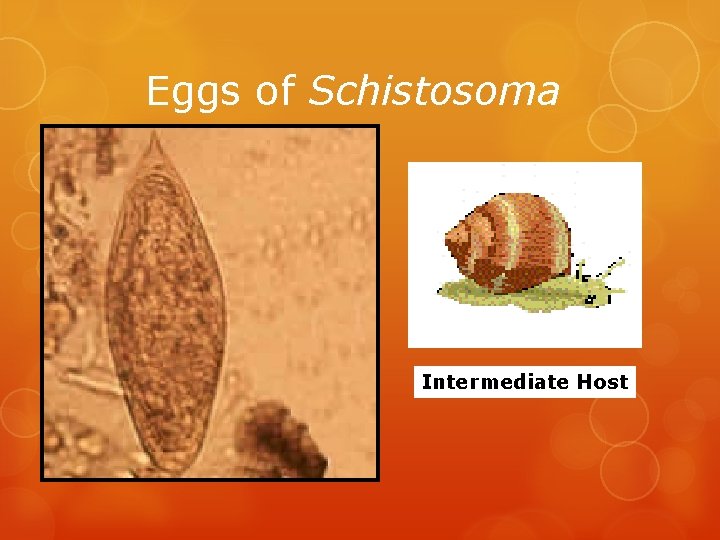
Eggs of Schistosoma spp Intermediate Host

Clinical Course Bladder Carcinoma Painless Hematuria Tumors in the ureter, calyces produce obstructive complication such as hydronephrosis often with pain in the costovertebral angle and hematuria.
Transitional Cell Carcinoma (TCC)
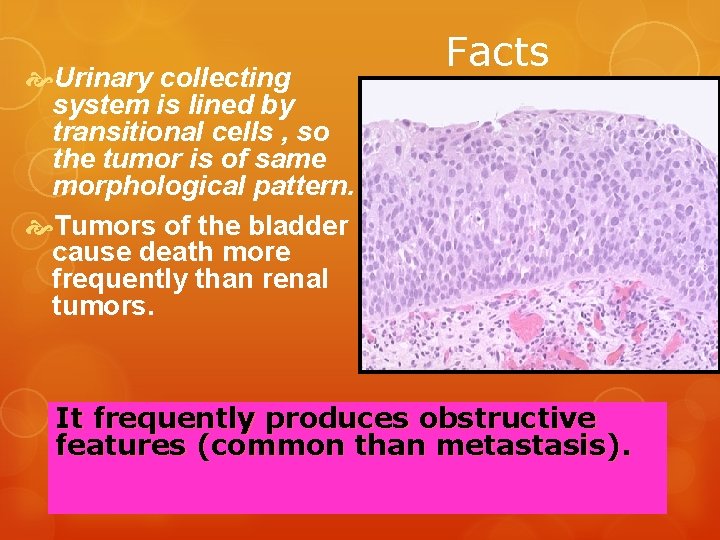
Urinary collecting system is lined by transitional cells , so the tumor is of same morphological pattern. Tumors of the bladder cause death more frequently than renal tumors. Facts It frequently produces obstructive features (common than metastasis).
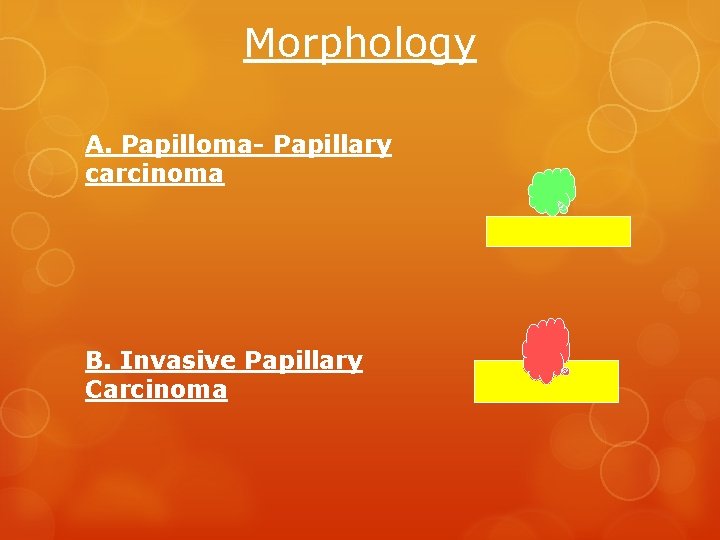
Morphology A. Papilloma- Papillary carcinoma B. Invasive Papillary Carcinoma
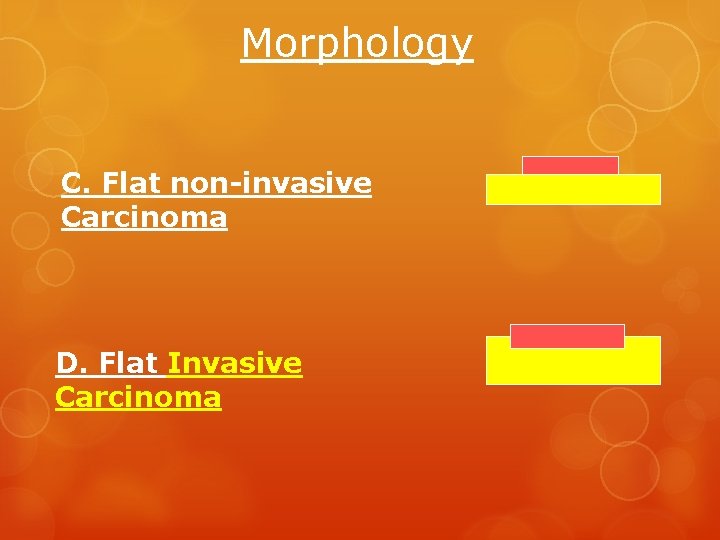
Morphology C. Flat non-invasive Carcinoma D. Flat Invasive Carcinoma
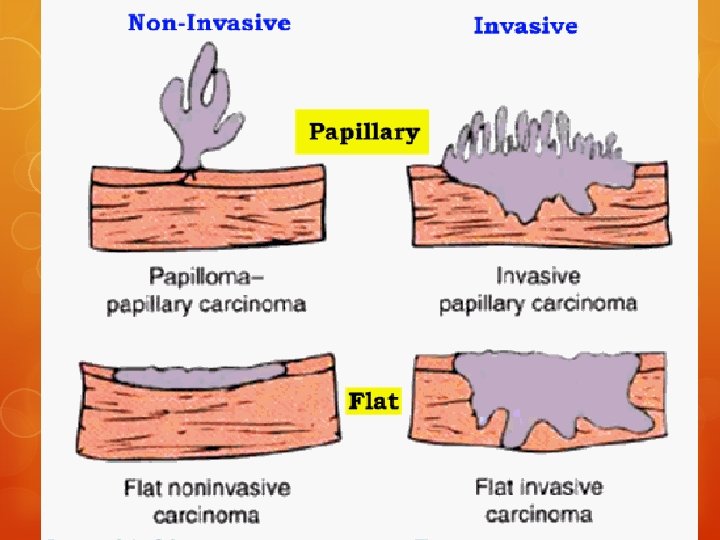
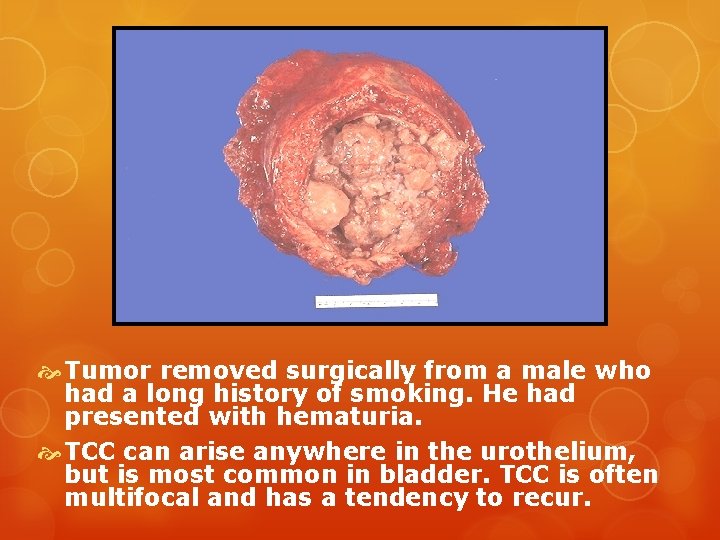
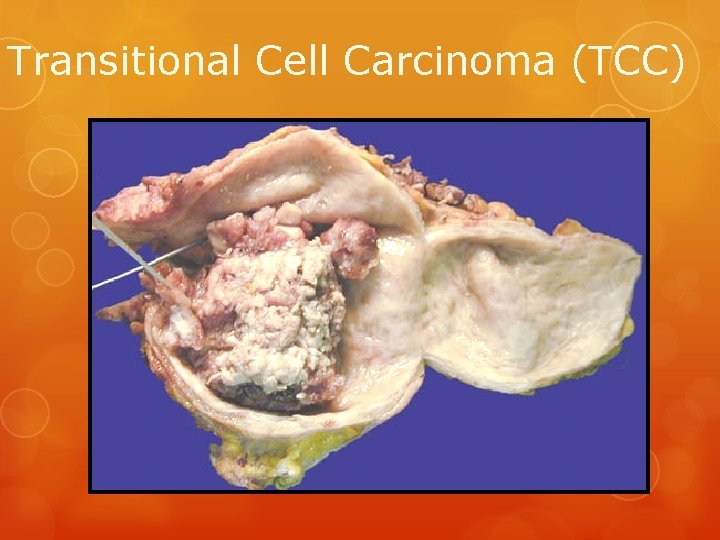
Tumor removed surgically from a male who had a long history of smoking. He had presented with hematuria. TCC can arise anywhere in the urothelium, but is most common in bladder. TCC is often multifocal and has a tendency to recur.
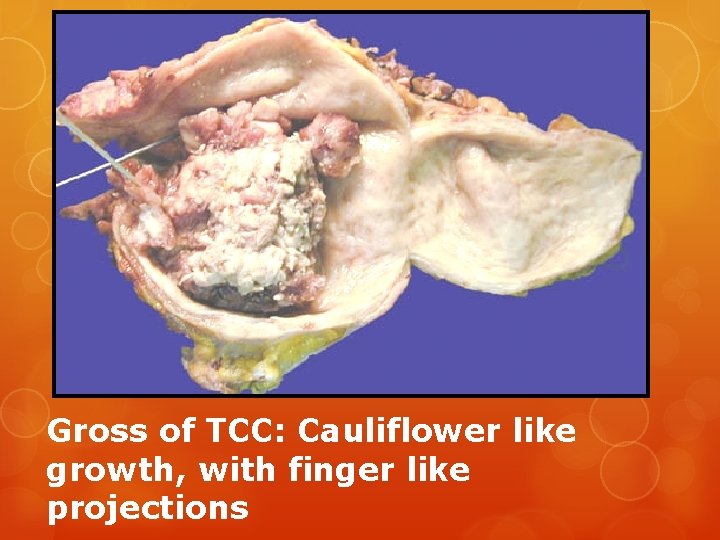
Gross of TCC: Cauliflower like growth, with finger like projections
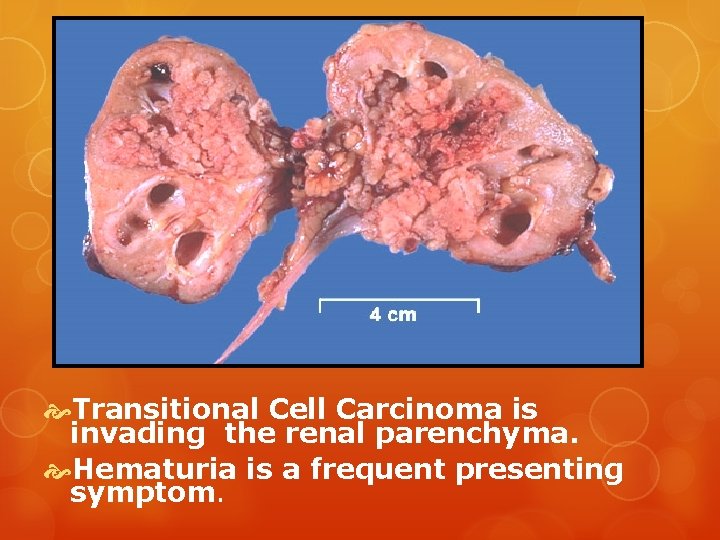
Transitional Cell Carcinoma is invading the renal parenchyma. Hematuria is a frequent presenting symptom.

MICROSCOPIC
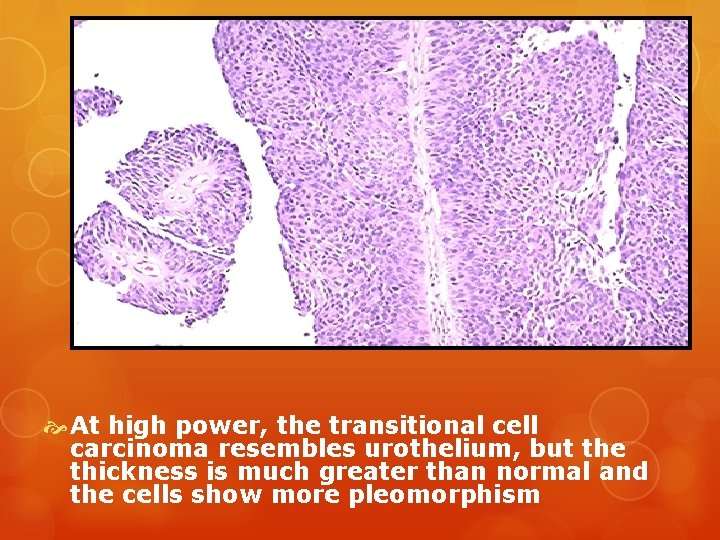
At high power, the transitional cell carcinoma resembles urothelium, but the thickness is much greater than normal and the cells show more pleomorphism
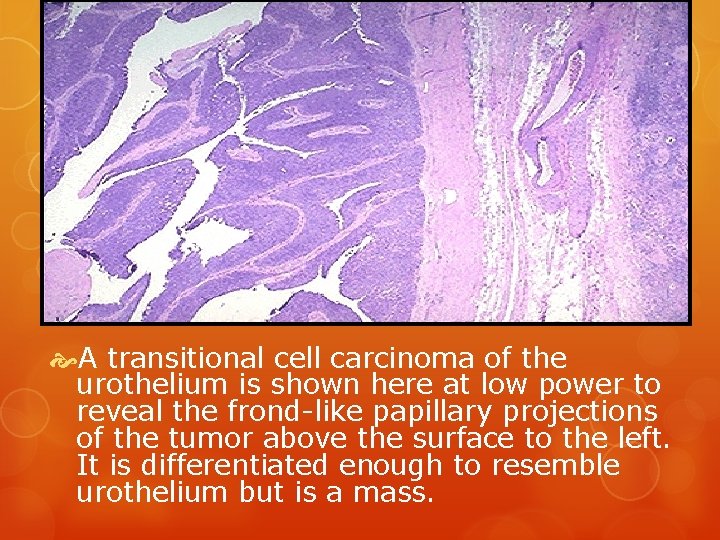
A transitional cell carcinoma of the urothelium is shown here at low power to reveal the frond-like papillary projections of the tumor above the surface to the left. It is differentiated enough to resemble urothelium but is a mass.
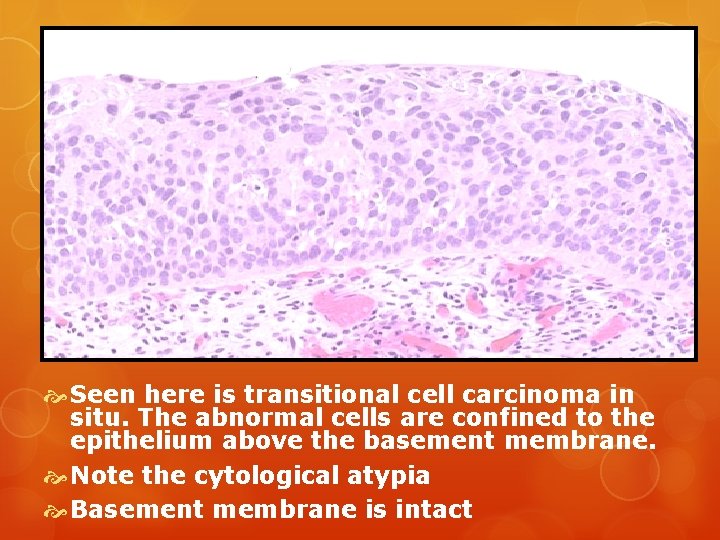
Seen here is transitional cell carcinoma in situ. The abnormal cells are confined to the epithelium above the basement membrane. Note the cytological atypia Basement membrane is intact

Important finding in Urinalysis: TCC Protein Trace Blood 2+
Microscopic Urinalysis Characteristic Result WBC/hpf <2/hpf RBC/hpf 10 -30/hpf Casts -Occasional hyaline casts Other Atypical urothelial cells present CYTOLOGY Cytologic examination of urine can reveal malignant cells, shed from the surface of the neoplasm.
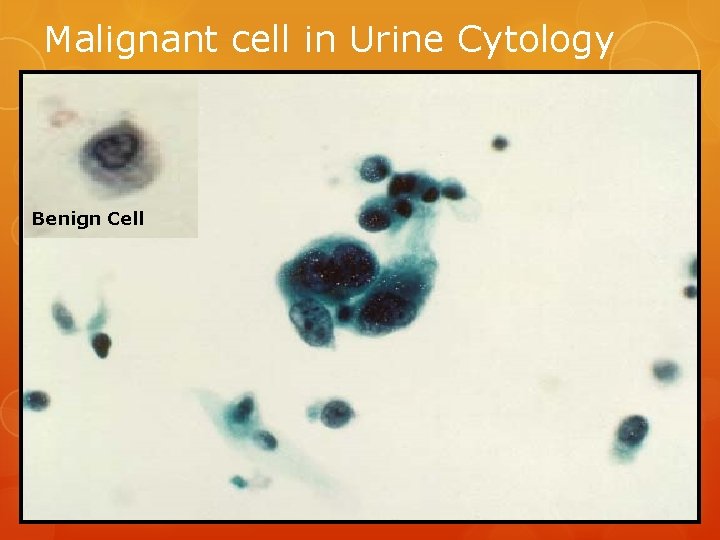
Malignant cell in Urine Cytology Benign Cell
Prognosis Depends on the grade and Stage. ( i. e. depth of invasion)
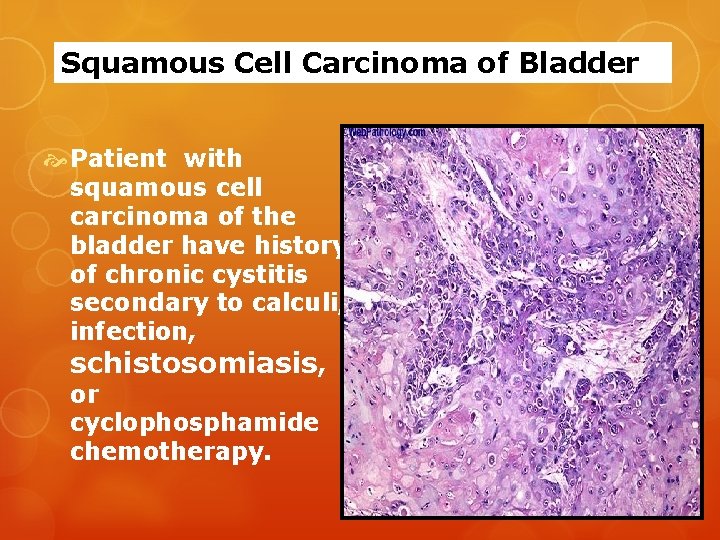
Squamous Cell Carcinoma of Bladder Patient with squamous cell carcinoma of the bladder have history of chronic cystitis secondary to calculi, infection, schistosomiasis, or cyclophosphamide chemotherapy.
In the middle east, where schistosomiasis is common, majority of the bladder cancers are squamous cell carcinomas.

THANK YOU
- Slides: 29