
Tumor Viruses For most viruses Replication Lysis Progeny
- Slides: 60
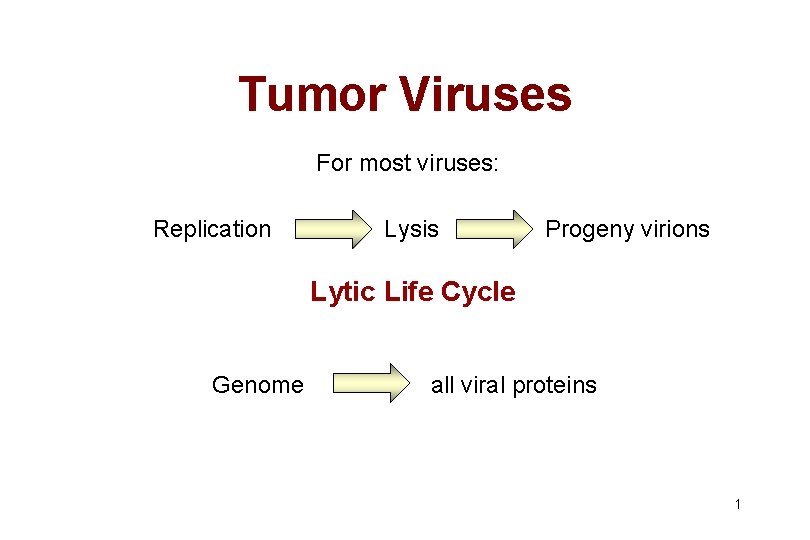
Tumor Viruses For most viruses: Replication Lysis Progeny virions Lytic Life Cycle Genome all viral proteins 1
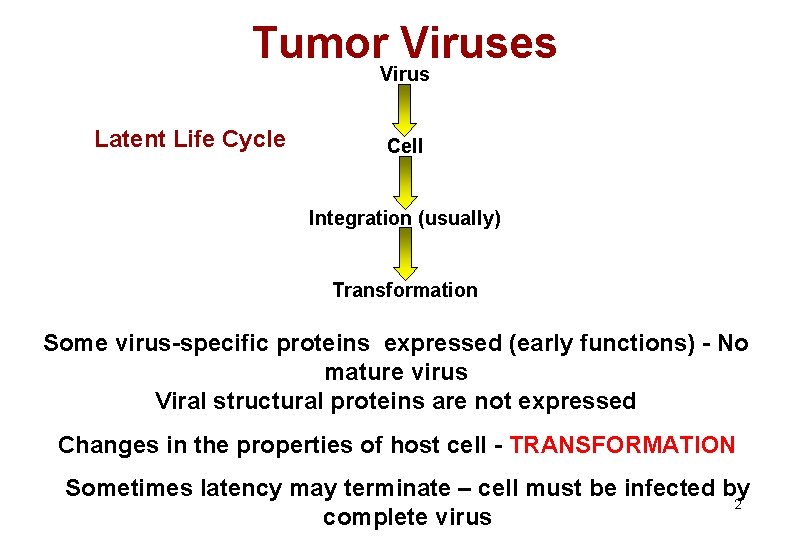
Tumor Viruses Virus Latent Life Cycle Cell Integration (usually) Transformation Some virus-specific proteins expressed (early functions) - No mature virus Viral structural proteins are not expressed Changes in the properties of host cell - TRANSFORMATION Sometimes latency may terminate – cell must be infected by 2 complete virus
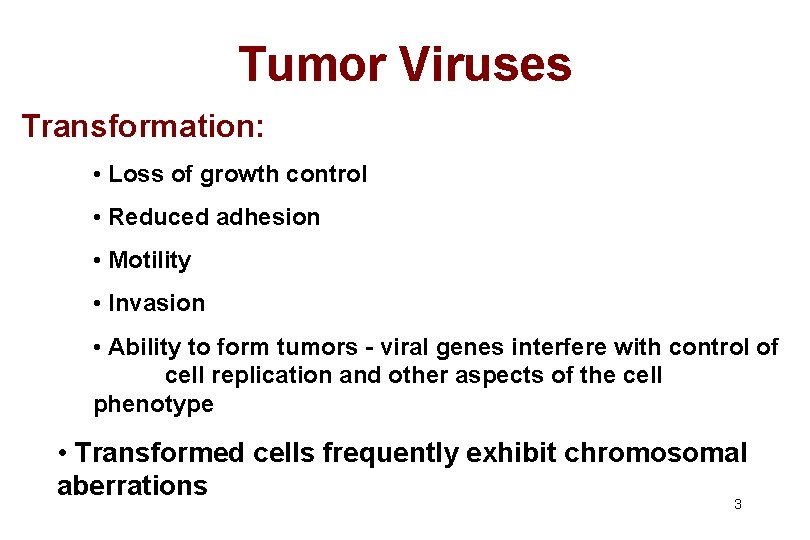
Tumor Viruses Transformation: • Loss of growth control • Reduced adhesion • Motility • Invasion • Ability to form tumors - viral genes interfere with control of cell replication and other aspects of the cell phenotype • Transformed cells frequently exhibit chromosomal aberrations 3
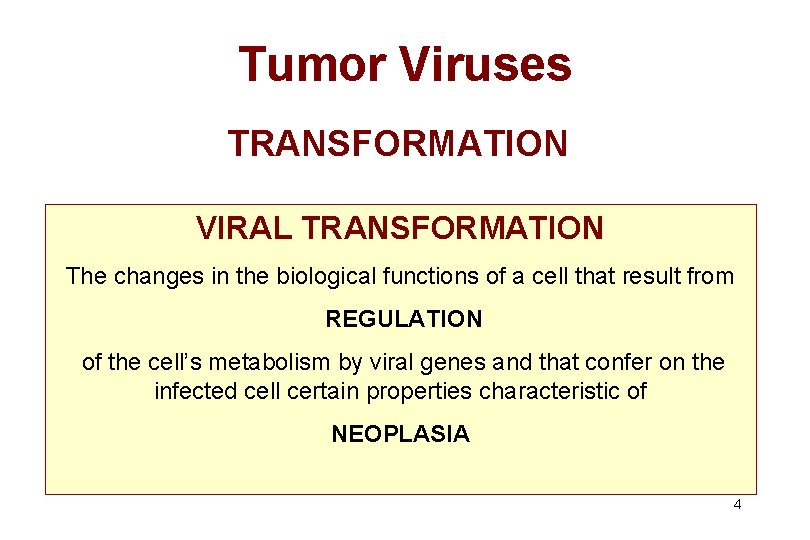
Tumor Viruses TRANSFORMATION VIRAL TRANSFORMATION The changes in the biological functions of a cell that result from REGULATION of the cell’s metabolism by viral genes and that confer on the infected cell certain properties characteristic of NEOPLASIA 4
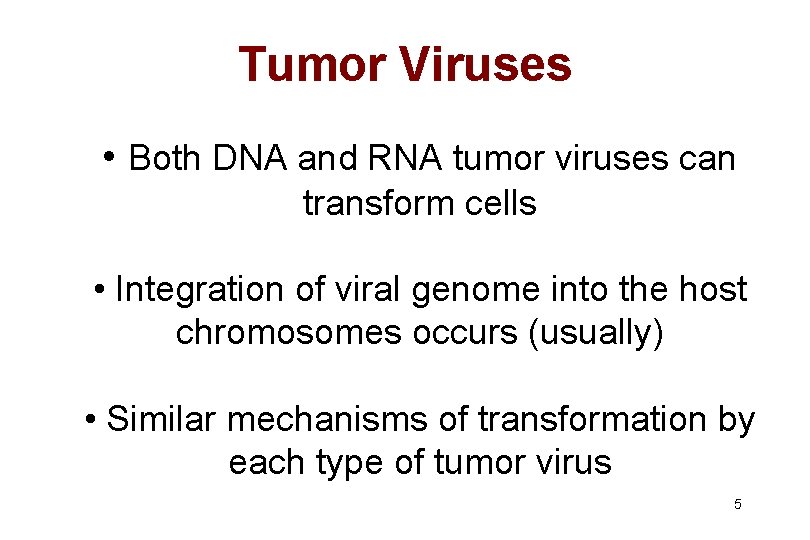
Tumor Viruses • Both DNA and RNA tumor viruses can transform cells • Integration of viral genome into the host chromosomes occurs (usually) • Similar mechanisms of transformation by each type of tumor virus 5
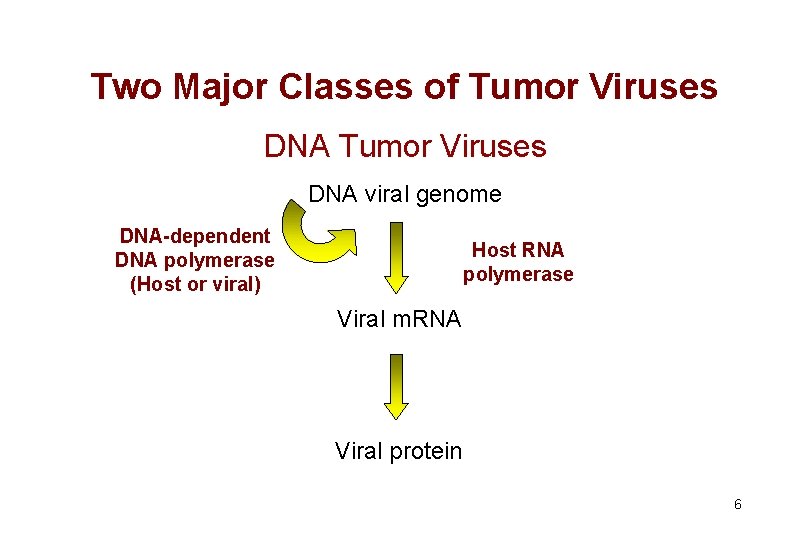
Two Major Classes of Tumor Viruses DNA viral genome DNA-dependent DNA polymerase (Host or viral) Host RNA polymerase Viral m. RNA Viral protein 6
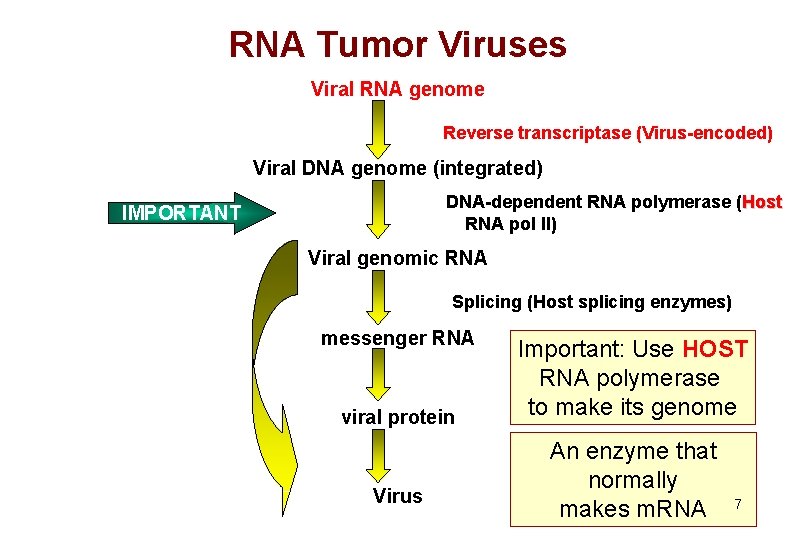
RNA Tumor Viruses Viral RNA genome Reverse transcriptase (Virus-encoded) Viral DNA genome (integrated) DNA-dependent RNA polymerase (Host RNA pol II) IMPORTANT Viral genomic RNA Splicing (Host splicing enzymes) messenger RNA viral protein Virus Important: Use HOST RNA polymerase to make its genome An enzyme that normally makes m. RNA 7
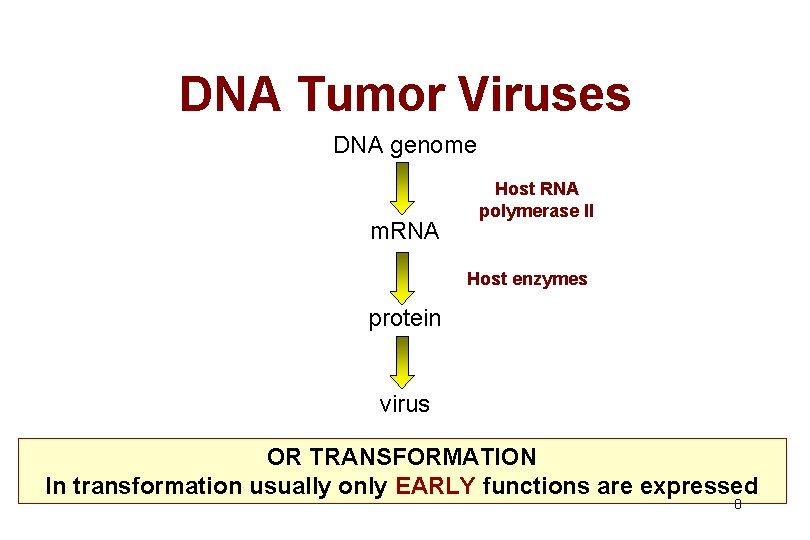
DNA Tumor Viruses DNA genome m. RNA Host RNA polymerase II Host enzymes protein virus OR TRANSFORMATION In transformation usually only EARLY functions are expressed 8
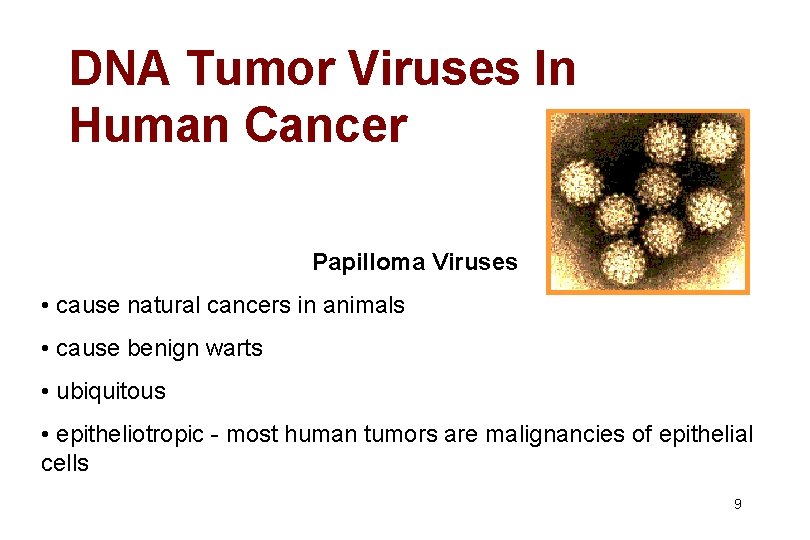
DNA Tumor Viruses In Human Cancer Papilloma Viruses • cause natural cancers in animals • cause benign warts • ubiquitous • epitheliotropic - most human tumors are malignancies of epithelial cells 9
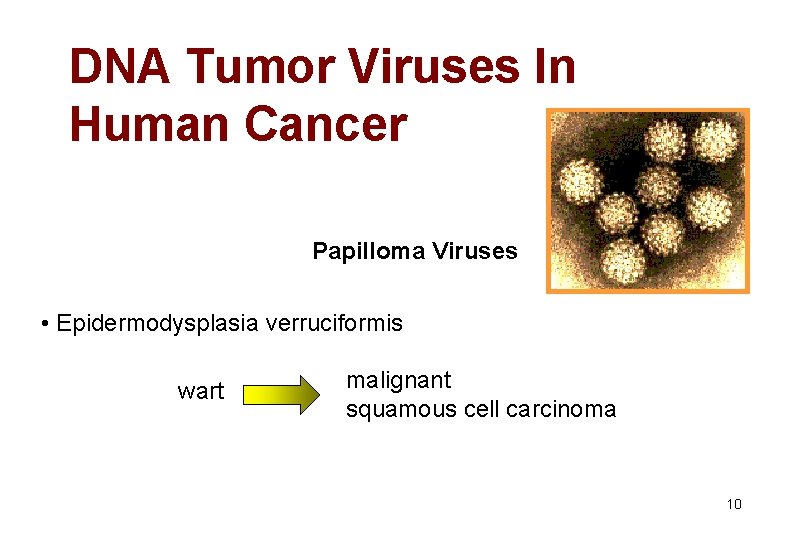
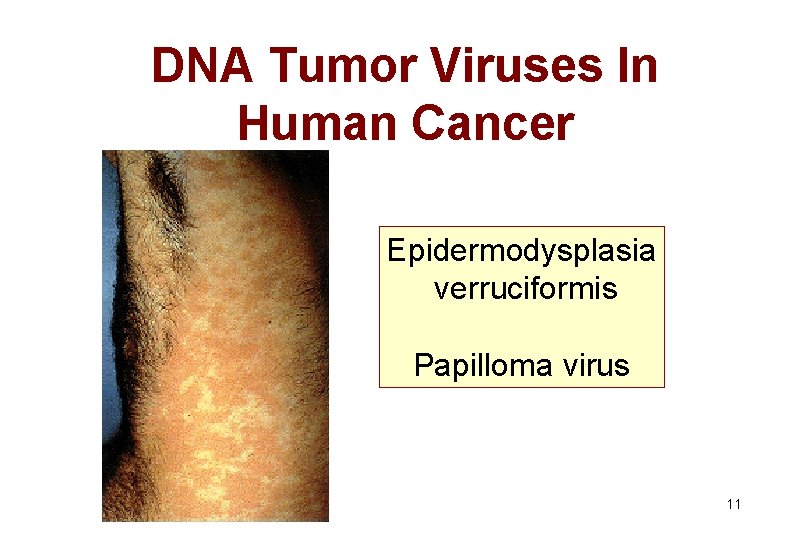
DNA Tumor Viruses In Human Cancer Papilloma Viruses • Epidermodysplasia verruciformis wart malignant squamous cell carcinoma 10
DNA Tumor Viruses In Human Cancer Epidermodysplasia verruciformis Papilloma virus 11
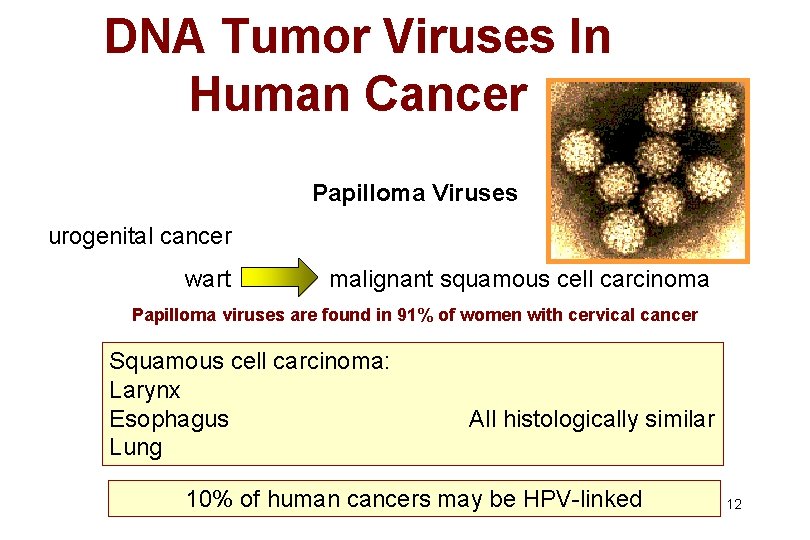
DNA Tumor Viruses In Human Cancer Papilloma Viruses urogenital cancer wart malignant squamous cell carcinoma Papilloma viruses are found in 91% of women with cervical cancer Squamous cell carcinoma: Larynx Esophagus Lung All histologically similar 10% of human cancers may be HPV-linked 12
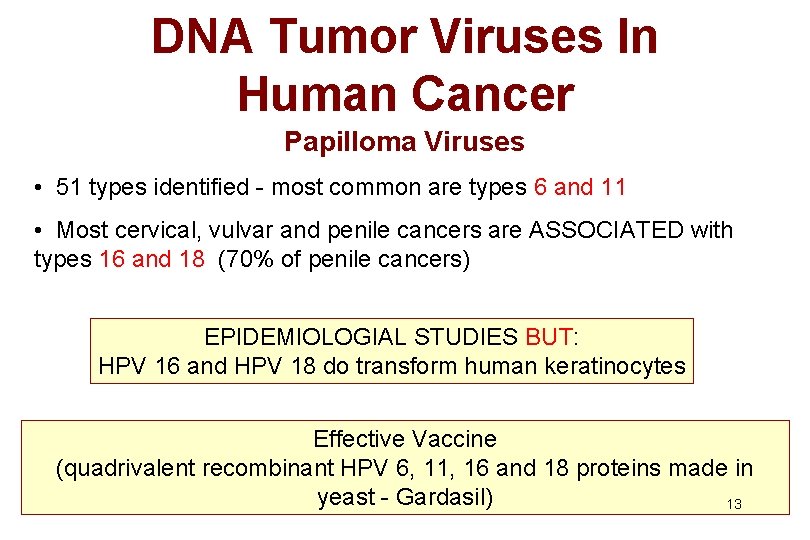
DNA Tumor Viruses In Human Cancer Papilloma Viruses • 51 types identified - most common are types 6 and 11 • Most cervical, vulvar and penile cancers are ASSOCIATED with types 16 and 18 (70% of penile cancers) EPIDEMIOLOGIAL STUDIES BUT: HPV 16 and HPV 18 do transform human keratinocytes Effective Vaccine (quadrivalent recombinant HPV 6, 11, 16 and 18 proteins made in yeast - Gardasil) 13
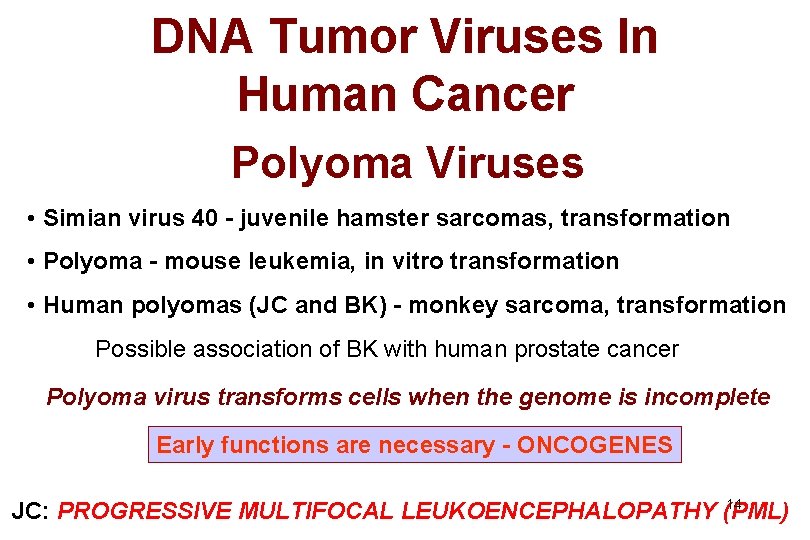
DNA Tumor Viruses In Human Cancer Polyoma Viruses • Simian virus 40 - juvenile hamster sarcomas, transformation • Polyoma - mouse leukemia, in vitro transformation • Human polyomas (JC and BK) - monkey sarcoma, transformation Possible association of BK with human prostate cancer Polyoma virus transforms cells when the genome is incomplete Early functions are necessary - ONCOGENES 14 JC: PROGRESSIVE MULTIFOCAL LEUKOENCEPHALOPATHY (PML)
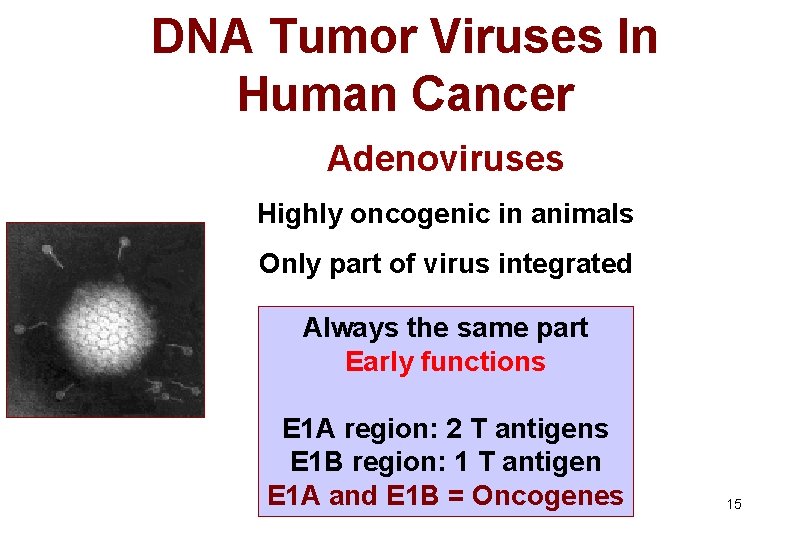
DNA Tumor Viruses In Human Cancer Adenoviruses Highly oncogenic in animals Only part of virus integrated Always the same part Early functions E 1 A region: 2 T antigens E 1 B region: 1 T antigen E 1 A and E 1 B = Oncogenes 15
DNA Tumor Viruses In Human Cancer ONCOGENE A gene that codes for a protein that potentially can transform a normal cell into a malignant cell An oncogene may be transmitted by a virus in which case it is known as a VIRAL ONCOGENE v-onc 16
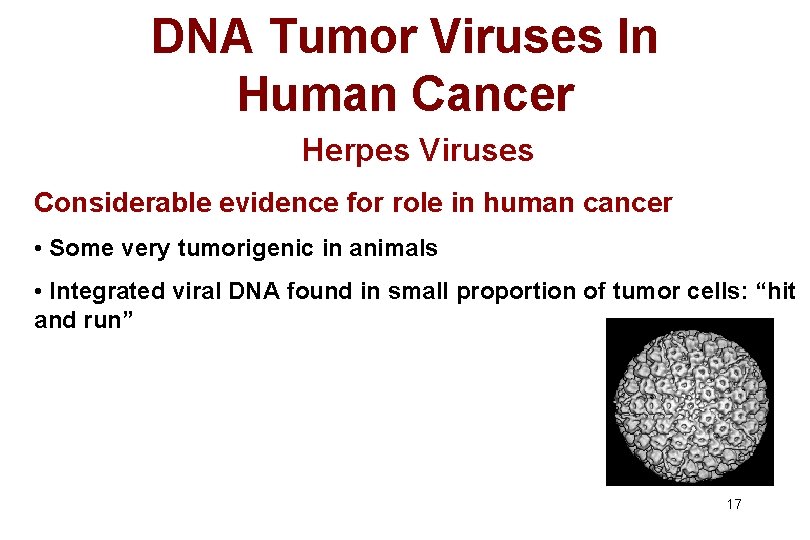
DNA Tumor Viruses In Human Cancer Herpes Viruses Considerable evidence for role in human cancer • Some very tumorigenic in animals • Integrated viral DNA found in small proportion of tumor cells: “hit and run” 17
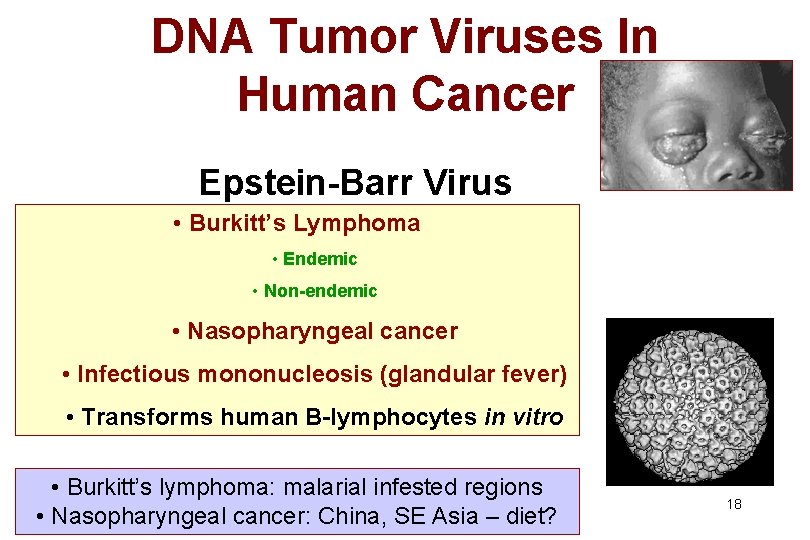
DNA Tumor Viruses In Human Cancer Epstein-Barr Virus • Burkitt’s Lymphoma • Endemic • Non-endemic • Nasopharyngeal cancer • Infectious mononucleosis (glandular fever) • Transforms human B-lymphocytes in vitro • Burkitt’s lymphoma: malarial infested regions • Nasopharyngeal cancer: China, SE Asia – diet? 18
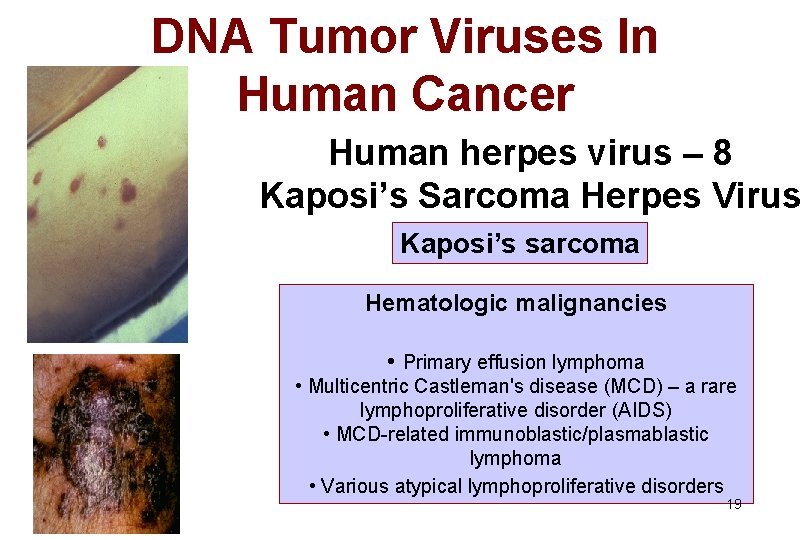
DNA Tumor Viruses In Human Cancer Human herpes virus – 8 Kaposi’s Sarcoma Herpes Virus Kaposi’s sarcoma Hematologic malignancies • Primary effusion lymphoma • Multicentric Castleman's disease (MCD) – a rare lymphoproliferative disorder (AIDS) • MCD-related immunoblastic/plasmablastic lymphoma • Various atypical lymphoproliferative disorders 19
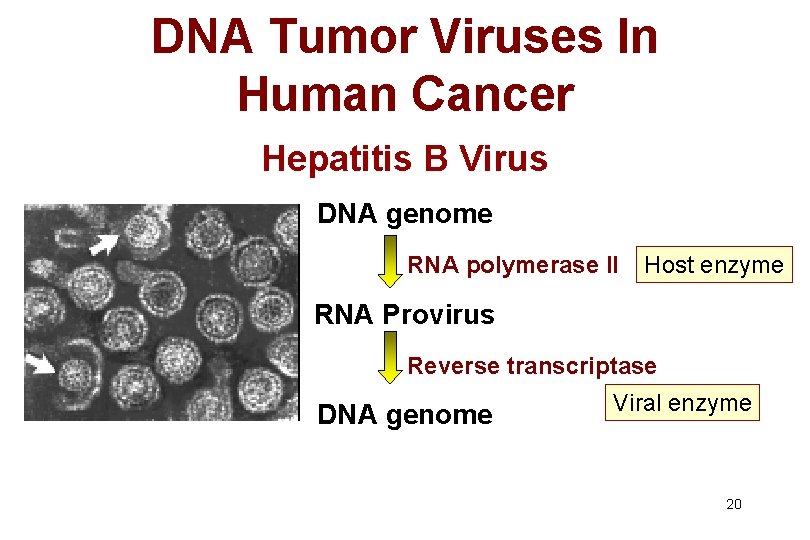
DNA Tumor Viruses In Human Cancer Hepatitis B Virus DNA genome RNA polymerase II Host enzyme RNA Provirus Reverse transcriptase DNA genome Viral enzyme 20
DNA Tumor Viruses In Human Cancer Hepatitis B continued • Vast public health problem • 10% of population in underdeveloped countries are chronic carriers • Long latency 21
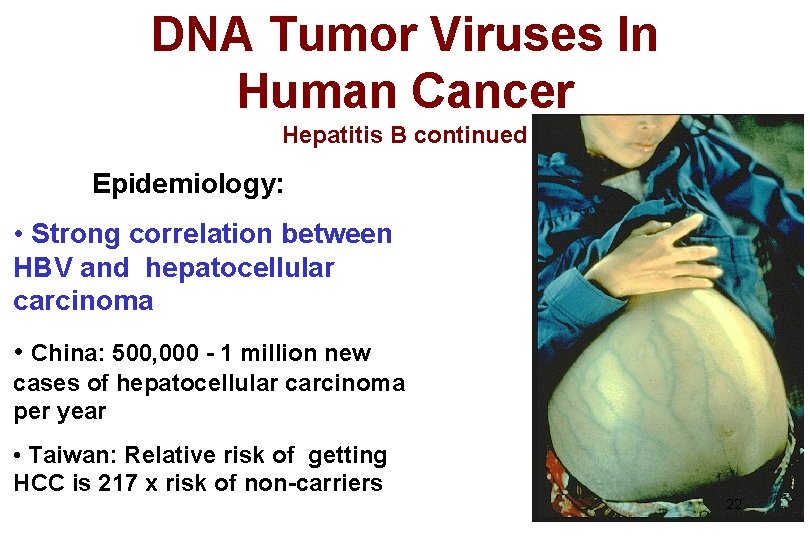
DNA Tumor Viruses In Human Cancer Hepatitis B continued Epidemiology: • Strong correlation between HBV and hepatocellular carcinoma • China: 500, 000 - 1 million new cases of hepatocellular carcinoma per year • Taiwan: Relative risk of getting HCC is 217 x risk of non-carriers 22
DNA Tumor Viruses In Human Cancer Summary • Can transform cells or have lytic life cycle • Often integrate into host genome • In transformation often ONLY early genes are transcribed • These are genes that are also necessary for a PRODUCTIVE infection 23
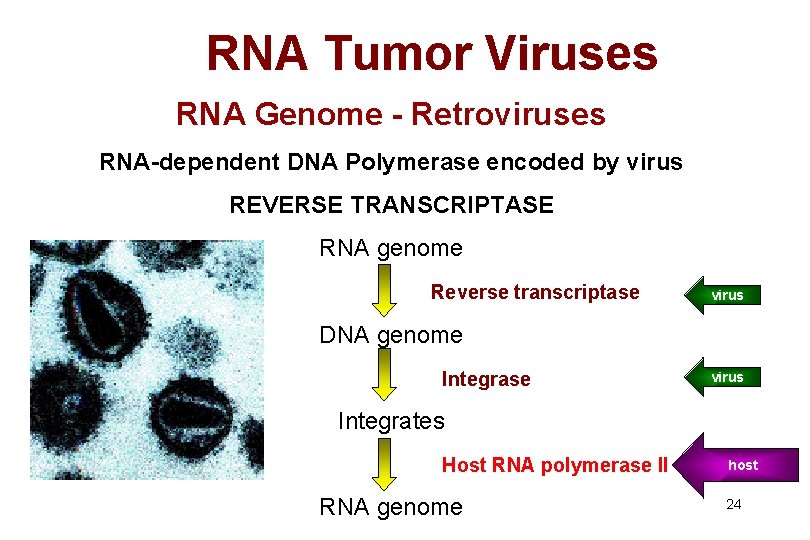
RNA Tumor Viruses RNA Genome - Retroviruses RNA-dependent DNA Polymerase encoded by virus REVERSE TRANSCRIPTASE RNA genome Reverse transcriptase virus DNA genome Integrase virus Integrates Host RNA polymerase II RNA genome host 24
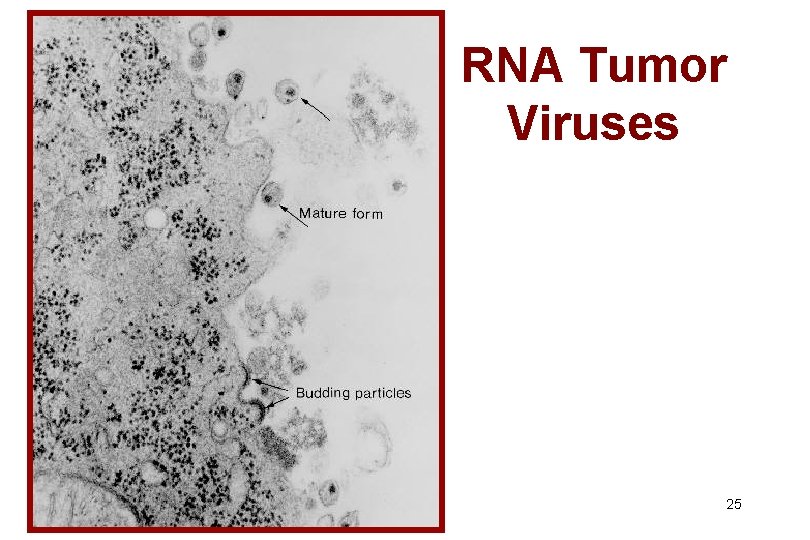
RNA Tumor Viruses 25
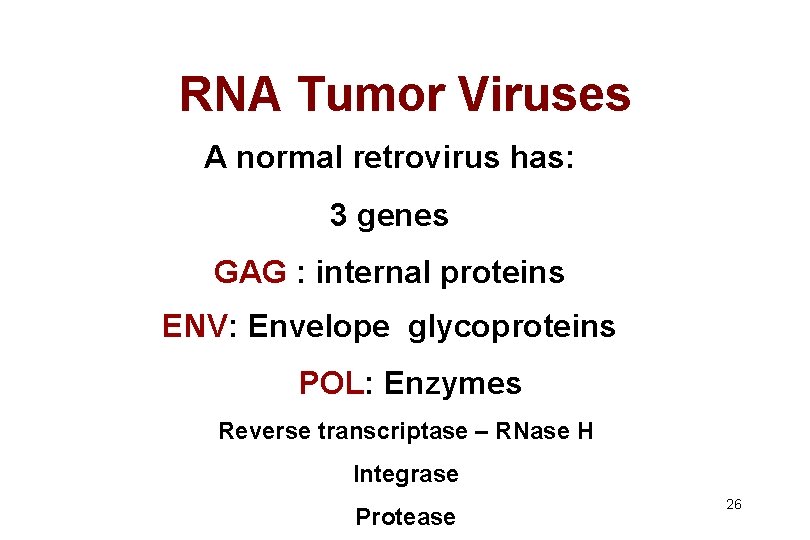
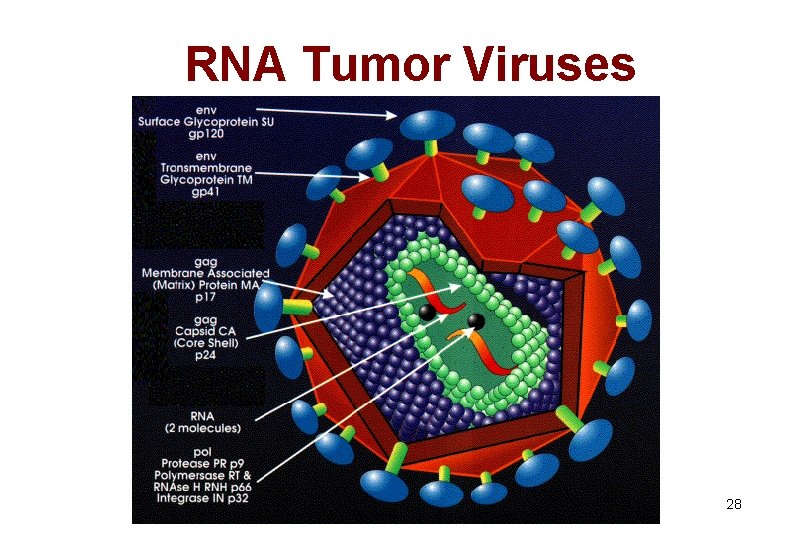
RNA Tumor Viruses A normal retrovirus has: 3 genes GAG : internal proteins ENV: Envelope glycoproteins POL: Enzymes Reverse transcriptase – RNase H Integrase Protease 26
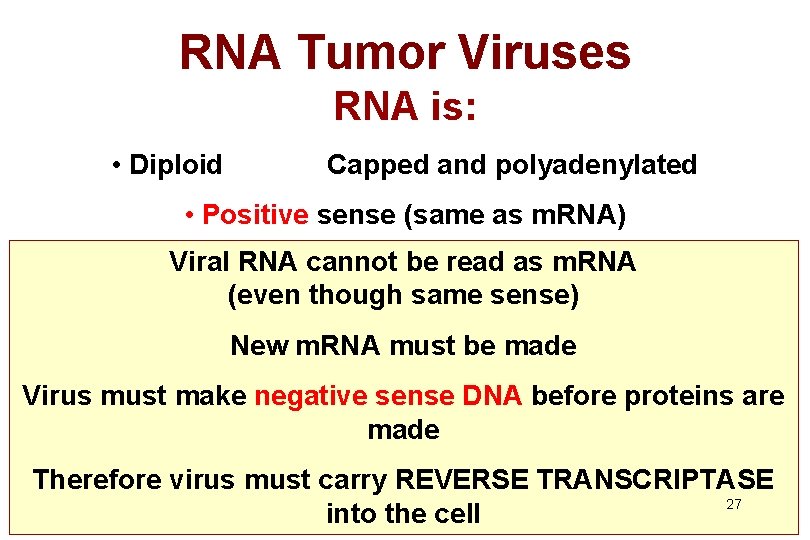
RNA Tumor Viruses RNA is: • Diploid Capped and polyadenylated • Positive sense (same as m. RNA) Viral RNA cannot be read as m. RNA (even though same sense) New m. RNA must be made Virus must make negative sense DNA before proteins are made Therefore virus must carry REVERSE TRANSCRIPTASE 27 into the cell
RNA Tumor Viruses 28
RNA Tumor Viruses Groups of Retroviruses • Oncovirinae important Tumor viruses and similar • Lentiviruses important Long latent period Progressive chronic disease Visna HIV 29
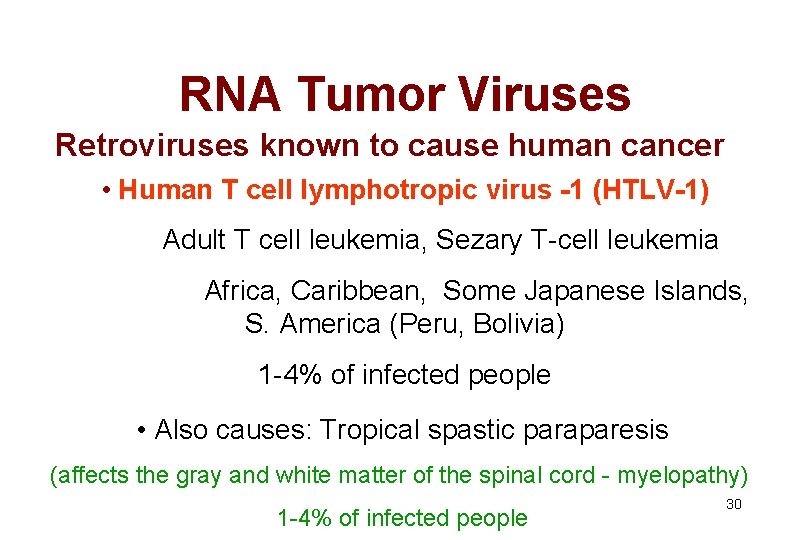
RNA Tumor Viruses Retroviruses known to cause human cancer • Human T cell lymphotropic virus -1 (HTLV-1) Adult T cell leukemia, Sezary T-cell leukemia Africa, Caribbean, Some Japanese Islands, S. America (Peru, Bolivia) 1 -4% of infected people • Also causes: Tropical spastic paraparesis (affects the gray and white matter of the spinal cord - myelopathy) 1 -4% of infected people 30
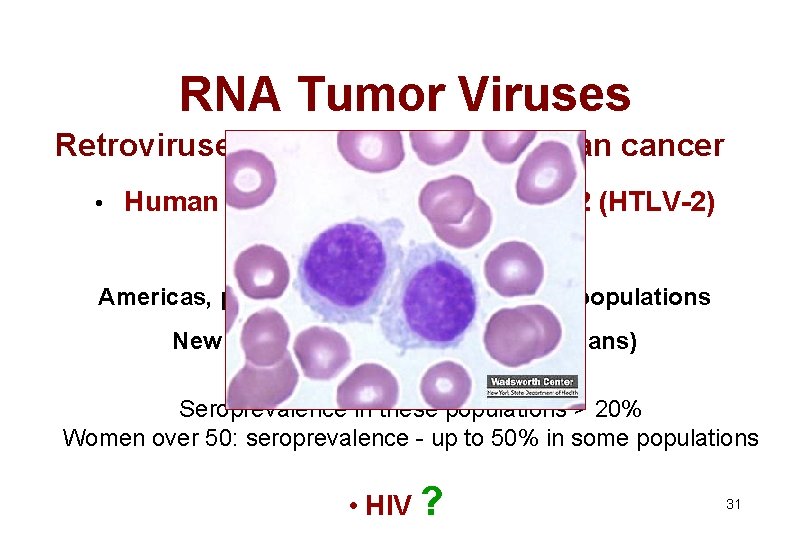
RNA Tumor Viruses Retroviruses known to cause human cancer • Human T cell lymphotropic virus -2 (HTLV-2) Hairy cell leukemia Americas, particularly in native American populations New Mexico (Navajo and Pueblo Indians) Florida (Seminole Indians) Seroprevalence in these populations > 20% Women over 50: seroprevalence - up to 50% in some populations • HIV ? 31
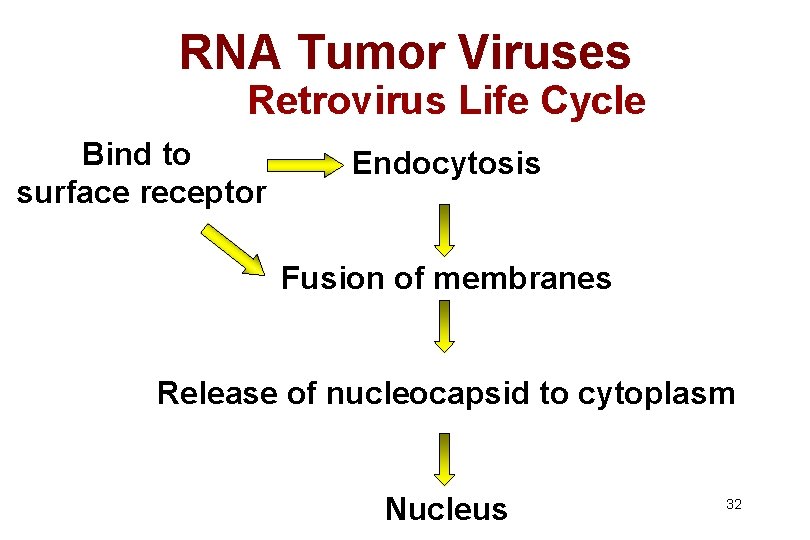
RNA Tumor Viruses Retrovirus Life Cycle Bind to surface receptor Endocytosis Fusion of membranes Release of nucleocapsid to cytoplasm Nucleus 32
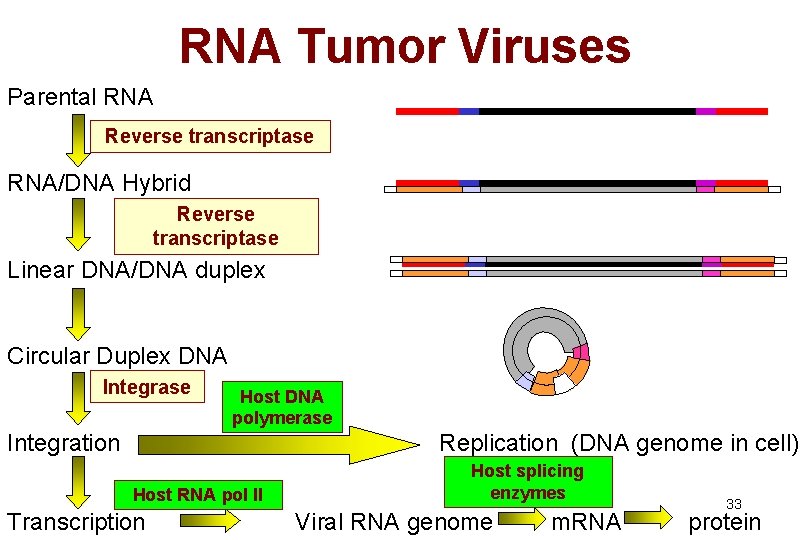
RNA Tumor Viruses Parental RNA Reverse transcriptase RNA/DNA Hybrid Reverse transcriptase Linear DNA/DNA duplex Circular Duplex DNA Integrase Host DNA polymerase Integration Replication (DNA genome in cell) Host RNA pol II Transcription Host splicing enzymes Viral RNA genome m. RNA 33 protein
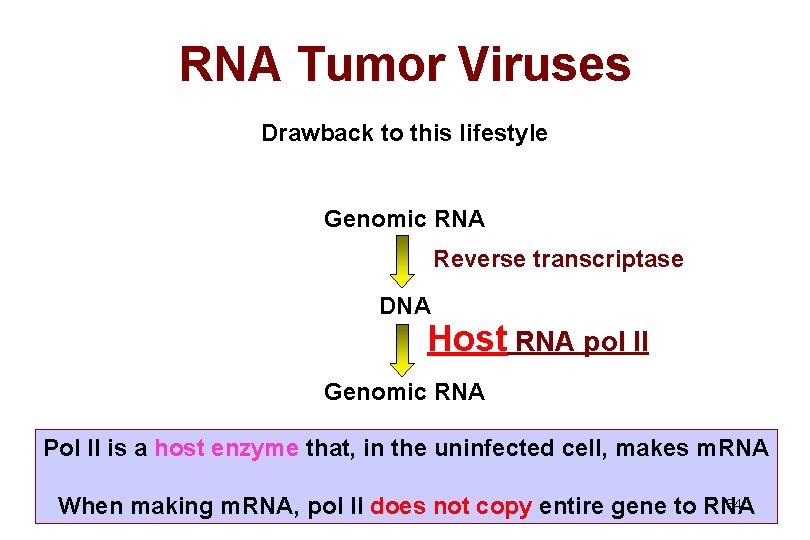
RNA Tumor Viruses Drawback to this lifestyle Genomic RNA Reverse transcriptase DNA Host RNA pol II Genomic RNA Pol II is a host enzyme that, in the uninfected cell, makes m. RNA 34 When making m. RNA, pol II does not copy entire gene to RNA
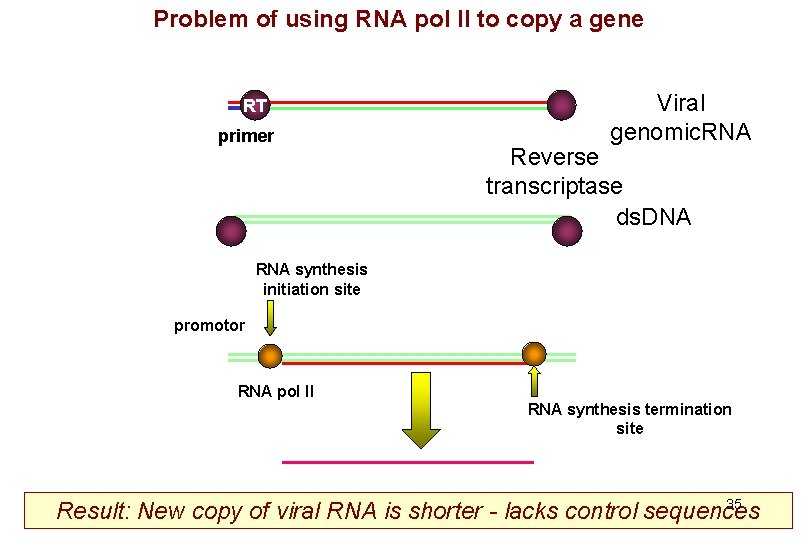
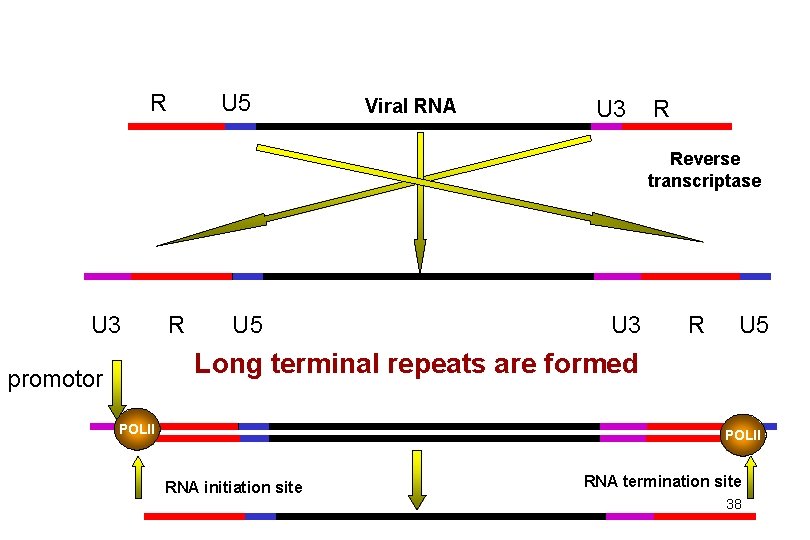
Problem of using RNA pol II to copy a gene RT primer Viral genomic. RNA Reverse transcriptase ds. DNA RNA synthesis initiation site promotor RNA pol II RNA synthesis termination site 35 Result: New copy of viral RNA is shorter - lacks control sequences
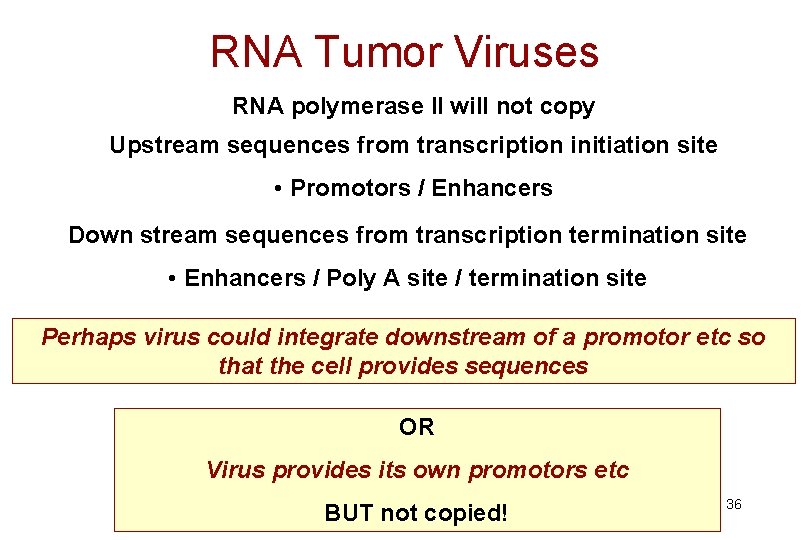
RNA Tumor Viruses RNA polymerase II will not copy Upstream sequences from transcription initiation site • Promotors / Enhancers Down stream sequences from transcription termination site • Enhancers / Poly A site / termination site ? Perhaps virus could integrate downstream of a promotor etc so that the cell provides sequences OR Virus provides its own promotors etc BUT not copied! 36
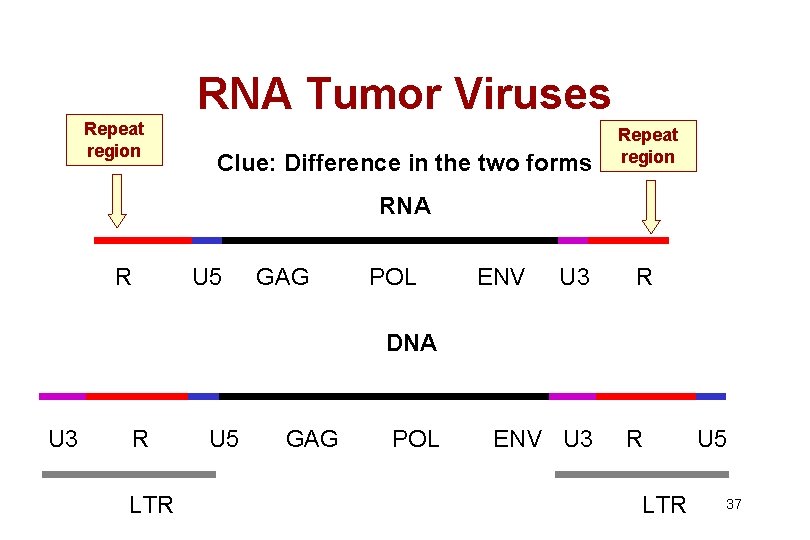
RNA Tumor Viruses Repeat region Clue: Difference in the two forms Repeat region RNA R U 5 GAG POL ENV U 3 R DNA U 3 R LTR U 5 GAG POL ENV U 3 R LTR U 5 37
R U 5 Viral RNA U 3 R Reverse transcriptase U 3 R U 5 Long terminal repeats are formed promotor POLII RNA initiation site RNA termination site 38
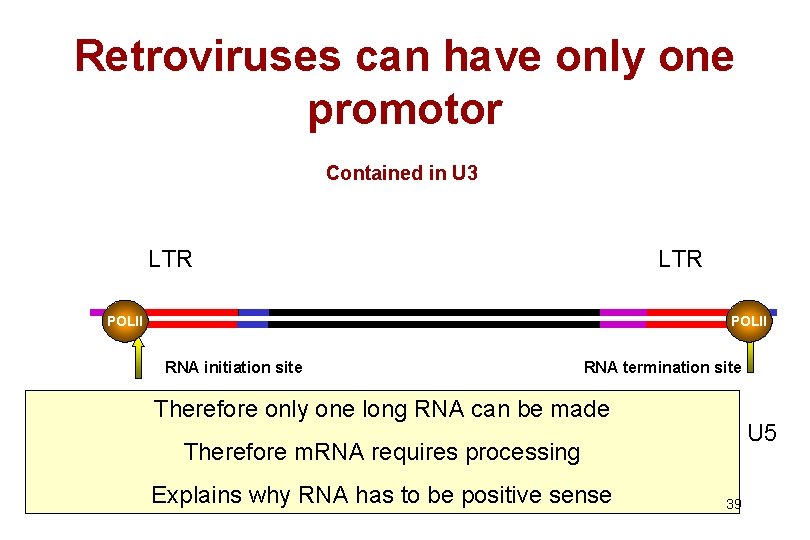
Retroviruses can have only one promotor Contained in U 3 LTR POLII RNA initiation site RNA termination site Therefore only one long RNA can be made U 5 Therefore m. RNA requires processing Explains why RNA has to be positive sense 39
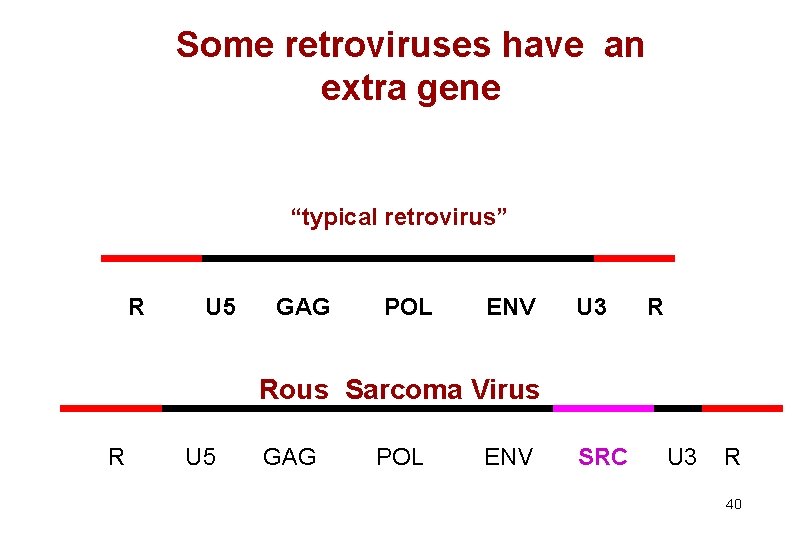
Some retroviruses have an extra gene “typical retrovirus” R U 5 GAG POL ENV U 3 R Rous Sarcoma Virus R U 5 GAG POL ENV SRC U 3 R 40
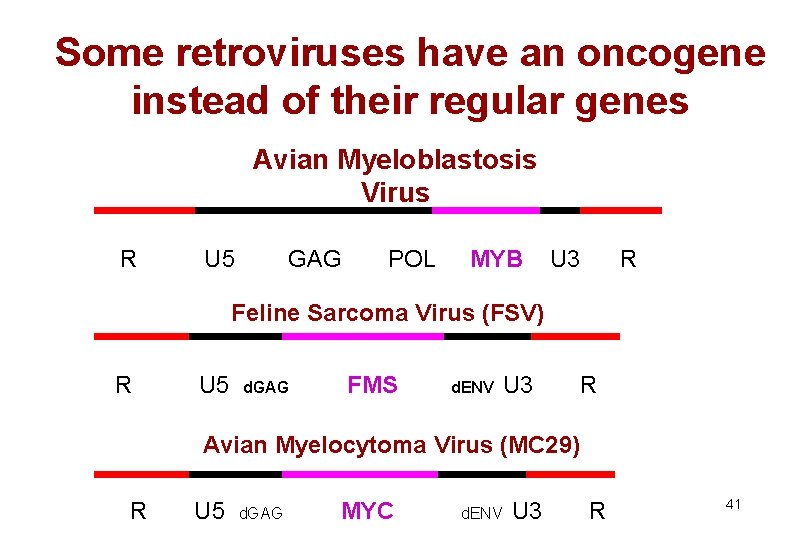
Some retroviruses have an oncogene instead of their regular genes Avian Myeloblastosis Virus R U 5 GAG POL MYB U 3 R Feline Sarcoma Virus (FSV) R U 5 d. GAG FMS d. ENV U 3 R Avian Myelocytoma Virus (MC 29) R U 5 d. GAG MYC d. ENV U 3 R 41
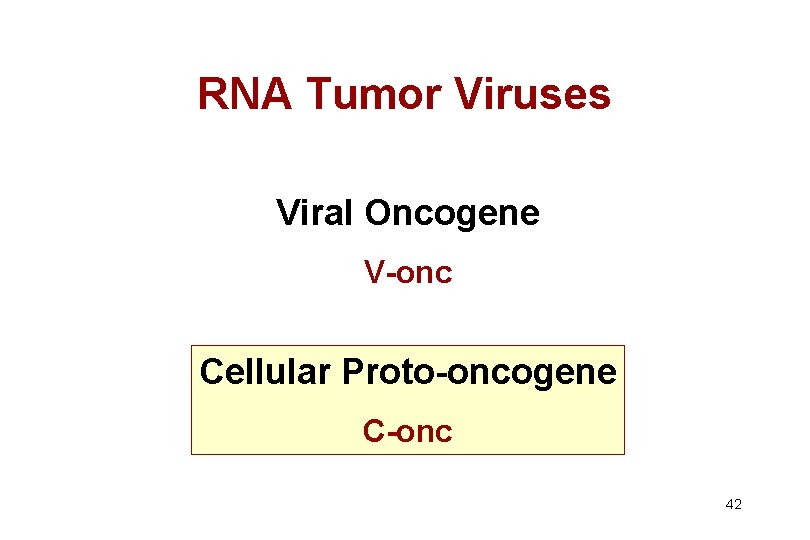
RNA Tumor Viruses Viral Oncogene V-onc Cellular Proto-oncogene C-onc 42
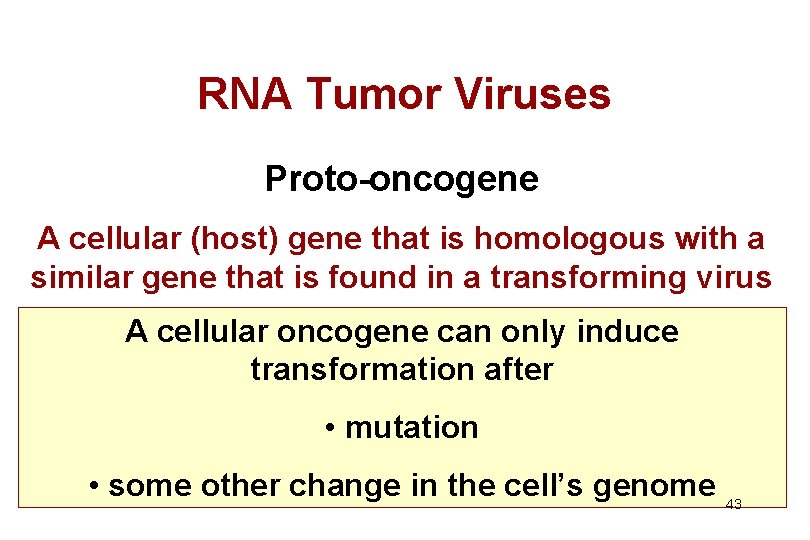
RNA Tumor Viruses Proto-oncogene A cellular (host) gene that is homologous with a similar gene that is found in a transforming virus A cellular oncogene can only induce transformation after • mutation • some other change in the cell’s genome 43
RNA Tumor Viruses The discovery of the acutely transforming retroviruses that contain v-oncs explains how cancers may arise as a result of infection These viruses cause rapid cancer in animals in the laboratory 44
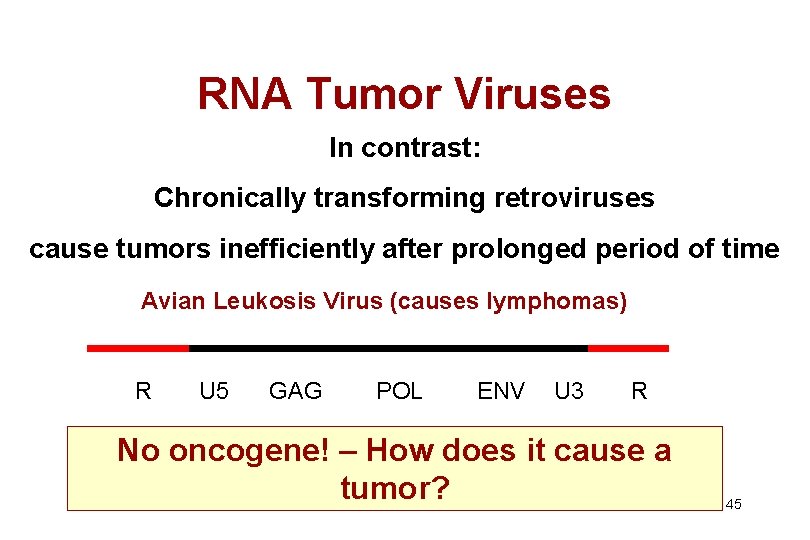
RNA Tumor Viruses In contrast: Chronically transforming retroviruses cause tumors inefficiently after prolonged period of time Avian Leukosis Virus (causes lymphomas) R U 5 GAG POL ENV U 3 R No oncogene! – How does it cause a tumor? 45
RNA Tumor Viruses ALV can integrate into the host cell genome at MANY locations but in tumor it is always at the SAME site (or restricted number of sites) Suggests tumor arose from one cell • Something must be important about this site for transformation • Crucial event must be rare 46
RNA Tumor Viruses What is special about this site? Myelocytoma tumors from several birds all have the oncogene close to this site It is close to C-myc! Oncogenesis by promotor insertion 47
RNA Tumor Viruses Could C-oncs be involved in NON-VIRAL cancers? 48
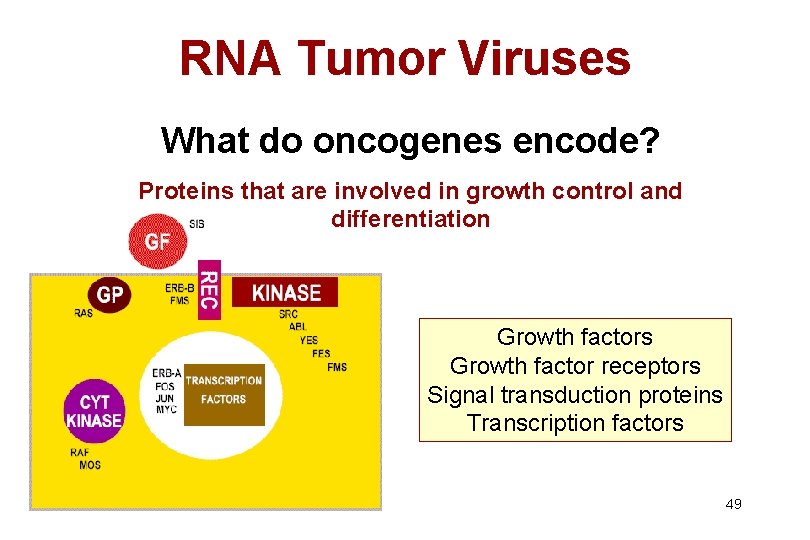
RNA Tumor Viruses What do oncogenes encode? Proteins that are involved in growth control and differentiation Growth factors Growth factor receptors Signal transduction proteins Transcription factors 49
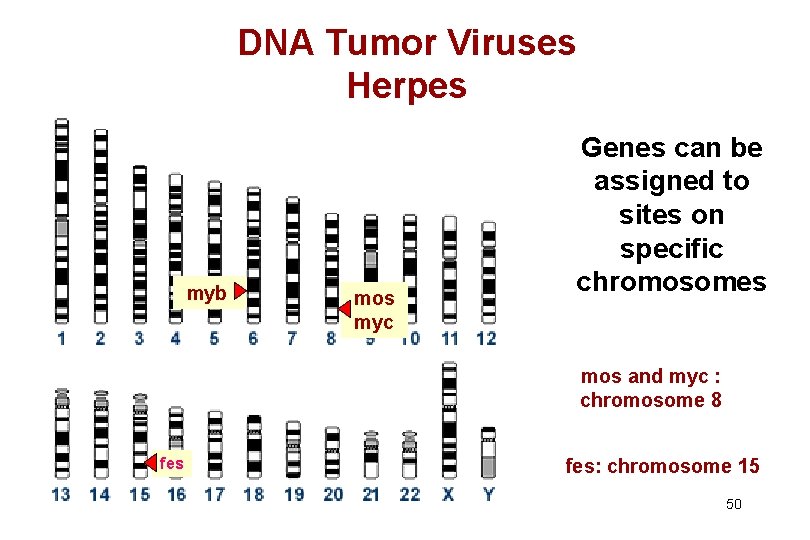
DNA Tumor Viruses Herpes myb mos myc Genes can be assigned to sites on specific chromosomes mos and myc : chromosome 8 fes: chromosome 15 50
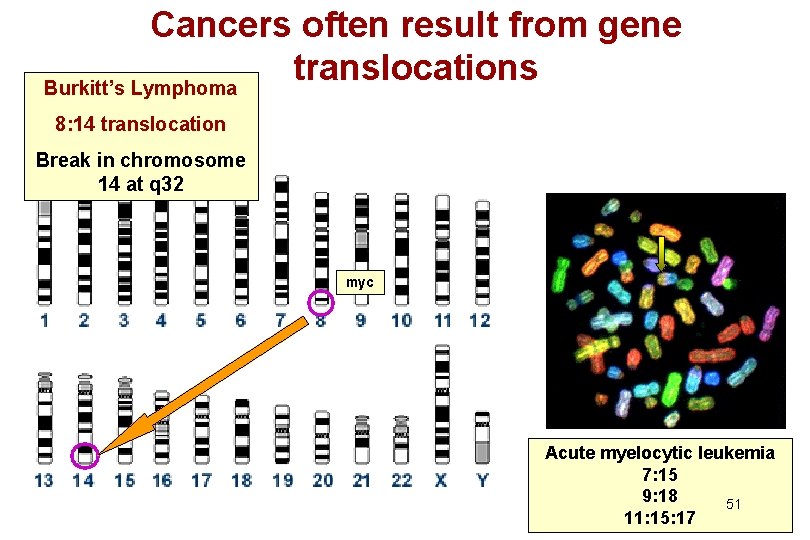
Cancers often result from gene translocations Burkitt’s Lymphoma 8: 14 translocation Break in chromosome 14 at q 32 myc Acute myelocytic leukemia 7: 15 9: 18 51 11: 15: 17
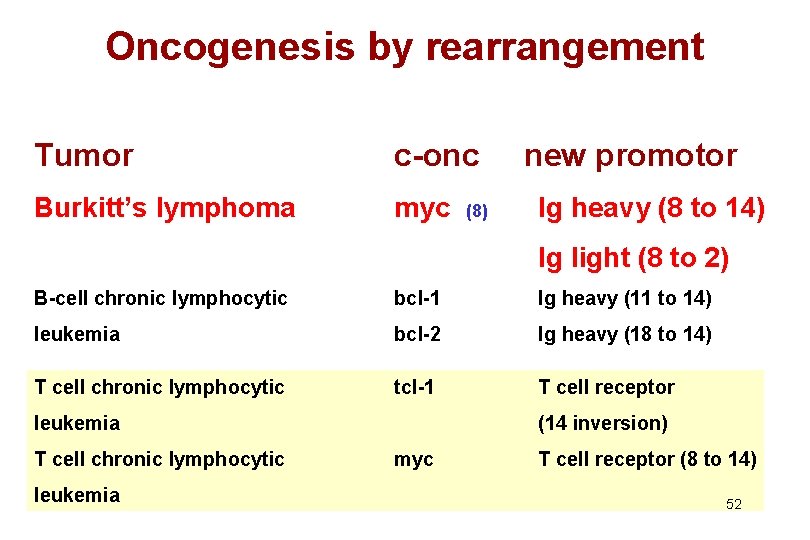
Oncogenesis by rearrangement Tumor c-onc Burkitt’s lymphoma myc (8) new promotor Ig heavy (8 to 14) Ig light (8 to 2) B-cell chronic lymphocytic bcl-1 Ig heavy (11 to 14) leukemia bcl-2 Ig heavy (18 to 14) T cell chronic lymphocytic tcl-1 T cell receptor leukemia T cell chronic lymphocytic leukemia (14 inversion) myc T cell receptor (8 to 14) 52
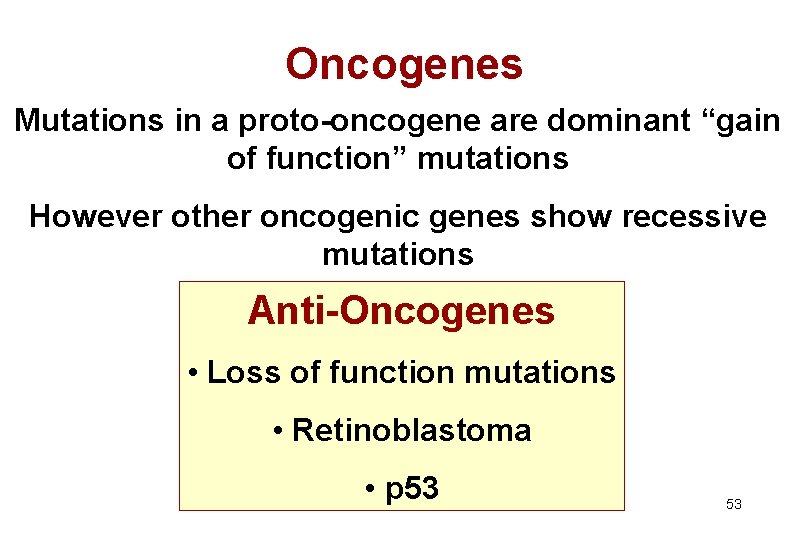
Oncogenes Mutations in a proto-oncogene are dominant “gain of function” mutations However other oncogenic genes show recessive mutations Anti-Oncogenes • Loss of function mutations • Retinoblastoma • p 53 53
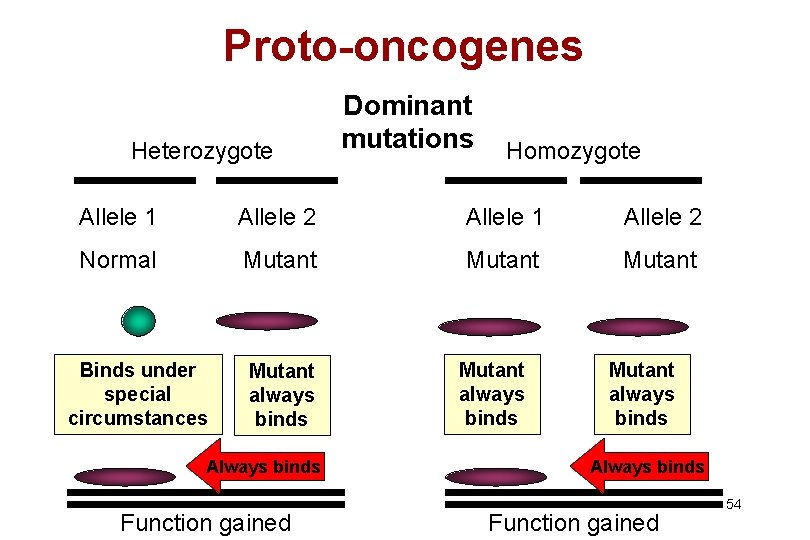
Proto-oncogenes Heterozygote Dominant mutations Homozygote Allele 1 Allele 2 Normal Mutant Binds under special circumstances Mutant always binds Always binds Function gained 54
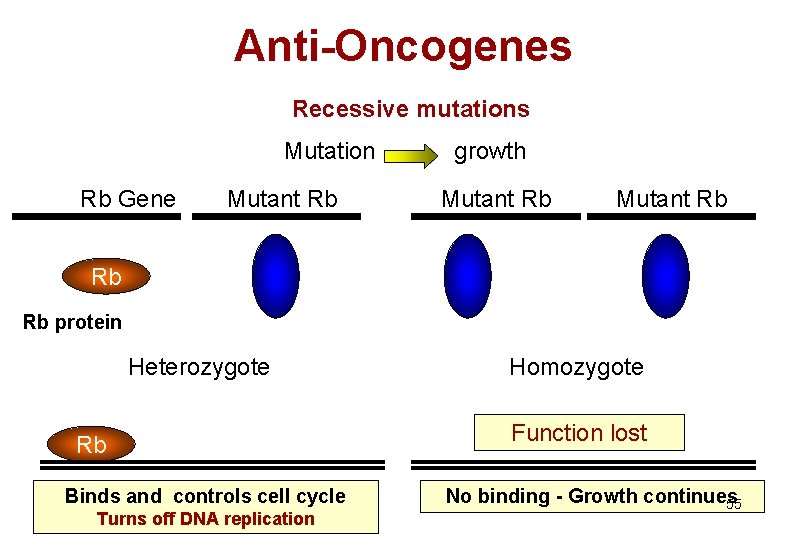
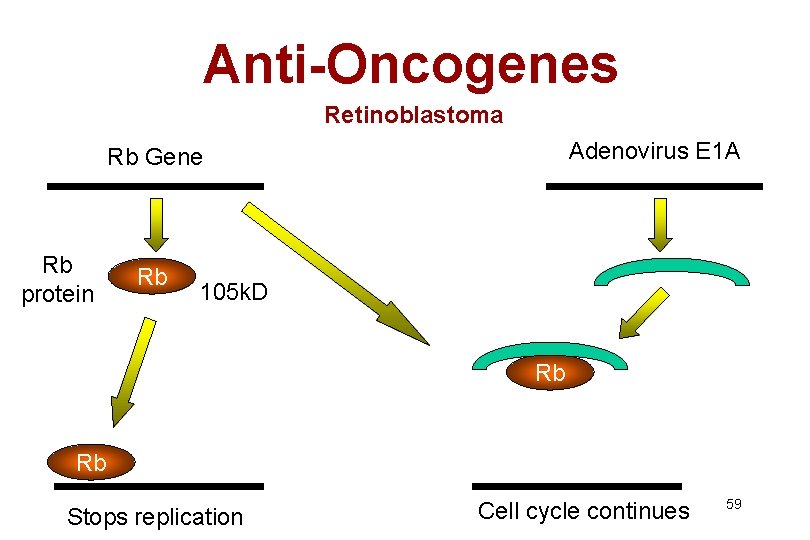
Anti-Oncogenes Recessive mutations Mutation Rb Gene Mutant Rb growth Mutant Rb Rb Rb protein Heterozygote Rb Binds and controls cell cycle Turns off DNA replication Homozygote Function lost No binding - Growth continues 55
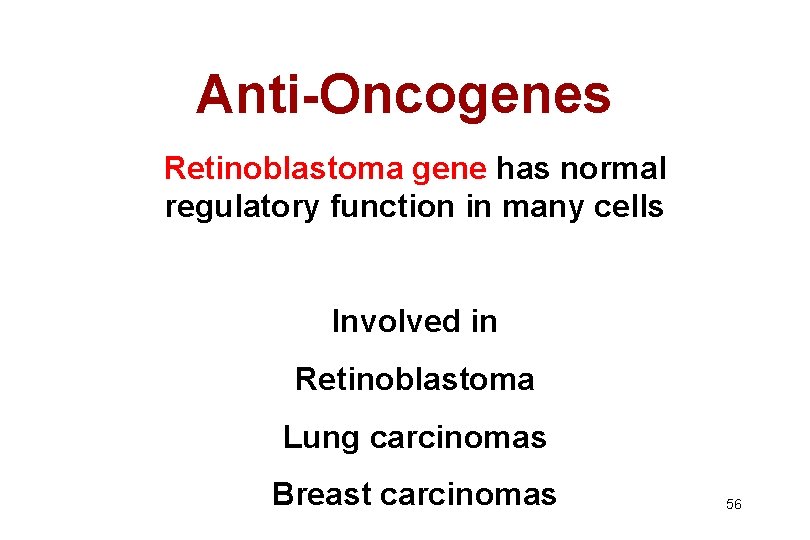
Anti-Oncogenes Retinoblastoma gene has normal regulatory function in many cells Involved in Retinoblastoma Lung carcinomas Breast carcinomas 56
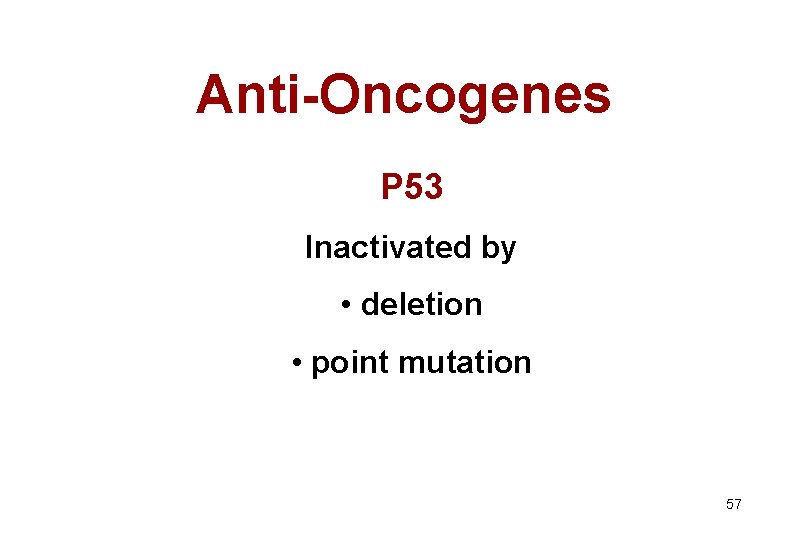
Anti-Oncogenes P 53 Inactivated by • deletion • point mutation 57
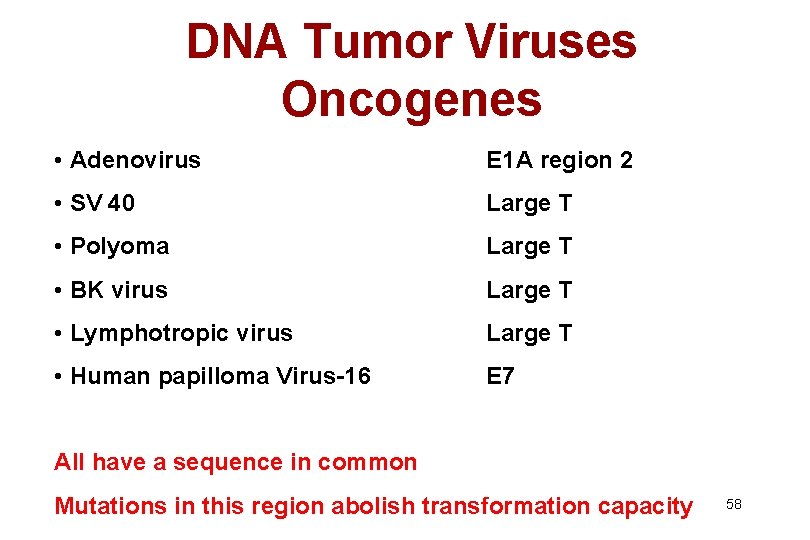
DNA Tumor Viruses Oncogenes • Adenovirus E 1 A region 2 • SV 40 Large T • Polyoma Large T • BK virus Large T • Lymphotropic virus Large T • Human papilloma Virus-16 E 7 All have a sequence in common Mutations in this region abolish transformation capacity 58
Anti-Oncogenes Retinoblastoma Adenovirus E 1 A Rb Gene Rb protein Rb 105 k. D Rb Rb Stops replication Cell cycle continues 59
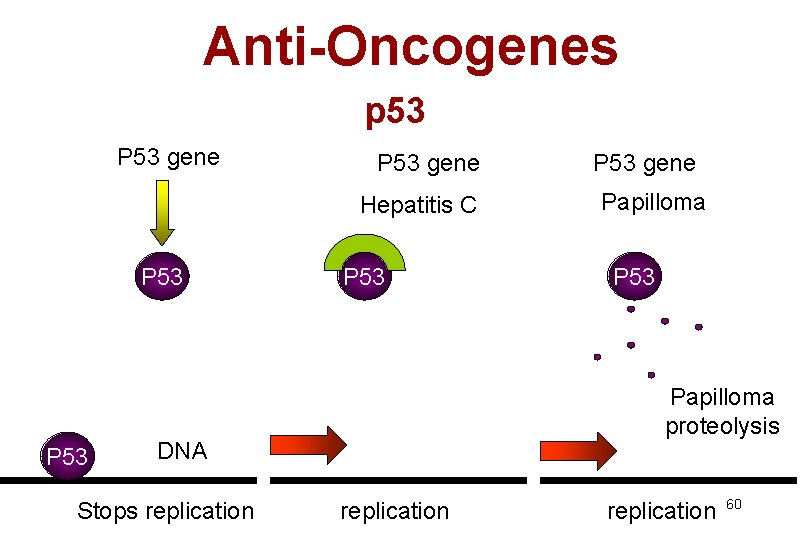
Anti-Oncogenes p 53 P 53 gene Hepatitis C P 53 Papilloma proteolysis DNA Stops replication P 53 gene replication 60