
Tumor Biology Cellular and Molecular Aspects of the
Tumor Biology: Cellular and Molecular Aspects of the Transformed Cell Growth Factors, Receptors, and Signal Transduction II Rebecca Riggins 202. 687. 7451 rbr 7@georgetown. edu
Overview o Intracellular signaling “downstream” of receptors - key pathways: Ras/MAPK, Src, PI 3 K o Intracellular signaling defects in cancer o Targeted therapies to intracellular signaling molecules o TNF and TRAIL
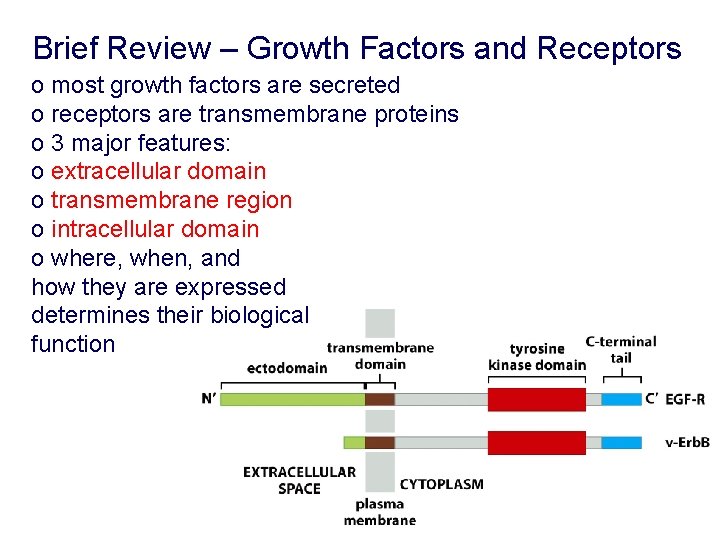
Brief Review – Growth Factors and Receptors o most growth factors are secreted o receptors are transmembrane proteins o 3 major features: o extracellular domain o transmembrane region o intracellular domain o where, when, and how they are expressed determines their biological function
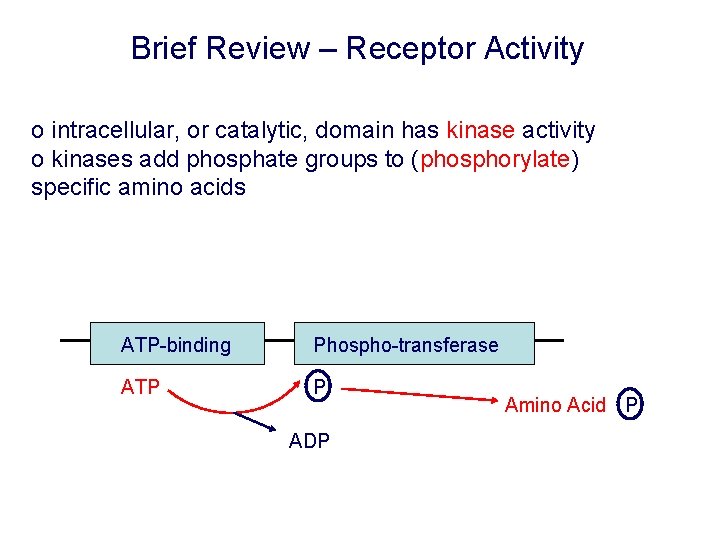
Brief Review – Receptor Activity o intracellular, or catalytic, domain has kinase activity o kinases add phosphate groups to (phosphorylate) specific amino acids ATP-binding Phospho-transferase ATP P ADP Amino Acid P
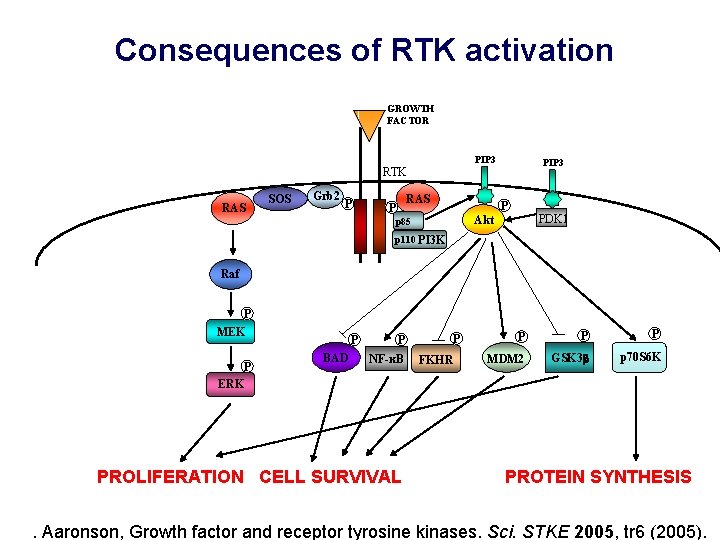
Consequences of RTK activation GROWTH FACTOR PIP 3 RTK RAS SOS Grb 2 P RAS P PIP 3 P PDK 1 Akt p 85 p 110 PI 3 K Raf P MEK P ERK P BAD P NF-ĸB PROLIFERATION CELL SURVIVAL P FKHR P P P MDM 2 GSK 3 p 70 S 6 K PROTEIN SYNTHESIS . Aaronson, Growth factor and receptor tyrosine kinases. Sci. STKE 2005, tr 6 (2005).
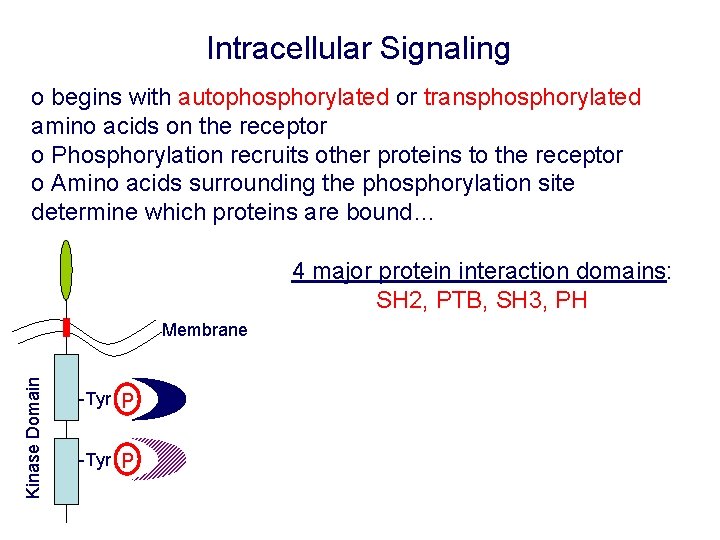
Intracellular Signaling o begins with autophosphorylated or transphorylated amino acids on the receptor o Phosphorylation recruits other proteins to the receptor o Amino acids surrounding the phosphorylation site determine which proteins are bound… 4 major protein interaction domains: SH 2, PTB, SH 3, PH Kinase Domain Membrane -Tyr P
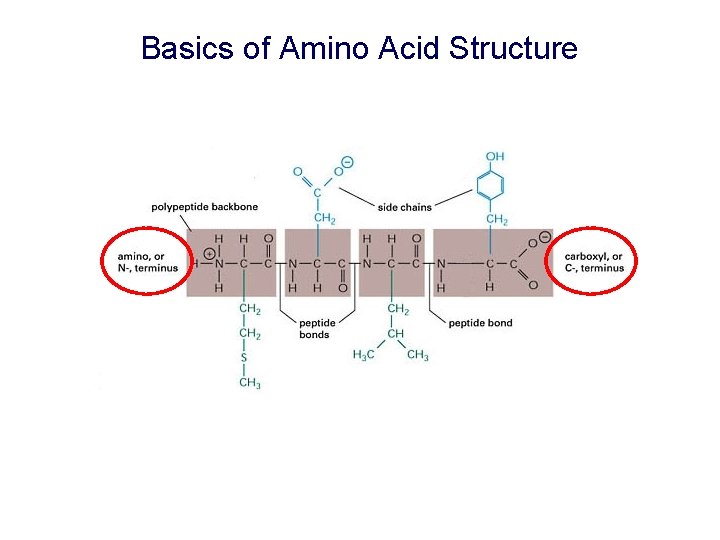
Basics of Amino Acid Structure
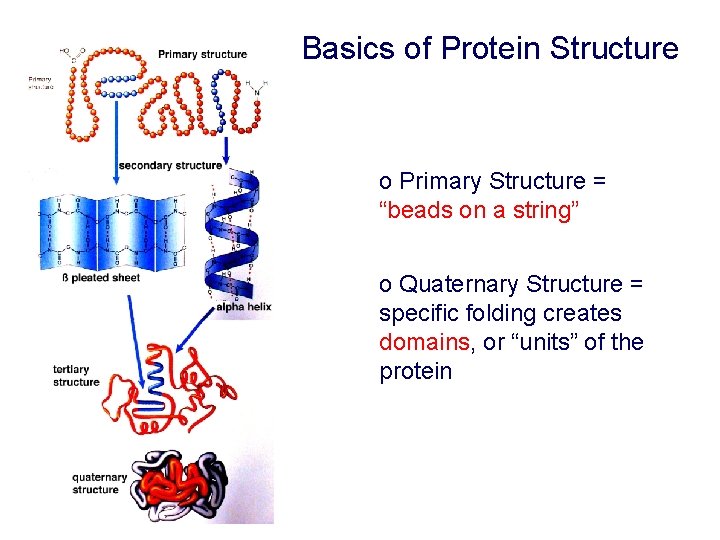
Basics of Protein Structure o Primary Structure = “beads on a string” o Quaternary Structure = specific folding creates domains, or “units” of the protein
SH 2 domains o SH 2 = src homology 2 o was first identified as a 100 amino acid region of homology (“sameness”) in the src tyrosine kinase o specifically recognizes phosphorylated Tyrosine o 2 classes of SH 2 domain-containing proteins… - have enzymatic activity (like Src) - don’t have enzymatic activity o Those with no enzymatic activity bind other proteins to the receptor…adaptor molecules
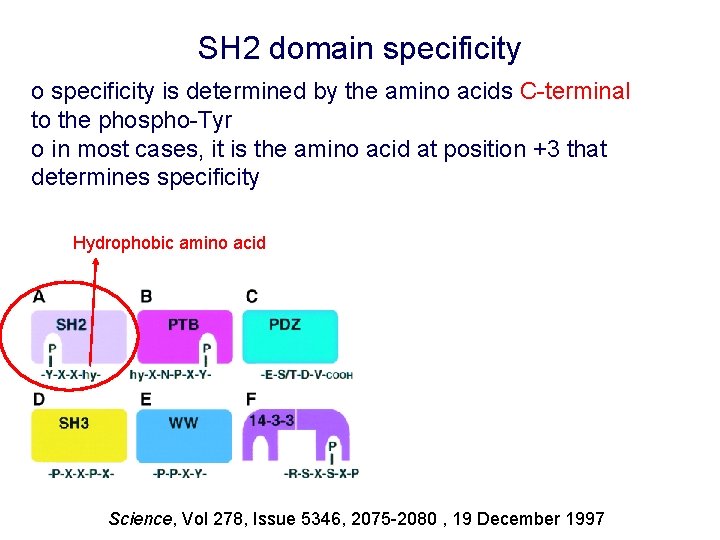
SH 2 domain specificity o specificity is determined by the amino acids C-terminal to the phospho-Tyr o in most cases, it is the amino acid at position +3 that determines specificity Hydrophobic amino acid Science, Vol 278, Issue 5346, 2075 -2080 , 19 December 1997
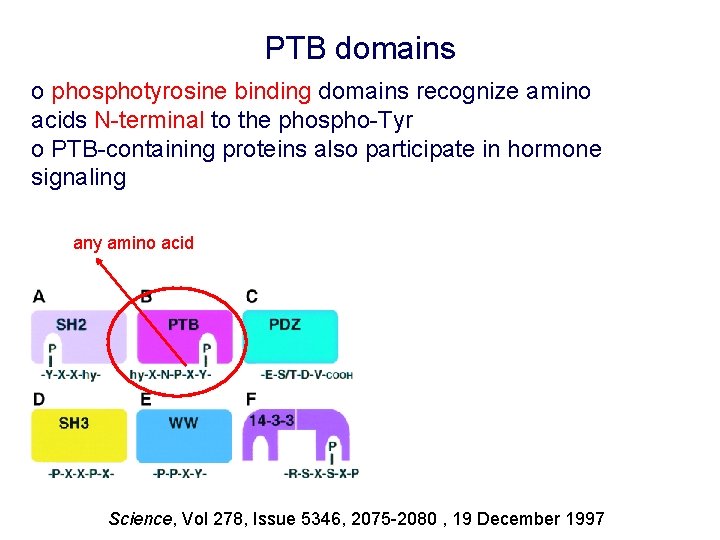
PTB domains o phosphotyrosine binding domains recognize amino acids N-terminal to the phospho-Tyr o PTB-containing proteins also participate in hormone signaling any amino acid Science, Vol 278, Issue 5346, 2075 -2080 , 19 December 1997
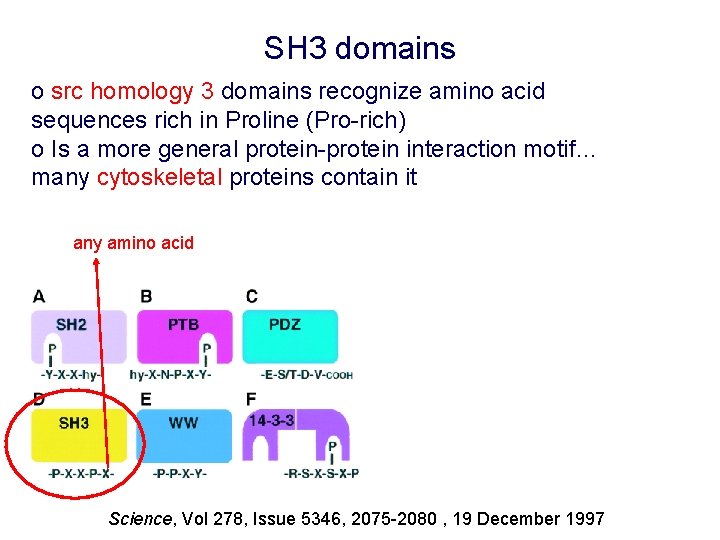
SH 3 domains o src homology 3 domains recognize amino acid sequences rich in Proline (Pro-rich) o Is a more general protein-protein interaction motif… many cytoskeletal proteins contain it any amino acid Science, Vol 278, Issue 5346, 2075 -2080 , 19 December 1997

PH domains o pleckstrin homology domains recognize phospholipids (components of the plasma membrane) Science, Vol 278, Issue 5346, 2075 -2080 , 19 December 1997
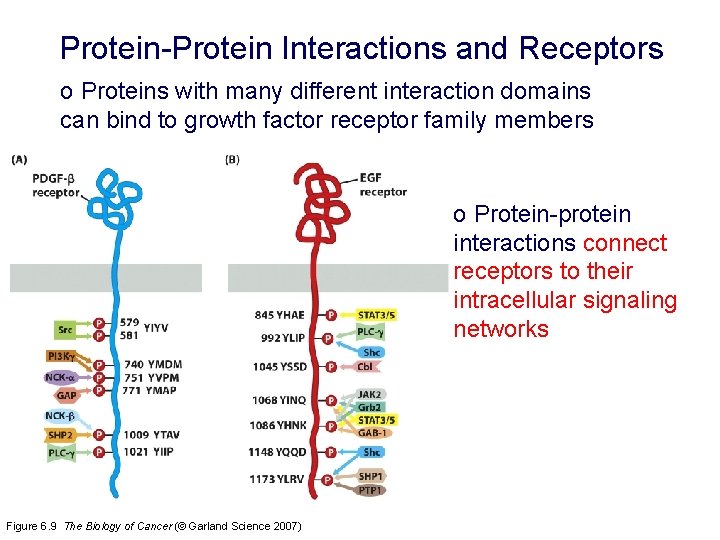
Protein-Protein Interactions and Receptors o Proteins with many different interaction domains can bind to growth factor receptor family members o Protein-protein interactions connect receptors to their intracellular signaling networks Figure 6. 9 The Biology of Cancer (© Garland Science 2007)
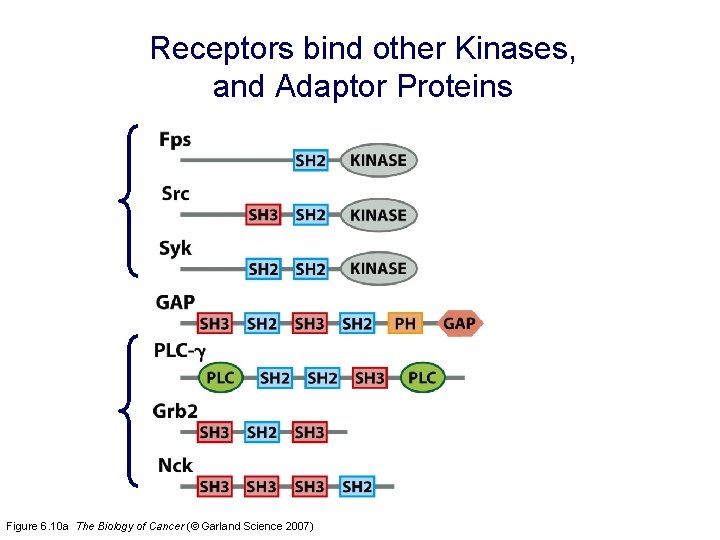
Receptors bind other Kinases, and Adaptor Proteins Figure 6. 10 a The Biology of Cancer (© Garland Science 2007)
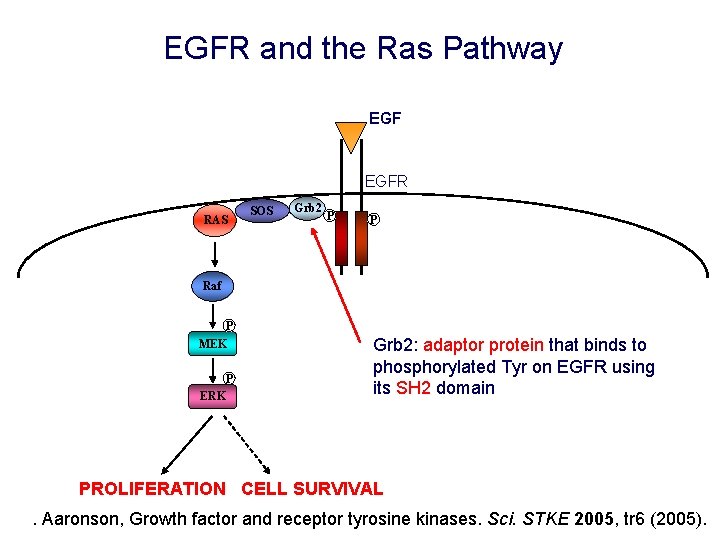
EGFR and the Ras Pathway EGFR RAS SOS Grb 2 P P Raf P MEK P ERK Grb 2: adaptor protein that binds to phosphorylated Tyr on EGFR using its SH 2 domain PROLIFERATION CELL SURVIVAL. Aaronson, Growth factor and receptor tyrosine kinases. Sci. STKE 2005, tr 6 (2005).
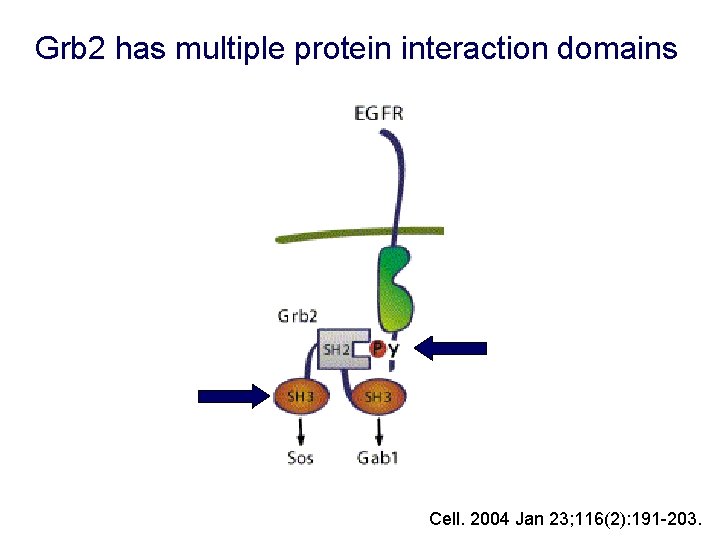
Grb 2 has multiple protein interaction domains Cell. 2004 Jan 23; 116(2): 191 -203.
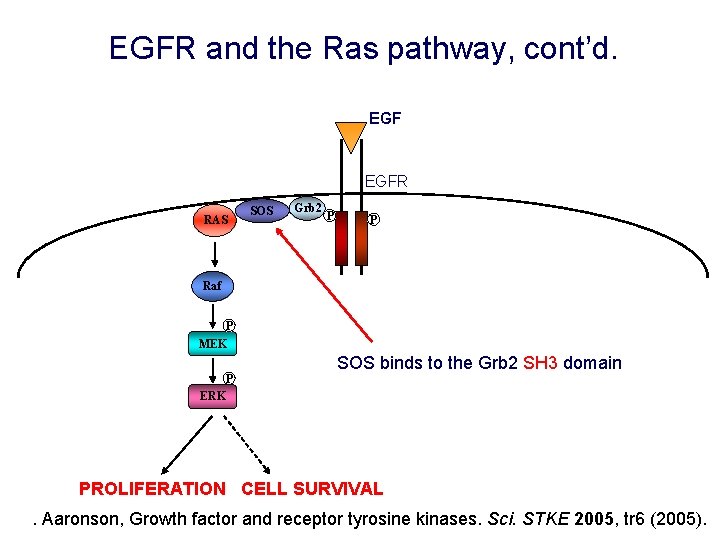
EGFR and the Ras pathway, cont’d. EGFR RAS SOS Grb 2 P P Raf P MEK P ERK SOS binds to the Grb 2 SH 3 domain PROLIFERATION CELL SURVIVAL. Aaronson, Growth factor and receptor tyrosine kinases. Sci. STKE 2005, tr 6 (2005).
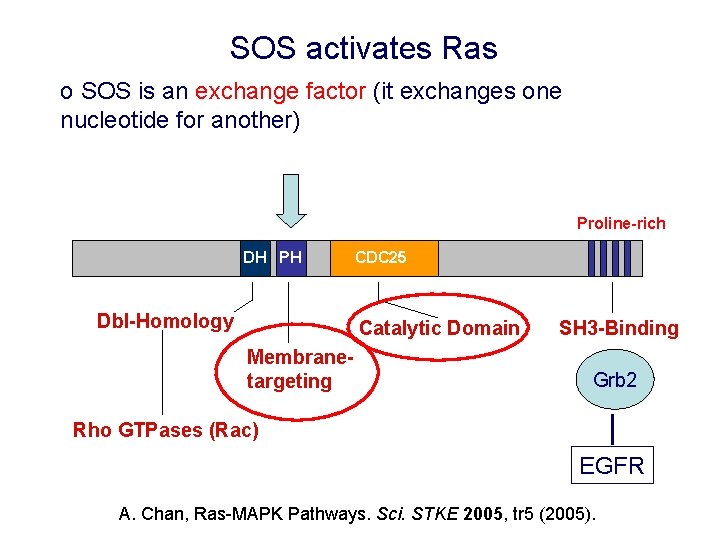
SOS activates Ras o SOS is an exchange factor (it exchanges one nucleotide for another) Proline-rich DH PH Dbl-Homology CDC 25 Catalytic Domain Membranetargeting SH 3 -Binding Grb 2 Rho GTPases (Rac) EGFR A. Chan, Ras-MAPK Pathways. Sci. STKE 2005, tr 5 (2005).
What is Ras? o Ras is an oncogene o Ras is a small GTP-binding protein…it binds guanine triphosphate o Ras bound to GTP is active…Ras bound to GDP is inactive o Ras mutation is implicated in many kinds of cancer…
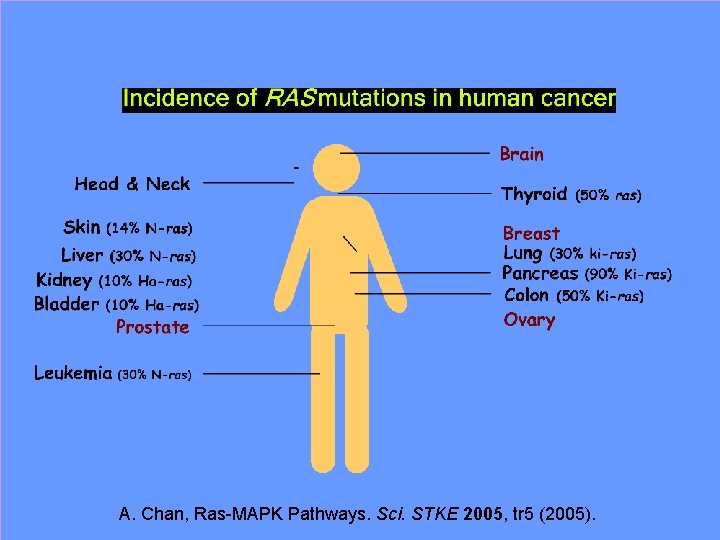
A. Chan, Ras-MAPK Pathways. Sci. STKE 2005, tr 5 (2005).
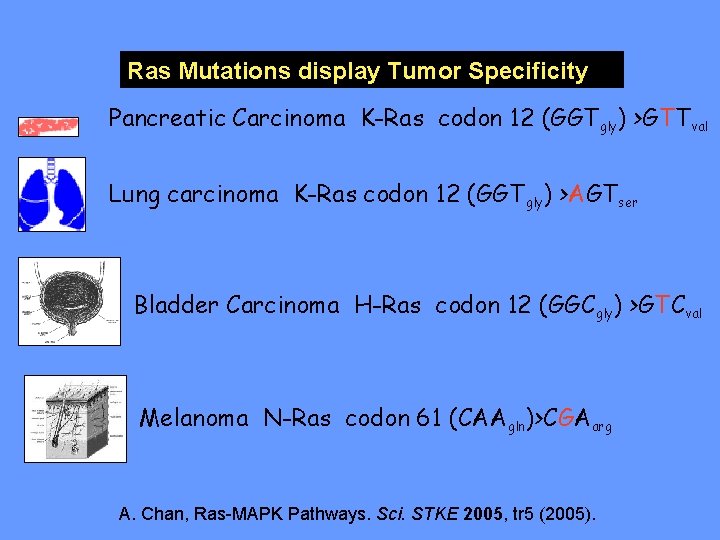
Ras Mutations display Tumor Specificity Pancreatic Carcinoma K-Ras codon 12 (GGTgly) >GTTval Lung carcinoma K-Ras codon 12 (GGTgly) >AGTser Bladder Carcinoma H-Ras codon 12 (GGCgly) >GTCval Melanoma N-Ras codon 61 (CAAgln)>CGAarg A. Chan, Ras-MAPK Pathways. Sci. STKE 2005, tr 5 (2005).
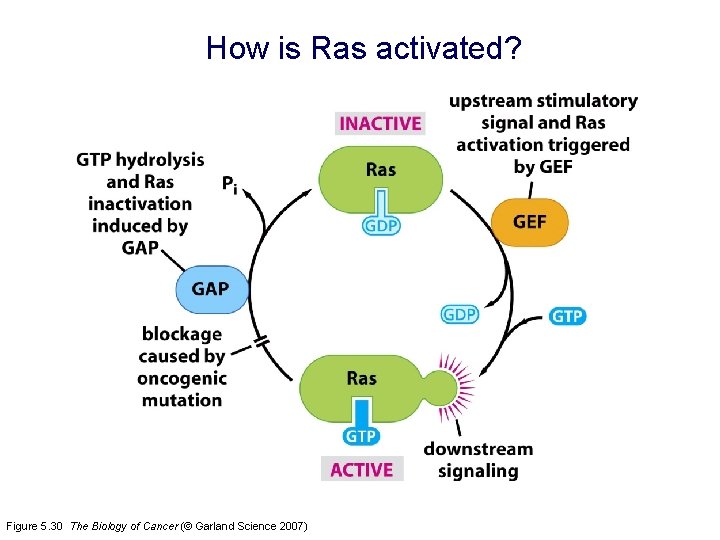
How is Ras activated? Figure 5. 30 The Biology of Cancer (© Garland Science 2007)
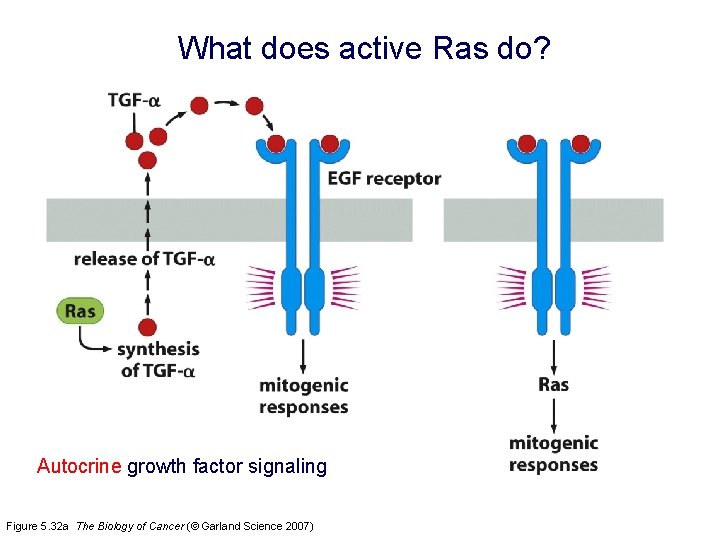
What does active Ras do? Autocrine growth factor signaling Figure 5. 32 a The Biology of Cancer (© Garland Science 2007)
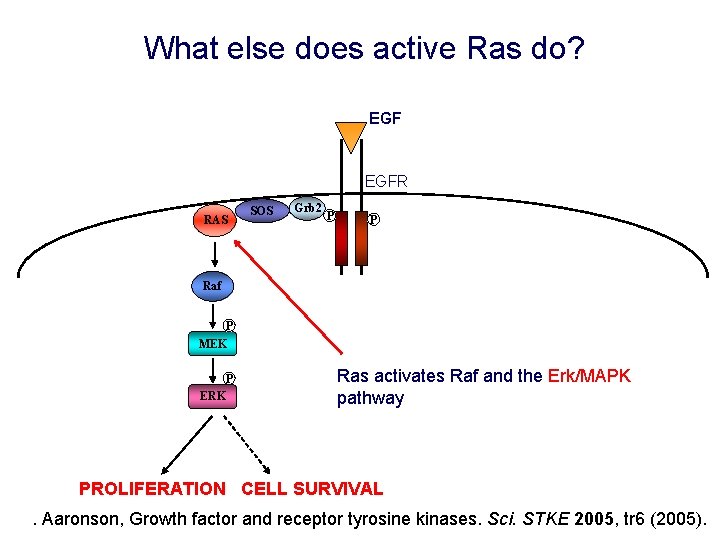
What else does active Ras do? EGFR RAS SOS Grb 2 P P Raf P MEK P ERK Ras activates Raf and the Erk/MAPK pathway PROLIFERATION CELL SURVIVAL. Aaronson, Growth factor and receptor tyrosine kinases. Sci. STKE 2005, tr 6 (2005).
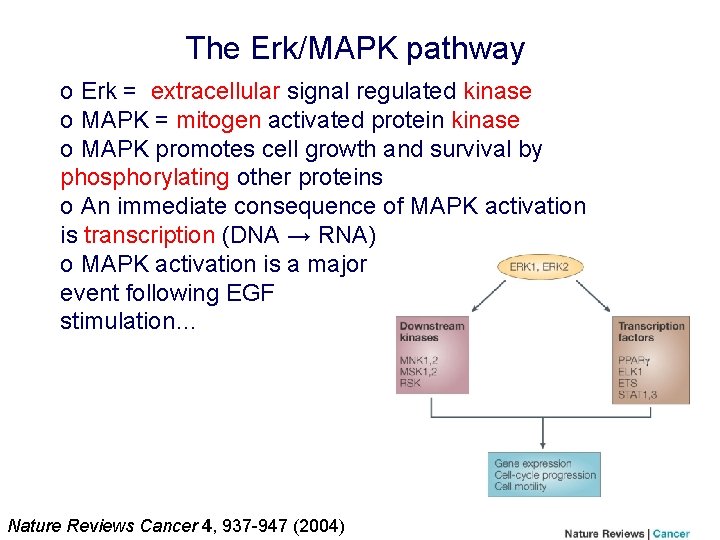
The Erk/MAPK pathway o Erk = extracellular signal regulated kinase o MAPK = mitogen activated protein kinase o MAPK promotes cell growth and survival by phosphorylating other proteins o An immediate consequence of MAPK activation is transcription (DNA → RNA) o MAPK activation is a major event following EGF stimulation… Nature Reviews Cancer 4, 937 -947 (2004)
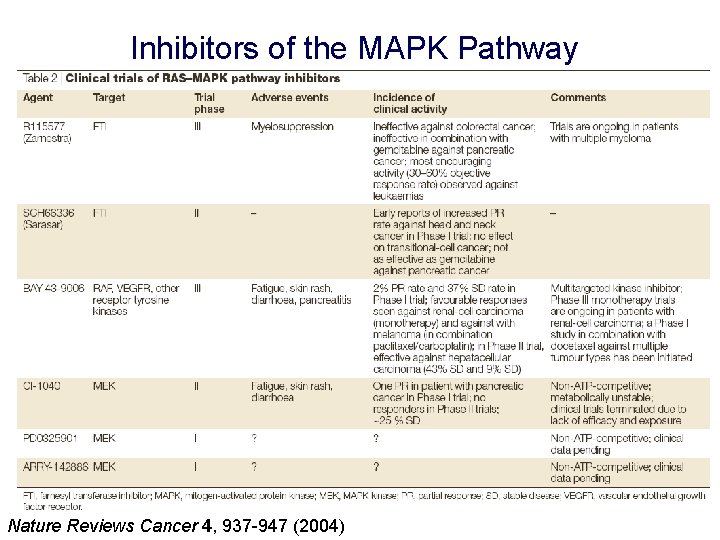
Inhibitors of the MAPK Pathway Nature Reviews Cancer 4, 937 -947 (2004)
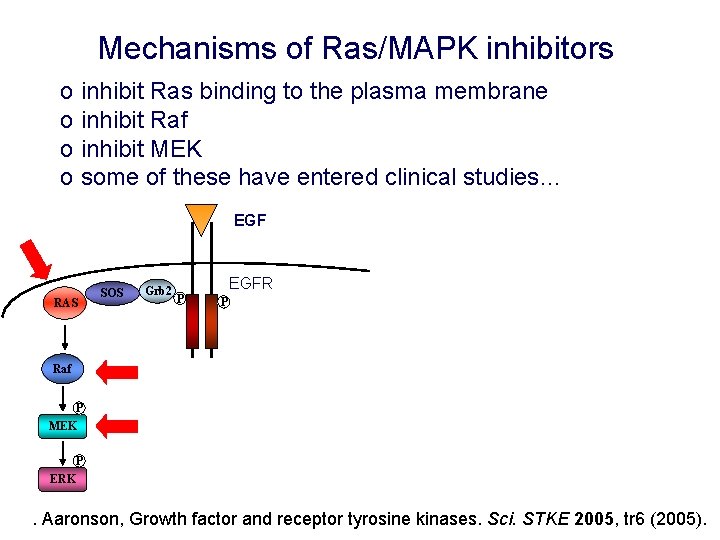
Mechanisms of Ras/MAPK inhibitors o inhibit Ras binding to the plasma membrane o inhibit Raf o inhibit MEK o some of these have entered clinical studies… EGF RAS SOS Grb 2 P EGFR P Raf P MEK P ERK . Aaronson, Growth factor and receptor tyrosine kinases. Sci. STKE 2005, tr 6 (2005).
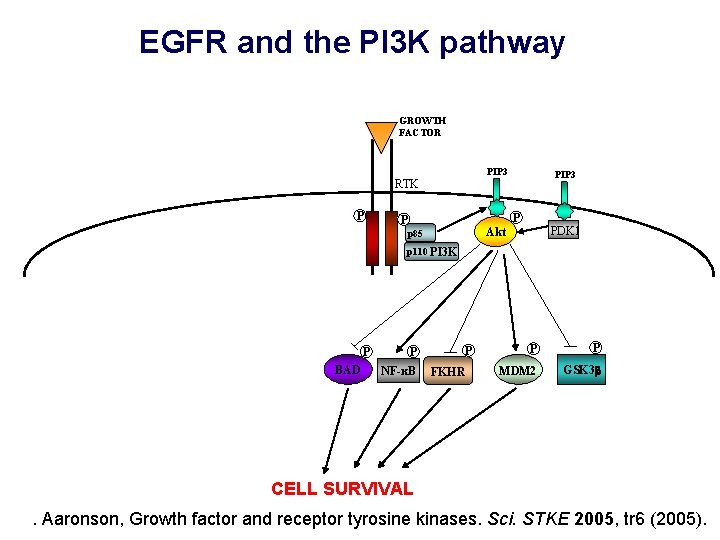
EGFR and the PI 3 K pathway GROWTH FACTOR PIP 3 RTK P PIP 3 P P PDK 1 Akt p 85 p 110 PI 3 K P BAD P NF-ĸB P FKHR P P MDM 2 GSK 3 CELL SURVIVAL. Aaronson, Growth factor and receptor tyrosine kinases. Sci. STKE 2005, tr 6 (2005).
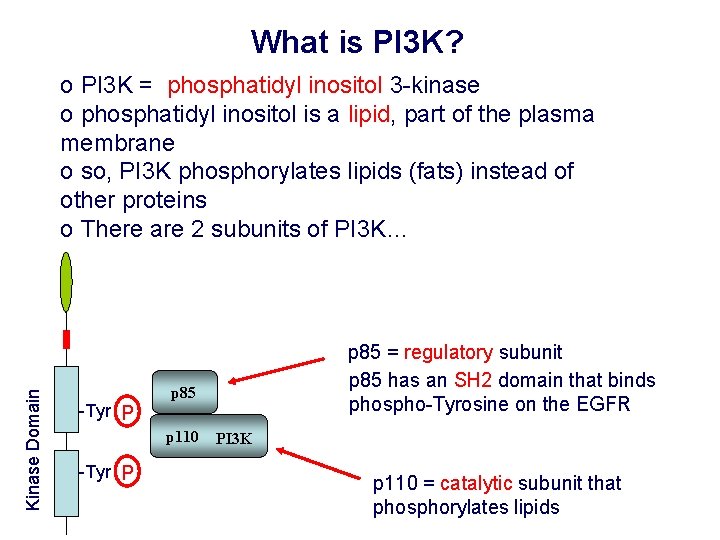
What is PI 3 K? Kinase Domain o PI 3 K = phosphatidyl inositol 3 -kinase o phosphatidyl inositol is a lipid, part of the plasma membrane o so, PI 3 K phosphorylates lipids (fats) instead of other proteins o There are 2 subunits of PI 3 K… -Tyr P p 85 p 110 -Tyr P p 85 = regulatory subunit p 85 has an SH 2 domain that binds phospho-Tyrosine on the EGFR PI 3 K p 110 = catalytic subunit that phosphorylates lipids
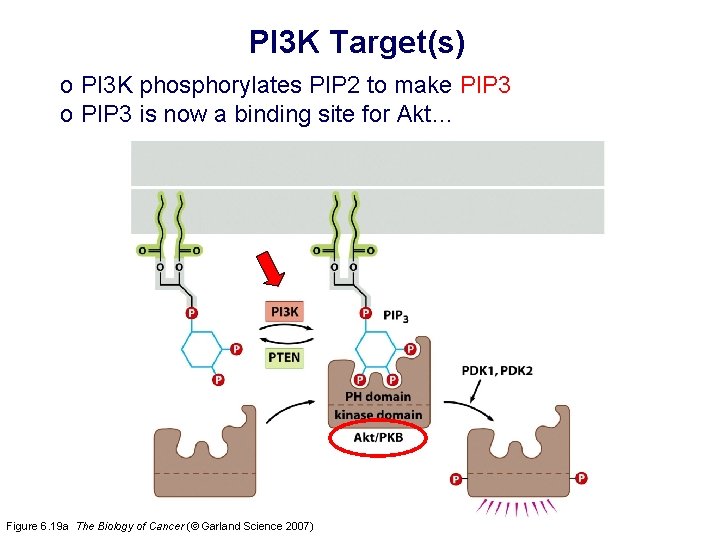
PI 3 K Target(s) o PI 3 K phosphorylates PIP 2 to make PIP 3 o PIP 3 is now a binding site for Akt… Figure 6. 19 a The Biology of Cancer (© Garland Science 2007)
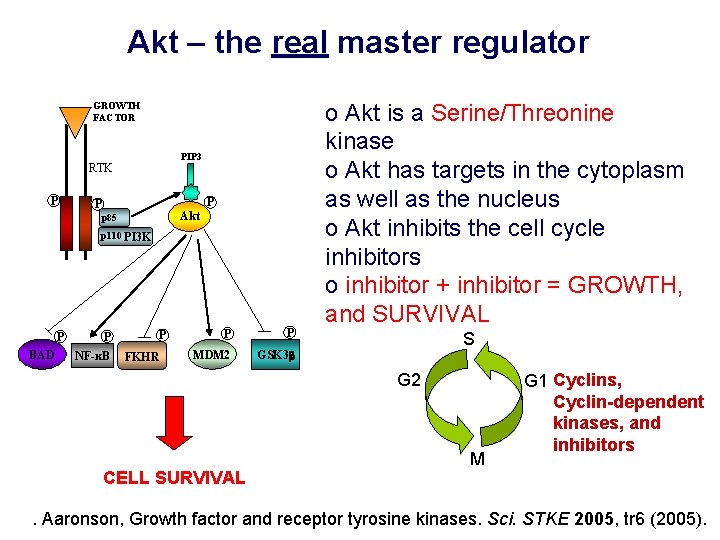
Akt – the real master regulator GROWTH FACTOR PIP 3 RTK P P P Akt p 85 p 110 PI 3 K P BAD P NF-ĸB P FKHR P P MDM 2 GSK 3 o Akt is a Serine/Threonine kinase o Akt has targets in the cytoplasm as well as the nucleus o Akt inhibits the cell cycle inhibitors o inhibitor + inhibitor = GROWTH, and SURVIVAL S G 2 CELL SURVIVAL M G 1 Cyclins, Cyclin-dependent kinases, and inhibitors . Aaronson, Growth factor and receptor tyrosine kinases. Sci. STKE 2005, tr 6 (2005).
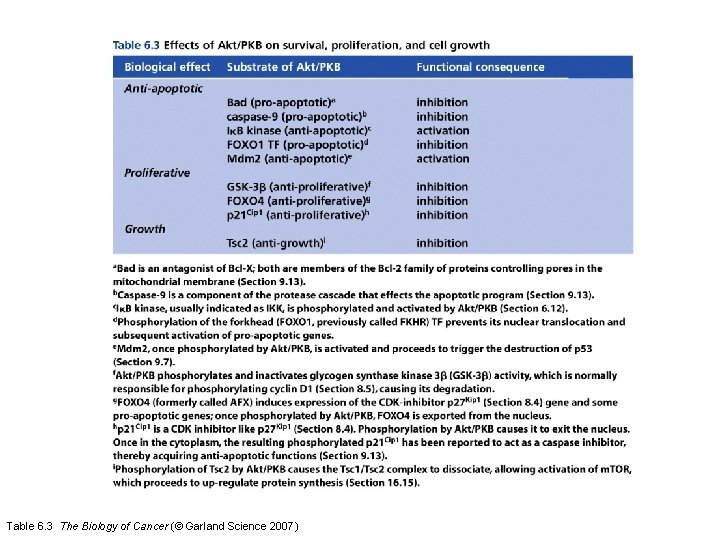
Table 6. 3 The Biology of Cancer (© Garland Science 2007)
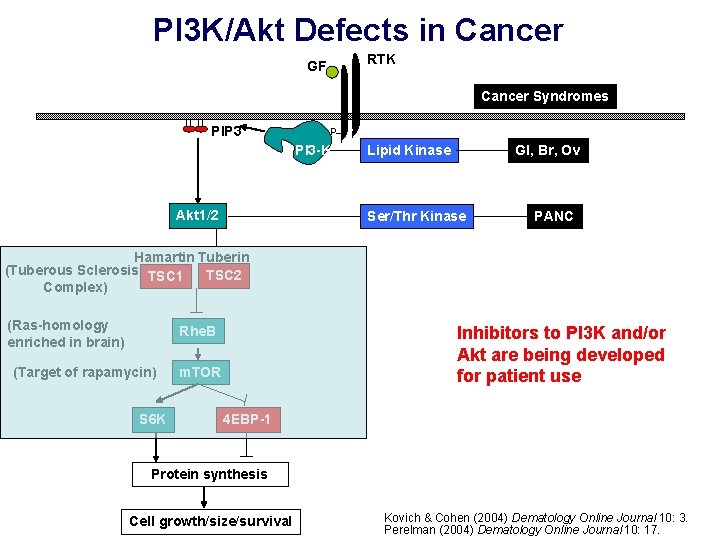
PI 3 K/Akt Defects in Cancer RTK GF Cancer Syndromes PIP 3 p PI 3 -K Akt 1/2 Lipid Kinase GI, Br, Ov Ser/Thr Kinase PANC Hamartin Tuberin (Tuberous Sclerosis TSC 1 TSC 2 Complex) (Ras-homology enriched in brain) Inhibitors to PI 3 K and/or Akt are being developed for patient use Rhe. B (Target of rapamycin) S 6 K m. TOR 4 EBP-1 Protein synthesis Cell growth/size/survival Kovich & Cohen (2004) Dematology Online Journal 10: 3. Perelman (2004) Dematology Online Journal 10: 17.
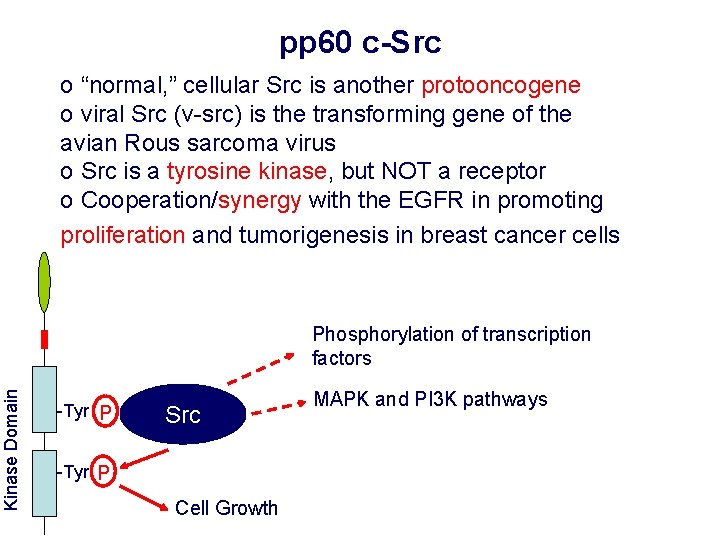
pp 60 c-Src o “normal, ” cellular Src is another protooncogene o viral Src (v-src) is the transforming gene of the avian Rous sarcoma virus o Src is a tyrosine kinase, but NOT a receptor o Cooperation/synergy with the EGFR in promoting proliferation and tumorigenesis in breast cancer cells Kinase Domain Phosphorylation of transcription factors -Tyr P Src -Tyr P Cell Growth MAPK and PI 3 K pathways
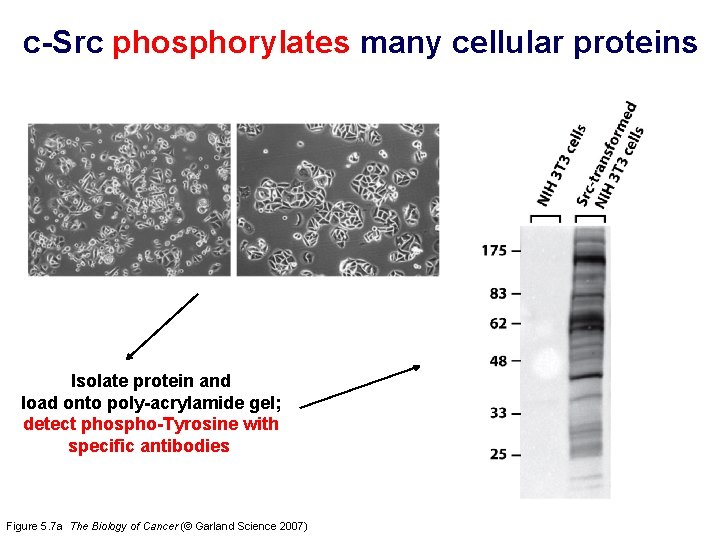
c-Src phosphorylates many cellular proteins Isolate protein and load onto poly-acrylamide gel; detect phospho-Tyrosine with specific antibodies Figure 5. 7 a The Biology of Cancer (© Garland Science 2007)
c-Src and Cancer o 30 -70% of breast cancers overexpress Src, show elevated activity…many of these also overexpress EGFR o Other cancers Src may contribute to are: colon, lung, skin, endometrial, head/neck o Src is usually not mutated…how is it activated?
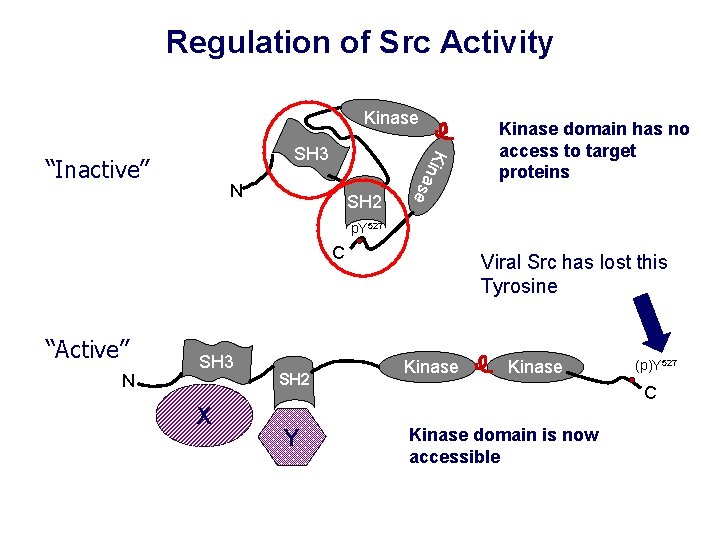
Regulation of Src Activity Kinase “Inactive” N SH 2 K i n ase SH 3 Kinase domain has no access to target proteins p. Y 527 C “Active” N SH 3 X SH 2 Y Viral Src has lost this Tyrosine Kinase (p)Y 527 C Kinase domain is now accessible
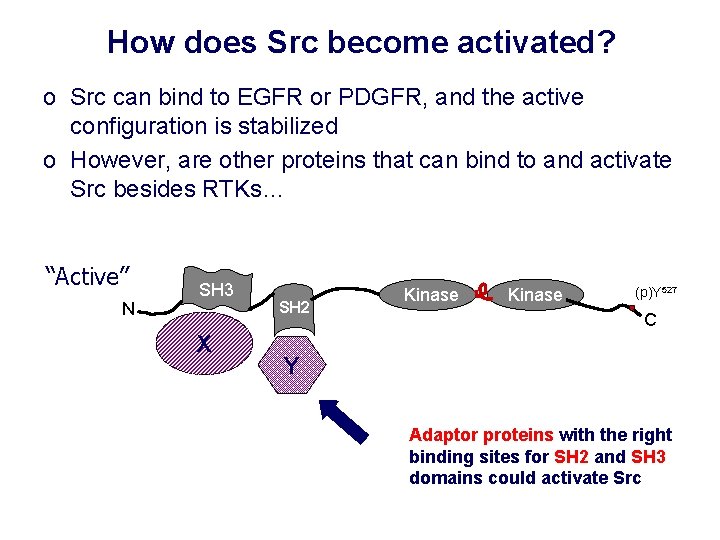
How does Src become activated? o Src can bind to EGFR or PDGFR, and the active configuration is stabilized o However, are other proteins that can bind to and activate Src besides RTKs… “Active” N SH 3 X SH 2 Kinase (p)Y 527 C Y Adaptor proteins with the right binding sites for SH 2 and SH 3 domains could activate Src
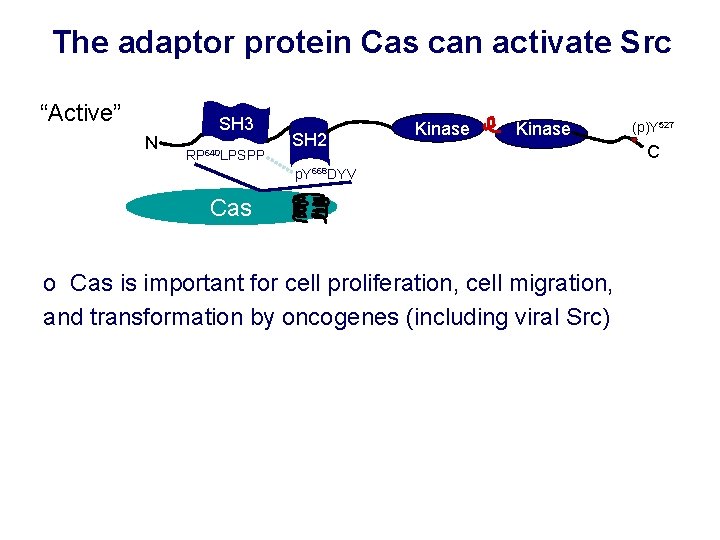
The adaptor protein Cas can activate Src “Active” N SH 3 RP 640 LPSPP SH 2 Kinase p. Y 668 DYV Cas o Cas is important for cell proliferation, cell migration, and transformation by oncogenes (including viral Src) (p)Y 527 C
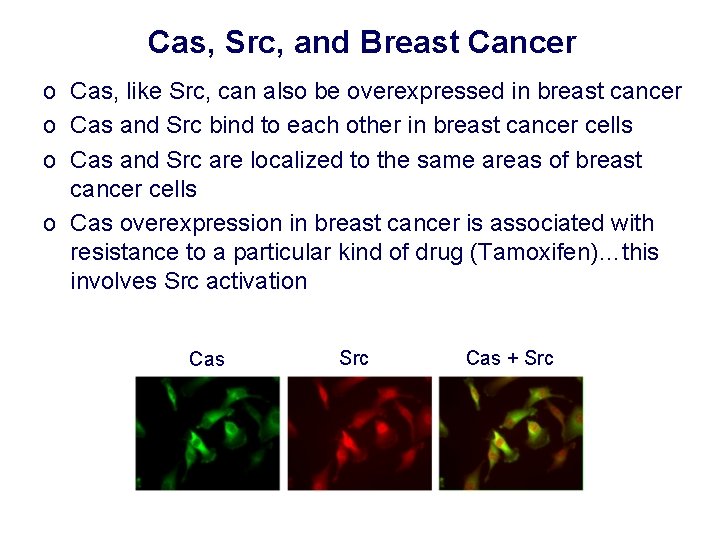
Cas, Src, and Breast Cancer o Cas, like Src, can also be overexpressed in breast cancer o Cas and Src bind to each other in breast cancer cells o Cas and Src are localized to the same areas of breast cancer cells o Cas overexpression in breast cancer is associated with resistance to a particular kind of drug (Tamoxifen)…this involves Src activation Cas Src Cas + Src
Inhibitors of Src in Cancer Therapy o o Inhibit protein-protein interactions (like those with Cas) Inhibit kinase activity (preclinical/phase I trials) Inhibit protein stability (accelerate Src degradation) These will likely be used in combination with other chemotherapy drugs, EGFR inhibitors, etc.
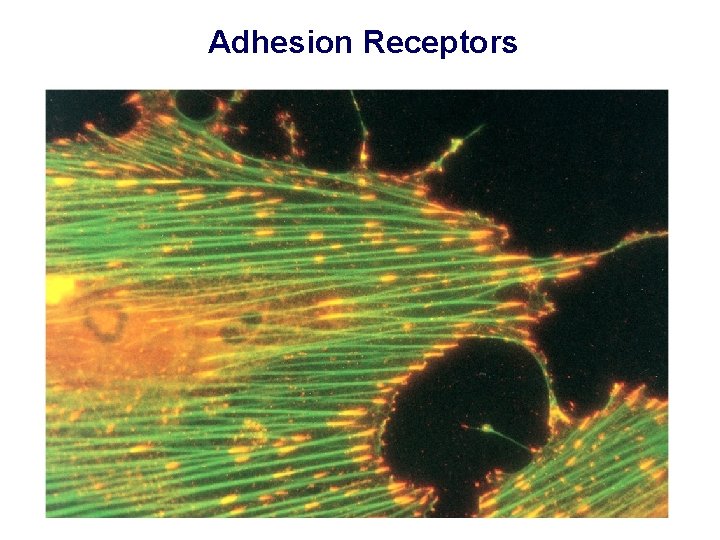
Adhesion Receptors
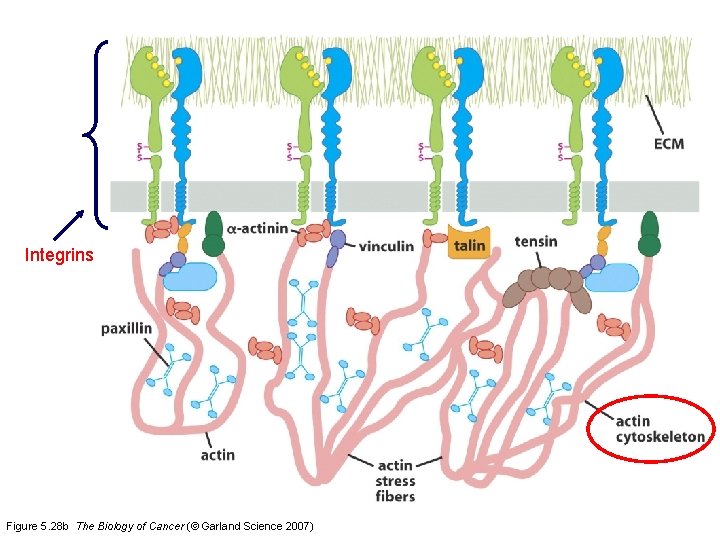
Integrins Figure 5. 28 b The Biology of Cancer (© Garland Science 2007)
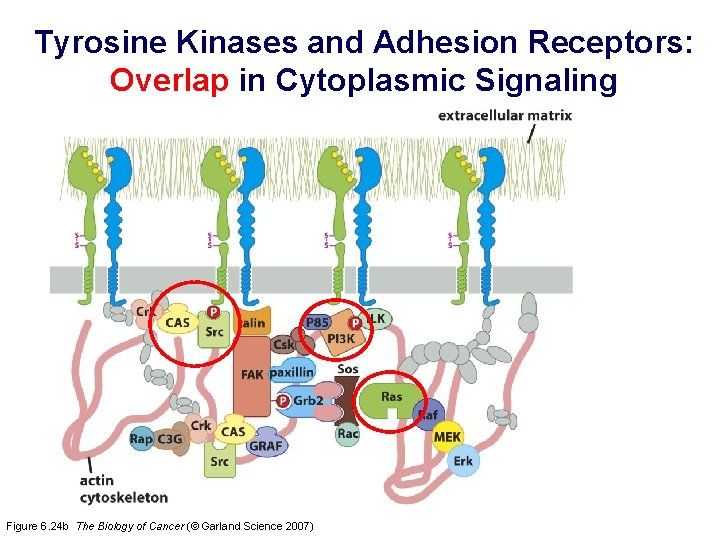
Tyrosine Kinases and Adhesion Receptors: Overlap in Cytoplasmic Signaling Figure 6. 24 b The Biology of Cancer (© Garland Science 2007)
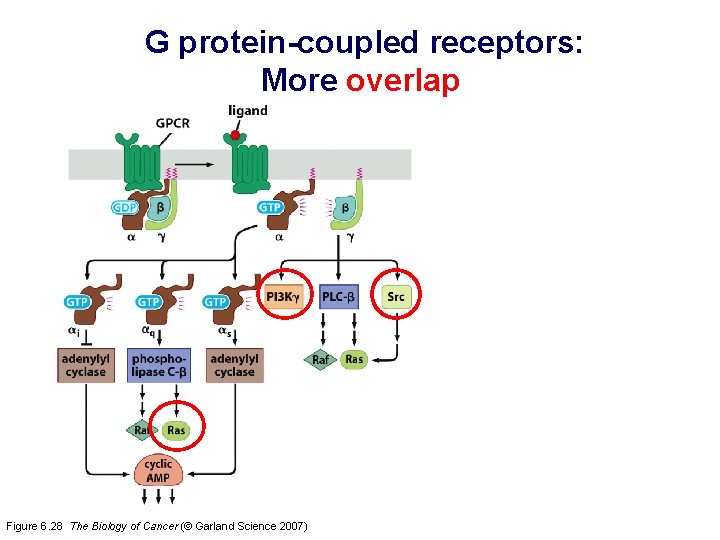
G protein-coupled receptors: More overlap Figure 6. 28 The Biology of Cancer (© Garland Science 2007)
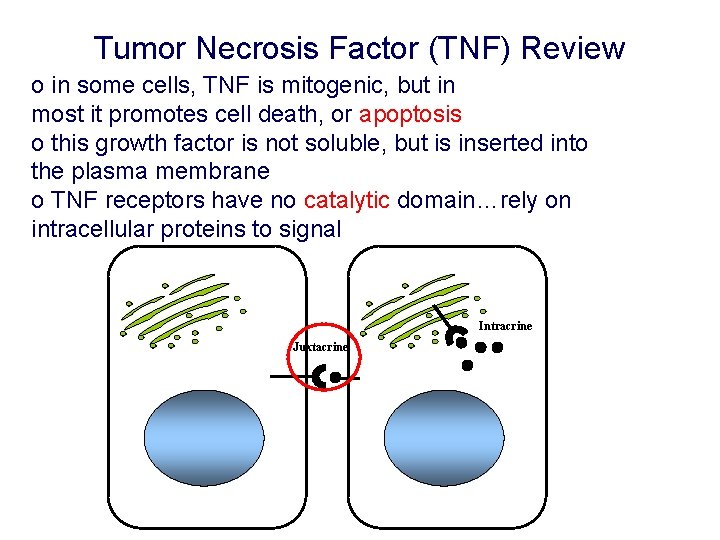
Tumor Necrosis Factor (TNF) Review o in some cells, TNF is mitogenic, but in most it promotes cell death, or apoptosis o this growth factor is not soluble, but is inserted into the plasma membrane o TNF receptors have no catalytic domain…rely on intracellular proteins to signal Intracrine Juxtacrine
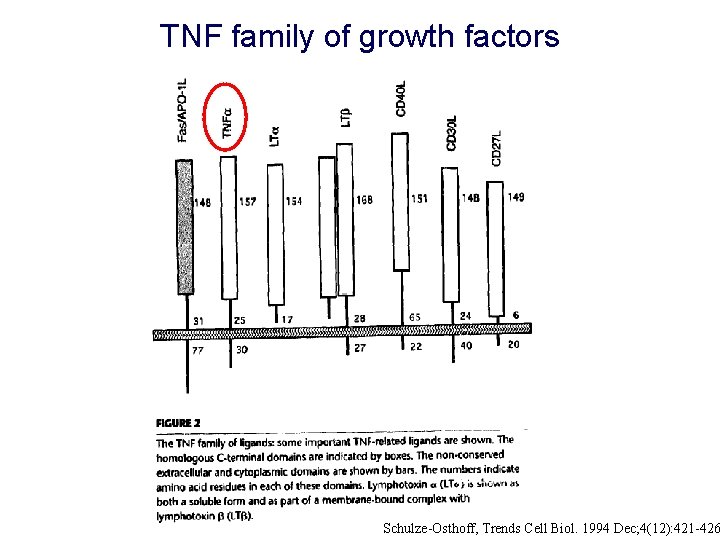
TNF family of growth factors Schulze-Osthoff, Trends Cell Biol. 1994 Dec; 4(12): 421 -426
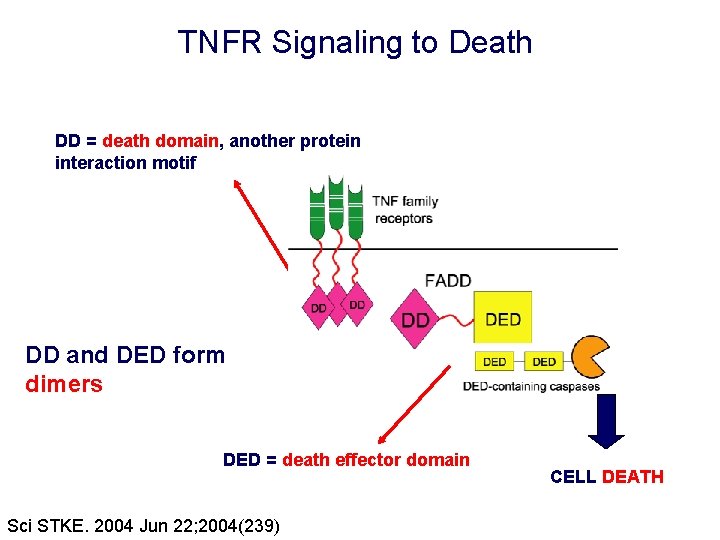
TNFR Signaling to Death DD = death domain, another protein interaction motif DD and DED form dimers DED = death effector domain Sci STKE. 2004 Jun 22; 2004(239) CELL DEATH
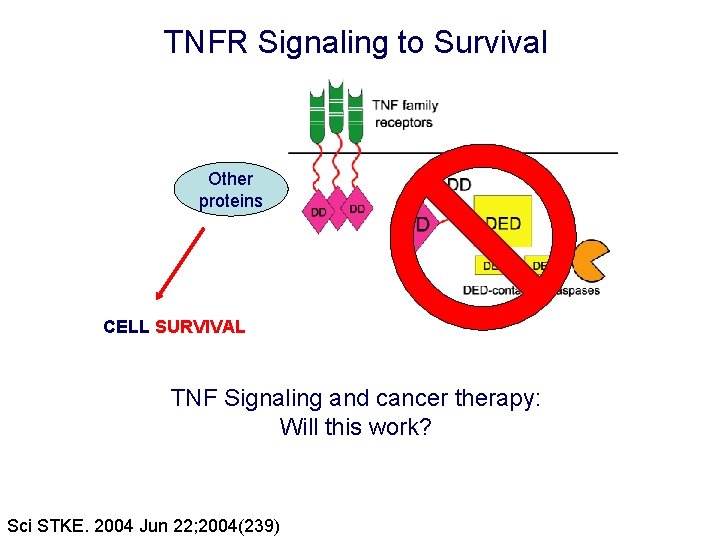
TNFR Signaling to Survival Other proteins CELL SURVIVAL TNF Signaling and cancer therapy: Will this work? Sci STKE. 2004 Jun 22; 2004(239)
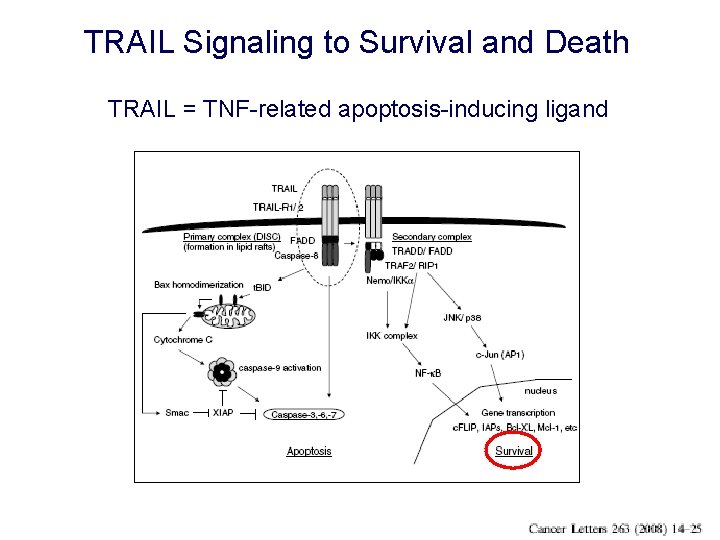
TRAIL Signaling to Survival and Death TRAIL = TNF-related apoptosis-inducing ligand
- Slides: 51