
Tuesday February 25 2014 10 6 Students analyze
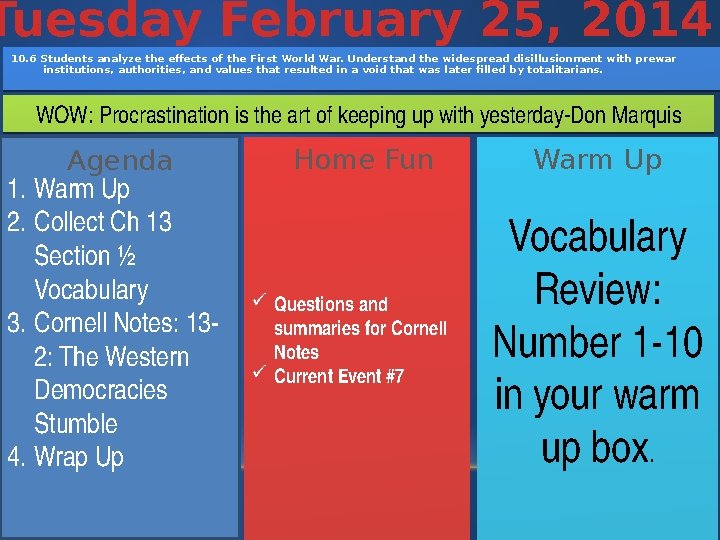
Tuesday February 25, 2014 10. 6 Students analyze the widespread 10. 6 Students analyze the effects of of the First World War. Understand the widespread disillusionment with prewar institutions, later filled institutions, authorities, and values that resulted in in a a void that was later filled by by totalitarians. WOW: Procrastination is the art of keeping up with yesterday-Don Marquis Agenda 1. Warm Up 2. Collect Ch 13 Section ½ Vocabulary 3. Cornell Notes: 132: The Western Democracies Stumble 4. Wrap Up Home Fun Questions and summaries for Cornell Notes Current Event #7 Warm Up Vocabulary Review: Number 1 -10 in your warm up box.
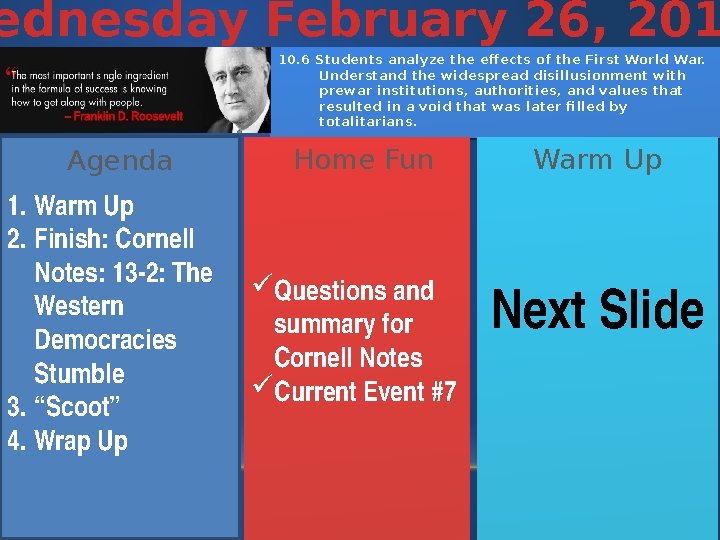
ednesday February 26, 201 10. 6 Students analyze the effects of the First World War. Understand the widespread disillusionment with prewar institutions, authorities, and values that resulted in a void that was later filled by totalitarians. Agenda 1. Warm Up 2. Finish: Cornell Notes: 13 -2: The Western Democracies Stumble 3. “Scoot” 4. Wrap Up Home Fun Questions and summary for Cornell Notes Current Event #7 Warm Up Next Slide
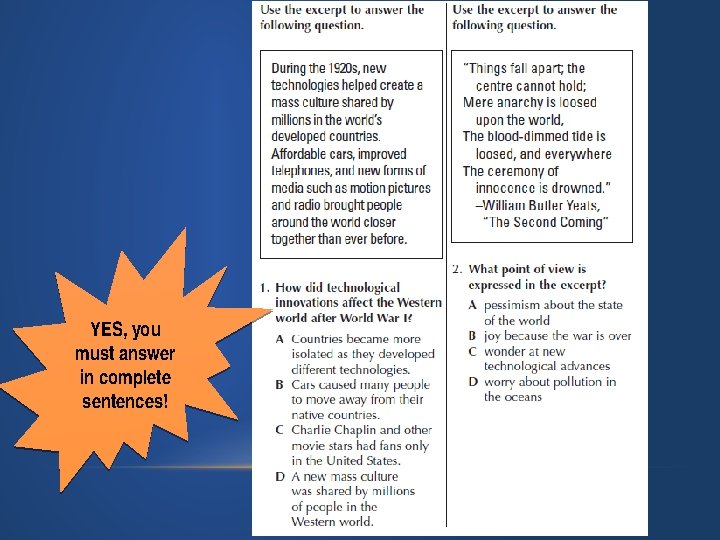
YES, you must answer in complete sentences!
SCOOT TOPIC: THE 1920’S • You have 30 seconds for each task card. • If you don’t do it, you don’t get the points. • Answer in complete sentences when possible!
WARM UP: WRITE THE WORD WHICH MATCHES THE DEFINITION IN YOUR WARM UP BOX. 1. a ban on the manufacture and sale of alcoholic beverages 2. a method of studying how the mind works and treating mental disorders. 3. massive fortifications built by the French along the French border with Germany. 4. an international agreement, signed by almost every nation in 1928, to renounce war as an instrument of national policy. 5. condition in which production of goods exceeds the demand for them. 6. the central banking system of the United States which regulate banks. 7. a painful time of global economic collapse, starting in 1929 & lasting until about 1939. 8. a massive package of economic and social programs established by President Roosevelt to help Americans during the Great Depression 9. Illegal bars that popped up during the 1920’s as a result of prohibition 10. the reduction of armed forces and weapons
PROHIBITION SPEAKEASIES PSYCHOANALYSIS FLAPPER OVERPRODUCTION 1. 2. 3. 4. 5. KELLOGG-BRIAND PACT NEW DEAL DISARMAMENT ULTIMATUM FEDERAL RESERVE MAGINOT LINE GREAT DEPRESSION liberated young women during the 1920’s a ban on the Manufacture and sale of alcoholic beverages a method of studying how the mind works and treating mental disorders. massive fortifications built by the French along the French border with Germany. an international agreement, signed by almost every nation in 1928, to renounce war as an instrument of national policy. 6. condition in which production of goods exceeds the demand for them. 7. the central banking system of the United States which regulate banks. 8. a painful time of global economic collapse, starting in 1929 & lasting until about 1939. 9. a massive package of economic and social programs established by President Roosevelt to help Americans during the Great Depression 10. Illegal bars that popped up during the 1920’s as a result of prohibition 11. the reduction of armed forces and weapons
TODAY’S STANDARD 10. 6 Students analyze the effects of the First World War. Understand the widespread disillusionment with prewar institutions, authorities, and values that resulted in a void that was later filled by totalitarians.
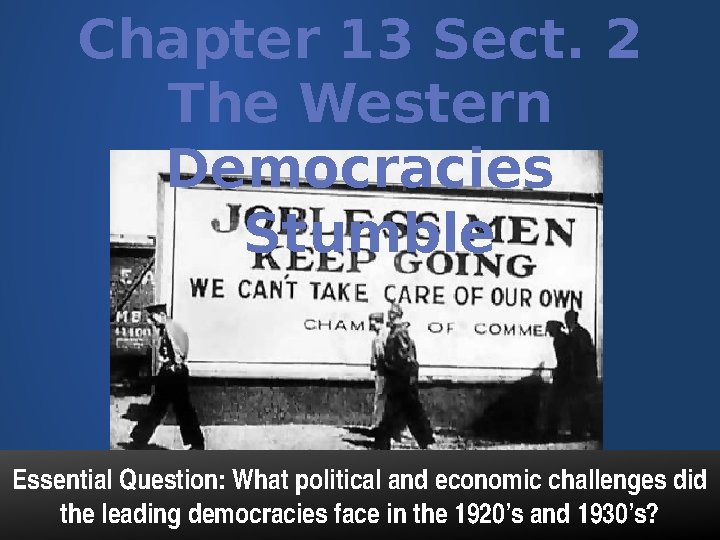
Chapter 13 Sect. 2 The Western Democracies Stumble Essential Question: What political and economic challenges did the leading democracies face in the 1920’s and 1930’s?
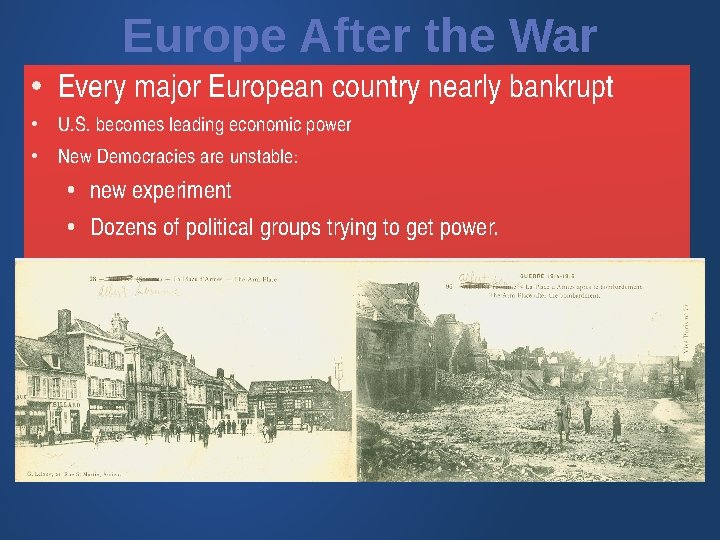
Europe After the War • Every major European country nearly bankrupt • • U. S. becomes leading economic power New Democracies are unstable : • • new experiment Dozens of political groups trying to get power.
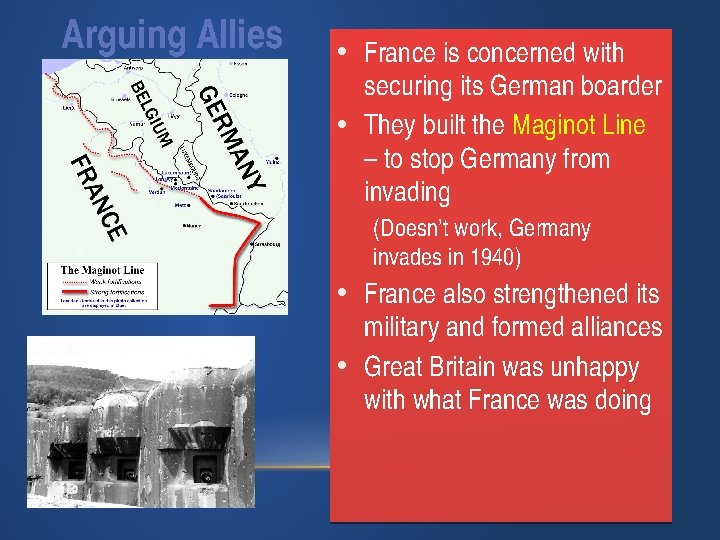
Arguing Allies • France is concerned with securing its German boarder • They built the Maginot Line – to stop Germany from invading (Doesn’t work, Germany invades in 1940) • France also strengthened its military and formed alliances • Great Britain was unhappy with what France was doing
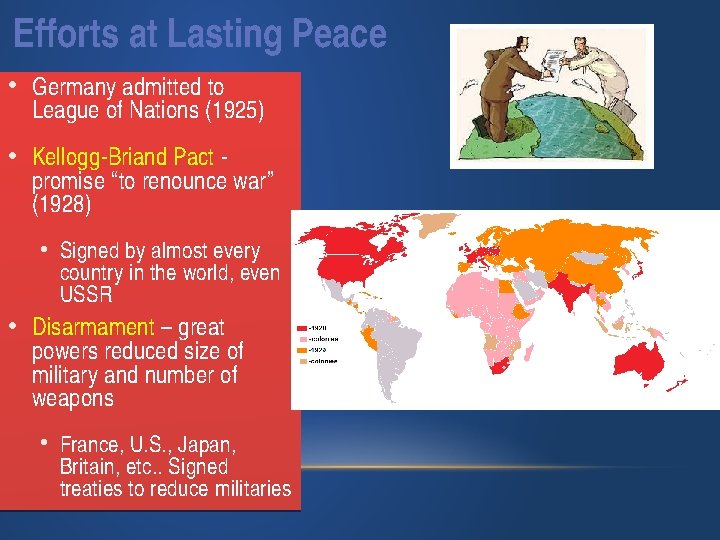
Efforts at Lasting Peace • Germany admitted to League of Nations (1925) • Kellogg-Briand Pact promise “to renounce war” (1928) • Signed by almost every country in the world, even USSR • Disarmament – great powers reduced size of military and number of weapons • France, U. S. , Japan, Britain, etc. . Signed treaties to reduce militaries
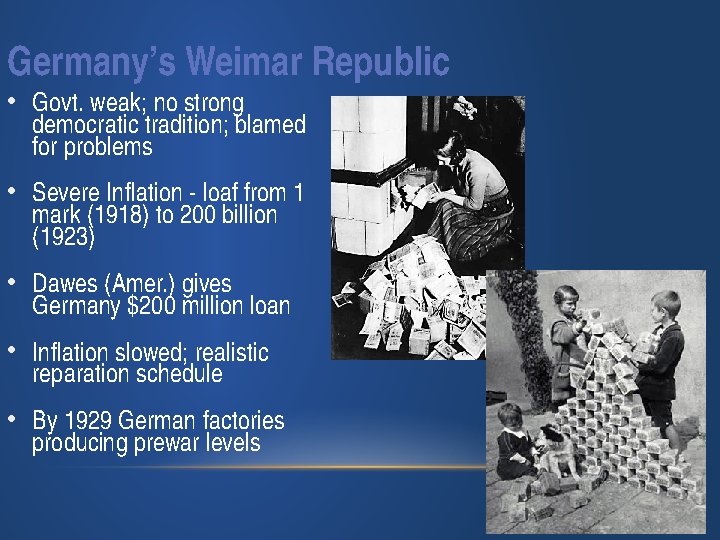
Germany’s Weimar Republic • Govt. weak; no strong democratic tradition; blamed for problems • Severe Inflation - loaf from 1 mark (1918) to 200 billion (1923) • Dawes (Amer. ) gives Germany $200 million loan • Inflation slowed; realistic reparation schedule • By 1929 German factories producing prewar levels
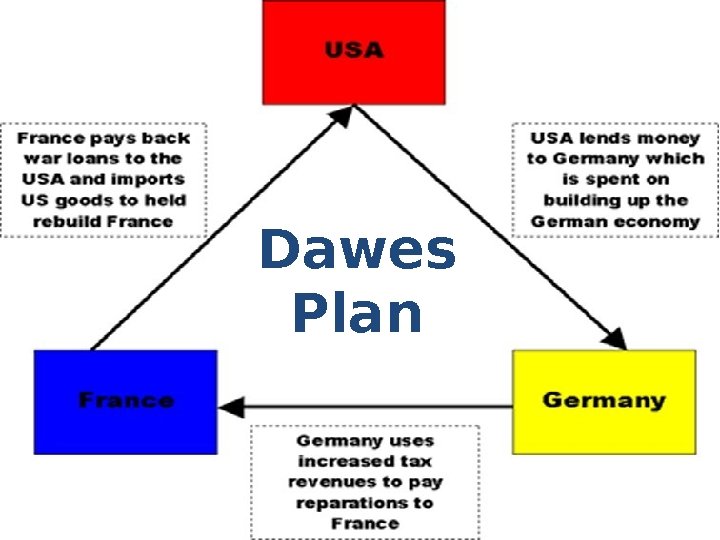
Dawes Plan
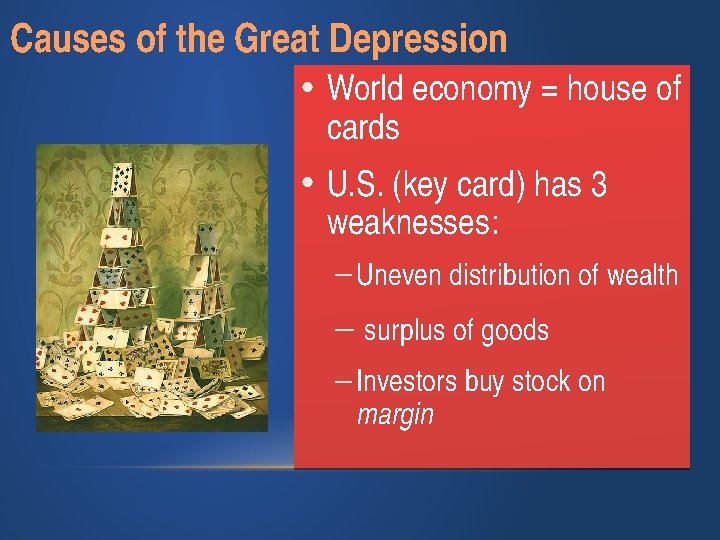
Causes of the Great Depression • World economy = house of cards • U. S. (key card) has 3 weaknesses: – Uneven distribution of wealth – surplus of goods – Investors buy stock on margin
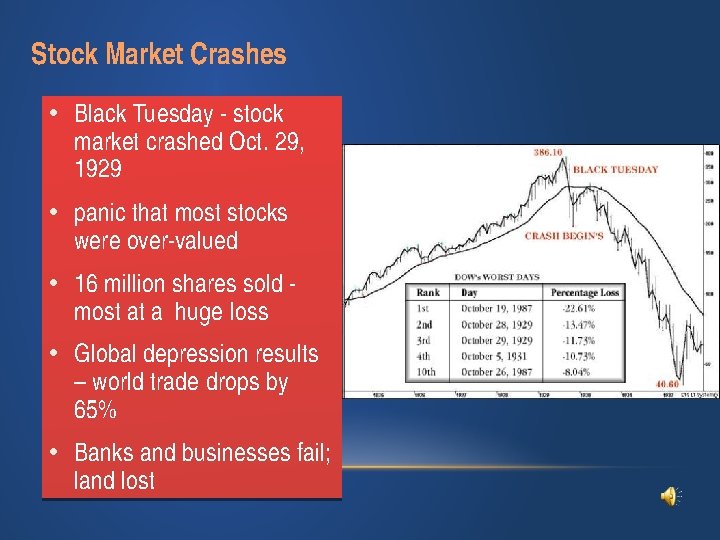
Stock Market Crashes • Black Tuesday - stock market crashed Oct. 29, 1929 • panic that most stocks were over-valued • 16 million shares sold most at a huge loss • Global depression results – world trade drops by 65% • Banks and businesses fail; land lost
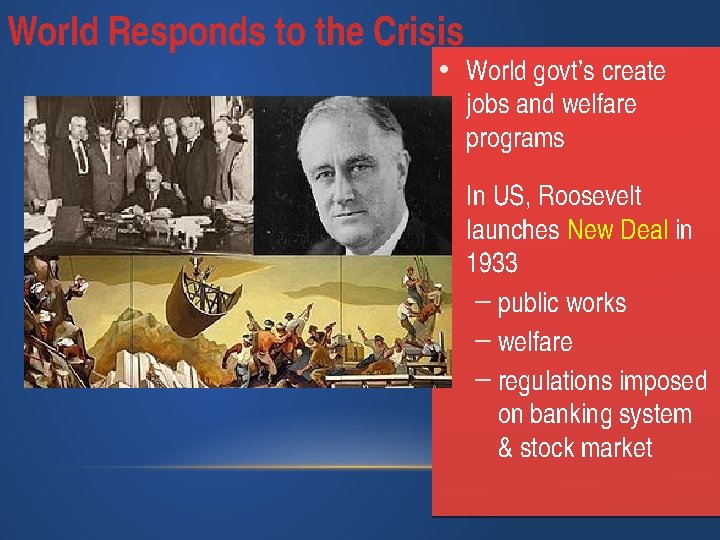
World Responds to the Crisis • World govt’s create jobs and welfare programs • In US, Roosevelt launches New Deal in 1933 – public works – welfare – regulations imposed on banking system & stock market
- Slides: 16