
Tuesday Calescite Decline therma thermae f bath Write

Tuesday
Calescite! Decline “therma, thermae” f. bath (Write that and the DECLENSION NUMBER at the top of your page. ) What else should you create? Hint: Magistra Flynn hearts _______!!!
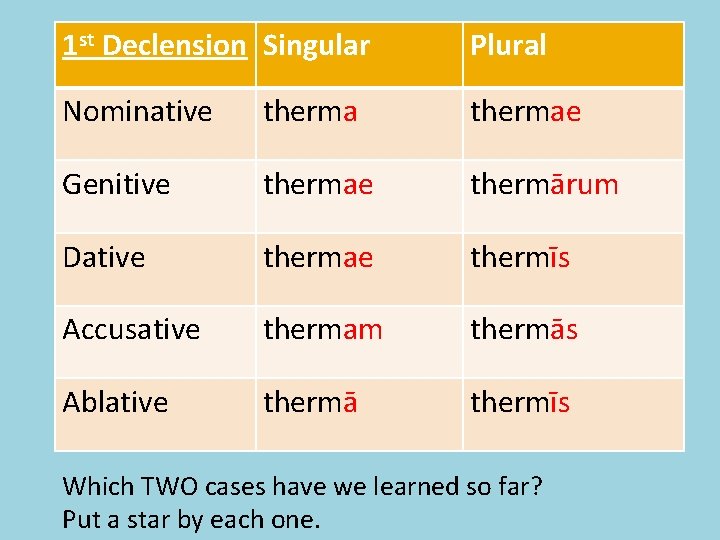
1 st Declension Singular Plural Nominative thermae Genitive thermae thermārum Dative thermae thermīs Accusative thermam thermās Ablative thermā thermīs Which TWO cases have we learned so far? Put a star by each one.
Reminder: Late Work Policy • Reb Recovery • Dry Erase Board notice – Within one week : 70 – After one week: 50 • Testing : Absent/Retakes
Stage 9 Model Sentences • pg. 142 • Practice reading Latin aloud • Translate into English
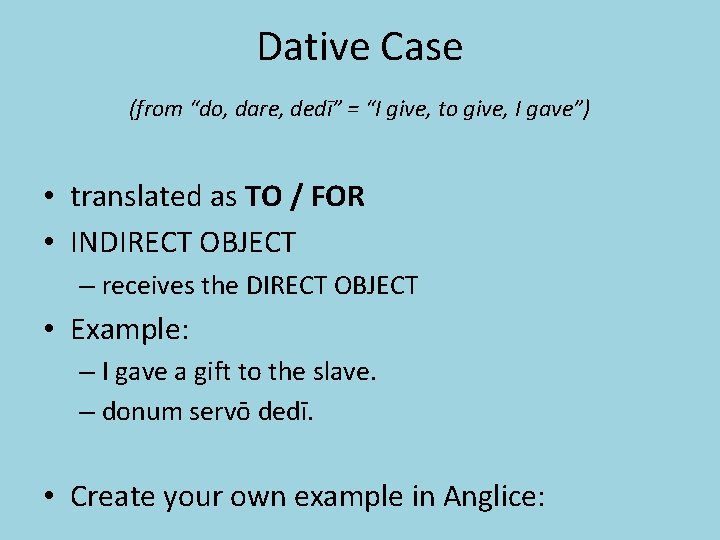
Dative Case (from “do, dare, dedī” = “I give, to give, I gave”) • translated as TO / FOR • INDIRECT OBJECT – receives the DIRECT OBJECT • Example: – I gave a gift to the slave. – donum servō dedī. • Create your own example in Anglice:
Dative Case • pg. 148 has even more examples – check out Part A • Take TWO minutes to look over these before I call on you to read them for the class – in utrumque linguae Latina et Anglice • Now take THREE minutes to translate the ODD numbers only, Part D, pg. 149
“thermae” • As I read aloud, look at the words. Which ones do you recognize? • Now study the new vocab in the list below the story. Write two sentences describing what you think the story will be about. • Begin translating, from lines 1 – 8. If you finish early, HELP a neighbor. – DON’T complete the story!

Wednesday
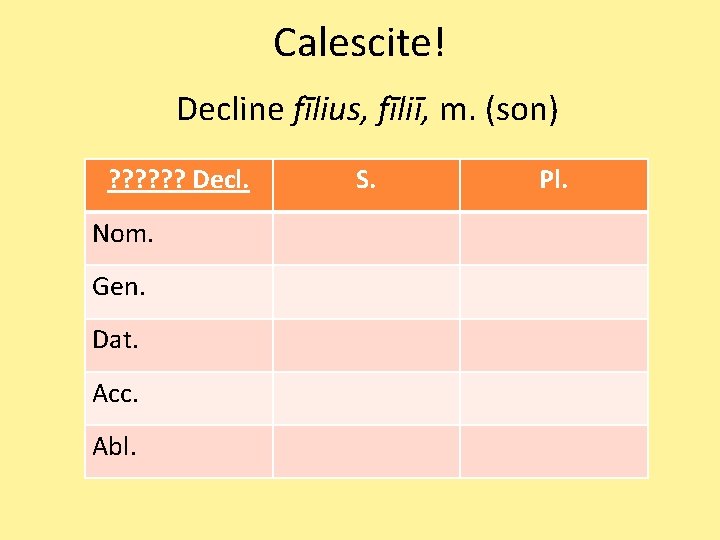
Calescite! Decline fīlius, fīliī, m. (son) ? ? ? Decl. Nom. Gen. Dat. Acc. Abl. S. Pl.
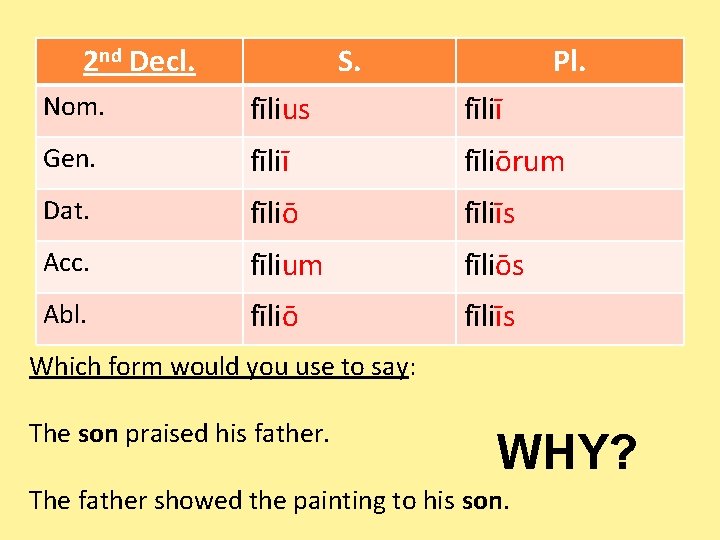
2 nd Decl. S. Pl. Nom. fīlius fīliī Gen. fīliī fīliōrum Dat. fīliō fīliīs Acc. fīlium fīliōs Abl. fīliō fīliīs Which form would you use to say: The son praised his father. WHY? The father showed the painting to his son.
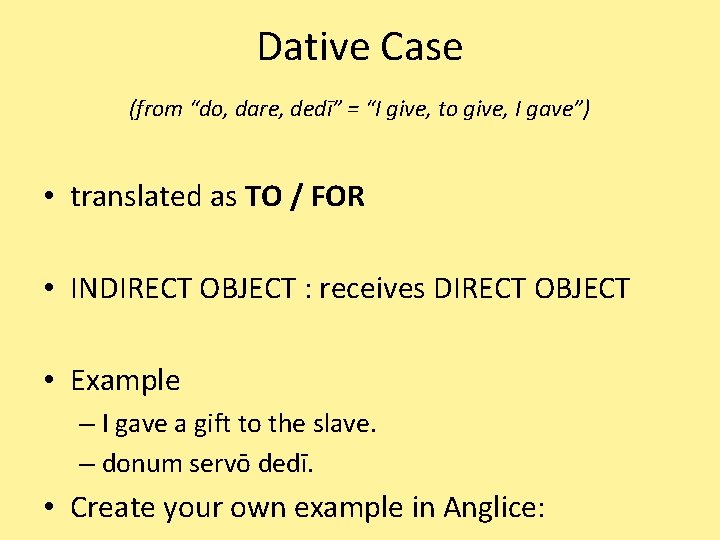
Dative Case (from “do, dare, dedī” = “I give, to give, I gave”) • translated as TO / FOR • INDIRECT OBJECT : receives DIRECT OBJECT • Example – I gave a gift to the slave. – donum servō dedī. • Create your own example in Anglice:
Dative Case • pg. 148 has even more examples – check out Part A • Take TWO minutes to look over these before I call on you to read them for the class – in utrumque linguae Latina et Anglice • Now take THREE minutes to translate the ODD numbers only, Part D, pg. 149
“thermae” • As I read aloud, look at the words. Which ones do you recognize? • Now study the new vocab. Write two sentences describing what you think the story will be about. • Begin translating, from lines 1 – 8. If you finish early, HELP a neighbor. – DON’T complete the story!

Thursday
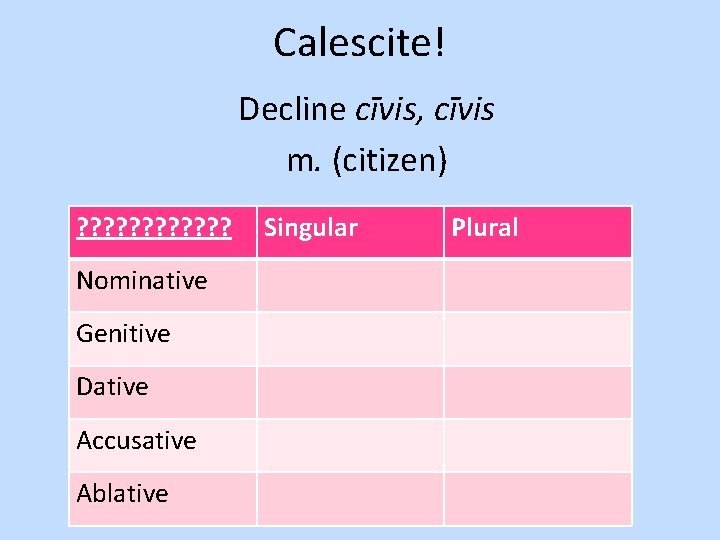
Calescite! Decline cīvis, cīvis m. (citizen) ? ? ? Nominative Genitive Dative Accusative Ablative Singular Plural
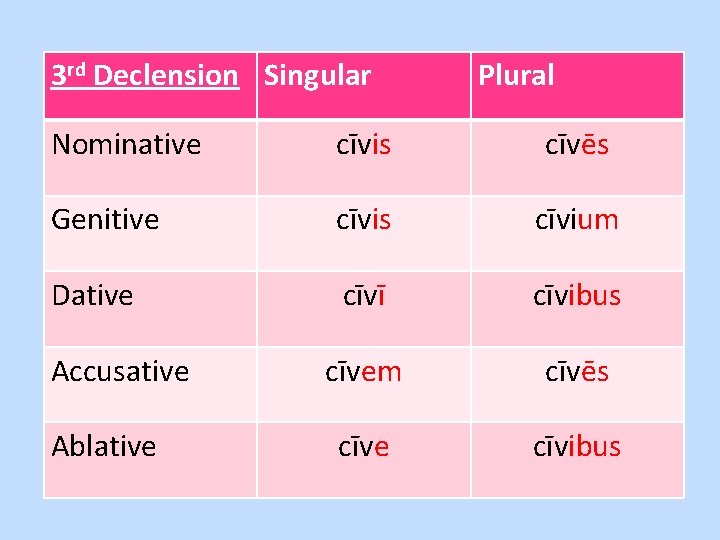
3 rd Declension Singular Plural Nominative cīvis cīvēs Genitive cīvis cīvium Dative cīvī cīvibus cīvem cīvēs cīve cīvibus Accusative Ablative
“thermae” • Continue translating, from lines 1 – 8. If you finish early, HELP a neighbor. – 20 minutes • CHECK translation • Finish translating, from line 9 – end for praescriptum domesticum

Friday
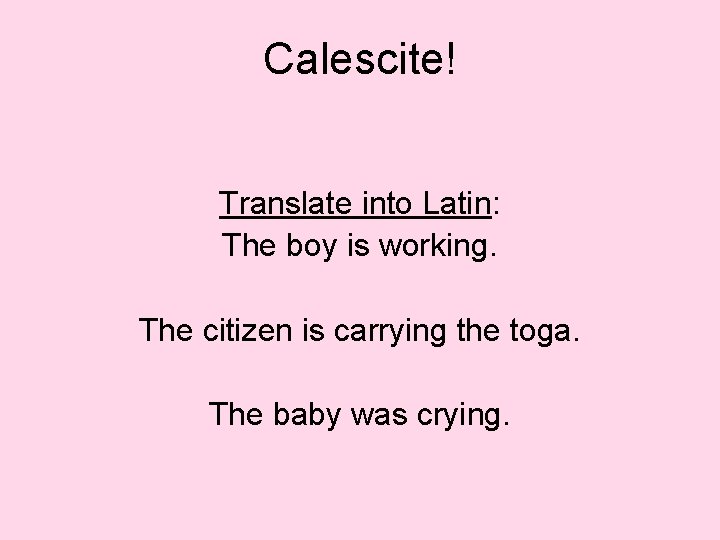
Calescite! Translate into Latin: The boy is working. The citizen is carrying the toga. The baby was crying.
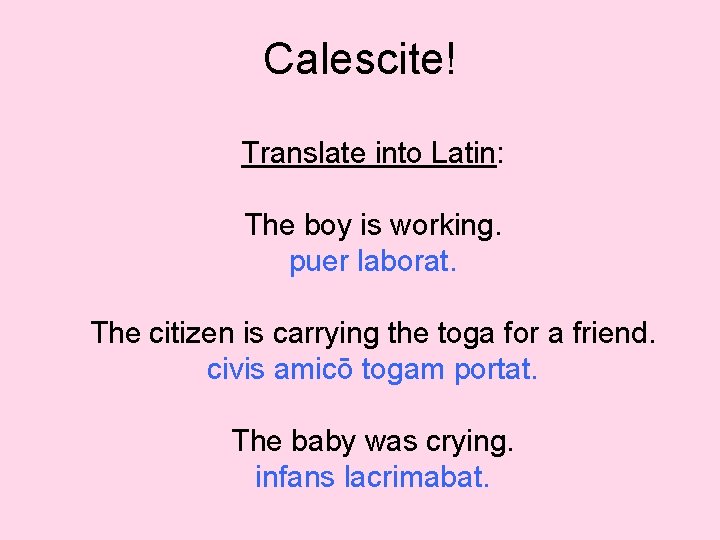
Calescite! Translate into Latin: The boy is working. puer laborat. The citizen is carrying the toga for a friend. civis amicō togam portat. The baby was crying. infans lacrimabat.
“thermae” • Need colored pen/cil • Write at the bottom: – COMPLETE – STOPPED AT LINE # ____ – DON’T HAVE BECAUSE ______ • Make corrections as we translate together
“in palaestrā” pg. 146 • Groups of 3 – 4; EVERYONE TRANSLATES, & decide whose job it is to – read the Latin – read English translation – read questions – read the answers to questions • • Group 1 : 1 – 9 Group 2 : 10 – 16 Group 3 : 17 – 23 Group 4 : 24 – 32 STOP TIME: ______
“in palaestrā” pg. 146 • Each person is responsible for listening to presenters • AND answering questions on their OWN sheet of paper
- Slides: 24