
Tuesday 32216 Learning Target Know what an ecosystem
- Slides: 19
Tuesday, 3/22/16 Learning Target: Know what an ecosystem is and how organisms interact within an ecosystem. Learning Outcome: Know the terms biotic, abiotic, niche vs. habitat, competition, and predation.
Ecology Notes 4 -2 Community Interactions
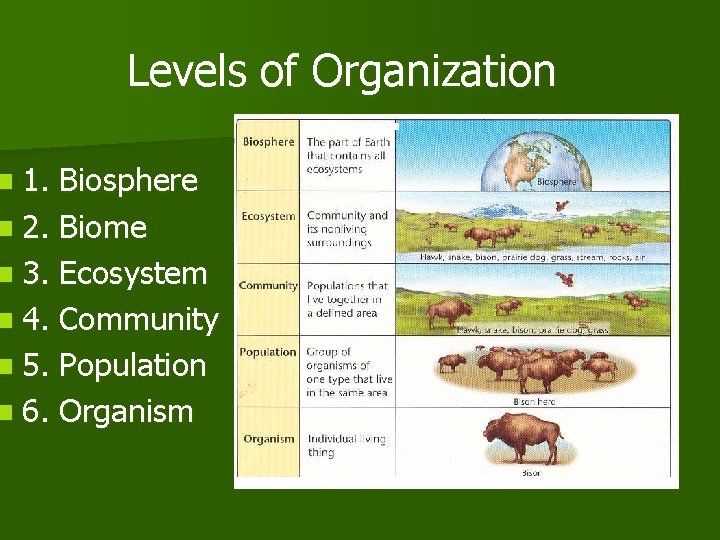
n 1. Levels of Organization Biosphere n 2. Biome n 3. Ecosystem n 4. Community n 5. Population n 6. Organism
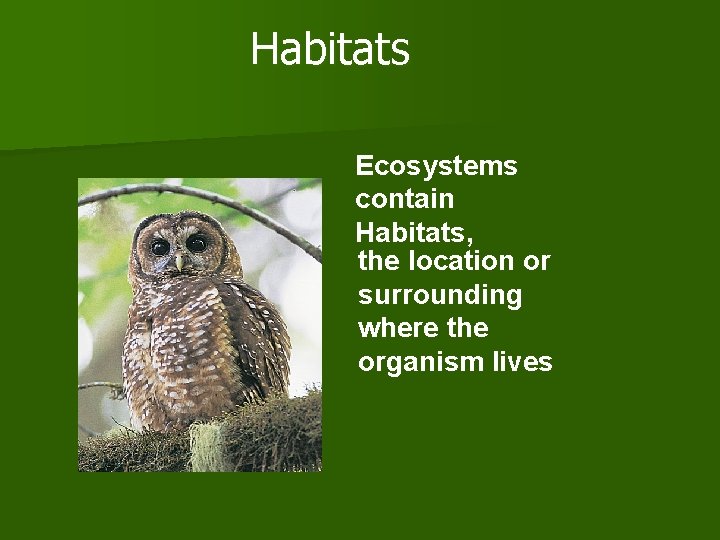
Habitats Ecosystems contain Habitats, the location or surrounding where the organism lives
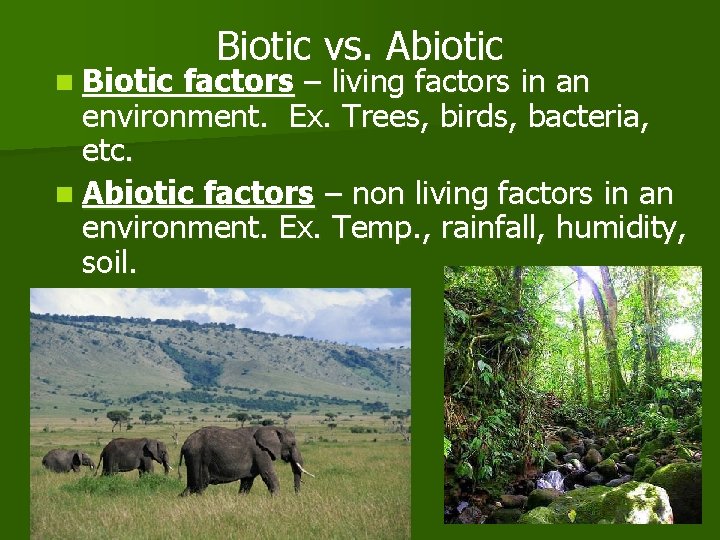
n Biotic vs. Abiotic factors – living factors in an environment. Ex. Trees, birds, bacteria, etc. n Abiotic factors – non living factors in an environment. Ex. Temp. , rainfall, humidity, soil.
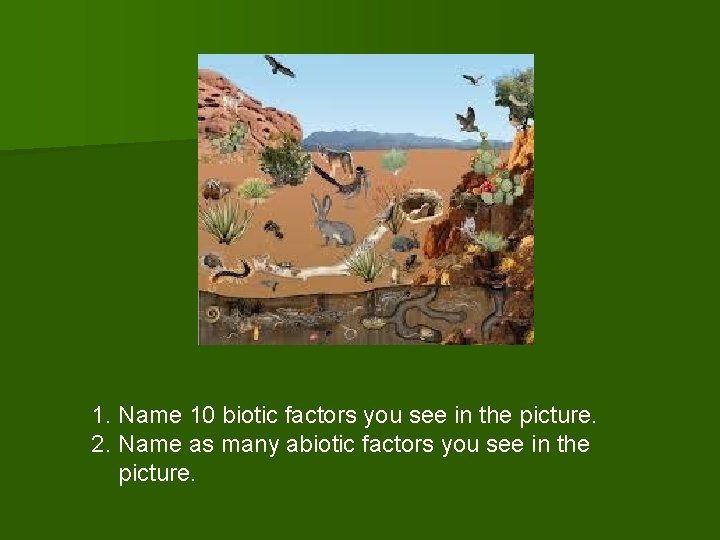
1. Name 10 biotic factors you see in the picture. 2. Name as many abiotic factors you see in the picture.
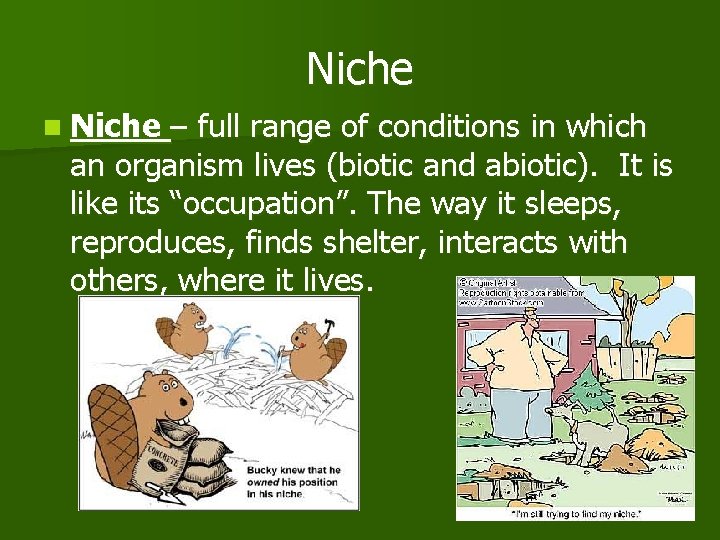
Niche n Niche – full range of conditions in which an organism lives (biotic and abiotic). It is like its “occupation”. The way it sleeps, reproduces, finds shelter, interacts with others, where it lives.
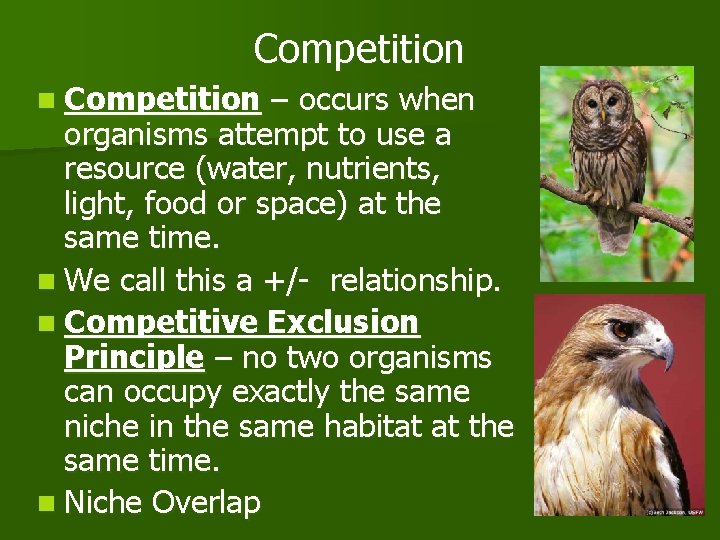
Competition n Competition – occurs when organisms attempt to use a resource (water, nutrients, light, food or space) at the same time. n We call this a +/- relationship. n Competitive Exclusion Principle – no two organisms can occupy exactly the same niche in the same habitat at the same time. n Niche Overlap
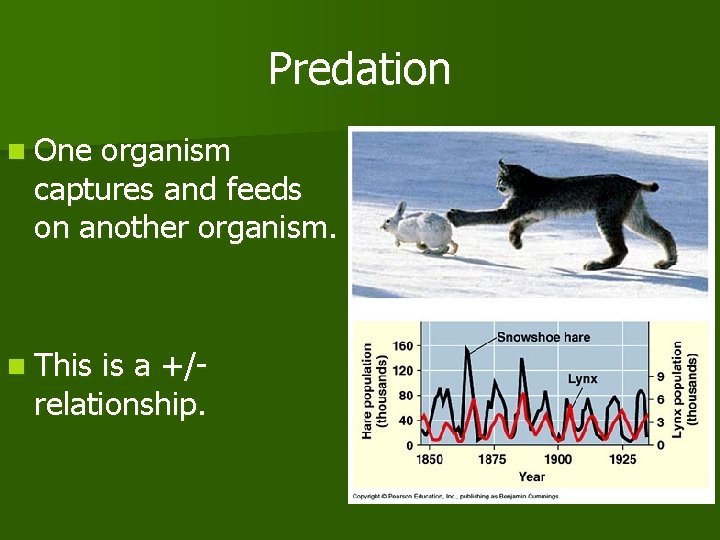
Predation n One organism captures and feeds on another organism. n This is a +/relationship.
Thursday, 3/24/16 Learning Target: Know the 3 types of symbiosis present in an ecosystem. Learning Outcome: Know the terms symbiosis, mutualism, commensalism, and parasitism by completing “Good Buddies. ”
n Do ecosystems stay the same or change over time? n Give examples.
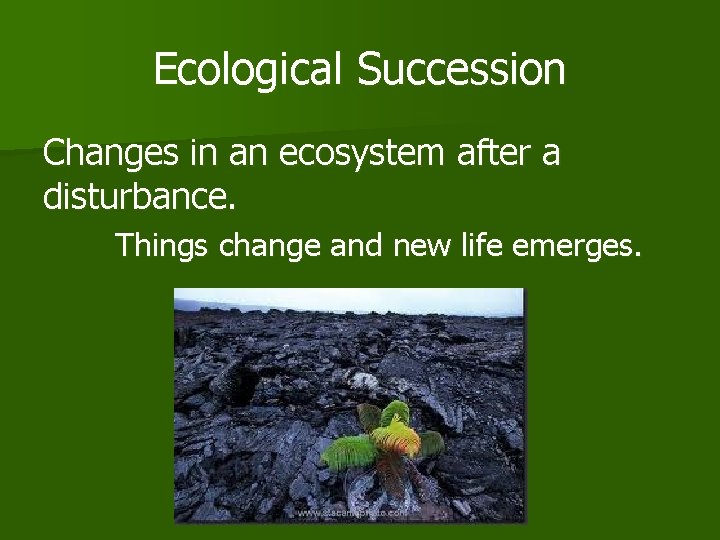
Ecological Succession Changes in an ecosystem after a disturbance. Things change and new life emerges.
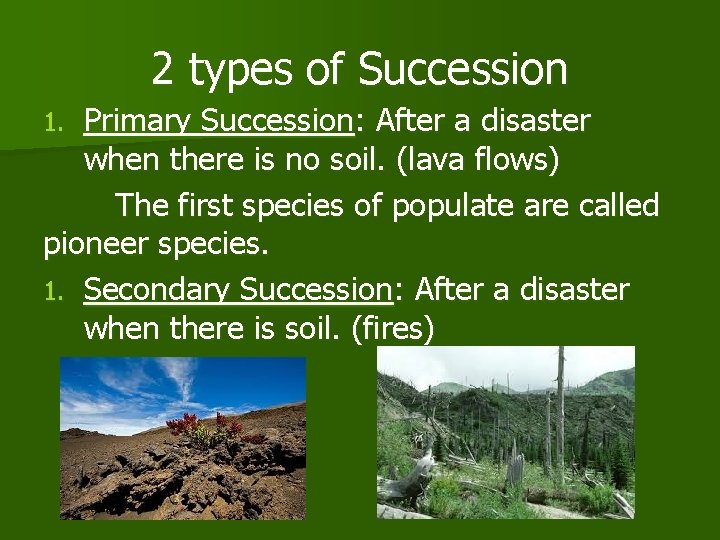
2 types of Succession Primary Succession: After a disaster when there is no soil. (lava flows) The first species of populate are called pioneer species. 1. Secondary Succession: After a disaster when there is soil. (fires) 1.
Is succession an orderly predictable process or random?
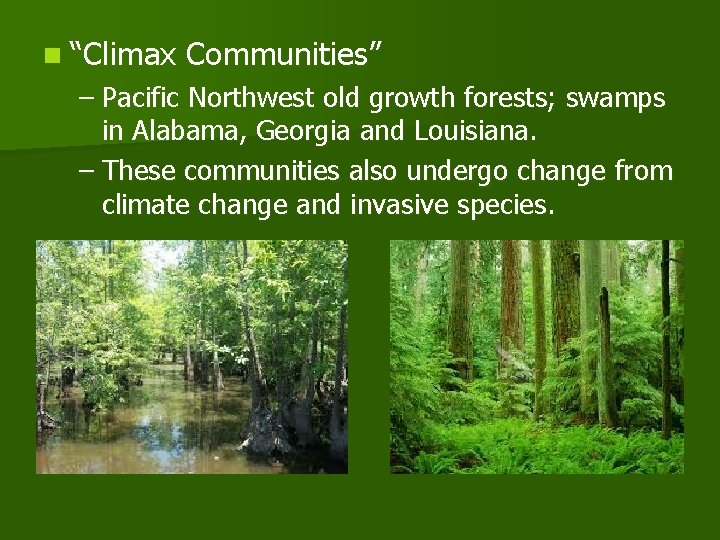
n “Climax Communities” – Pacific Northwest old growth forests; swamps in Alabama, Georgia and Louisiana. – These communities also undergo change from climate change and invasive species.
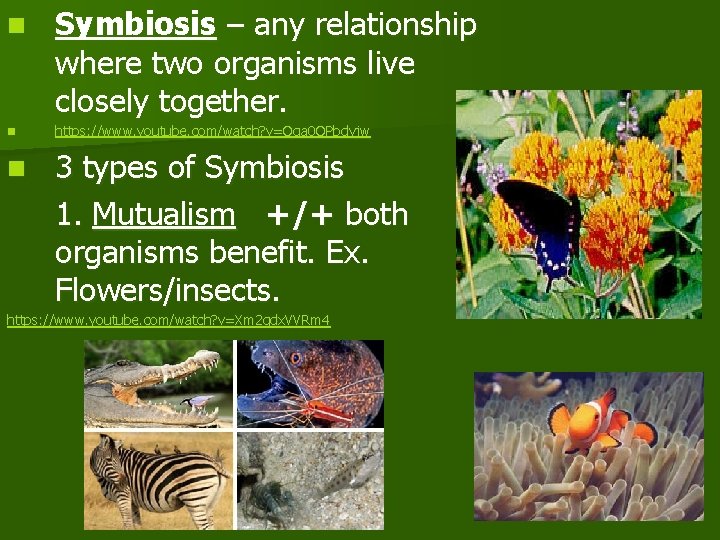
n n n Symbiosis – any relationship where two organisms live closely together. https: //www. youtube. com/watch? v=Qqa 0 OPbdvjw 3 types of Symbiosis 1. Mutualism +/+ both organisms benefit. Ex. Flowers/insects. https: //www. youtube. com/watch? v=Xm 2 qdx. VVRm 4
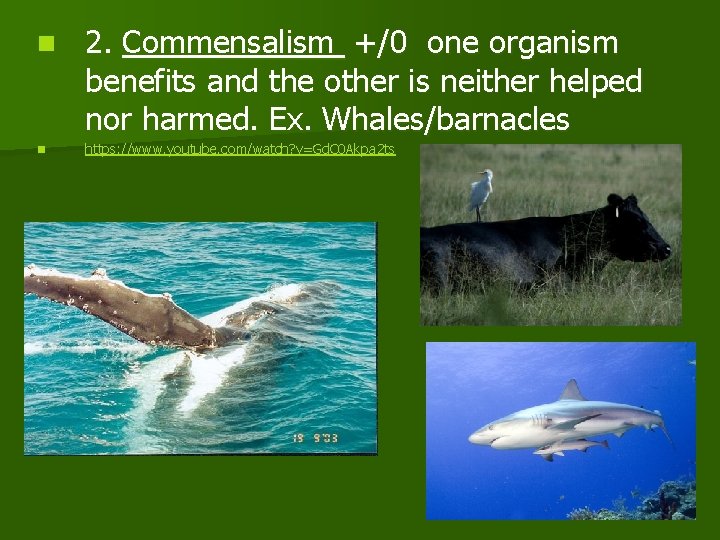
n n 2. Commensalism +/0 one organism benefits and the other is neither helped nor harmed. Ex. Whales/barnacles https: //www. youtube. com/watch? v=Gd. C 0 Akpa 2 ts
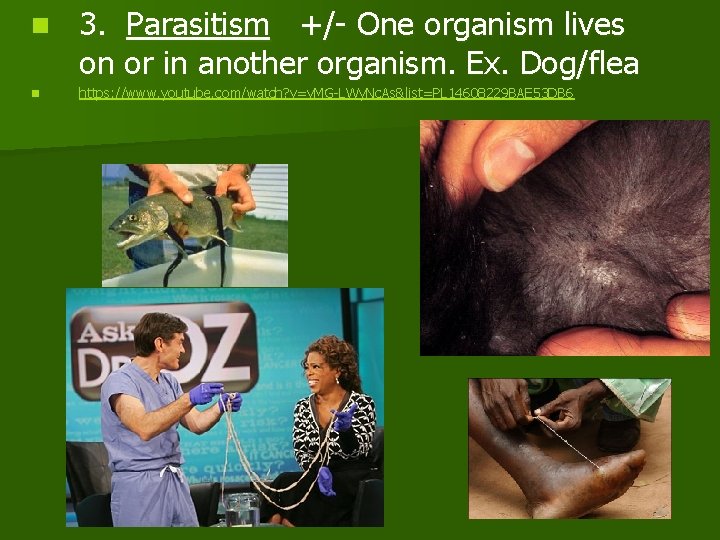
n n 3. Parasitism +/- One organism lives on or in another organism. Ex. Dog/flea https: //www. youtube. com/watch? v=v. MG-LWy. Nc. As&list=PL 14608229 BAE 53 DB 6
Friday 3/25/16 n Please turn in your Lynx and Hare Lab! n 5 minutes to observe your ecosystem.