
TUBERCULOSIS Maram abdaljaleel MD Dermatopathologist Neuropathologist Tuberculosis Tuberculosis

TUBERCULOSIS Maram abdaljaleel, MD Dermatopathologist &Neuropathologist
Tuberculosis ■ Tuberculosis is a communicable chronic granulomatous disease caused by Mycobacterium tuberculosis involving Iungs usually but may affect any organ.
Epidemiology q The most common cause of death resulting from a single infectious agent. q 1. 7 billion individuals are infected worldwide. q 1. 5 million deaths per year. q The incidence of tuberculosis in U. S. -born individuals has declined since 1992.
Risk Factors Poverty, crowding, and chronic debilitating illness. disease ■ older adults Alaska) (particularly ■ the urban poor ■ Hispanics silicosis) ■ patients with AIDS ■ immigrants from ■ chronic renal Southeast Asia ■ and members of failure minority ■ diabetes mellitus ■ Malnutrition communities. ■ Hodgkin ■ Alcoholism ■ African Americans lymphoma ■ Native Americans ■ Immunosuppressi on
Infection vs. disease ■ Infection implies seeding of a focus with organisms. ■ Disease is a clinically significant tissue damage ■ Routes of transmission ■ Airborne droplets
Primary Tuberculosis ■ self-limited ■ Uncommonly may result in the development of fever and pleural effusions. ■ Viable organisms may remain dormant in a tiny, telltale fibrocalcific nodule at the site of the infection for several years (infection, not active disease) ■ If immune defenses are lowered, the infection may
Tuberculin (Mantoux) test: ■ Delayed hypersensitivity ■ intracutaneous injection of 0. 1 m. L of sterile purified protein derivative (PPD) ■ A positive tuberculin skin test does not differentiate between infection and disease.
■ False-negative reactions or skin test anergy: – certain viral infections – Sarcoidosis – Malnutrition – Hodgkin lymphoma – immunosuppression – overwhelming active tuberculous disease. ■ False-positive reactions may result from infection by atypical mycobacteria.
Etiology: ■ Mycobacteria: – slender rods – acid-fast (i. e. , they have a high content of complex lipids that readily bind the Ziehl-Neelsen stain and subsequently stubbornly resist decolorization).
M. tuberculosis hominis ■ Most cases of tuberculosis. ■ The reservoir of infection found in individuals with active pulmonary disease. ■ Transmission – direct, by inhalation of airborne organisms in aerosols generated by expectoration – exposure to contaminated secretions of infected individuals.
Mycobacterium bovis – Oropharyngeal and intestinal tuberculosis – contracted by drinking contaminated milk
Mycobacterium avium complex ■ Less virulent than M. tuberculosis ■ Rarely cause disease in immunocompetent individuals. ■ Cause disease in 10% to 30% of patients with AIDS.
Pathogenesis ■ In the previously unexposed immunocompetent individual – Development of cell-mediated immunity ■ To resist the organism ■ To develop tissue hypersensitivity to tubercular antigens. – Destructive tissue hypersensitivity as a part of the host immune response: ■ Caseating granulomas ■ Cavitation
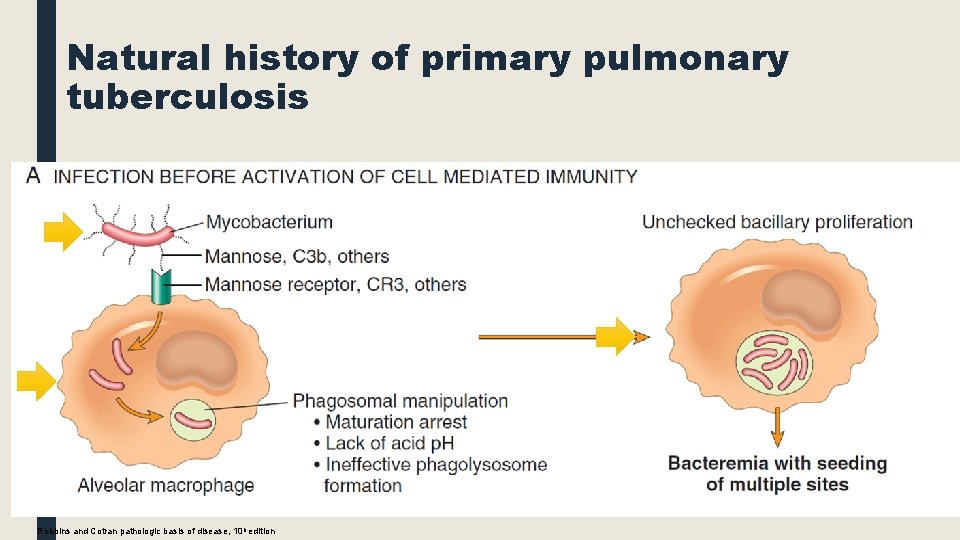
Natural history of primary pulmonary tuberculosis Robbins and Cotran pathologic basis of disease, 10 h edition
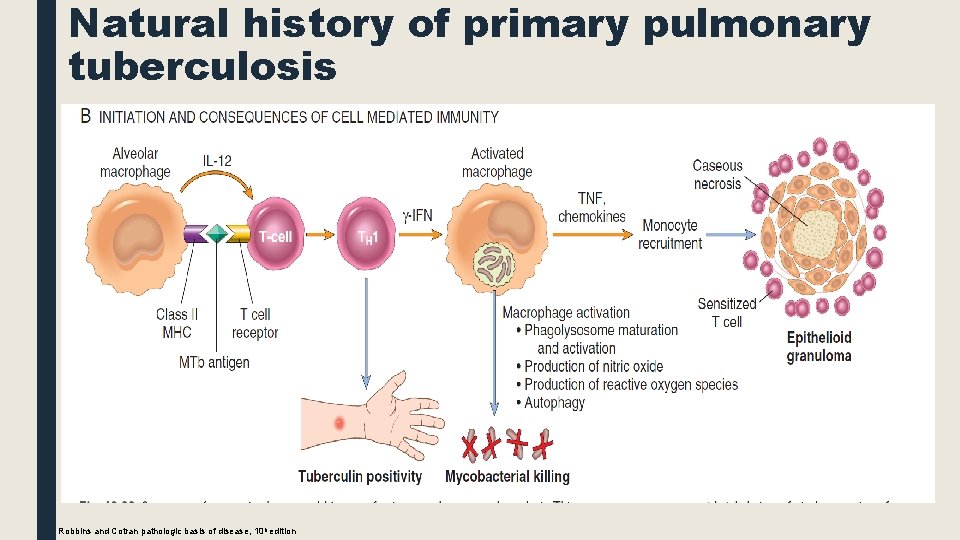
Natural history of primary pulmonary tuberculosis Robbins and Cotran pathologic basis of disease, 10 h edition
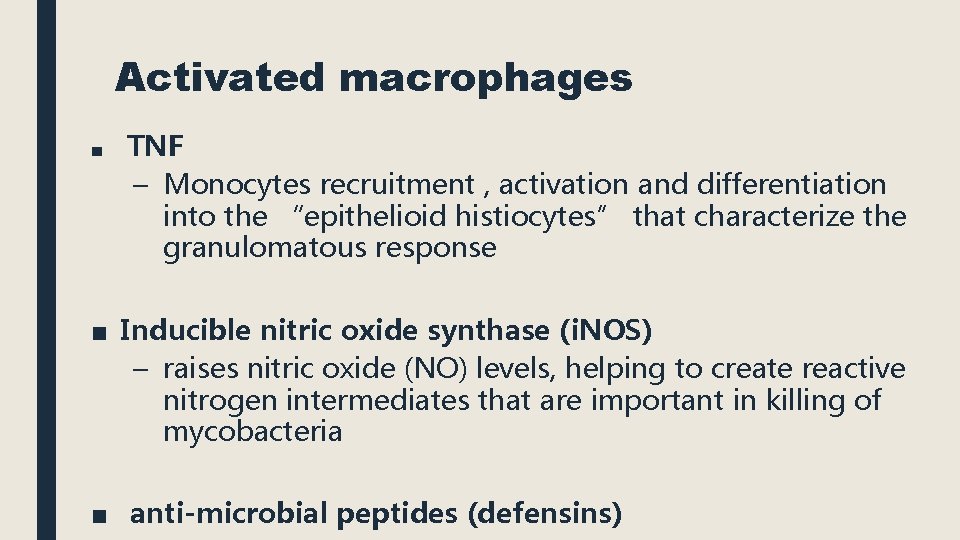
Activated macrophages ■ TNF – Monocytes recruitment , activation and differentiation into the “epithelioid histiocytes” that characterize the granulomatous response ■ Inducible nitric oxide synthase (i. NOS) – raises nitric oxide (NO) levels, helping to create reactive nitrogen intermediates that are important in killing of mycobacteria ■ anti-microbial peptides (defensins)
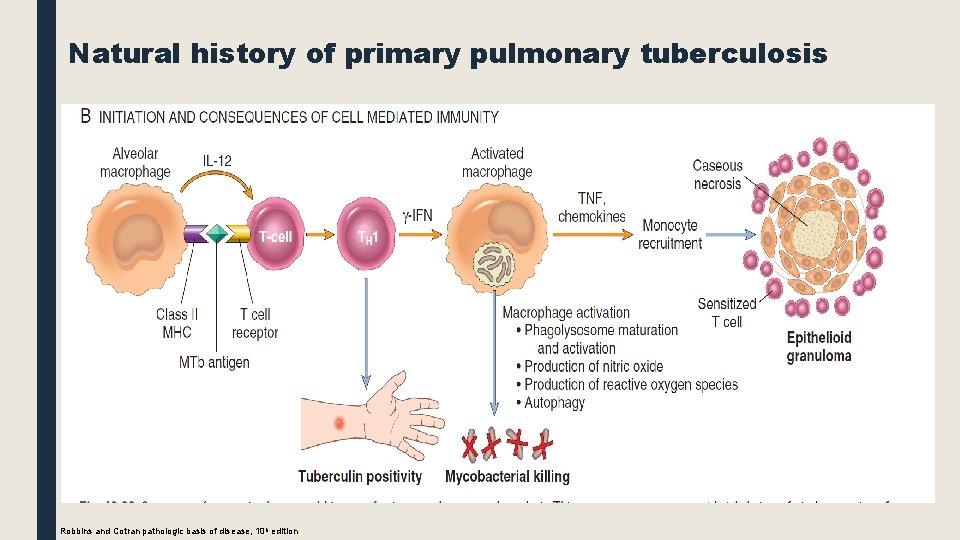
Natural history of primary pulmonary tuberculosis Granulomatous inflammation and tissue damage. Inaddition to stimulating macrophages to kill mycobacteria, the TH 1 response orchestrates the formation of granulomas and caseous necrosis. Macrophages activated by IFN-γ differentiate into the “epithelioid histiocytes” that aggregate to form granulomas; some epithelioid cells may fuse to form giant cells. In many individuals, this response halts the infection before significant tissue destruction or illness occur. In other individuals Robbins and Cotran pathologic basis of disease, 10 h edition
Pathogenesis, Summary: ■ Immunity to a tubercular infection is primarily mediated by TH 1 cells, which stimulate macrophages to kill mycobacteria. ■ Immune response, while largely effective, comes at the cost of hypersensitivity and the accompanying tissue destruction ■ Defects in any of the steps of a TH 1 T cell response (including IL 12, IFN-γ, TNF, or nitric oxide production) – poorly formed granulomas – absence of resistance – disease progression.
■ Reactivation of the infection or re-exposure to the bacilli in a previously sensitized host results in rapid mobilization of a defensive reaction but also increased tissue necrosis. ■ Hypersensitivity and resistance appear in parallel – The loss of hypersensitivity (indicated by tuberculin negativity in a M. tuberculosis-infected patient) is an ominous sign of fading resistance to the organism.
Primary Tuberculosis ■ The form of disease that develops in a previously unexposed and therefore unsensitized patient. ■ 5% of newly infected acquire significant disease.
Primary Tuberculosis, presentation: ■ In otherwise healthy individuals: – Mostly the only consequence are the foci of scarring. Which may harbor viable bacilli and serve as a nidus for disease reactivation at a later time if host defenses wane. ■ Uncommonly, new infection leads to progressive primary tuberculosis: – Affected patients are: ■ overtly immunocompromised ■ have subtle defects in host defenses, (malnourished ) ■ Certain racial groups, such as the Inuit ■ HIV-positive patients with significant immunosuppression
MORPHOLOGY ■ Almost always begins in the lungs. ■ The inhaled bacilli usually implant close to the pleura in the distal air spaces – in the lower part of the upper lobe – in the upper part of the lower lobe.
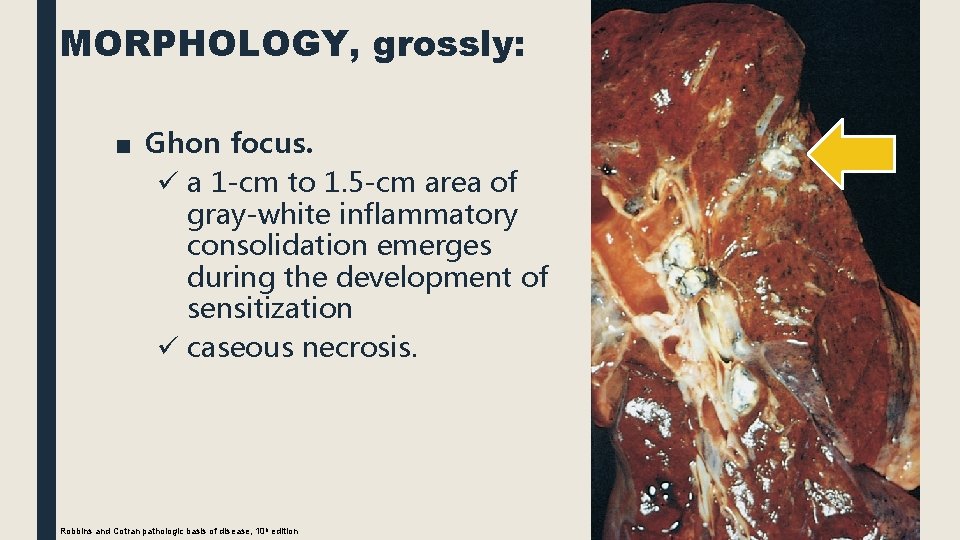
MORPHOLOGY, grossly: ■ Ghon focus. ü a 1 -cm to 1. 5 -cm area of gray-white inflammatory consolidation emerges during the development of sensitization ü caseous necrosis. Robbins and Cotran pathologic basis of disease, 10 h edition
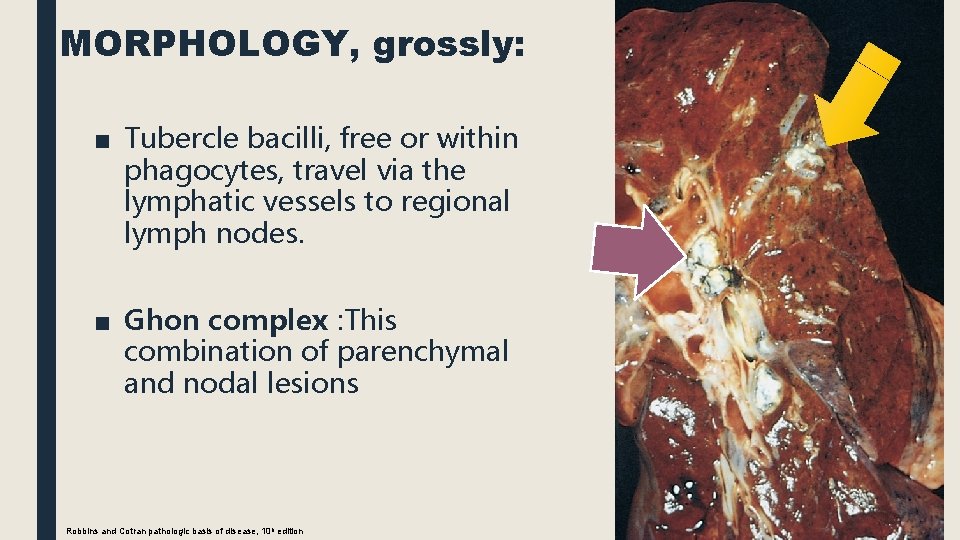
MORPHOLOGY, grossly: ■ Tubercle bacilli, free or within phagocytes, travel via the lymphatic vessels to regional lymph nodes. ■ Ghon complex : This combination of parenchymal and nodal lesions Robbins and Cotran pathologic basis of disease, 10 h edition
■ In the first few weeks, Lymphatic and hematogenous dissemination ■ In 95% cell-mediated immunity controls the infection. ■ Ghon complex undergoes progressive fibrosis and calcification ■ Despite seeding of other organs, no lesions develop.
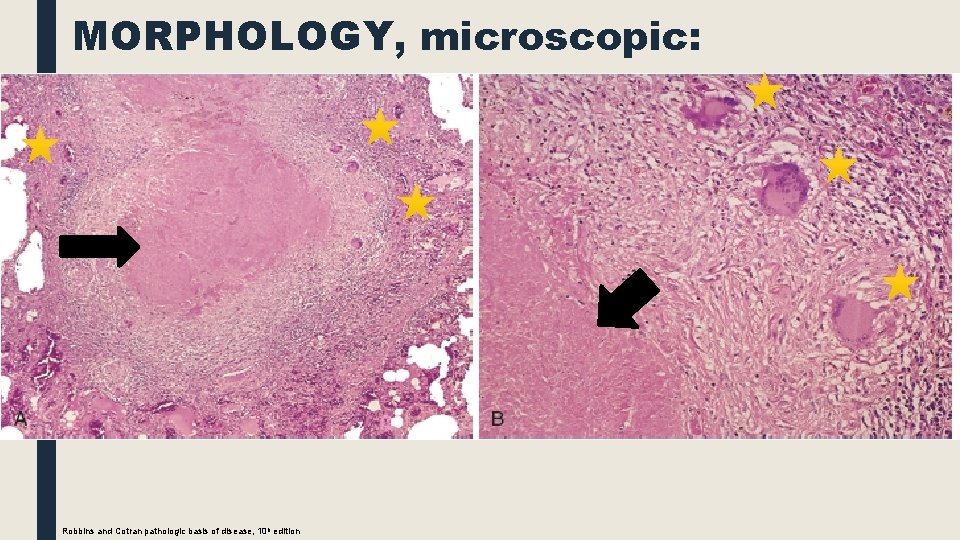
MORPHOLOGY, microscopic: Robbins and Cotran pathologic basis of disease, 10 h edition
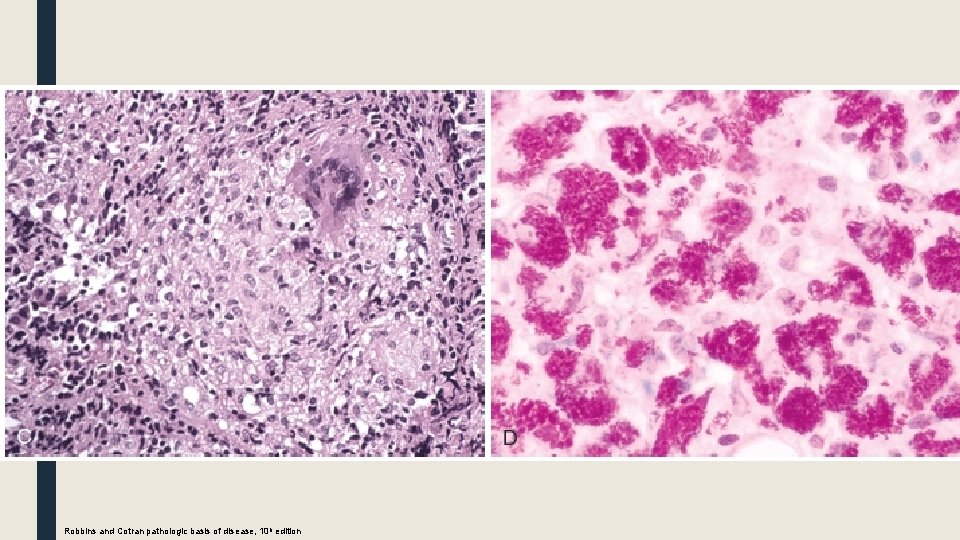
Robbins and Cotran pathologic basis of disease, 10 h edition
Secondary Tuberculosis (Reactivation Tuberculosis) ■ Arises in a previously sensitized host when host resistance is weakened Or due to reinfection ■ <5% with primary disease develop secondary tuberculosis. ■ Secondary pulmonary tuberculosis: – classically localized to the apex of one or both upper lobes. – the bacilli excite a marked tissue response that tends to wall off the focus (localization) – regional lymph nodes are less involved early in the disease than they are in primary tuberculosis. – cavitation leading to erosion into and dissemination along airways important source of infectivity, because the patient
MORPHOLOGY, grossly: ■ initial lesion is a small focus of consolidation, <2 cm, within 1 -2 cm of the apical pleura. ■ sharply circumscribed, firm, gray-white to yellow with variable amount of central caseation and peripheral fibrosis
MORPHOLOGY, microscopic: ■ active lesions: coalescent tubercles with central caseation. ■ tubercle bacilli: – can be demonstrated by appropriate methods in early exudative and caseous phases of granuloma formation – Impossible to find them in the late fibrocalcific stages. ■ Localized, apical, secondary pulmonary tuberculosis: – heal with fibrosis either spontaneously or after therapy – or may progress and extend along several different pathways.
■ progressive pulmonary tuberculosis: – apical lesion enlarges with expansion of caseation area. – Erosion into a bronchus evacuates the caseous center, creating a ragged, irregular cavity lined by caseous material – Erosion of blood vessels results in hemoptysis. – With adequate treatment, the process may be arrested – If the treatment is inadequate or host defenses are impaired, the infection may spread by direct extension and by dissemination through airways, lymphatic
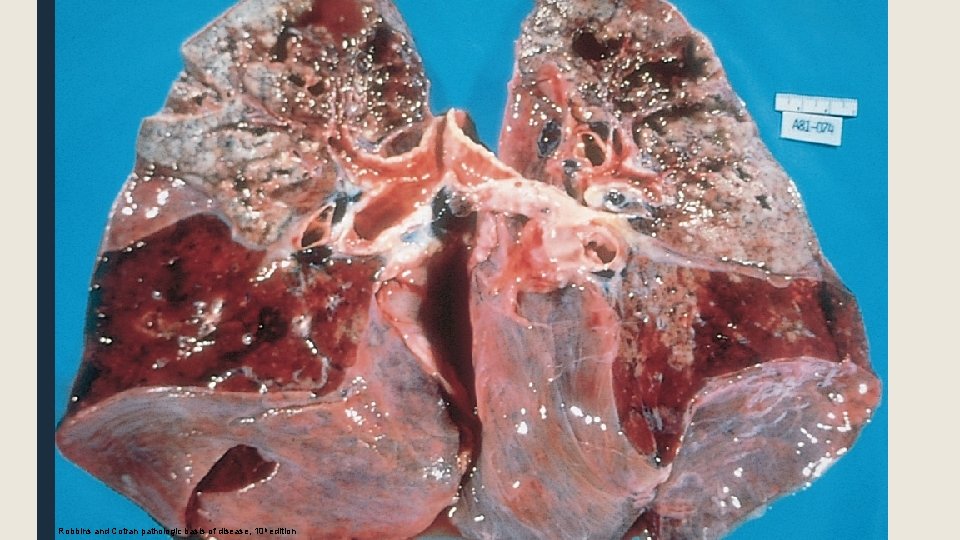
Robbins and Cotran pathologic basis of disease, 10 h edition
■ Miliary pulmonary disease : – when organisms reach the bloodstream through lymphatic vessels and then recirculate to the lung via the pulmonary arteries. – small (2 -mm), yellow-white consolidation scattered through the lung parenchyma – the word miliary is derived from the resemblance of these foci to millet seeds. – With progressive pulmonary tuberculosis, the pleural cavity is invariably involved and serous pleural effusions, tuberculous empyema, or obliterative fibrous pleuritis develop. – Endobronchial, endotracheal, and laryngeal tuberculosis
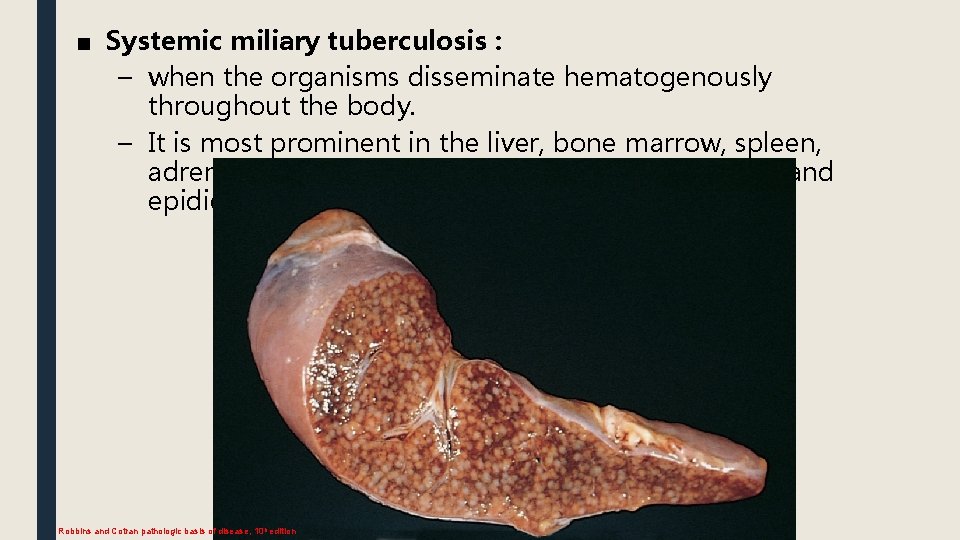
■ Systemic miliary tuberculosis : – when the organisms disseminate hematogenously throughout the body. – It is most prominent in the liver, bone marrow, spleen, adrenal glands, meninges, kidneys, fallopian tubes, and epididymis Robbins and Cotran pathologic basis of disease, 10 h edition
■ Isolated-organ tuberculosis: – any organs or tissues seeded hematogenously and may be the presenting manifestation of tuberculosis. – meninges (tuberculous meningitis), kidneys (renal tuberculosis), adrenal glands, bones (osteomyelitis), and fallopian tubes (salpingitis), – vertebrae (Pott disease).
■ Lymphadenitis : – the most frequent form of extrapulmonary tuberculosis – cervical region – unifocal, and most patients do not have concurrent extranodal disease. – HIV-positive patients, have multifocal disease, systemic symptoms, and either pulmonary or other organ involvement by active tuberculosis.
Clinical Features ■ Asymptomatic ■ Insidious onset, with gradual development of both systemic and localizing symptoms and signs. ■ Systemic manifestations: ■ probably related to the release of cytokines by activated macrophages (TNF and IL-1), ■ appear early in the disease course ■ include malaise, anorexia, weight loss, and fever. ■ Fever: low grade and remittent +/- night sweats.
– Pulmonary: ■ increasing amounts of sputum, at first mucoid and later purulent. ■ When cavitation is present, the sputum contains tubercle bacilli. ■ Hemoptysis (50%). ■ Pleuritic pain – Extrapulmonary manifestations: ■ infertility, headache, neurologic deficits, back pain and paraplegia.
Diagnosis: ■ based on the history , physical and radiographic findings of consolidation or cavitation in the apices of the lungs. ■ Ultimately, tubercle bacilli must be identified: – The most common methodology for diagnosis of tuberculosis remains demonstration of acid-fast organisms in sputum by staining or by use of fluorescent auramine rhodamine. – Conventional cultures (10 weeks), – liquid media–based radiometric assays (2 weeks). – PCR amplification on liquid media with growth, as well as on tissue sections, to identify the mycobacterium.

culture remains the standard diagnostic modality
Prognosis : ■ determined by : – the extent of the infection (localized versus widespread) – the immune status of the host – the antibiotic sensitivity of the organism

M. abdaljaleel@ju. edu. jo

THANK YOU!
- Slides: 43