
Ttests and ANOVA Statistical analysis of group differences


![Summary of Mat. Lab syntax T-test [h, p, ci, stats]=ttest 1(X, mean of population)](https://slidetodoc.com/presentation_image_h2/069897a30de74d0334cd57af6d621aad/image-13.jpg "Summary of Mat. Lab syntax T-test [h, p, ci, stats]=ttest 1(X, mean of population)")



- Slides: 34
T-tests and ANOVA Statistical analysis of group differences
Outline Criteria for t-test Criteria for ANOVA Variables in t-tests Variables in ANOVA Examples of t-tests Examples of ANOVA Summary
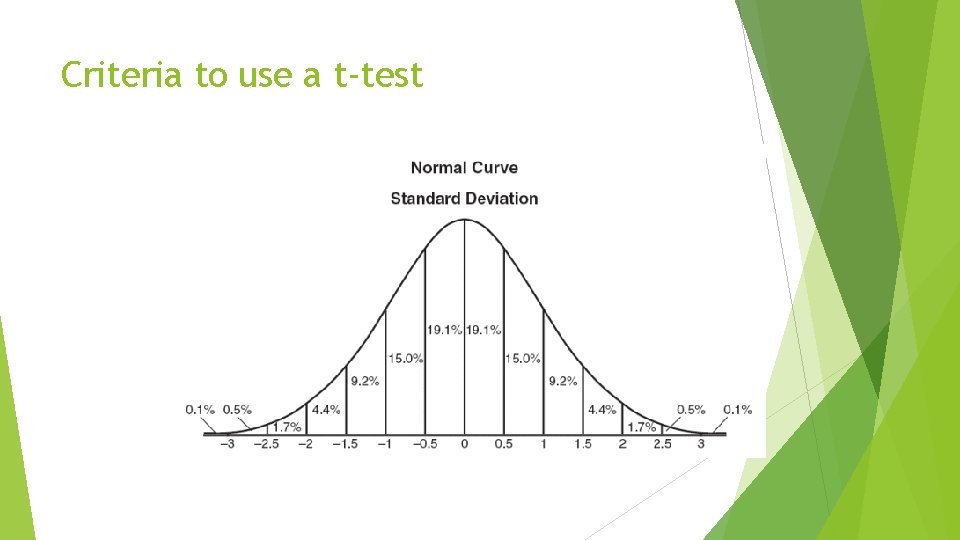
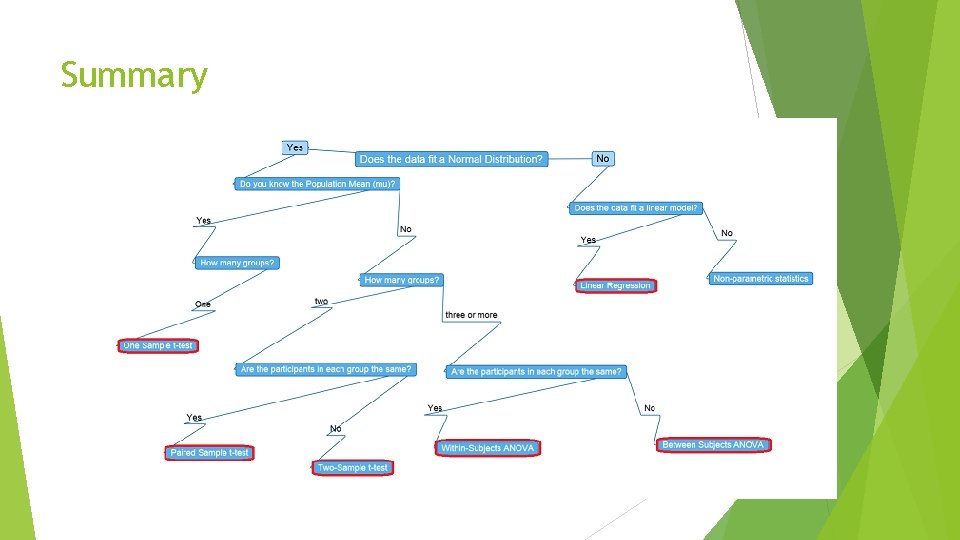
Criteria to use a t-test
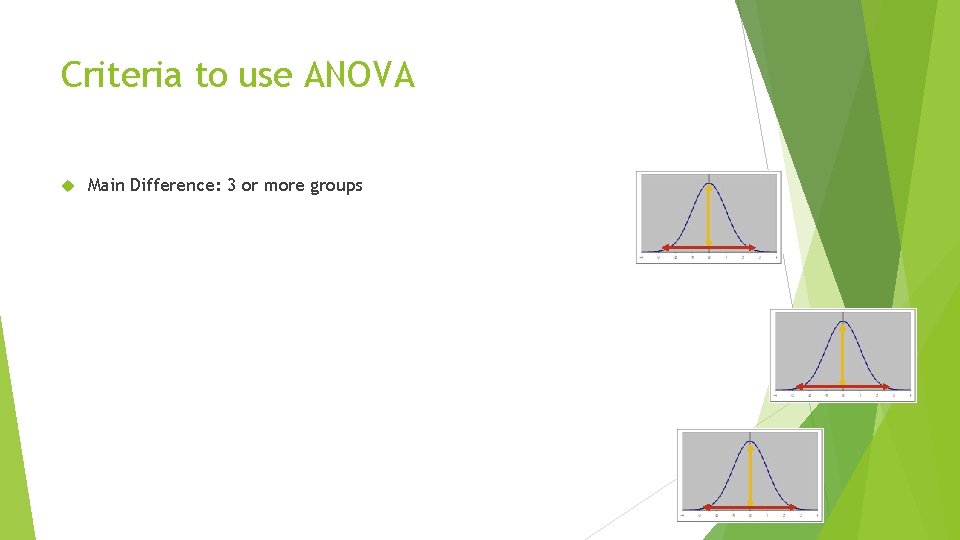
Criteria to use ANOVA Main Difference: 3 or more groups
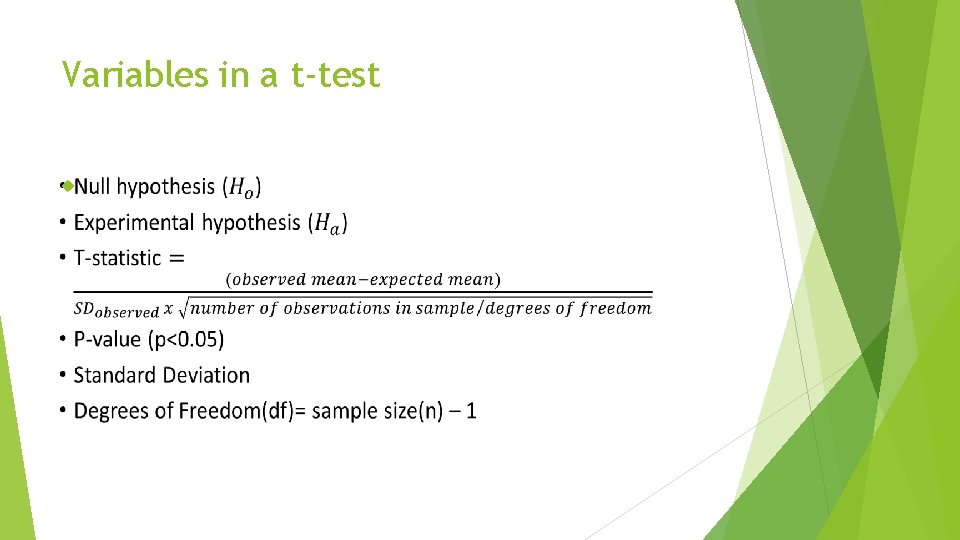
Variables in a t-test
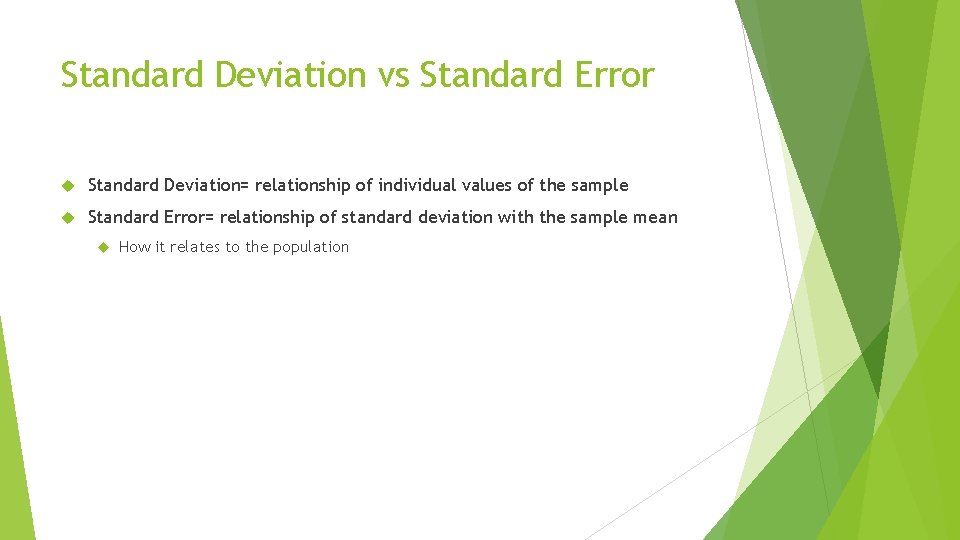
Standard Deviation vs Standard Error Standard Deviation= relationship of individual values of the sample Standard Error= relationship of standard deviation with the sample mean How it relates to the population
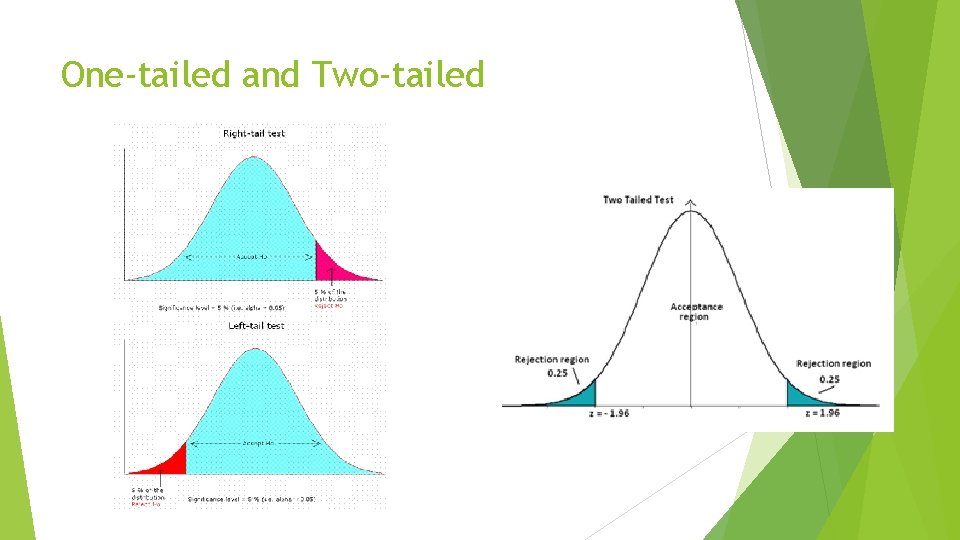
One-tailed and Two-tailed
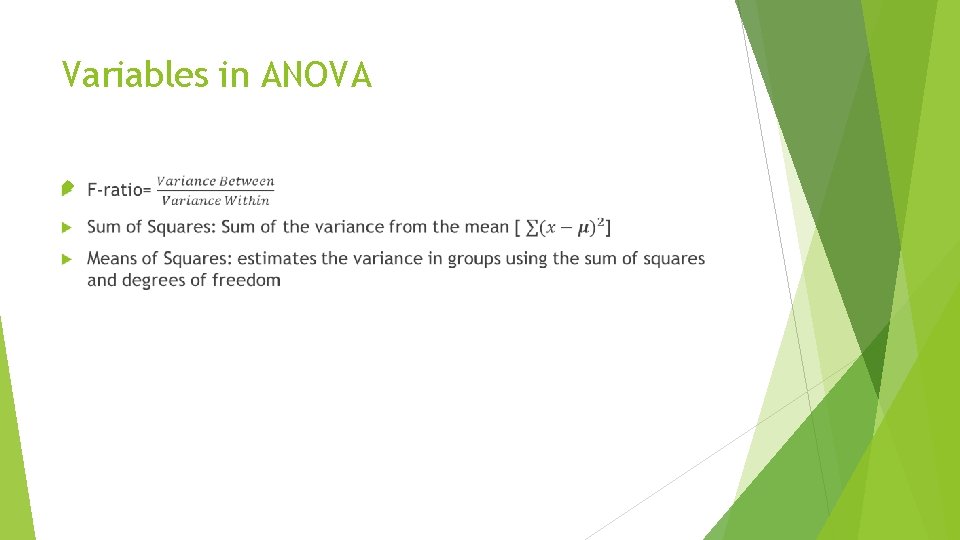
Variables in ANOVA
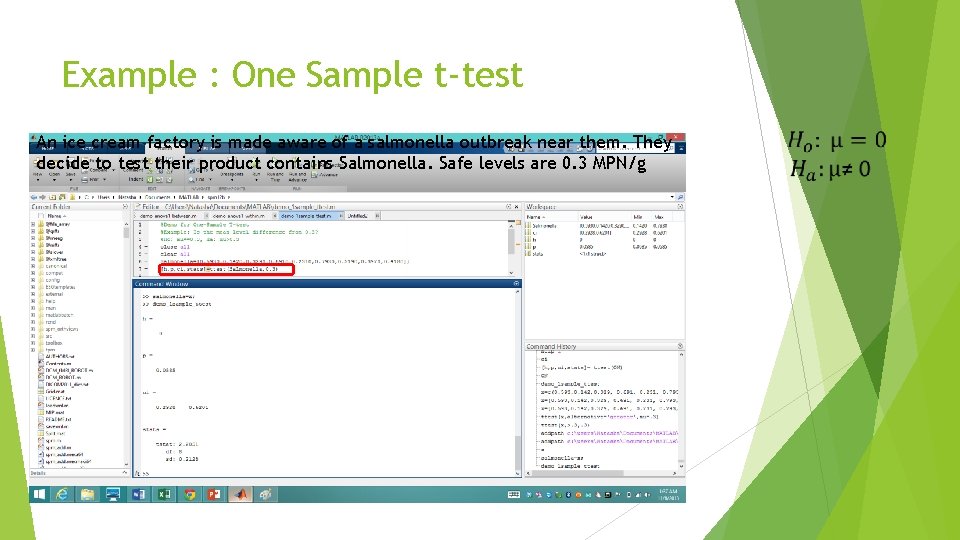
Example : One Sample t-test An ice cream factory is made aware of a salmonella outbreak near them. They decide to test their product contains Salmonella. Safe levels are 0. 3 MPN/g
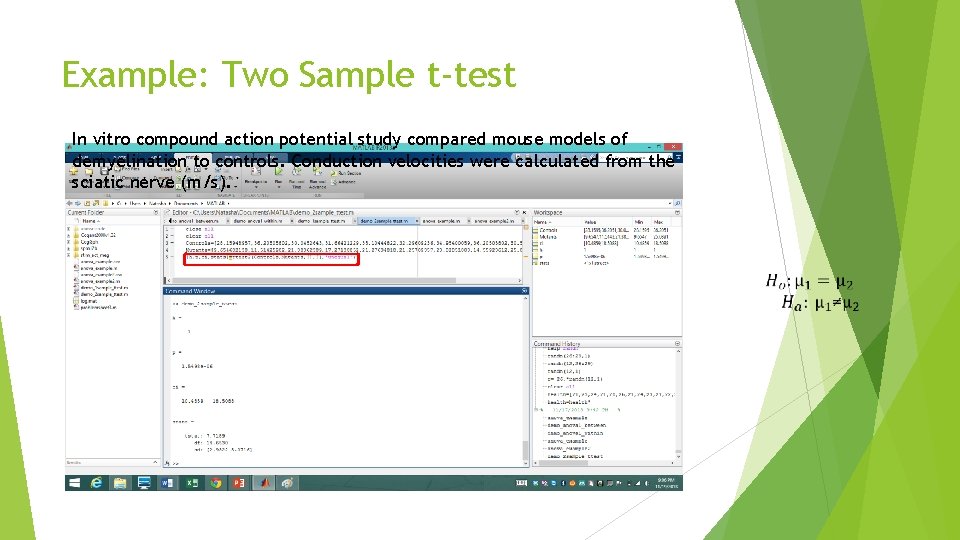
Example: Two Sample t-test In vitro compound action potential study compared mouse models of demyelination to controls. Conduction velocities were calculated from the sciatic nerve (m/s).
Example of Within Subjects ANOVA A sample of 12 people volunteered to participate in a diet study. Their BMI indices were measured before beginning the study. For one month they were given a exercise and diet regiment. Every two weeks each subject had their BMI index remeasured
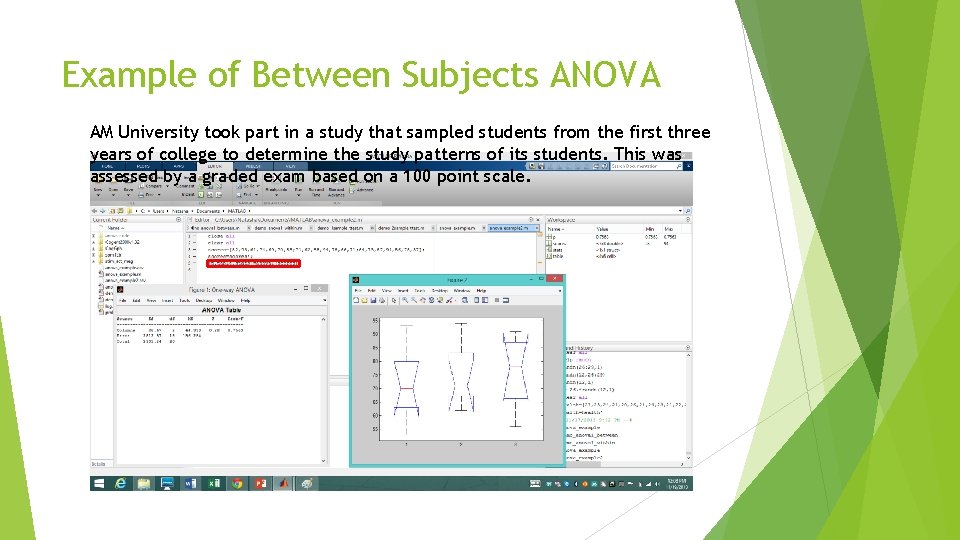
Example of Between Subjects ANOVA AM University took part in a study that sampled students from the first three years of college to determine the study patterns of its students. This was assessed by a graded exam based on a 100 point scale.
Summary of Mat. Lab syntax T-test [h, p, ci, stats]=ttest 1(X, mean of population) [h, p, ci, stats]=ttest 2(X) ANOVA [p, stats] = anova 1(X, group, displayopt) p = anova 2(X, reps, displayopt) http: //www. mathworks. co. uk/help/stats/
Types of Error Type 1 - Significance when there is none Type 2 - No significance when there is
Summary
Correlation and Regression
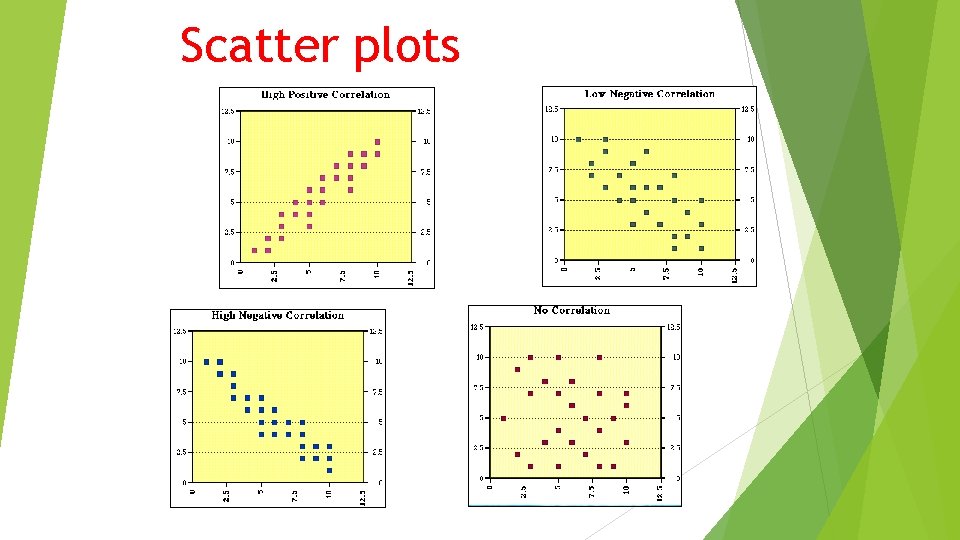
Correlation aims to find the degree of relationship between two variables, x and y. Correlation causality Scatter plot is the best method of visual representation of relationship between two independent variables.
Scatter plots
How to quantify correlation? 1) 2) Covariance Pearson Correlation Coefficient
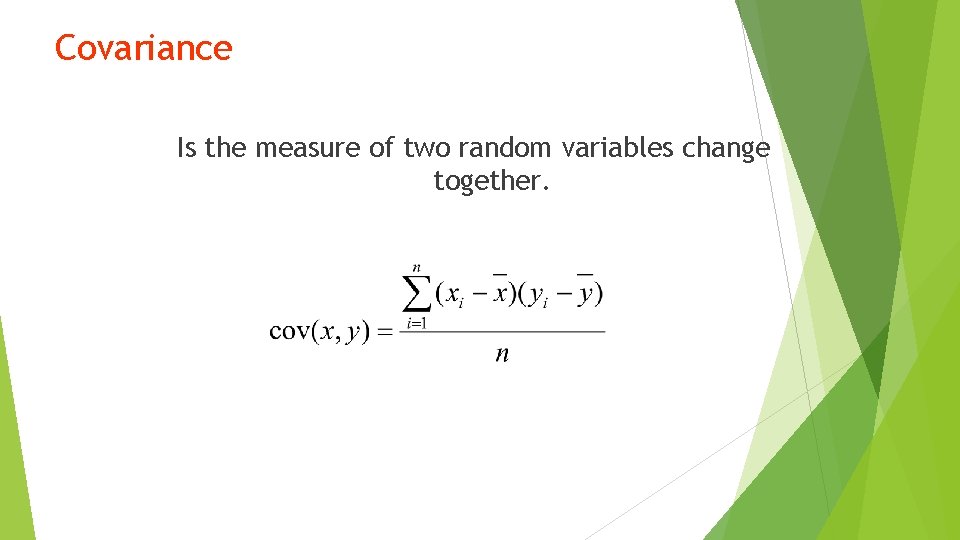
Covariance Is the measure of two random variables change together.
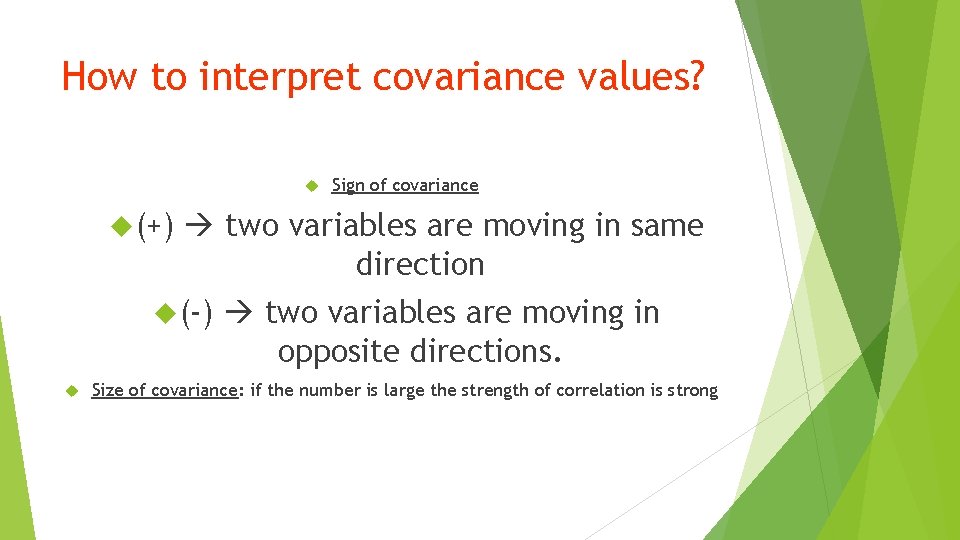
How to interpret covariance values? (+) two variables are moving in same direction (-) Sign of covariance two variables are moving in opposite directions. Size of covariance: if the number is large the strength of correlation is strong
Problem? The covariance is dependent on the variability in the data. So large variance gives large numbers. Therefore the magnitude cannot be measured. Solution? ?
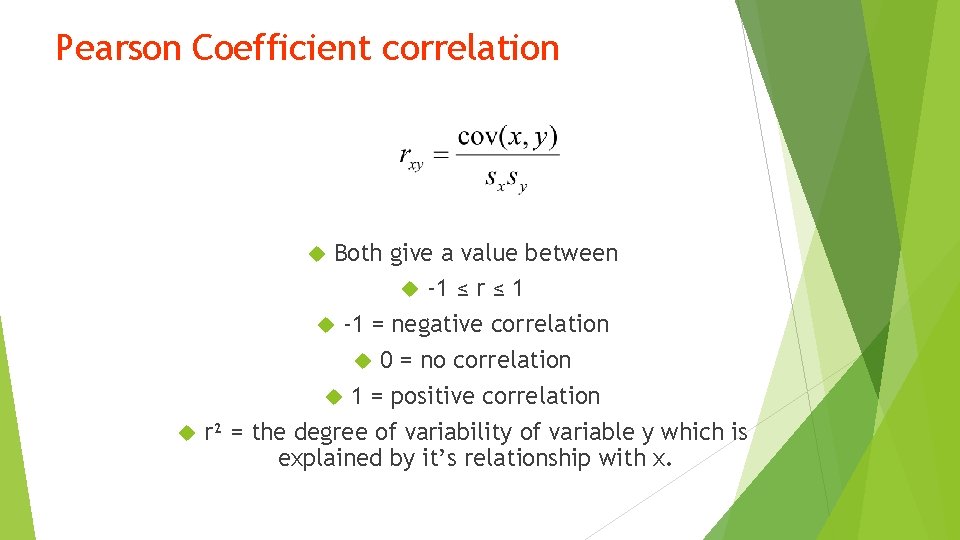
Pearson Coefficient correlation Both give a value between -1 ≤ r ≤ 1 -1 = negative correlation 0 = no correlation 1 = positive correlation r² = the degree of variability of variable y which is explained by it’s relationship with x.
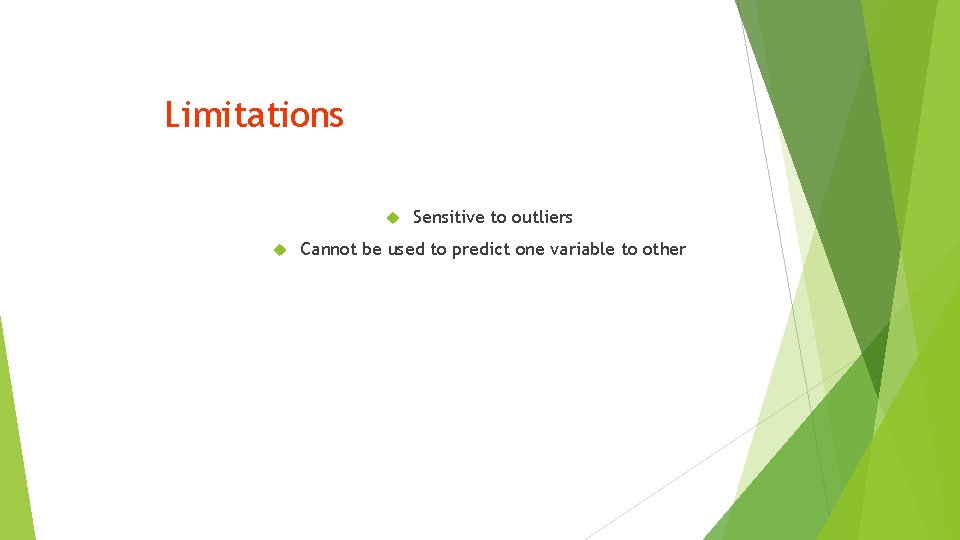
Limitations Sensitive to outliers Cannot be used to predict one variable to other
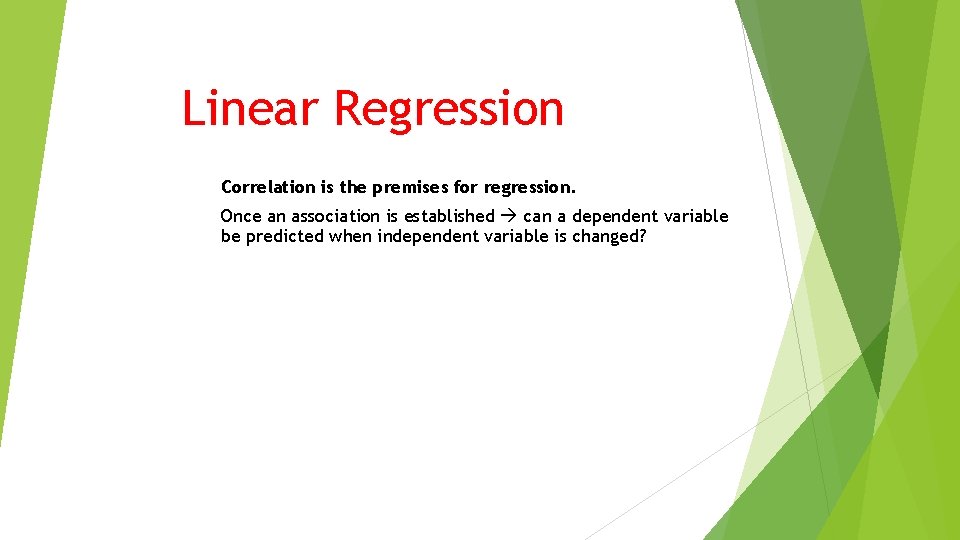
Linear Regression Correlation is the premises for regression. Once an association is established can a dependent variable be predicted when independent variable is changed?
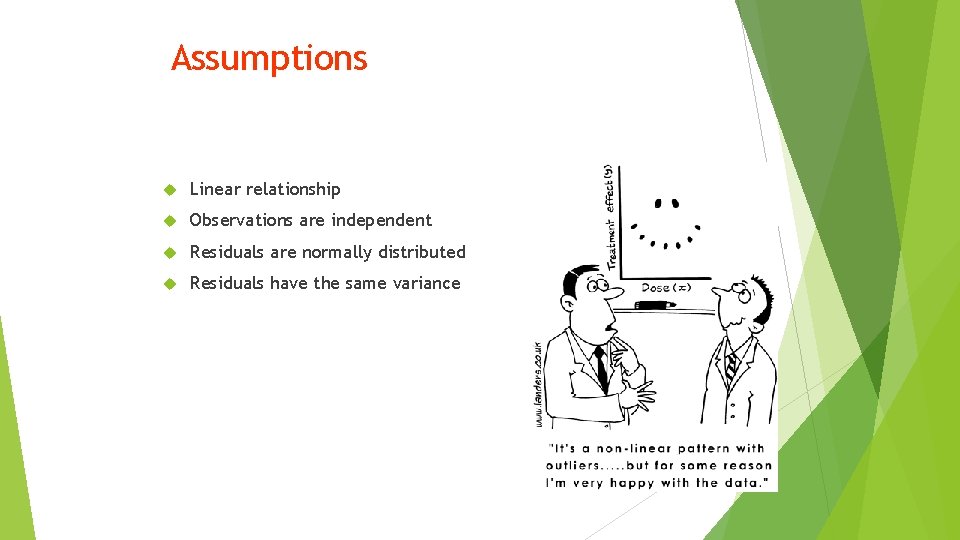
Assumptions Linear relationship Observations are independent Residuals are normally distributed Residuals have the same variance
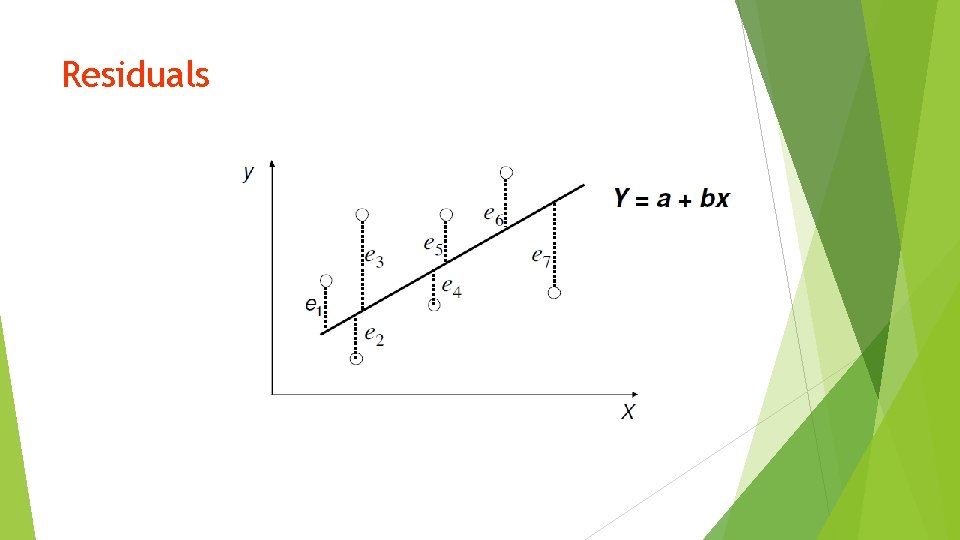
Residuals
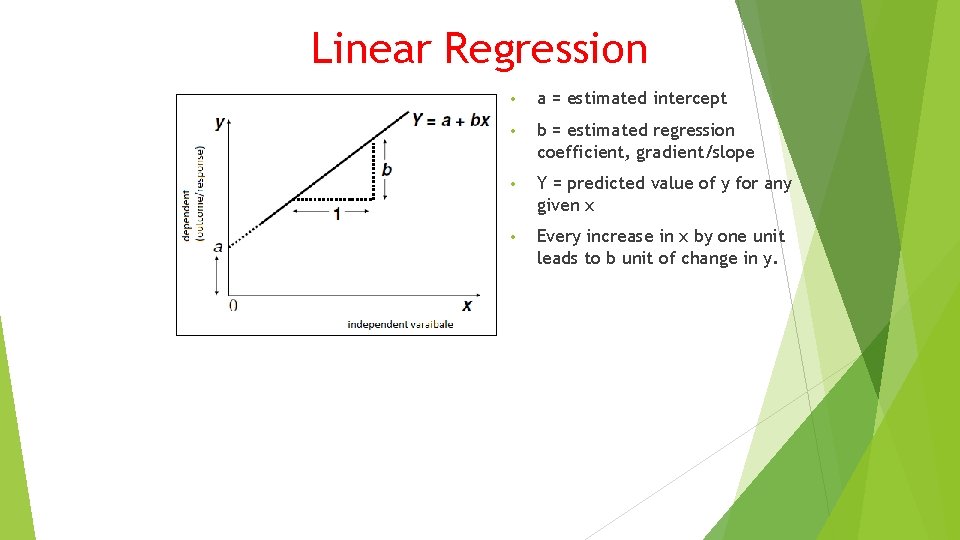
Linear Regression • a = estimated intercept • b = estimated regression coefficient, gradient/slope • Y = predicted value of y for any given x • Every increase in x by one unit leads to b unit of change in y.
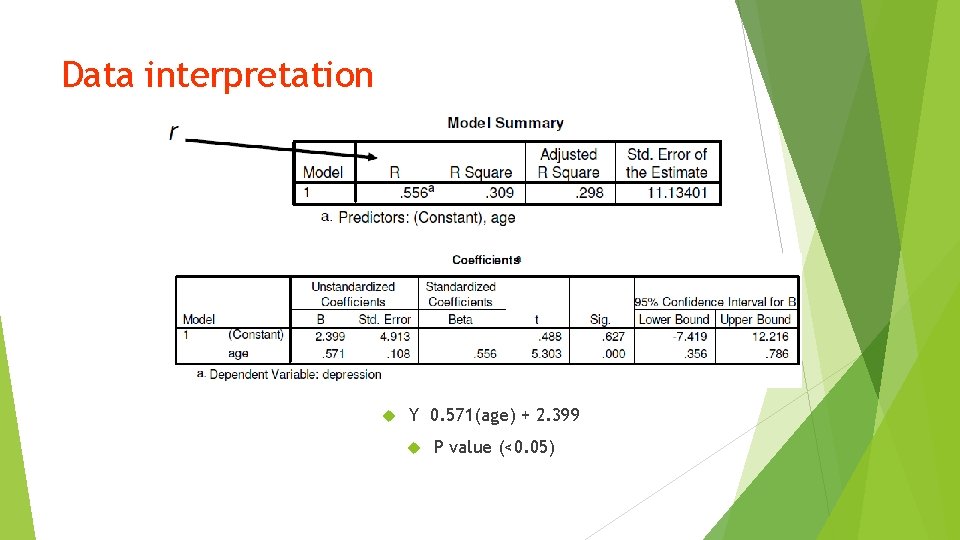
Data interpretation Y 0. 571(age) + 2. 399 P value (<0. 05)
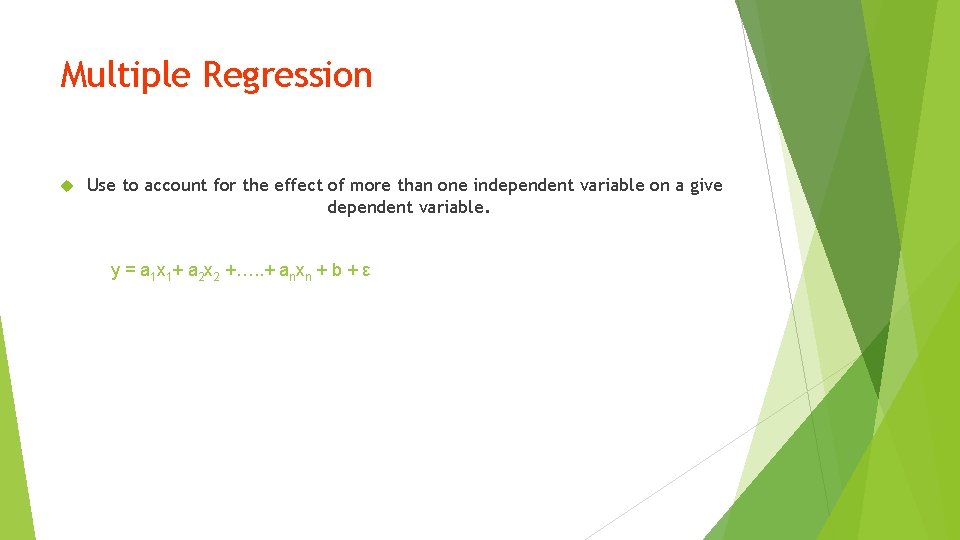
Multiple Regression Use to account for the effect of more than one independent variable on a give dependent variable. y = a 1 x 1+ a 2 x 2 +…. . + anxn + b + ε
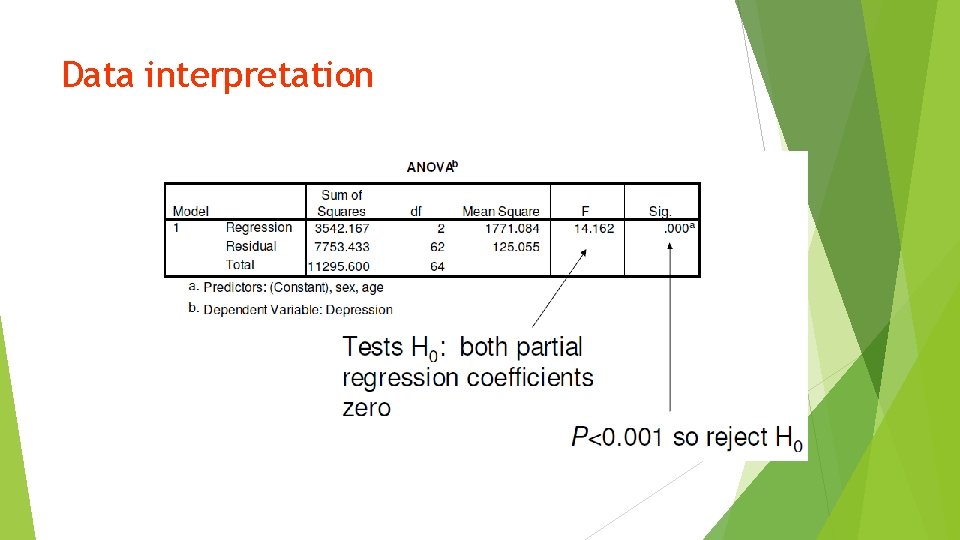
Data interpretation
General Linear Model GLM can also allow you to analyse the effects of several independent x variables on several dependent variables, y 1, y 2, y 3 etc, in a linear combination
Summary Correlation (positive, no correlation, negative) No causality Linear regression – predict one dependent variable y through x Multiple regression – predict one dependent variable y through more than one indepdent variable.
? ? Questions ? ?