
TSS Architecture Definition Context TSS Scoping Study Context
- Slides: 4
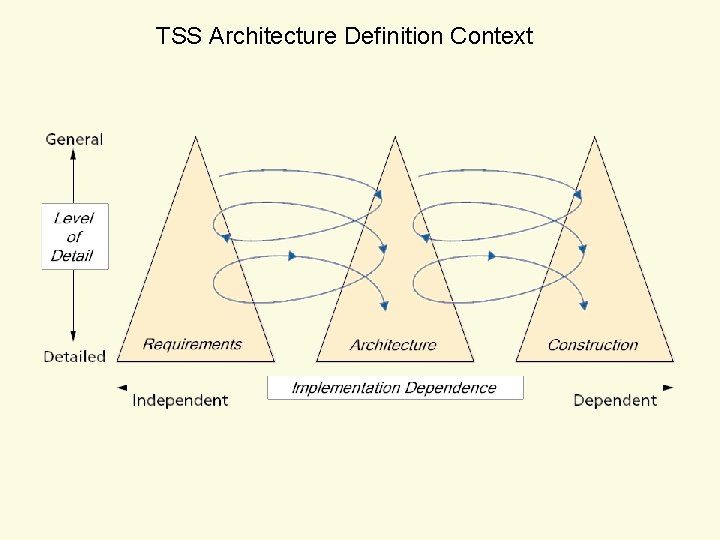
TSS Architecture Definition Context
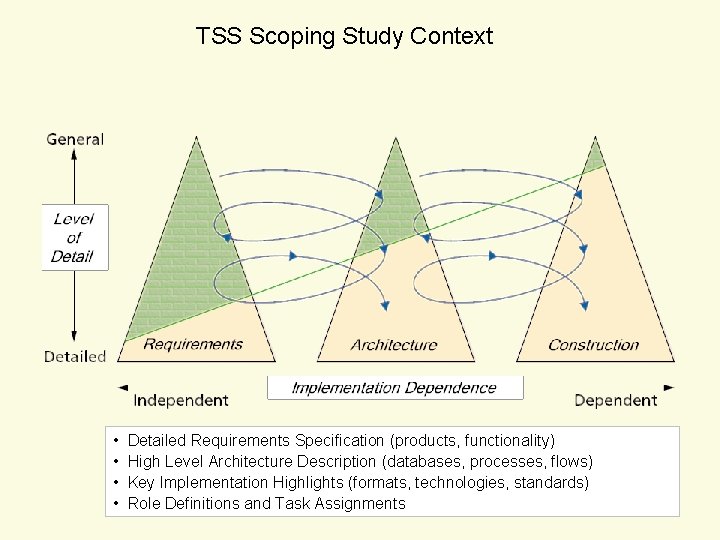
TSS Scoping Study Context • • Detailed Requirements Specification (products, functionality) High Level Architecture Description (databases, processes, flows) Key Implementation Highlights (formats, technologies, standards) Role Definitions and Task Assignments
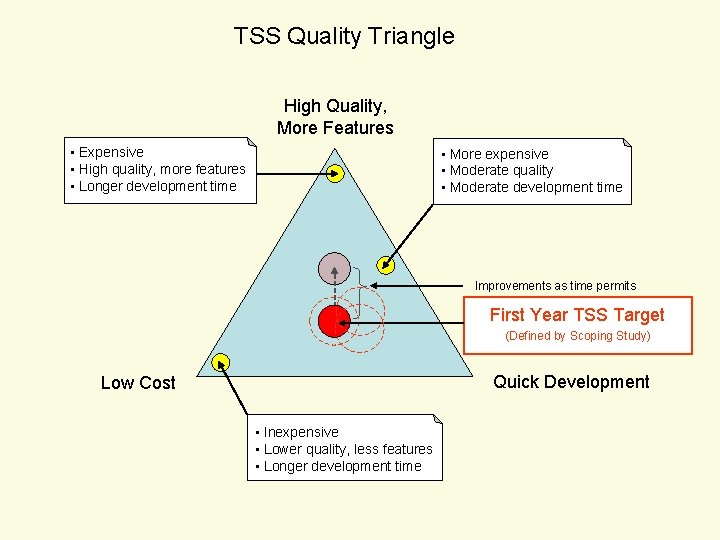
TSS Quality Triangle High Quality, More Features • Expensive • High quality, more features • Longer development time • More expensive • Moderate quality • Moderate development time Improvements as time permits First Year TSS Target (Defined by Scoping Study) Quick Development Low Cost • Inexpensive • Lower quality, less features • Longer development time
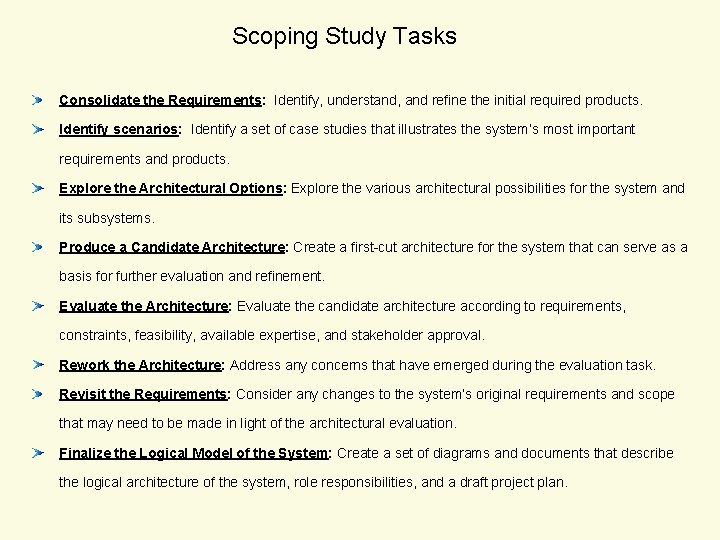
Scoping Study Tasks Consolidate the Requirements: Identify, understand, and refine the initial required products. Identify scenarios: Identify a set of case studies that illustrates the system’s most important requirements and products. Explore the Architectural Options: Explore the various architectural possibilities for the system and its subsystems. Produce a Candidate Architecture: Create a first-cut architecture for the system that can serve as a basis for further evaluation and refinement. Evaluate the Architecture: Evaluate the candidate architecture according to requirements, constraints, feasibility, available expertise, and stakeholder approval. Rework the Architecture: Address any concerns that have emerged during the evaluation task. Revisit the Requirements: Consider any changes to the system’s original requirements and scope that may need to be made in light of the architectural evaluation. Finalize the Logical Model of the System: Create a set of diagrams and documents that describe the logical architecture of the system, role responsibilities, and a draft project plan.