
TSA Writing Skills Primary 6 Prewriting Read the

- Slides: 25
TSA Writing Skills (Primary 6)
Pre-writing
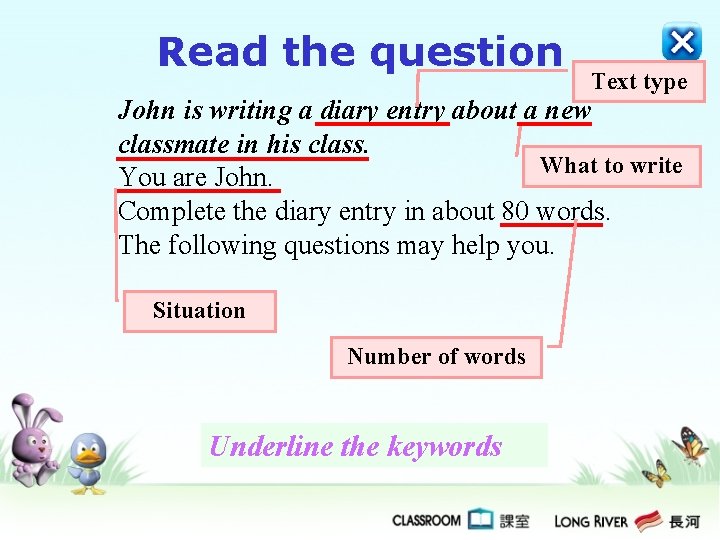
Read the question Text type John is writing a diary entry about a new classmate in his class. What to write You are John. Complete the diary entry in about 80 words. The following questions may help you. Situation Number of words Underline the keywords
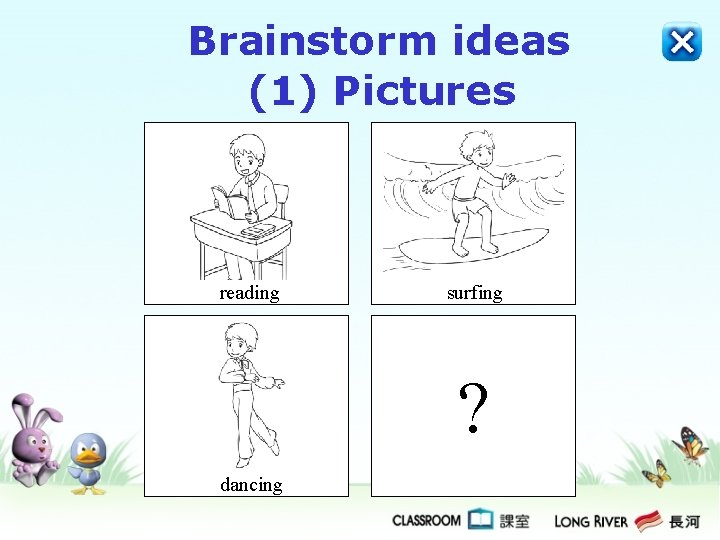
Brainstorm ideas (1) Pictures ? reading surfing ? ? dancing
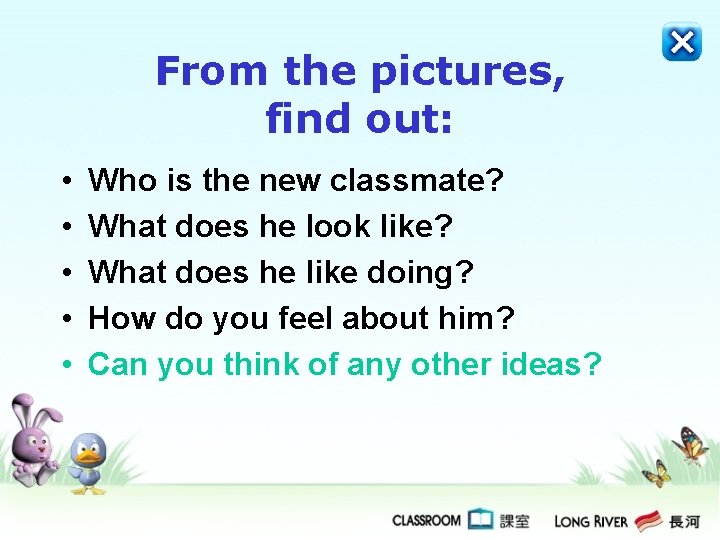
From the pictures, find out: • • • Who is the new classmate? What does he look like? What does he like doing? How do you feel about him? Can you think of any other ideas?
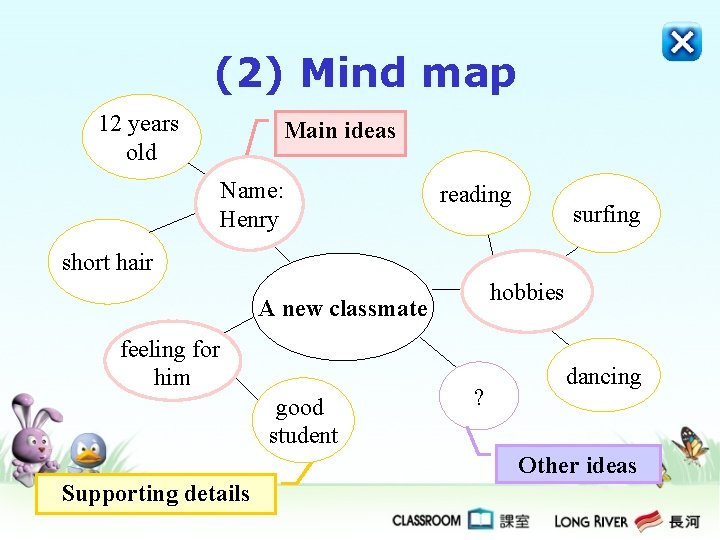
Brainstorm ideas (2) Mind map • Think of as many ideas about this new classmate as possible • Sometimes there may be a mind map to tell you what you can write about
(2) Mind map 12 years old Main ideas Name: Henry reading surfing short hair hobbies A new classmate feeling for him good student ? dancing Other ideas Supporting details
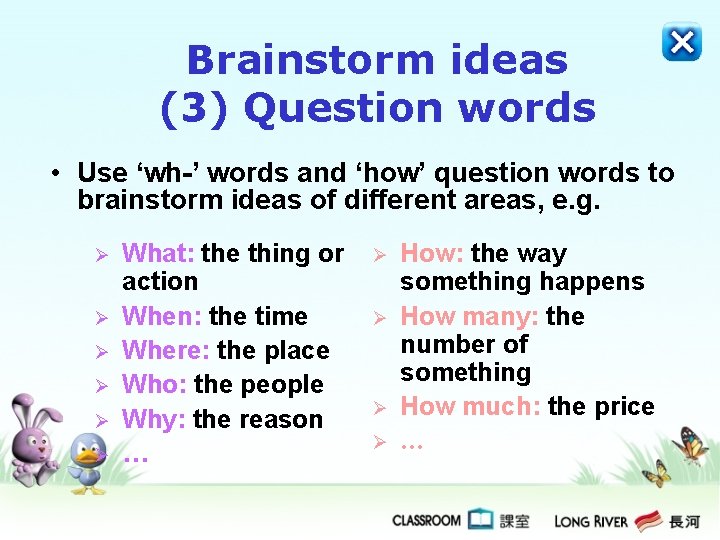
Brainstorm ideas (3) Question words • Use ‘wh-’ words and ‘how’ question words to brainstorm ideas of different areas, e. g. Ø Ø Ø What: the thing or action When: the time Where: the place Who: the people Why: the reason … Ø Ø How: the way something happens How many: the number of something How much: the price …
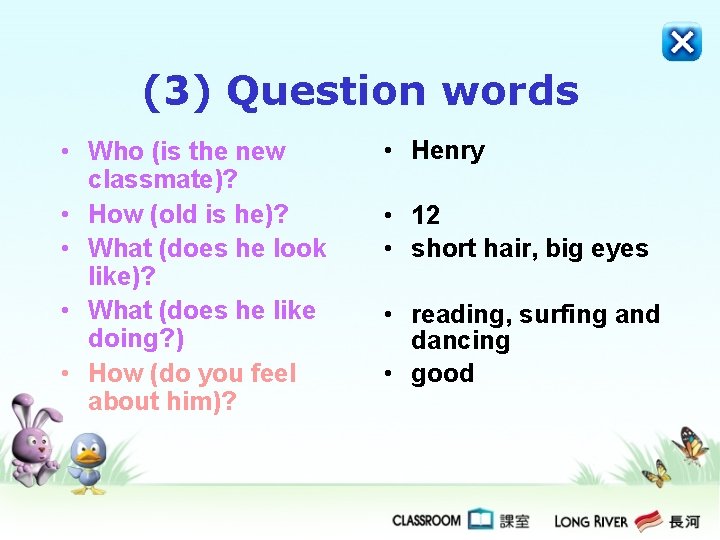
(3) Question words • Who (is the new classmate)? • How (old is he)? • What (does he look like)? • What (does he like doing? ) • How (do you feel about him)? • Henry • 12 • short hair, big eyes • reading, surfing and dancing • good
Writing
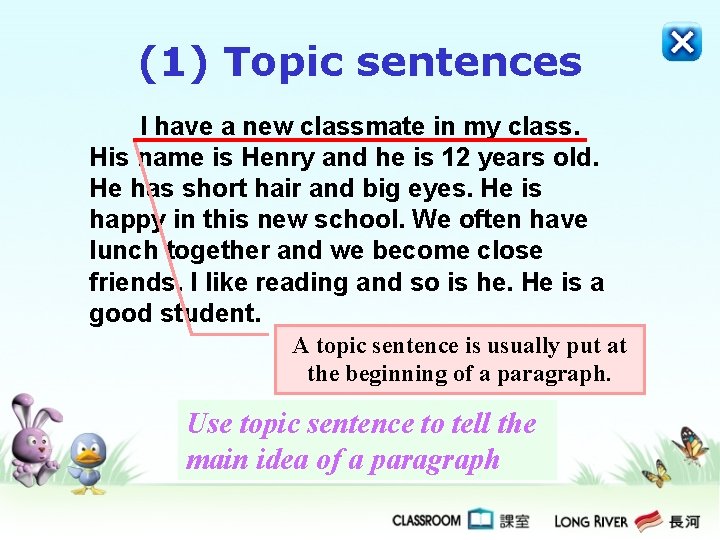
(1) Topic sentences I have a new classmate in my class. His name is Henry and he is 12 years old. He has short hair and big eyes. He is happy in this new school. We often have lunch together and we become close friends. I like reading and so is he. He is a good student. A topic sentence is usually put at the beginning of a paragraph. Use topic sentence to tell the main idea of a paragraph
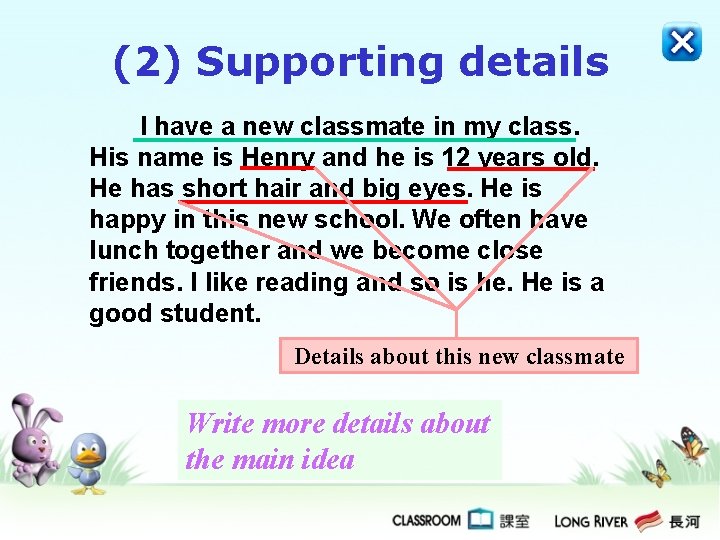
(2) Supporting details I have a new classmate in my class. His name is Henry and he is 12 years old. He has short hair and big eyes. He is happy in this new school. We often have lunch together and we become close friends. I like reading and so is he. He is a good student. Details about this new classmate Write more details about the main idea
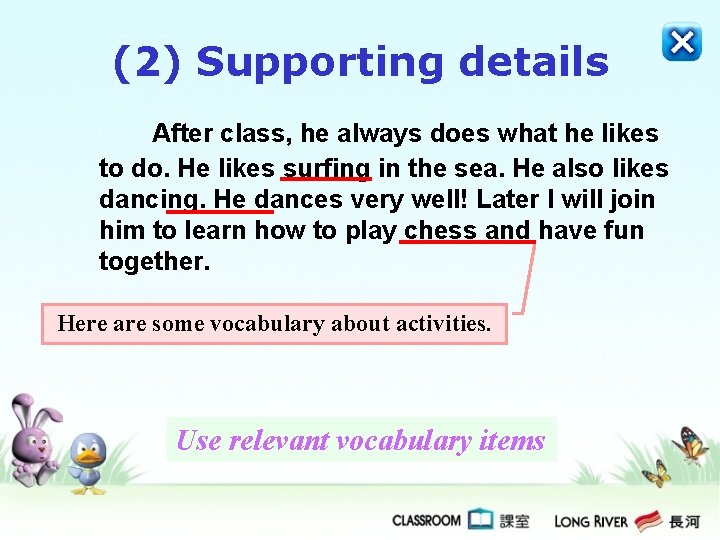
(2) Supporting details After class, he always does what he likes to do. He likes surfing in the sea. He also likes dancing. He dances very well! Later I will join him to learn how to play chess and have fun together. Here are some vocabulary about activities. Use relevant vocabulary items
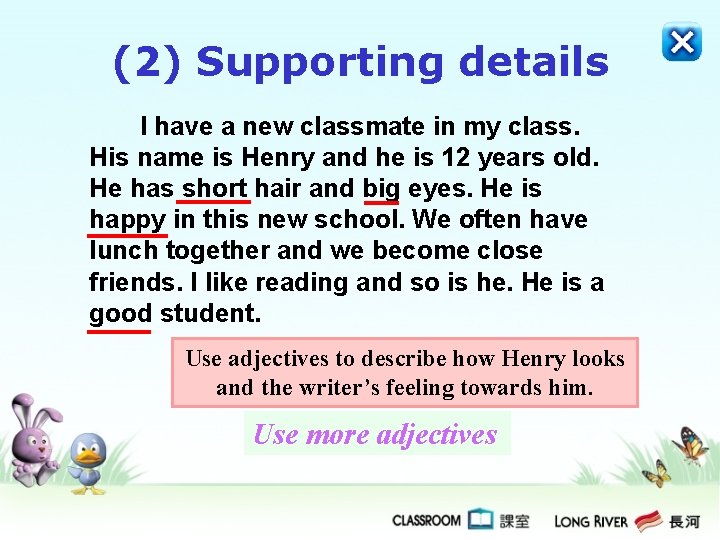
(2) Supporting details I have a new classmate in my class. His name is Henry and he is 12 years old. He has short hair and big eyes. He is happy in this new school. We often have lunch together and we become close friends. I like reading and so is he. He is a good student. Use adjectives to describe how Henry looks and the writer’s feeling towards him. Use more adjectives
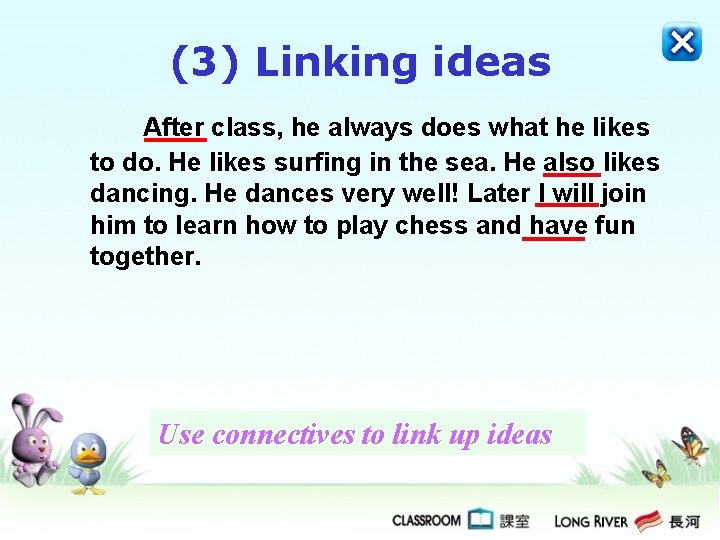
(3) Linking ideas After class, he always does what he likes to do. He likes surfing in the sea. He also likes dancing. He dances very well! Later I will join him to learn how to play chess and have fun together. Use connectives to link up ideas
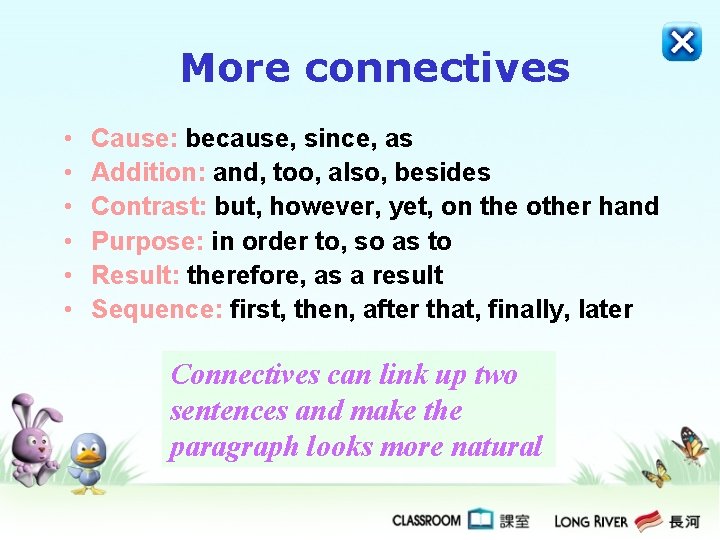
More connectives • • • Cause: because, since, as Addition: and, too, also, besides Contrast: but, however, yet, on the other hand Purpose: in order to, so as to Result: therefore, as a result Sequence: first, then, after that, finally, later Connectives can link up two sentences and make the paragraph looks more natural
Formats
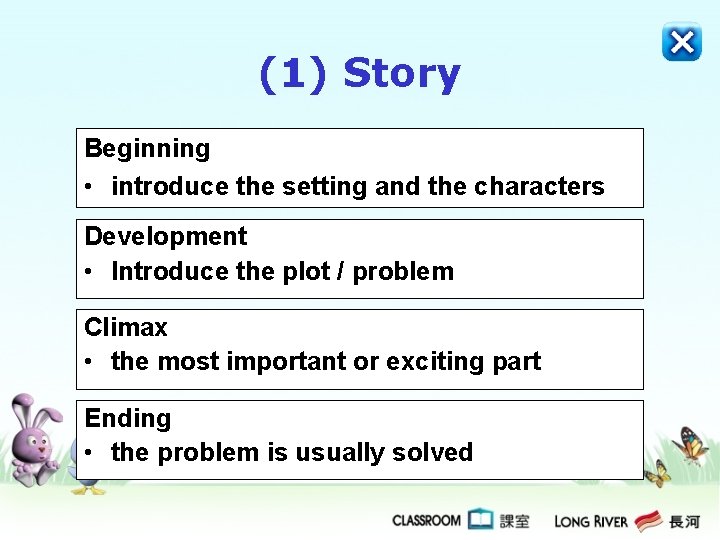
(1) Story Beginning • introduce the setting and the characters Development • Introduce the plot / problem Climax • the most important or exciting part Ending • the problem is usually solved
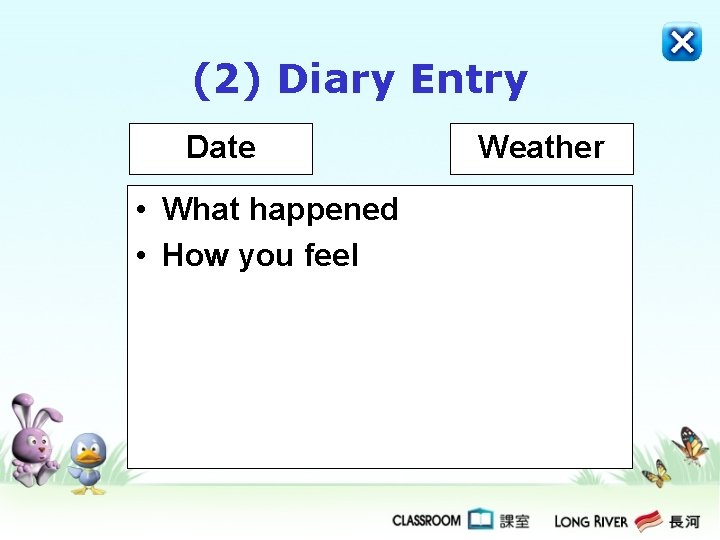
(2) Diary Entry Date • What happened • How you feel Weather
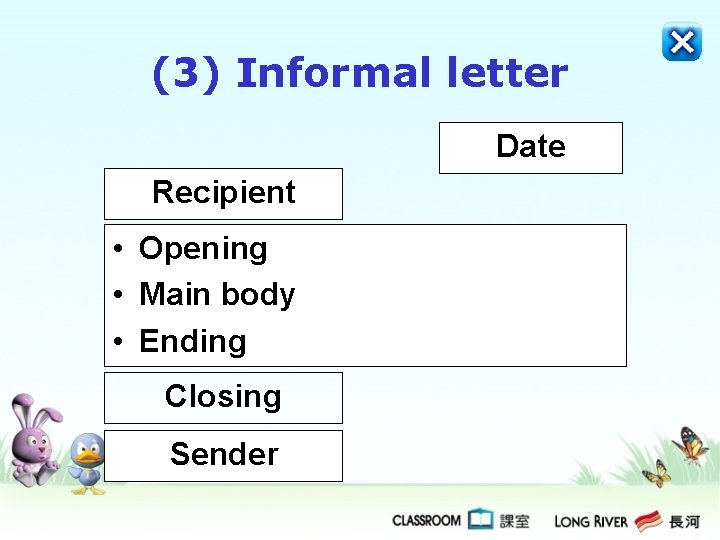
(3) Informal letter Date Recipient • Opening • Main body • Ending Closing Sender
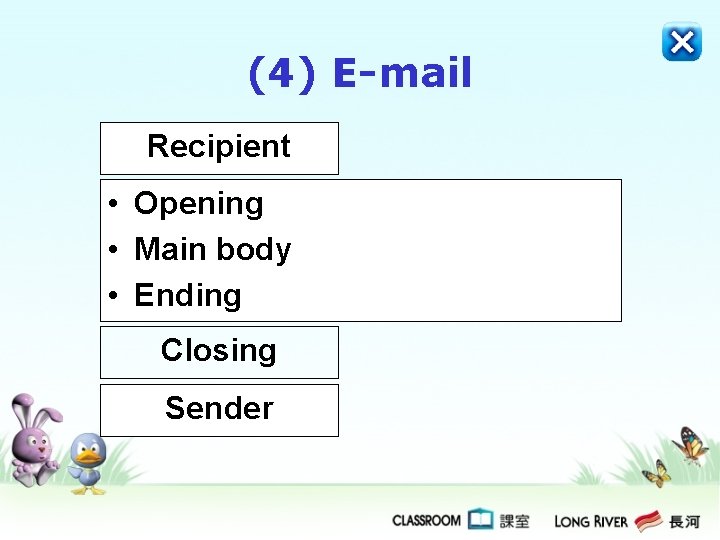
(4) E-mail Recipient • Opening • Main body • Ending Closing Sender
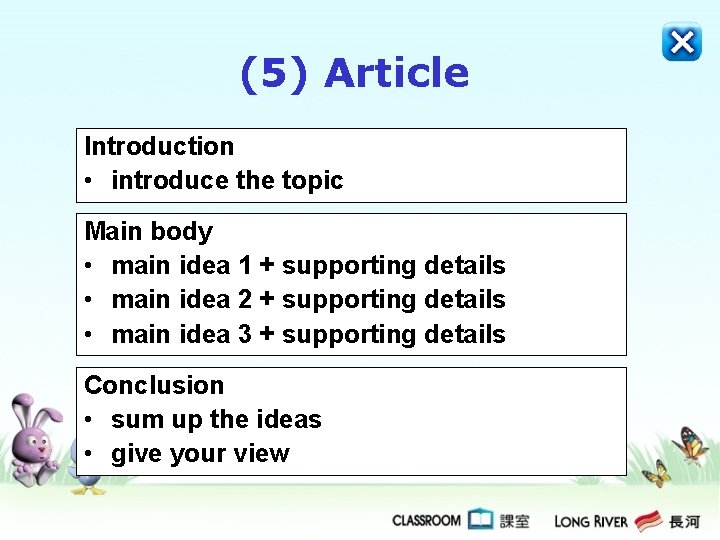
(5) Article Introduction • introduce the topic Main body • main idea 1 + supporting details • main idea 2 + supporting details • main idea 3 + supporting details Conclusion • sum up the ideas • give your view
Post-writing
Read again • Take 5 -10 minutes to read your writing again • Check the language (grammar) - tenses - spelling • Check the format (especially letters) • Check the number of words (about 80 words)
- The End -