
Trypanosomiasis Trypanosoma brucei African trypanosomes sleeping sickness Trypanosoma
Trypanosomiasis • Trypanosoma brucei (African trypanosomes) • sleeping sickness • Trypanosoma cruzi (American trypanosomes) • Chagas’ disease • S. and Central America
transmission • A bite from an infected tsetse fly causes African trypanosomiasis. • Blood transfusions are a rare cause of parasitic transmission. • In rare cases, accidental transmission in the laboratory has been implicated.
Morphology 1 - trypanosmes is an elongated , spindleshape cell with a single nucleus near the middle of parasite. 2 - it has kinetoplast. 3 - it has undulating membrane. 4 - possess a slender-single flagella at the anterior end. 5 - flagellum serve as organ of attachment and locomotion. 6 - there are four stages in life cycle : -
A –trypomastigote: - postnuclear kinetoplast , flagellum start from anterior end with undulating membrane , found in vertebrate and insects. B –epimastigote: - kinetoplast anterior to nucleus flagellum emerging from the body and continuing to the anterior end with short undulating membrane. C –promastigote: - kinetoplast at the anterior end. Flagellum emerging from anterior end of the body. there is no undulating membrane. D–amastigote: - spherical or oval in shape without undulating membrane. flagellum not extend from outside the membrane , start from the kinetoplast.
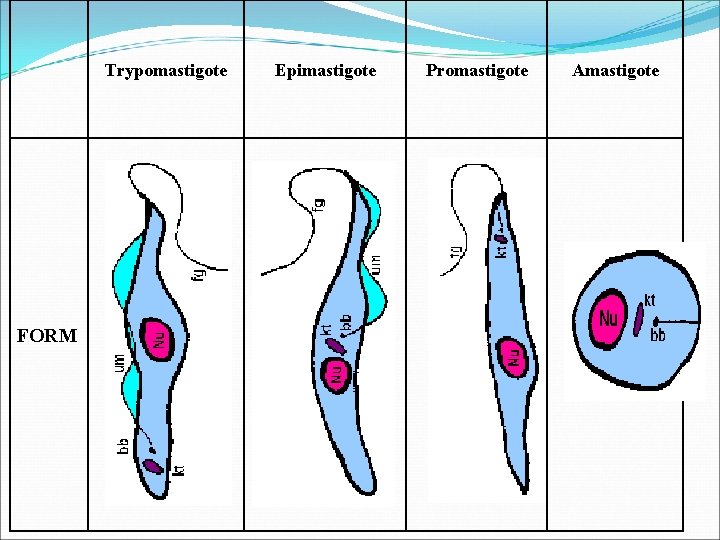
Trypomastigote FORM Epimastigote Promastigote Amastigote
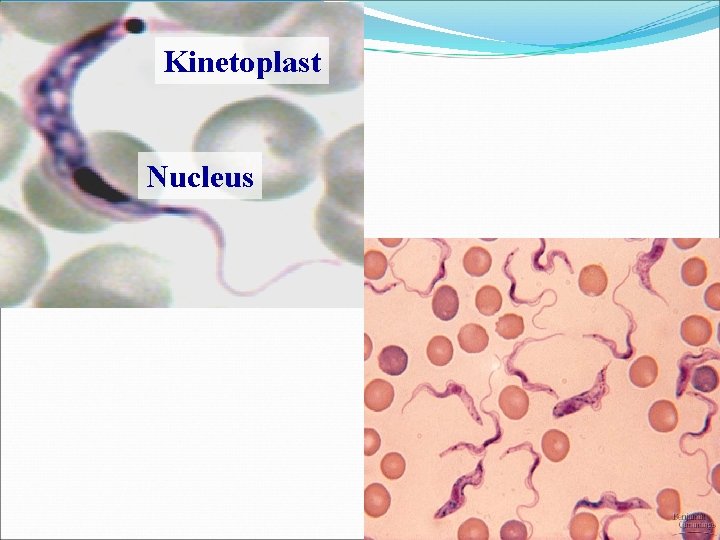
Kinetoplast Nucleus
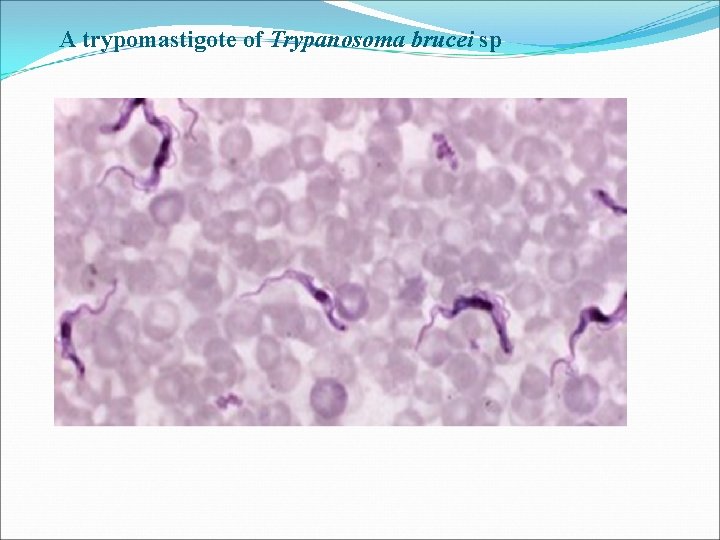
A trypomastigote of Trypanosoma brucei sp
There are two Types of HAT • Trypanosoma brucei rhodesiense • Trypanosomoa brucei gambiense • Acute -- can cause death in weeks or months • Chronic --lasts years
Disease Course and Symptoms • invasion of blood characterized by irregular fever and headache (acute stage) • T. gambiense can be self-limiting or progressing to a more serious disease (chronic) • includes invasion of lymphatics and CNS
• parasites crossing blood-brain barrier(BBB) result in CNS involvement and nervous impairment • described as meningoencephalitis • increased apathy and fatigue • confusion and somnolence • motor changes including tics, slurred speech, incoordination • convulsions, coma, death
100% Fatal if left untreated cardiac failure or from the infection itself
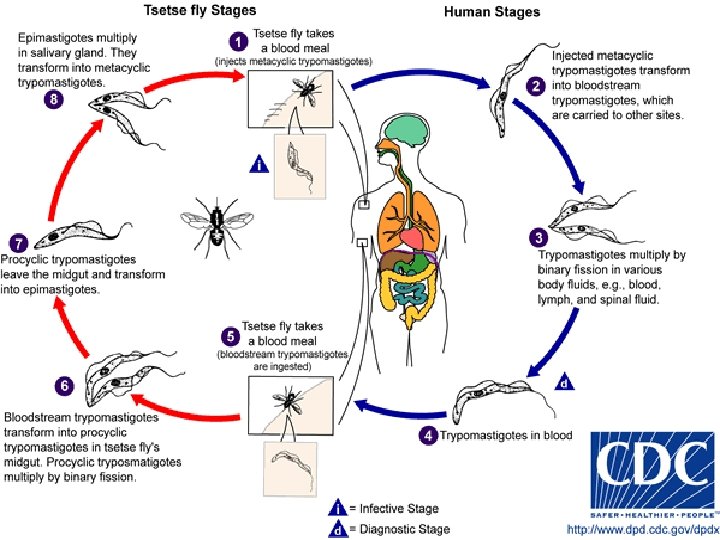
Life cycle • Trypanosomes are parasites with a 2 -host life cycle: mammalian and arthropod. • The life cycle starts when the trypanosomes are ingested during a blood meal by the tsetse fly. • The trypanosomes multiply over a period of 2 -3 weeks in the fly midgut; then, the trypanosomes migrate to the salivary gland, where they develop into epimastigotes. • The metacyclic trypomastigotes infect humans.
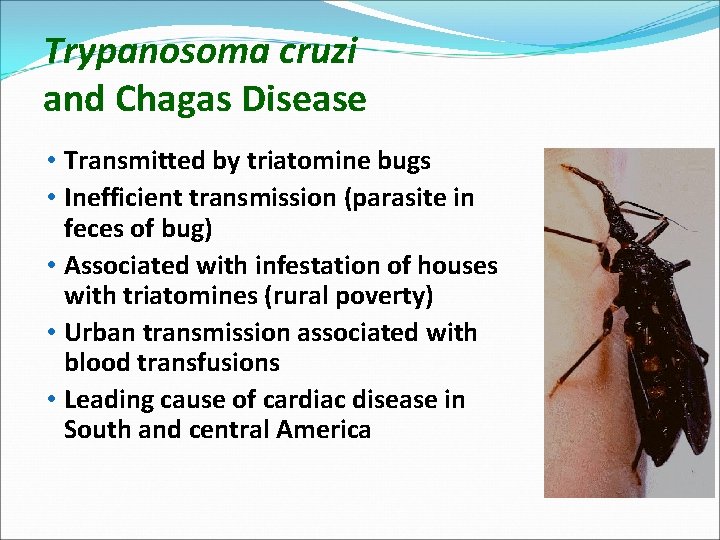
Trypanosoma cruzi and Chagas Disease • Transmitted by triatomine bugs • Inefficient transmission (parasite in feces of bug) • Associated with infestation of houses with triatomines (rural poverty) • Urban transmission associated with blood transfusions • Leading cause of cardiac disease in South and central America
Clinical Course of Chagas • Acute Phase active infection (1 -4 months) most are asymptomatic (children most likely to be symptomatic) • Indeterminate Phase 10 -30 years of latency seropositive with no detectable parasitemia • Chronic Phase 10 -30% of infected exhibit cardiomyopathy conductions defects congestive heart failure
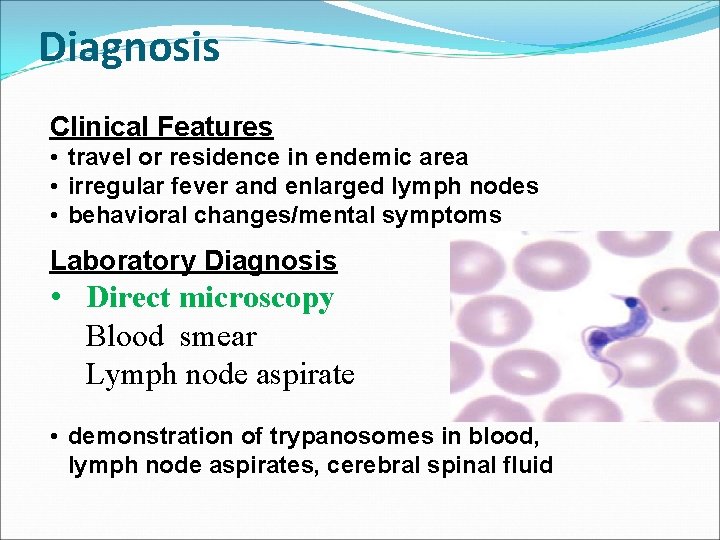
Diagnosis Clinical Features • travel or residence in endemic area • irregular fever and enlarged lymph nodes • behavioral changes/mental symptoms Laboratory Diagnosis • Direct microscopy Blood smear Lymph node aspirate • demonstration of trypanosomes in blood, lymph node aspirates, cerebral spinal fluid
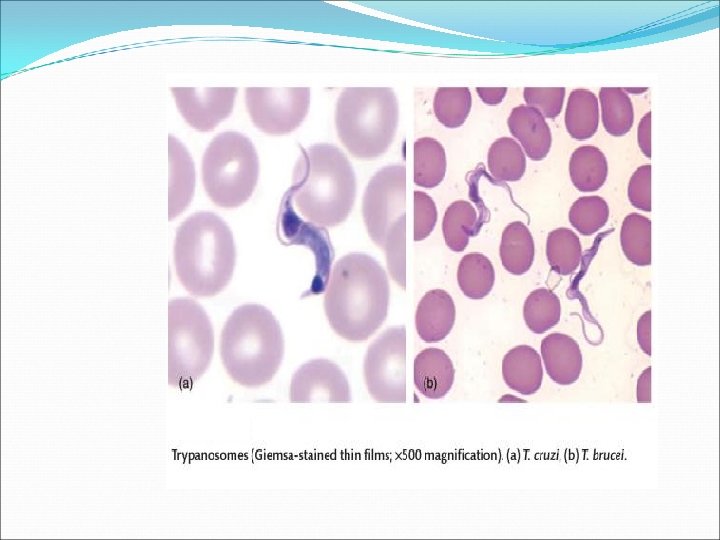
• Serology • Antigen detection tests based on enzyme-linked immunosorbent assay (ELISA) technology have been developed. Culture of CSF, blood, bone marrow aspirate, or tissue specimens can be performed in liquid media. • Other tests developed like polymerase chain reaction (PCR) • Animal inoculation
Treatment • Early stage - most recover • Suramin • Melasporol • Pentamidine • Late stage - upto 5% relapse • Only Melasporol
Control Destruction of animal reservoir Vector Control Diagnosis & treatment
- Slides: 20