
TrustBased Relational Intervention TBRI RFKC INTRODUCTION AND OVERVIEW
Trust-Based Relational Intervention ® ® (TBRI ) RFKC INTRODUCTION AND OVERVIEW
Children from Hard Places
TBRI – What will we cover? ► Overview of TBRI ► Connecting Principles ► Empowering Principles ► Correcting Principles ► Levels of Engagement
Overview - TBRI ► Trust-Based Relational Intervention (TBRI) is designed to meet the basic relationship and developmental needs of children and youth from “hard places, ” as well as the needs of the adults who seek to help them heal, learn, and grow. ► Attachment-based, trauma-informed, evidence-based, and whole child. ► Set of principles and strategies that give caregivers (parents, volunteers, professionals, etc. ) the tools to bring healing and well-being to children and adolescents.
Overview – Who uses TBRI? Homes Orphanages Schools Camps Residential facilities Courts Church
Overview – Complex Trauma & Risk Factors Complex Trauma “The experience of multiple, chronic, and prolonged, developmentally adverse traumatic events, most often of an interpersonal nature. ” RISK FACTORS ► Difficult Pregnancy ► Difficult Birth ► Early Hospitalization ► Abuse ► Neglect ► Trauma
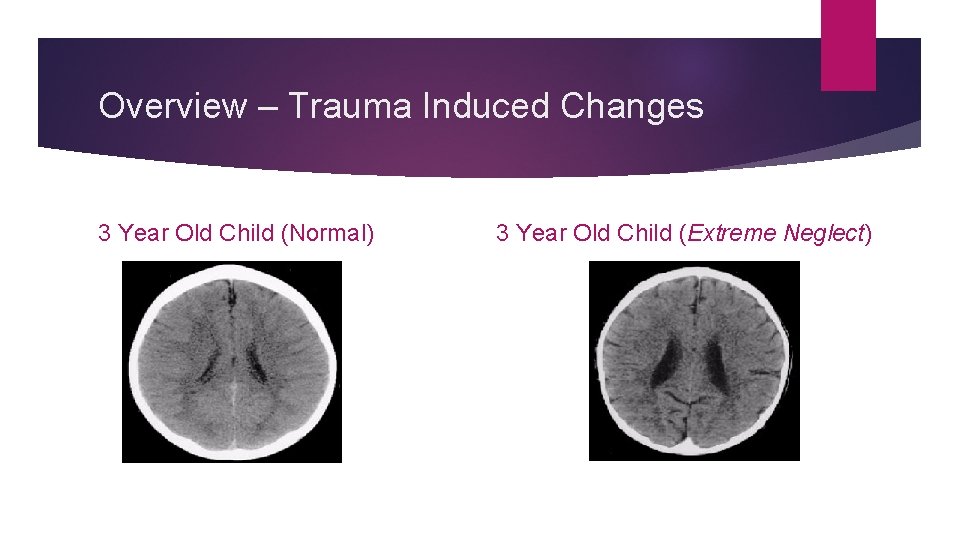
Overview – Trauma Induced Changes 3 Year Old Child (Normal) 3 Year Old Child (Extreme Neglect)
Overview – Brain Growth Stages There are 6 major brain growth stages ► In-Utero ► First Year ► Age Five ► Age 8 ► Age 12 ► Age 16

TBRI ® : Connecting Principles TO BUILD TRUSTING RELATIONSHIPS THAT HELP CHILDREN AND YOUTH FEEL VALUED, CARED FOR, SAFE, AND CONNECTED. DISARMING FEAR AND BUILDING TRUST GREATLY INCREASES THE CAPACITY FOR CONNECTION, GROWTH, AND LEARNING.
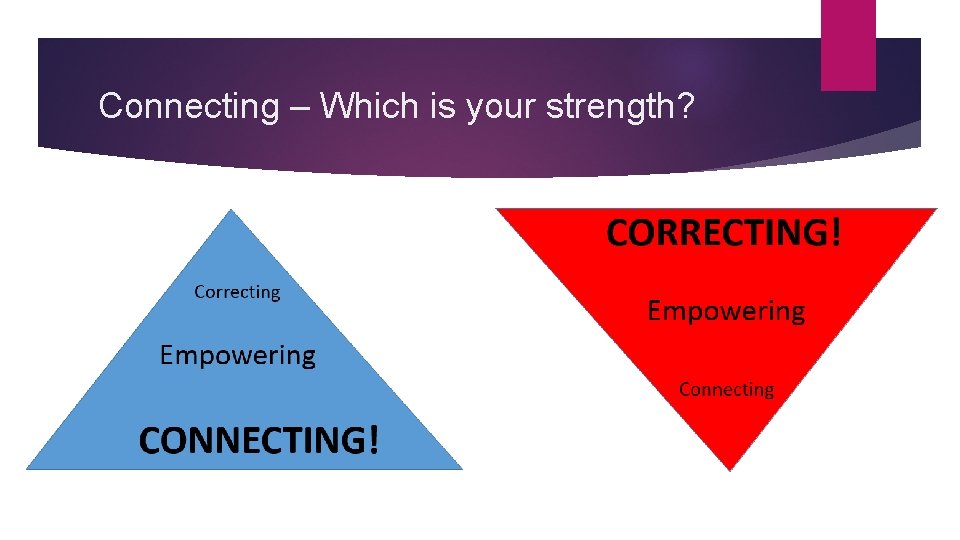
Connecting – Which is your strength?
Connecting – Mindfulness Strategies ► ► ► Be flexible in responding. Adjust interactions based on the child’s needs. Be aware of the child’s perception of your voice/presence/interactions (as welcoming, threatening, etc. ) Be aware of yourself, the child and the environment. Be a calm, attentive presence. Questions to ask yourself: ► What do I bring to this situation from my personal history? ► How does this child perceive me? ► What else might be going on in the environment that is influencing this situation?
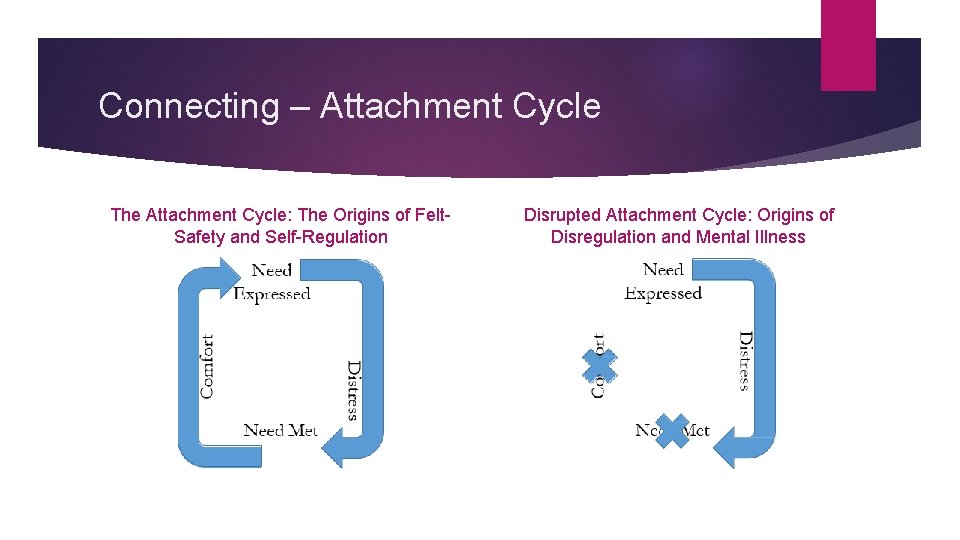
Connecting – Attachment Cycle The Attachment Cycle: The Origins of Felt. Safety and Self-Regulation Disrupted Attachment Cycle: Origins of Disregulation and Mental Illness
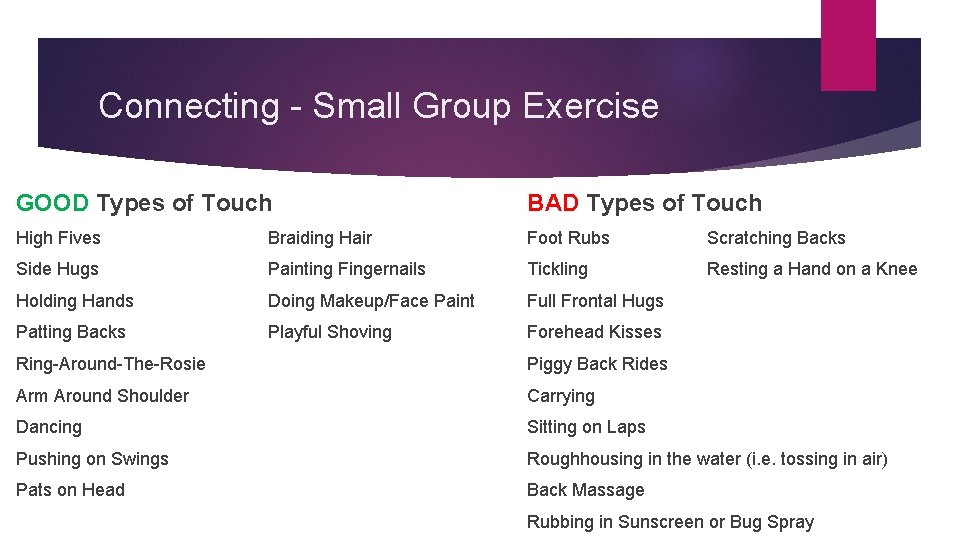
Connecting - Small Group Exercise GOOD Types of Touch BAD Types of Touch High Fives Braiding Hair Foot Rubs Scratching Backs Side Hugs Painting Fingernails Tickling Resting a Hand on a Knee Holding Hands Doing Makeup/Face Paint Full Frontal Hugs Patting Backs Playful Shoving Forehead Kisses Ring-Around-The-Rosie Piggy Back Rides Arm Around Shoulder Carrying Dancing Sitting on Laps Pushing on Swings Roughhousing in the water (i. e. tossing in air) Pats on Head Back Massage Rubbing in Sunscreen or Bug Spray
Connecting – Engagement Strategies Questions to ask yourself ► How do I effectively engage this child in terms of full attention, close proximity, facial expression, voice tone, body language, etc. ? ► Am I “matching” with body language, position, voice, etc. ? But what is one of the most powerful connecting gifts that can be given by any adult? …
Connecting – Engagement Strategies GIVING VOICE! ► Children and youth who have come from “hard places” typically feel they have no voice and are much more likely to use aggression, violence, manipulation, triangulation and control to deal with adults and other children. ► Connecting strategies are dynamic in beginning to teach trust and disarm fear.

The Importance of Giving Voice to Our Children
Brainstorming Exercise What are 3 ways you can give your camper a voice?
Connecting - Small Group Exercise “For the things we have to learn before we can do them, we learn by doing them. ” - Aristotle, The Nicomachaen Ethics
TBRI ® : Empowering Principles TO PREPARE “BODIES AND BRAINS” FOR SUCCESS BY MEETING PHYSICAL NEEDS AND TO PREPARE AN ENVIRONMENT THAT MEETS THE INTERNAL PHYSICAL NEEDS OF CHILDREN AND YOUTH.
Empowering – Physiological Strategies (Physical/Internal) ► Provide hydration (ex. Water bottles) Questions to ask yourself: ► Attend to blood sugar: healthy food or snacks every 2 hours ► Have I met this child’s physical needs so that he can learn at his highest level? ► Meet sensory needs: provide opportunities for physical activity at least every 2 hours ► In the past two hours, has this child had water, good, and sensory activity? ► Model self-regulation: Teach & practice selfregulation skills in physical and/or nurturing activities throughout the day ► The capacity to teach Self-Regulation is one of the most important Empowering Principles.
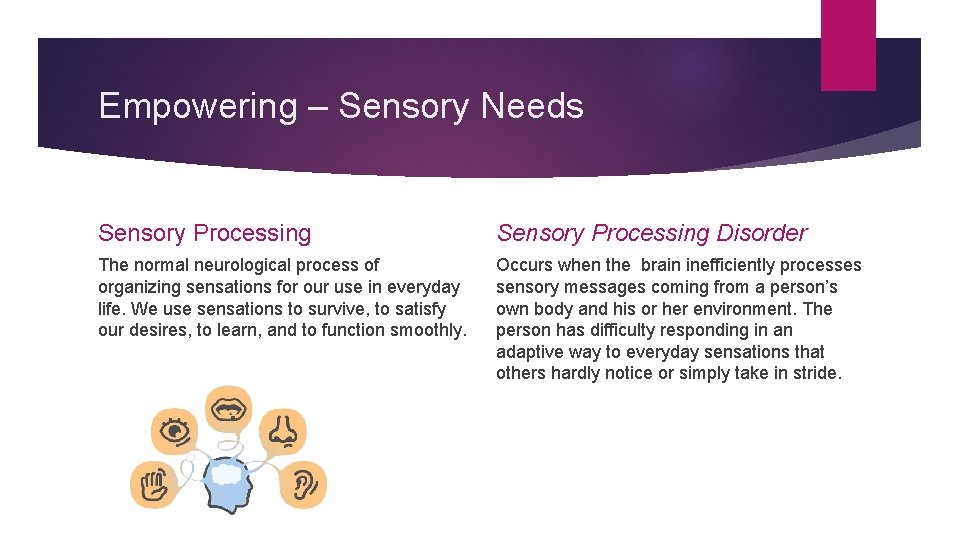
Empowering – Sensory Needs Sensory Processing Disorder The normal neurological process of organizing sensations for our use in everyday life. We use sensations to survive, to satisfy our desires, to learn, and to function smoothly. Occurs when the brain inefficiently processes sensory messages coming from a person’s own body and his or her environment. The person has difficulty responding in an adaptive way to everyday sensations that others hardly notice or simply take in stride.
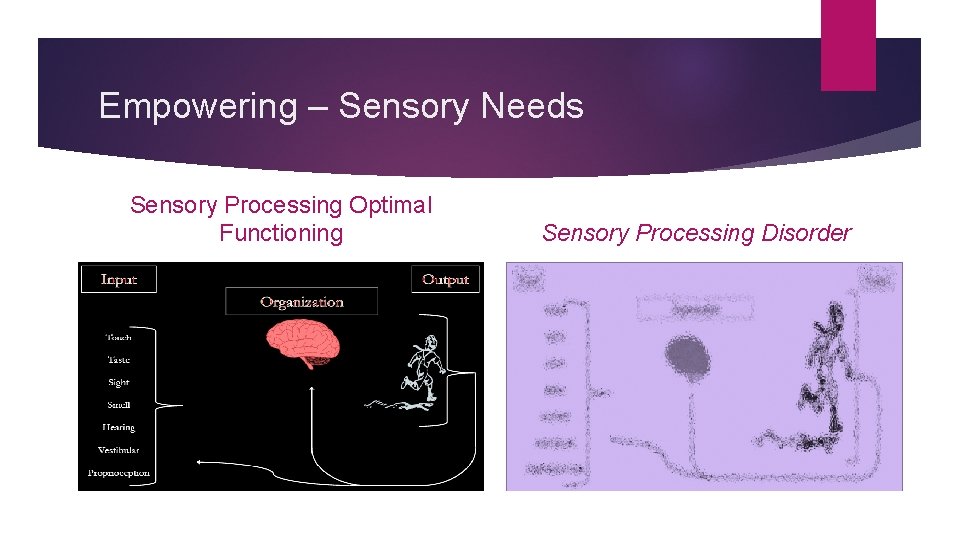
Empowering – Sensory Needs Sensory Processing Optimal Functioning Sensory Processing Disorder
Understanding Sensory Processing
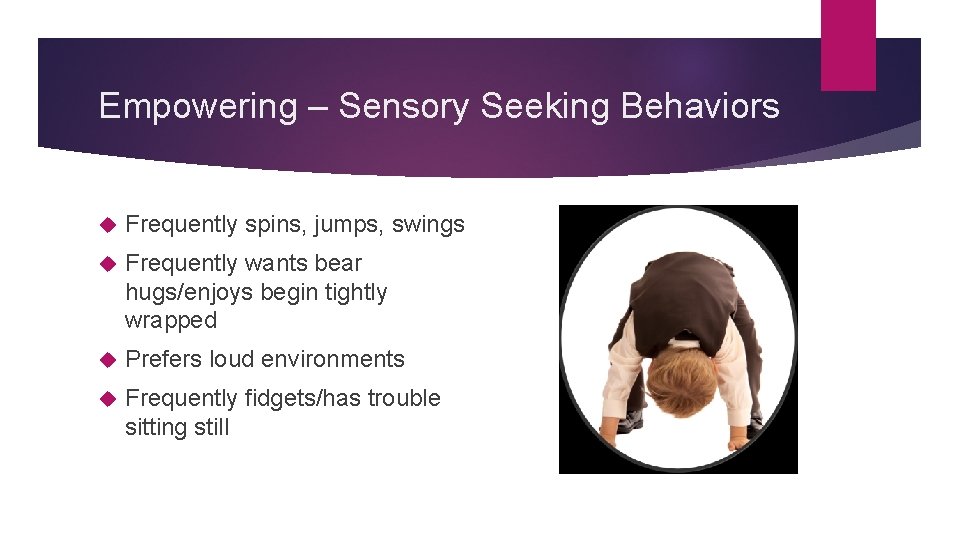
Empowering – Sensory Seeking Behaviors Frequently spins, jumps, swings Frequently wants bear hugs/enjoys begin tightly wrapped Prefers loud environments Frequently fidgets/has trouble sitting still
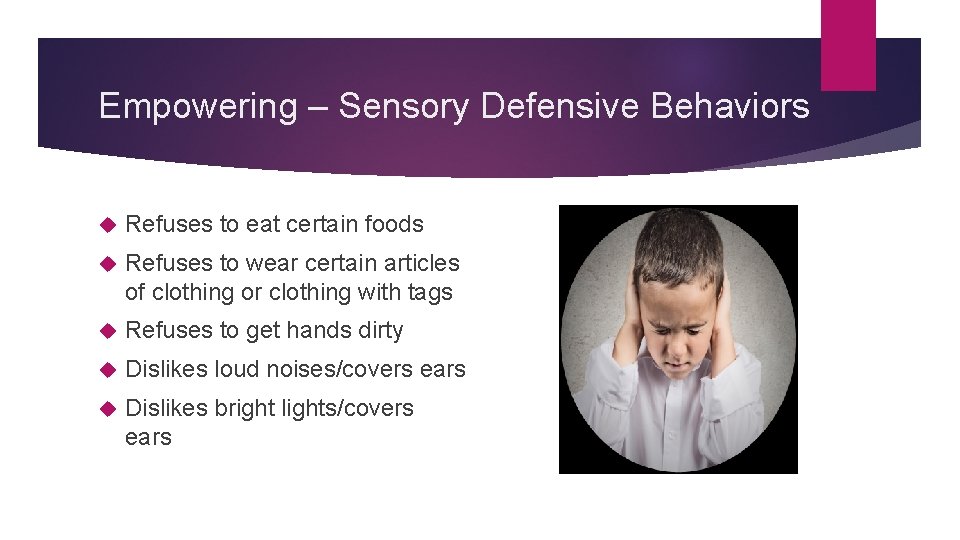
Empowering – Sensory Defensive Behaviors Refuses to eat certain foods Refuses to wear certain articles of clothing or clothing with tags Refuses to get hands dirty Dislikes loud noises/covers ears Dislikes bright lights/covers ears
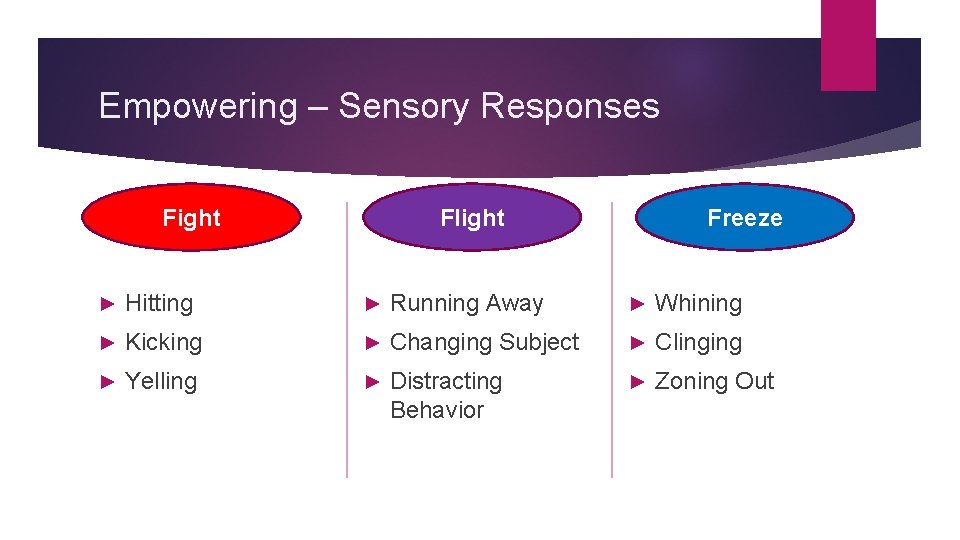
Empowering – Sensory Responses Fight Flight Freeze ► Hitting ► Running Away ► Whining ► Kicking ► Changing Subject ► Clinging ► Yelling ► Distracting Behavior ► Zoning Out
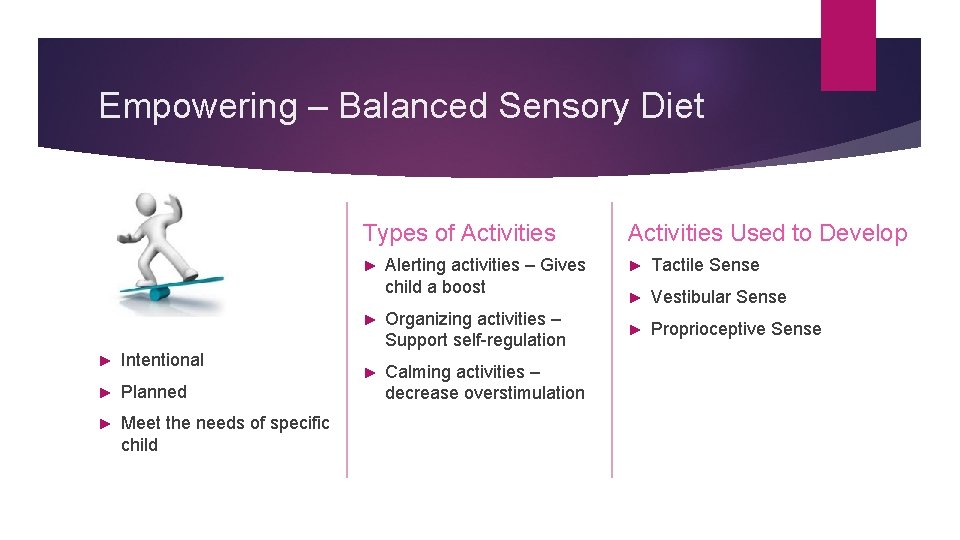
Empowering – Balanced Sensory Diet Types of Activities ► ► Intentional ► Planned ► Meet the needs of specific child Alerting activities – Gives child a boost ► Organizing activities – Support self-regulation ► Calming activities – decrease overstimulation Activities Used to Develop ► Tactile Sense ► Vestibular Sense ► Proprioceptive Sense
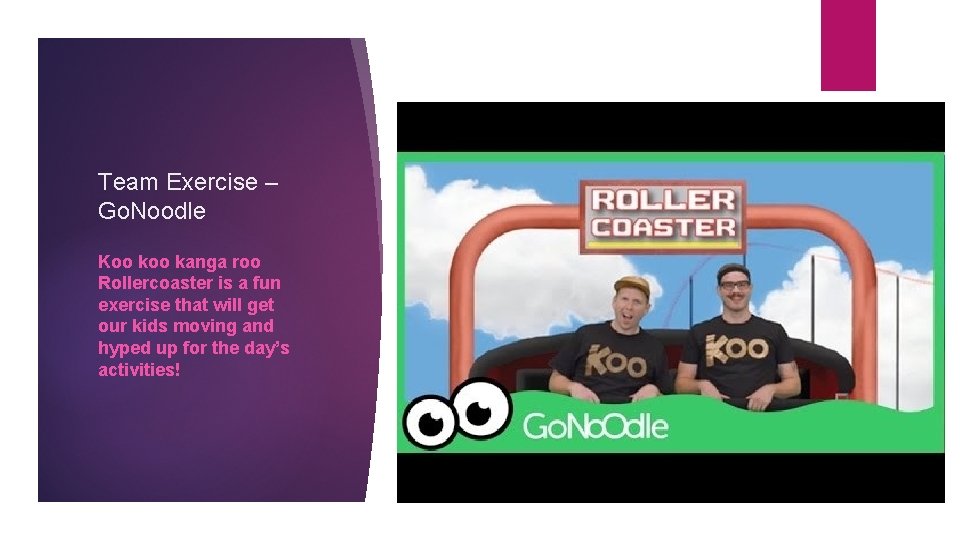
Team Exercise – Go. Noodle Koo kanga roo Rollercoaster is a fun exercise that will get our kids moving and hyped up for the day’s activities!
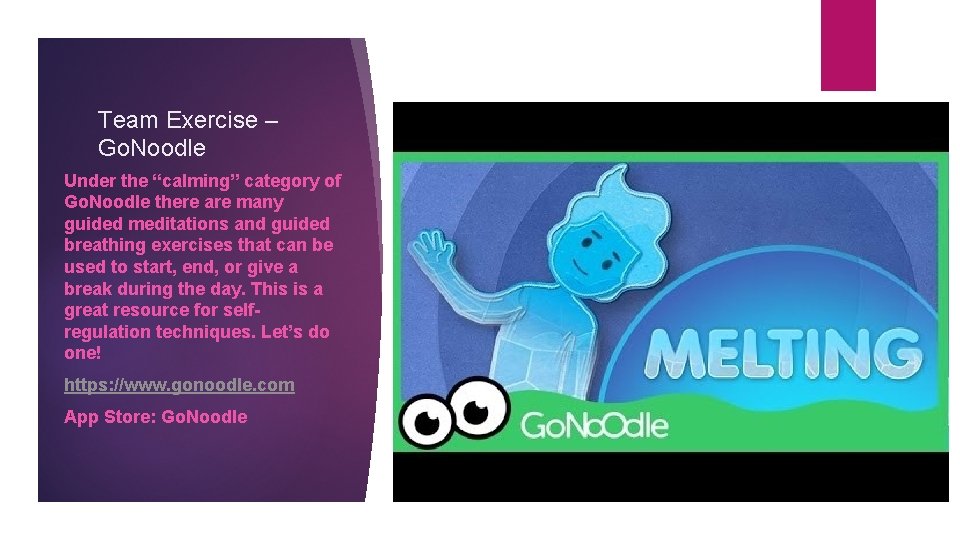
Team Exercise – Go. Noodle Under the “calming” category of Go. Noodle there are many guided meditations and guided breathing exercises that can be used to start, end, or give a break during the day. This is a great resource for selfregulation techniques. Let’s do one! https: //www. gonoodle. com App Store: Go. Noodle
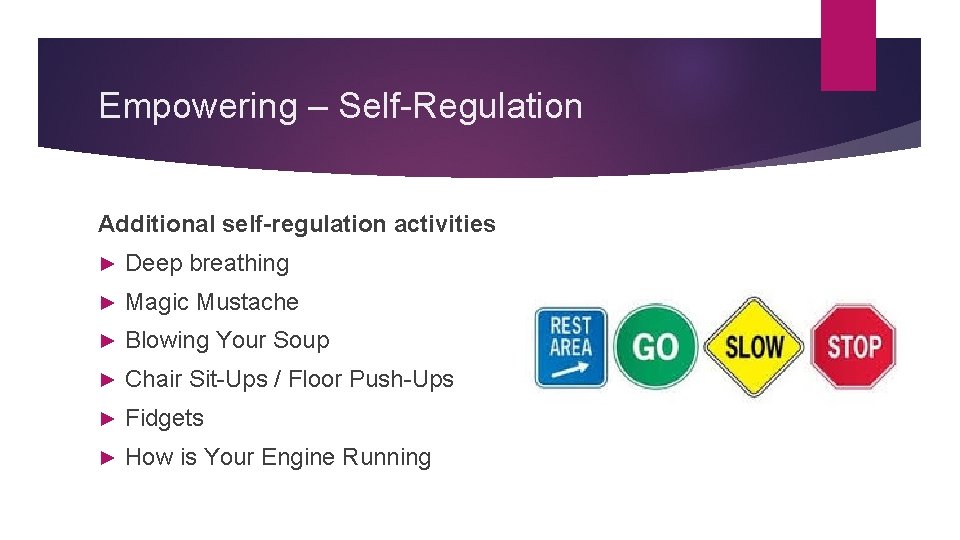
Empowering – Self-Regulation Additional self-regulation activities ► Deep breathing ► Magic Mustache ► Blowing Your Soup ► Chair Sit-Ups / Floor Push-Ups ► Fidgets ► How is Your Engine Running
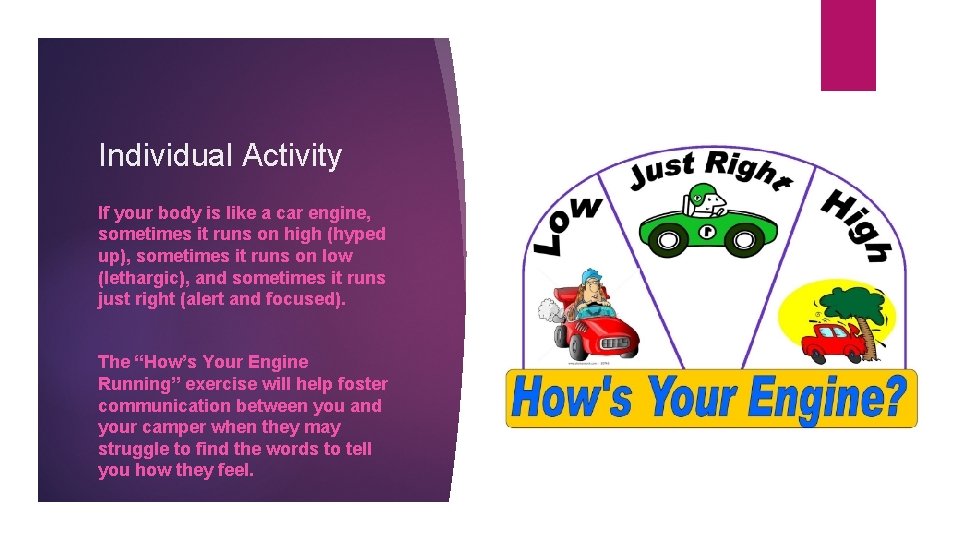
Individual Activity If your body is like a car engine, sometimes it runs on high (hyped up), sometimes it runs on low (lethargic), and sometimes it runs just right (alert and focused). The “How’s Your Engine Running” exercise will help foster communication between you and your camper when they may struggle to find the words to tell you how they feel.
Empowering – Ecological Strategies (Environmental/External) ► ► ► Use daily rituals that are predictable (ex. Morning routines) Create predictability with transitions (ex. “In 5 minutes we will go eat dinner. ”) Develop awareness about the levels of sensory input (ex. Does my perfume seem to set this child off? ). Questions to ask yourself: ► Is the environment conducive to optimizing learning and behavior? ► Is the environment under and/or over stimulating? (ex: too much noise, smell, light, etc. )
Brainstorming Exercise Transitions can be hard! Describe 3 transitions that may be difficult for your camper and how would you support them.
Empowering - Small Group Exercise “Those who have the privilege to know have the duty to act. ” - Albert Einstein
TBRI ® : Correcting Principles TO HELP CHILDREN LEARN APPROPRIATE STRATEGIES FOR GETTING THEIR NEEDS MET AND TO LEARN TO NAVIGATE SUCCESSFUL INTERACTIONS DAY-TO-DAY.
Correcting – Proactive Strategies Teach social skills during calm/alert times. Questions to ask yourself: Engage through play, through playful activities and during nurturing games and activities to enhance child’s awareness of appropriate social and problem-solving skills and strategies. ► What does this child need to learn in order to be successful day-to-day and in life? ► How can I teach these things during calm/alert/teachable moments? ► How can I use playfulness/nurturing activities to teach these skills proactively? When skills are taught proactively, the need for responsive strategies is greatly reduced! Offer choices, compromises and teach life value terms.
Correcting – Life Value Terms Life value terms that can be used at camp: ► With respect ► Gentle and Kind ► Cooperate and Compromise ► Stick together ► Use Your Words ► Accepting No ► With Permission and Supervision Can you think of any others? ….
Correcting – Responsive Strategies Tools to be used for responding to challenging behaviors. Include IDEAL Response and Levels of Response. Highly effective when adults have taken time to connect and empower during calm times. Create learning opportunities so that the child sees you as the “coach” not as the “warden. ” Questions to ask yourself: ► What is this behavior really saying and what does this child really need? ► What Level of Response is needed here? ► Am I using the IDEAL Response? ► How quickly can I get this child back “on the train” and moving with me?
Correcting – IDEAL Response Immediate Respond immediately (within seconds when possible). Direct Engage directly (with eyes, proximity, and at their level). Efficient Maximize playfulness when possible and use ONLY the Level of Response that is essential for addressing the challenge. Give the child a chance for a “re-do” while meeting the need. Not the child! Make it clear that you are their advocate, not their adversary. Action-Based Leveled at the behavior
Correcting – Levels of Response The following levels of response WILL HAVE hands on Big Camper involvement. The Care Team should be contacted at a level 3 discretion but no later than level 4. L 1 – Slight uneasy temperament, fidgeting, repetitive motions, slightly withdrawn. (GREEN) L 2 – Uneasy temperament, hesitation to be involved, excessive fidgeting. (GREEN) L 3 – Sassy tone, pushing away, refusal to be involved, hypersensitive. (GREEN-YELLOW) L 4 – Becoming angry or irritable, becoming noncompliant, mildly withdrawn. (YELLOW) L 5 – Anger, threatening mild violence, complete noncompliance, running away. (YELLOW-RED)
Correcting – Levels of Response The following levels of response will NOT have hands on Camp Counselor involvement. The Care Team, at this point, will be fully and solely engaged in crisis intervention. L 6 – Swearing, threatening violence, pushing away, hitting, becoming aggressive. (RED) L 7 – Mildly violent tendencies, aggression, swearing, angry voice. (RED) L 8 – Aggressive, violent, swearing, pushing away, refusal to comply. (RED) L 9 – Completely violent, running away, swearing, losing control. (RED) L 10 – Complete loss of control, violence, screaming, completely inconsolable. (RED)
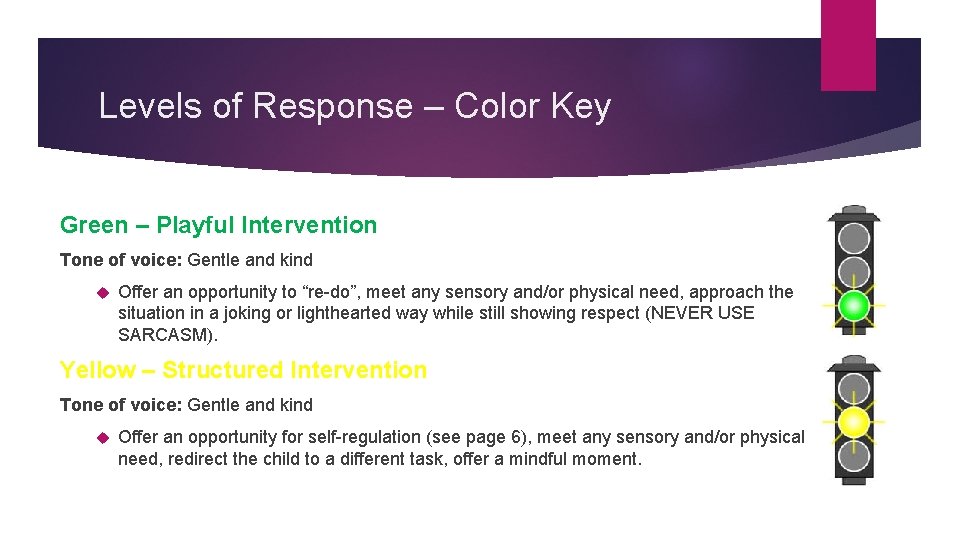
Levels of Response – Color Key Green – Playful Intervention Tone of voice: Gentle and kind Offer an opportunity to “re-do”, meet any sensory and/or physical need, approach the situation in a joking or lighthearted way while still showing respect (NEVER USE SARCASM). Yellow – Structured Intervention Tone of voice: Gentle and kind Offer an opportunity for self-regulation (see page 6), meet any sensory and/or physical need, redirect the child to a different task, offer a mindful moment.
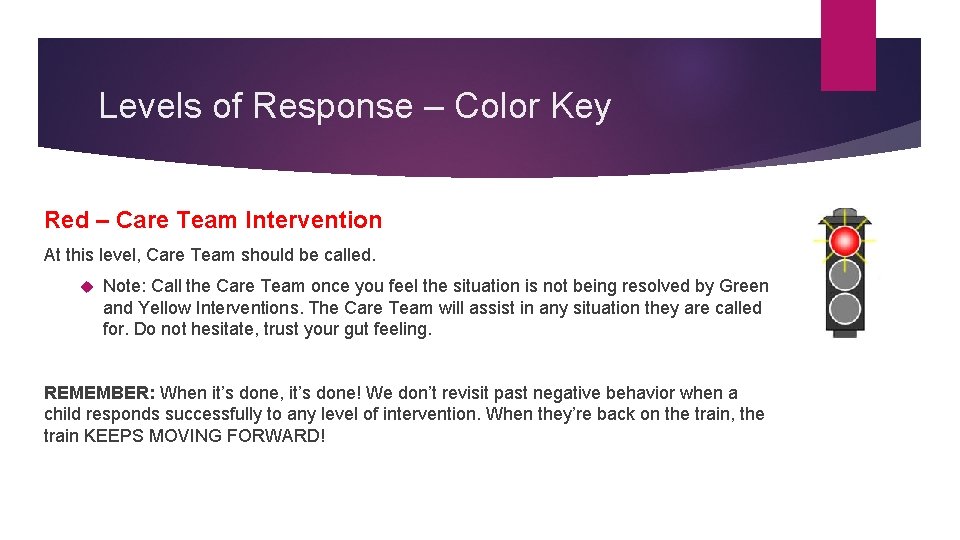
Levels of Response – Color Key Red – Care Team Intervention At this level, Care Team should be called. Note: Call the Care Team once you feel the situation is not being resolved by Green and Yellow Interventions. The Care Team will assist in any situation they are called for. Do not hesitate, trust your gut feeling. REMEMBER: When it’s done, it’s done! We don’t revisit past negative behavior when a child responds successfully to any level of intervention. When they’re back on the train, the train KEEPS MOVING FORWARD!
Empowering - Small Group Exercise “I have been impressed with the urgency of doing. Knowing is not enough; we must apply. Being willing is not enough; we must do. ” - Leonardo da Vinci
- Slides: 44