
Truss Structures The Direct Stiffness Method Lecture Notes














- Slides: 52
Truss Structures: The Direct Stiffness Method Lecture Notes Dr. Rakhmad Arief Siregar Universiti Malaysia Perlis 1
Introduction n n In this chapter, creation of a finite element model of a mechanical system composed of any number of elements is considered It will be limited to truss structures The elements be connected by pin joints in which each element is free to rotate about the joint The global coordinate system is the reference frame in which displacements of the structures are expressed and usually chosen by convenience in consideration of overall geometry 2
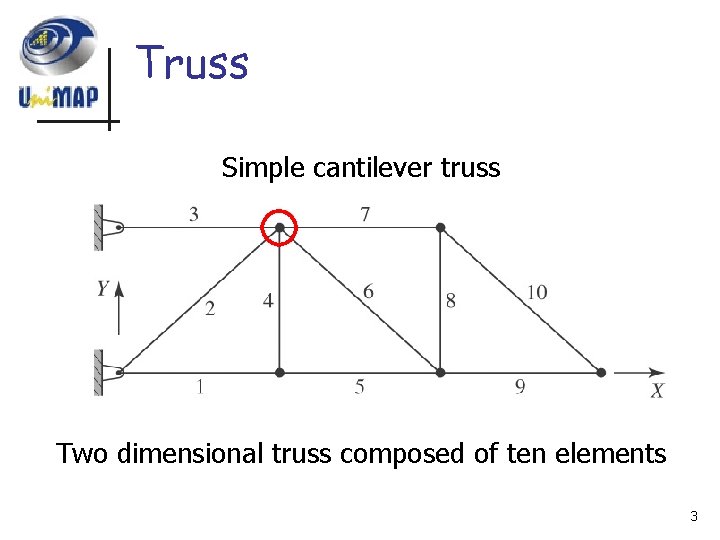
Truss Simple cantilever truss Two dimensional truss composed of ten elements 3
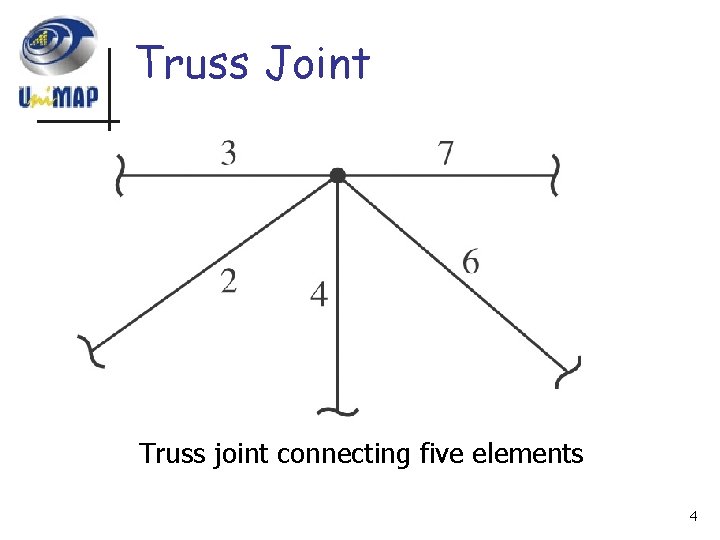
Truss Joint Truss joint connecting five elements 4
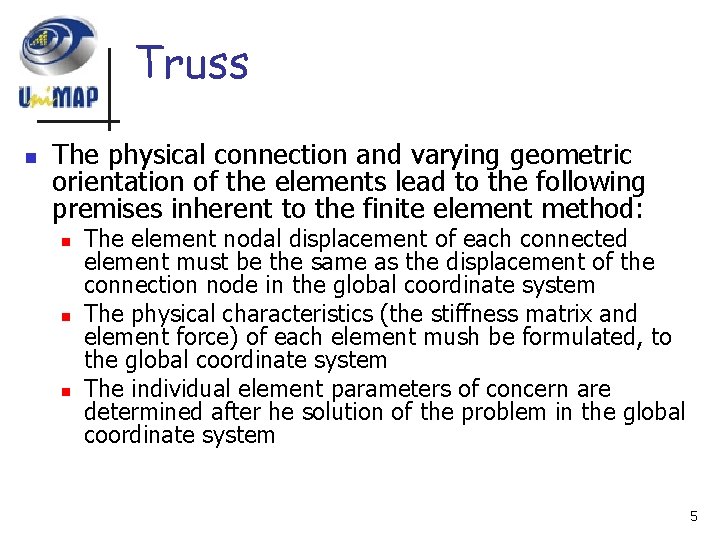
Truss n The physical connection and varying geometric orientation of the elements lead to the following premises inherent to the finite element method: n n n The element nodal displacement of each connected element must be the same as the displacement of the connection node in the global coordinate system The physical characteristics (the stiffness matrix and element force) of each element mush be formulated, to the global coordinate system The individual element parameters of concern are determined after he solution of the problem in the global coordinate system 5
Nodal Equilibrium n n To illustrate the conversion of element properties to a global coordinate system, we will consider the one -dimensional bar element as a structural member of a two-dimensional truss The assembly procedure: n n n Choose the element type (the bar element only) Specify the geometry of the problem (element connectivity) Formulate the algebraic governing the problem (static equilibrium only) Specify the boundary condition (displacement and forces) Solve the system of equation for the global displacement 6
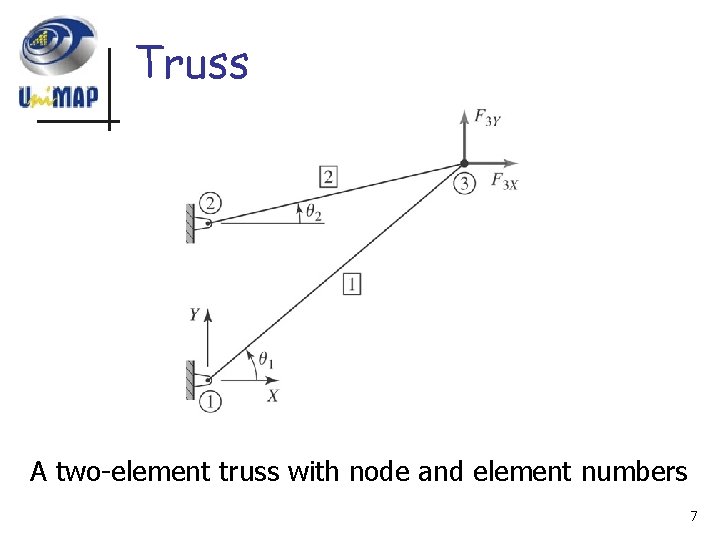
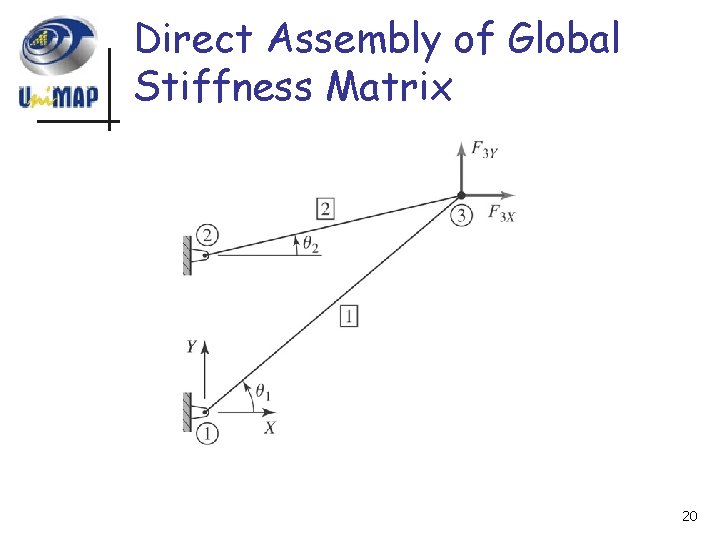
Truss A two-element truss with node and element numbers 7
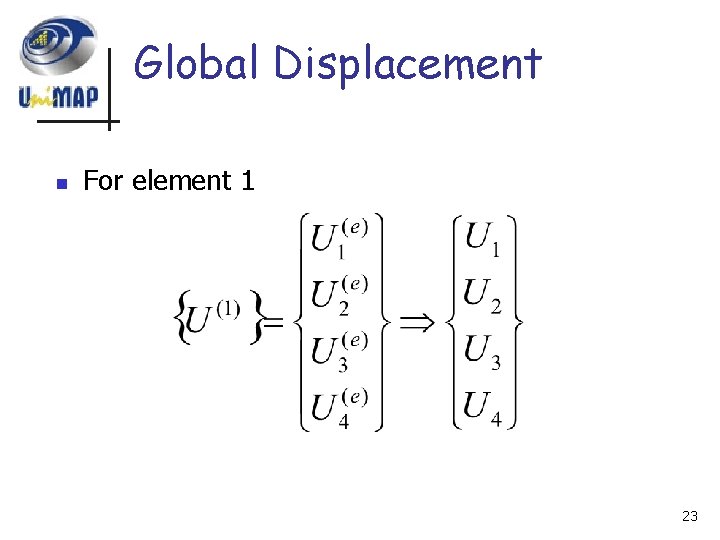
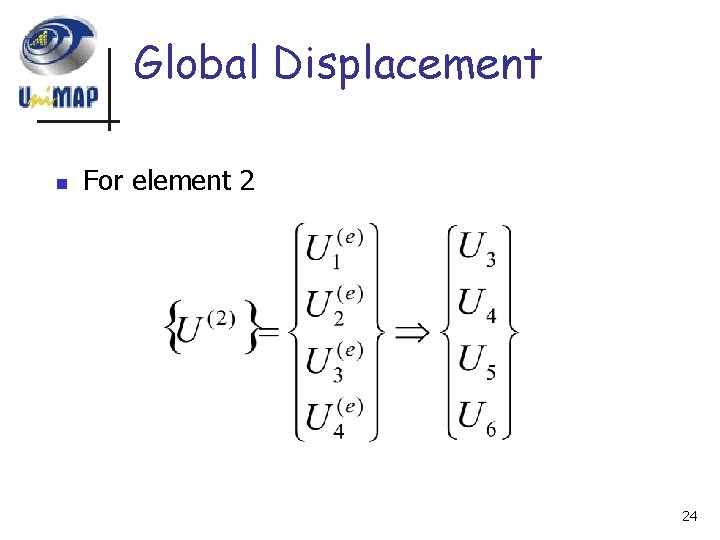
Global displacement notation 8
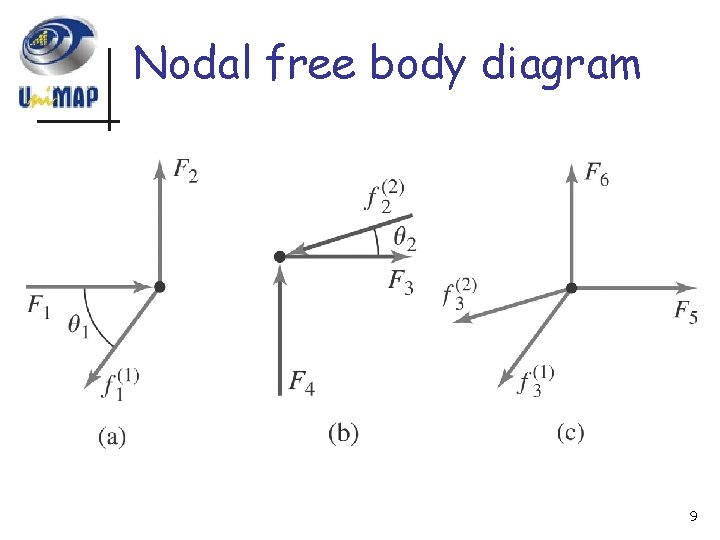
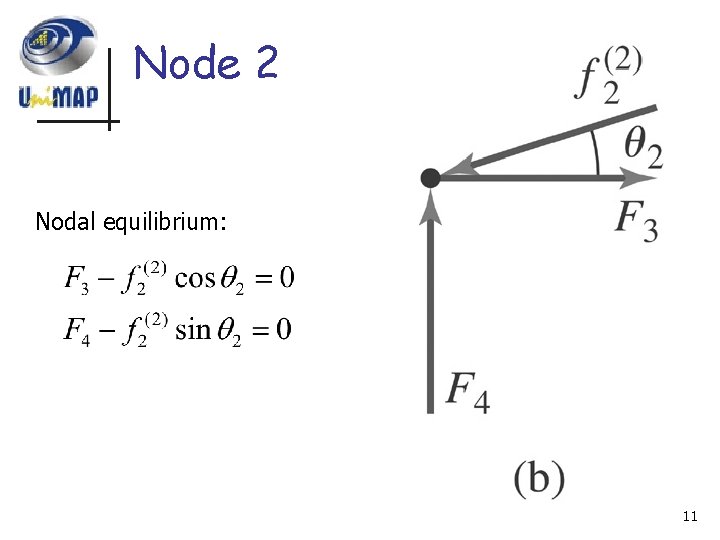
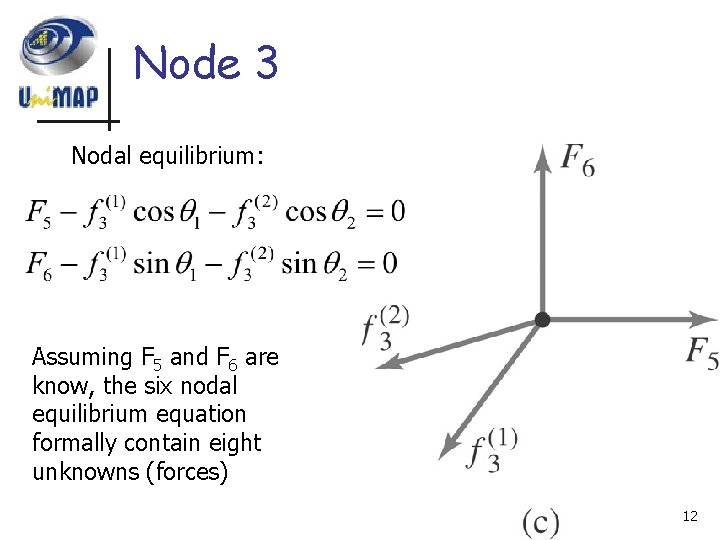
Nodal free body diagram 9
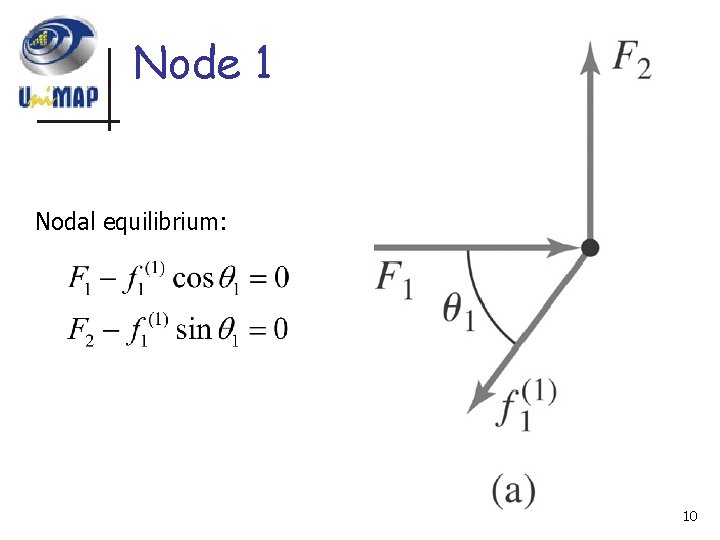
Node 1 Nodal equilibrium: 10
Node 2 Nodal equilibrium: 11
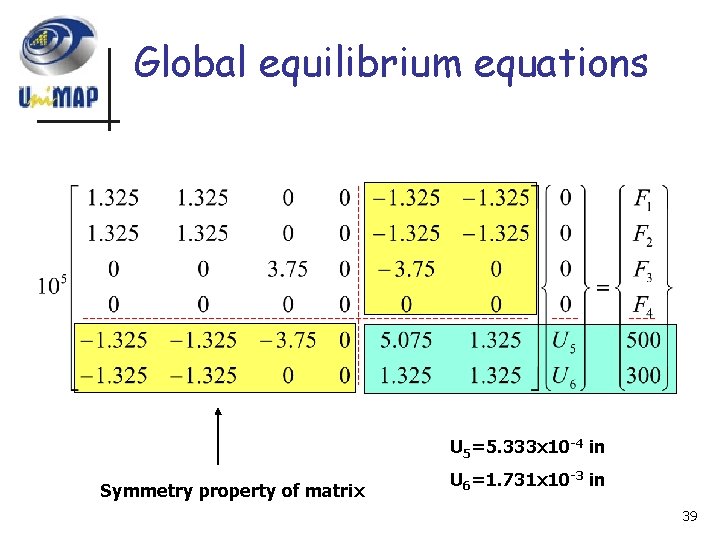
Node 3 Nodal equilibrium: Assuming F 5 and F 6 are know, the six nodal equilibrium equation formally contain eight unknowns (forces) 12
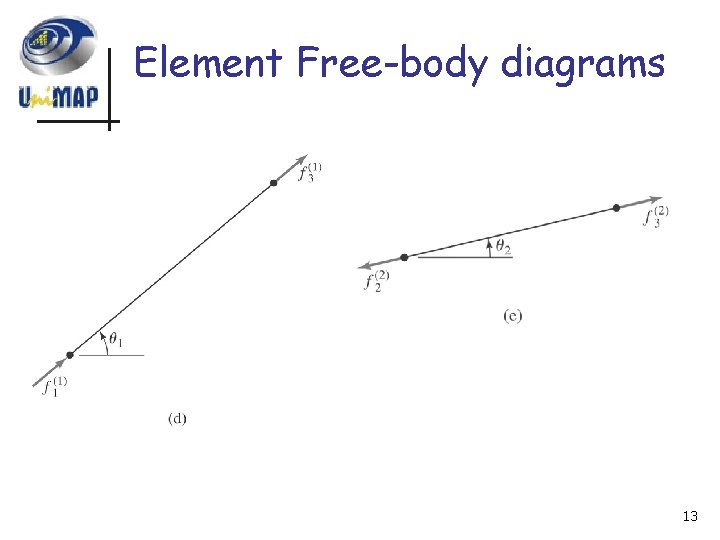
Element Free-body diagrams 13
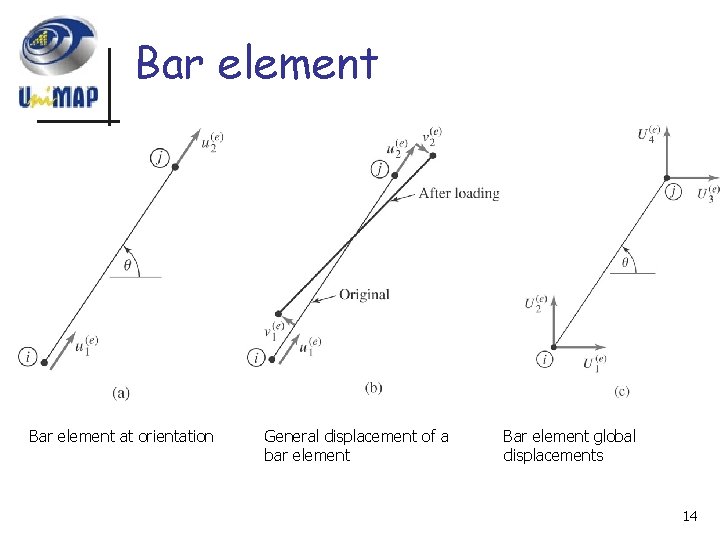
Bar element at orientation General displacement of a bar element Bar element global displacements 14
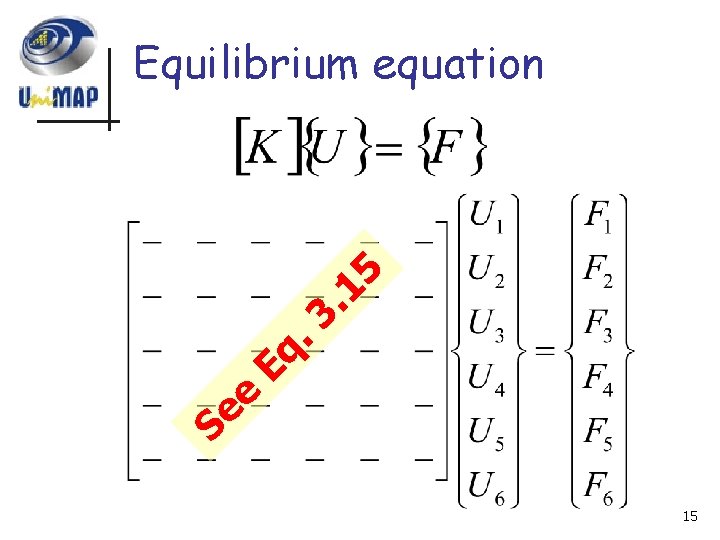
Se e Eq . 3. 1 5 Equilibrium equation 15
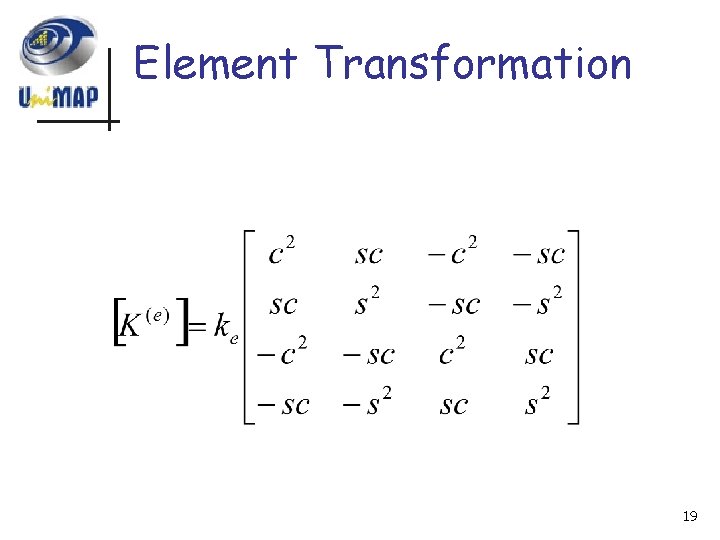
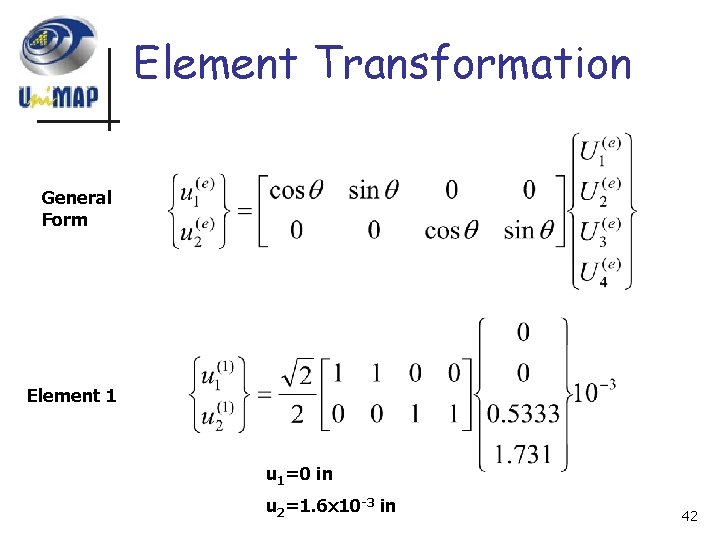
Element Transformation n n The previous formulation of global stiffness matrix is quiet cumbersome concept for the very simple of models A direct method for transforming the stiffness characteristic on an element by element basis is no developed in preparation for use in the direct assembly procedure of the following section 16
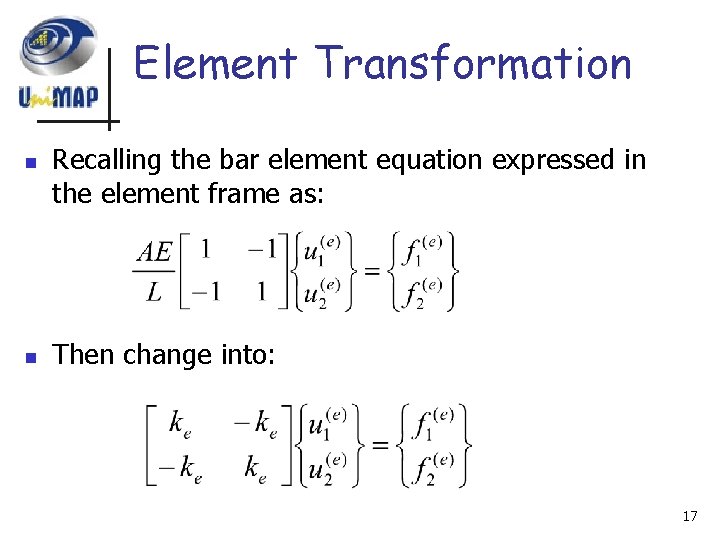
Element Transformation n n Recalling the bar element equation expressed in the element frame as: Then change into: 17
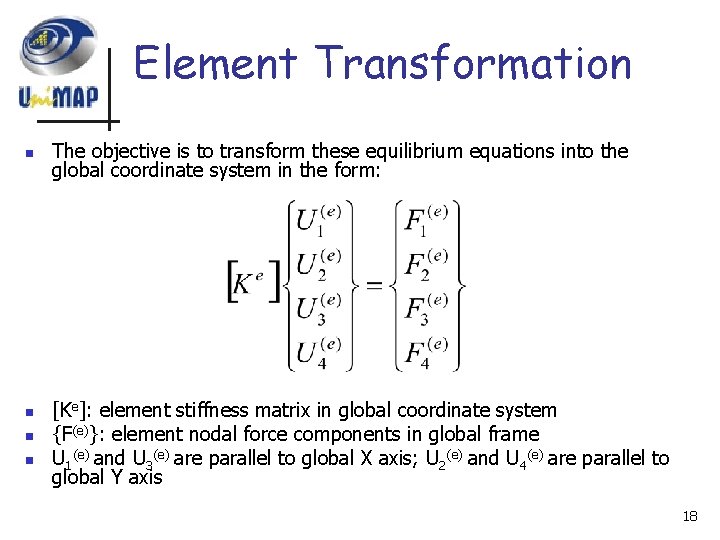
Element Transformation n n The objective is to transform these equilibrium equations into the global coordinate system in the form: [Ke]: element stiffness matrix in global coordinate system {F(e)}: element nodal force components in global frame U 1(e) and U 3(e) are parallel to global X axis; U 2(e) and U 4(e) are parallel to global Y axis 18
Element Transformation 19
Direct Assembly of Global Stiffness Matrix 20
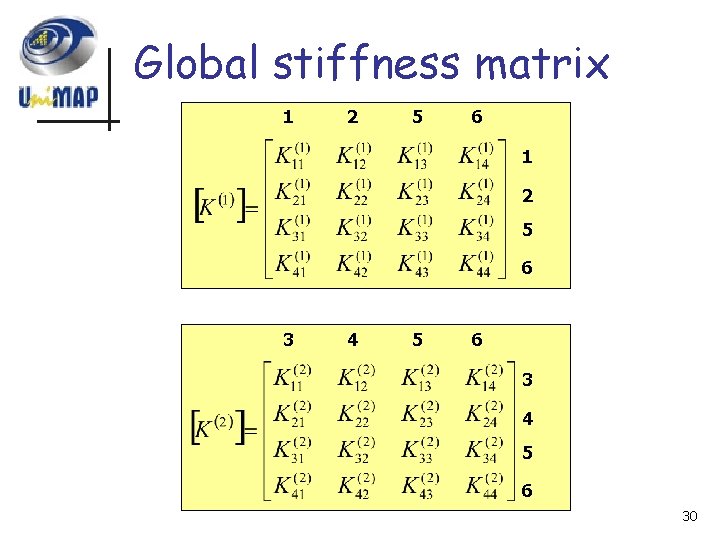
Global Stiffness Matrix n For element 1 21
Global Stiffness matrix n For element 2 22
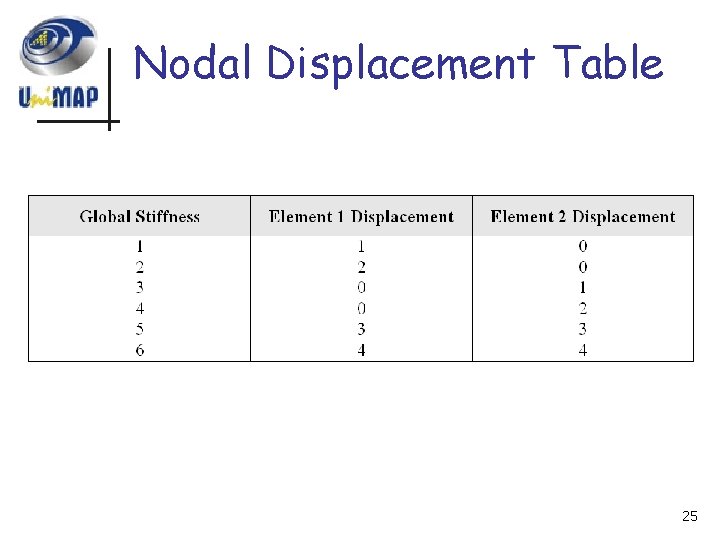
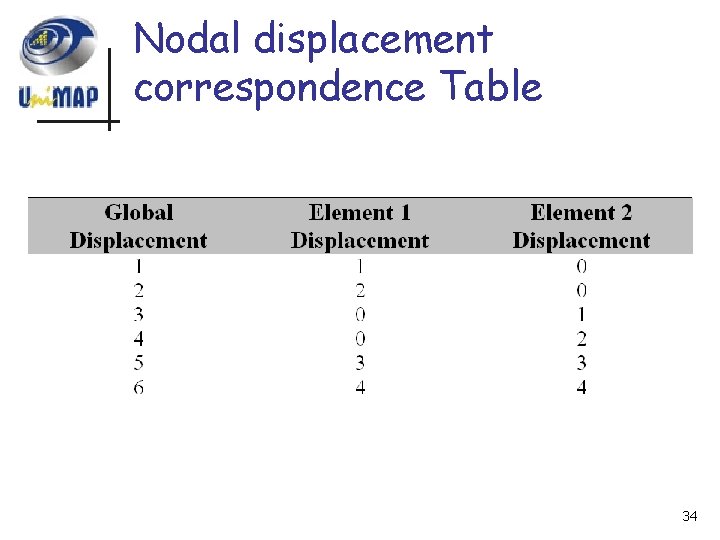
Global Displacement n For element 1 23
Global Displacement n For element 2 24
Nodal Displacement Table 25
Boundary Conditions n Not finished yet! 26
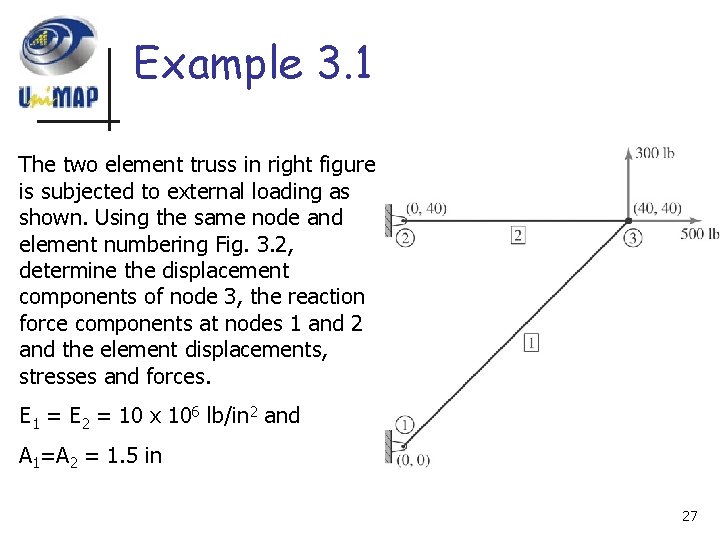
Example 3. 1 The two element truss in right figure is subjected to external loading as shown. Using the same node and element numbering Fig. 3. 2, determine the displacement components of node 3, the reaction force components at nodes 1 and 2 and the element displacements, stresses and forces. E 1 = E 2 = 10 x 106 lb/in 2 and A 1=A 2 = 1. 5 in 27
Solution n Element stiffness: The nodal coordinates are 1 = /4 and 2 = 0 Element length L 2 = 40 in 28
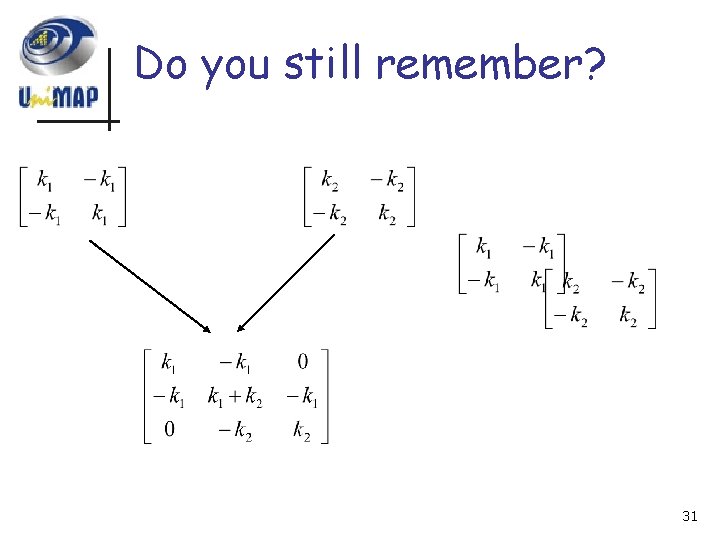
Global stiffness matrix 29
Global stiffness matrix 1 2 5 6 3 4 5 6 30
Do you still remember? 31
Global stiffness matrix 32
Global stiffness matrix 33
Nodal displacement correspondence Table 34
Global stiffness matrix 35
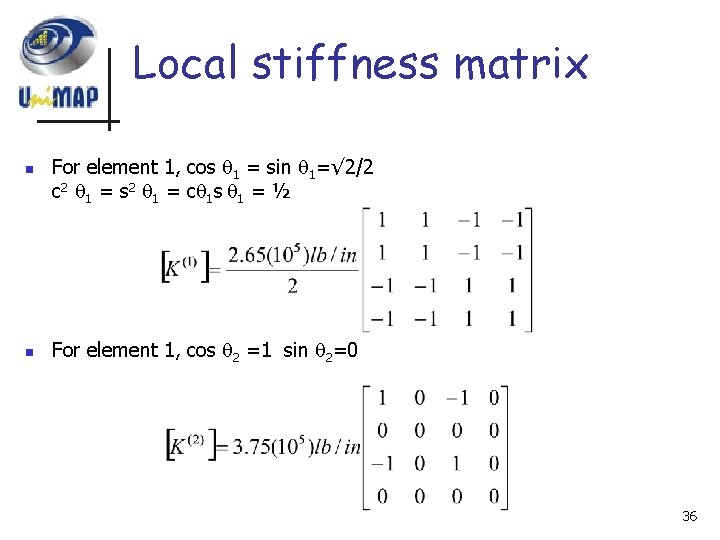
Local stiffness matrix n n For element 1, cos 1 = sin 1=√ 2/2 c 2 1 = s 2 1 = c 1 s 1 = ½ For element 1, cos 2 =1 sin 2=0 36
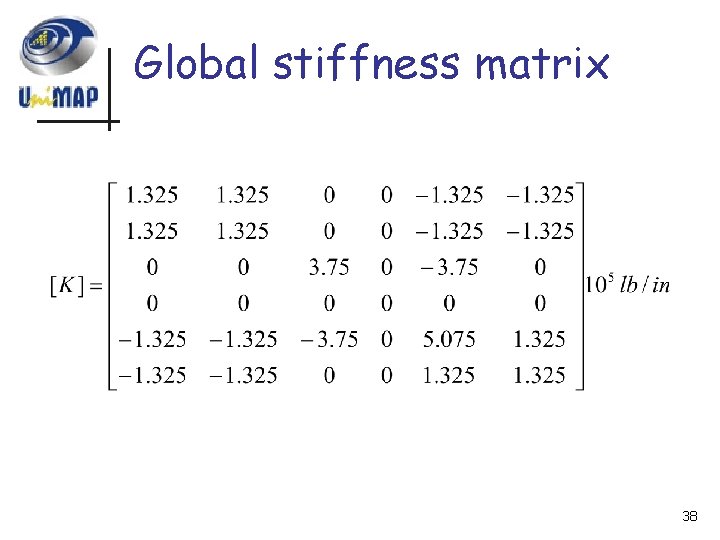
Global stiffness matrix 37
Global stiffness matrix 38
Global equilibrium equations U 5=5. 333 x 10 -4 in Symmetry property of matrix U 6=1. 731 x 10 -3 in 39
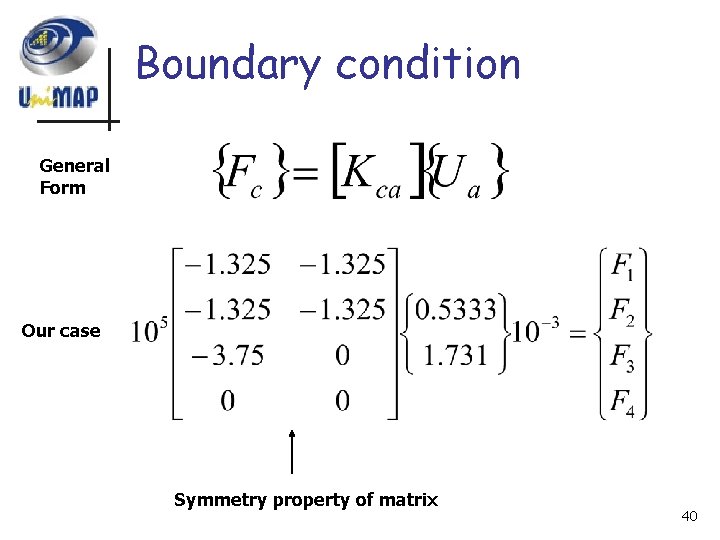
Boundary condition General Form Our case Symmetry property of matrix 40
Boundary condition Answers 41
Element Transformation General Form Element 1 u 1=0 in u 2=1. 6 x 10 -3 in 42
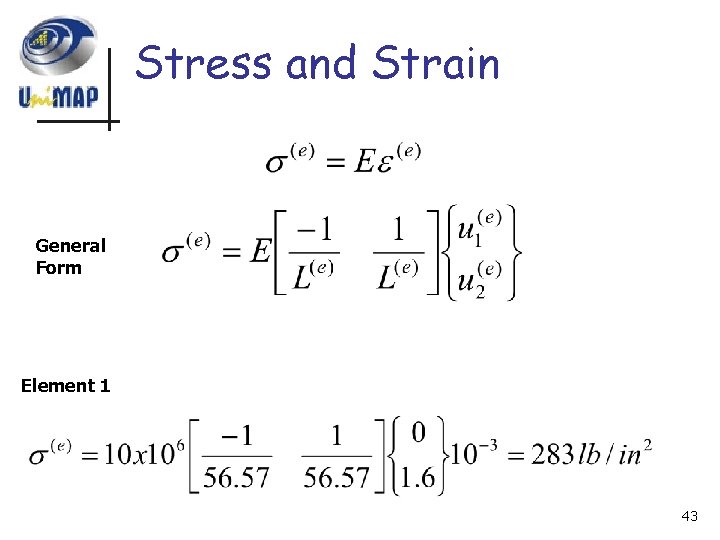
Stress and Strain General Form Element 1 43
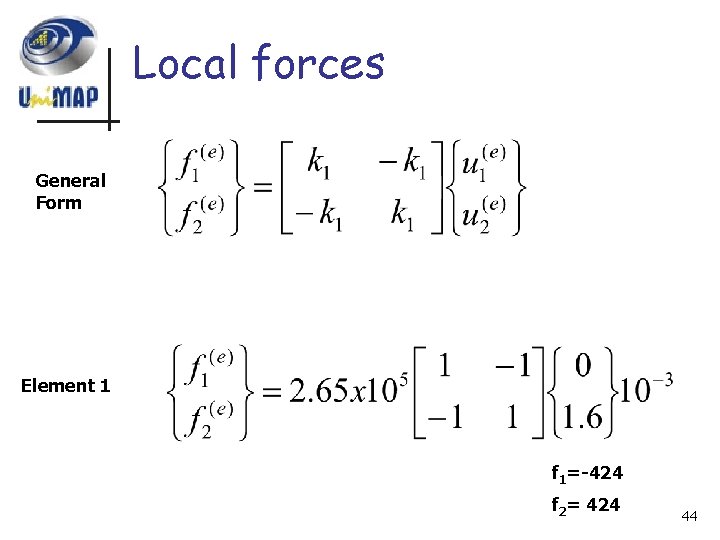
Local forces General Form Element 1 f 1=-424 f 2= 424 44
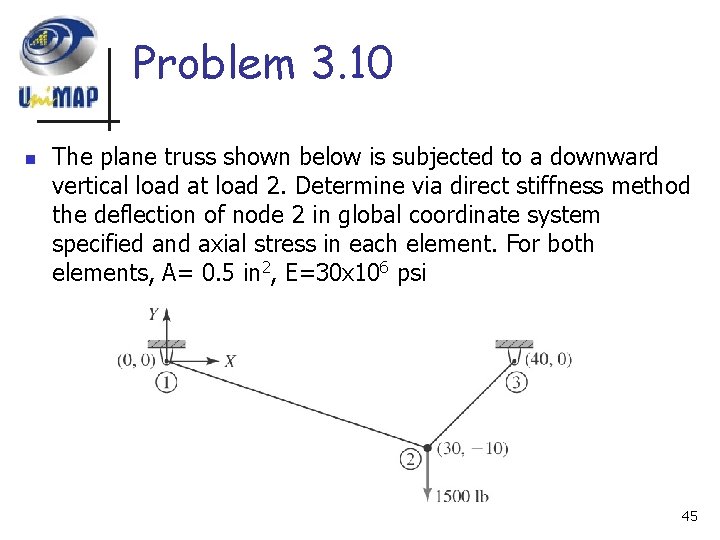
Problem 3. 10 n The plane truss shown below is subjected to a downward vertical load at load 2. Determine via direct stiffness method the deflection of node 2 in global coordinate system specified and axial stress in each element. For both elements, A= 0. 5 in 2, E=30 x 106 psi 45
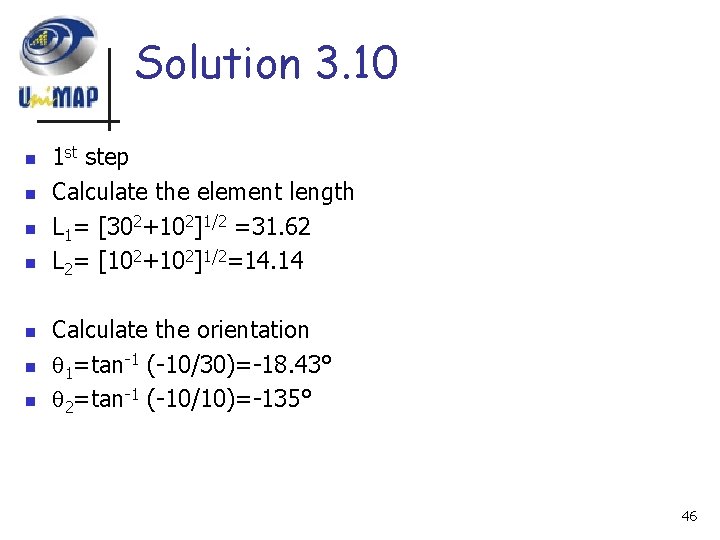
Solution 3. 10 n n n n 1 st step Calculate the element length L 1= [302+102]1/2 =31. 62 L 2= [102+102]1/2=14. 14 Calculate the orientation 1=tan-1 (-10/30)=-18. 43° 2=tan-1 (-10/10)=-135° 46
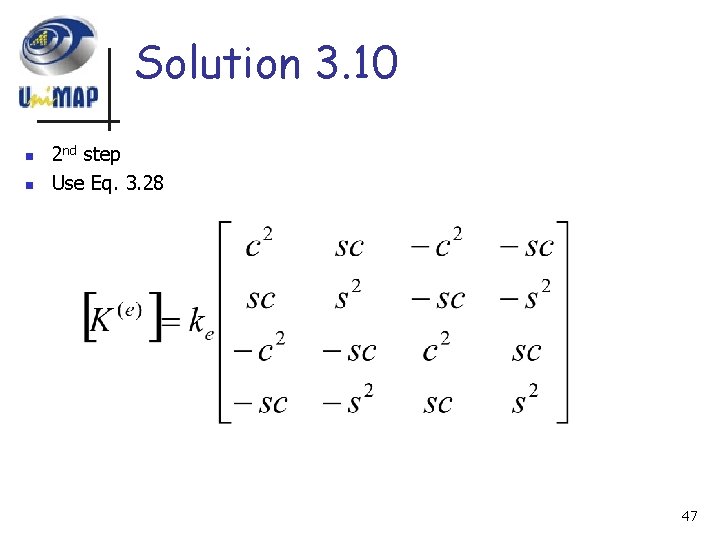
Solution 3. 10 n n 2 nd step Use Eq. 3. 28 47
Solution 3. 10 n n 2 nd step Use Eq. 3. 28 Symmetry 48
Solution 3. 10 n Assembled global stiffness 49
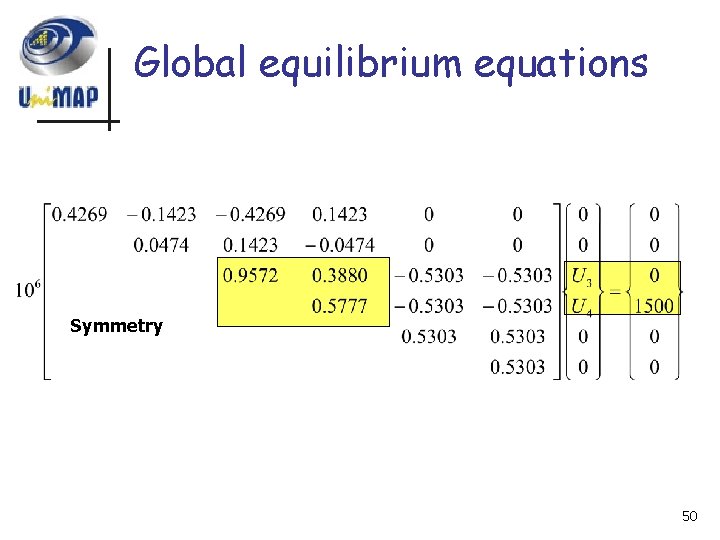
Global equilibrium equations Symmetry 50
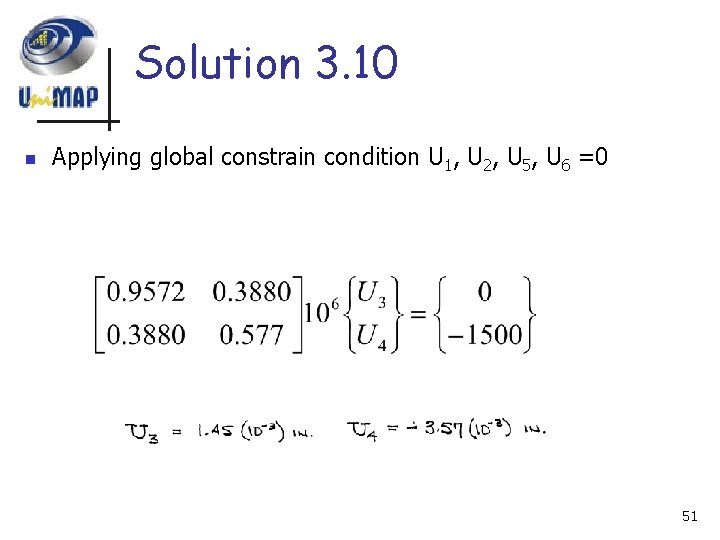
Solution 3. 10 n Applying global constrain condition U 1, U 2, U 5, U 6 =0 51
52