
TRUEAHF Trial Short and LongTerm Effect of Immediate
- Slides: 28
TRUE-AHF Trial Short- and Long-Term Effect of Immediate Vasodilator Therapy in Acutely Decompensated Heart Failure: Results of the TRUE-AHF Trial Milton Packer, M. D. Baylor University Medical Center, Dallas TX on behalf of the TRUE-AHF Executive Committee and Investigators
Disclosures Within past 2 years: Consultant to Admittance, Amgen, Astra. Zeneca, Bayer, Bio. Control, Boehringer Ingelheim, Boston Scientific, Celyad, Cardiorentis, Daiichi Sankyo, Glaxo. Smith. Kline, Novartis, Novo. Nordisk, Relypsa, Takeda, ZS Pharma
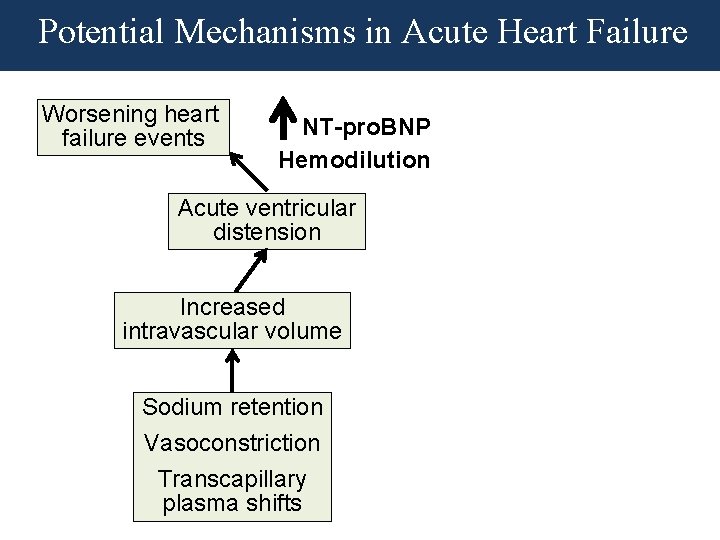
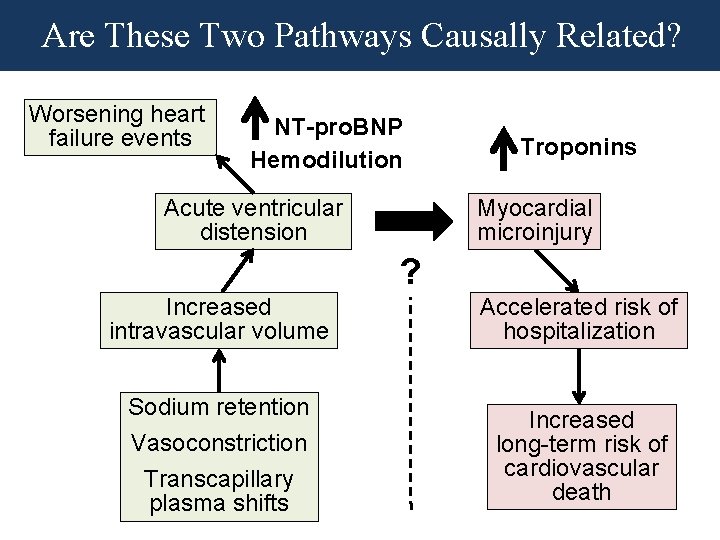
Potential Mechanisms in Acute Heart Failure Worsening heart failure events NT-pro. BNP Hemodilution Acute ventricular distension Increased intravascular volume Sodium retention Vasoconstriction Transcapillary plasma shifts
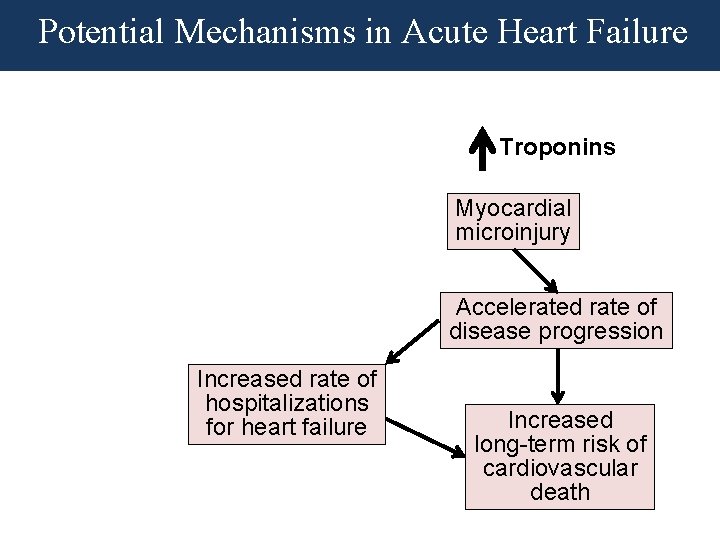
Potential Mechanisms in Acute Heart Failure Troponins Myocardial microinjury Accelerated rate of disease progression Increased rate of hospitalizations for heart failure Increased long-term risk of cardiovascular death
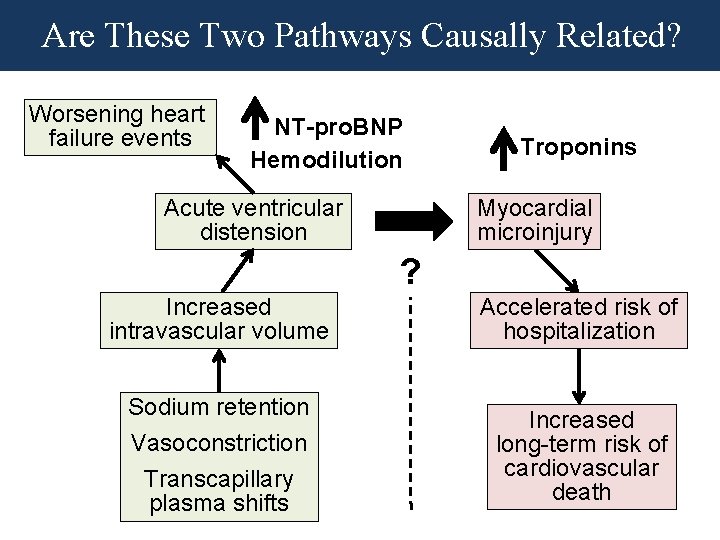
Are These Two Pathways Causally Related? Worsening heart failure events NT-pro. BNP Hemodilution Acute ventricular distension Troponins Myocardial microinjury ? Increased intravascular volume Sodium retention Vasoconstriction Transcapillary plasma shifts Accelerated risk of hospitalization Increased long-term risk of cardiovascular death
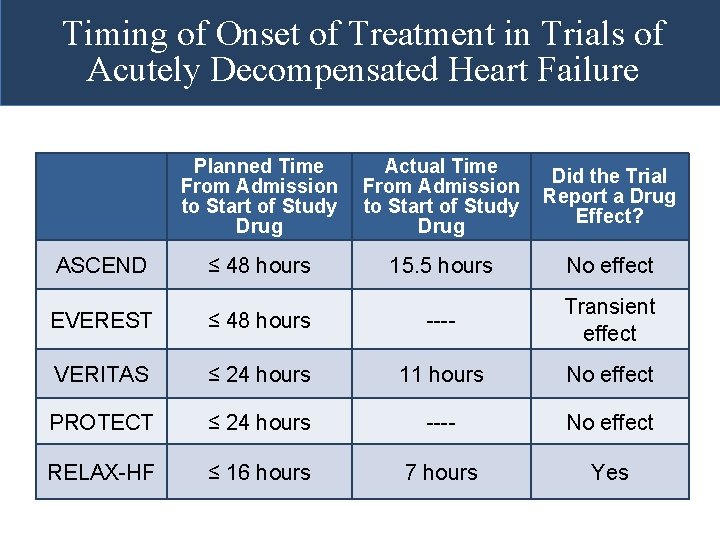
Timing of Onset of Treatment in Trials of Acutely Decompensated Heart Failure Planned Time Actual Time Did the Trial From Admission Report a Drug to Start of Study Effect? Drug ASCEND ≤ 48 hours 15. 5 hours No effect EVEREST ≤ 48 hours ---- Transient effect VERITAS ≤ 24 hours 11 hours No effect PROTECT ≤ 24 hours ---- No effect RELAX-HF ≤ 16 hours 7 hours Yes
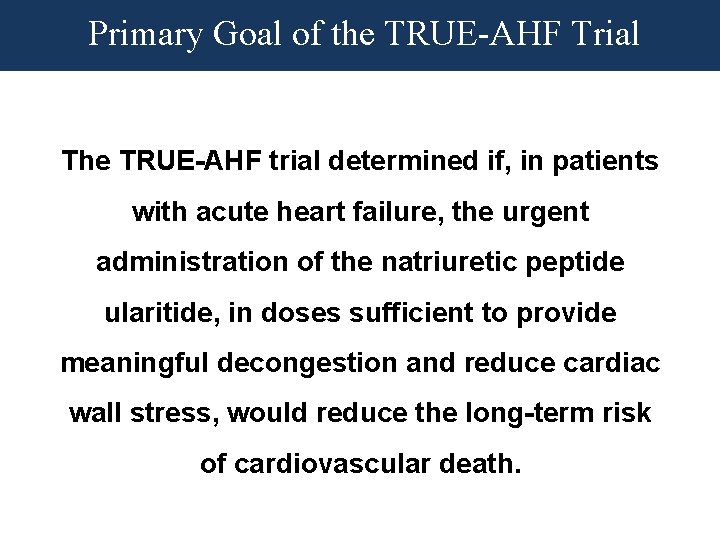
Primary Goal of the TRUE-AHF Trial The TRUE-AHF trial determined if, in patients with acute heart failure, the urgent administration of the natriuretic peptide ularitide, in doses sufficient to provide meaningful decongestion and reduce cardiac wall stress, would reduce the long-term risk of cardiovascular death.
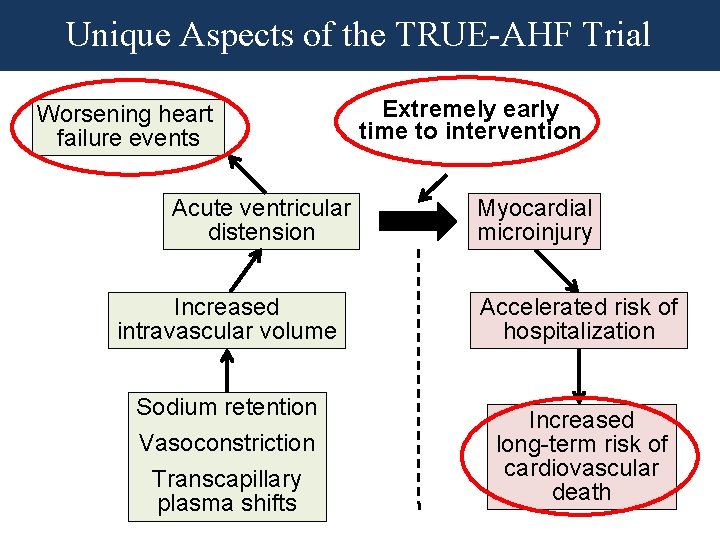
Unique Aspects of the TRUE-AHF Trial Worsening heart failure events Acute ventricular distension Increased intravascular volume Sodium retention Vasoconstriction Transcapillary plasma shifts Extremely early time to intervention Myocardial microinjury Accelerated risk of hospitalization Increased long-term risk of cardiovascular death
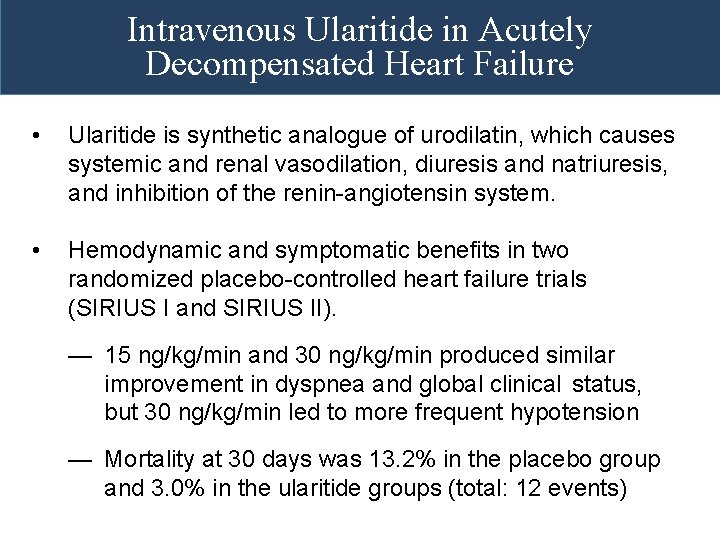
Intravenous Ularitide in Acutely Decompensated Heart Failure • Ularitide is synthetic analogue of urodilatin, which causes systemic and renal vasodilation, diuresis and natriuresis, and inhibition of the renin-angiotensin system. • Hemodynamic and symptomatic benefits in two randomized placebo-controlled heart failure trials (SIRIUS I and SIRIUS II). — 15 ng/kg/min and 30 ng/kg/min produced similar improvement in dyspnea and global clinical status, but 30 ng/kg/min led to more frequent hypotension — Mortality at 30 days was 13. 2% in the placebo group and 3. 0% in the ularitide groups (total: 12 events)
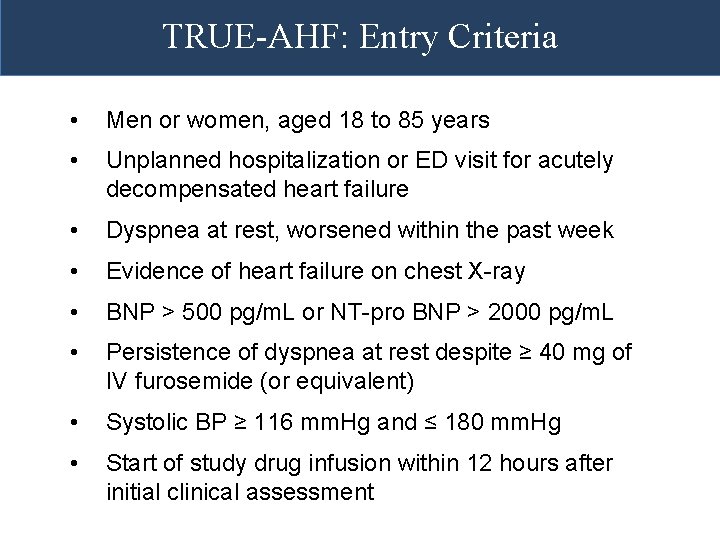
TRUE-AHF: Entry Criteria • Men or women, aged 18 to 85 years • Unplanned hospitalization or ED visit for acutely decompensated heart failure • Dyspnea at rest, worsened within the past week • Evidence of heart failure on chest X-ray • BNP > 500 pg/m. L or NT-pro BNP > 2000 pg/m. L • Persistence of dyspnea at rest despite ≥ 40 mg of IV furosemide (or equivalent) • Systolic BP ≥ 116 mm. Hg and ≤ 180 mm. Hg • Start of study drug infusion within 12 hours after initial clinical assessment
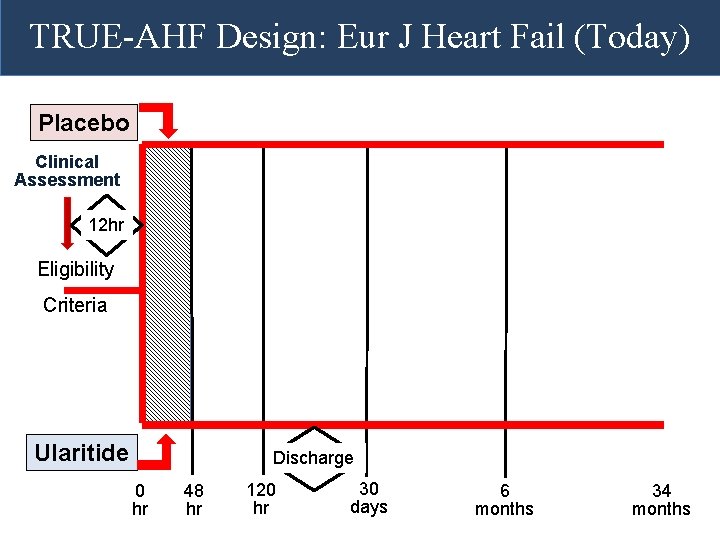
TRUE-AHF Design: Eur J Heart Fail (Today) Placebo Clinical Assessment 12 hr Eligibility Criteria Ularitide Discharge 0 hr 48 hr 120 hr 30 days 6 months 34 months
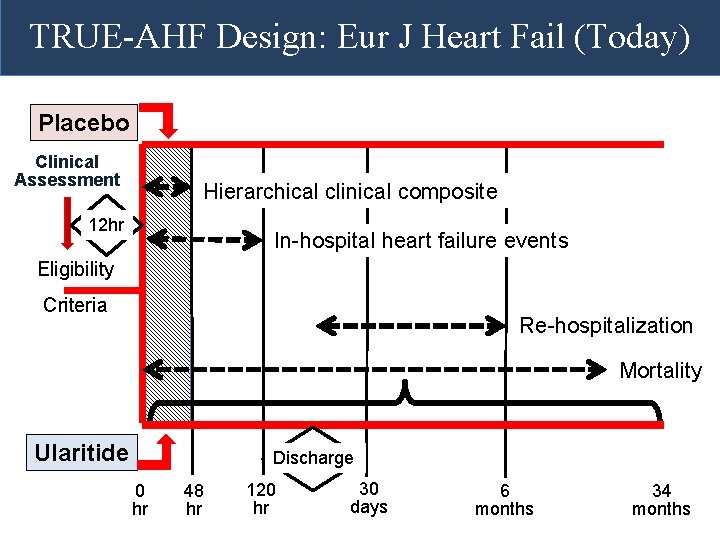
TRUE-AHF Design: Eur J Heart Fail (Today) Placebo Clinical Assessment Hierarchical clinical composite 12 hr In-hospital heart failure events Eligibility Criteria Re-hospitalization Mortality Ularitide Discharge 0 hr 48 hr 120 hr 30 days 6 months 34 months
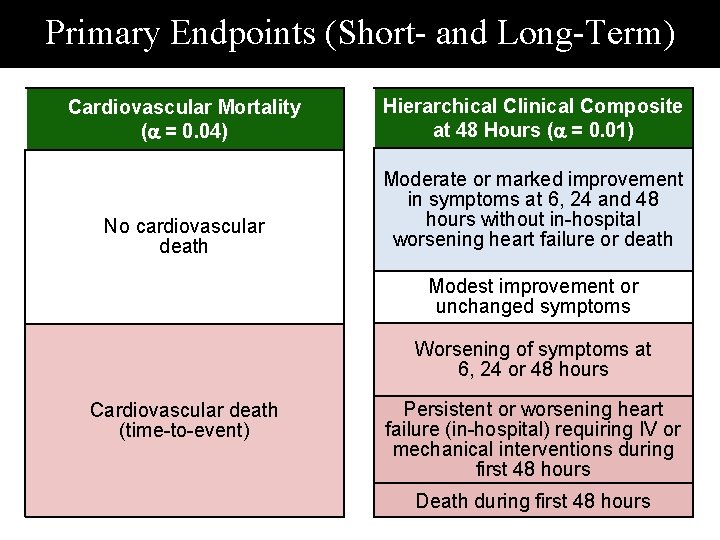
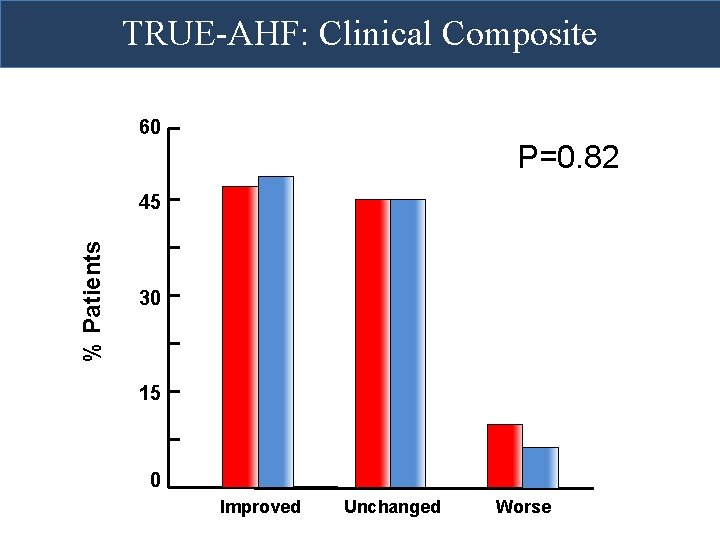
Primary Endpoints (Short- and Long-Term) Cardiovascular Mortality (a = 0. 04) Hierarchical Clinical Composite at 48 Hours (a = 0. 01) No cardiovascular death Moderate or marked improvement in symptoms at 6, 24 and 48 hours without in-hospital worsening heart failure or death Modest improvement or unchanged symptoms Worsening of symptoms at 6, 24 or 48 hours Cardiovascular death (time-to-event) Persistent or worsening heart failure (in-hospital) requiring IV or mechanical interventions during first 48 hours Death during first 48 hours
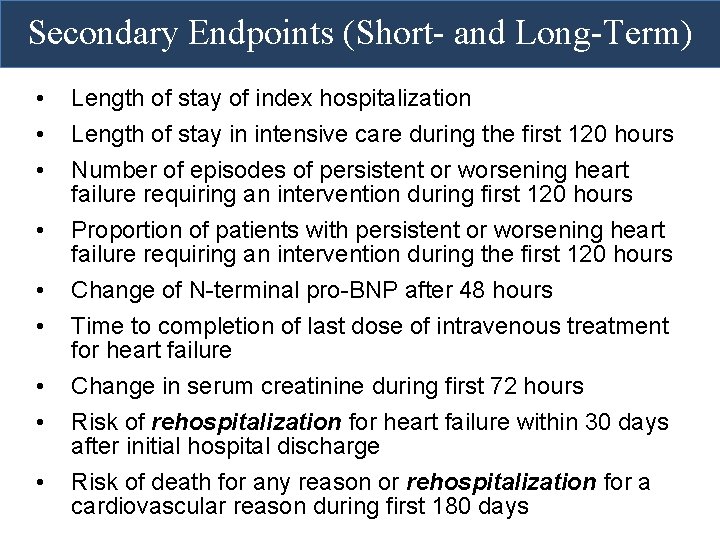
Secondary Endpoints (Short- and Long-Term) • • Length of stay of index hospitalization Length of stay in intensive care during the first 120 hours • Number of episodes of persistent or worsening heart failure requiring an intervention during first 120 hours Proportion of patients with persistent or worsening heart failure requiring an intervention during the first 120 hours Change of N-terminal pro-BNP after 48 hours Time to completion of last dose of intravenous treatment for heart failure Change in serum creatinine during first 72 hours Risk of rehospitalization for heart failure within 30 days after initial hospital discharge Risk of death for any reason or rehospitalization for a cardiovascular reason during first 180 days • • •
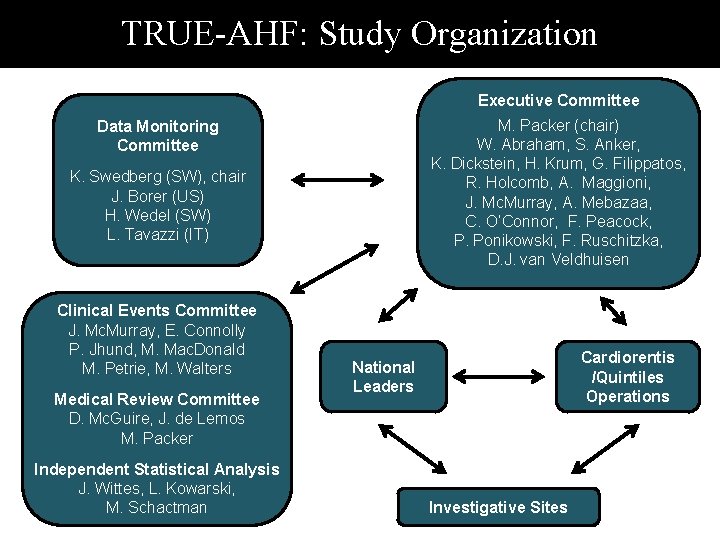
TRUE-AHF: Study Organization Executive Committee M. Packer (chair) W. Abraham, S. Anker, K. Dickstein, H. Krum, G. Filippatos, R. Holcomb, A. Maggioni, J. Mc. Murray, A. Mebazaa, C. O’Connor, F. Peacock, P. Ponikowski, F. Ruschitzka, D. J. van Veldhuisen Data Monitoring Committee K. Swedberg (SW), chair J. Borer (US) H. Wedel (SW) L. Tavazzi (IT) Clinical Events Committee J. Mc. Murray, E. Connolly P. Jhund, M. Mac. Donald M. Petrie, M. Walters Medical Review Committee D. Mc. Guire, J. de Lemos M. Packer Independent Statistical Analysis J. Wittes, L. Kowarski, M. Schactman Cardiorentis /Quintiles Operations National Leaders Investigative Sites
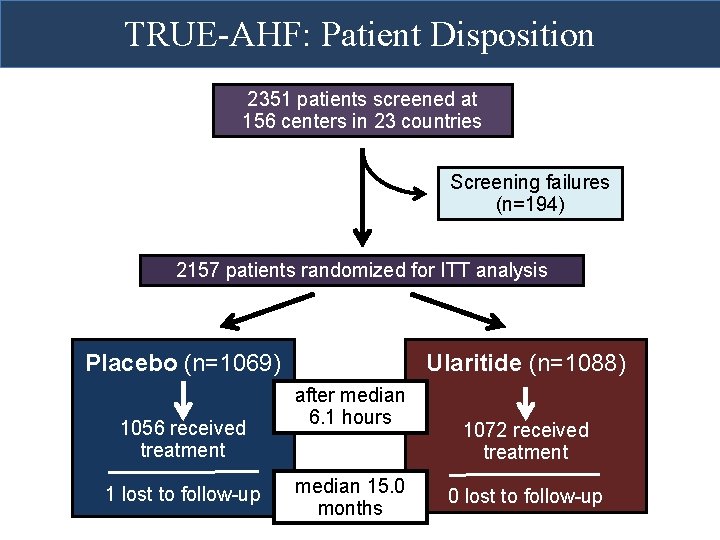
TRUE-AHF: Patient Disposition 2351 patients screened at 156 centers in 23 countries Screening failures (n=194) 2157 patients randomized for ITT analysis Ularitide (n=1088) Placebo (n=1069) 1056 received treatment 1 lost to follow-up after median 6. 1 hours median 15. 0 months 1072 received treatment 0 lost to follow-up
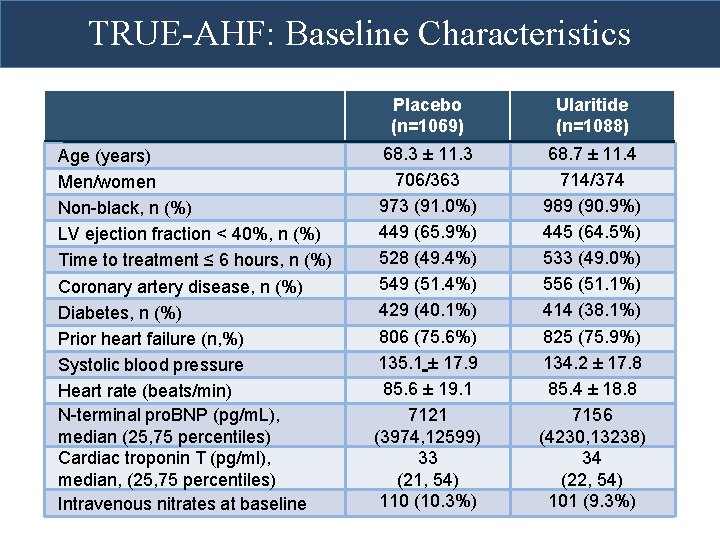
TRUE-AHF: Baseline Characteristics Age (years) Men/women Non-black, n (%) LV ejection fraction < 40%, n (%) Time to treatment ≤ 6 hours, n (%) Coronary artery disease, n (%) Diabetes, n (%) Prior heart failure (n, %) Systolic blood pressure Heart rate (beats/min) N-terminal pro. BNP (pg/m. L), median (25, 75 percentiles) Cardiac troponin T (pg/ml), median, (25, 75 percentiles) Intravenous nitrates at baseline Placebo (n=1069) Ularitide (n=1088) 68. 3 ± 11. 3 706/363 973 (91. 0%) 449 (65. 9%) 528 (49. 4%) 549 (51. 4%) 429 (40. 1%) 806 (75. 6%) 135. 1 ± 17. 9 85. 6 ± 19. 1 7121 (3974, 12599) 33 (21, 54) 110 (10. 3%) 68. 7 ± 11. 4 714/374 989 (90. 9%) 445 (64. 5%) 533 (49. 0%) 556 (51. 1%) 414 (38. 1%) 825 (75. 9%) 134. 2 ± 17. 8 85. 4 ± 18. 8 7156 (4230, 13238) 34 (22, 54) 101 (9. 3%)
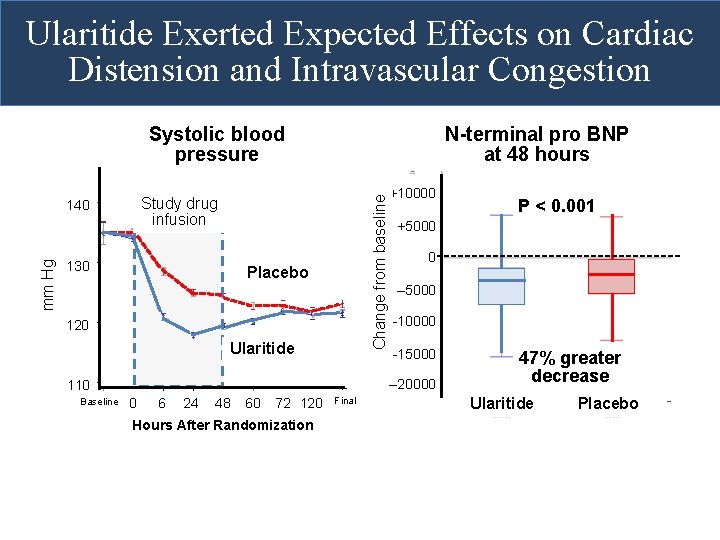
Ularitide Exerted Expected Effects on Cardiac Distension and Intravascular Congestion Study drug infusion 140 mm Hg N-terminal pro BNP at 48 hours Change from baseline Systolic blood pressure 130 Placebo 120 Ularitide 0 6 24 48 60 72 120 Hours After Randomization Final P < 0. 001 +5000 0 – 5000 – 10000 – 15000 – 20000 110 Baseline +10000 47% greater decrease Ularitide Placebo
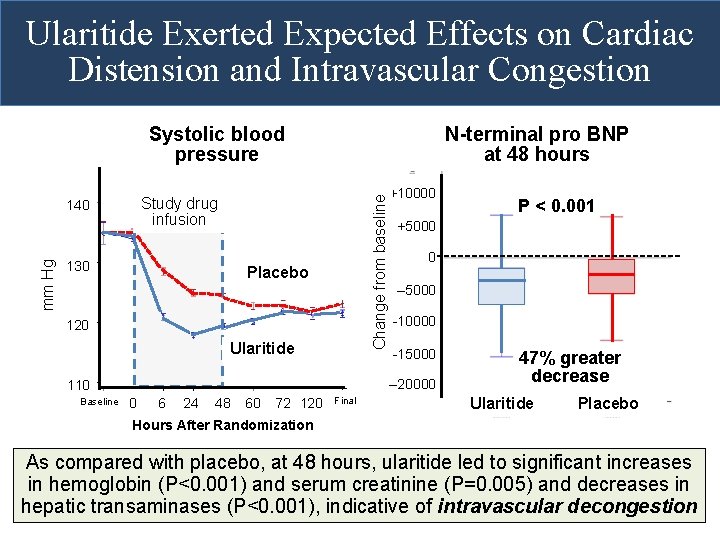
Ularitide Exerted Expected Effects on Cardiac Distension and Intravascular Congestion Study drug infusion 140 mm Hg N-terminal pro BNP at 48 hours Change from baseline Systolic blood pressure 130 Placebo 120 Ularitide 0 6 24 48 60 72 120 Final P < 0. 001 +5000 0 – 5000 – 10000 – 15000 – 20000 110 Baseline +10000 47% greater decrease Ularitide Placebo Hours After Randomization As compared with placebo, at 48 hours, ularitide led to significant increases in hemoglobin (P<0. 001) and serum creatinine (P=0. 005) and decreases in hepatic transaminases (P<0. 001), indicative of intravascular decongestion
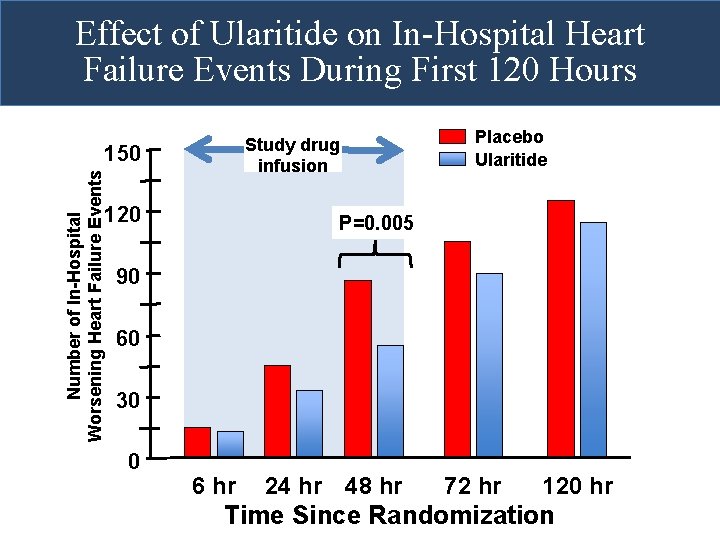
Effect of Ularitide on In-Hospital Heart Failure Events During First 120 Hours Study drug infusion Number of In-Hospital Worsening Heart Failure Events 150 120 Placebo Ularitide P=0. 005 90 60 30 0 6 hr 24 hr 48 hr 72 hr 120 hr Time Since Randomization
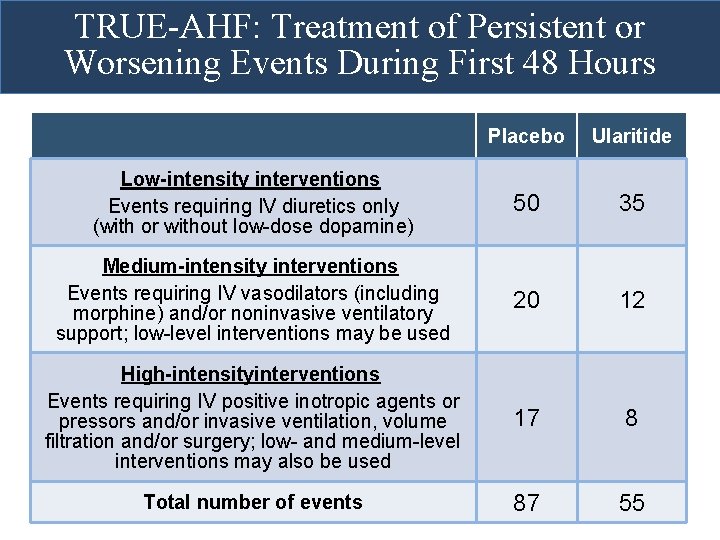
TRUE-AHF: Treatment of Persistent or Worsening Events During First 48 Hours Placebo Ularitide Low-intensity interventions Events requiring IV diuretics only (with or without low-dose dopamine) 50 35 Medium-intensity interventions Events requiring IV vasodilators (including morphine) and/or noninvasive ventilatory support; low-level interventions may be used 20 12 High-intensityinterventions Events requiring IV positive inotropic agents or pressors and/or invasive ventilation, volume filtration and/or surgery; low- and medium-level interventions may also be used 17 8 Total number of events 87 55
Are These Two Pathways Causally Related? Worsening heart failure events NT-pro. BNP Hemodilution Acute ventricular distension Troponins Myocardial microinjury ? Increased intravascular volume Sodium retention Vasoconstriction Transcapillary plasma shifts Accelerated risk of hospitalization Increased long-term risk of cardiovascular death
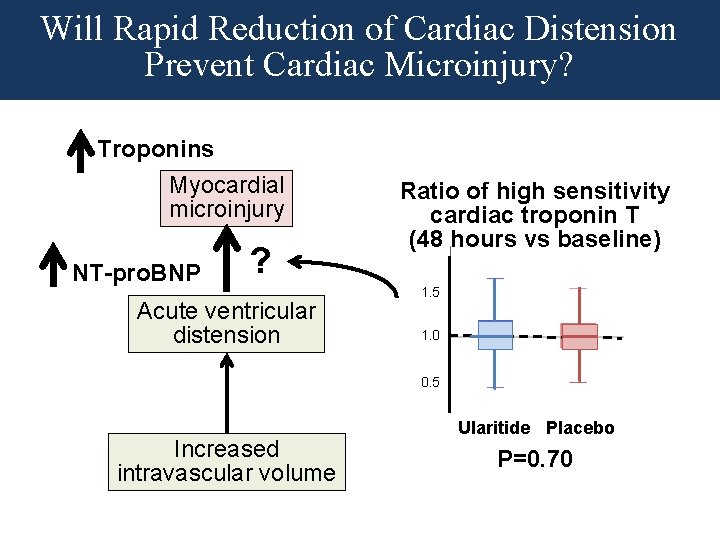
Will Rapid Reduction of Cardiac Distension Prevent Cardiac Microinjury? Troponins Myocardial microinjury NT-pro. BNP ? Acute ventricular distension Ratio of high sensitivity cardiac troponin T (48 hours vs baseline) 1. 5 1. 0 0. 5 Increased intravascular volume Ularitide Placebo P=0. 70
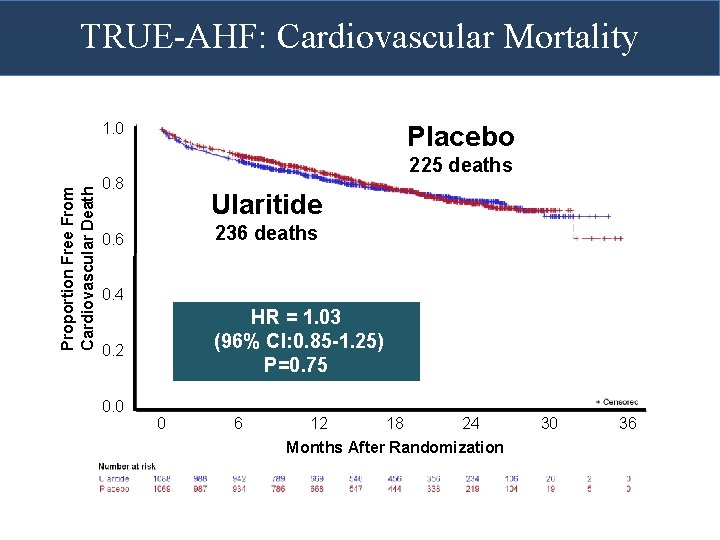
TRUE-AHF: Cardiovascular Mortality 1. 0 Placebo Proportion Free From Cardiovascular Death 32 225 deaths 0. 8 Ularitide 236 deaths 0. 6 0. 4 HR = 1. 03 (96% CI: 0. 85 -1. 25) P=0. 75 0. 2 0. 0 0 6 12 18 24 Months After Randomization 30 36
TRUE-AHF: Clinical Composite 60 P=0. 82 % Patients 45 30 15 0 Improved Unchanged Worse
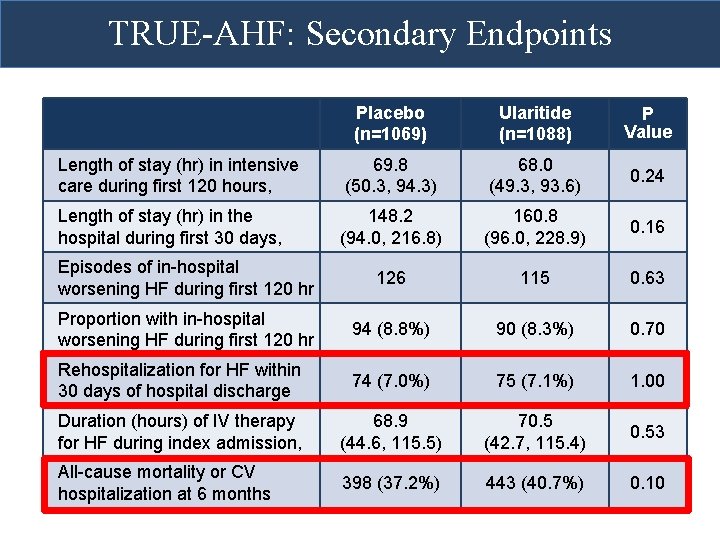
TRUE-AHF: Secondary Endpoints Placebo (n=1069) Ularitide (n=1088) P Value Length of stay (hr) in intensive care during first 120 hours, 69. 8 (50. 3, 94. 3) 68. 0 (49. 3, 93. 6) 0. 24 Length of stay (hr) in the hospital during first 30 days, 148. 2 (94. 0, 216. 8) 160. 8 (96. 0, 228. 9) 0. 16 Episodes of in-hospital worsening HF during first 120 hr 126 115 0. 63 Proportion with in-hospital worsening HF during first 120 hr 94 (8. 8%) 90 (8. 3%) 0. 70 Rehospitalization for HF within 30 days of hospital discharge 74 (7. 0%) 75 (7. 1%) 1. 00 Duration (hours) of IV therapy for HF during index admission, 68. 9 (44. 6, 115. 5) 70. 5 (42. 7, 115. 4) 0. 53 All-cause mortality or CV hospitalization at 6 months 398 (37. 2%) 443 (40. 7%) 0. 10
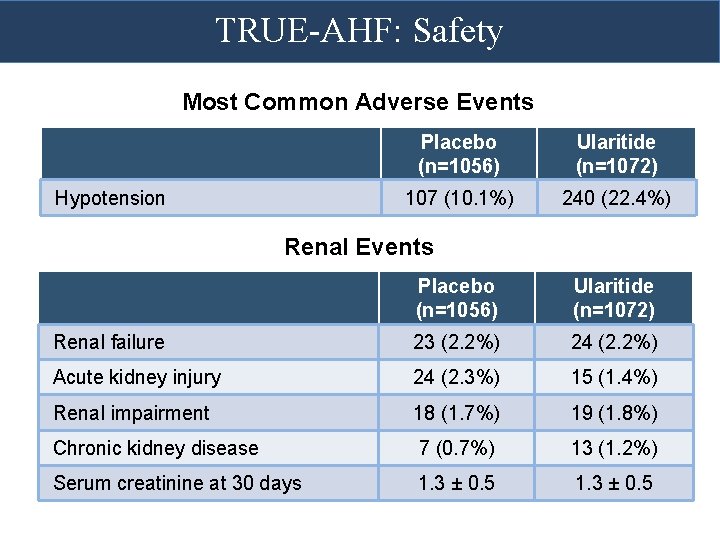
TRUE-AHF: Safety Most Common Adverse Events Hypotension Placebo (n=1056) Ularitide (n=1072) 107 (10. 1%) 240 (22. 4%) Renal Events Placebo (n=1056) Ularitide (n=1072) Renal failure 23 (2. 2%) 24 (2. 2%) Acute kidney injury 24 (2. 3%) 15 (1. 4%) Renal impairment 18 (1. 7%) 19 (1. 8%) Chronic kidney disease 7 (0. 7%) 13 (1. 2%) Serum creatinine at 30 days 1. 3 ± 0. 5
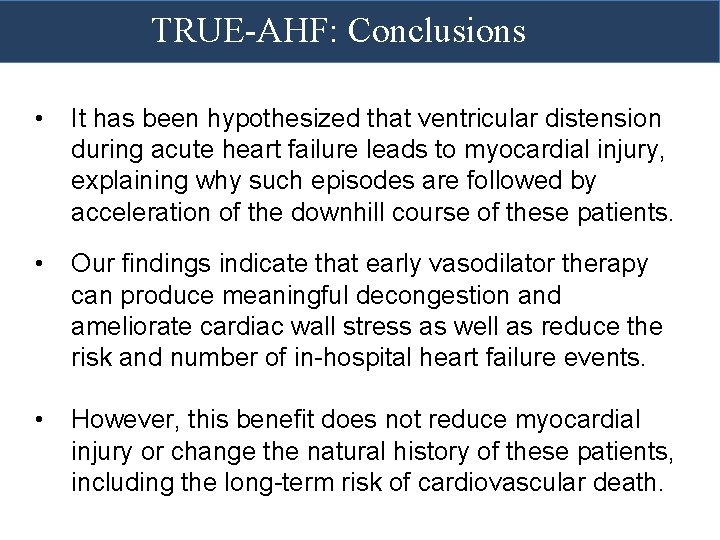
TRUE-AHF: Conclusions • It has been hypothesized that ventricular distension during acute heart failure leads to myocardial injury, explaining why such episodes are followed by acceleration of the downhill course of these patients. • Our findings indicate that early vasodilator therapy can produce meaningful decongestion and ameliorate cardiac wall stress as well as reduce the risk and number of in-hospital heart failure events. • However, this benefit does not reduce myocardial injury or change the natural history of these patients, including the long-term risk of cardiovascular death.