
True or false 1 An ecosystem is all
- Slides: 48
True or false? 1. An ecosystem is all the animals that live together in a given area. 2. A layer of decayed leaves that covers the soil in a forest is an example of a living factor. 3. A habitat is the place where an animal lives.
True or false? 4. Symbiosis is a close relationship between two species. 5. Energy from sunlight is the basis for almost every food chain on Earth. 6. A plant creates matter when it grows.
What is an ecosystem? • An ecosystem is all the living things and nonliving things in a given area. • Ecosystems on Earth include forests, deserts, grasslands, rivers, beaches, and coral reefs. • Ecosystems that have similar climates and contain similar types of plants are grouped together into biomes.
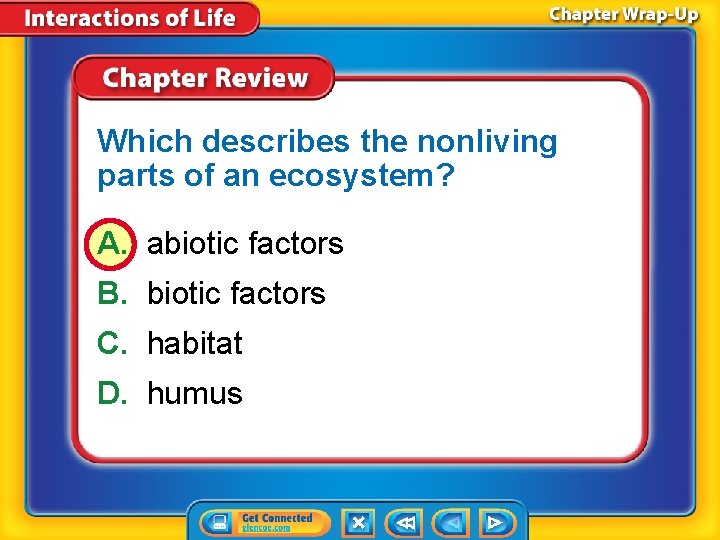
What is an ecosystem? (cont. ) • The nonliving parts of an ecosystem are called abiotic factors. • Living or once-living things in an ecosystem are called biotic factors.
What is an ecosystem? (cont. ) Biotic or Abiotic? • Sunlight • Worms • Decaying plants • Air • Rocks • The ocean
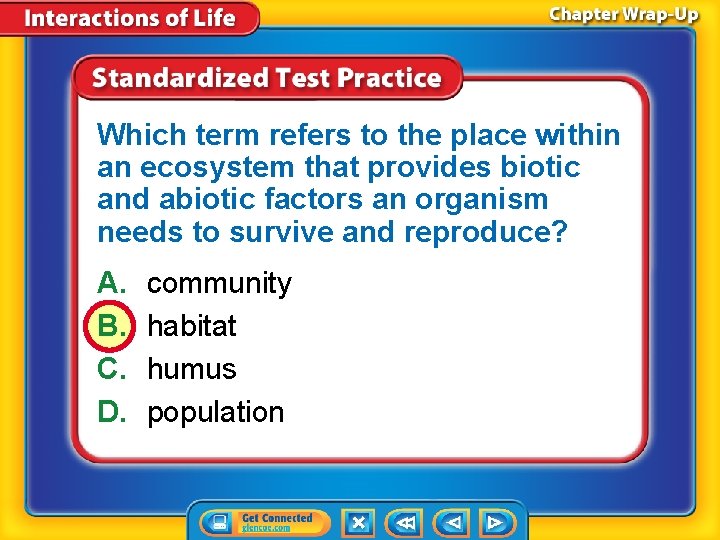
Habitats • A habitat is the place within an ecosystem that provides food, water, shelter, and other biotic and abiotic factors an organism needs to survive and reproduce. • Organisms have a variety of habitats. • When biotic or abiotic factors in an ecosystem change, habitats can change or disappear.
Populations • Every ecosystem includes many individuals of many species. • A population is all the organisms of the same species that live in the same area at the same time. • All the populations living in the same area at the same time form a community.
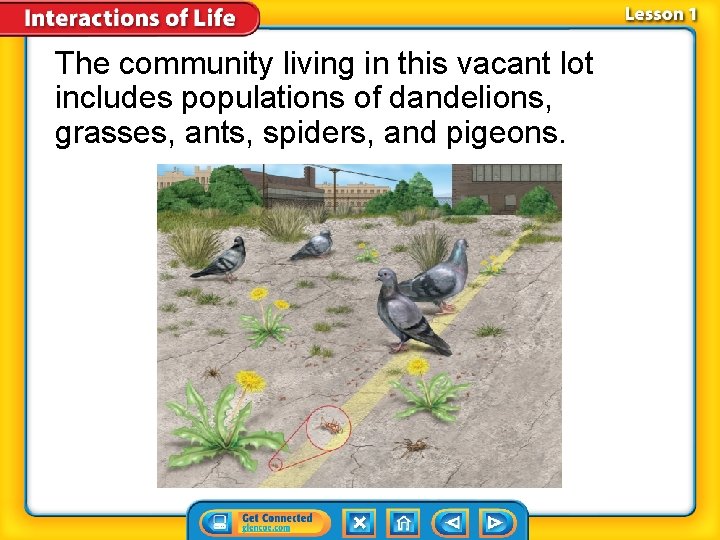
The community living in this vacant lot includes populations of dandelions, grasses, ants, spiders, and pigeons.
Populations (cont. ) • Population density is the size of a population compared to the amount of space available. • When population density is high, organisms live closer together and might not be able to obtain all the resources needed for life. • Diseases spread more easily when organisms live closer together.
Populations (cont. ) • Production of offspring increases the size of a population. The death of individuals reduces population size. • If births outnumber deaths, the population grows. • Changes in the abiotic or biotic factors in an ecosystem can cause organisms to move away or die out.
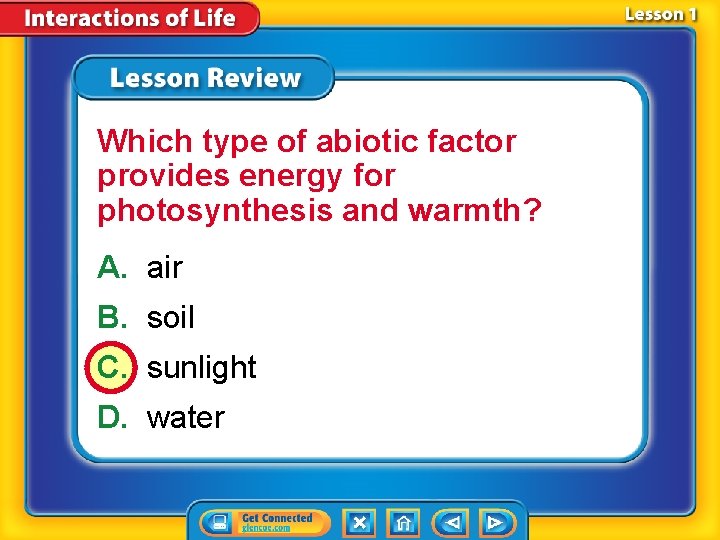
Which type of abiotic factor provides energy for photosynthesis and warmth? A. air B. soil C. sunlight D. water
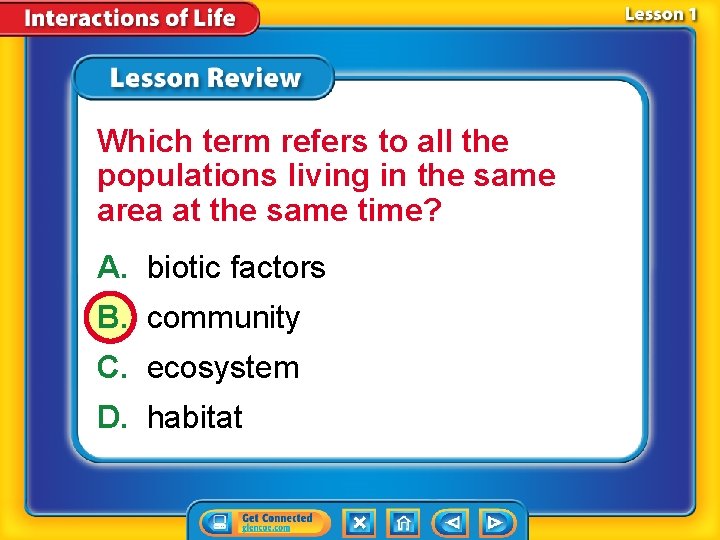
Which term refers to all the populations living in the same area at the same time? A. biotic factors B. community C. ecosystem D. habitat
True or False? 1. An ecosystem is all the animals that live together in a given area. 2. A layer of decayed leaves that covers the soil in a forest is an example of a living factor.
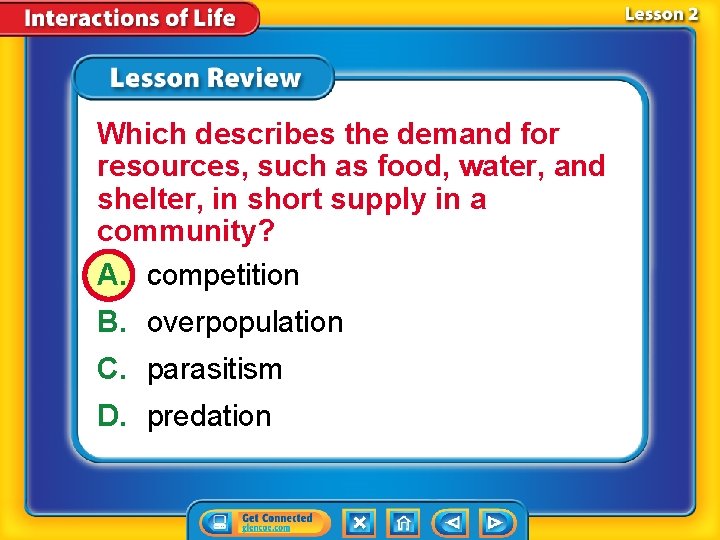
Competition • Competition describes the demand for resources, such as food, water, and shelter, in short supply in a community. • Competition can take place among the members of a population or between two populations of different species. • Competition limits population size.
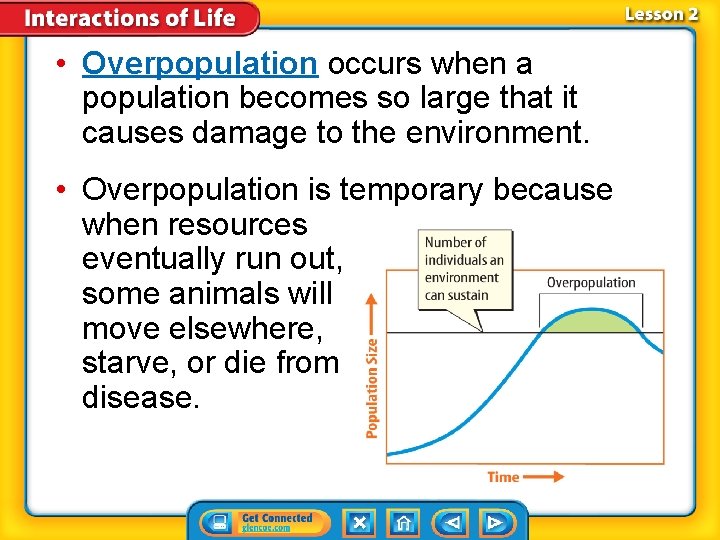
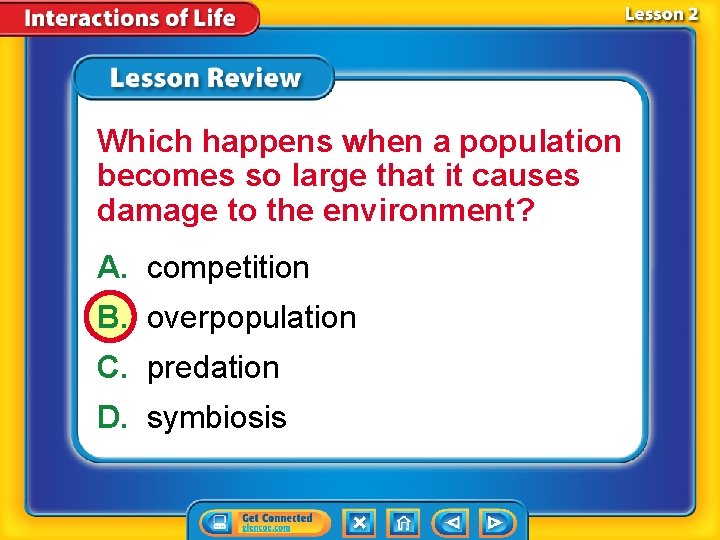
• Overpopulation occurs when a population becomes so large that it causes damage to the environment. • Overpopulation is temporary because when resources eventually run out, some animals will move elsewhere, starve, or die from disease.
Predation • Predation is the act of one organism, a predator, feeding on another organism, its prey. • Predators help control the size of prey populations. • When prey populations decrease, the number of predators usually decreases because less food is available.
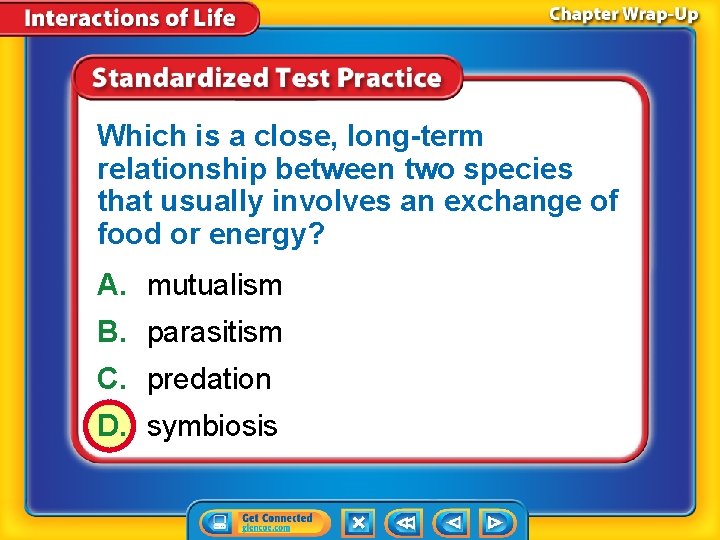
Symbiosis is a close, long-term relationship between two species that usually involves an exchange of food or energy.
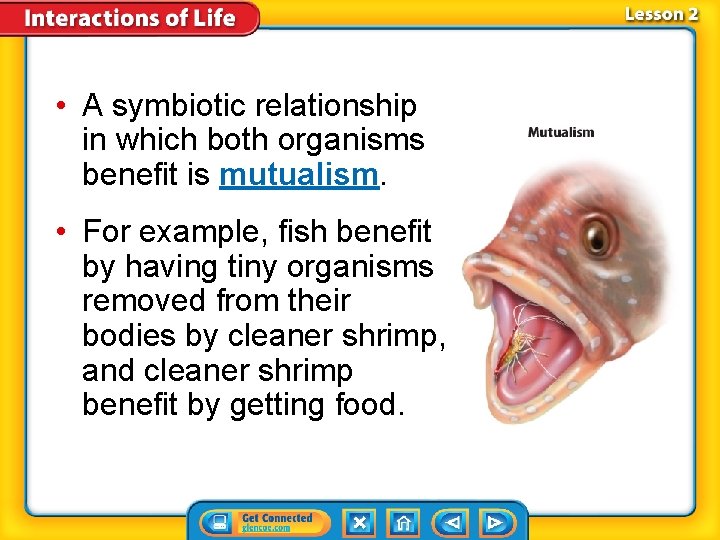
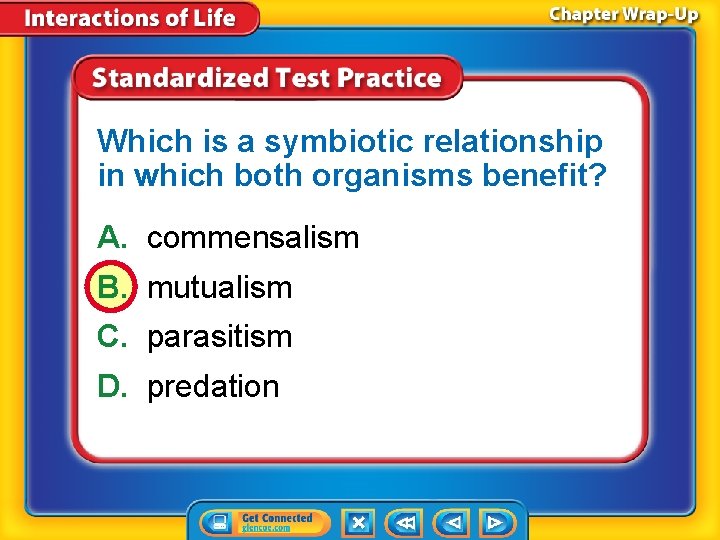
• A symbiotic relationship in which both organisms benefit is mutualism. • For example, fish benefit by having tiny organisms removed from their bodies by cleaner shrimp, and cleaner shrimp benefit by getting food.
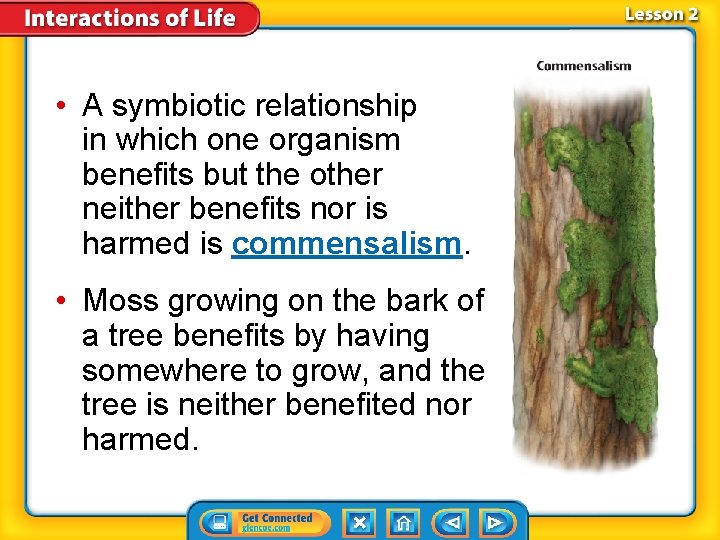
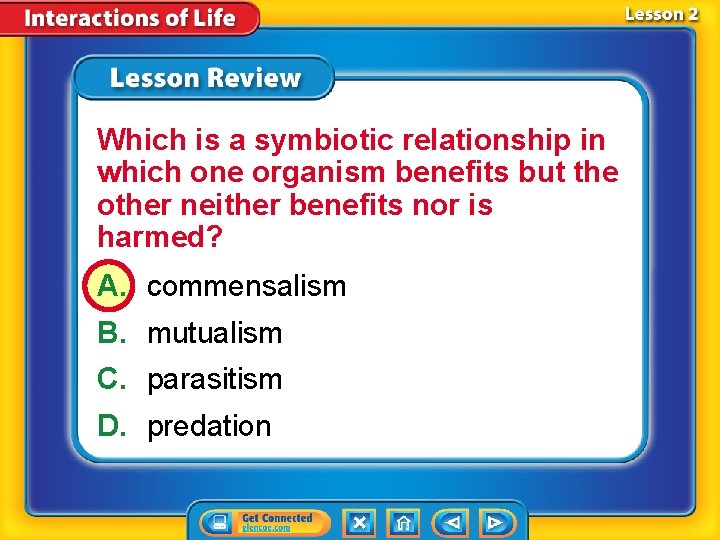
• A symbiotic relationship in which one organism benefits but the other neither benefits nor is harmed is commensalism. • Moss growing on the bark of a tree benefits by having somewhere to grow, and the tree is neither benefited nor harmed.
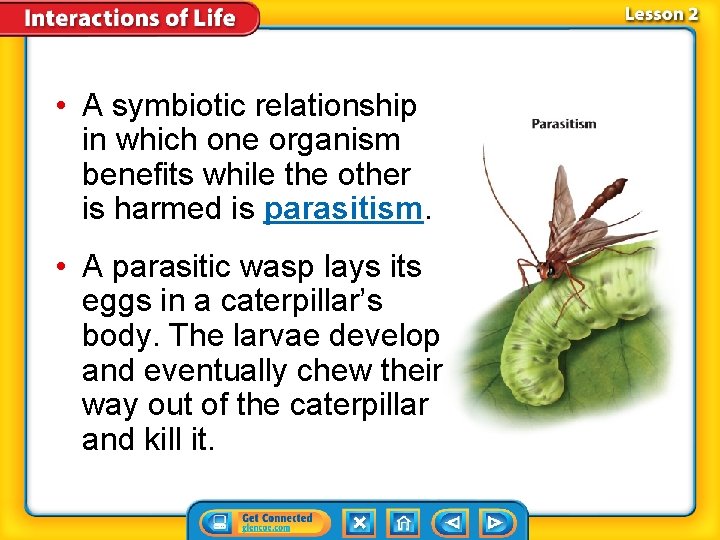
• A symbiotic relationship in which one organism benefits while the other is harmed is parasitism. • A parasitic wasp lays its eggs in a caterpillar’s body. The larvae develop and eventually chew their way out of the caterpillar and kill it.
Which happens when a population becomes so large that it causes damage to the environment? A. competition B. overpopulation C. predation D. symbiosis
Which is a symbiotic relationship in which one organism benefits but the other neither benefits nor is harmed? A. commensalism B. mutualism C. parasitism D. predation
Which describes the demand for resources, such as food, water, and shelter, in short supply in a community? A. competition B. overpopulation C. parasitism D. predation
True or False? 3. A habitat is the place where an animal lives. 4. Symbiosis is a close relationship between two species.
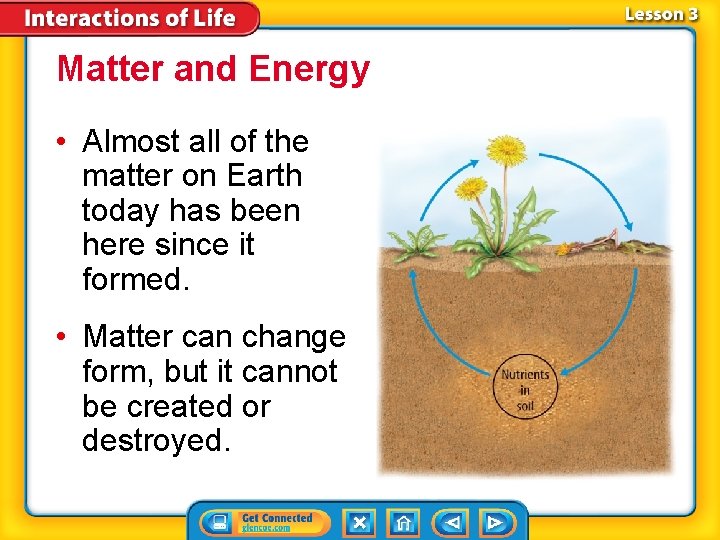
Matter and Energy • Almost all of the matter on Earth today has been here since it formed. • Matter can change form, but it cannot be created or destroyed.
Matter and Energy (cont. ) • Unlike matter, energy cannot be recycled, but it can be converted. • For example, the chemical energy in a log converts to thermal energy and light energy when it burns.
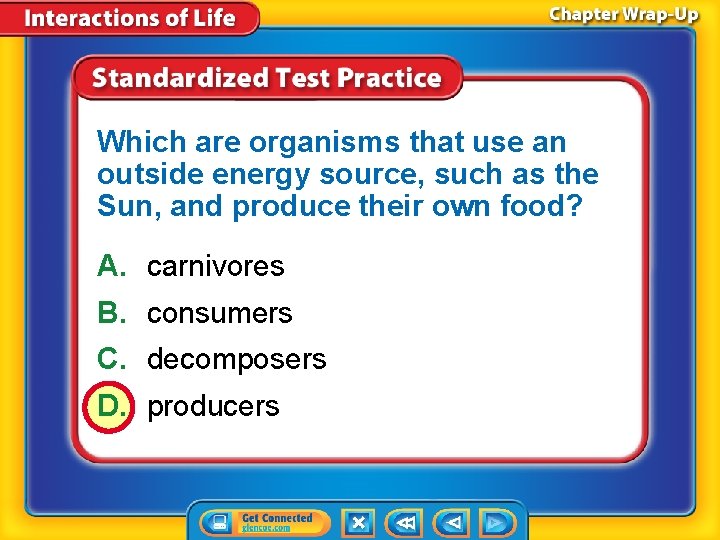
Obtaining Energy • Most of the energy used by all organisms on Earth comes from the Sun. • Producers are organisms that use an outside energy source, such as the Sun, and produce their own food.
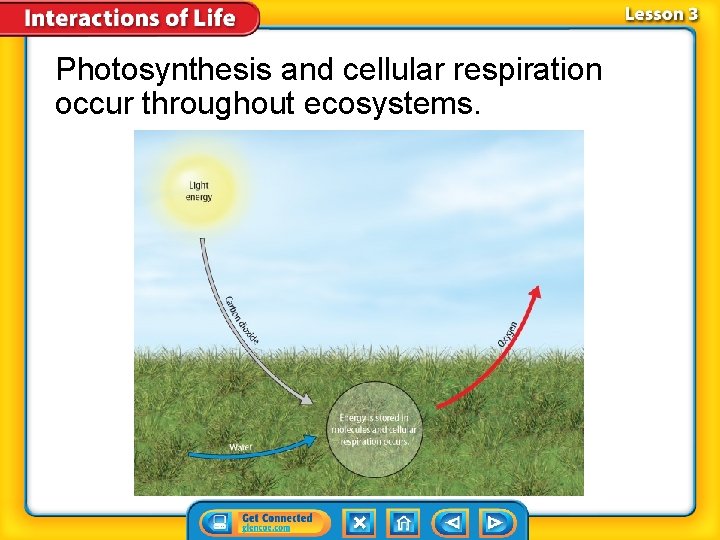
Photosynthesis and cellular respiration occur throughout ecosystems.
Obtaining Energy (cont. ) • Consumers are organisms that cannot make their own food. • Consumers obtain food by eating producers or other consumers.
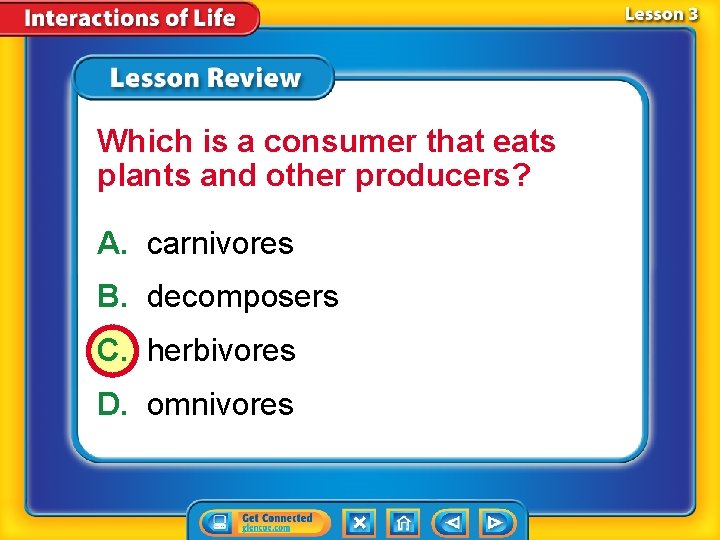
Obtaining Energy (cont. ) • Ecosystems include several different kinds of consumers. • Herbivores, such as snails, rabbits, deer, and bees, eat plants and other producers. • Carnivores, such as cats, snakes, hawks, frogs and spiders, eat herbivores and other consumers.
Obtaining Energy (cont. ) • Omnivores, including bears, robins, pigs, rats, and humans, eat producers and consumers. • Decomposers, including fungi, bacteria, wood lice, termites, and earthworms, break down the bodies of dead organisms into compounds that can be used by living organisms.
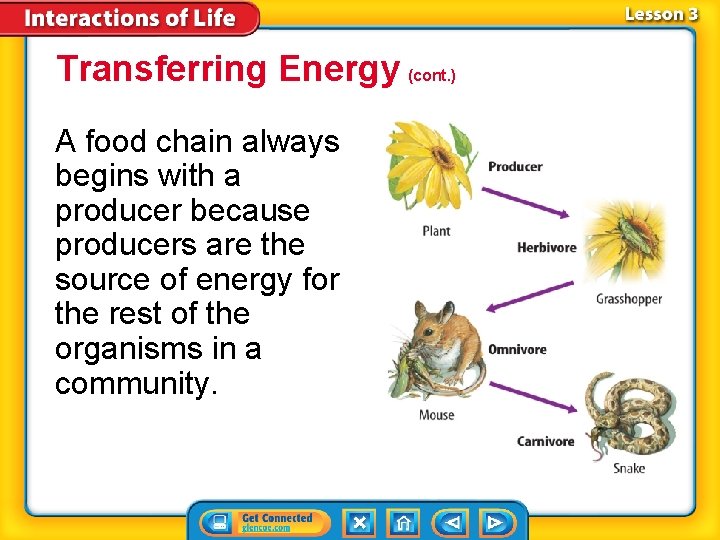
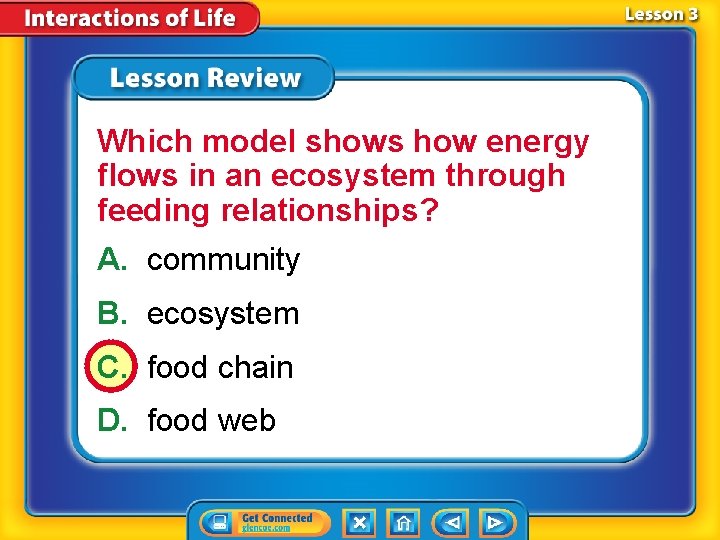
Transferring Energy • The transfer of energy takes place in an ecosystem when one organism eats another. • A model that shows how energy flows in an ecosystem through feeding relationships is called a food chain.
Transferring Energy (cont. ) A food chain always begins with a producer because producers are the source of energy for the rest of the organisms in a community.
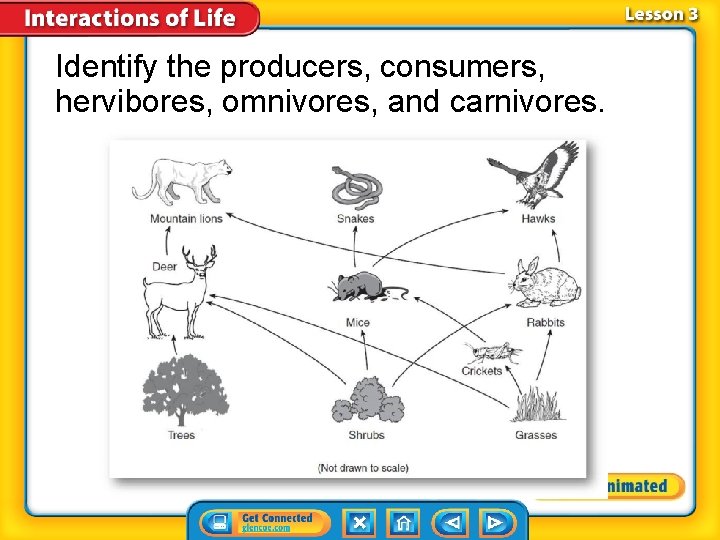
Transferring Energy (cont. ) • Most ecosystems contain many food chains. • A food web is a more complex model of energy transfer that can show the food chains in a community are interconnected.
Identify the producers, consumers, hervibores, omnivores, and carnivores.
Where does most of the energy used by all organisms on Earth come from? A. water B. the Sun C. producers D. consumers
Which model shows how energy flows in an ecosystem through feeding relationships? A. community B. ecosystem C. food chain D. food web
Which is a consumer that eats plants and other producers? A. carnivores B. decomposers C. herbivores D. omnivores
True or False? 5. Energy from sunlight is the basis for almost every food chain on Earth. 6. A plant creates matter when it grows.
Which describes the nonliving parts of an ecosystem? A. abiotic factors B. biotic factors C. habitat D. humus
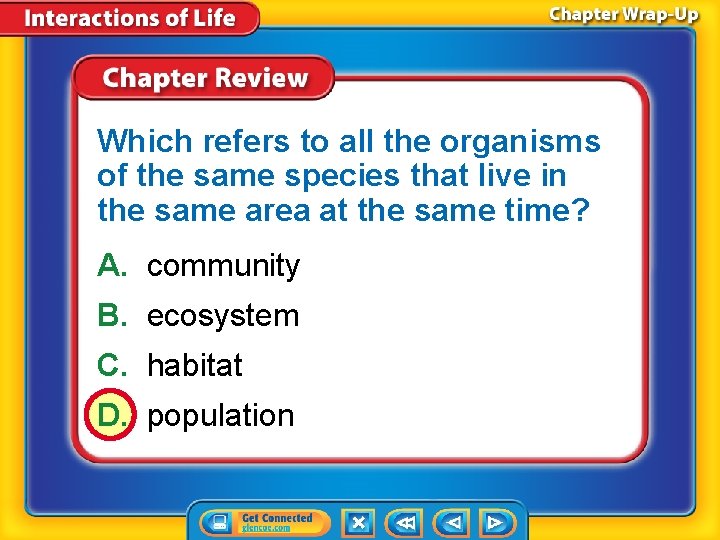
Which refers to all the organisms of the same species that live in the same area at the same time? A. community B. ecosystem C. habitat D. population
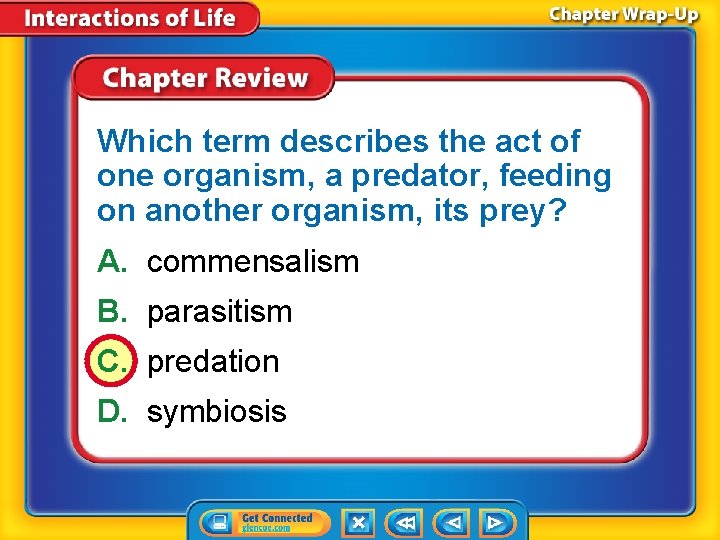
Which term describes the act of one organism, a predator, feeding on another organism, its prey? A. commensalism B. parasitism C. predation D. symbiosis
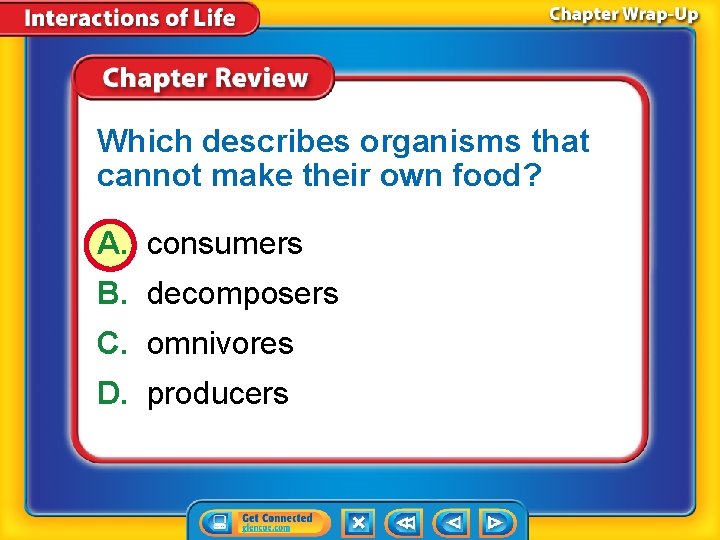
Which describes organisms that cannot make their own food? A. consumers B. decomposers C. omnivores D. producers
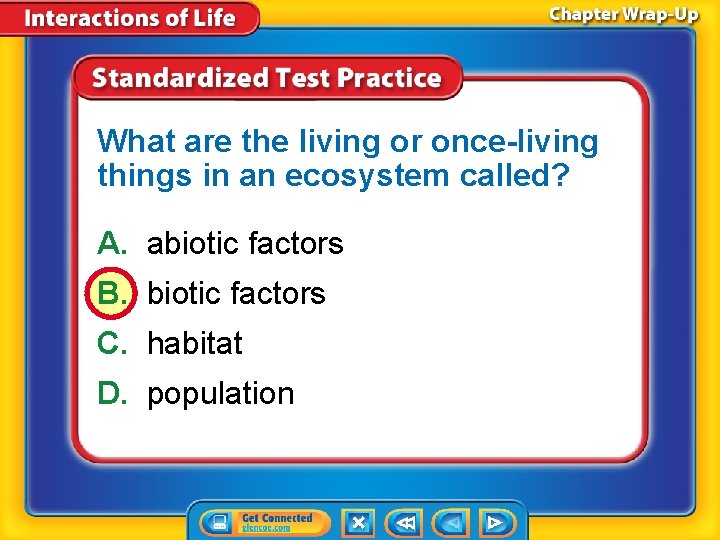
What are the living or once-living things in an ecosystem called? A. abiotic factors B. biotic factors C. habitat D. population
Which term refers to the place within an ecosystem that provides biotic and abiotic factors an organism needs to survive and reproduce? A. B. C. D. community habitat humus population
Which is a symbiotic relationship in which both organisms benefit? A. commensalism B. mutualism C. parasitism D. predation
Which is a close, long-term relationship between two species that usually involves an exchange of food or energy? A. mutualism B. parasitism C. predation D. symbiosis
Which are organisms that use an outside energy source, such as the Sun, and produce their own food? A. carnivores B. consumers C. decomposers D. producers