
TROPISMS ADAPTATIONS Tropisms A TROPISM IS A PLANTS
- Slides: 23
TROPISMS & ADAPTATIONS
Tropisms A TROPISM IS A PLANT’S DIRECTED GROWTH TOWARDS OR AWAY FROM A STIMULUS.
TROPISMS We will cover 4 tropisms. Gravitropism Phototropism Thigmotropism Hydrotropism
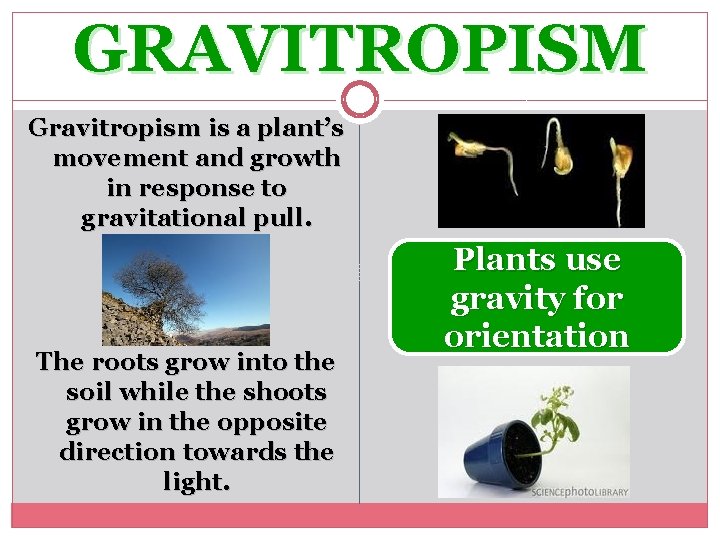
GRAVITROPISM Gravitropism is a plant’s movement and growth in response to gravitational pull. The roots grow into the soil while the shoots grow in the opposite direction towards the light. Plants use gravity for orientation
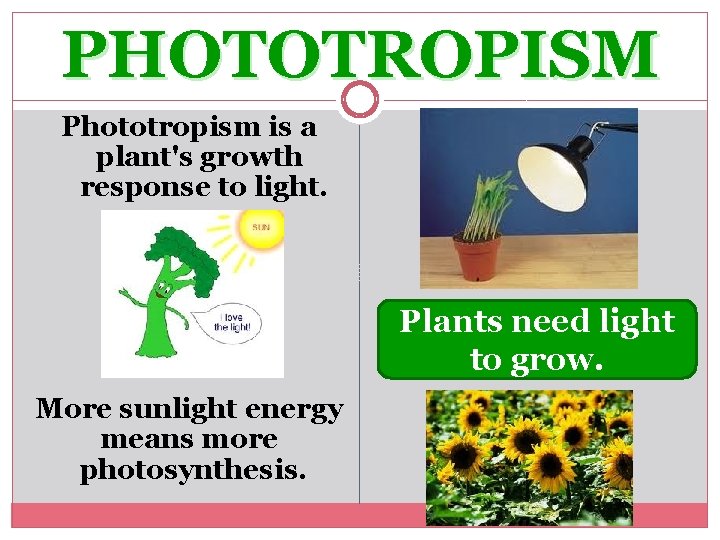
PHOTOTROPISM Phototropism is a plant's growth response to light. Plants need light to grow. More sunlight energy means more photosynthesis.
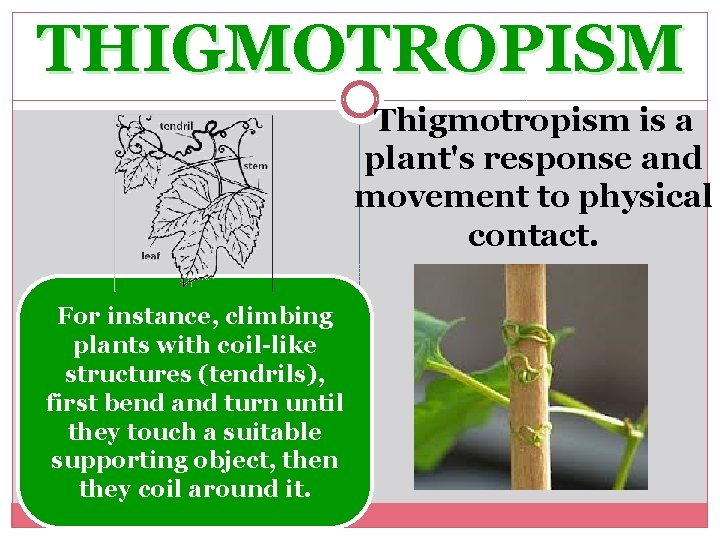
THIGMOTROPISM Thigmotropism is a plant's response and movement to physical contact. For instance, climbing plants with coil-like structures (tendrils), first bend and turn until they touch a suitable supporting object, then they coil around it.
HYDROTROPISM Hydrotropism is a plants growth response to water. Roots, grow towards moist soils to avoid draught stress. Once a root cap has sensed water it bends and then the root grows towards it.
Plant Adaptations HOW PLANTS ADAPT IN DIFFERENT BIOMES
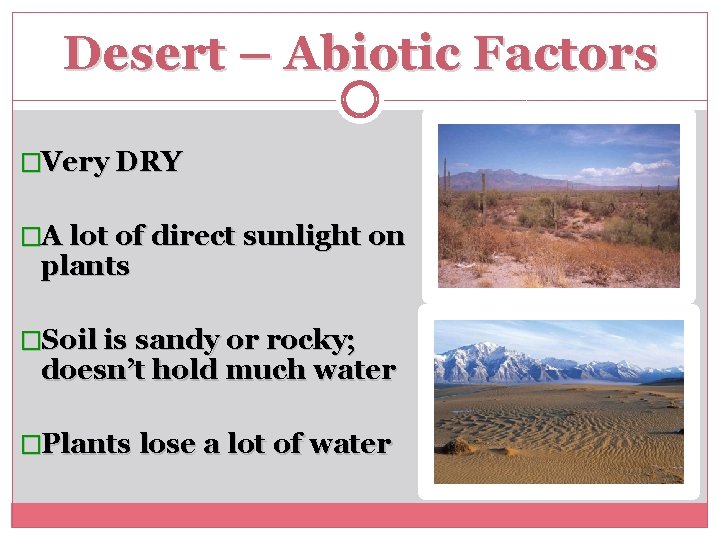
Desert – Abiotic Factors �Very DRY �A lot of direct sunlight on plants �Soil is sandy or rocky; doesn’t hold much water �Plants lose a lot of water
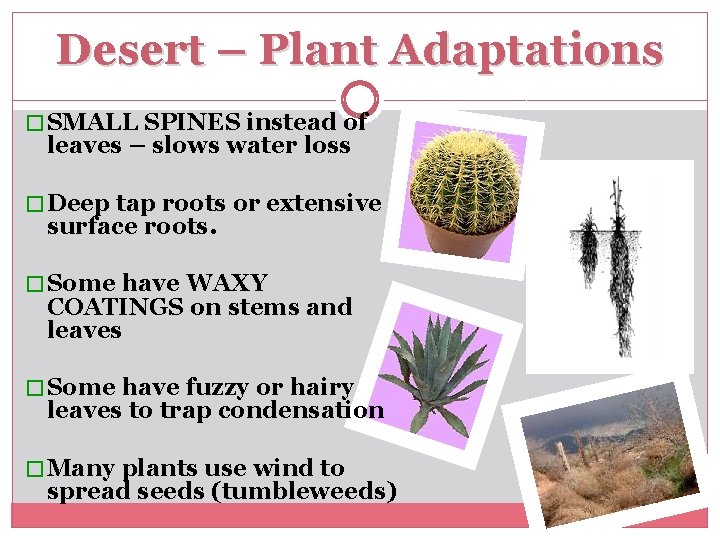
Desert – Plant Adaptations � SMALL SPINES instead of leaves – slows water loss � Deep tap roots or extensive surface roots. � Some have WAXY COATINGS on stems and leaves � Some have fuzzy or hairy leaves to trap condensation � Many plants use wind to spread seeds (tumbleweeds)
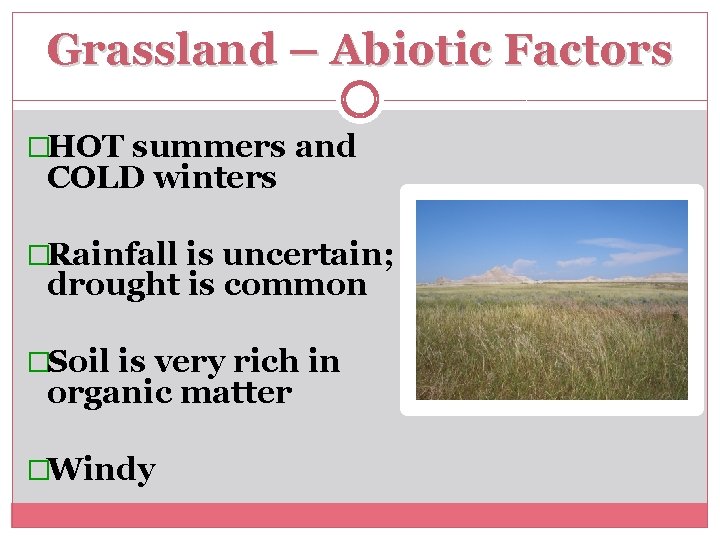
Grassland – Abiotic Factors �HOT summers and COLD winters �Rainfall is uncertain; drought is common �Soil is very rich in organic matter �Windy
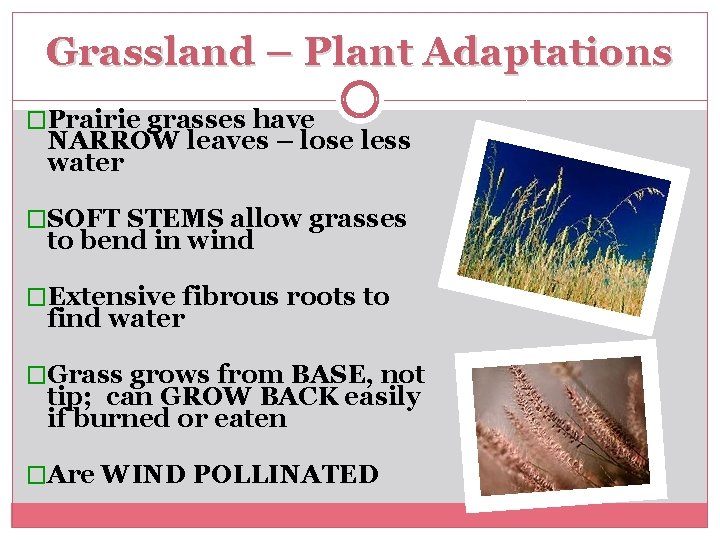
Grassland – Plant Adaptations �Prairie grasses have NARROW leaves – lose less water �SOFT STEMS allow grasses to bend in wind �Extensive fibrous roots to find water �Grass grows from BASE, not tip; can GROW BACK easily if burned or eaten �Are WIND POLLINATED
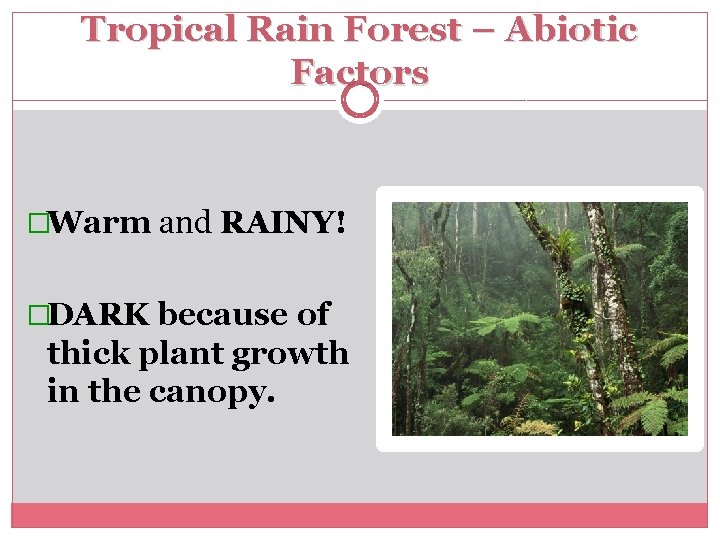
Tropical Rain Forest – Abiotic Factors �Warm and RAINY! �DARK because of thick plant growth in the canopy.
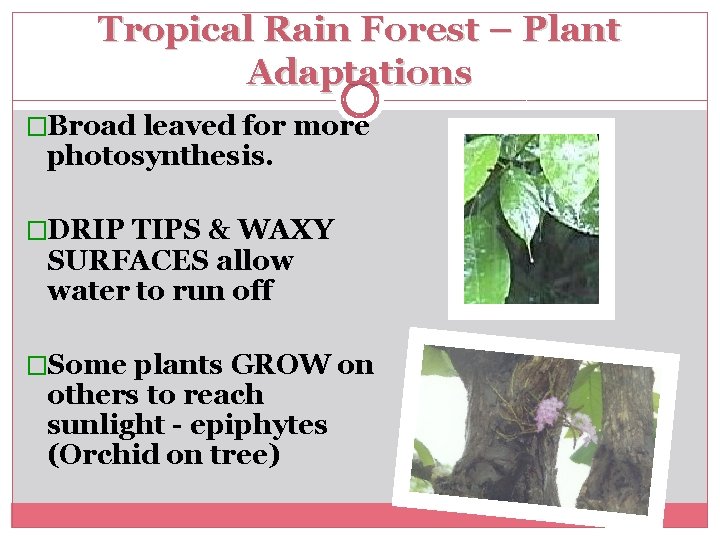
Tropical Rain Forest – Plant Adaptations �Broad leaved for more photosynthesis. �DRIP TIPS & WAXY SURFACES allow water to run off �Some plants GROW on others to reach sunlight - epiphytes (Orchid on tree)
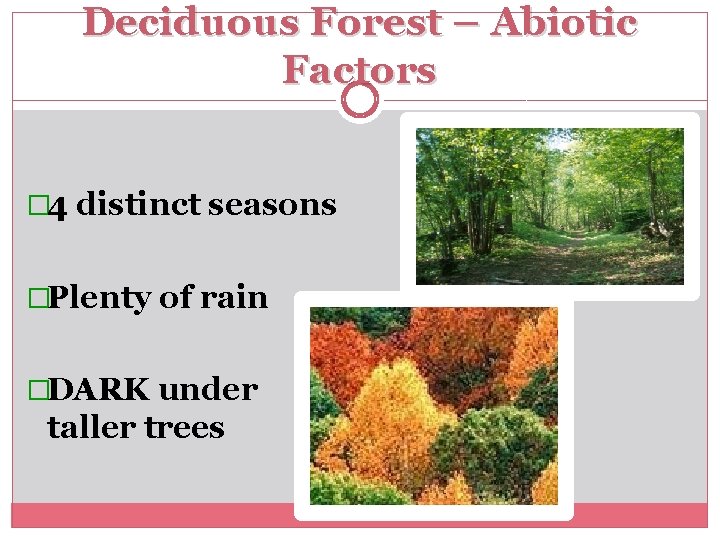
Deciduous Forest – Abiotic Factors � 4 distinct seasons �Plenty of rain �DARK under taller trees
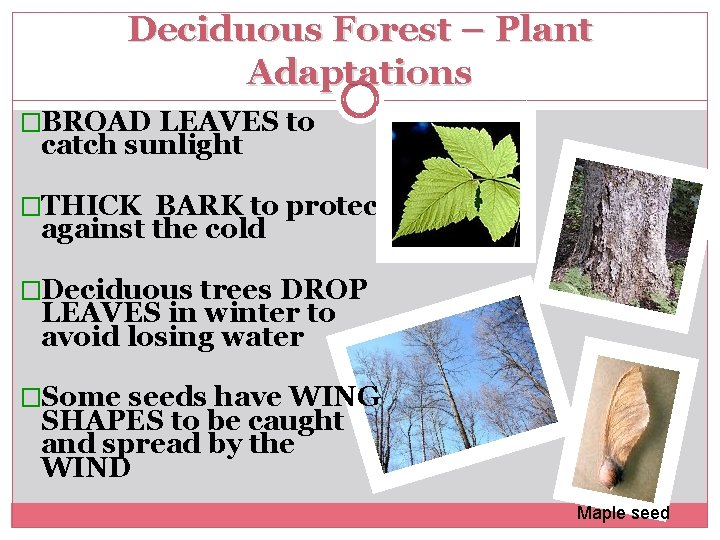
Deciduous Forest – Plant Adaptations �BROAD LEAVES to catch sunlight �THICK BARK to protect against the cold �Deciduous trees DROP LEAVES in winter to avoid losing water �Some seeds have WING SHAPES to be caught and spread by the WIND Maple seed
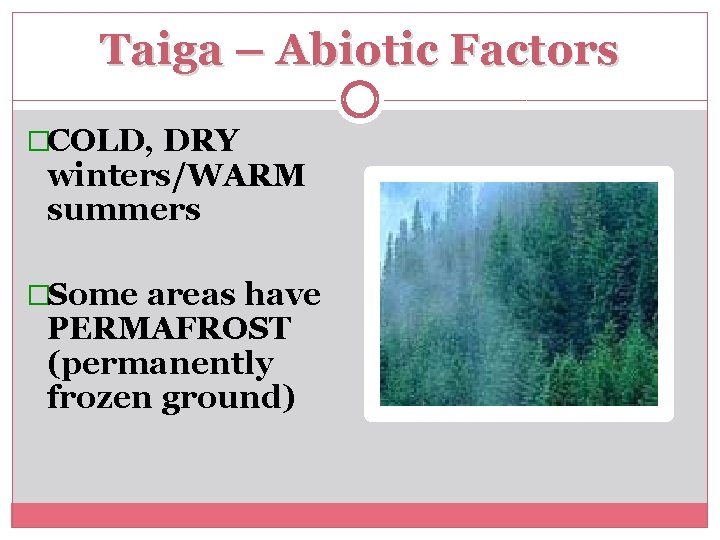
Taiga – Abiotic Factors �COLD, DRY winters/WARM summers �Some areas have PERMAFROST (permanently frozen ground)
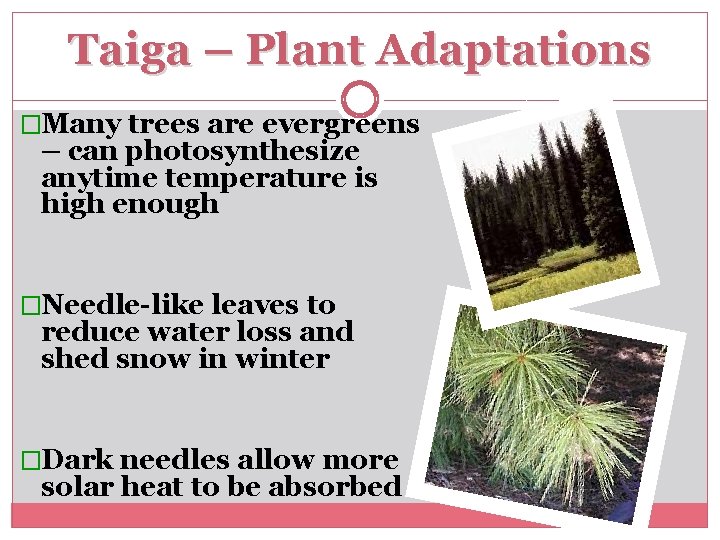
Taiga – Plant Adaptations �Many trees are evergreens – can photosynthesize anytime temperature is high enough �Needle-like leaves to reduce water loss and shed snow in winter �Dark needles allow more solar heat to be absorbed
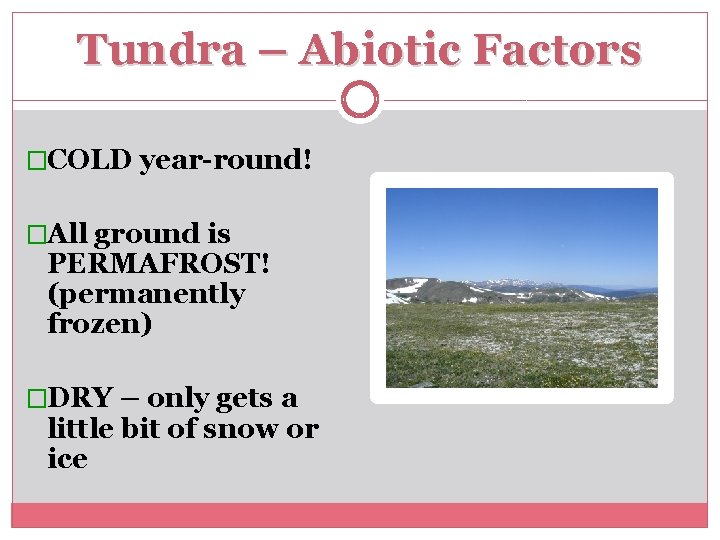
Tundra – Abiotic Factors �COLD year-round! �All ground is PERMAFROST! (permanently frozen) �DRY – only gets a little bit of snow or ice
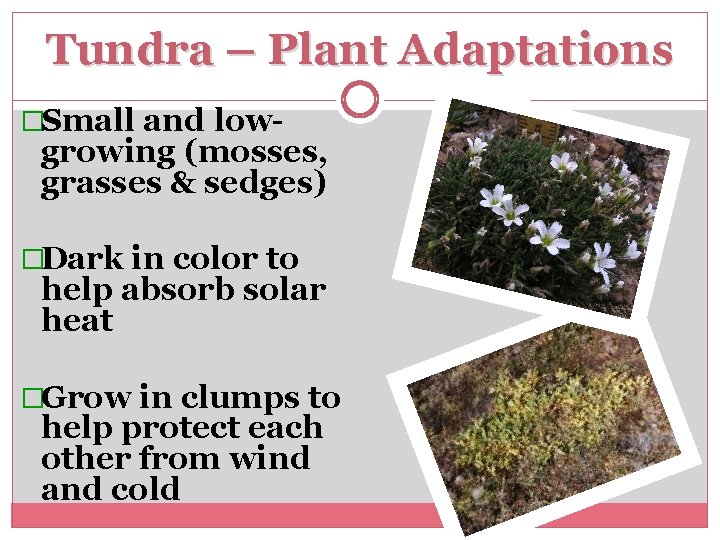
Tundra – Plant Adaptations �Small and low- growing (mosses, grasses & sedges) �Dark in color to help absorb solar heat �Grow in clumps to help protect each other from wind and cold
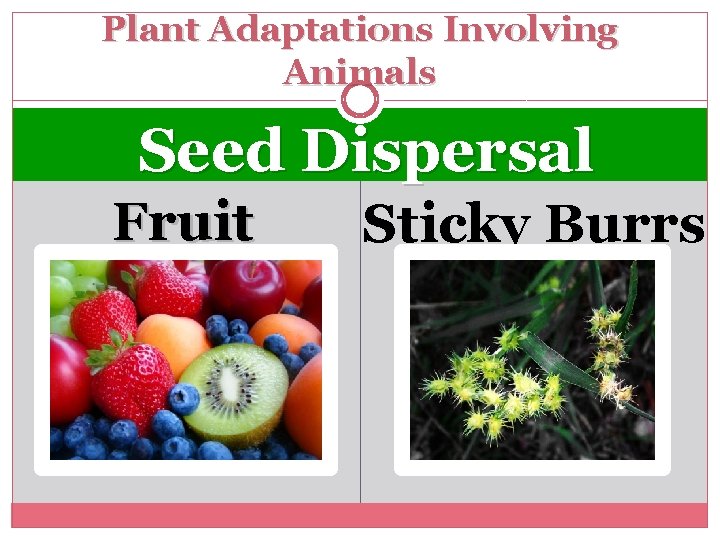
Plant Adaptations Involving Animals Seed Dispersal Fruit Sticky Burrs
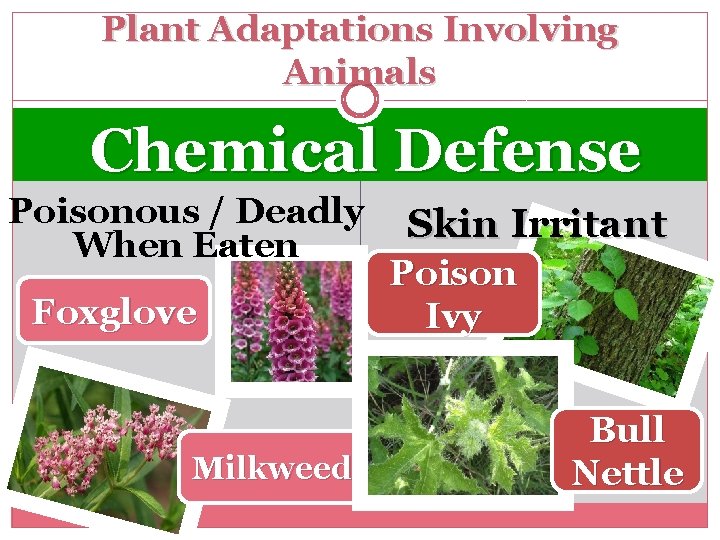
Plant Adaptations Involving Animals Chemical Defense Poisonous / Deadly Skin Irritant When Eaten Poison Foxglove Ivy Milkweed Bull Nettle
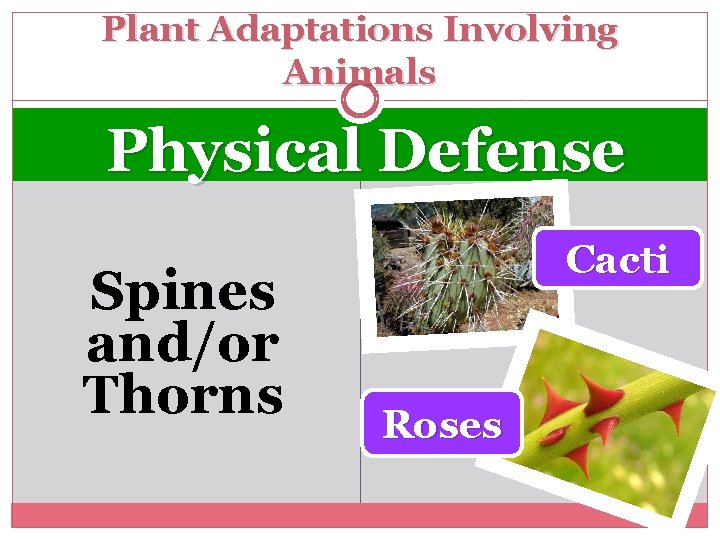
Plant Adaptations Involving Animals Physical Defense Spines and/or Thorns Cacti Roses