
Tropical Rainy Tropical Wet Dry Savannas Tropical Savannas
- Slides: 27
Tropical Rainy: Tropical Wet & Dry: Savannas
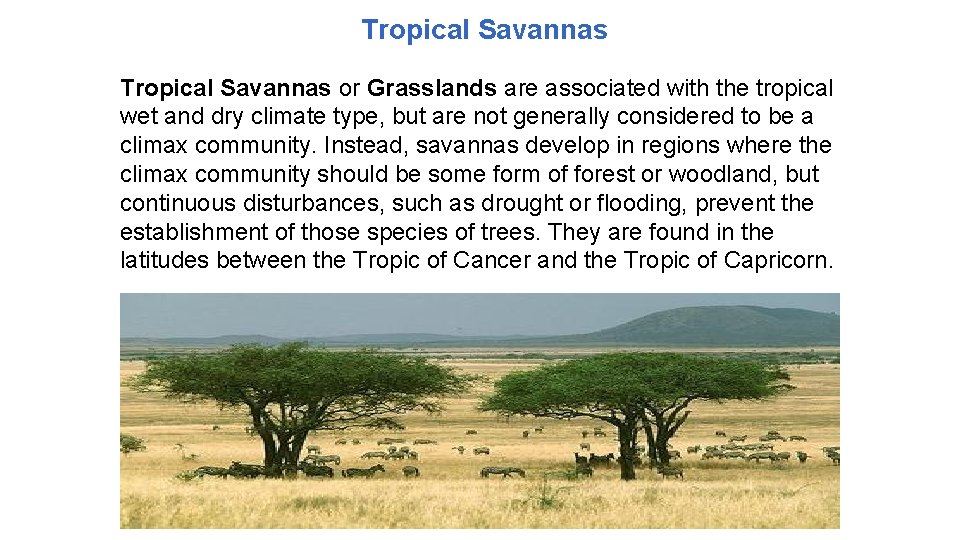
Tropical Savannas or Grasslands are associated with the tropical wet and dry climate type, but are not generally considered to be a climax community. Instead, savannas develop in regions where the climax community should be some form of forest or woodland, but continuous disturbances, such as drought or flooding, prevent the establishment of those species of trees. They are found in the latitudes between the Tropic of Cancer and the Tropic of Capricorn.
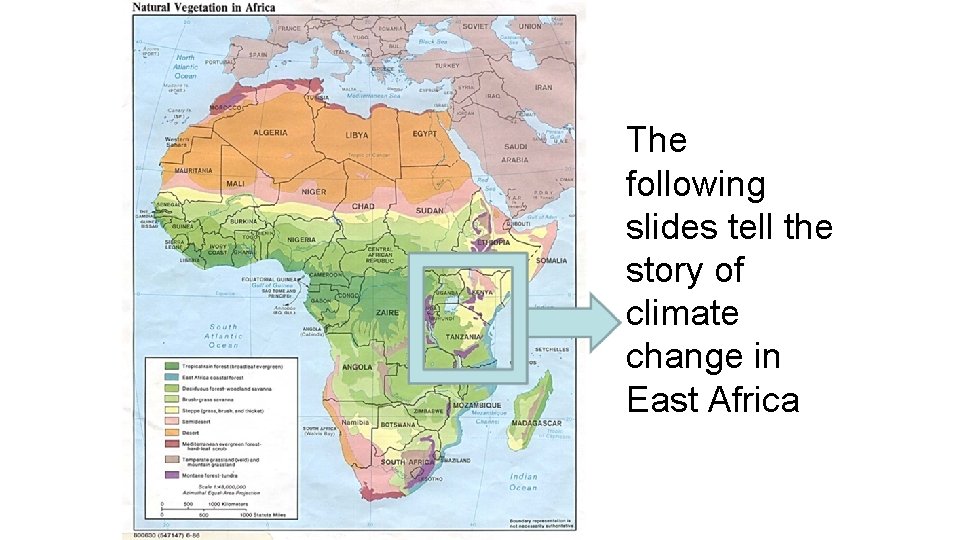
The following slides tell the story of climate change in East Africa
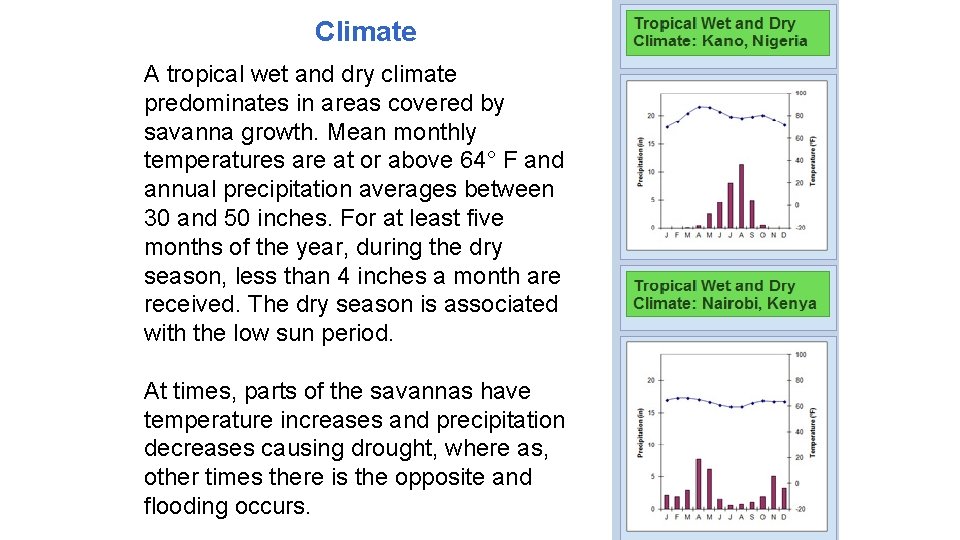
Climate A tropical wet and dry climate predominates in areas covered by savanna growth. Mean monthly temperatures are at or above 64° F and annual precipitation averages between 30 and 50 inches. For at least five months of the year, during the dry season, less than 4 inches a month are received. The dry season is associated with the low sun period. At times, parts of the savannas have temperature increases and precipitation decreases causing drought, where as, other times there is the opposite and flooding occurs.
Why is it important to learn about climate change in East Africa? • Climate change affects all parts of the globe. • Our actions in the US affect other countries. • How? • Climate change in other parts of the world affects the US. • Why? • What we learn about climate change in East Africa can help us understand climate change elsewhere.
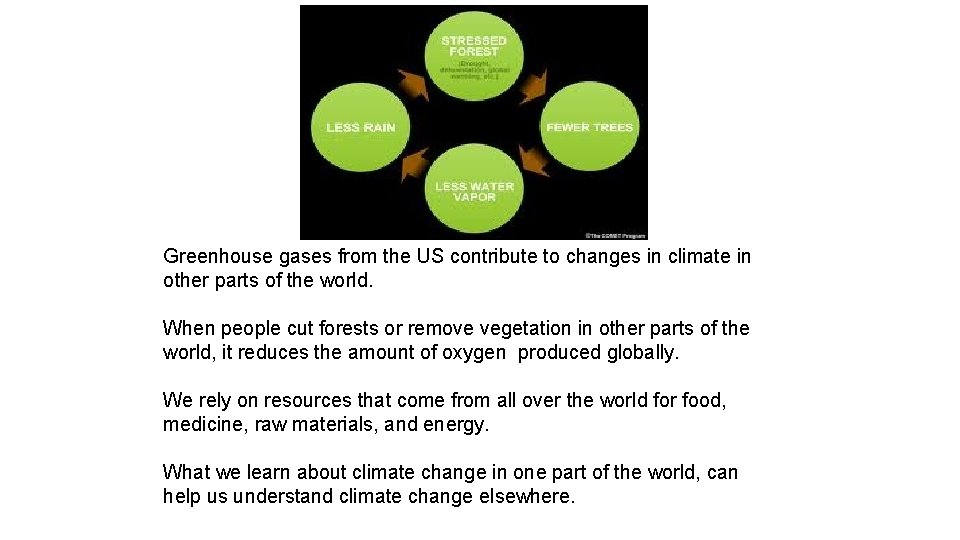
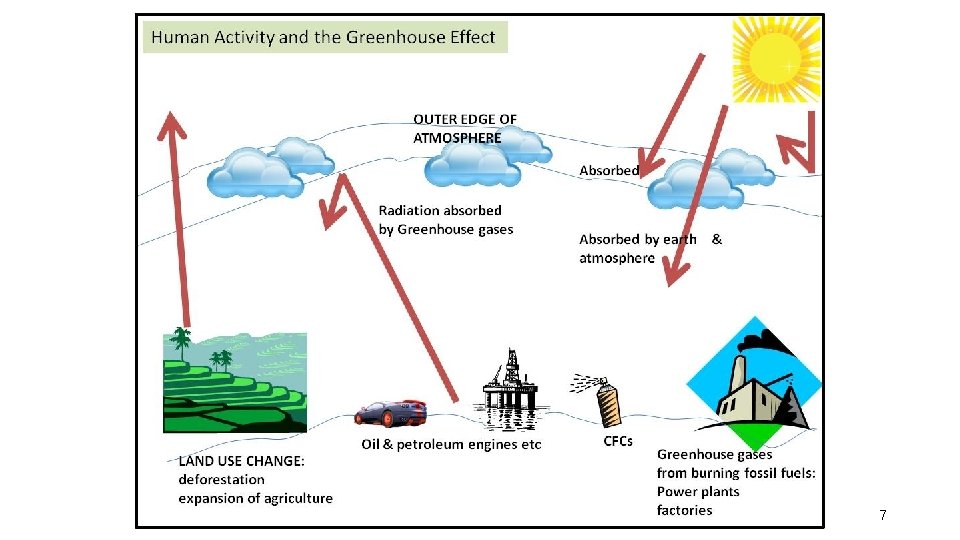
Greenhouse gases from the US contribute to changes in climate in other parts of the world. When people cut forests or remove vegetation in other parts of the world, it reduces the amount of oxygen produced globally. We rely on resources that come from all over the world for food, medicine, raw materials, and energy. What we learn about climate change in one part of the world, can help us understand climate change elsewhere.
7
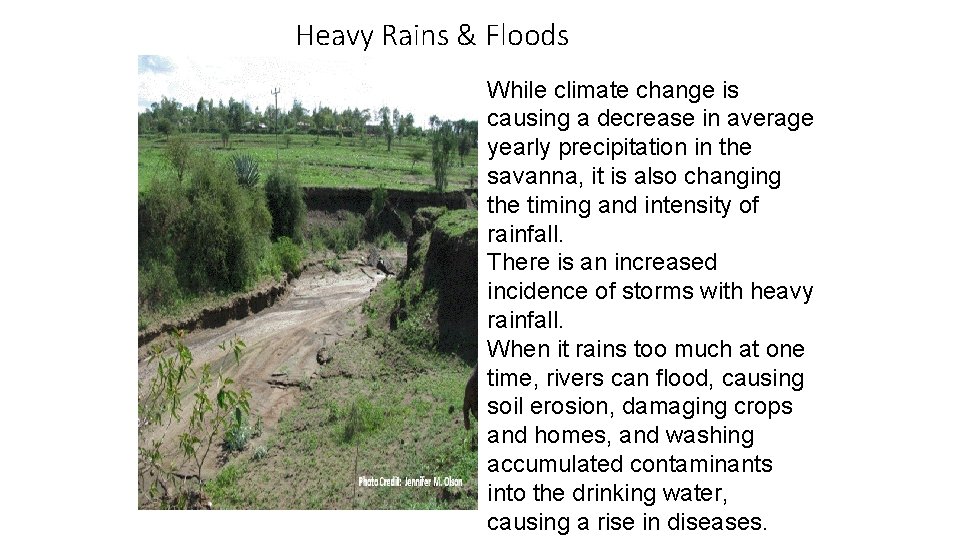
Heavy Rains & Floods While climate change is causing a decrease in average yearly precipitation in the savanna, it is also changing the timing and intensity of rainfall. There is an increased incidence of storms with heavy rainfall. When it rains too much at one time, rivers can flood, causing soil erosion, damaging crops and homes, and washing accumulated contaminants into the drinking water, causing a rise in diseases.
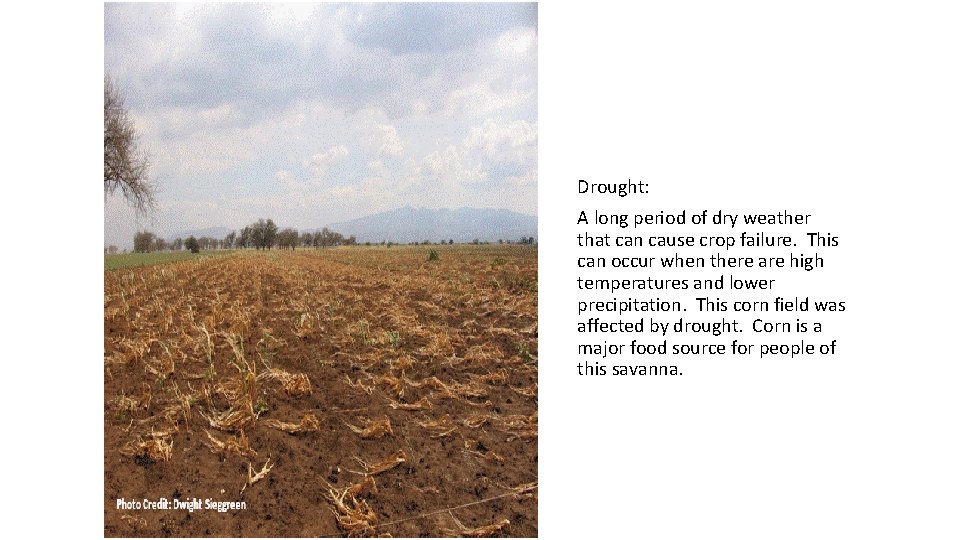
Drought: Photo credit: Dwigt Sieggreen A long period of dry weather that can cause crop failure. This can occur when there are high temperatures and lower precipitation. This corn field was affected by drought. Corn is a major food source for people of this savanna.
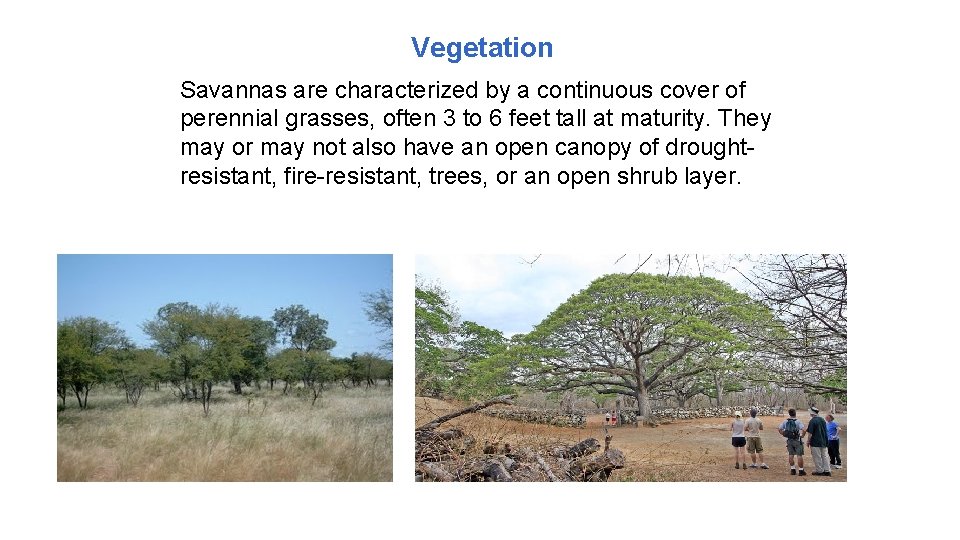
Vegetation Savannas are characterized by a continuous cover of perennial grasses, often 3 to 6 feet tall at maturity. They may or may not also have an open canopy of droughtresistant, fire-resistant, trees, or an open shrub layer.
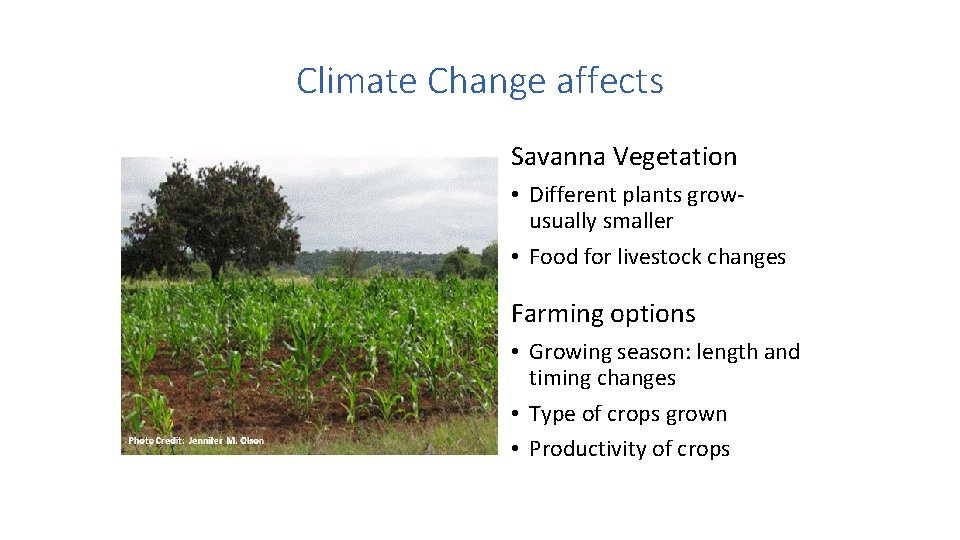
Climate Change affects Savanna Vegetation • Different plants growusually smaller • Food for livestock changes Farming options • Growing season: length and timing changes • Type of crops grown • Productivity of crops
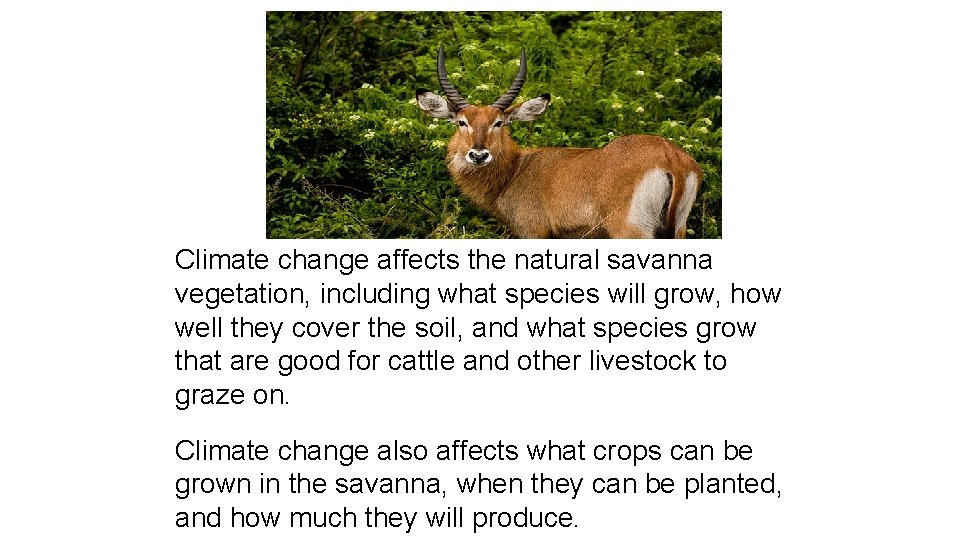
Climate change affects the natural savanna vegetation, including what species will grow, how well they cover the soil, and what species grow that are good for cattle and other livestock to graze on. Climate change also affects what crops can be grown in the savanna, when they can be planted, and how much they will produce.
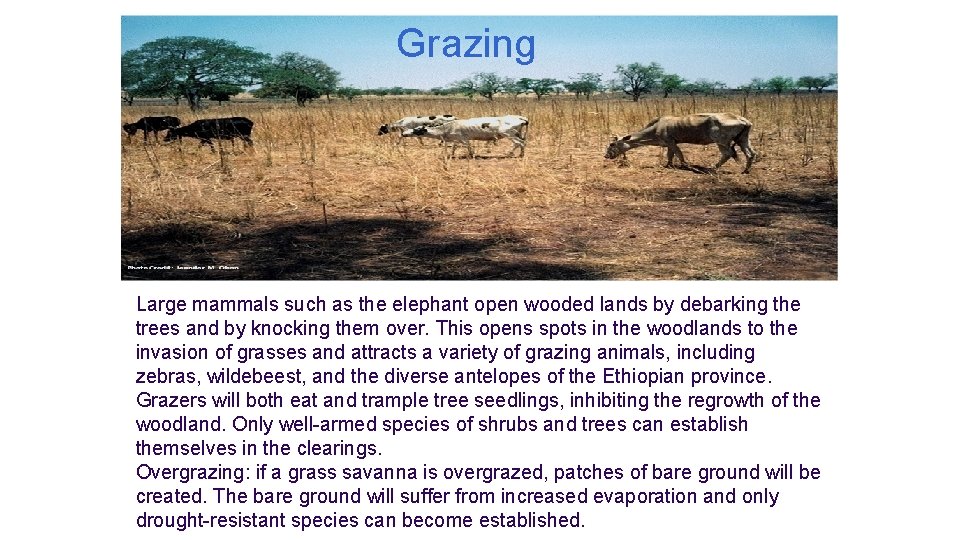
Grazing Large mammals such as the elephant open wooded lands by debarking the trees and by knocking them over. This opens spots in the woodlands to the invasion of grasses and attracts a variety of grazing animals, including zebras, wildebeest, and the diverse antelopes of the Ethiopian province. Grazers will both eat and trample tree seedlings, inhibiting the regrowth of the woodland. Only well-armed species of shrubs and trees can establish themselves in the clearings. Overgrazing: if a grass savanna is overgrazed, patches of bare ground will be created. The bare ground will suffer from increased evaporation and only drought-resistant species can become established.
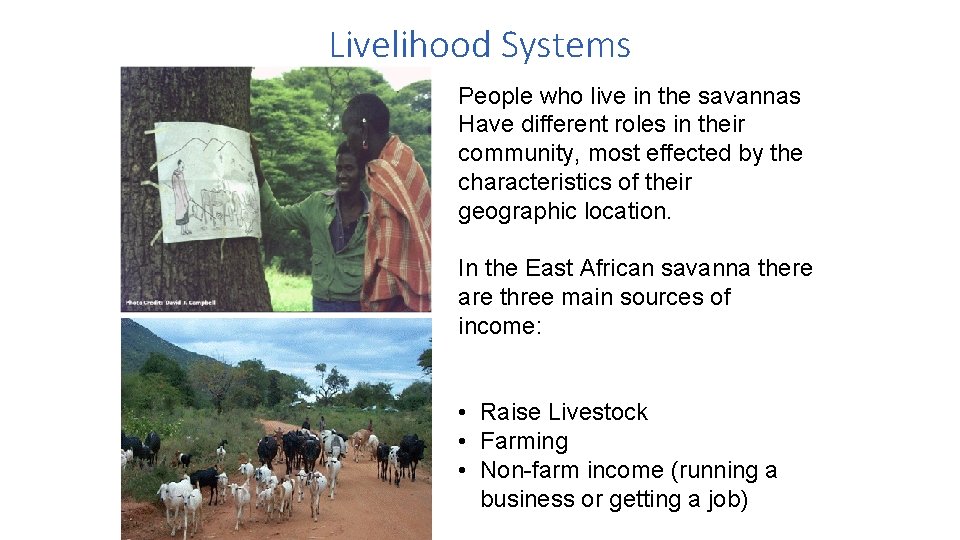
Livelihood Systems People who live in the savannas Have different roles in their community, most effected by the characteristics of their geographic location. In the East African savanna there are three main sources of income: • Raise Livestock • Farming • Non-farm income (running a business or getting a job)
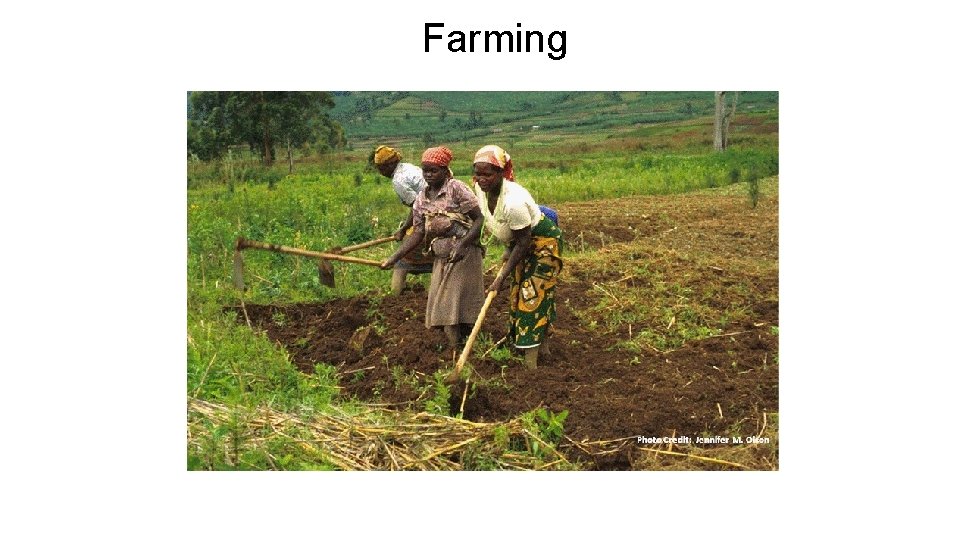
Farming Photo Credit: Jennifer M. Olson
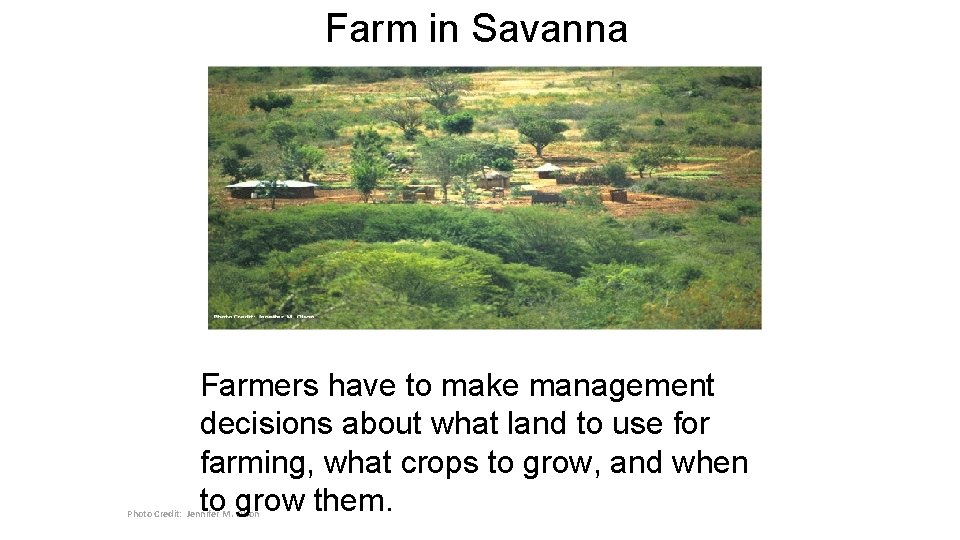
Farming is another livelihood option in the savanna. • Maize (corn dried and used for cornmeal) is a common crop. • Sorghum and millet are traditional grains that are better adapted to dry climates. Farming in the savanna is increasing because: • Some farmers are moving into the savanna from other areas. • Some herders are beginning to farm to earn additional income. When people choose farming as a livelihood, they need to have land, labor, and seeds to successfully farm. They also need to be able to sell what is not for their own use. Farmers have to make choices about: • what crops to grow • where to plant • how much of each crop to plant
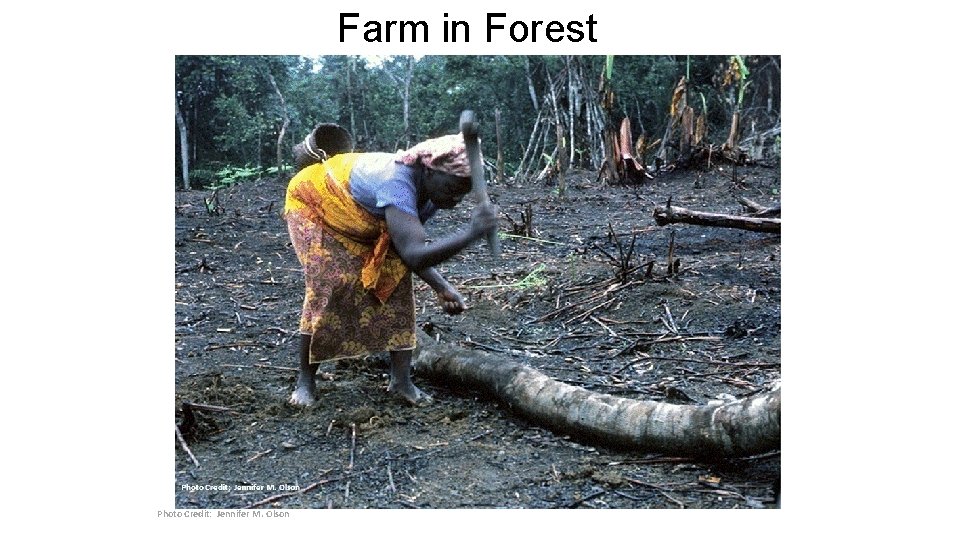
Farm in Forest Photo Credit: Jennifer M. Olson
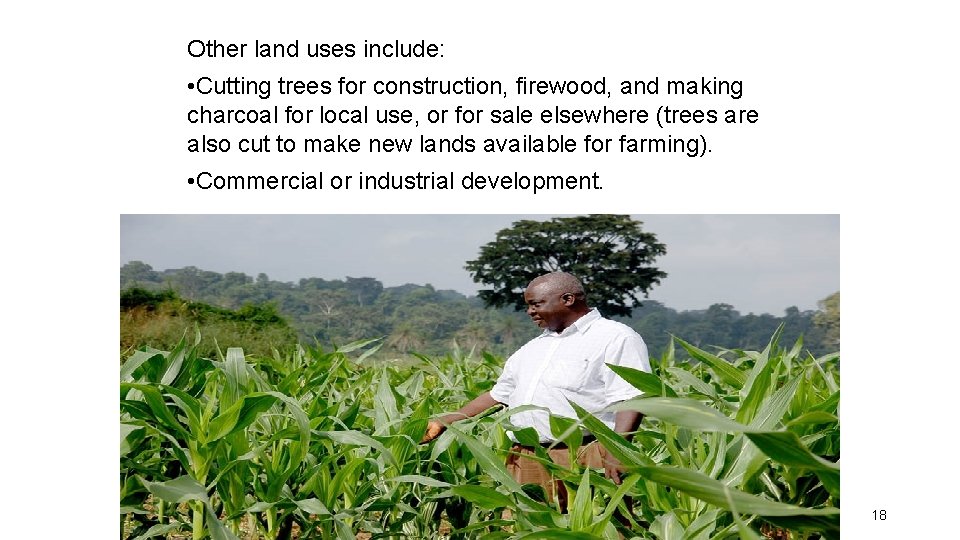
Other land uses include: • Cutting trees for construction, firewood, and making charcoal for local use, or for sale elsewhere (trees are also cut to make new lands available for farming). • Commercial or industrial development. 18
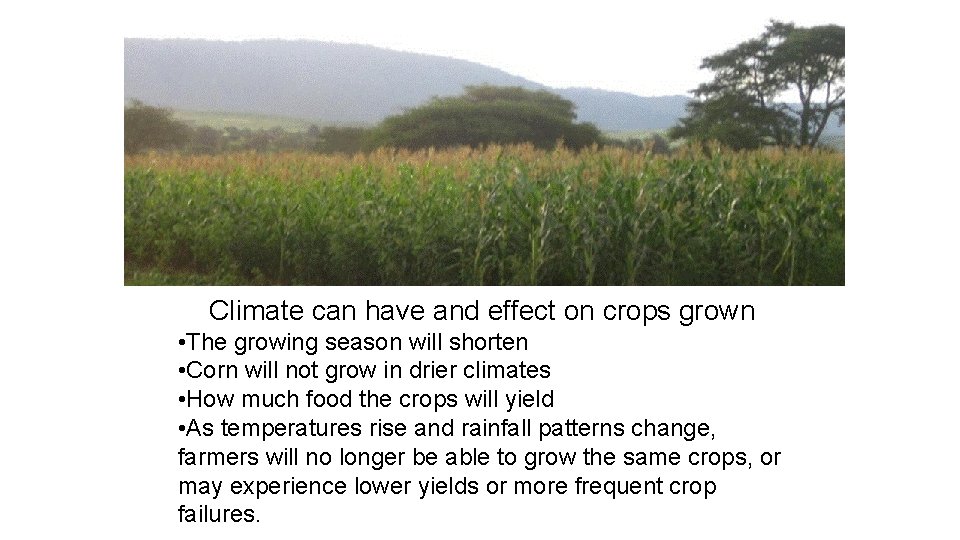
Climate can have and effect on crops grown • The growing season will shorten • Corn will not grow in drier climates • How much food the crops will yield • As temperatures rise and rainfall patterns change, farmers will no longer be able to grow the same crops, or may experience lower yields or more frequent crop failures.
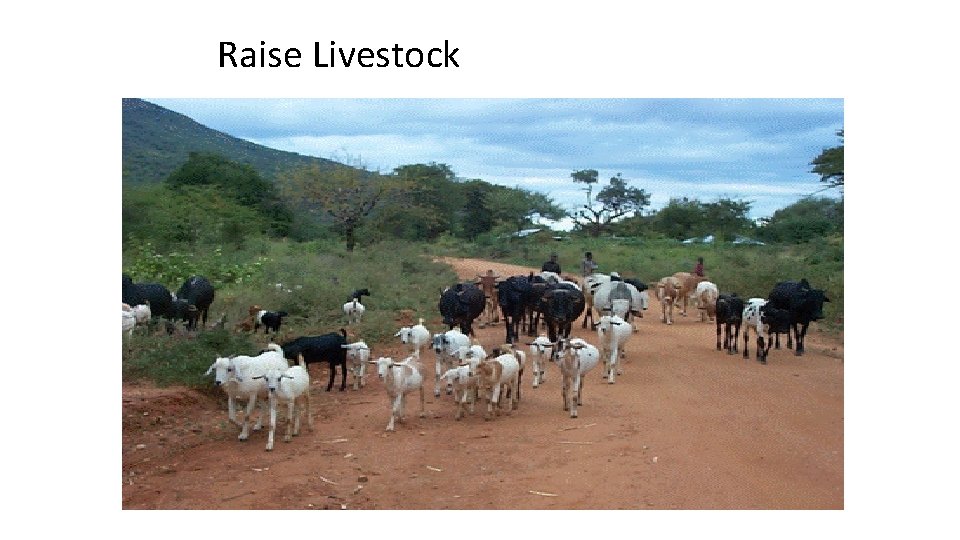
Raise Livestock
People have to make decisions about how to earn a living, by having livestock, farming, getting jobs, or a combination of all three. Herders have to decide how much livestock to keep, which kinds of livestock to keep (cattle, goats, sheep, camels), and where to take them to graze. Farmers have to decide what crops to grow, and how much of each crop to grow. Maize is a staple food crop that is typically grown in the area, sometimes with beans, although sorghum and millet are better adapted to the climate. Households have to decide if someone in the family should look for a job, and whether or not to migrate.
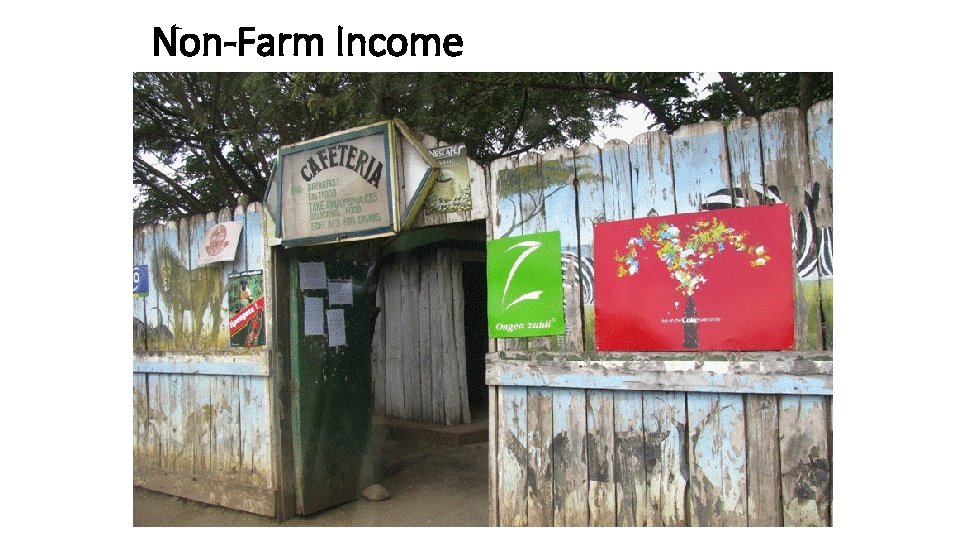
Non-Farm Income
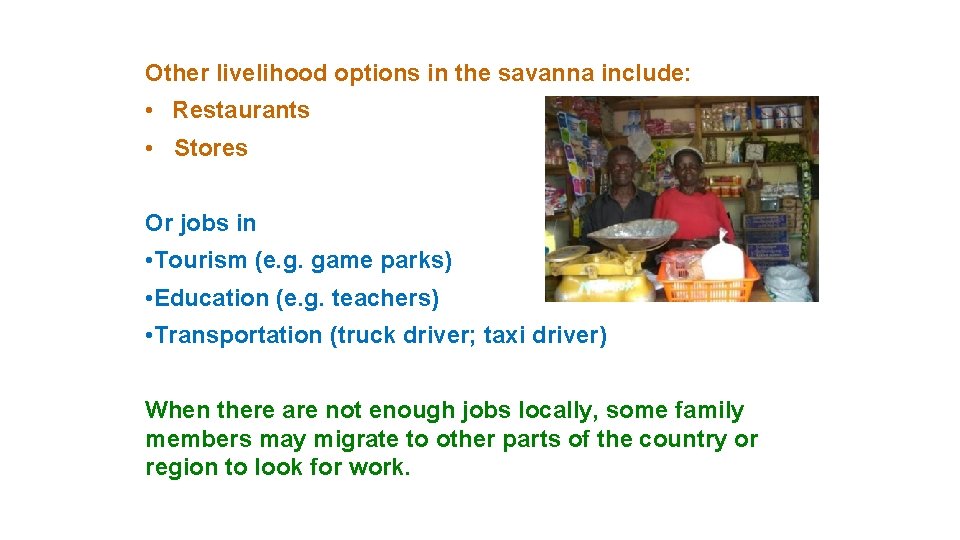
Other livelihood options in the savanna include: • Restaurants • Stores Or jobs in • Tourism (e. g. game parks) • Education (e. g. teachers) • Transportation (truck driver; taxi driver) When there are not enough jobs locally, some family members may migrate to other parts of the country or region to look for work.
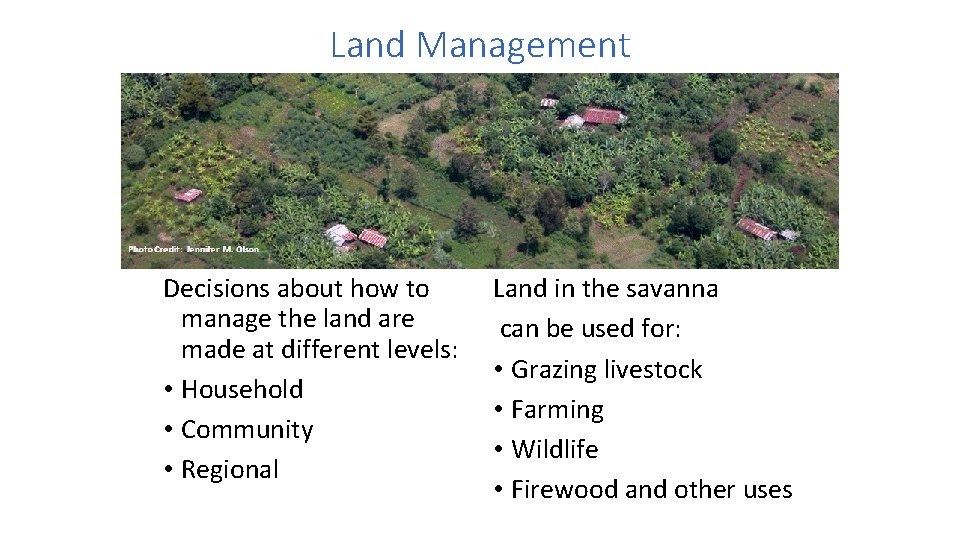
Land Management Decisions about how to manage the land are made at different levels: • Household • Community • Regional Land in the savanna can be used for: • Grazing livestock • Farming • Wildlife • Firewood and other uses
Farm in Savanna Farmers have to make management decisions about what land to use for Farming farming, what crops to grow, and when to grow them. Photo Credit: Jennifer M. Olson
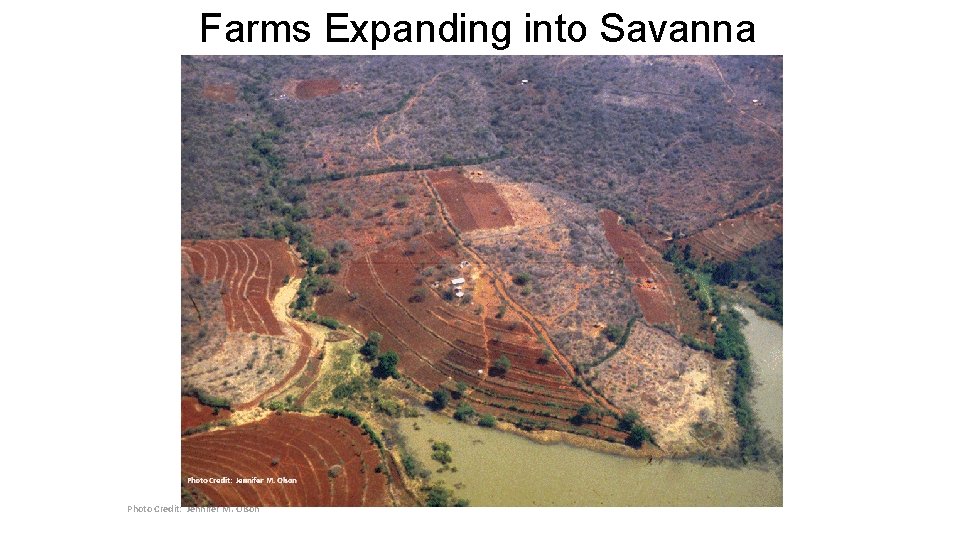
Farms Expanding into Savanna Photo Credit: Jennifer M. Olson
One of the biggest changes in land use in the East African savanna is the expansion of farming into grazing areas. • Population pressures, government policies, and the need to have different sources of income have caused people to start farming in areas that used to be used for grazing. • Some of these people are farmers moving in from other areas, and some are herders who have begun farming to supplement their income. • The savanna ecosystem is fragile, and farming can cause greater environmental degradation. • Farming is more vulnerable to changes in climate than grazing because crops require more water than forage, and crops are more sensitive to temperature.