
Tropical rainforest Climate Tropical rainforests are always humid
- Slides: 14
Tropical rainforest
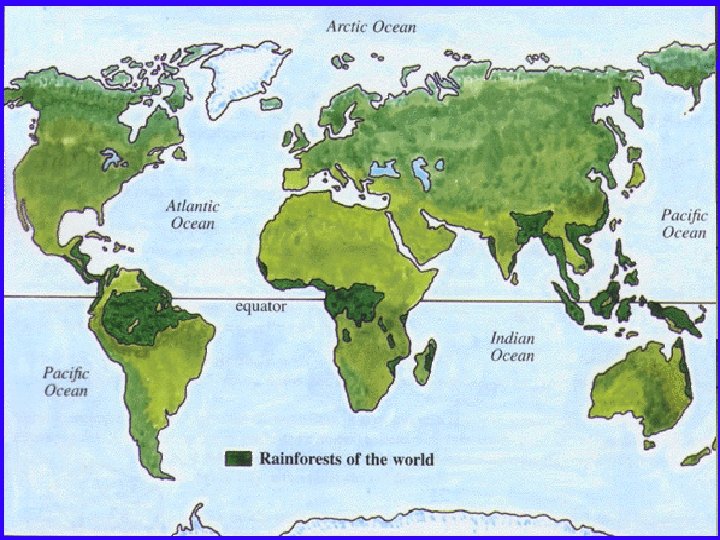
Climate • Tropical rainforests are always humid and warm • Get about 200 to 450 cm of rain a year • Located on a belt around the earth near the equator – They receive strong sunlight and maintain a relatively constant temperature year round • The tropical forest covers about 7% of Earth’s surface.
Tropical Rainforest Facts • Tropical rainforests grow on top of very poor soil, most nutrients are found in the plants • Some fungi actually live directly on the tree to transfer the nutrients from the decaying matter directly to the tree • Many trees have above ground roots to provide support in the thin soil
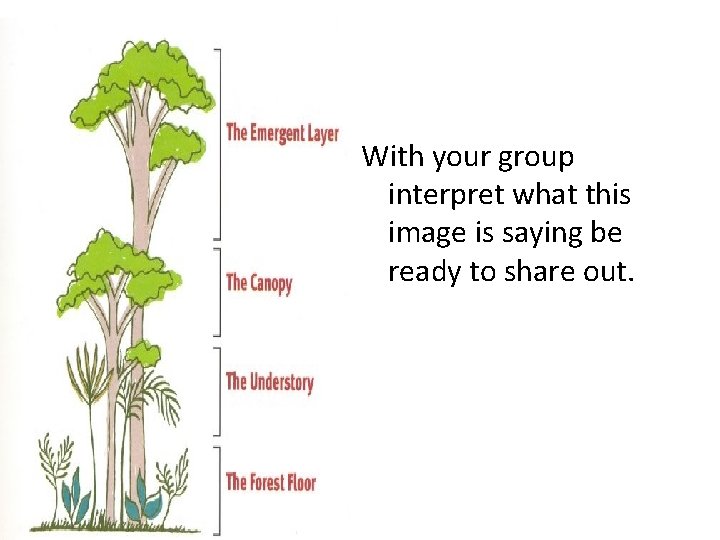
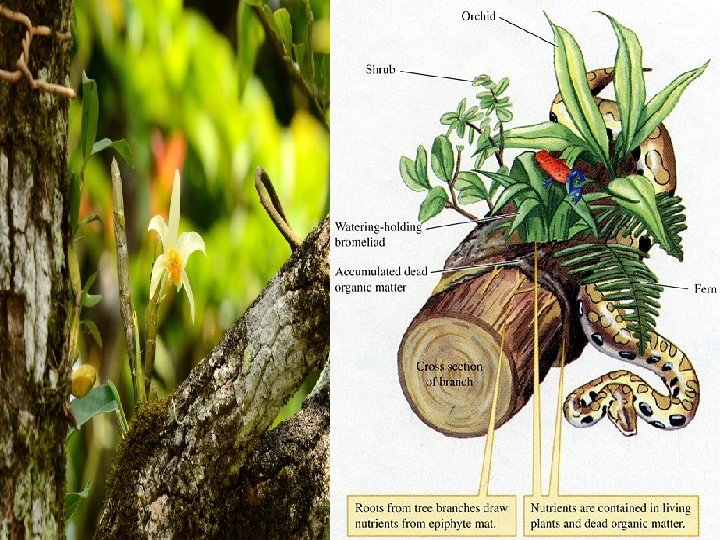
With your group interpret what this image is saying be ready to share out.
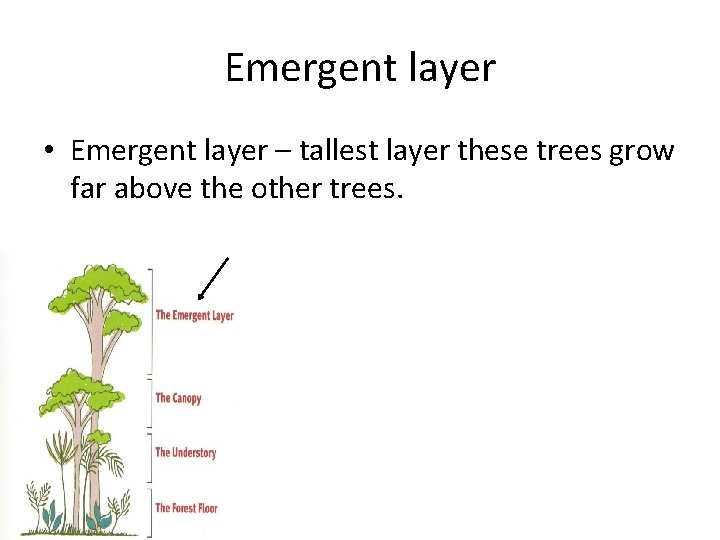
Emergent layer • Emergent layer – tallest layer these trees grow far above the other trees.
The Canopy • Trees form a dense layer that absorbs almost 95% of the sunlight • Split into an upper canopy and a lower canopy the lower canopy. • There are special plants that grow in this layer called epiphytes (ex. Orchids) – They grow on trees instead of the ground where they can get the sunlight needed for photosynthesis – These plants also absorb the water that runs down the tree branches when it rains • Most animals that live in the rainforest live in the canopy because they depend on these plants for survival
The Understory • Very little light reaches this layer • Plants that grow here have adapted in the following ways – Don’t grow to be too tall – Have large flat leaves to absorb the little light that makes it there • Fun fact: most house plants have come from this layer of the rainforest. Why?
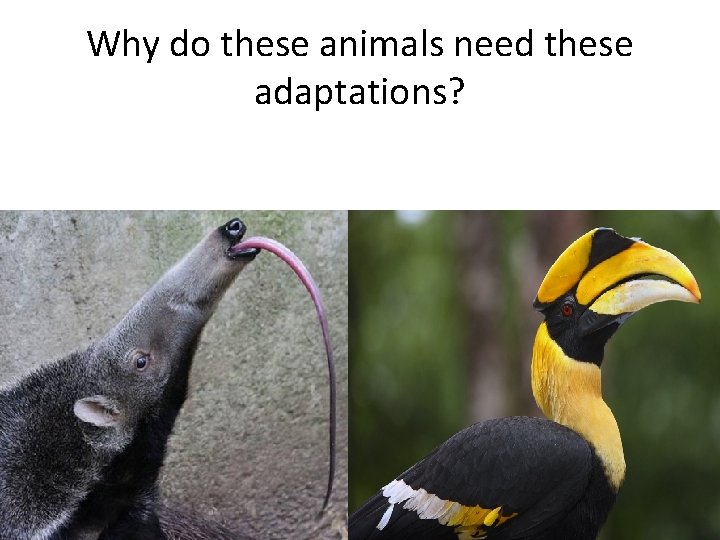
Why do these animals need these adaptations?
Species Adaptations and Diversity • Tropical rain forest is the biome with the largest number of species • Most rain forest animals are specialists – For example: the giant anteater uses its long tongue to reach insects in small cracks and homes where other animals cannot reach. – For example: the great hornbill uses its strong curved beak to crack open nutshells – For example: Costa Rican hooded praying mantis uses camouflage to avoid predators.
Take 1 min to … • Make a list of as many human impacts on the Rain Forests as you can
Human Impacts • Every 60 seconds nearly 150 acres of tropical rainforest are cleared for • logging operations, • agriculture, • cattle ranching or • oil exploration • Habitat destruction occurs when land inhabited by an organism is destroyed or altered • This usually then causes a species to become extinct.