
Tropical Cyclone Overview THE DVORAK TECHNIQUE Introduction Visible
Tropical Cyclone Overview THE DVORAK TECHNIQUE • • • Introduction Visible Technique IR Technique Strengths and Weaknesses Lab Exercise: Visible Pattern Classification RAMMT/CIRA
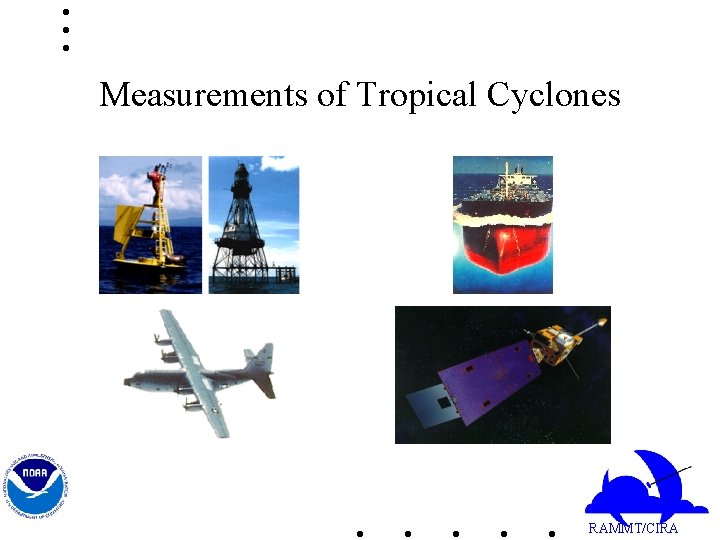
Measurements of Tropical Cyclones RAMMT/CIRA
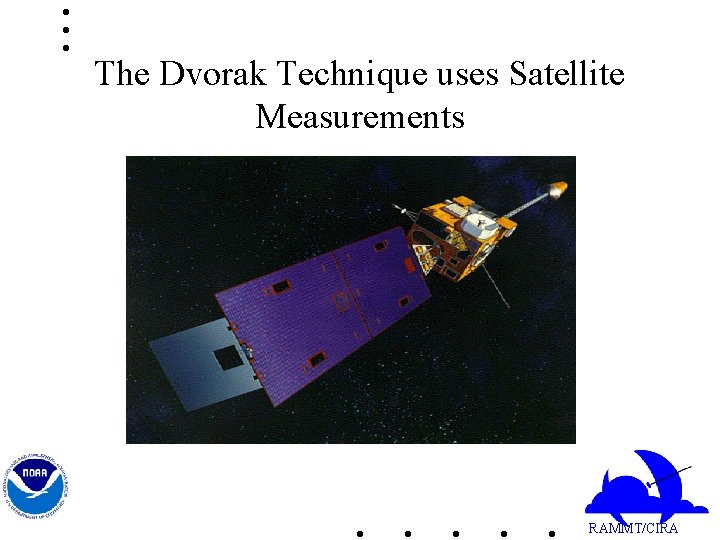
The Dvorak Technique uses Satellite Measurements RAMMT/CIRA
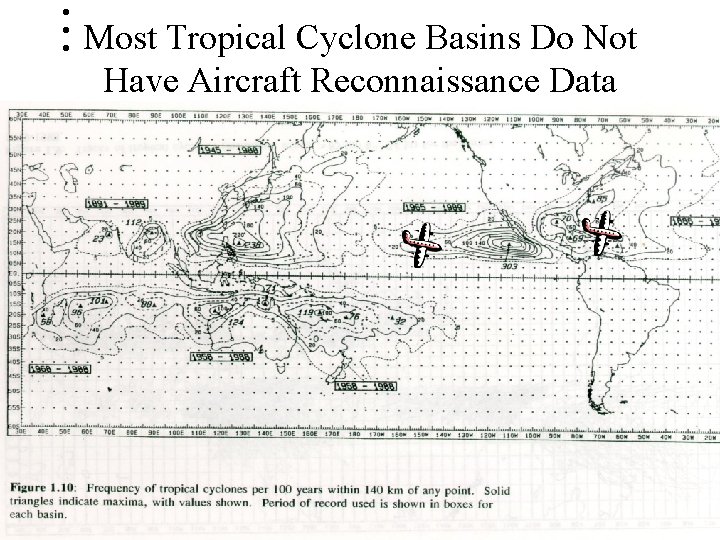
Most Tropical Cyclone Basins Do Not Have Aircraft Reconnaissance Data RAMMT/CIRA
Technique Reference NOAA Technical Report NESDIS 11 Tropical Cyclone Intensity Analysis Using Satellite Data Vernon F. Dvorak Satellite Applications Laboratory Washington, D. C. September 1984 (Reprinted October 1985) RAMMT/CIRA
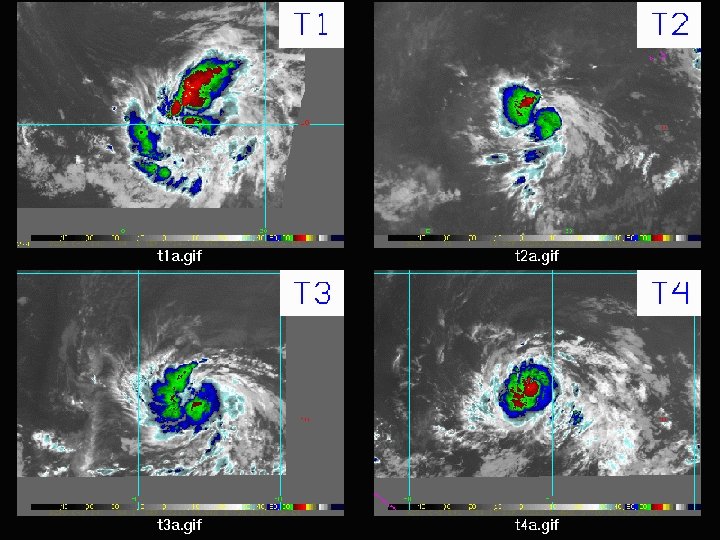
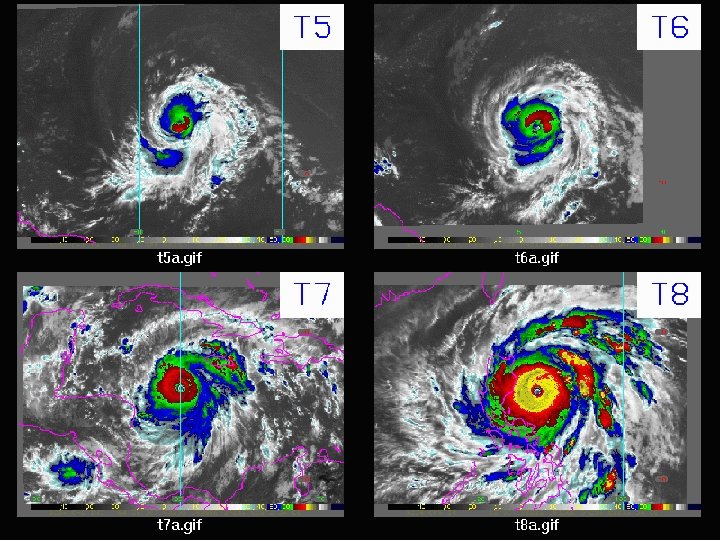
Overview of the Dvorak Technique • Visible and Infrared Technique • Simplified Visible Technique given here (See Technical Report for full details) • Uses patterns and measurements as seen on satellite imagery to assign a number (T number) representative of the cyclone’s strength. • The T number scale runs from 0 to 8 in increments of 0. 5. RAMMT/CIRA
Overview of the Dvorak Technique Cont’d • In the following examples, only the Data T Number (DT) will be calculated, the final (official) T number assigned to a tropical cyclone includes further considerations. • DT computations familiarize one to various tropical cyclone patterns. RAMMT/CIRA
Four Basic Patterns • • Curved Band Pattern Shear Pattern Central Dense Overcast (CDO) Pattern Eye Pattern RAMMT/CIRA
Four Basic Patterns • Pattern is not always obvious • System may move from one pattern to another RAMMT/CIRA
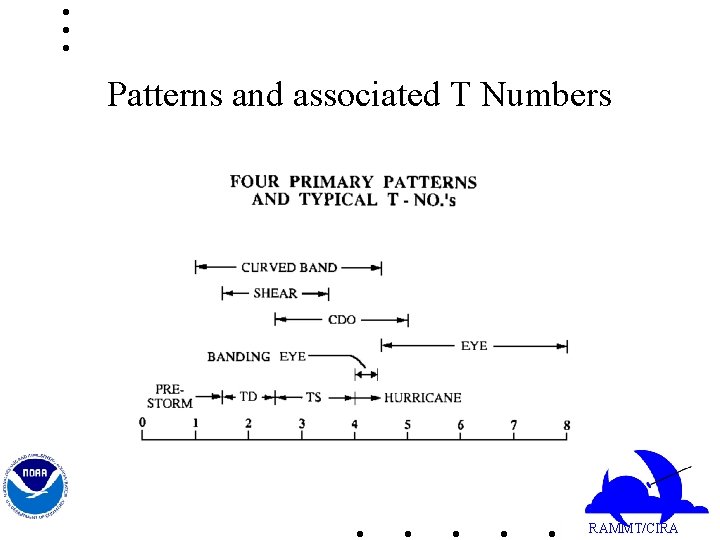
Patterns and associated T Numbers RAMMT/CIRA
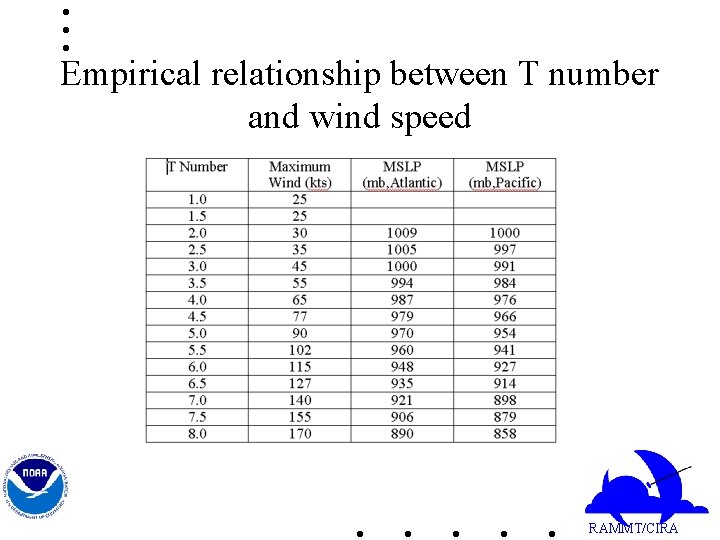
Empirical relationship between T number and wind speed RAMMT/CIRA
Finding the Cloud System Center (CSC) • First step in the Dvorak technique • From Dvorak (1985): “The cloud system center is defined as the focal point of all the curved lines or bands of the cloud system. It can also be thought of as the point toward which the curved lines merge or spiral. ” • Several situations RAMMT/CIRA

Curved Band Pattern RAMMT/CIRA
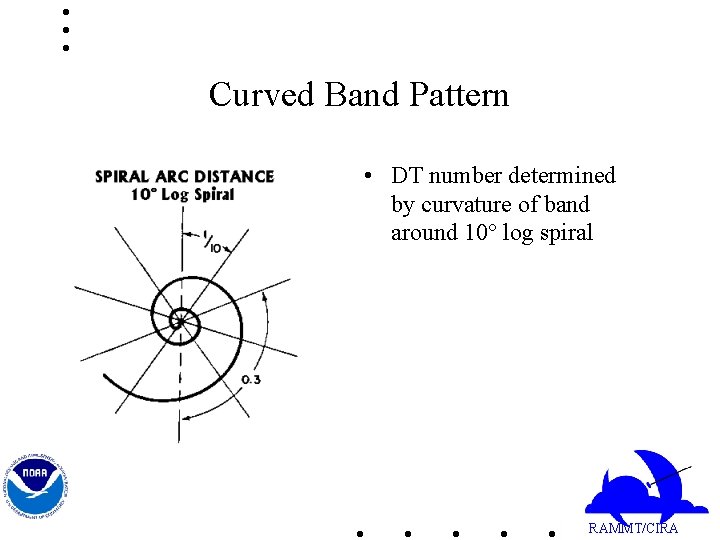
Curved Band Pattern • DT number determined by curvature of band around 10 log spiral RAMMT/CIRA
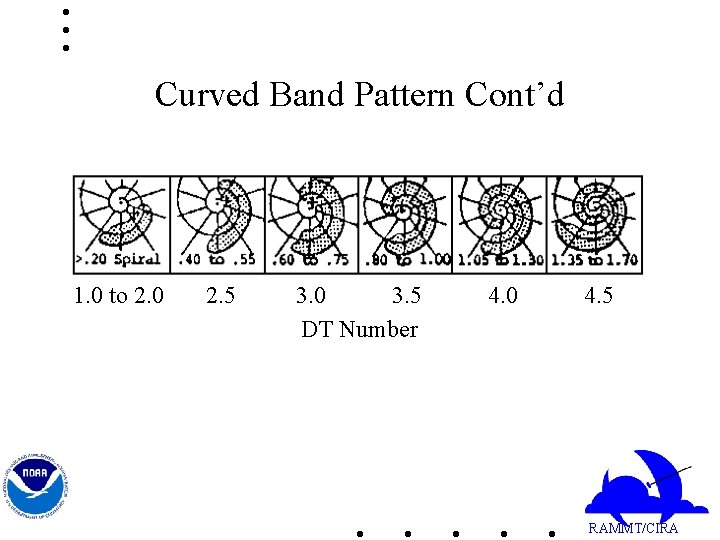
Curved Band Pattern Cont’d 1. 0 to 2. 0 2. 5 3. 0 3. 5 DT Number 4. 0 4. 5 RAMMT/CIRA

Example: Tropical Storm Ivan 1115 UTC 23 September 1998 RAMMT/CIRA

Example: Curved Band RAMMT/CIRA

Curved Band Pattern • Tropical Storm Ivan curves 0. 7 around log 10 spiral. This corresponds to DT=3 RAMMT/CIRA
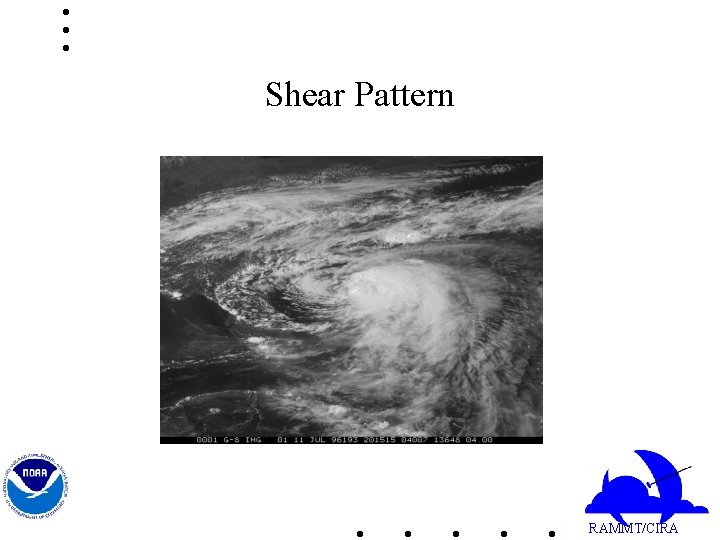
Shear Pattern RAMMT/CIRA
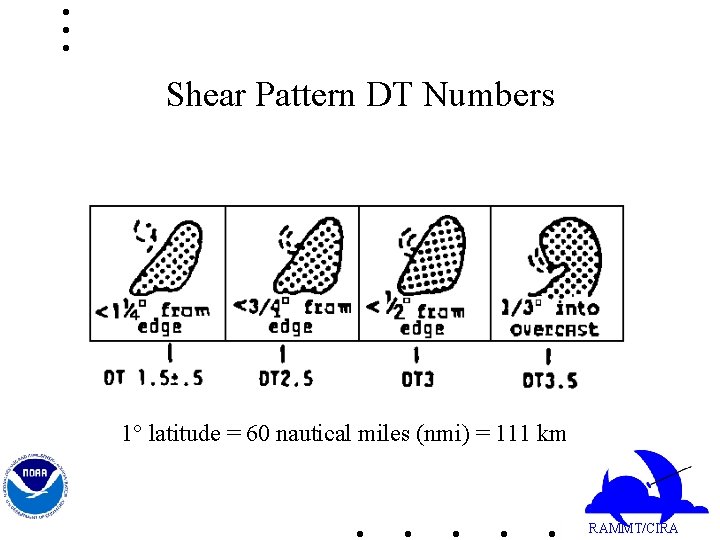
Shear Pattern DT Numbers 1° latitude = 60 nautical miles (nmi) = 111 km RAMMT/CIRA
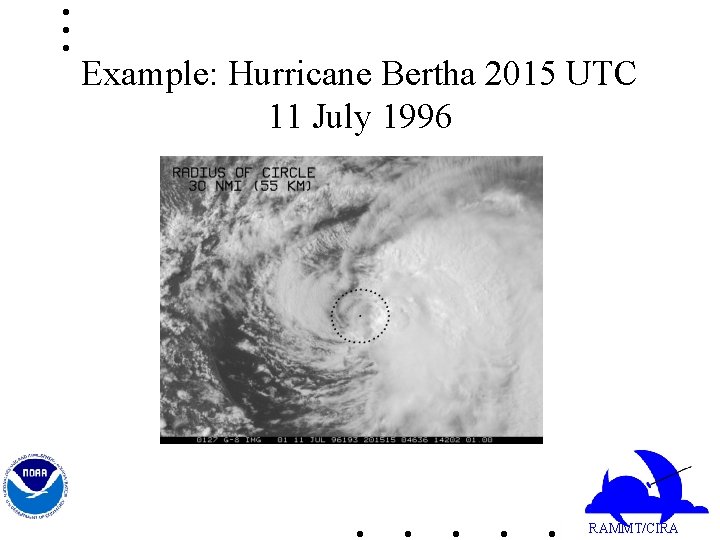
Example: Hurricane Bertha 2015 UTC 11 July 1996 RAMMT/CIRA
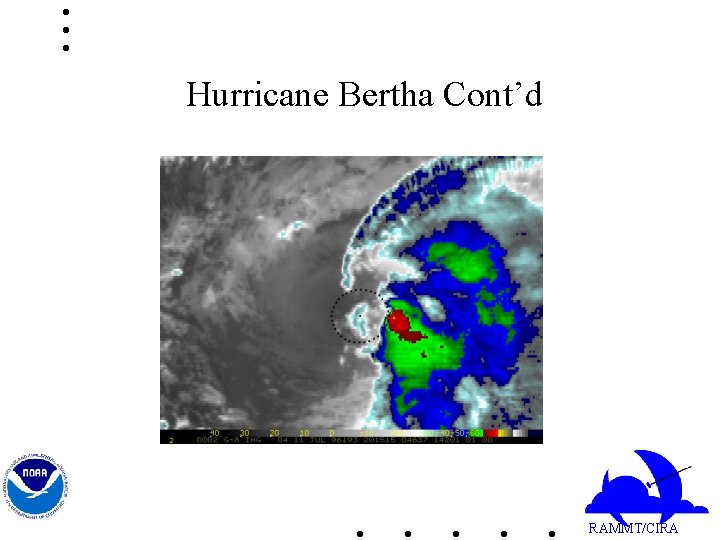
Hurricane Bertha Cont’d RAMMT/CIRA
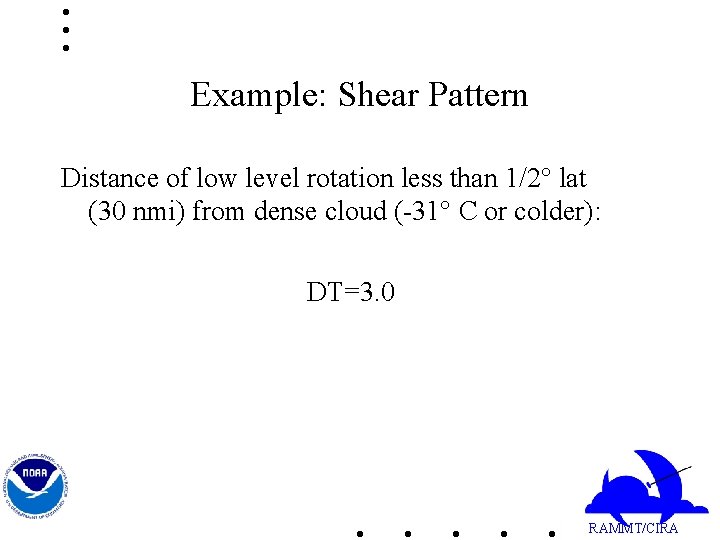
Example: Shear Pattern Distance of low level rotation less than 1/2° lat (30 nmi) from dense cloud (-31° C or colder): DT=3. 0 RAMMT/CIRA

T Numbers for Weakening Systems • T numbers decrease before cyclone’s winds • Current intensity (CI) number represents strength of weakening system and is larger than T number. RAMMT/CIRA
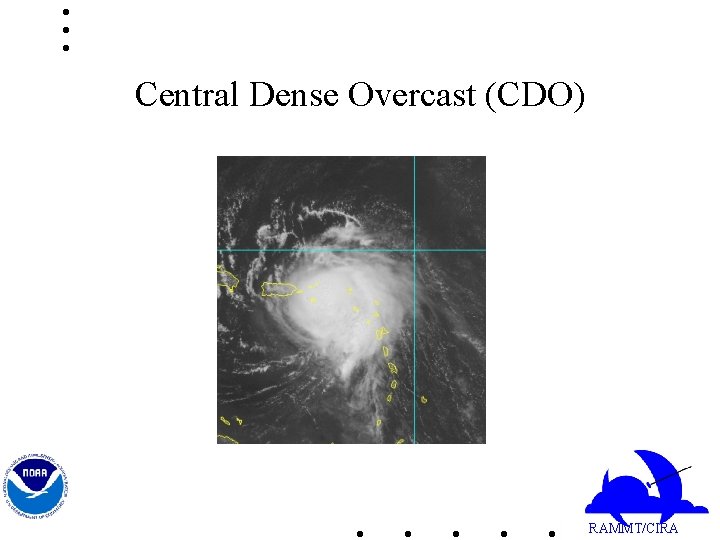
Central Dense Overcast (CDO) RAMMT/CIRA
CDO • No eye • DT number determined by CF+BF=DT – CF=CENTRAL FEATURE – BF=BANDING FEATURE – DT=DATA T NUMBER RAMMT/CIRA
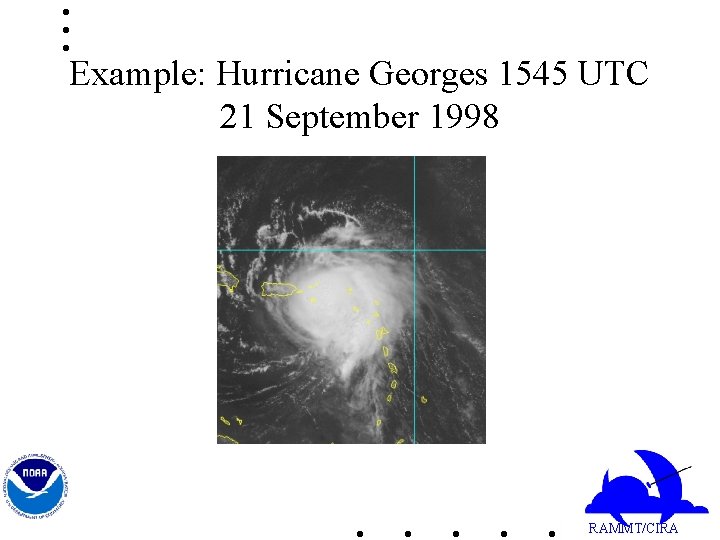
Example: Hurricane Georges 1545 UTC 21 September 1998 RAMMT/CIRA
Example: CDO Central Feature (CF) • Measure Diameter of CDO in degrees latitude • For a well defined CDO – 3/4 ° CF=2 – 1 1/4 ° CF=3 – 1 3/4 ° CF=4 – >2 1/4 ° CF=5 • For an irregular CDO – 1° to 1 1/2 ° CF=2 – >1 1/2 ° CF=3 RAMMT/CIRA
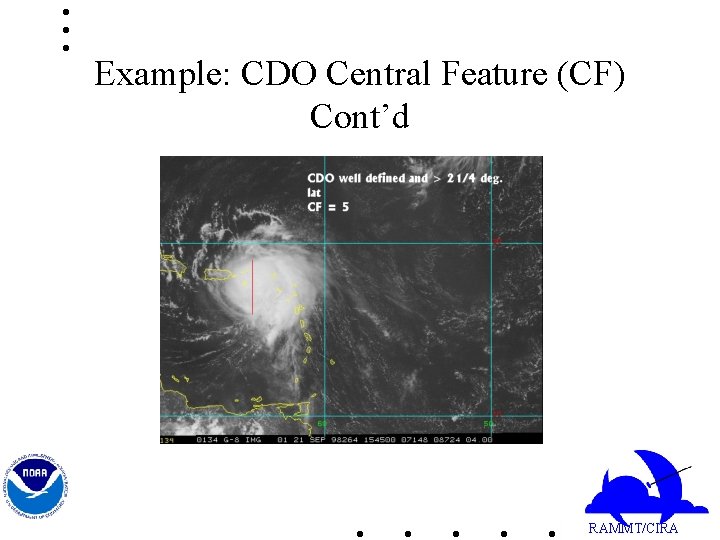
Example: CDO Central Feature (CF) Cont’d RAMMT/CIRA
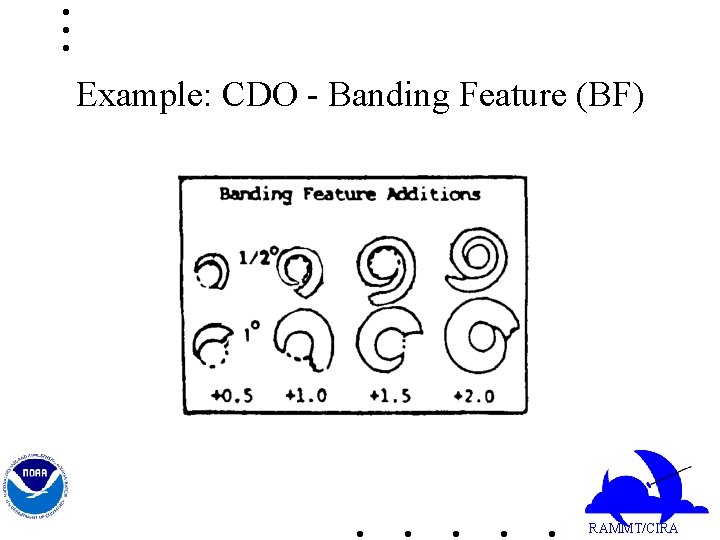
Example: CDO - Banding Feature (BF) RAMMT/CIRA
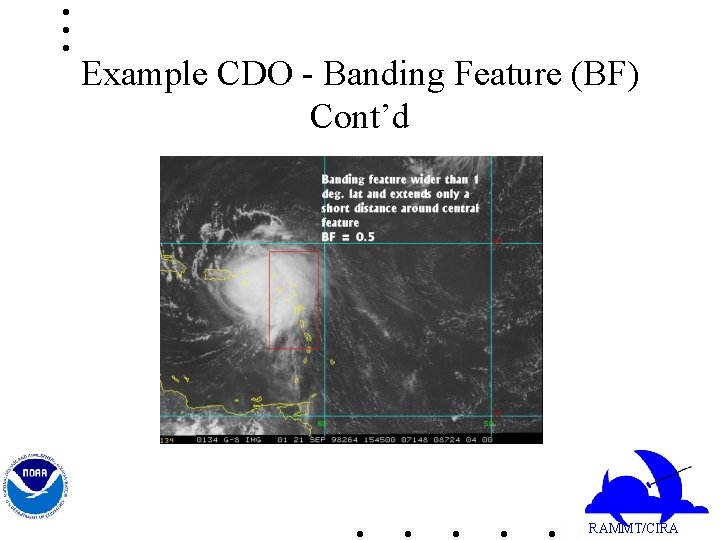
Example CDO - Banding Feature (BF) Cont’d RAMMT/CIRA
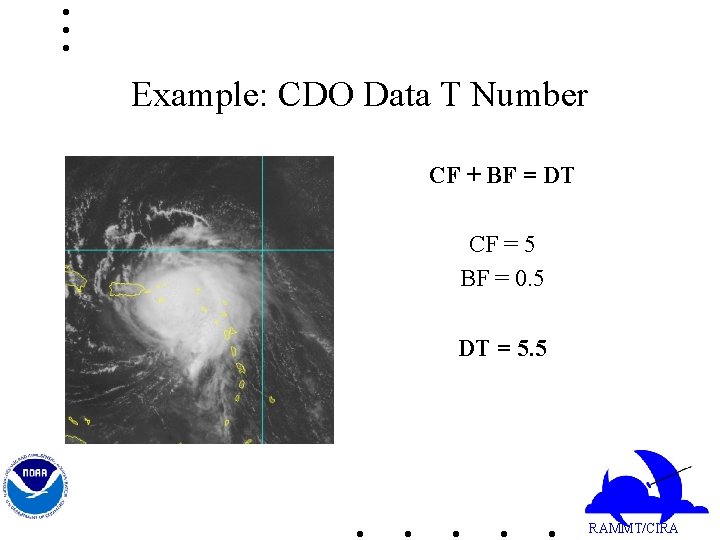
Example: CDO Data T Number CF + BF = DT CF = 5 BF = 0. 5 DT = 5. 5 RAMMT/CIRA
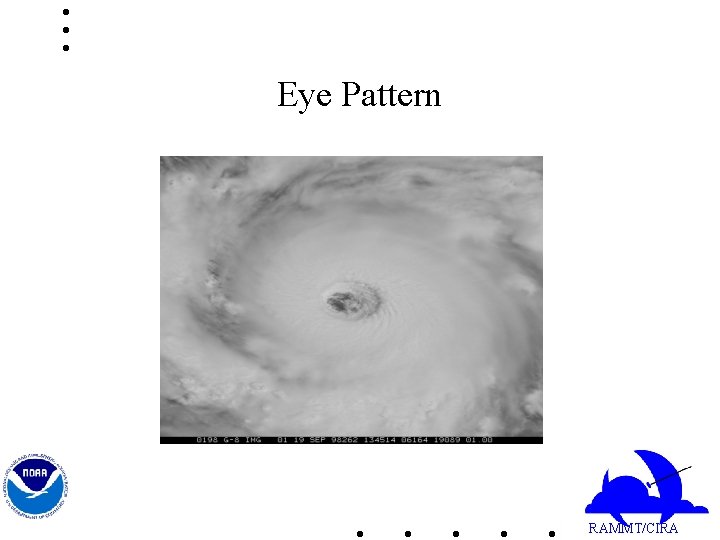
Eye Pattern RAMMT/CIRA
Eye Pattern • DT number determined by CF+BF=DT – CF=CENTRAL FEATURE – BF=BANDING FEATURE – DT=DATA T NUMBER RAMMT/CIRA
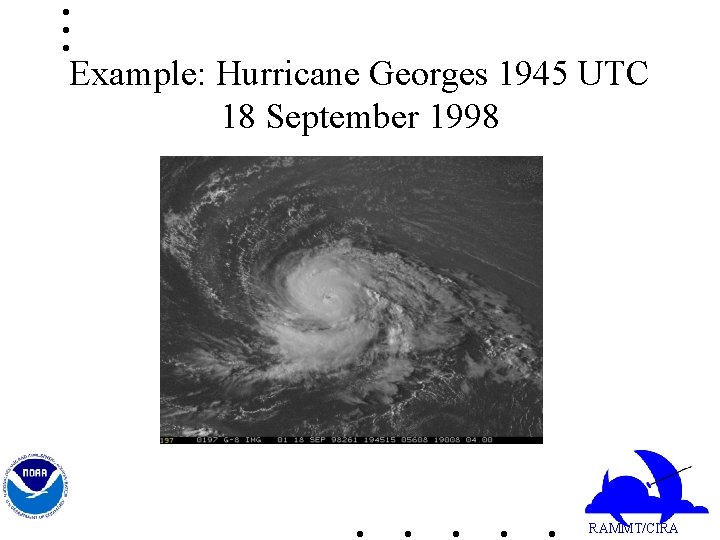
Example: Hurricane Georges 1945 UTC 18 September 1998 RAMMT/CIRA
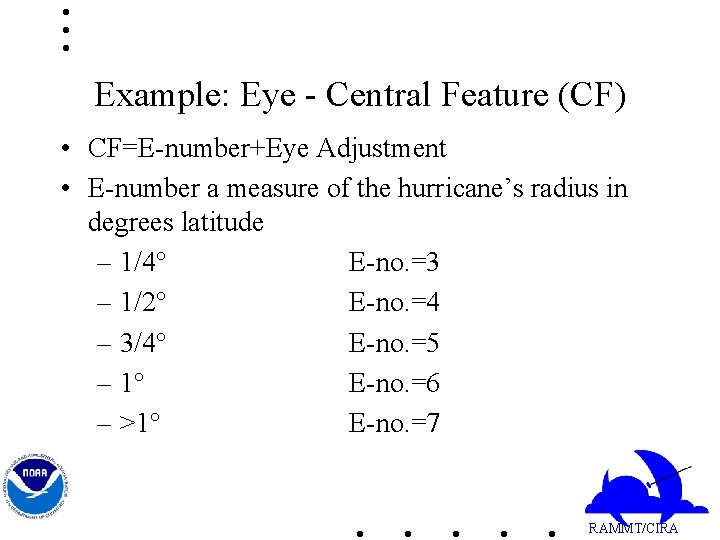
Example: Eye - Central Feature (CF) • CF=E-number+Eye Adjustment • E-number a measure of the hurricane’s radius in degrees latitude – 1/4° E-no. =3 – 1/2° E-no. =4 – 3/4° E-no. =5 – 1° E-no. =6 – >1° E-no. =7 RAMMT/CIRA
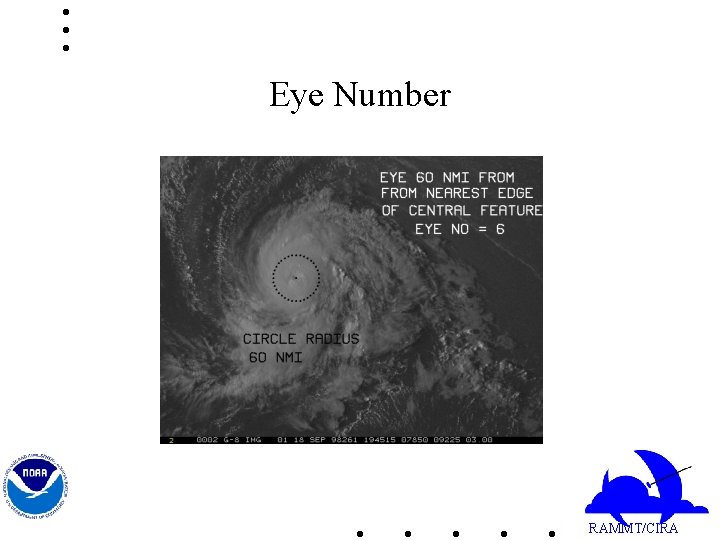
Eye Number RAMMT/CIRA
Eye - Central Feature Cont’d • Eye adjustment 1. Poorly defined or ragged eyes: Subtract 0. 5 for E -no. 4. 5 and 1 for E-no. 5. 2. Large eyes: Limit T-no. to T 6 for round, well defined eyes, and to T 5 for large ragged eyes. 3. For MET 6, 0. 5 or 1 may be added to DT for well defined eye in smooth CDO when DT < MET. Note: MET is Model-Estimated T, which is extrapolated from previous Dvorak estimate RAMMT/CIRA
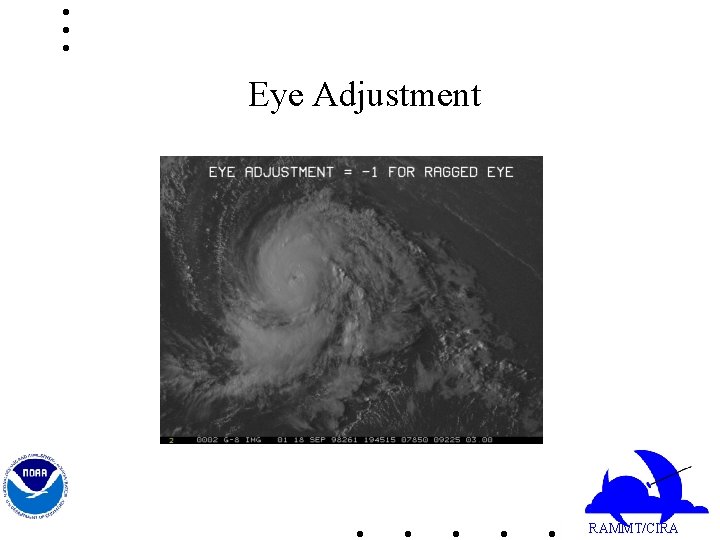
Eye Adjustment RAMMT/CIRA
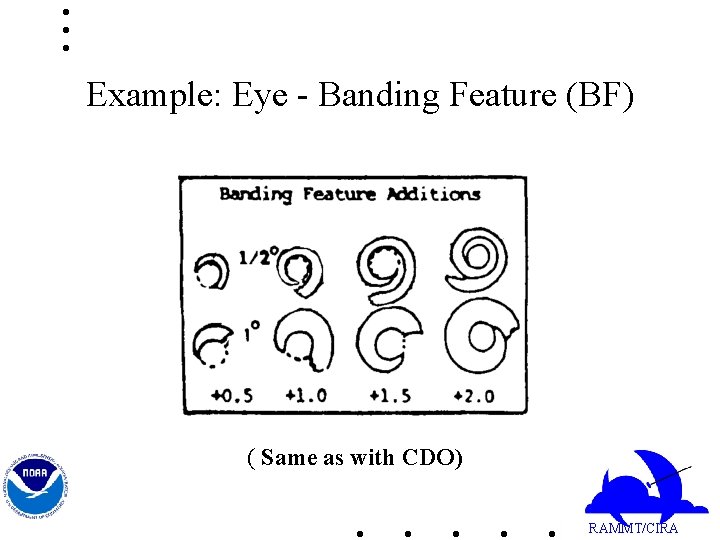
Example: Eye - Banding Feature (BF) ( Same as with CDO) RAMMT/CIRA
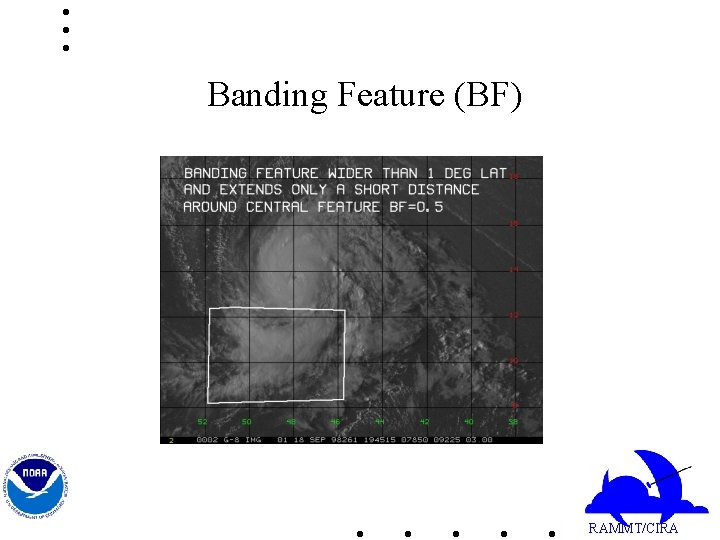
Banding Feature (BF) RAMMT/CIRA
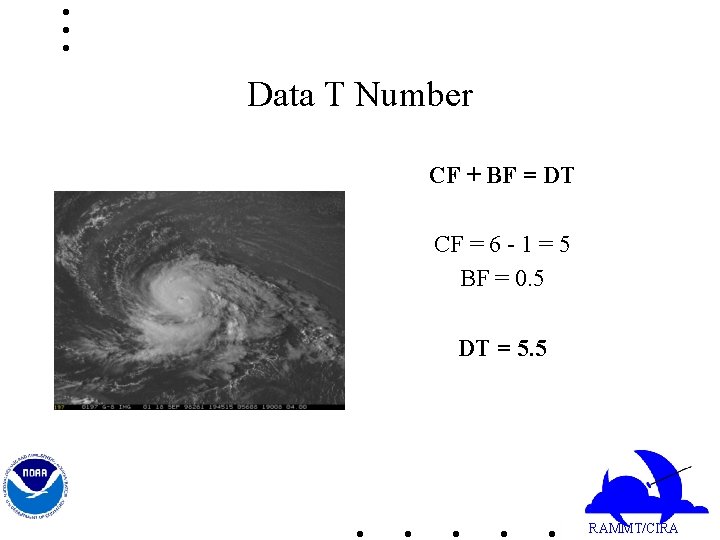
Data T Number CF + BF = DT CF = 6 - 1 = 5 BF = 0. 5 DT = 5. 5 RAMMT/CIRA
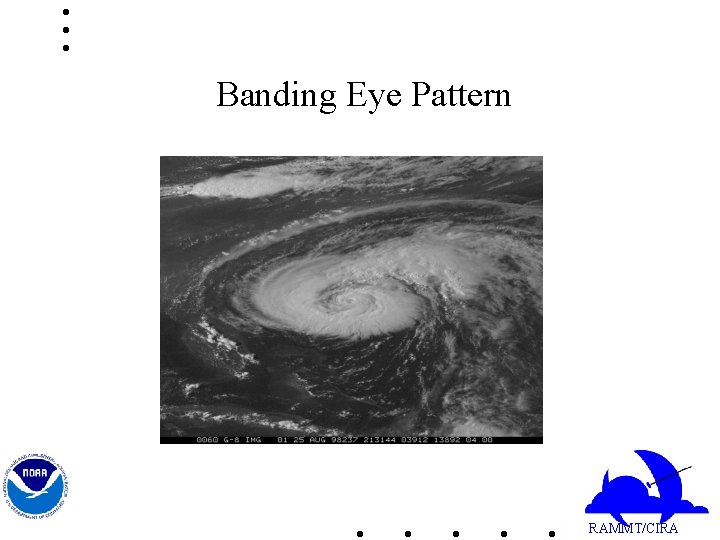
Banding Eye Pattern RAMMT/CIRA
Banding Eye Pattern • DT number determined by CF+BF=DT – CF=CENTRAL FEATURE – BF=BANDING FEATURE – DT=DATA T NUMBER RAMMT/CIRA
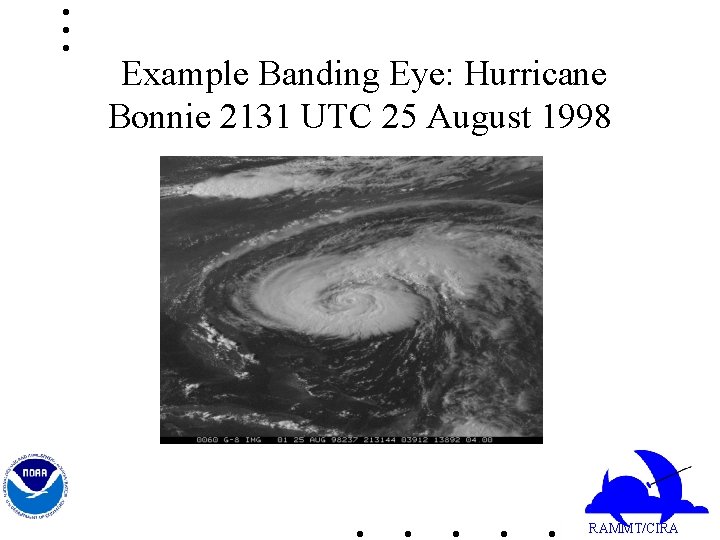
Example Banding Eye: Hurricane Bonnie 2131 UTC 25 August 1998 RAMMT/CIRA
Example: Banding Eye - Central Feature (CF) • CF=E-number+Eye Adjustment • E-number a measure of the width of the band in degrees latitude – 1/4° E-no. =3 – 3/4° E-no. =4 – 11/4° E-no. =5 RAMMT/CIRA
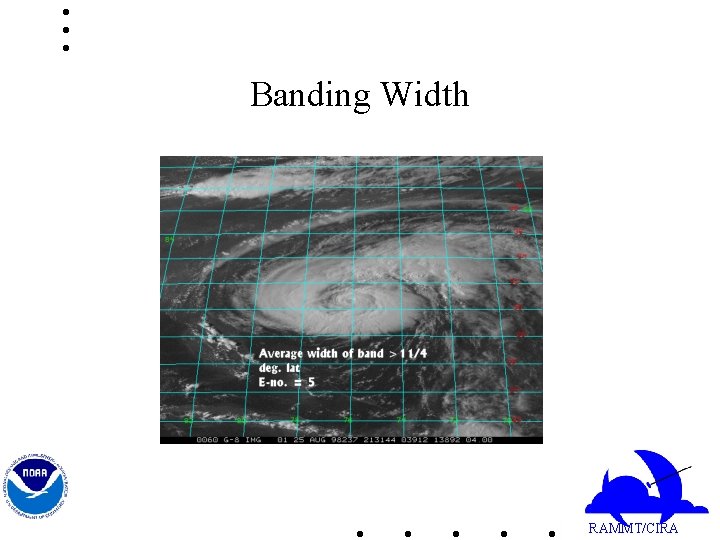
Banding Width RAMMT/CIRA
Eye - Central Feature Cont’d • Eye adjustment 1. Poorly defined or ragged eyes: Subtract 0. 5 for E -no. 4. 5 and 1 for E-no. 5. 2. Large eyes: Limit T-no. to T 6 for round, well defined eyes, and to T 5 for large ragged eyes. 3. For MET 6, 0. 5 or 1 may be added to DT for well defined eye in smooth CDO when DT < MET. RAMMT/CIRA
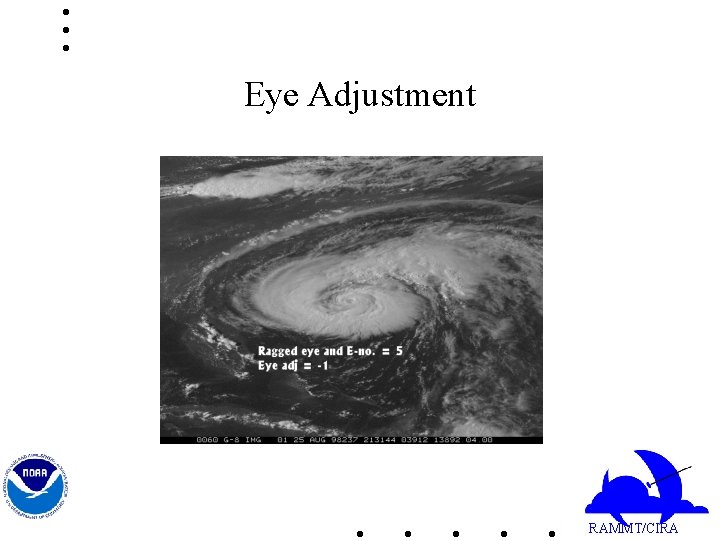
Eye Adjustment RAMMT/CIRA
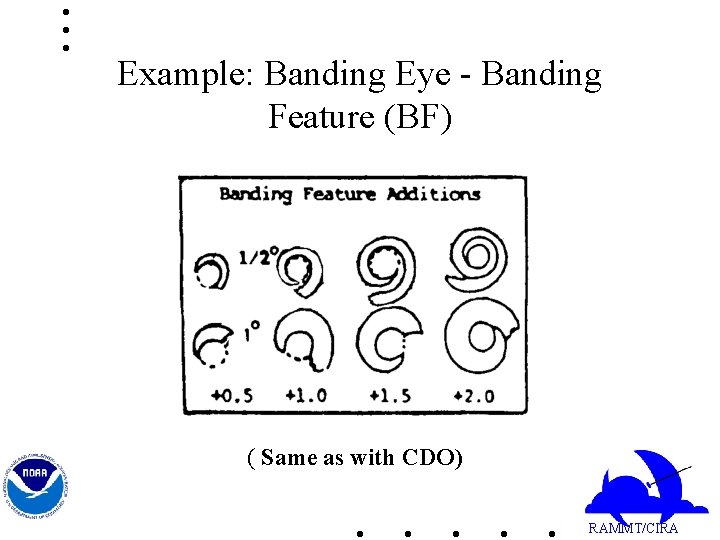
Example: Banding Eye - Banding Feature (BF) ( Same as with CDO) RAMMT/CIRA
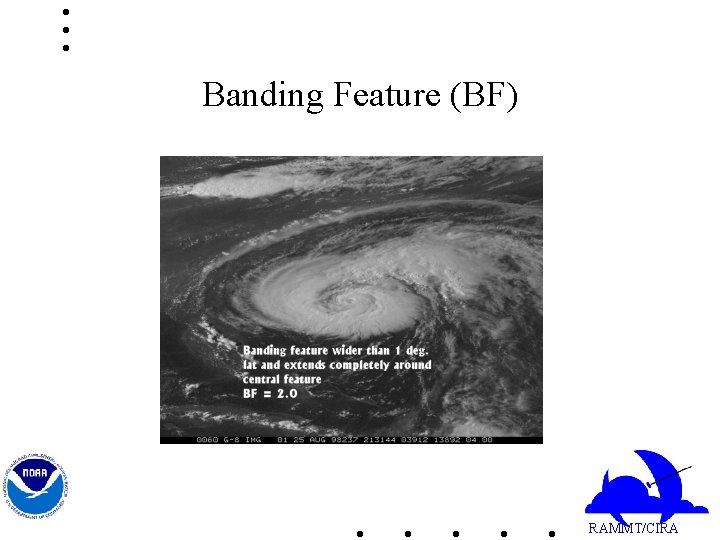
Banding Feature (BF) RAMMT/CIRA
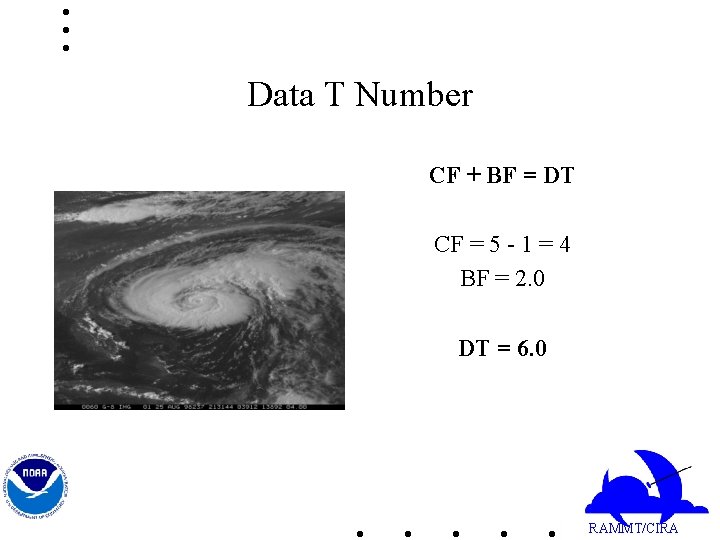
Data T Number CF + BF = DT CF = 5 - 1 = 4 BF = 2. 0 DT = 6. 0 RAMMT/CIRA
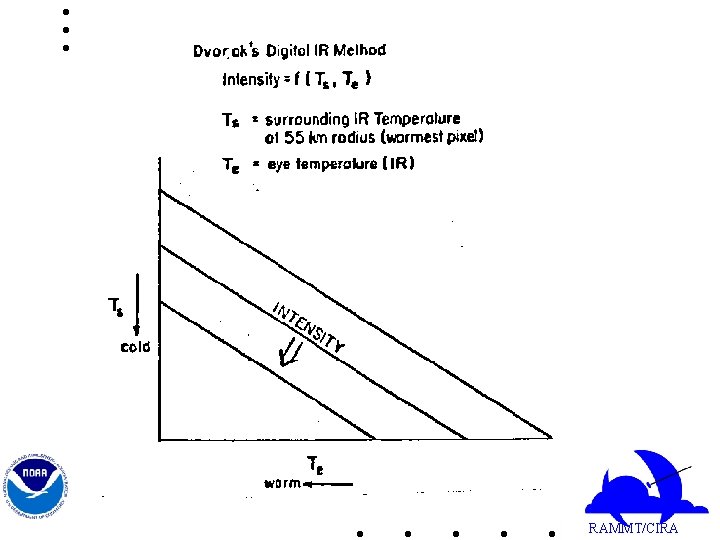
Infrared (IR) Technique • Can be used during night as well as during day • At times more objective than visible technique RAMMT/CIRA
RAMMT/CIRA
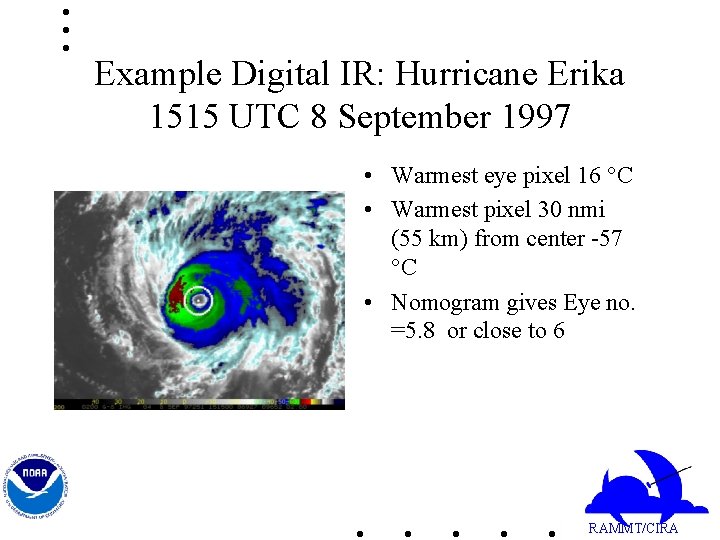
Example Digital IR: Hurricane Erika 1515 UTC 8 September 1997 • Warmest eye pixel 16 °C • Warmest pixel 30 nmi (55 km) from center -57 °C • Nomogram gives Eye no. =5. 8 or close to 6 RAMMT/CIRA
RAMMT/CIRA
RAMMT/CIRA
Dvorak Analysis of TC Intensity • Strengths – – – Consistent, relatively simple approach to a difficult task Time proven, the primary technique for more than 15 year Valid for all geographic regions Patterns based on cloud response to vorticity Highly reproducible Better validation and confidence for the more intense storms • Weaknesses – – – – Some aspects are too subjective Subceptible to large errors in weaker systems T-number < 4 “spin down” times are too uniform poor intensity estimates of very small storms “midgets” at night Does not account for subtropical or extratropical transition Does not compensate for large translation speeds (left to the forecaster) Training and experience are very important because of the subjective nature of the method. RAMMT/CIRA
Improvements to the Dvorak Technique • Make the method more objective by using computer resources and digital data. – Objective version of IR technique developed by Chris Velden, U. Wisconsin • Formalize methods to compensate for known weaknesses • Improvement of the CI rules, using observed decay rates from aircraft. • Incorporation of other routinely available satellite products (SSMI, AMSU, POES) RAMMT/CIRA
Summary of Lesson 2 • The Dvorak technique uses patterns and measurements from satellite imagery to estimate the strength of a tropical cyclone. • Four basic types – Curved band pattern – Shear pattern – CDO pattern – Eye pattern • Banded eye • IR and visible techniques • Objective version of IR technique developed by U. Wisconsin RAMMT/CIRA
- Slides: 60