
Tropical Cyclone Formation and Extratropical Transition IWTC V
![Synoptic-scale [External] Influences Stage I • – – – Tropical waves that propagate zonally](https://slidetodoc.com/presentation_image_h2/a2bada033ba1693e593461312c72c80c/image-3.jpg "Synoptic-scale [External] Influences Stage I • – – – Tropical waves that propagate zonally")
![Synoptic-scale [External] Influences Stage I • • • Such predictions are very difficult in](https://slidetodoc.com/presentation_image_h2/a2bada033ba1693e593461312c72c80c/image-4.jpg "Synoptic-scale [External] Influences Stage I • • • Such predictions are very difficult in")
![Mesoscale Organization [Internal] Influences Stage II Top Down Bottom Up](https://slidetodoc.com/presentation_image_h2/a2bada033ba1693e593461312c72c80c/image-5.jpg "Mesoscale Organization [Internal] Influences Stage II Top Down Bottom Up")
![Mesoscale Organization [Internal] Influences Stage II • Issues associated with the relative roles of](https://slidetodoc.com/presentation_image_h2/a2bada033ba1693e593461312c72c80c/image-11.jpg "Mesoscale Organization [Internal] Influences Stage II • Issues associated with the relative roles of")
- Slides: 26
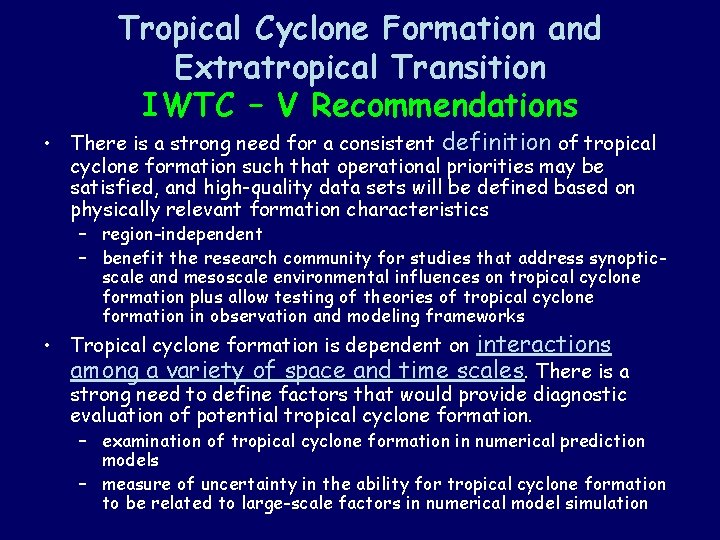
Tropical Cyclone Formation and Extratropical Transition IWTC – V Recommendations • There is a strong need for a consistent definition of tropical cyclone formation such that operational priorities may be satisfied, and high-quality data sets will be defined based on physically relevant formation characteristics – region-independent – benefit the research community for studies that address synopticscale and mesoscale environmental influences on tropical cyclone formation plus allow testing of theories of tropical cyclone formation in observation and modeling frameworks • Tropical cyclone formation is dependent on interactions among a variety of space and time scales. There is a strong need to define factors that would provide diagnostic evaluation of potential tropical cyclone formation. – examination of tropical cyclone formation in numerical prediction models – measure of uncertainty in the ability for tropical cyclone formation to be related to large-scale factors in numerical model simulation
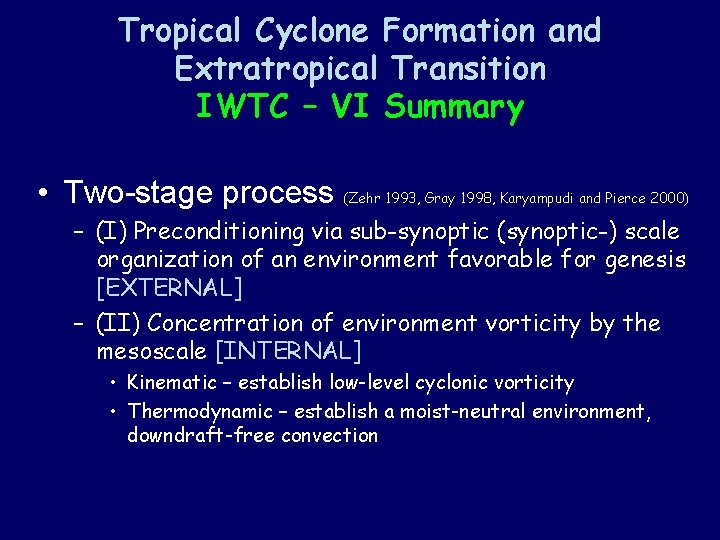
Tropical Cyclone Formation and Extratropical Transition IWTC – VI Summary • Two-stage process (Zehr 1993, Gray 1998, Karyampudi and Pierce 2000) – (I) Preconditioning via sub-synoptic (synoptic-) scale organization of an environment favorable for genesis [EXTERNAL] – (II) Concentration of environment vorticity by the mesoscale [INTERNAL] • Kinematic – establish low-level cyclonic vorticity • Thermodynamic – establish a moist-neutral environment, downdraft-free convection
Synoptic-scale [External] Influences Stage I • – – – Tropical waves that propagate zonally provide local flow perturbations that contribute to a favorable environment for tropical cyclone formation via enhancement of Vertical motion Low-level vorticity Changing vertical wind shear • Most tropical cyclones form under the influence of wave circulations. • If the waves could be forecast (with demonstrable skill), genesis could be forecast. 1200 UTC 07 Oct 2002
Synoptic-scale [External] Influences Stage I • • • Such predictions are very difficult in the tropics using current deterministic models. Tropical waves are predictable using statistical techniques. Other statistical genesis prediction techniques are also showing promise. Therefore, combined statistical/deterministic forecasts offer promise forecasts of genesis. Possible lead times of up to the time-scale of the MJO. 1200 UTC 07 Oct 2002
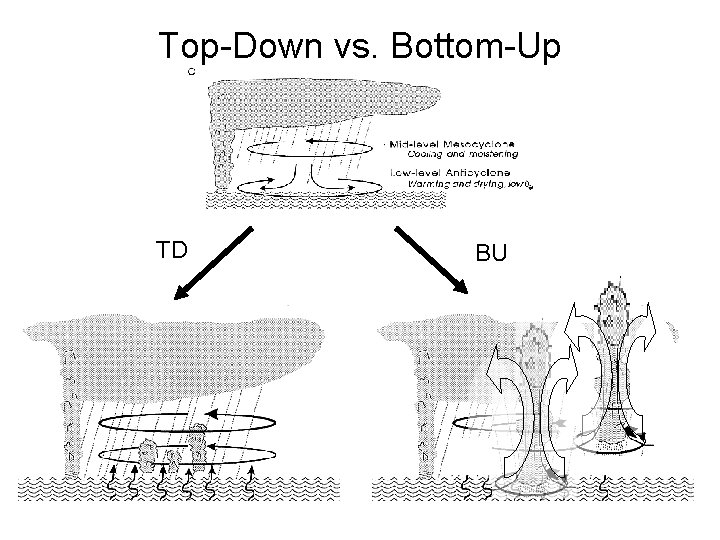
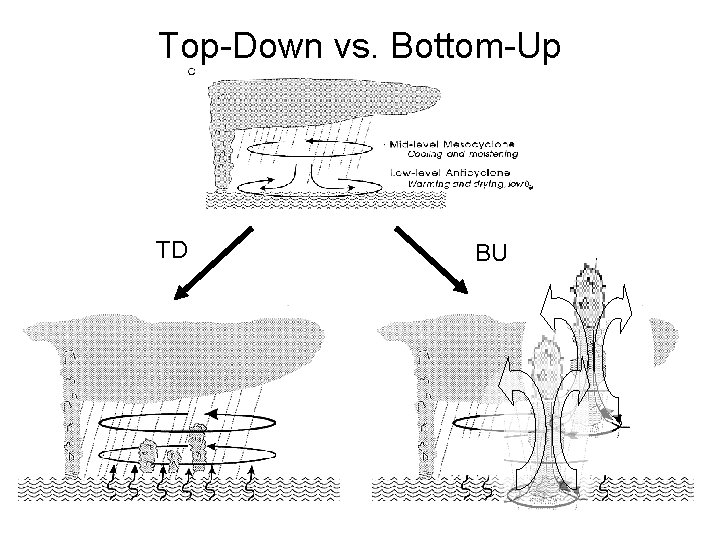
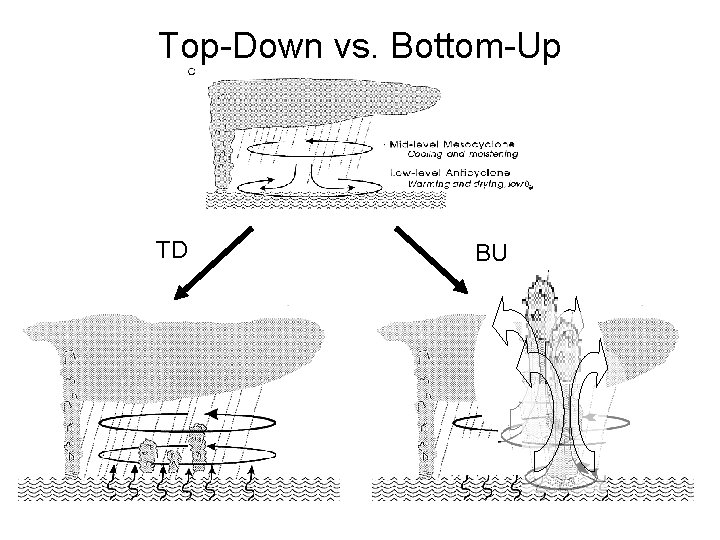
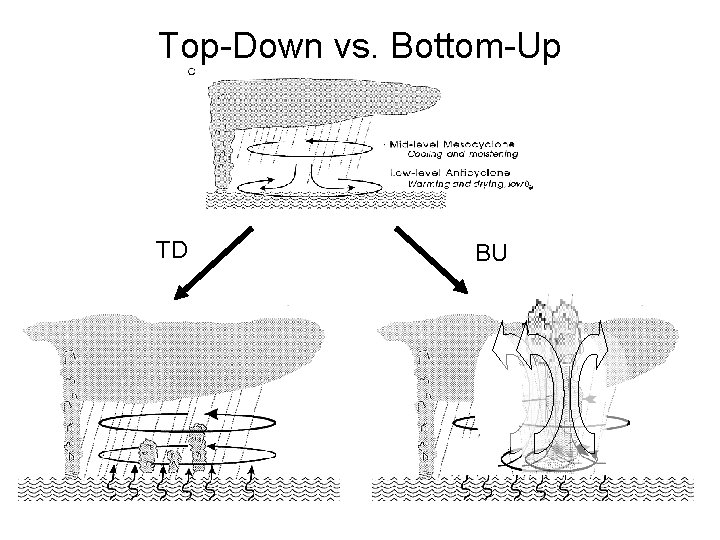
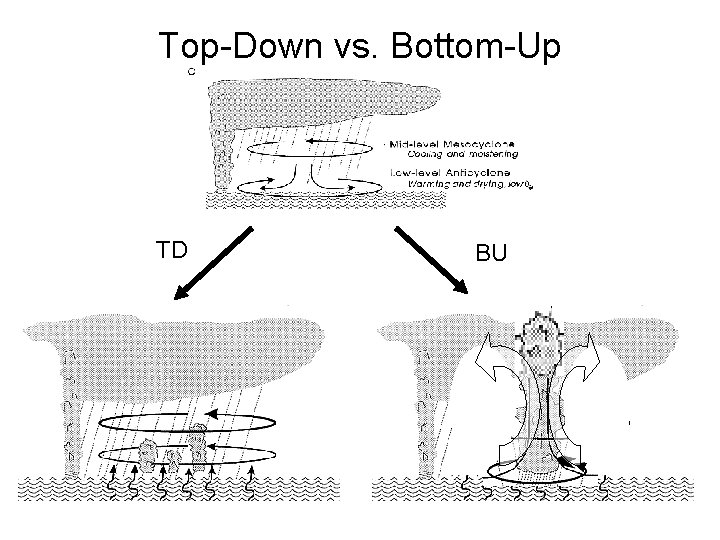
Mesoscale Organization [Internal] Influences Stage II Top Down Bottom Up
Top-Down vs. Bottom-Up TD BU
Top-Down vs. Bottom-Up TD BU
Top-Down vs. Bottom-Up TD BU
Top-Down vs. Bottom-Up TD BU
Top-Down vs. Bottom-Up TD BU
Mesoscale Organization [Internal] Influences Stage II • Issues associated with the relative roles of stratiform and convective-type vortex enhancement – Establishment of downdraft-free convection – Vortex hot tower contribution to the establishment of a moist-neutral environment – Necessity of these conditions? – Factors that impact generation of sufficient vortex hot tower activity – Scales: pre-genesis clusters are observed on the scale of 100 km. • Are they comprised of downdraft-free convection? • What mechanisms are responsible for these conditions? • Why do most fail to warm core, surface-concentrated vortices?
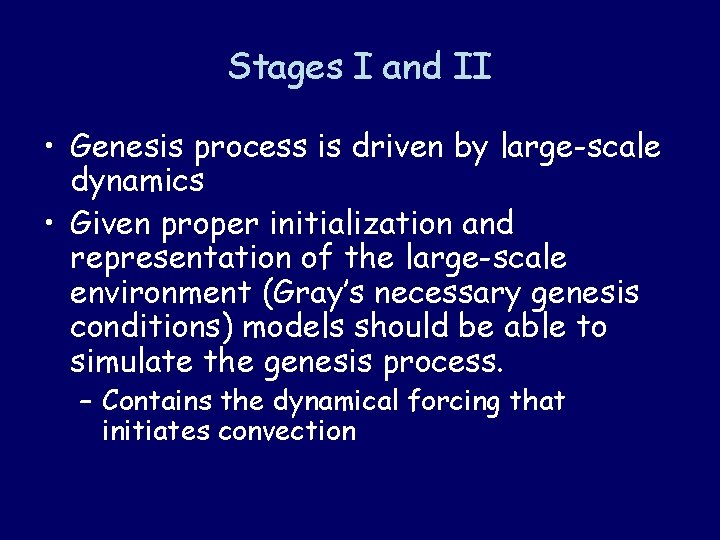
Stages I and II • Genesis process is driven by large-scale dynamics • Given proper initialization and representation of the large-scale environment (Gray’s necessary genesis conditions) models should be able to simulate the genesis process. – Contains the dynamical forcing that initiates convection
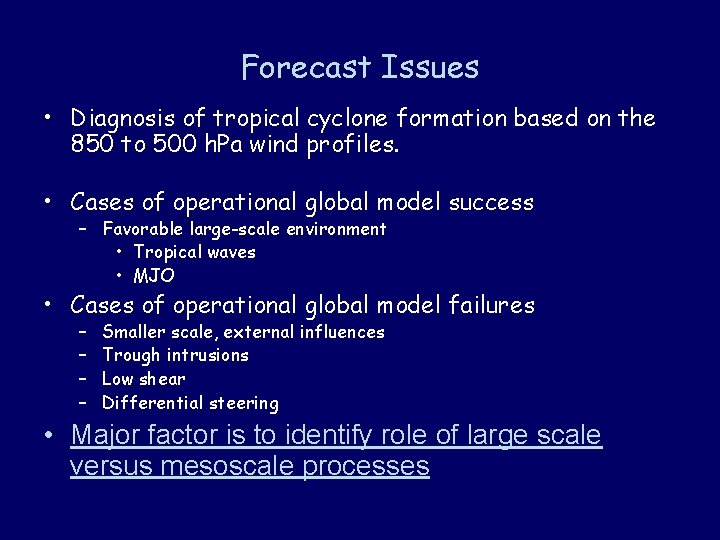
Forecast Issues • Diagnosis of tropical cyclone formation based on the 850 to 500 h. Pa wind profiles. • Cases of operational global model success – Favorable large-scale environment • Tropical waves • MJO • Cases of operational global model failures – – Smaller scale, external influences Trough intrusions Low shear Differential steering • Major factor is to identify role of large scale versus mesoscale processes
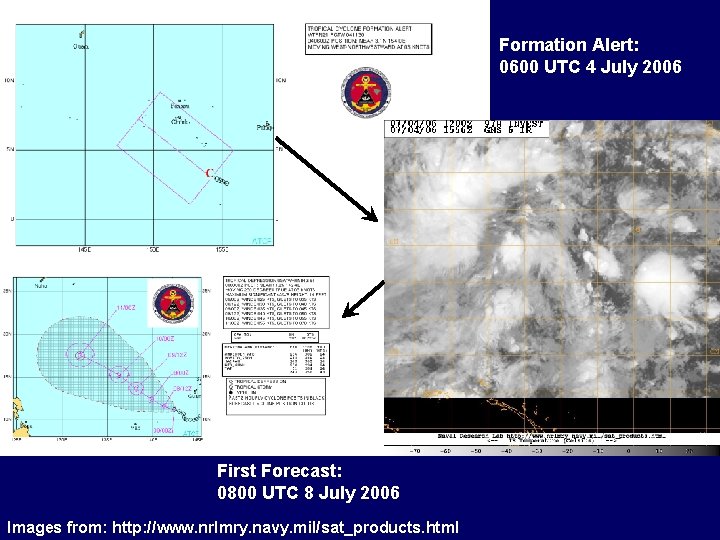
Formation Alert: 0600 UTC 4 July 2006 First Forecast: 0800 UTC 8 July 2006 Images from: http: //www. nrlmry. navy. mil/sat_products. html
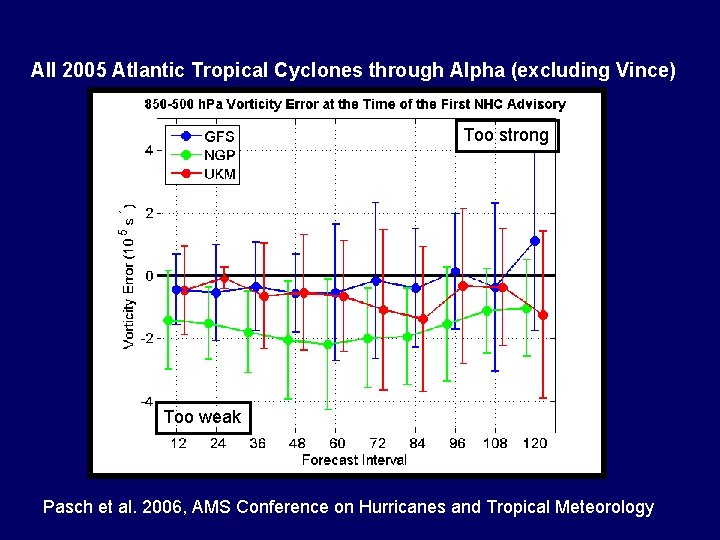
All 2005 Atlantic Tropical Cyclones through Alpha (excluding Vince) Too strong Too weak Pasch et al. 2006, AMS Conference on Hurricanes and Tropical Meteorology
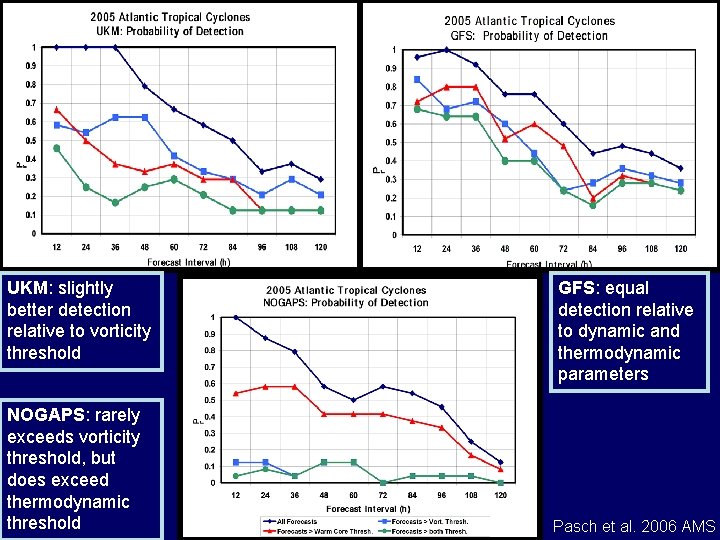
UKM: slightly better detection relative to vorticity threshold NOGAPS: rarely exceeds vorticity threshold, but does exceed thermodynamic threshold GFS: equal detection relative to dynamic and thermodynamic parameters Pasch et al. 2006 AMS
Extratropical Transition IWTC-V Summary • IWTC-V recognises that a consistent definition of extratropical transition (ET) of a tropical cyclone does not exist and recommends that WMO support the development of an operationally and physically consistent definition for ET for use by the operational and research communities, and that this ET definition be presented at IWTC-VI. This should include conceptual models of wind, precipitation and ocean surface wave distributions. • To advance the understanding of the process of extratropical transition, it is recommended that a comprehensive research program be developed including the use of existing data sets, and field experiments in co-operation with existing programs such as THORPEX – Precipitation – Expansion of wind field – Ocean wave fields – Role of the ocean in ET
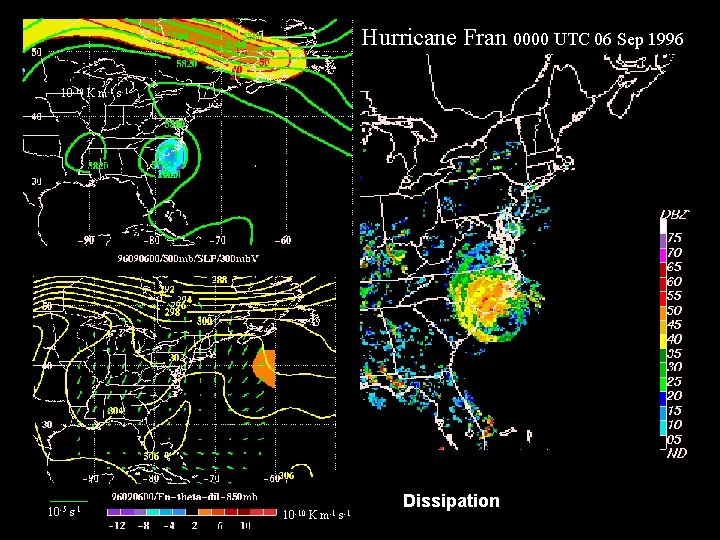
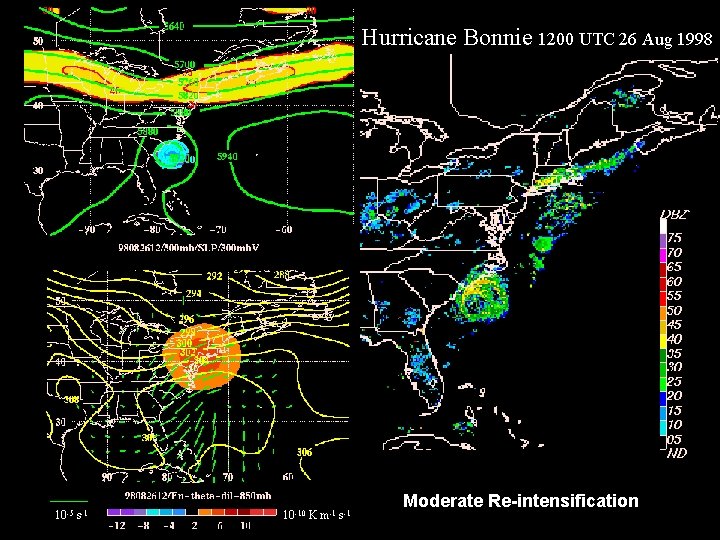
• • • Extratropical Transition IWTC-V Summary Observations and Forecasts Timing of extratropical transition: Phase with the midlatitude trough Structural changes Physical processes Important observations Impacts on forecasts of downstream weather – Re-intensification? – Dissipation?
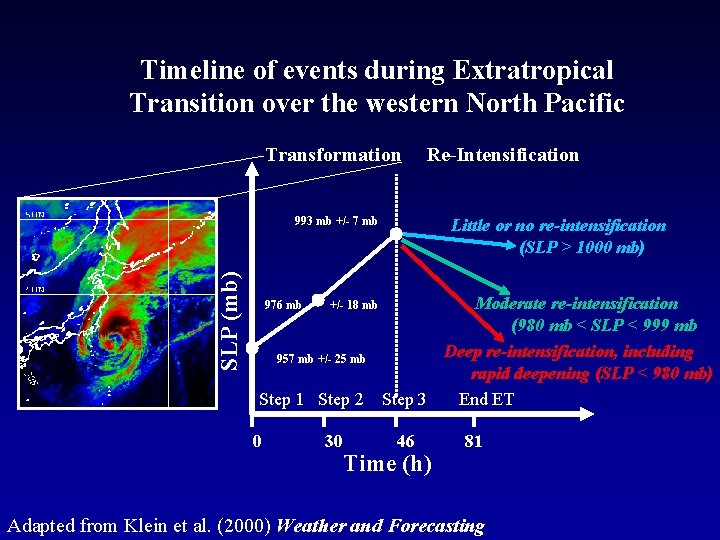
Timeline of events during Extratropical Transition over the western North Pacific Transformation Re-Intensification SLP (mb) 993 mb +/- 7 mb 976 mb +/- 18 mb 957 mb +/- 25 mb Step 1 Step 2 0 30 Little or no re-intensification (SLP > 1000 mb) Moderate re-intensification (980 mb < SLP < 999 mb Deep re-intensification, including rapid deepening (SLP < 980 mb) Step 3 End ET 46 Time (h) 81 Adapted from Klein et al. (2000) Weather and Forecasting
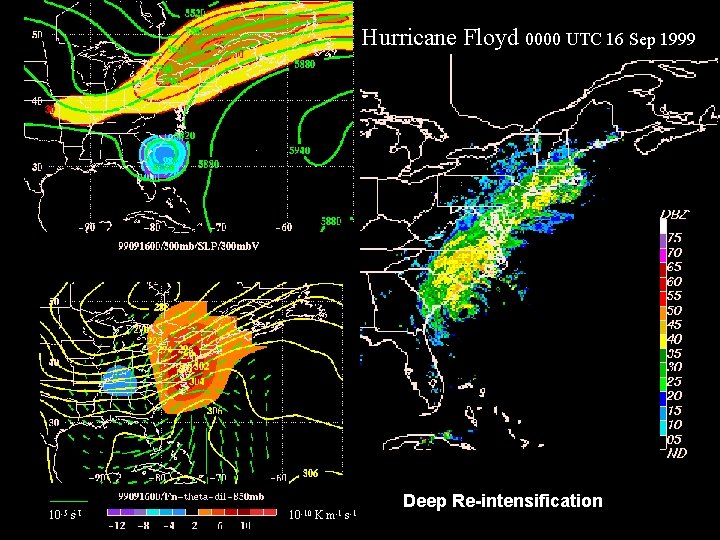
Hurricane Floyd 0000 UTC 16 Sep 1999 10 -5 s-1 10 -10 K m-1 s-1 Deep Re-intensification
Hurricane Fran 0000 UTC 06 Sep 1996 10 -10 K m-1 s-1 10 -5 s-1 10 -10 K m-1 s-1 Dissipation
Hurricane Bonnie 1200 UTC 26 Aug 1998 10 -5 s-1 10 -10 K m-1 s-1 Moderate Re-intensification
Extratropical Transition Physical Processes and Downstream Impacts • Scale of physical processes involved in the ET process ranges from microscale to planetary scale – most are associated with phase changes and are difficult to observe/model/diagnose • There are variety of physical processes that contribute to the sensitivity of the downstream response to the TC and the upstream state during ET?
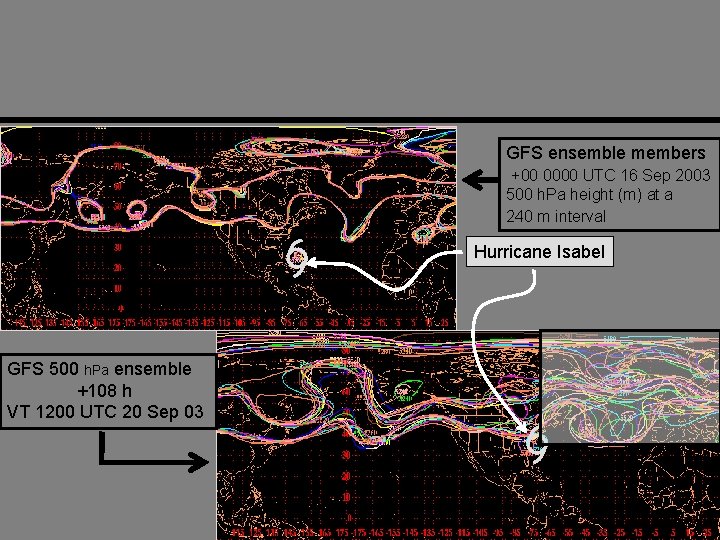
GFS ensemble members +00 0000 UTC 16 Sep 2003 500 h. Pa height (m) at a 240 m interval Hurricane Isabel GFS 500 h. Pa ensemble +108 h VT 1200 UTC 20 Sep 03
Extratropical Transition as Tropical/Extratropical Interaction • Role of the tropical cyclone structure – prior to recurvature – at recurvature – following recurvature • What must be observed (space, time, parameter) to increase predictability of – important weather parameters? – downstream impacts? • Role in seasonal variability (Hart 2006 AMS Conference)
Summary • Progress – Observational capabilities – Operational Model capabilities – Recognition of the importance of scale interactions • Requirements – Explaining variability – Continued analysis of scale interactions – Definitions