
Tropic responses Directional movements by growth in response
Tropic responses Directional movements by growth in response to a directional stimulus
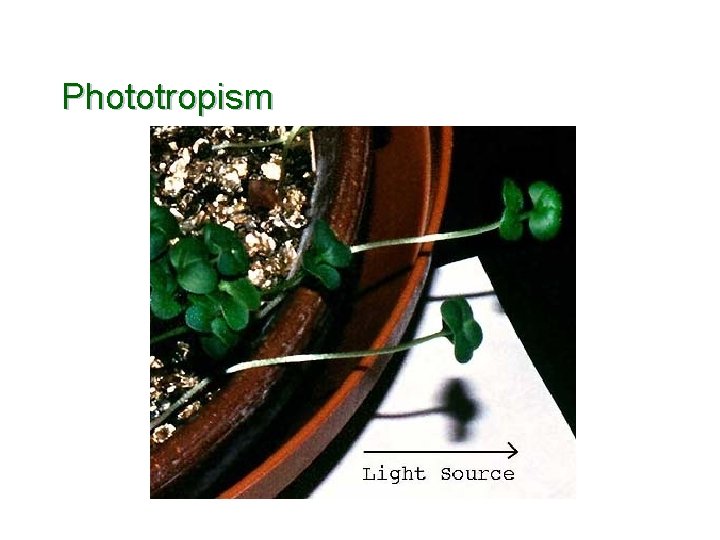
Phototropism
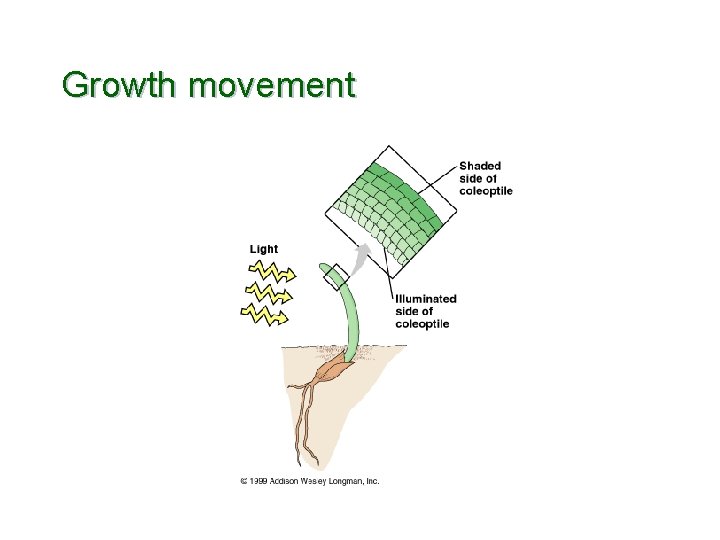
Growth movement
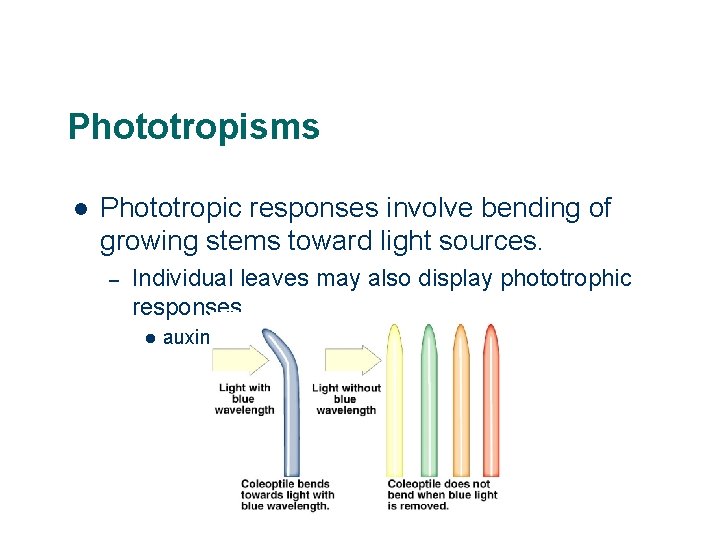
Phototropisms l Phototropic responses involve bending of growing stems toward light sources. – Individual leaves may also display phototrophic responses. l auxin most likely involved
l Gravitropism is the response of a plant to Plants Respond to Gravity the earth’s gravitational field. – present at germination l – auxins play primary role Four steps l l gravity perceived by cell signal formed that perceives gravity signal transduced intra- and intercellularly differential cell elongation
Gravitropism l Increased auxin concentration on the lower side in stems l causes those cells to grow more than cells on the upper side. – stem bends up against the force of gravity l negative gravitropism Upper side of roots oriented horizontally grow more rapidly than the lower side – roots ultimately grow downward l positive gravitropism
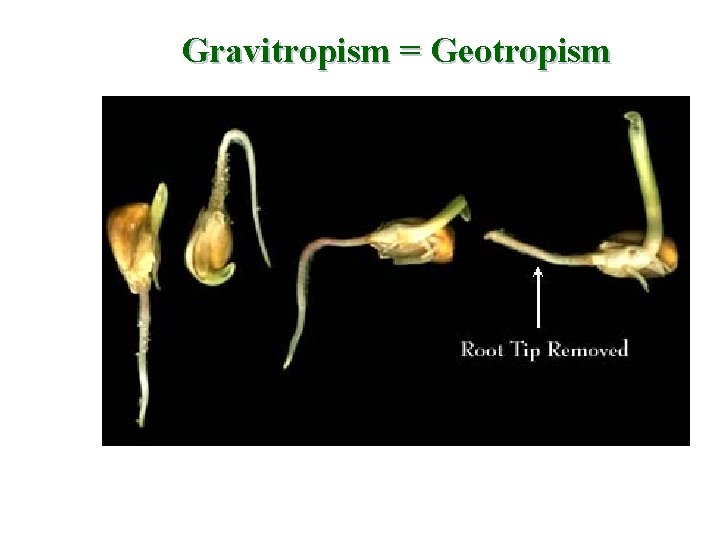
Gravitropism = Geotropism
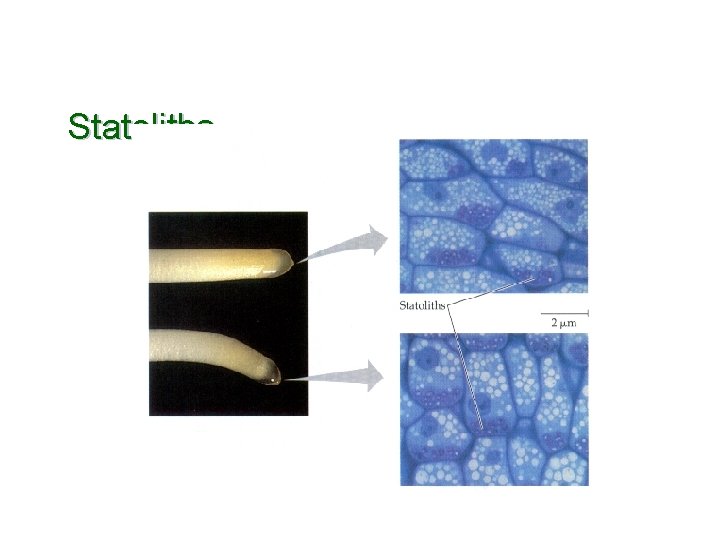
Statoliths
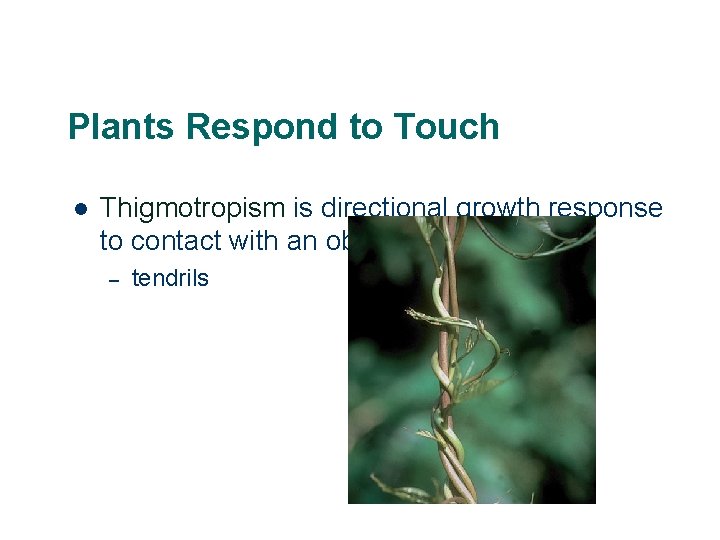
Plants Respond to Touch l Thigmotropism is directional growth response to contact with an object. – tendrils

Thigmotropism
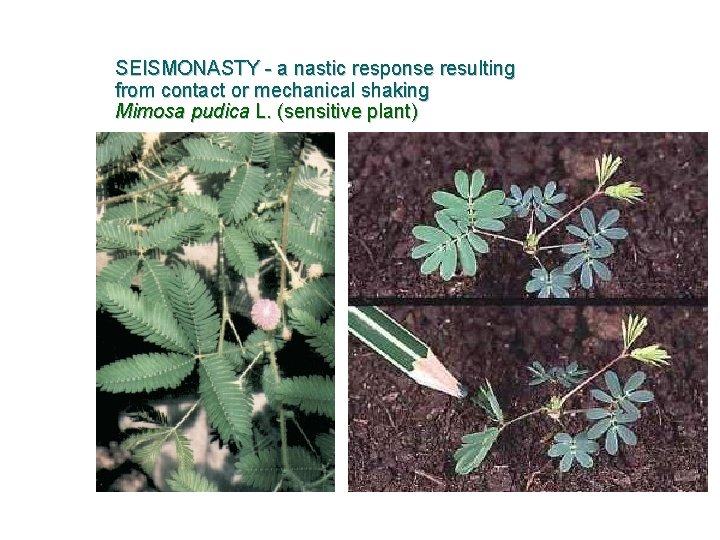
SEISMONASTY - a nastic response resulting from contact or mechanical shaking Mimosa pudica L. (sensitive plant)
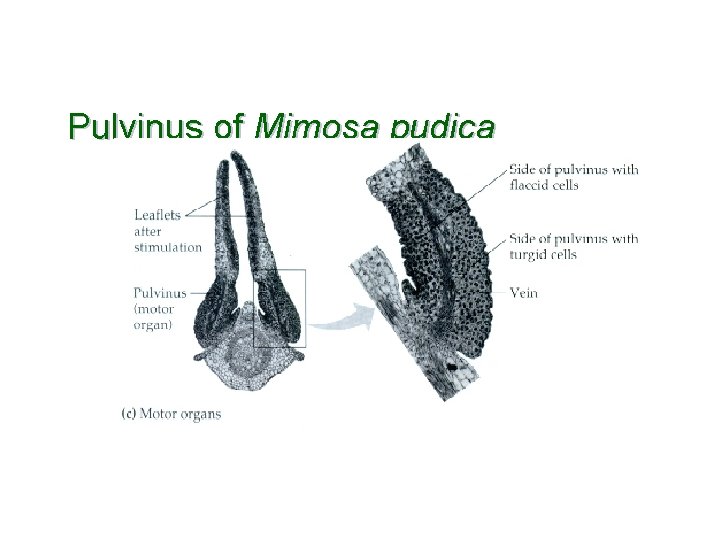
Pulvinus of Mimosa pudica
Plants Response to Light l l Photomorphogenesis – nondirectional, light-mediated changes in plant growth and development l red light changes the shape of phytochrome and can trigger photomorphogenesis l Stems go from etiolated (in dark or Pfr) to unetiolated (in light with Pr). Photoperiodism – Regulates when seeds of lettue and some weeds. Presence of Pr inhibits germination, while its conversion to Pfr in red light induces germination Red light ===> germination Far-red light ===> no germination Red ===> far-red ===> far-red ===> no germination Those seeds not buried deep in the ground get exposed to red light, and this signals germination. – Regulates when plants flower; either in the Spring or later in the Summer and Fall.
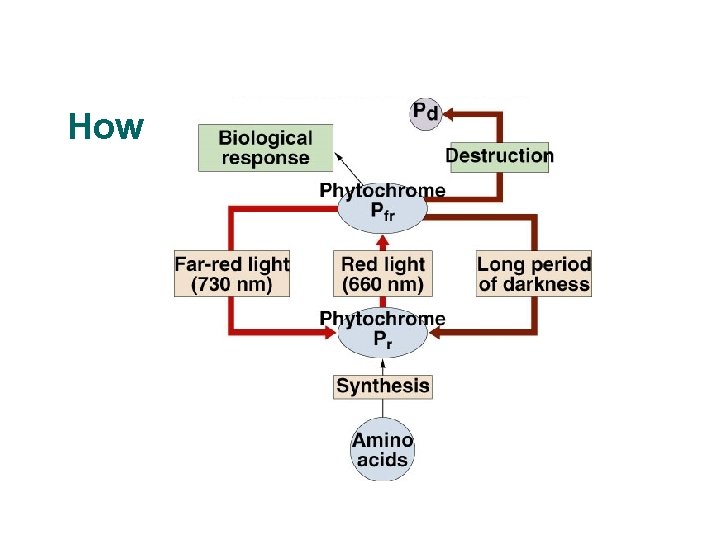
How Phytochrome Works
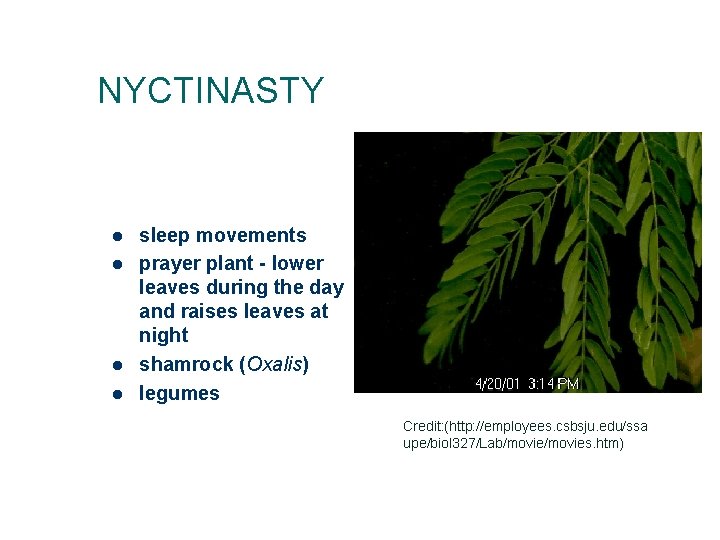
NYCTINASTY l l sleep movements prayer plant - lower leaves during the day and raises leaves at night shamrock (Oxalis) legumes Credit: (http: //employees. csbsju. edu/ssa upe/biol 327/Lab/movies. htm)
l Circadian Clocks clocks are endogenous Circadian timekeepers that keep plant responses synchronized with the environment. – circadian rhythm characteristics l l must continue to run in absence of external inputs must be about 24 hours in duration can be reset or entrained (to determine or modify the phase or period of <circadian rhythms entrained by a light cycle>) can compensate for temperature differences

THANK YOU
- Slides: 17