
Trophic Relationships Definition Feeding connections among living organisms
- Slides: 10
Trophic Relationships
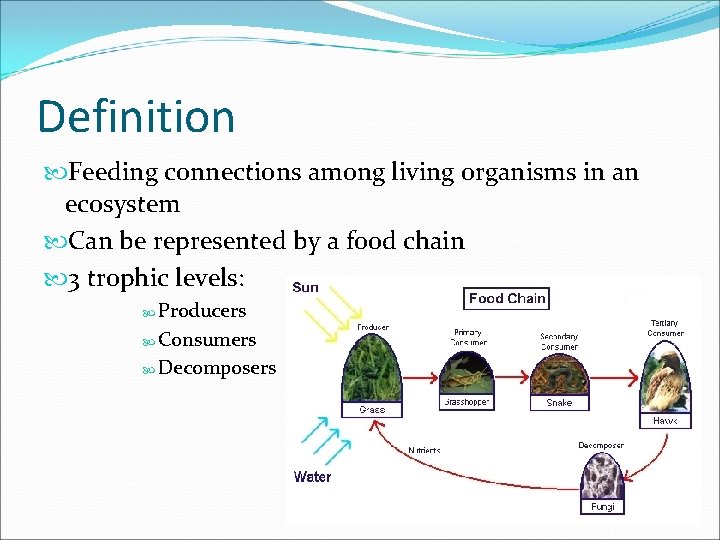
Definition Feeding connections among living organisms in an ecosystem Can be represented by a food chain 3 trophic levels: Producers Consumers Decomposers
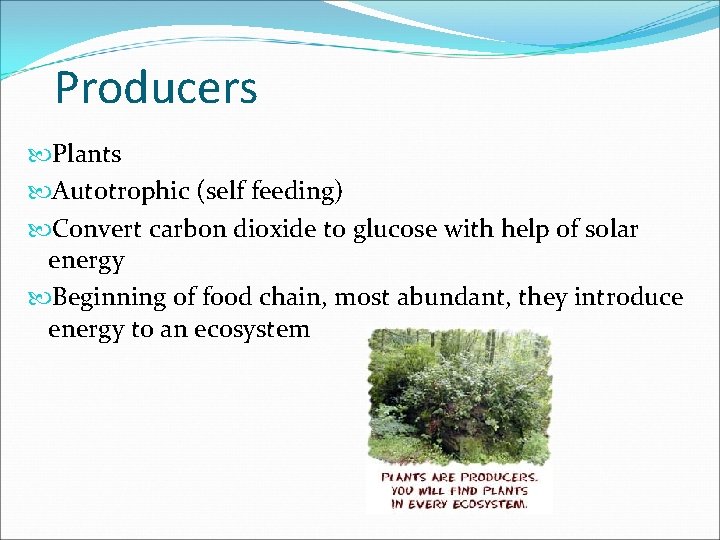
Producers Plants Autotrophic (self feeding) Convert carbon dioxide to glucose with help of solar energy Beginning of food chain, most abundant, they introduce energy to an ecosystem
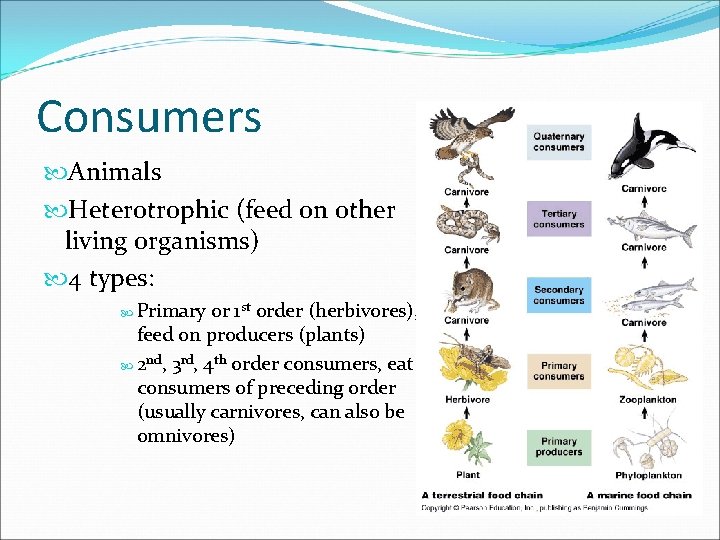
Consumers Animals Heterotrophic (feed on other living organisms) 4 types: Primary or 1 st order (herbivores), feed on producers (plants) 2 nd, 3 rd, 4 th order consumers, eat consumers of preceding order (usually carnivores, can also be omnivores)
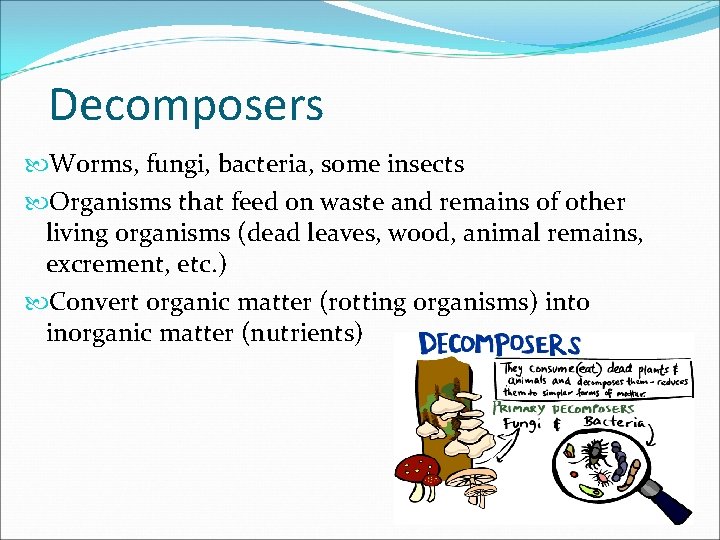
Decomposers Worms, fungi, bacteria, some insects Organisms that feed on waste and remains of other living organisms (dead leaves, wood, animal remains, excrement, etc. ) Convert organic matter (rotting organisms) into inorganic matter (nutrients)
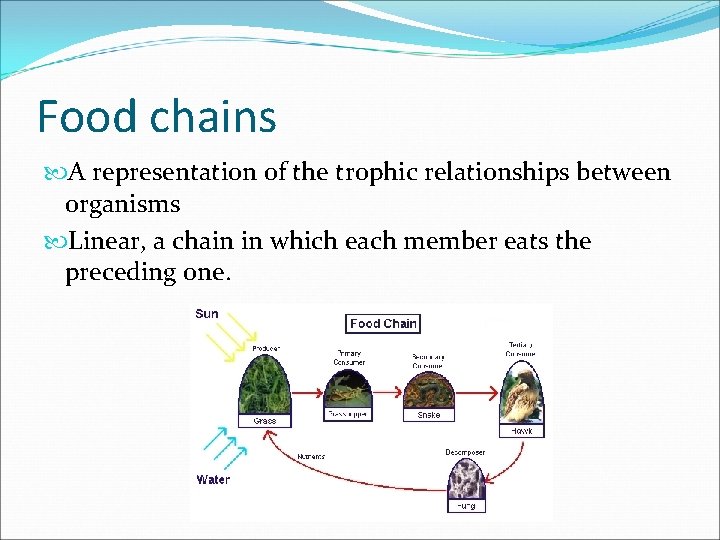
Food chains A representation of the trophic relationships between organisms Linear, a chain in which each member eats the preceding one.
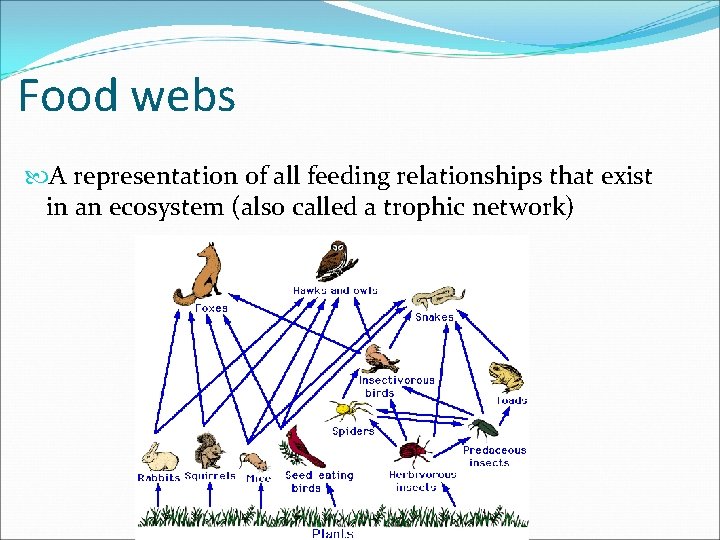
Food webs A representation of all feeding relationships that exist in an ecosystem (also called a trophic network)
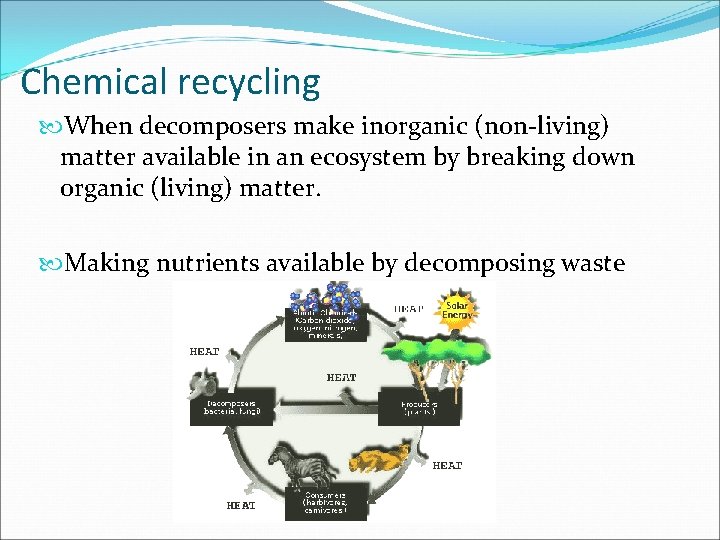
Chemical recycling When decomposers make inorganic (non-living) matter available in an ecosystem by breaking down organic (living) matter. Making nutrients available by decomposing waste
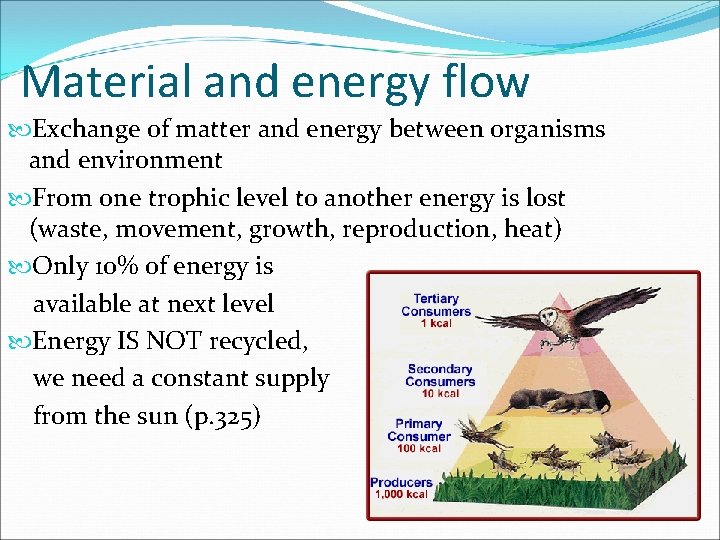
Material and energy flow Exchange of matter and energy between organisms and environment From one trophic level to another energy is lost (waste, movement, growth, reproduction, heat) Only 10% of energy is available at next level Energy IS NOT recycled, we need a constant supply from the sun (p. 325)
Primary productivity in ecosystems The amount of new biomass generated by producers (energy available from plants) limits the # of organisms that can live in an ecosystem Influenced by: Sunlight Water Nutrients Temperature