
Trophic Levels Producers Primary Consumers Secondary Consumers Tertiary
- Slides: 29
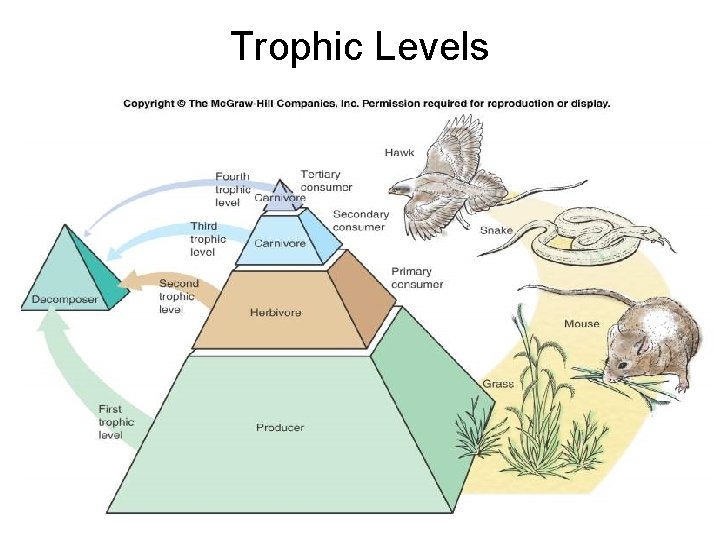
Trophic Levels
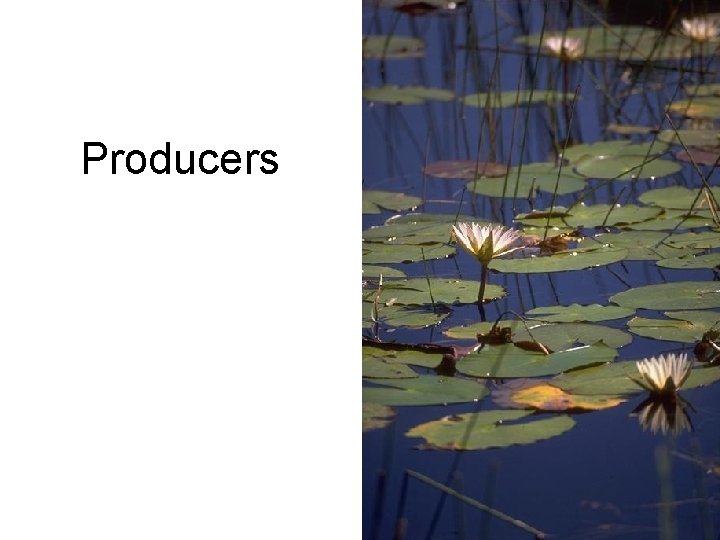
Producers
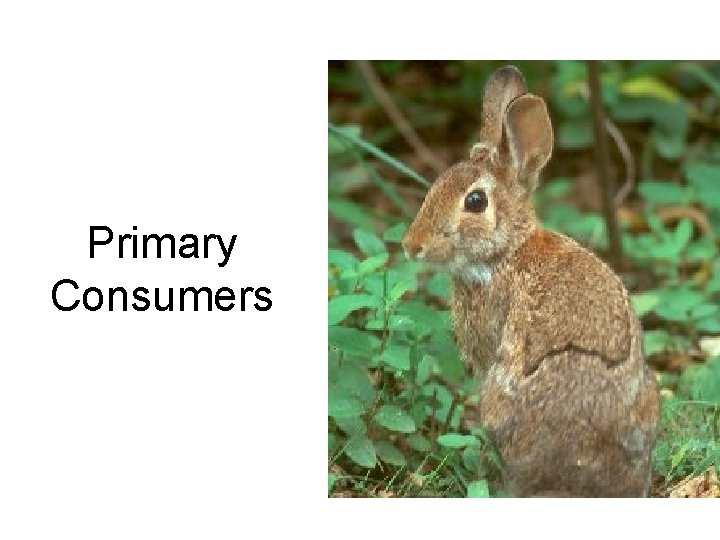
Primary Consumers
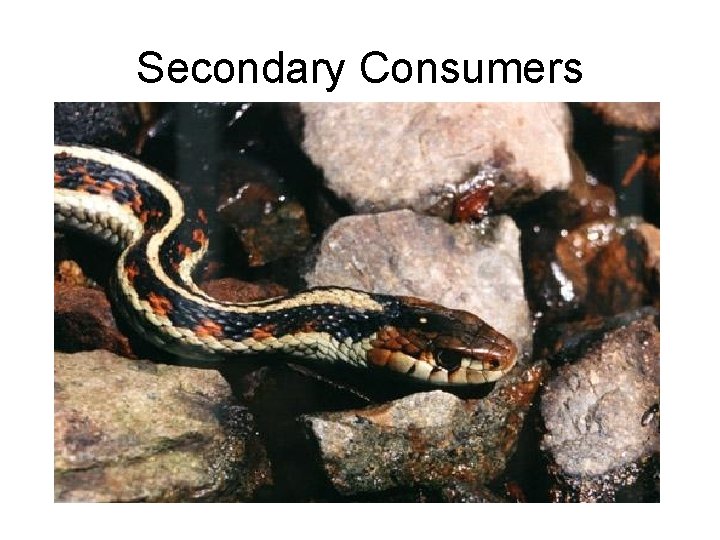
Secondary Consumers
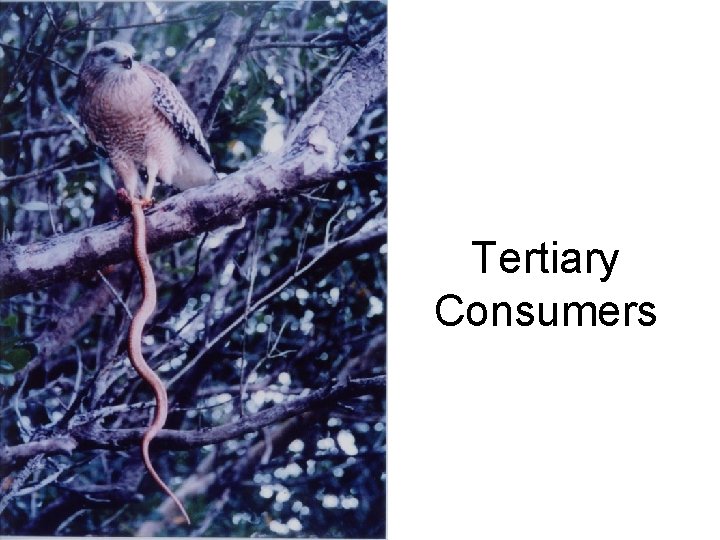
Tertiary Consumers
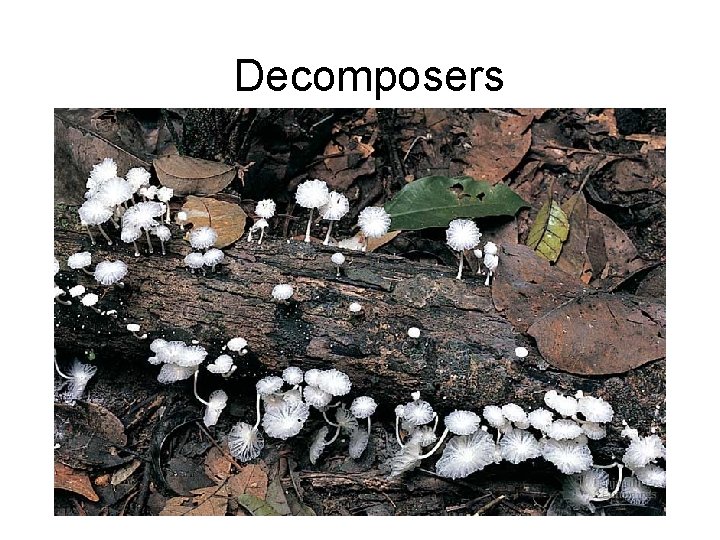
Decomposers
Kinds of consumers • ______ consumer who eats producers. • _______ consumer who eats only other consumers • ________consumer who eats producers and consumers • ________ consumer who breaks down dead organisms
Ecosystems • A community of organisms (i. e. plants and animals) living together with their environment (non-living aspects), functioning as a unit.
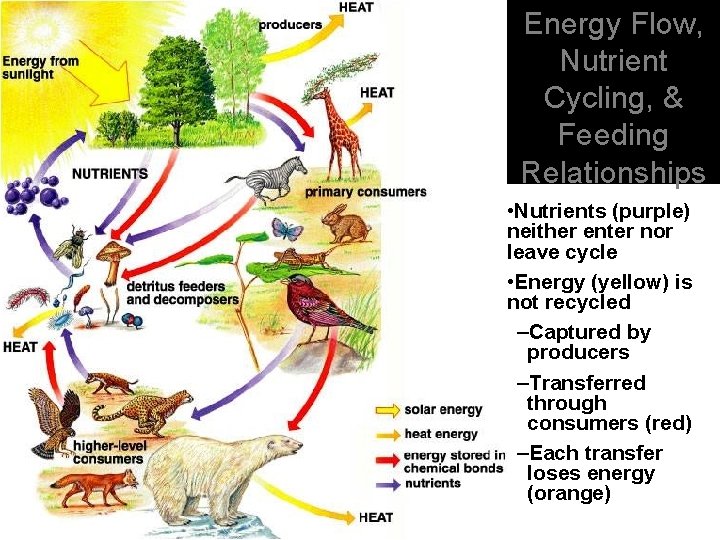
Energy Flow, Nutrient Cycling, & Feeding Relationships • Nutrients (purple) neither enter nor leave cycle • Energy (yellow) is not recycled –Captured by producers –Transferred through consumers (red) –Each transfer loses energy (orange)
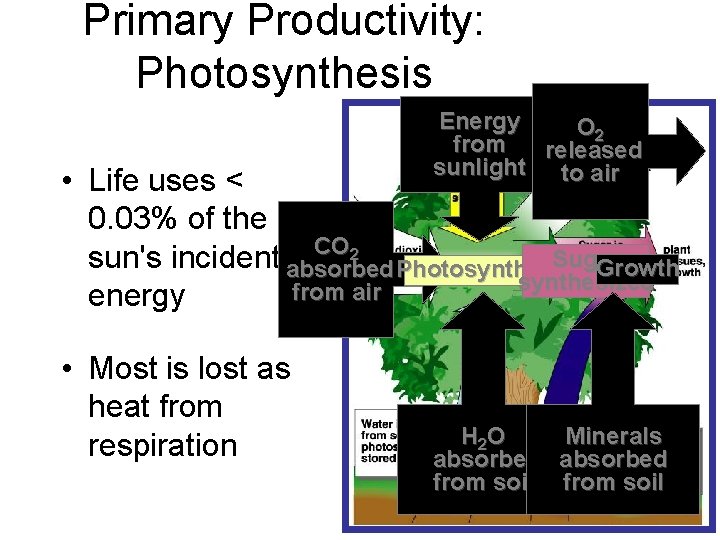
Primary Productivity: Photosynthesis Energy O 2 from released sunlight to air • Life uses < 0. 03% of the CO 2 Sugar sun's incident absorbed Growth Photosynthesis synthesized from air energy • Most is lost as heat from respiration H 2 O absorbed from soil Minerals absorbed from soil
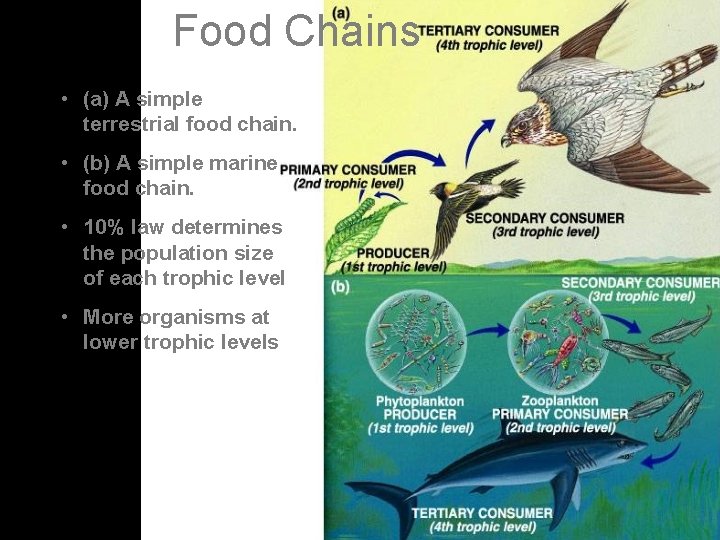
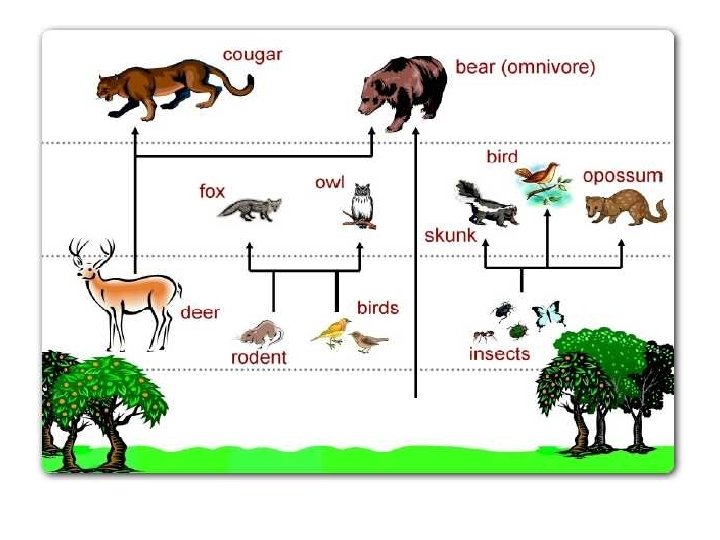
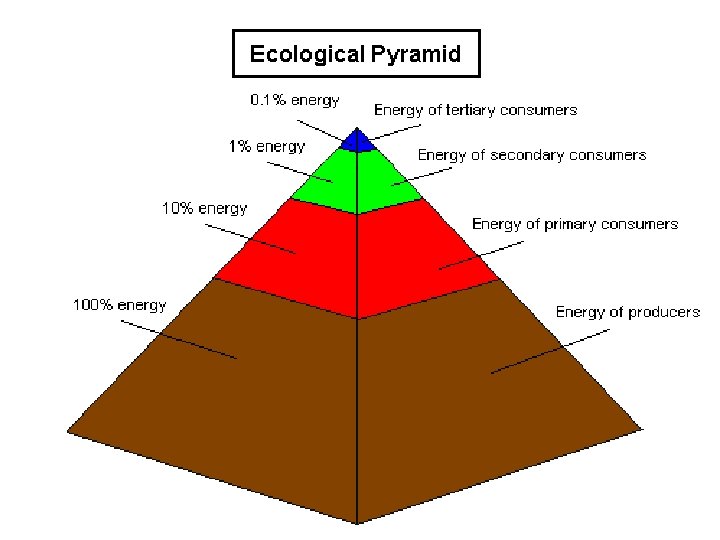
Food Chains • (a) A simple terrestrial food chain. • (b) A simple marine food chain. • 10% law determines the population size of each trophic level • More organisms at lower trophic levels
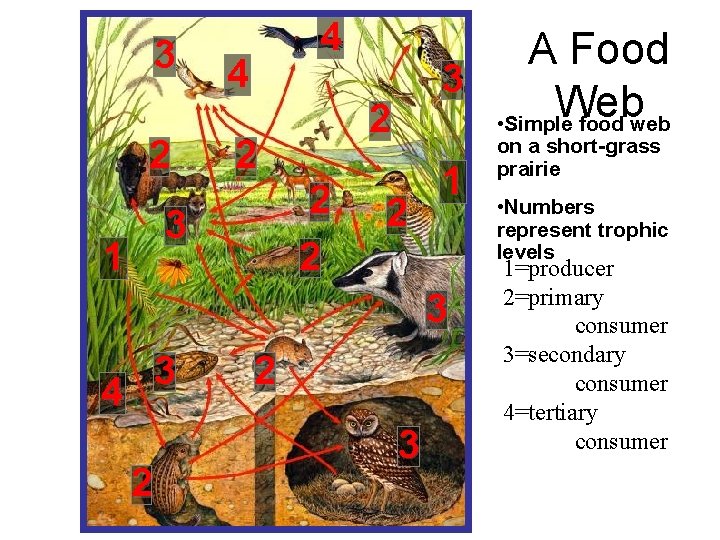
3 2 4 4 1 2 2 3 A Food 3 Web • Simple food web 2 1 3 4 3 2 2 3 on a short-grass prairie • Numbers represent trophic levels 1=producer 2=primary consumer 3=secondary consumer 4=tertiary consumer
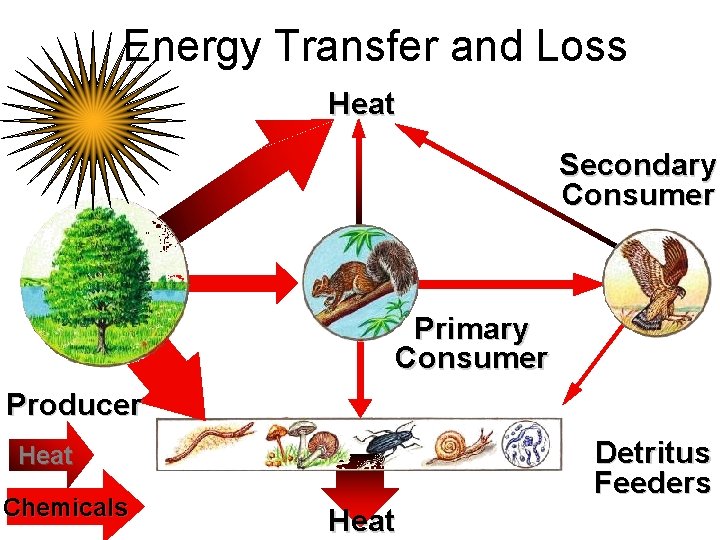
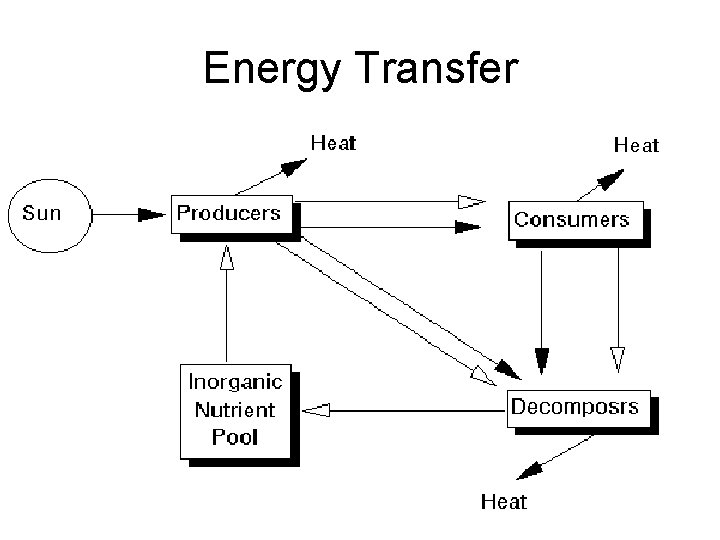
Energy Transfer and Loss Heat Secondary Consumer Primary Consumer Producer Detritus Feeders Heat Chemicals Heat
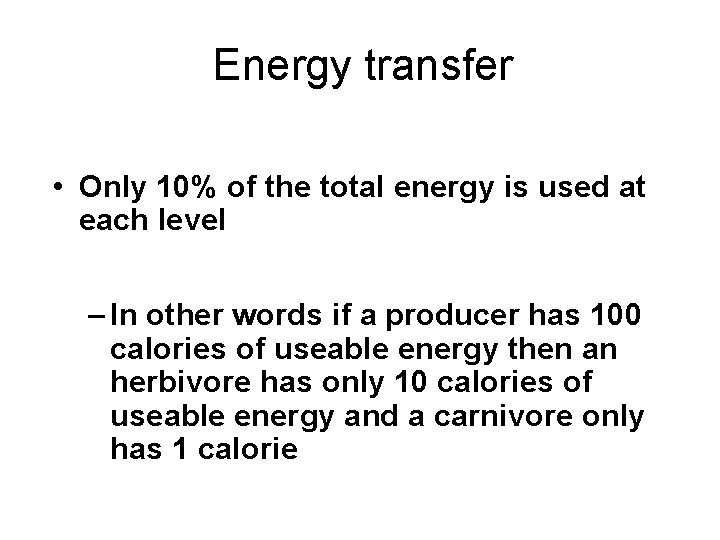
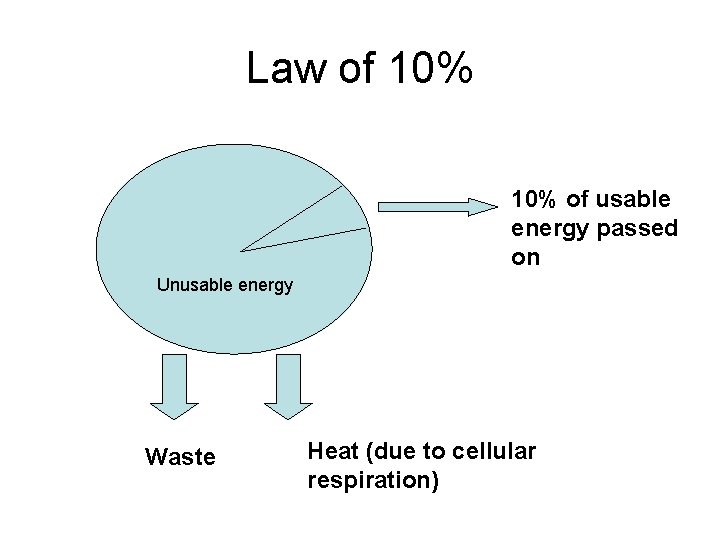
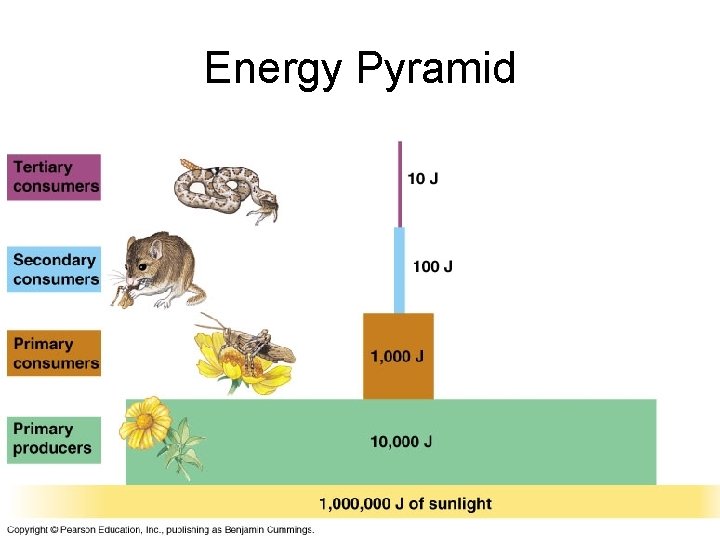
Energy transfer • Only 10% of the total energy is used at each level – In other words if a producer has 100 calories of useable energy then an herbivore has only 10 calories of useable energy and a carnivore only has 1 calorie
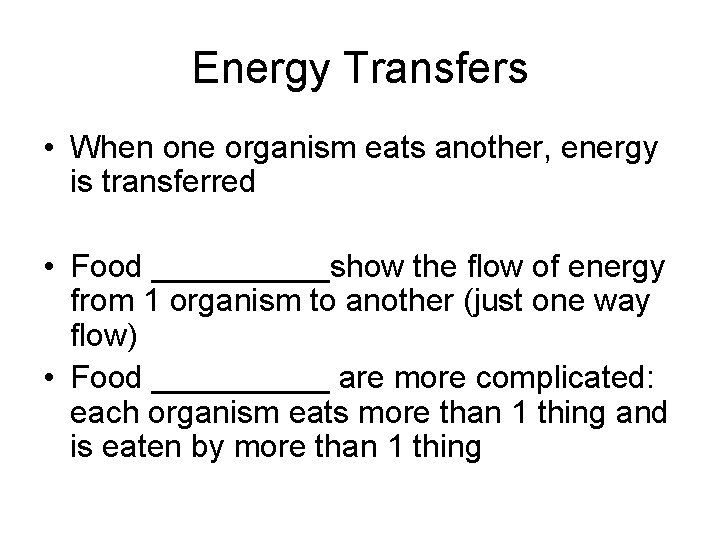
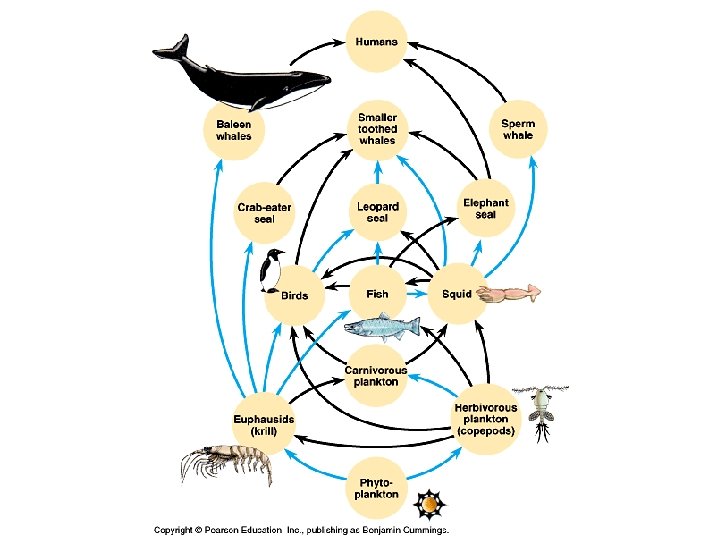
Energy Transfers • When one organism eats another, energy is transferred • Food _____show the flow of energy from 1 organism to another (just one way flow) • Food _____ are more complicated: each organism eats more than 1 thing and is eaten by more than 1 thing
Energy Transfer
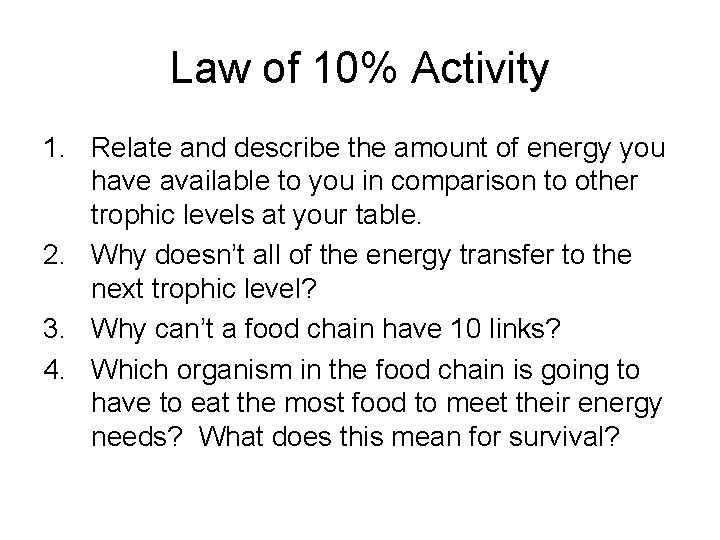
Law of 10% Activity 1. Relate and describe the amount of energy you have available to you in comparison to other trophic levels at your table. 2. Why doesn’t all of the energy transfer to the next trophic level? 3. Why can’t a food chain have 10 links? 4. Which organism in the food chain is going to have to eat the most food to meet their energy needs? What does this mean for survival?
Law of 10% of usable energy passed on Unusable energy Waste Heat (due to cellular respiration)
Trophic Levels
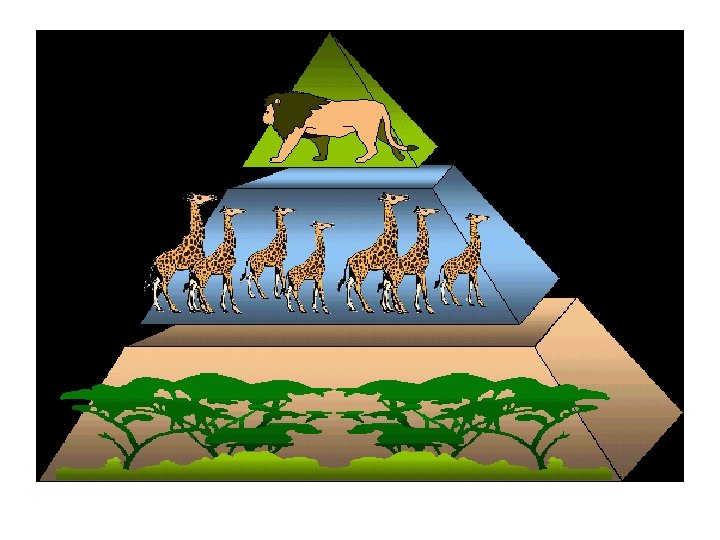
Energy Pyramid
• Why are there more producers than herbivores? • Why are there more herbivores than carnivores? • Why can’t there be too many links in a food chain? • Why do top carnivores need such a large territory?
Energy Flow and Eating Habits • Meat eating (higher on the trophic pyramid) uses more energy than eating veggies • 90% of the grain that we grow is used to feed livestock • 100 kg of grain can feed: – 10 kg of cow and 1 kg of steak eating people – 10 kg of grain eating people (10 x more)
What can pass through a food web? • Energy • Mineral nutrients (carbon, nitrogen, phosphorus) (more on this soon) • Bad Stuff – any toxins or poisons that are fat stored can be passed along a food chain
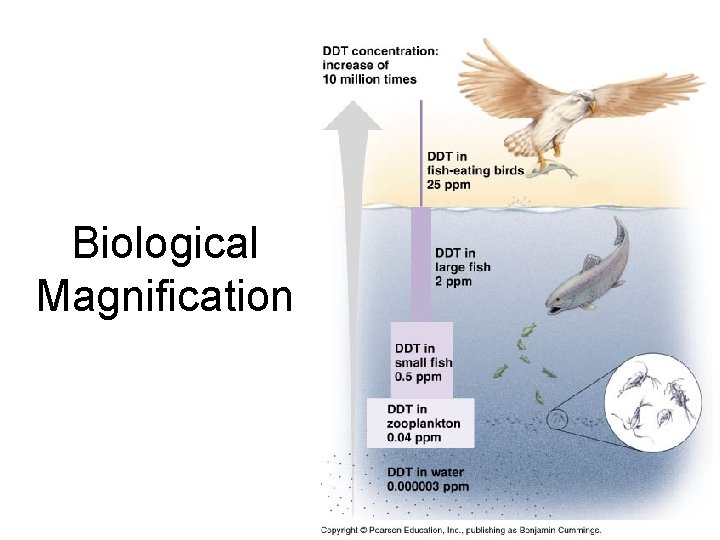
Biological Magnification
BIOMAGNIFICATION • If each little fish eats a little DDT, but • Each medium fish eats 10 little fish (or more) -10 X DDT (or more) • Each larger fish eats 10 medium fish (or more) -_____X DDT (or more) • Each huge fish eats 10 larger fish (or more) -______X DDT (or more) • Each level along the food chain, the poison gets more and more concentrated