
Trip Generation Basics and Cautions of Site Impact

Trip Generation Basics and Cautions of Site Impact Review

Trip Generation Simple trip generation calculation needed even when the large scale models are used. Large scale regional models are not intended for small areas.

Simple Trip Generation Example 10 = Daily Trip Generation Rate for a Single Family Home 10 = Homes being built – (called “Dwelling Units”) – Homes are the “Independent Variable” How many daily trips do we project? 100

Trip Generation Report and use of the 7 th Edition ITE Trip Generation Report and Handbook

ITE Trip Generation Report Not a Manual • National data – Florida, Arizona and California, played big role • Suburban locations with little or no transit • Some small sample sizes for new (though important) uses – Discount clubs (861) – Stand-alone drug stores (881) • May not work downtown
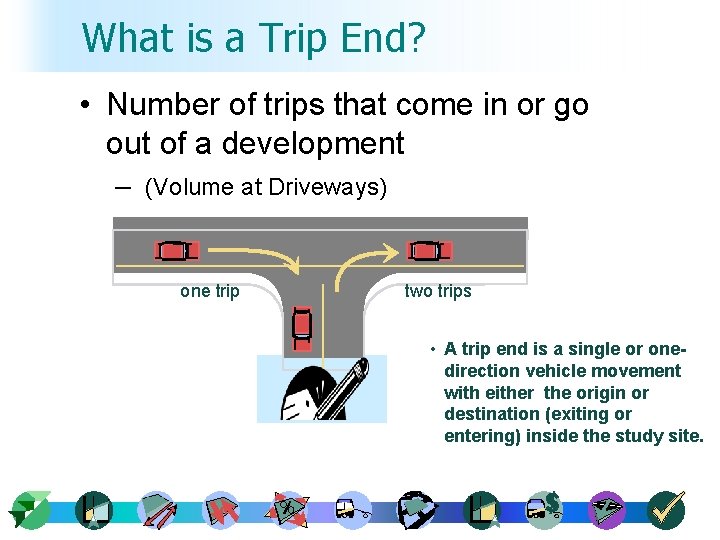
What is a Trip End? • Number of trips that come in or go out of a development – (Volume at Driveways) one trip two trips • A trip end is a single or onedirection vehicle movement with either the origin or destination (exiting or entering) inside the study site.

Journey/Trip Ends 2 TRIP ENDS E N O 2 TRIP ENDS IP R T 1 Journey 3 Trips Start Stop (Home to Work) (Work to Shops) (Shops to Home) ONE TRIP (Home-Work-Shops-Home) 6 Trip Ends (2 Per Trip) ON ET RIP 2 TRIP ENDS

Vehicle Trips (ITE) vs. Person Trips 5 Person Trips 1 Vehicle Trip ITE Trips

How Are Trip Generation Rates Determined? Tube laid • Traffic is counted at each entrance of a certain land use. Traffic is then studied in relation to the size of certain “independent variables. ” 1, 000 10, 000 sq ft store 250 employees 1000
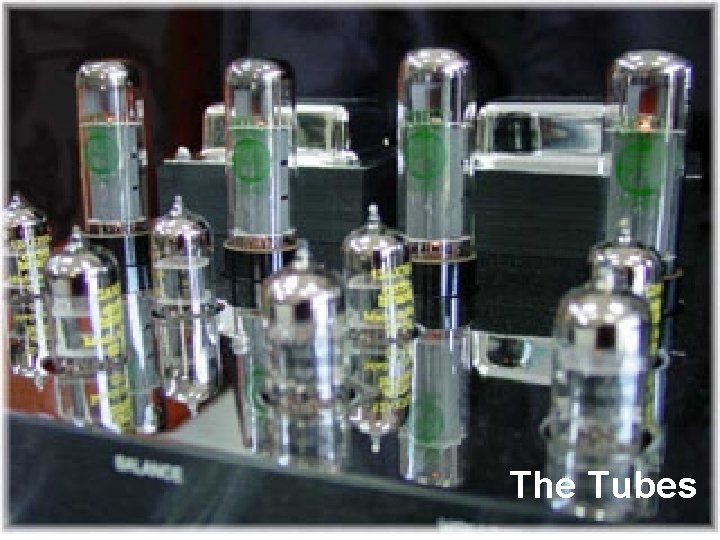
The Tubes
Not This

But this
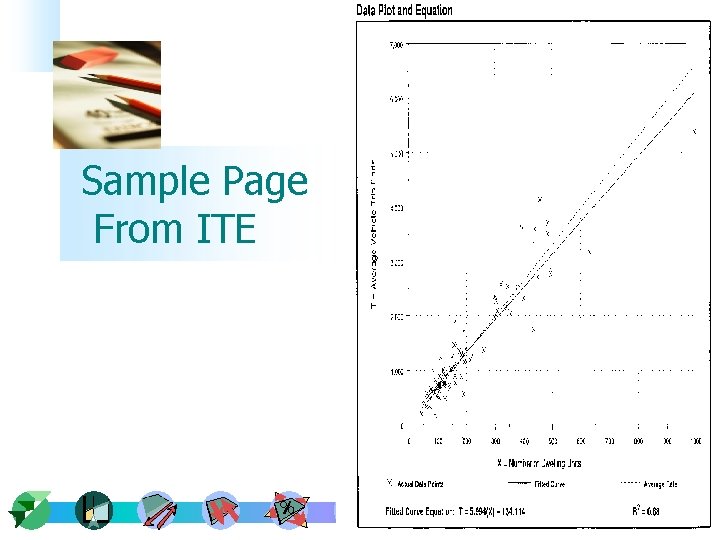
Sample Page From ITE
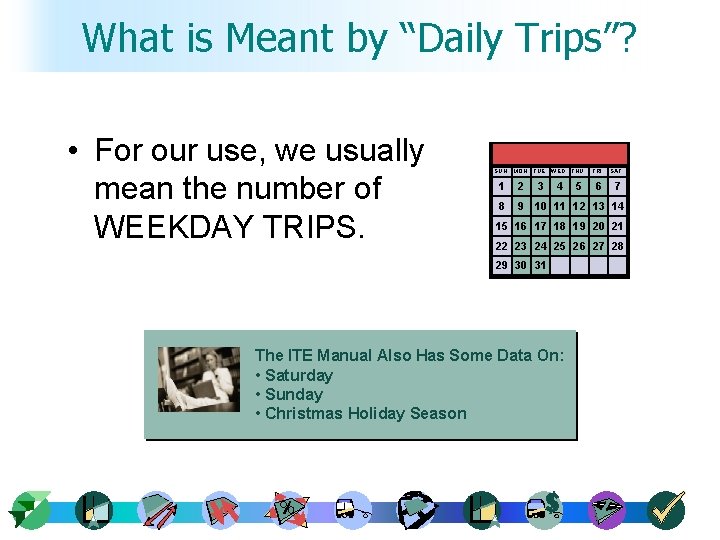
What is Meant by “Daily Trips”? • For our use, we usually mean the number of WEEKDAY TRIPS. SUN MON TUE WED 3 4 THU FRI SAT 5 6 7 1 2 8 9 10 11 12 13 14 15 16 17 18 19 20 21 22 23 24 25 26 27 28 29 30 31 The ITE Manual Also Has Some Data On: • Saturday • Sunday • Christmas Holiday Season
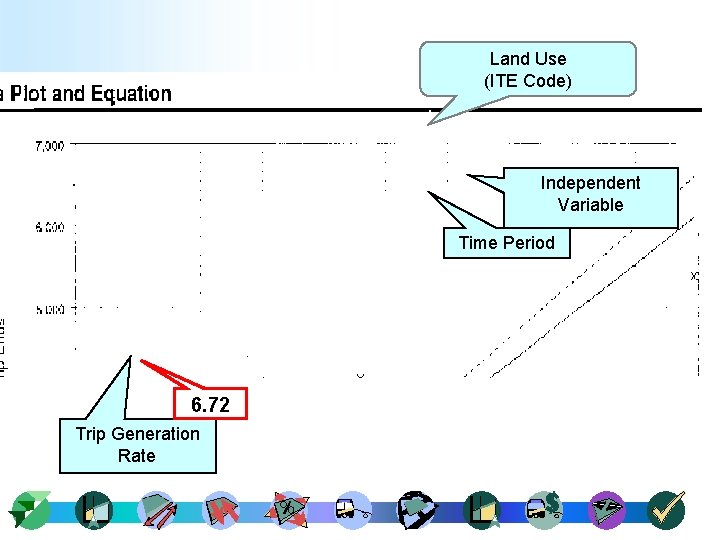
Land Use (ITE Code) Independent Variable Time Period 6. 72 Trip Generation Rate
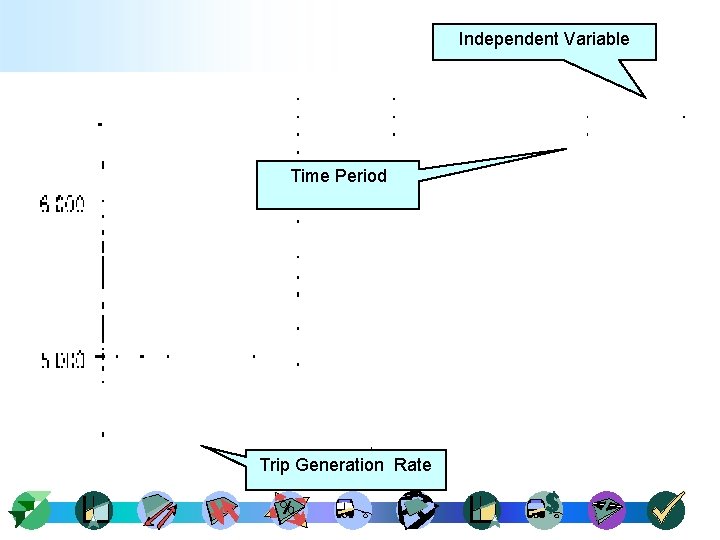
Independent Variable Time Period Trip Generation Rate
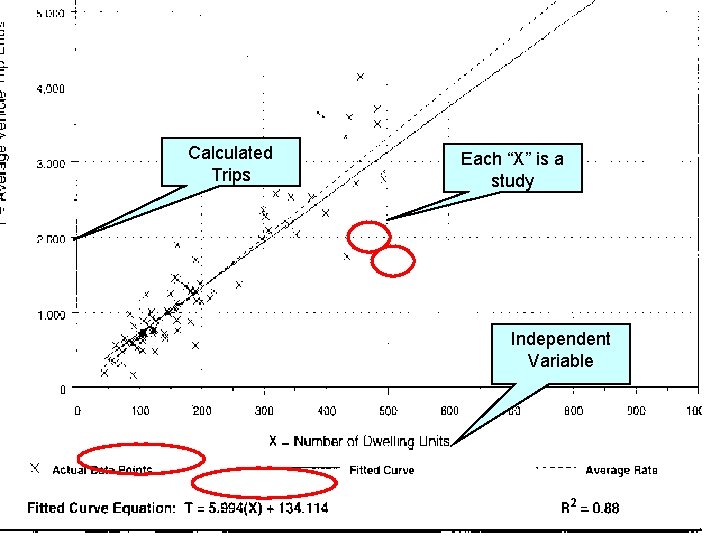
Calculated Trips Each “X” is a study Independent Variable
Apartment – Daily graph
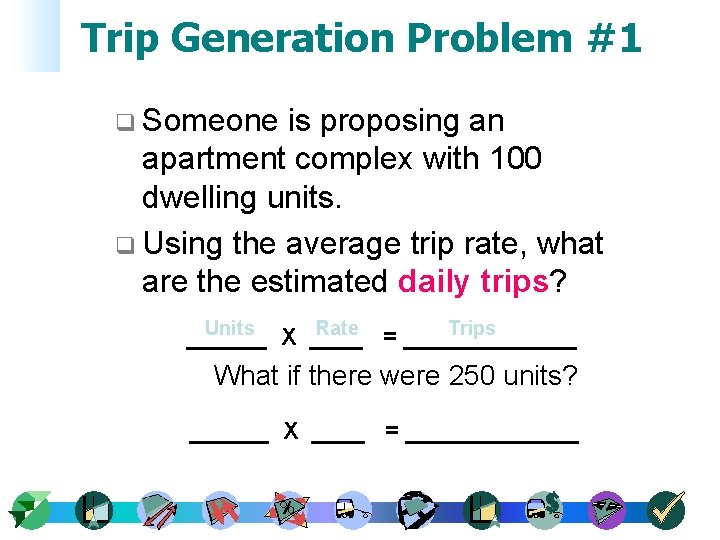
Trip Generation Problem #1 q Someone is proposing an apartment complex with 100 dwelling units. q Using the average trip rate, what are the estimated daily trips? Units X ____ Rate = _______ Trips ______ What if there were 250 units? ______ X ____ = _______
Apartment PM PEAK Adjacent Street Traffic
Apartment PM PEAK Adjacent Street Traffic
What’s Peak Hour? • Any 4 consecutive 15 minute periods that equal the highest 1 hour volume • There are usually morning and evening – Some lunch time peaks are important • We are usually using peak hour of Adjacent Street Traffic
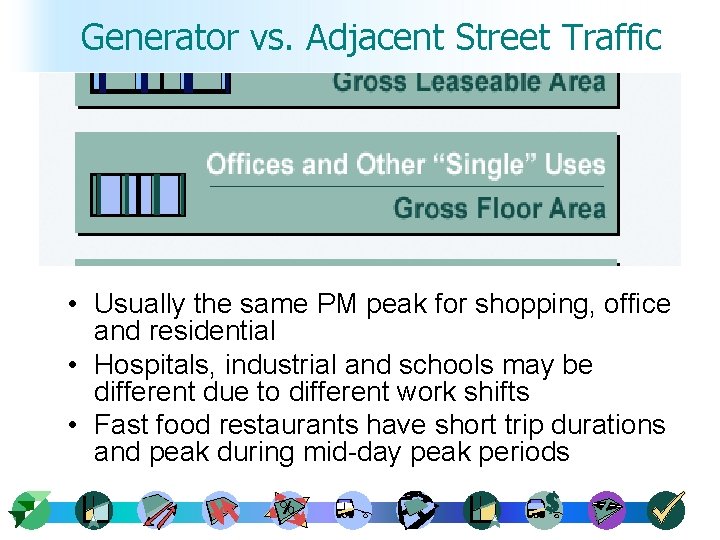
Generator vs. Adjacent Street Traffic • Usually the same PM peak for shopping, office and residential • Hospitals, industrial and schools may be different due to different work shifts • Fast food restaurants have short trip durations and peak during mid-day peak periods
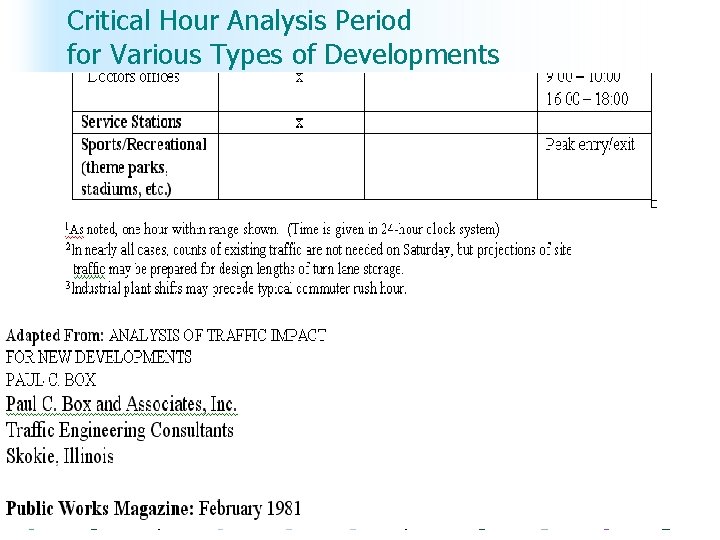
Critical Hour Analysis Period for Various Types of Developments
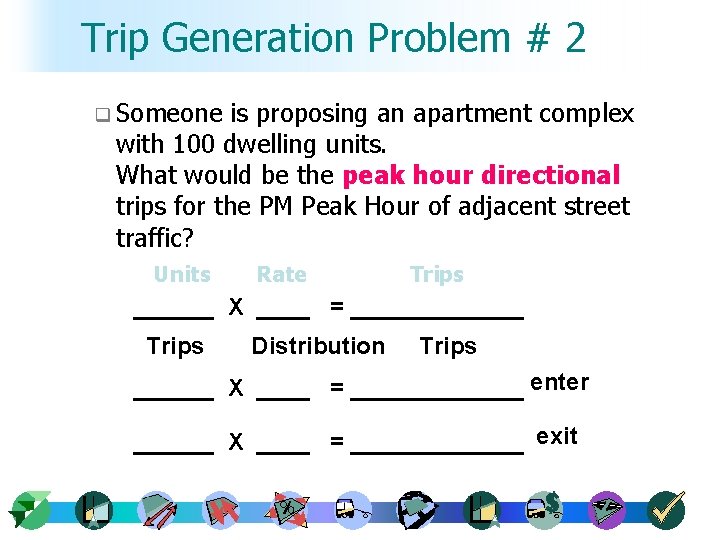
Trip Generation Problem # 2 q Someone is proposing an apartment complex with 100 dwelling units. What would be the peak hour directional trips for the PM Peak Hour of adjacent street traffic? Units Rate Trips ______ X ____ = _______ Trips Distribution Trips ______ X ____ = _______ enter ______ X ____ = _______ exit
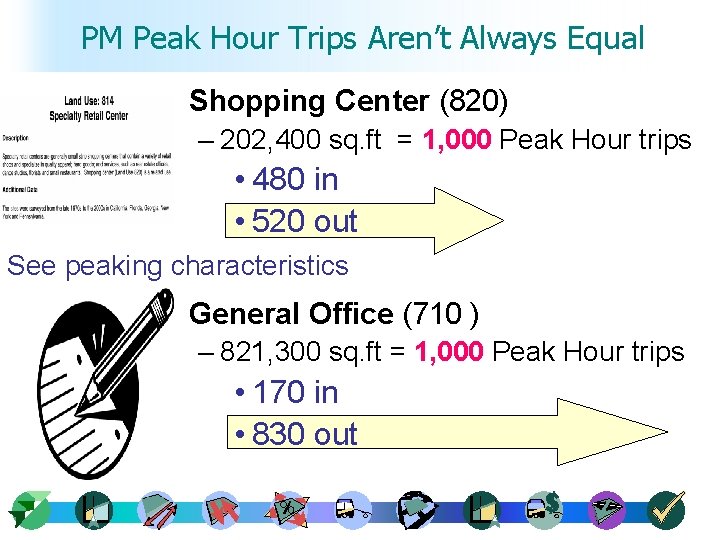
PM Peak Hour Trips Aren’t Always Equal • Shopping Center (820) – 202, 400 sq. ft = 1, 000 Peak Hour trips • 480 in • 520 out See peaking characteristics • General Office (710 ) – 821, 300 sq. ft = 1, 000 Peak Hour trips • 170 in • 830 out
Think About It • When would a major office development have the most impact on the surrounding road system?
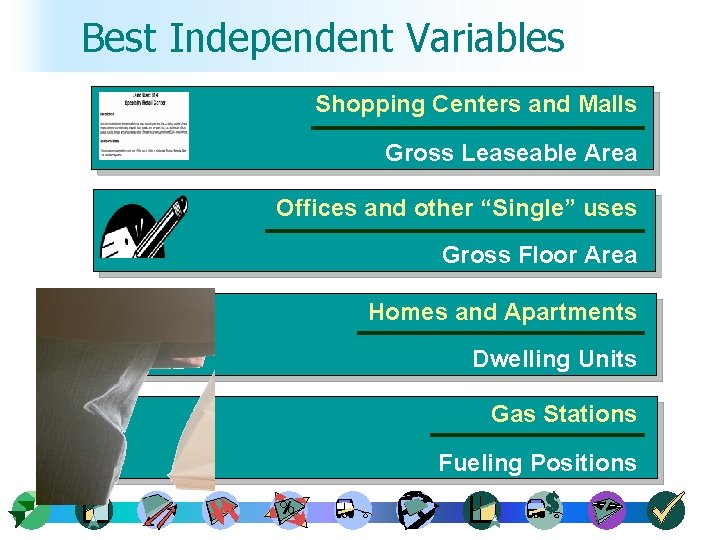
Best Independent Variables Shopping Centers and Malls Gross Leaseable Area Offices and other “Single” uses Gross Floor Area Homes and Apartments Dwelling Units Gas Stations Fueling Positions
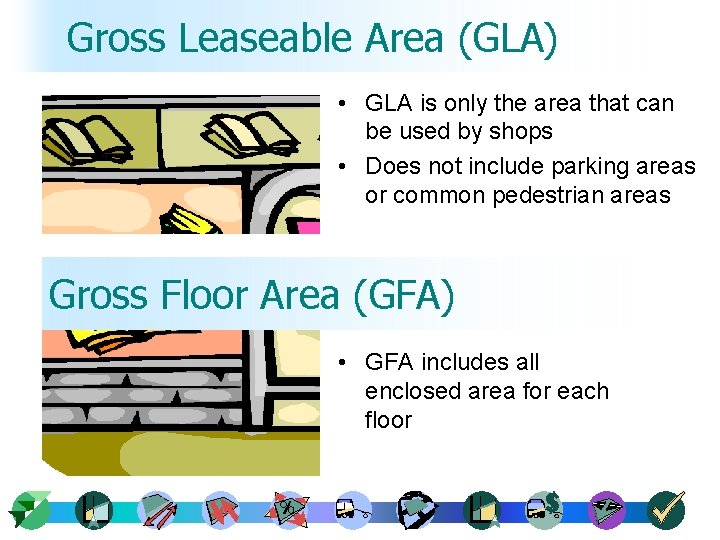
Gross Leaseable Area (GLA) • GLA is only the area that can be used by shops • Does not include parking areas or common pedestrian areas Gross Floor Area (GFA) • GFA includes all enclosed area for each floor
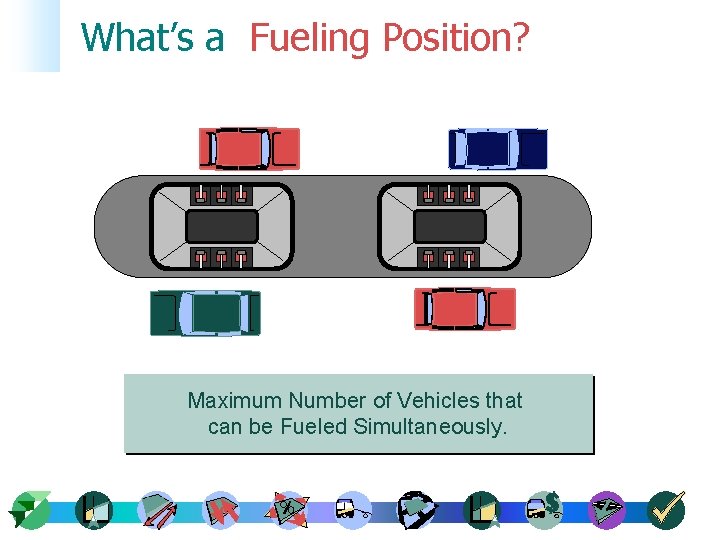
What’s a Fueling Position? Maximum Number of Vehicles that can be Fueled Simultaneously.
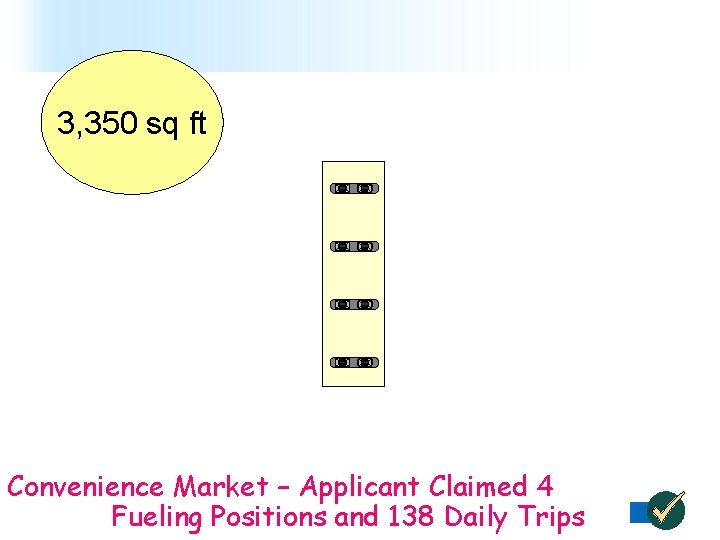
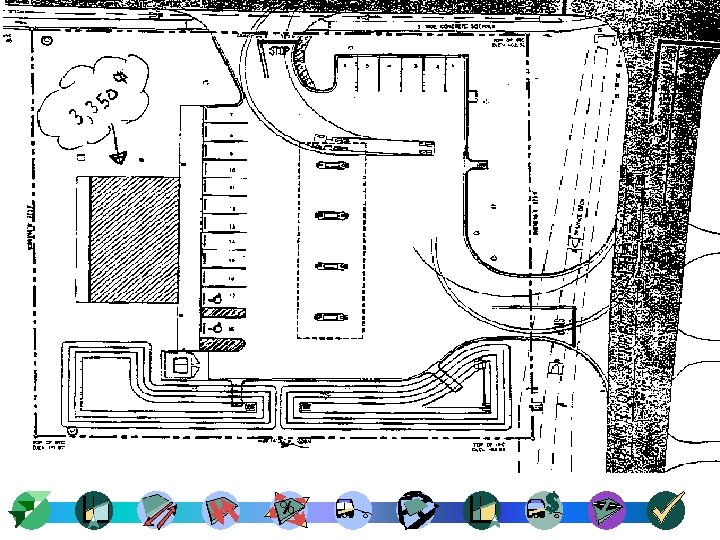
3, 350 sq ft Convenience Market – Applicant Claimed 4 Fueling Positions and 138 Daily Trips

e Analyst “Shopped” for the Trip Generat

Specialty Retail Compared
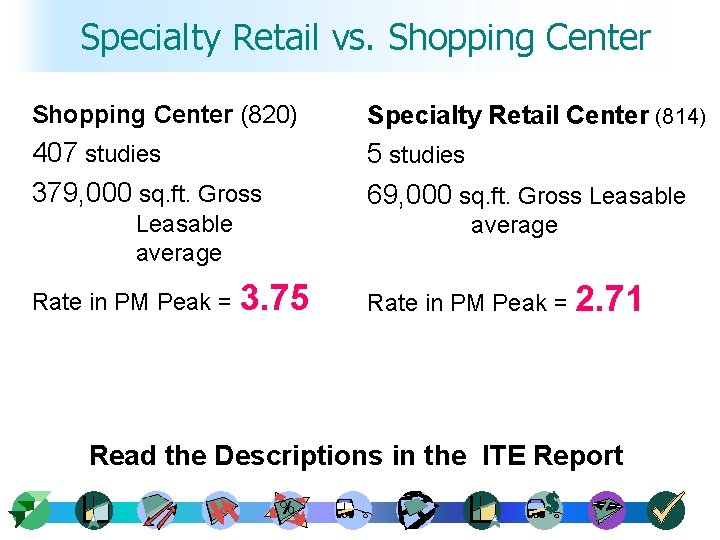
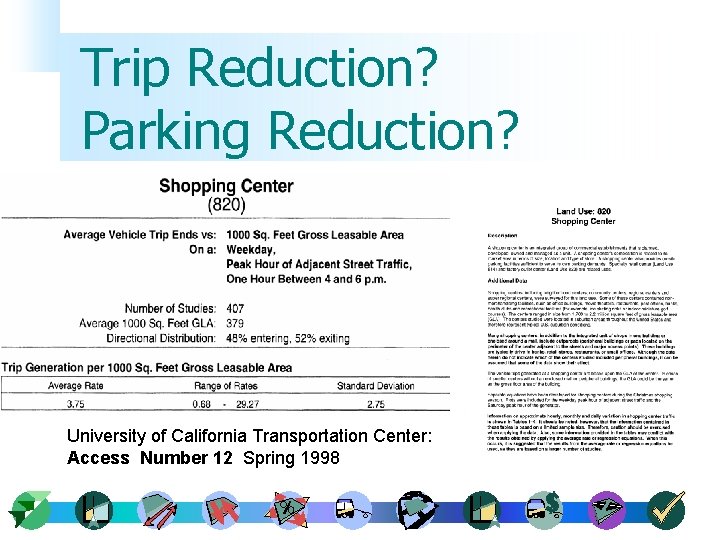
Specialty Retail vs. Shopping Center (820) Specialty Retail Center (814) 407 studies 379, 000 sq. ft. Gross 5 studies 69, 000 sq. ft. Gross Leasable average Rate in PM Peak = average 3. 75 Rate in PM Peak = 2. 71 Read the Descriptions in the ITE Report

Read Descriptions – Full of Information
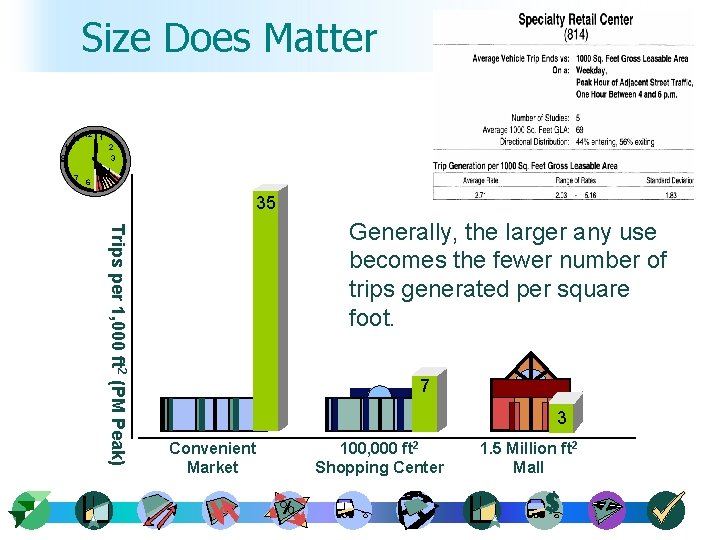
Size Does Matter 11 12 1 2 10 9 3 8 7 6 5 4 35 Trips per 1, 000 ft 2 (PM Peak) Generally, the larger any use becomes the fewer number of trips generated per square foot. 7 3 Convenient Market 100, 000 ft 2 Shopping Center 1. 5 Million ft 2 Mall
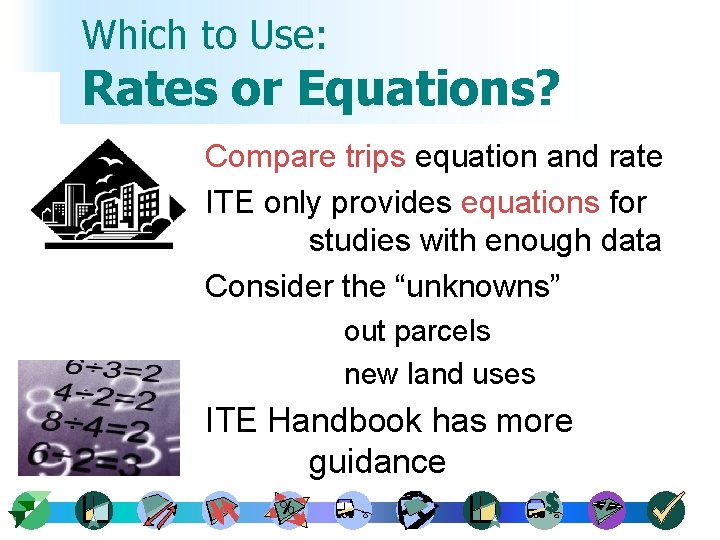
Which to Use: Rates or Equations? Compare trips equation and rate ITE only provides equations for studies with enough data Consider the “unknowns” out parcels new land uses ITE Handbook has more guidance
Shopping Center

Shopping Center

Shopping Center
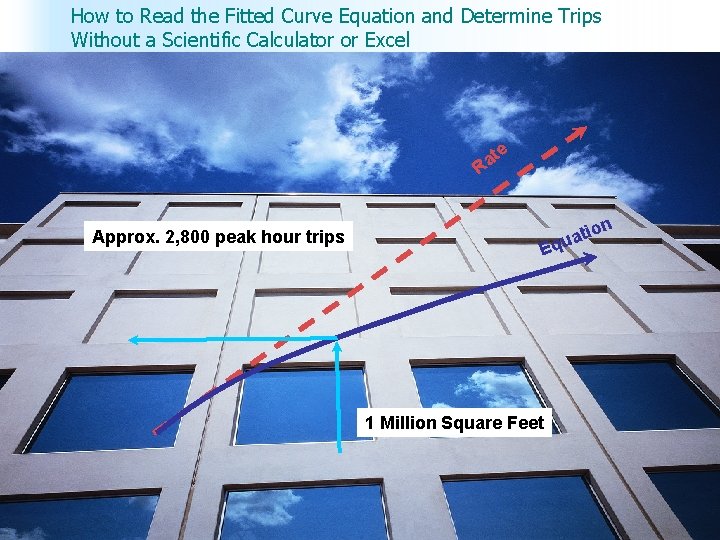
How to Read the Fitted Curve Equation and Determine Trips Without a Scientific Calculator or Excel te a R Approx. 2, 800 peak hour trips ion t a qu E 1 Million Square Feet
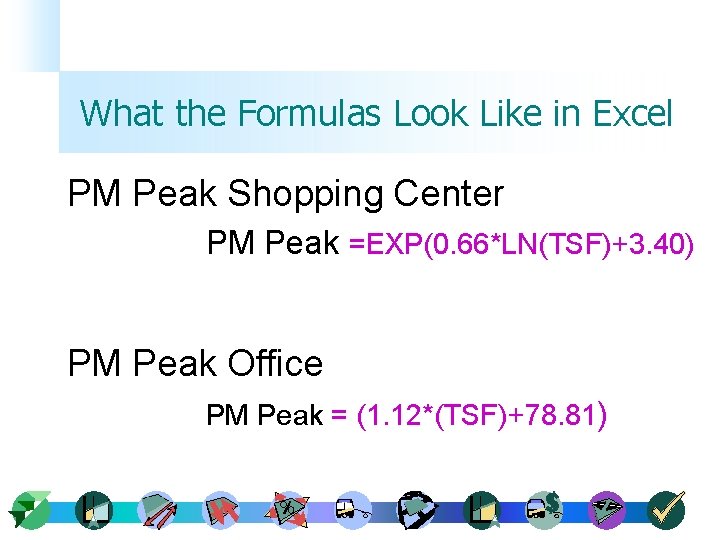
What the Formulas Look Like in Excel PM Peak Shopping Center PM Peak =EXP(0. 66*LN(TSF)+3. 40) PM Peak Office PM Peak = (1. 12*(TSF)+78. 81)
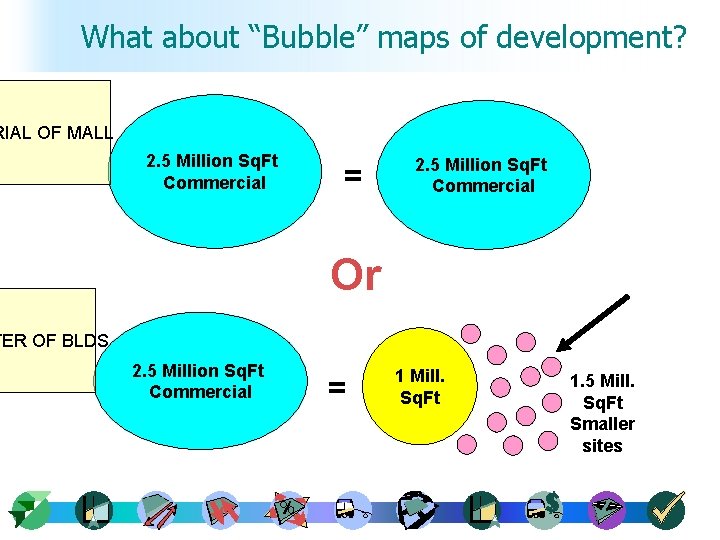
What about “Bubble” maps of development? RIAL OF MALL = 2. 5 Million Sq. Ft Commercial Or TER OF BLDS 2. 5 Million Sq. Ft Commercial = 1 Mill. Sq. Ft 1. 5 Mill. Sq. Ft Smaller sites
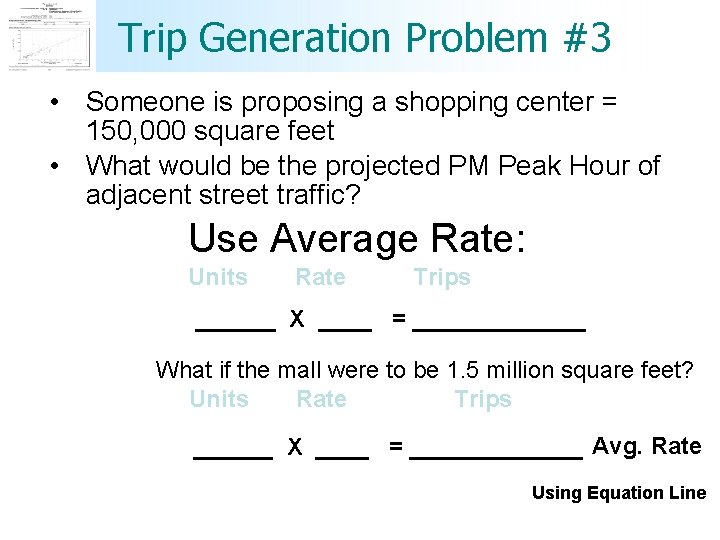
Trip Generation Problem #3 • Someone is proposing a shopping center = 150, 000 square feet • What would be the projected PM Peak Hour of adjacent street traffic? Use Average Rate: Units Rate Trips ______ X ____ = _______ What if the mall were to be 1. 5 million square feet? Units Rate Trips ______ X ____ = _______ Avg. Rate Using Equation Line
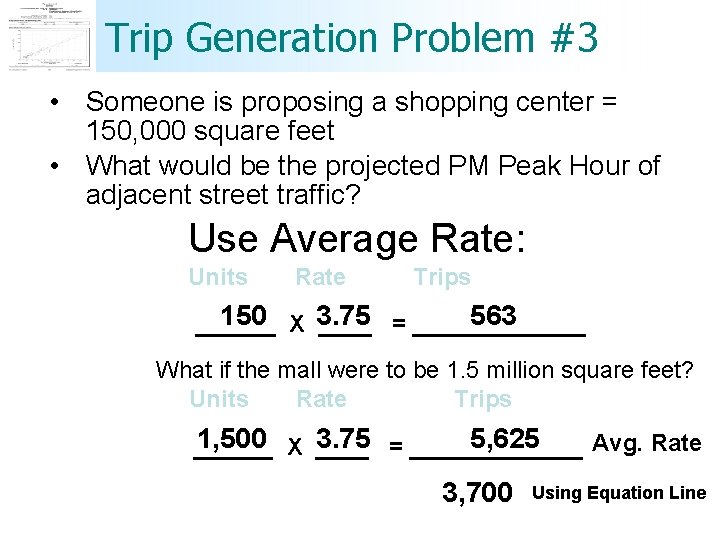
Trip Generation Problem #3 • Someone is proposing a shopping center = 150, 000 square feet • What would be the projected PM Peak Hour of adjacent street traffic? Use Average Rate: Units Rate Trips 150 X 3. 75 563 ______ = _______ What if the mall were to be 1. 5 million square feet? Units Rate Trips 1, 500 X 3. 75 5, 625 Avg. Rate ______ = _______ 3, 700 Using Equation Line
Trip Reduction? Parking Reduction? University of California Transportation Center: Access Number 12 Spring 1998
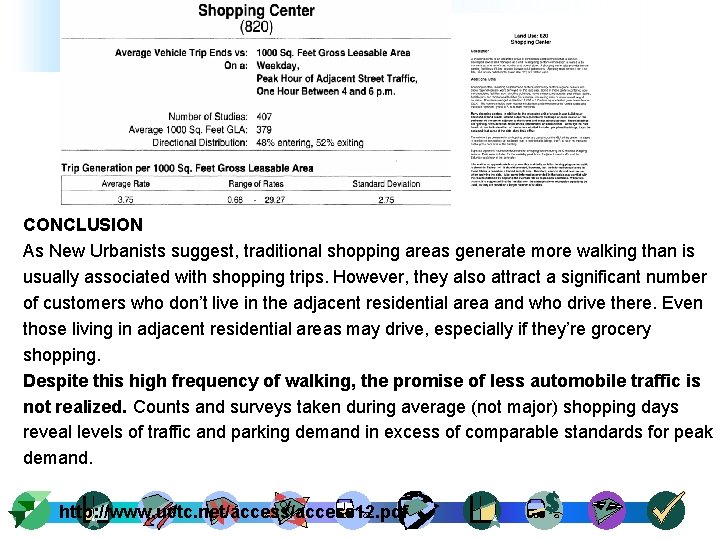
CONCLUSION As New Urbanists suggest, traditional shopping areas generate more walking than is usually associated with shopping trips. However, they also attract a significant number of customers who don’t live in the adjacent residential area and who drive there. Even those living in adjacent residential areas may drive, especially if they’re grocery shopping. Despite this high frequency of walking, the promise of less automobile traffic is not realized. Counts and surveys taken during average (not major) shopping days reveal levels of traffic and parking demand in excess of comparable standards for peak demand. http: //www. uctc. net/access 12. pdf
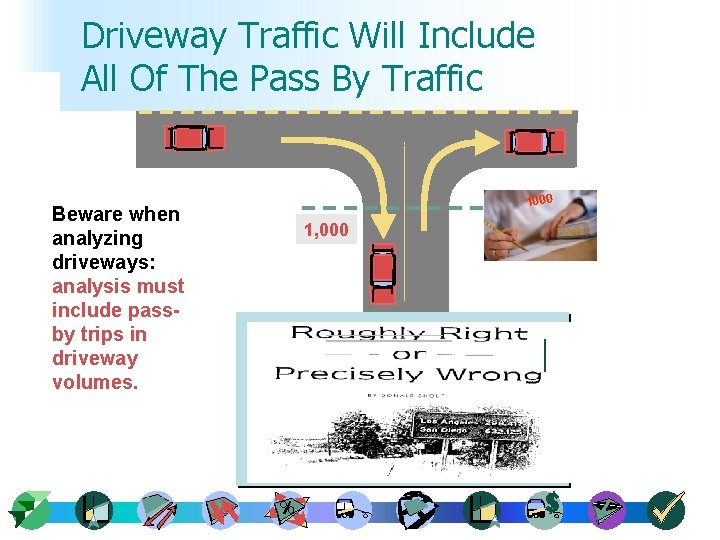
Driveway Traffic Will Include All Of The Pass By Traffic Beware when analyzing driveways: analysis must include passby trips in driveway volumes. 1000 1, 000
What you need to Know About Trip Generation • Simple trip generation is always needed • Read the descriptions of the ITE Report • Trip Generation studies are just estimates – Don’t be fooled by the precision • ITE’s Trip Generation methods may not work downtown • Be skeptical of major trip reductions until more studies are done • Don’t blindly use a “stock” percentage for internalization
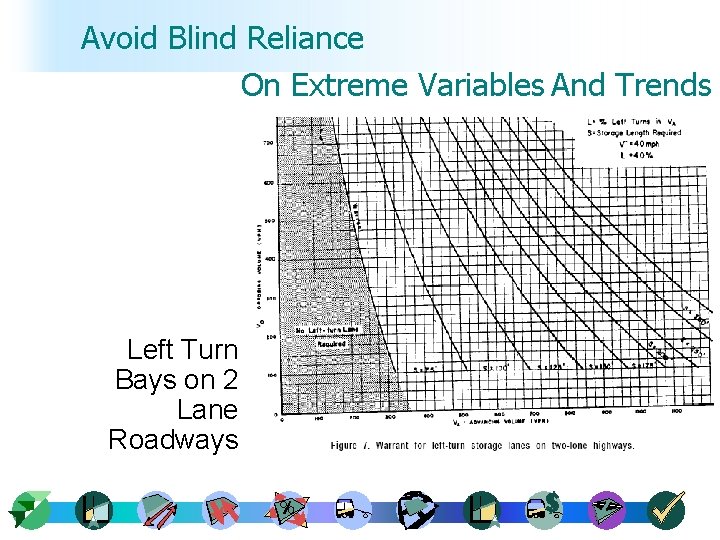
Avoid Blind Reliance On Extreme Variables And Trends Left Turn Bays on 2 Lane Roadways

Harmelink Method for Left Turn Lanes (Early 1960 s) • Based on delay – Not Safety • Used the term “Warrant” • Assumes precise knowledge of the future

From AASHTO Adapted from Harmelink
Arvida Communities
Commercial Pod
Commercial Node on US 98 Commercial Node
PM Peak Traffic for the Commercial Pod

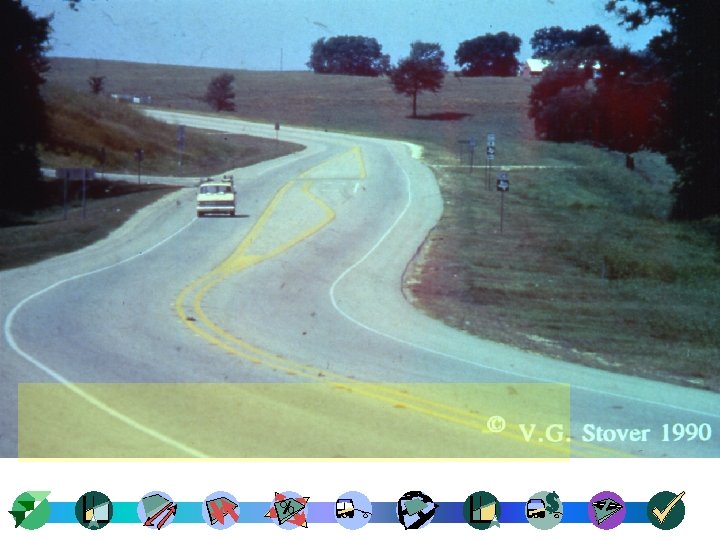

Projections

What Can Go Wrong With Projections?
What Can Go Wrong With Projections? • In 1977 there were 48 Elvis Impersonators • In 1996 There were 7, 328 • If this rate of Growth continues; • One out of 4 people in 2012 will be an Elvis impersonator

estrian Access and Interaction with t

Vergil Stover’s Principle of Site Design
Don’t Forget Pedestrians, Cyclists and Bus Patrons • Sidewalks into the site – On both sides of the driveway • Pedestrian paths to the buildings and shops • Sight distance issues at driveways and bus stops • Secure and reasonable bike parking
- Slides: 65