
Trigger Point Therapy for the Office Athlete What
- Slides: 13
Trigger Point Therapy for the Office Athlete What is it, and how can you use it to improve your function?
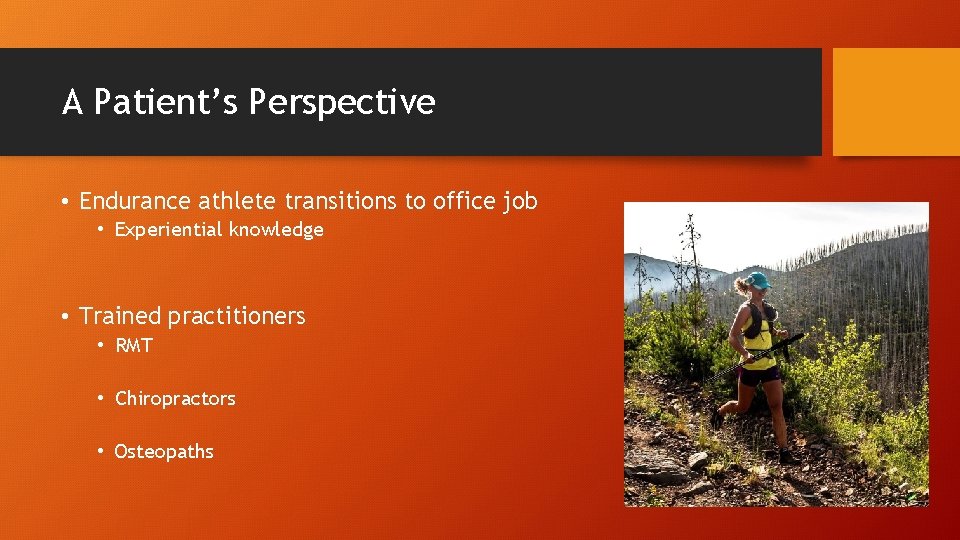
A Patient’s Perspective • Endurance athlete transitions to office job • Experiential knowledge • Trained practitioners • RMT • Chiropractors • Osteopaths
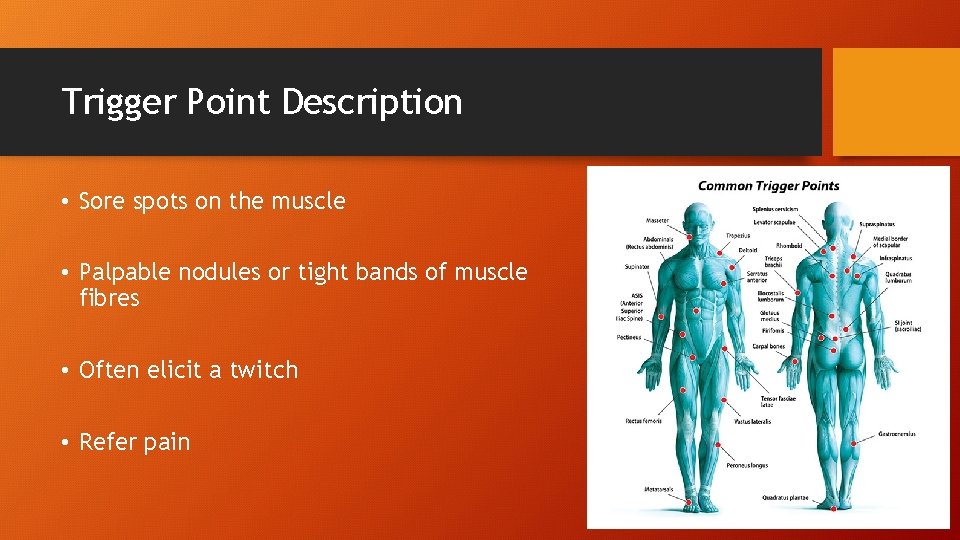
Trigger Point Description • Sore spots on the muscle • Palpable nodules or tight bands of muscle fibres • Often elicit a twitch • Refer pain
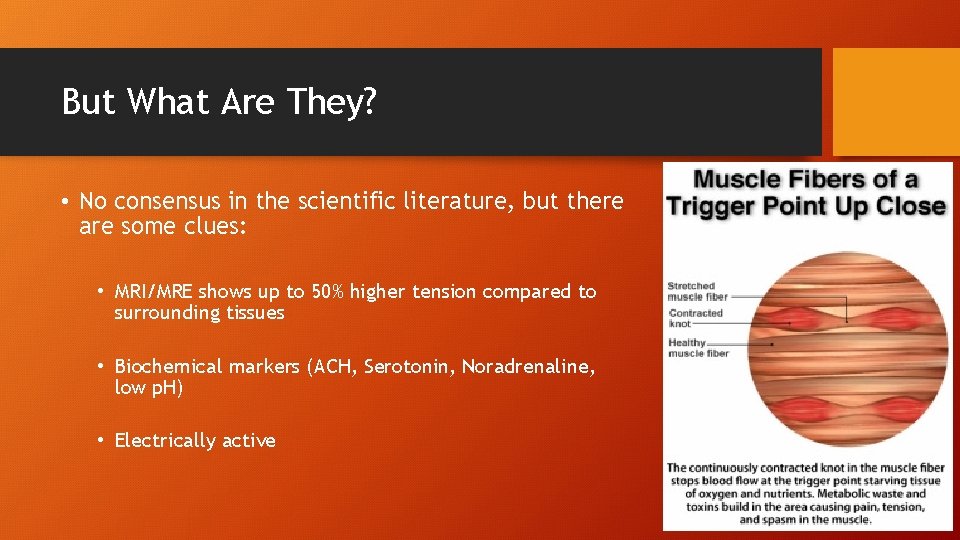
But What Are They? • No consensus in the scientific literature, but there are some clues: • MRI/MRE shows up to 50% higher tension compared to surrounding tissues • Biochemical markers (ACH, Serotonin, Noradrenaline, low p. H) • Electrically active
Two Types • Latent • No spontaneous pain • Affects muscle function • Pain on palpation only • Active • Causes pain at rest • Referred pain on palpation, similar to complaint
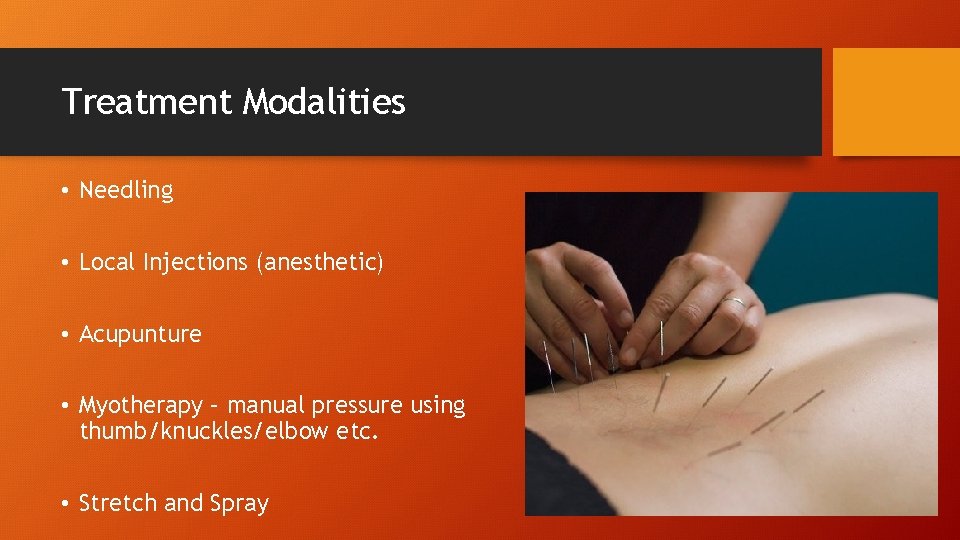
Treatment Modalities • Needling • Local Injections (anesthetic) • Acupunture • Myotherapy – manual pressure using thumb/knuckles/elbow etc. • Stretch and Spray
Effectiveness • High Variation • • Dependent on injury/individual Skill of practitioner May require a single or multiple treatments Must be followed up with strengthening exercises • Weak evidence due to small study size • Headaches and migraines – reduce intensity, severity and frequency • Low back pain – best when combined with otherapies
Soft Tissue Release (STR) • “The Soft Tissue Release Handbook”. Sanderson and Odell. 2013. • AKA – Active Release Therapy • Lock – Lengthen – Release • Lock – Surface area (start broader), Pressure (start lighter), Direction (angled vs direct) • Lengthen – Active (patient moves), Passive (therapist moves), Weight bearing, Resisted.
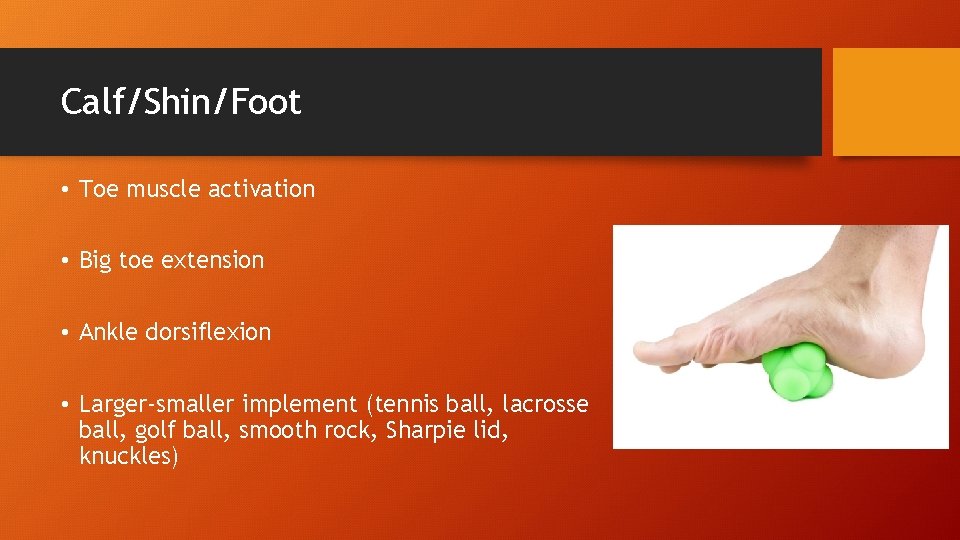
Calf/Shin/Foot • Toe muscle activation • Big toe extension • Ankle dorsiflexion • Larger-smaller implement (tennis ball, lacrosse ball, golf ball, smooth rock, Sharpie lid, knuckles)
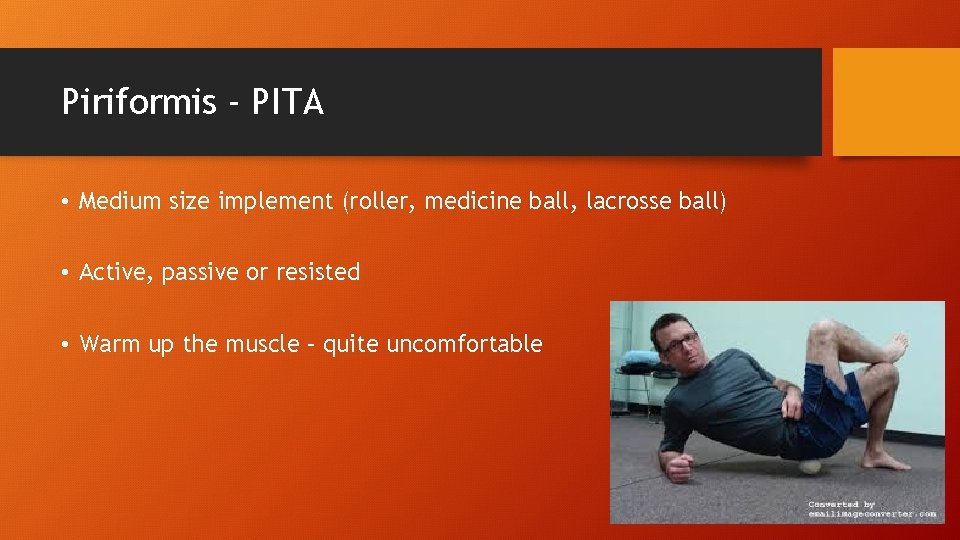
Piriformis - PITA • Medium size implement (roller, medicine ball, lacrosse ball) • Active, passive or resisted • Warm up the muscle – quite uncomfortable
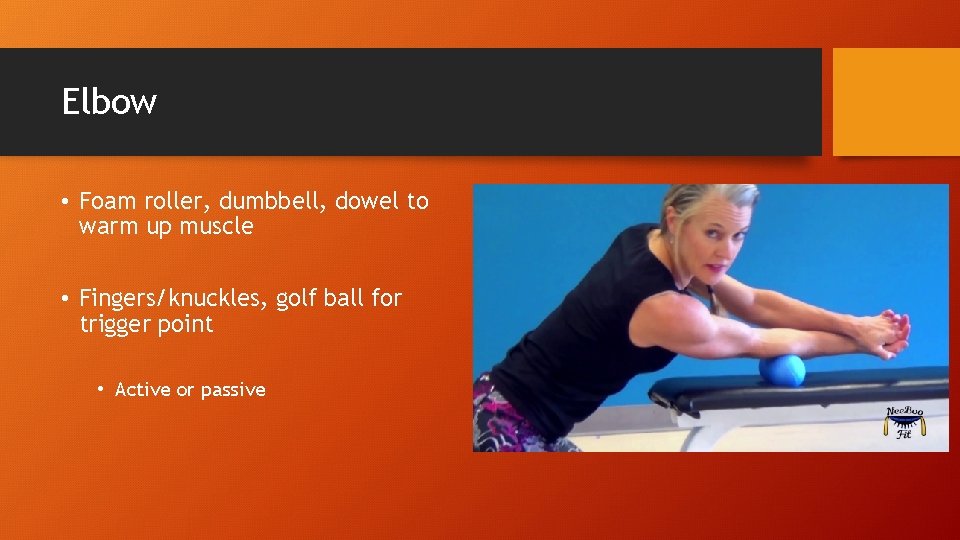
Elbow • Foam roller, dumbbell, dowel to warm up muscle • Fingers/knuckles, golf ball for trigger point • Active or passive
Choosing a Therapist • Should gain noticeable relief within a couple of visits • Most of the time should treat away from the painful area • Should give you at home myofascial release exercises and strengthening/stretching exercises • Beware of rest • Should not cause excessive bruising.
Resources • “The Soft Tissue Release Handbook”. Sanderson and Odell. 2013. • Intended for use by therapists • Gives a very good overview of the injury process, and the rational behind TPT • Medline – free with Calgary Public Library membership • For those who want to know the current scientific research • “Anatomy Trains”. Thomas Myers, 3 rd Ed. • All about fascia