
Triclosans Effect on Yeast Survivorship Ryan Mc Nelis
- Slides: 17
Triclosan’s Effect on Yeast Survivorship Ryan Mc. Nelis Freshman, Pittsburgh Central Catholic
Triclosan • Acts against bacteria and fungi in a variety of commercial products including, soaps, shampoos, and toothpastes • Works by targeting cytoplasmic and membrane targets • Has been reported to have various negative health effects, ranging from increasing risks of food allergies, to muscle contraction. It has also been found toxic to bacteria at levels that are found throughout aquatic environments.
Saccharomyces cerevisiae (Yeast) • • • Eukaryotic microorganism Unicellular 3– 4 µm diameter The most studied cellular model in research Cell cycle is similar to human cells Comparable DNA replication, recombination, cell division and metabolism
Purpose • The purpose of this experiment was to determine the effect varying concentrations of triclosan had on the survivorship of yeast cultures
Hypothesis Null- triclosan will have no significant effect on the number of surviving yeast colonies Alternative- triclosan will significantly decrease the number of surviving yeast colonies
Materials • • Test tubes Proper safety equipment Water Spreader bars Vortex Sterile Water Hot Plates Beakers • Test tube rack • Micropipettes • • Pipette tips Yeast • (Saccharomyces cerevisiae) YEPD Agar Plates YEPD Media (0. 5% yeast, 2% Glucose, 2% Peptone) Triclosan Sterile Dilution Fluid
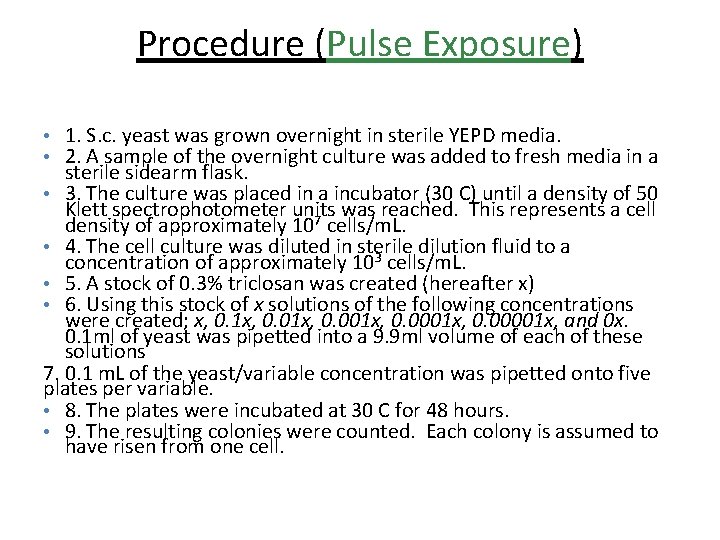
Procedure (Pulse Exposure) • 1. S. c. yeast was grown overnight in sterile YEPD media. • 2. A sample of the overnight culture was added to fresh media in a sterile sidearm flask. • 3. The culture was placed in a incubator (30 C) until a density of 50 Klett spectrophotometer units was reached. This represents a cell density of approximately 107 cells/m. L. • 4. The cell culture was diluted in sterile dilution fluid to a concentration of approximately 103 cells/m. L. • 5. A stock of 0. 3% triclosan was created (hereafter x) • 6. Using this stock of x solutions of the following concentrations were created; x, 0. 1 x, 0. 001 x, 0. 00001 x, and 0 x. 0. 1 ml of yeast was pipetted into a 9. 9 ml volume of each of these solutions 7. 0. 1 m. L of the yeast/variable concentration was pipetted onto five plates per variable. • 8. The plates were incubated at 30 C for 48 hours. • 9. The resulting colonies were counted. Each colony is assumed to have risen from one cell.
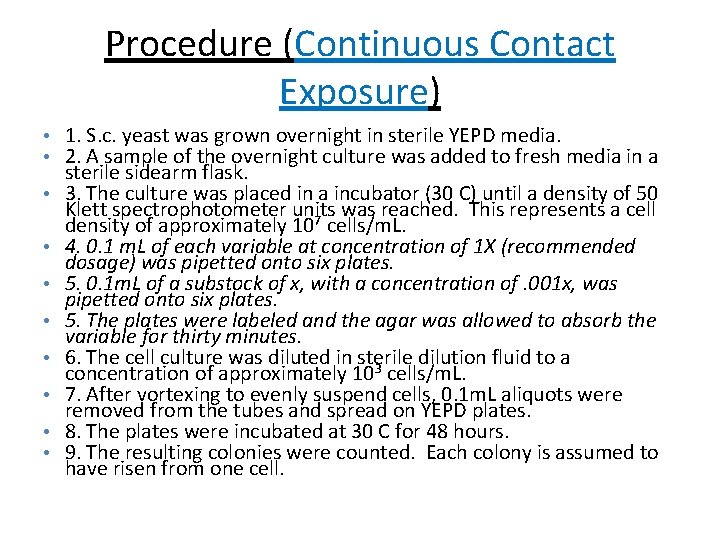
Procedure (Continuous Contact Exposure) • 1. S. c. yeast was grown overnight in sterile YEPD media. • 2. A sample of the overnight culture was added to fresh media in a • • sterile sidearm flask. 3. The culture was placed in a incubator (30 C) until a density of 50 Klett spectrophotometer units was reached. This represents a cell density of approximately 107 cells/m. L. 4. 0. 1 m. L of each variable at concentration of 1 X (recommended dosage) was pipetted onto six plates. 5. 0. 1 m. L of a substock of x, with a concentration of. 001 x, was pipetted onto six plates. 5. The plates were labeled and the agar was allowed to absorb the variable for thirty minutes. 6. The cell culture was diluted in sterile dilution fluid to a concentration of approximately 103 cells/m. L. 7. After vortexing to evenly suspend cells, 0. 1 m. L aliquots were removed from the tubes and spread on YEPD plates. 8. The plates were incubated at 30 C for 48 hours. 9. The resulting colonies were counted. Each colony is assumed to have risen from one cell.
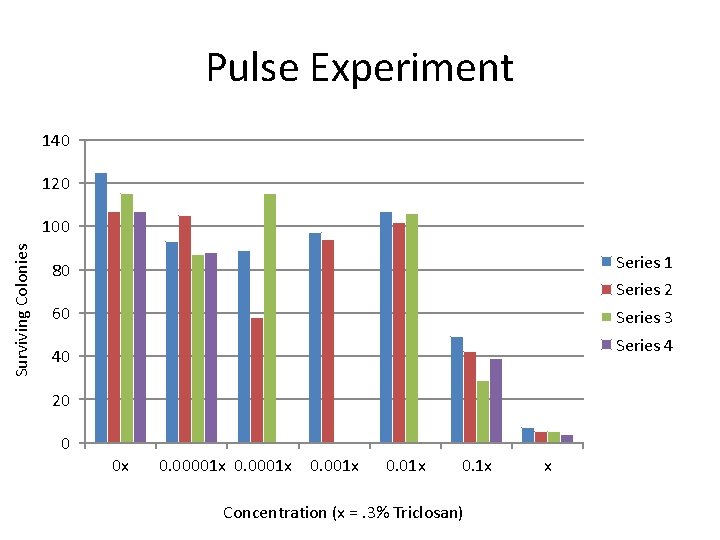
Pulse Experiment 140 120 Surviving Colonies 100 80 Series 1 60 Series 3 Series 2 Series 4 40 20 0 0 x 0. 00001 x 0. 1 x Concentration (x =. 3% Triclosan) x
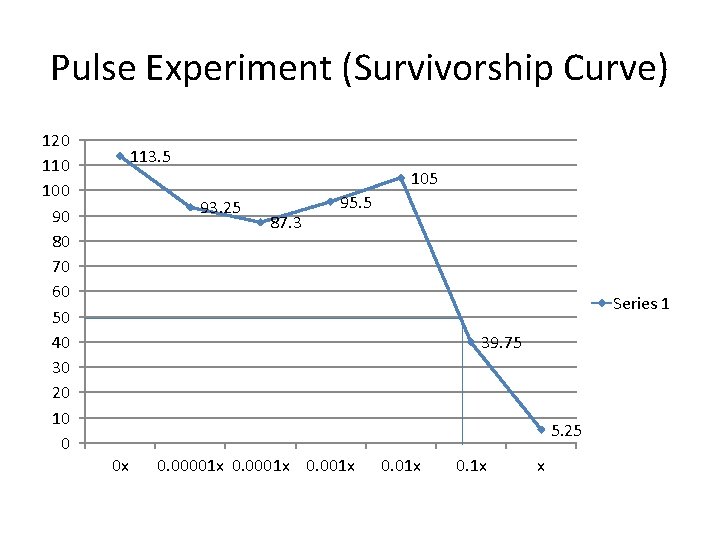
Pulse Experiment (Survivorship Curve) 120 110 100 90 80 70 60 50 40 30 20 10 0 113. 5 105 93. 25 87. 3 95. 5 Series 1 39. 75 5. 25 0 x 0. 00001 x 0. 1 x x
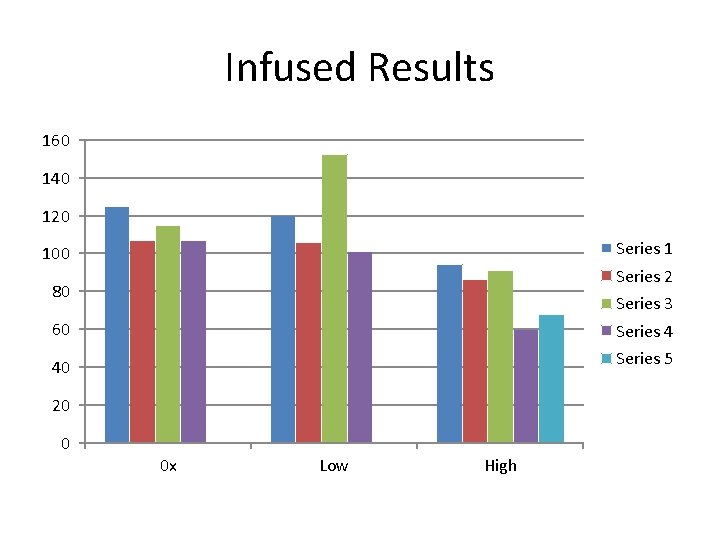
Infused Results 160 140 120 Series 1 100 Series 2 80 Series 3 60 Series 4 40 Series 5 20 0 0 x Low High
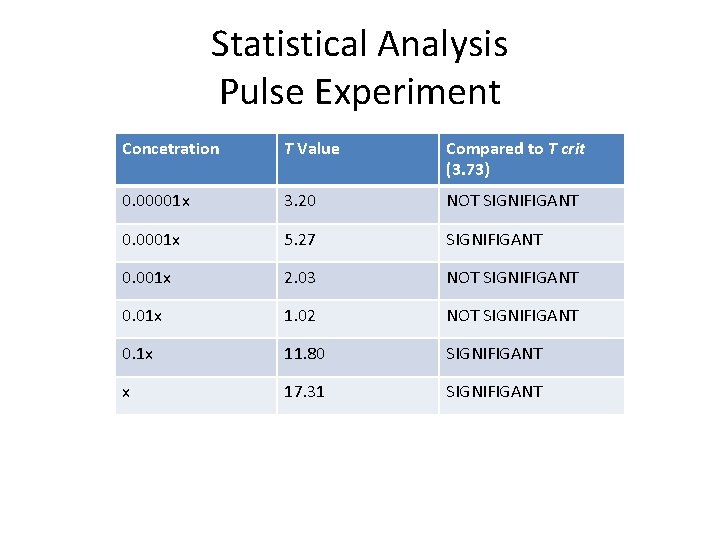
Statistical Analysis Pulse Experiment Concetration T Value Compared to T crit (3. 73) 0. 00001 x 3. 20 NOT SIGNIFIGANT 0. 0001 x 5. 27 SIGNIFIGANT 0. 001 x 2. 03 NOT SIGNIFIGANT 0. 01 x 1. 02 NOT SIGNIFIGANT 0. 1 x 11. 80 SIGNIFIGANT x 17. 31 SIGNIFIGANT
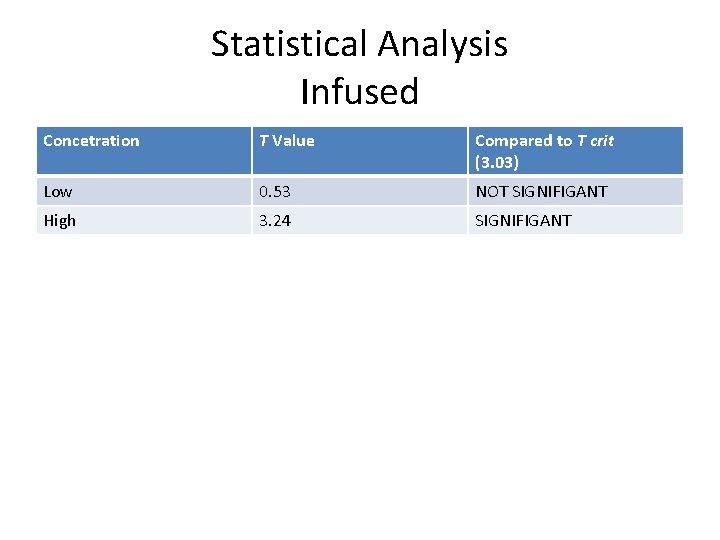
Statistical Analysis Infused Concetration T Value Compared to T crit (3. 03) Low 0. 53 NOT SIGNIFIGANT High 3. 24 SIGNIFIGANT
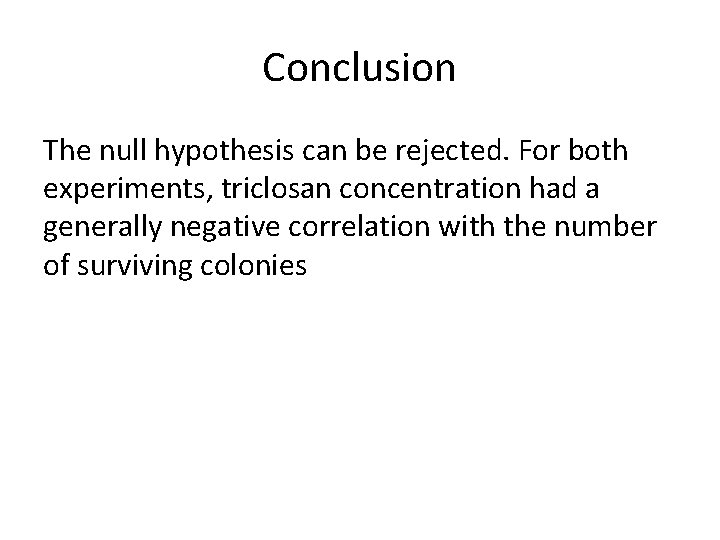
Conclusion The null hypothesis can be rejected. For both experiments, triclosan concentration had a generally negative correlation with the number of surviving colonies
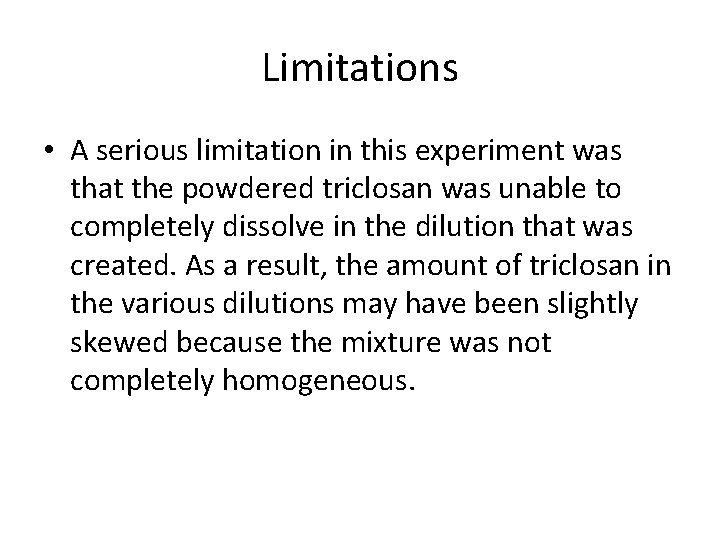
Limitations • A serious limitation in this experiment was that the powdered triclosan was unable to completely dissolve in the dilution that was created. As a result, the amount of triclosan in the various dilutions may have been slightly skewed because the mixture was not completely homogeneous.
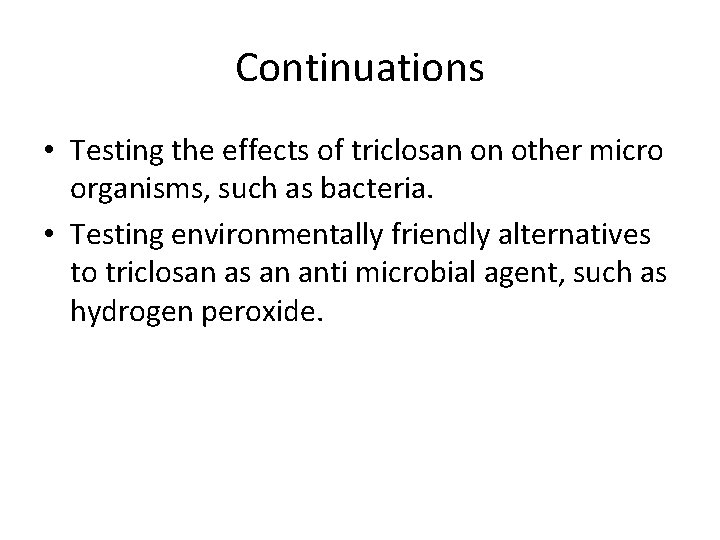
Continuations • Testing the effects of triclosan on other micro organisms, such as bacteria. • Testing environmentally friendly alternatives to triclosan as an anti microbial agent, such as hydrogen peroxide.
Works Cited • http: //www. fda. gov/For. Consumers/Consumer Updates/ucm 205999. htm • http: //www. epa. gov/oppsrrd 1/REDs/factshee ts/triclosan_fs. htm • http: //en. wikipedia. org/wiki/Triclosan