
TRICHINOSIS TRICHINIASIS TRICHINELLOSIS Trichinella spiralis Trichinosis symptomatology Intestinal

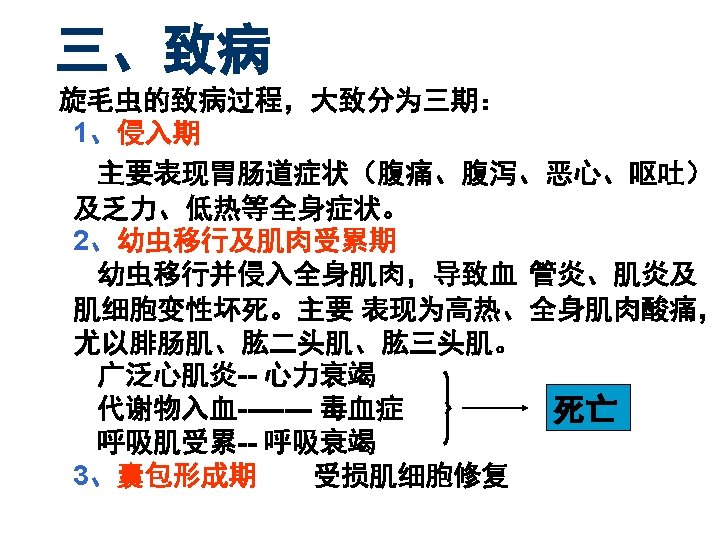
- Slides: 40
TRICHINOSIS TRICHINIASIS TRICHINELLOSIS & Trichinella spiralis
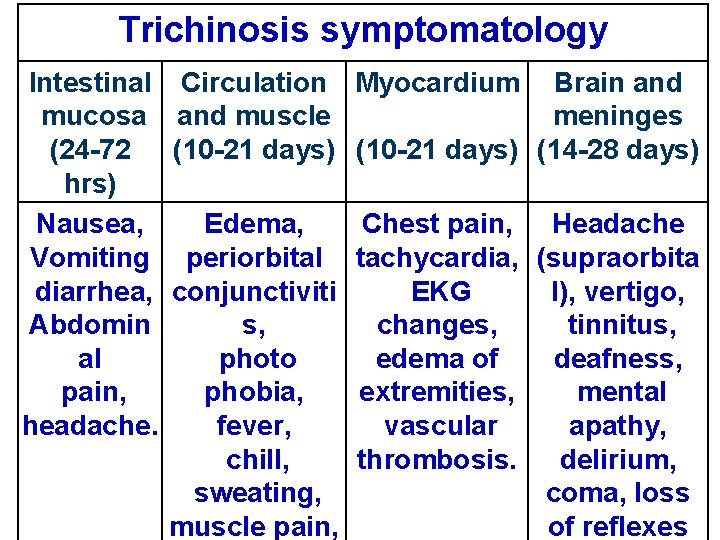
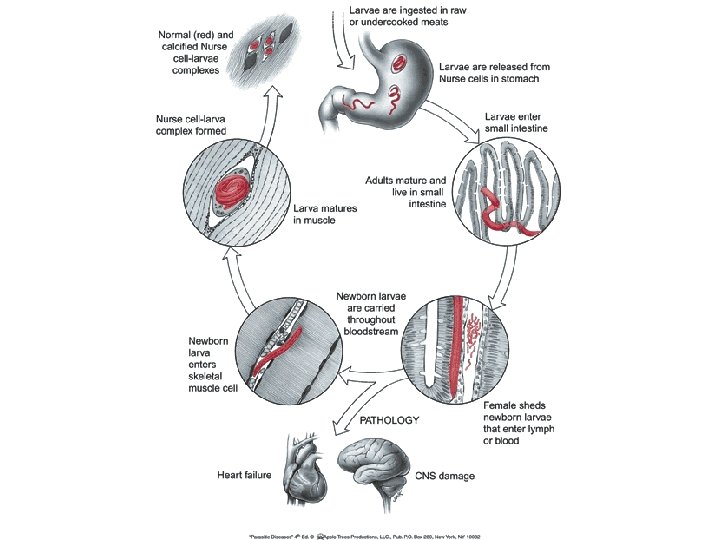
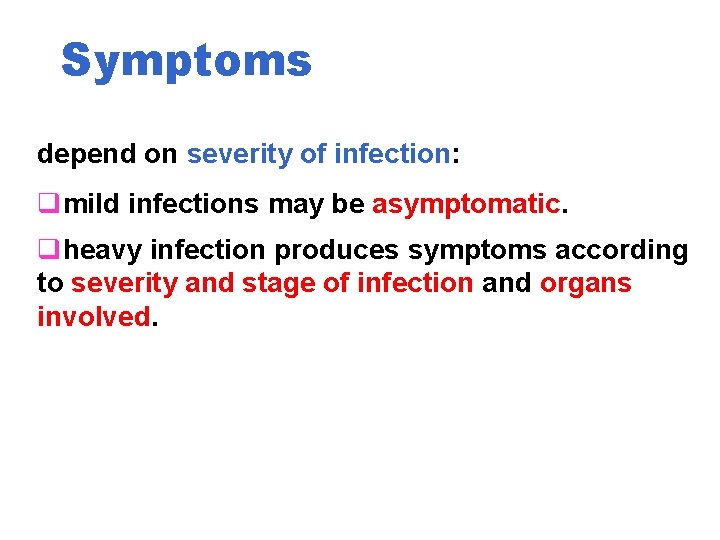
Trichinosis symptomatology Intestinal mucosa (24 -72 hrs) Nausea, Vomiting diarrhea, Abdomin al pain, headache. Circulation Myocardium Brain and muscle meninges (10 -21 days) (14 -28 days) Edema, periorbital conjunctiviti s, photo phobia, fever, chill, sweating, muscle pain, Chest pain, Headache tachycardia, (supraorbita EKG l), vertigo, changes, tinnitus, edema of deafness, extremities, mental vascular apathy, thrombosis. delirium, coma, loss of reflexes
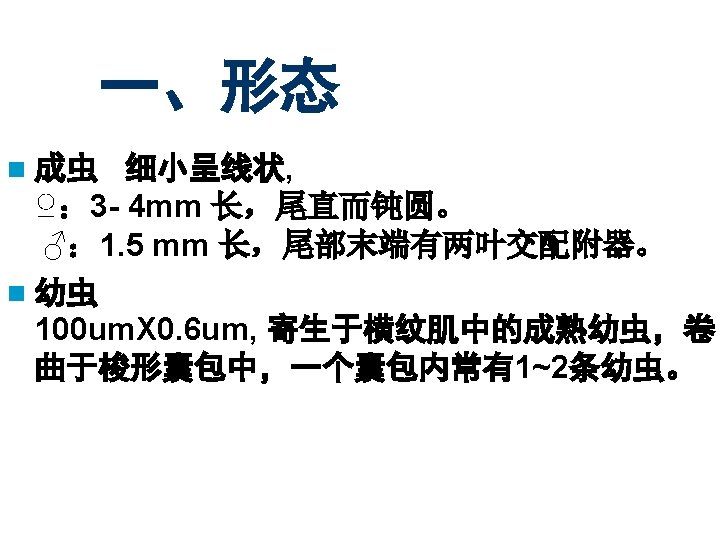
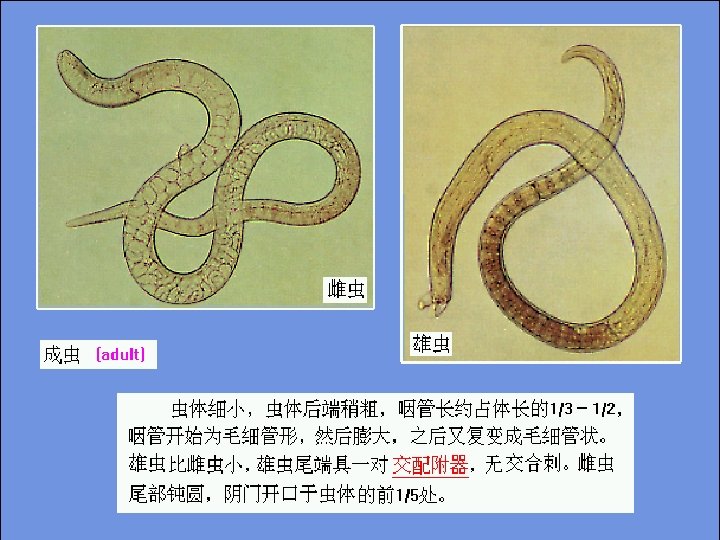
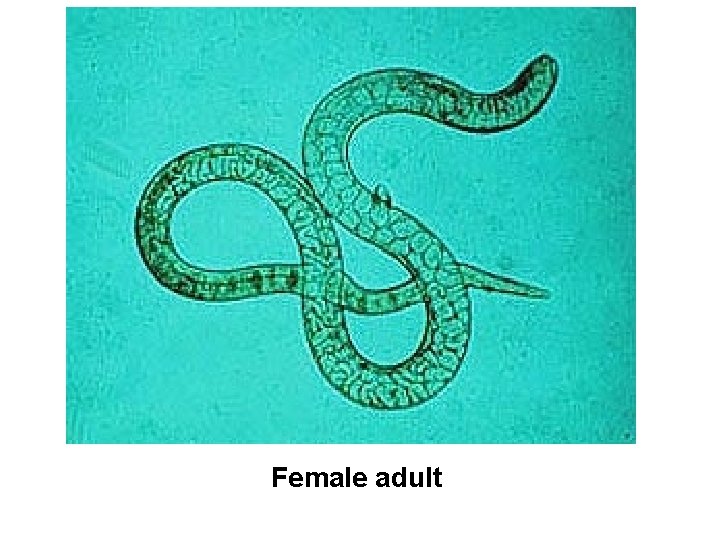
Female adult
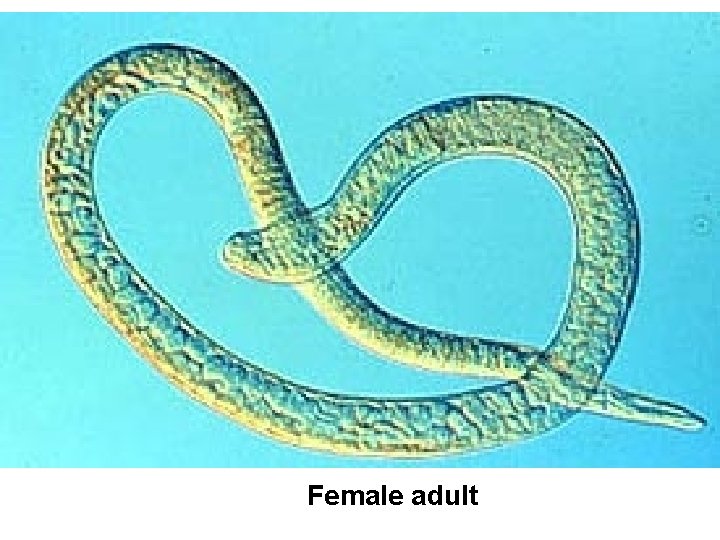
Female adult
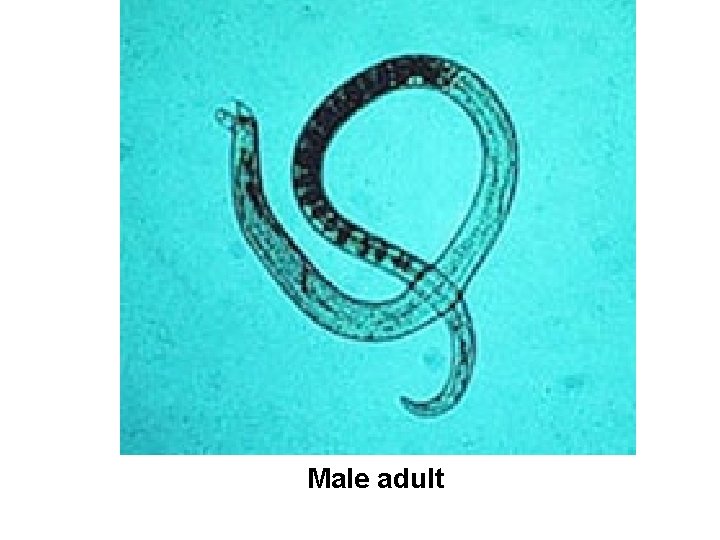
Male adult
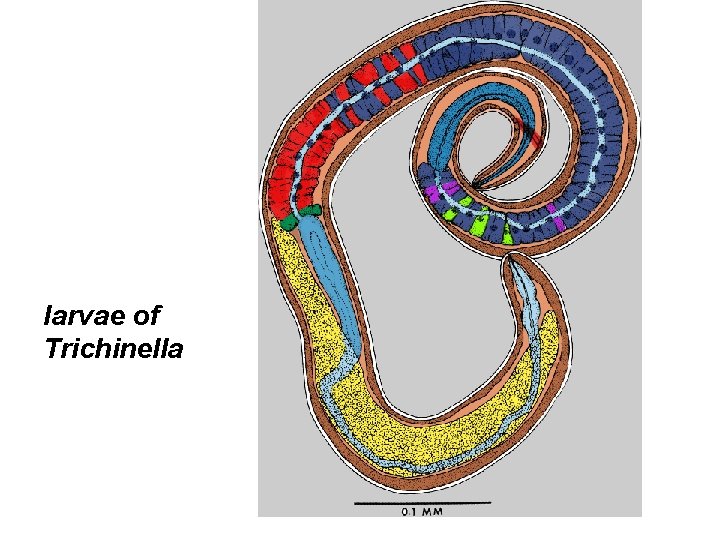
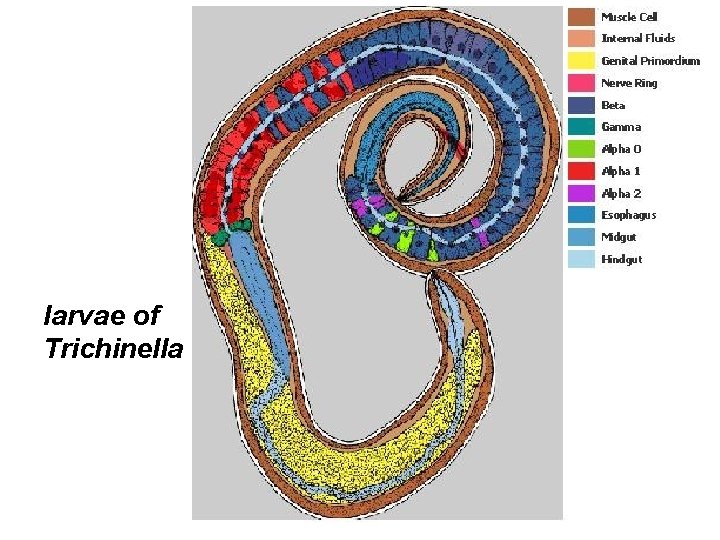
larvae of Trichinella
larvae of Trichinella
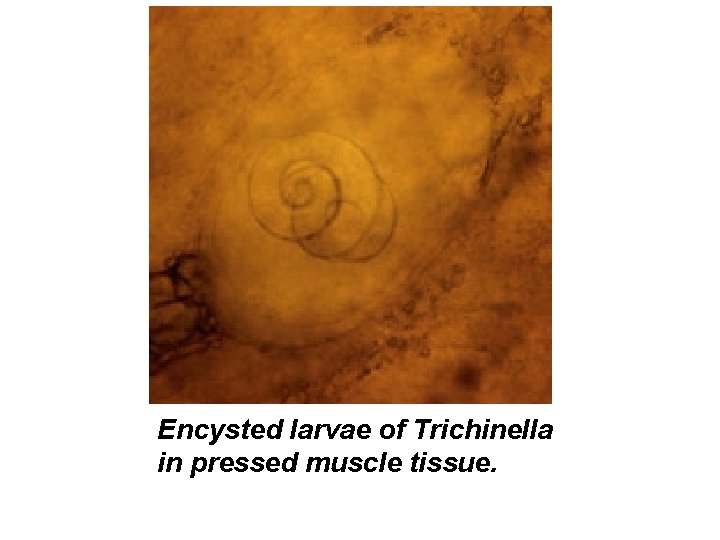
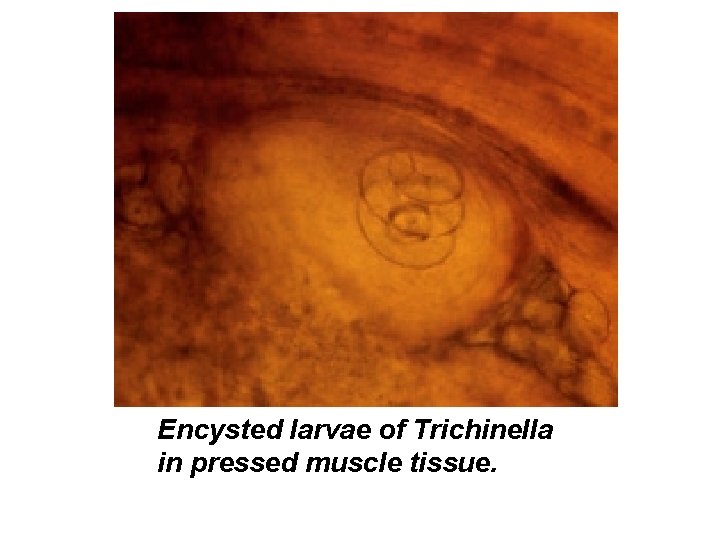
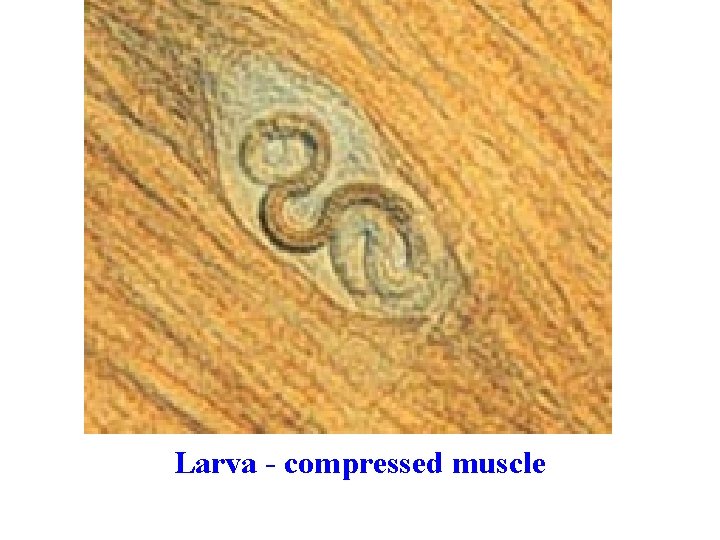
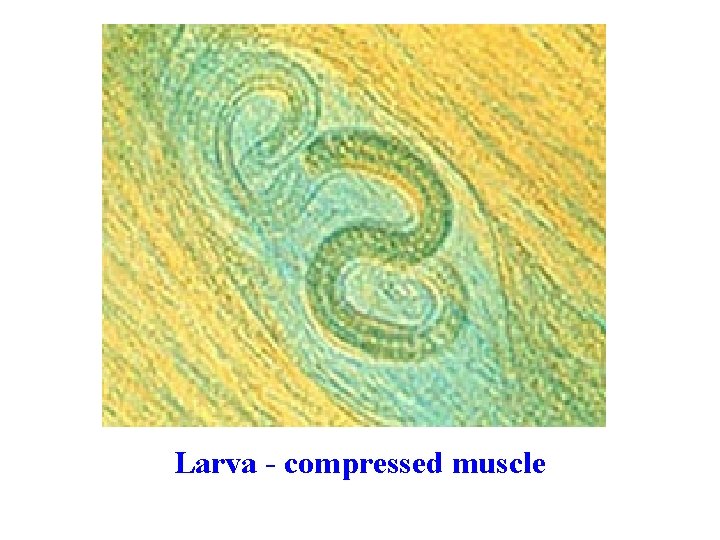
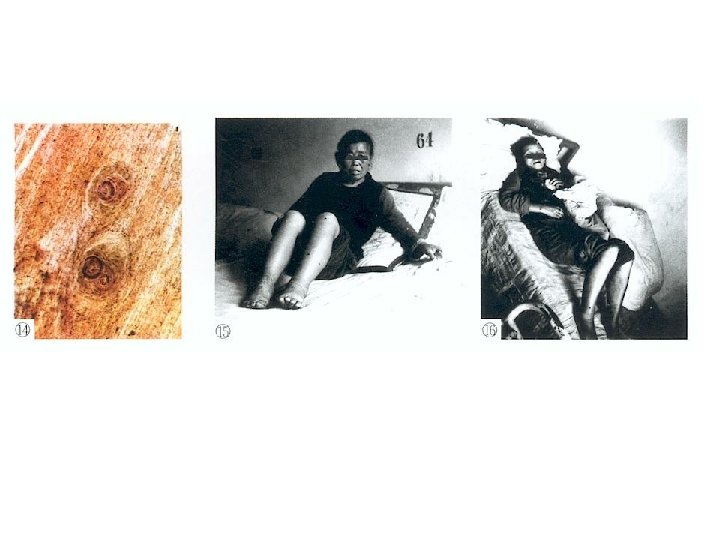
Encysted larvae of Trichinella in pressed muscle tissue.
Encysted larvae of Trichinella in pressed muscle tissue.
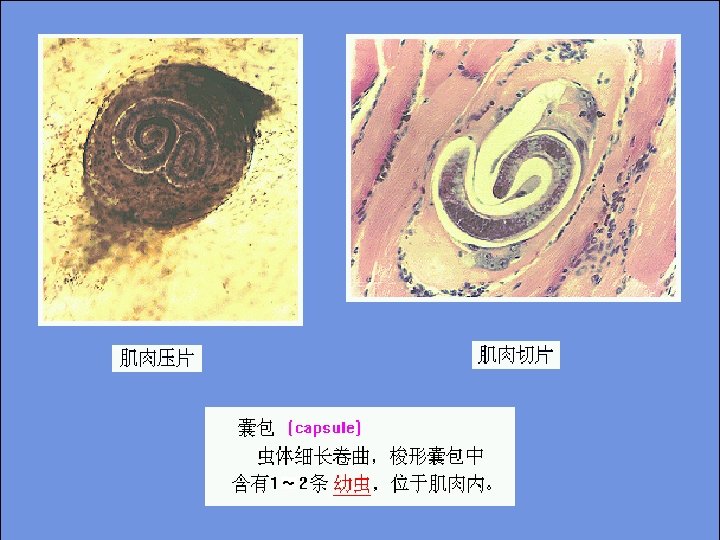
Larva - compressed muscle
Larva - compressed muscle
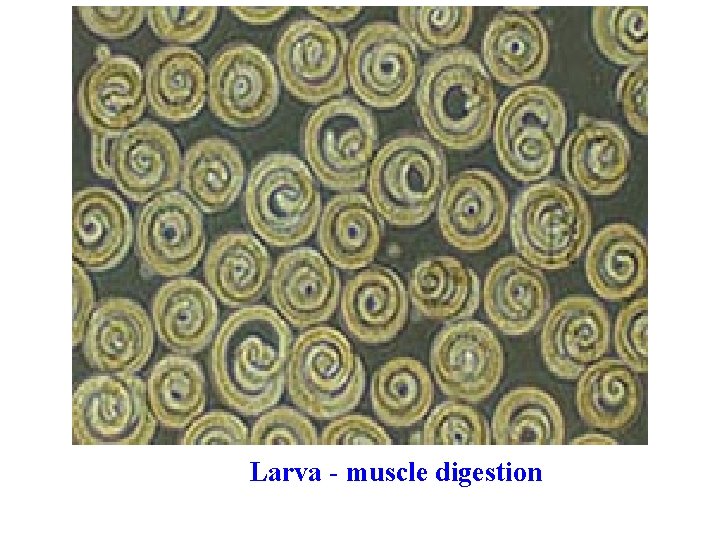
Larva - muscle digestion
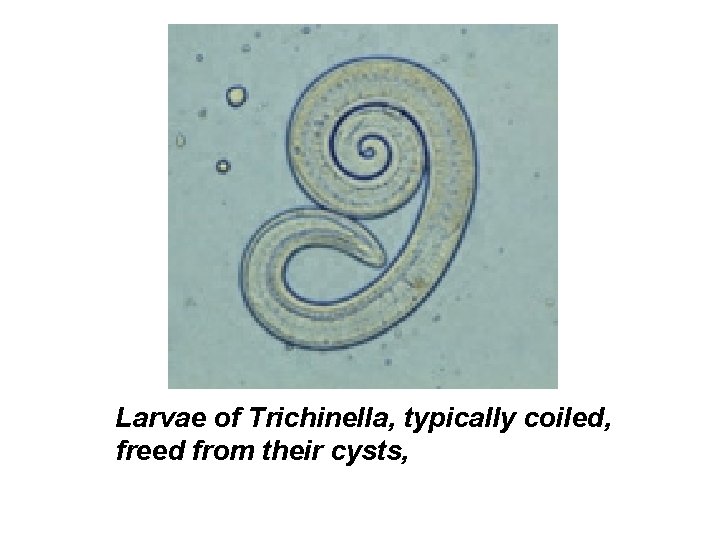
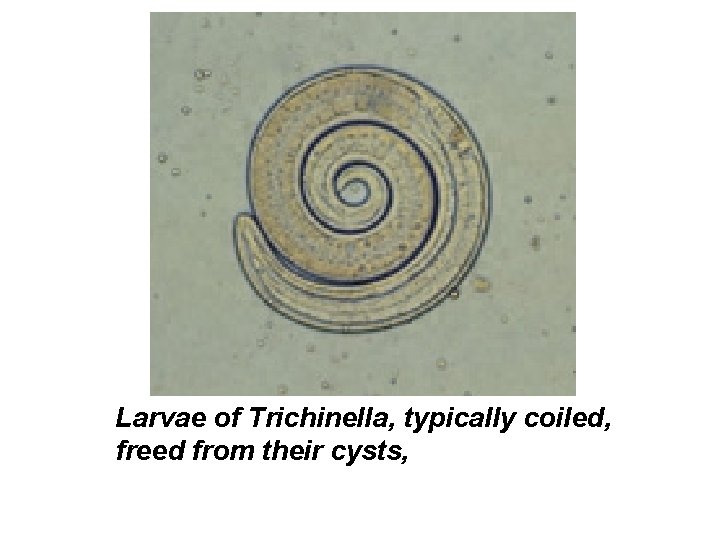
Larvae of Trichinella, typically coiled, freed from their cysts,
Larvae of Trichinella, typically coiled, freed from their cysts,
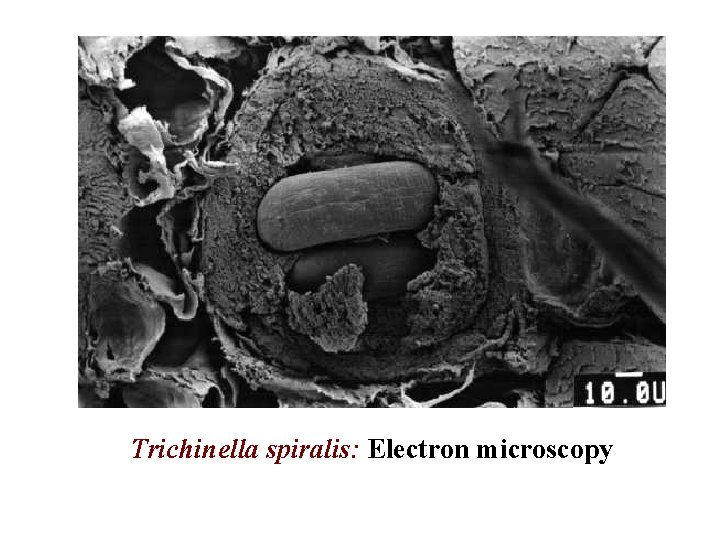
Trichinella spiralis: Electron microscopy
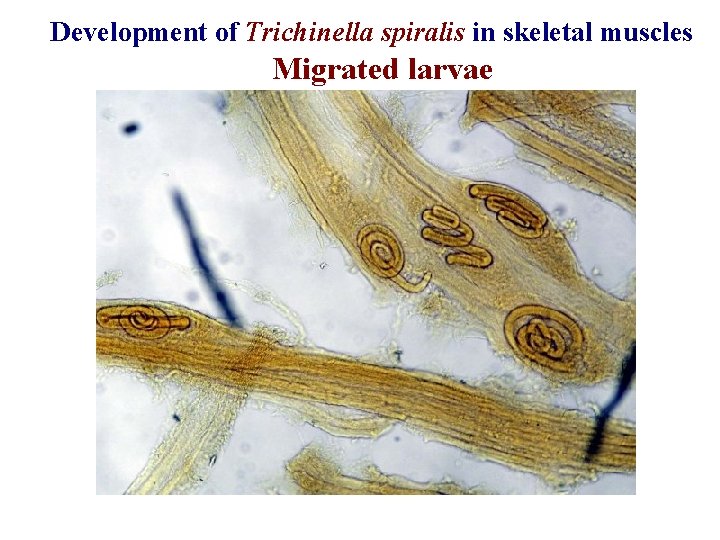
Development of Trichinella spiralis in skeletal muscles Migrated larvae
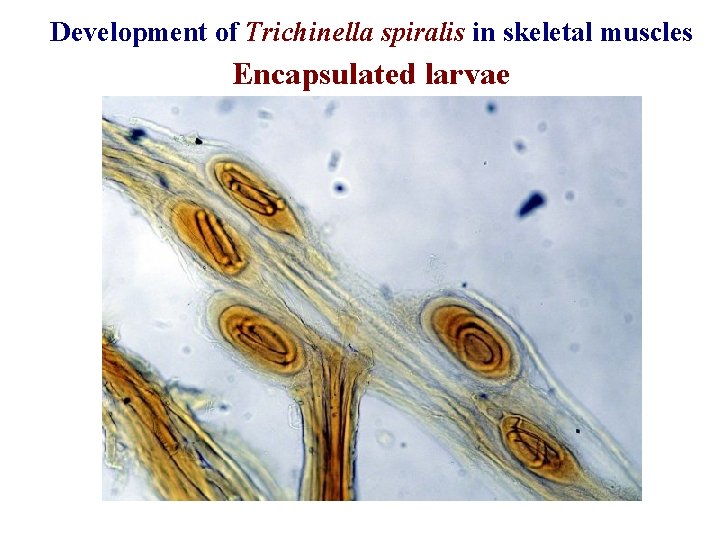
Development of Trichinella spiralis in skeletal muscles Encapsulated larvae
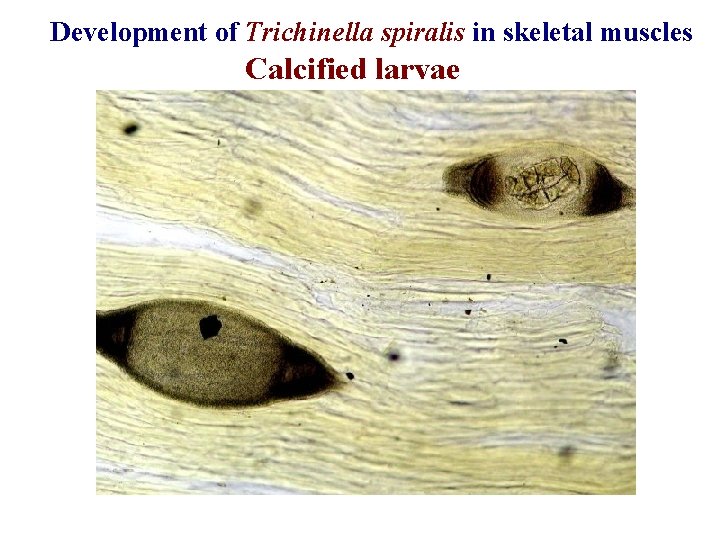
Development of Trichinella spiralis in skeletal muscles Calcified larvae
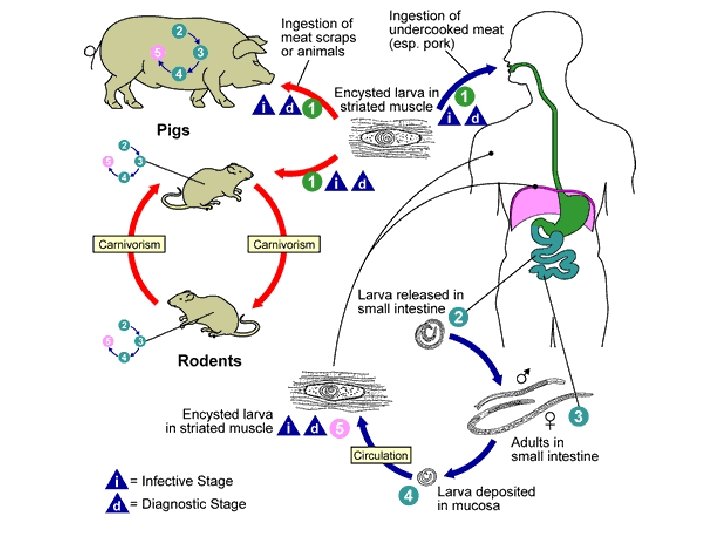
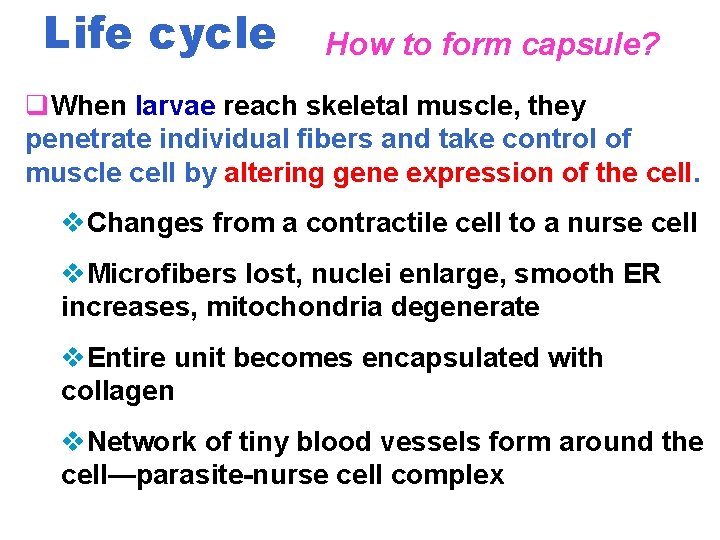
Life cycle How to form capsule? q. When larvae reach skeletal muscle, they penetrate individual fibers and take control of muscle cell by altering gene expression of the cell. v. Changes from a contractile cell to a nurse cell v. Microfibers lost, nuclei enlarge, smooth ER increases, mitochondria degenerate v. Entire unit becomes encapsulated with collagen v. Network of tiny blood vessels form around the cell—parasite-nurse cell complex
Life cycle How to form capsule? q. When larvae reach skeletal muscle, they penetrate individual fibers and take control of muscle cell by altering gene expression of the cell. qlarvae absorb nutrients from the nurse cell, and after 4 -8 weeks they are infective to their next host.
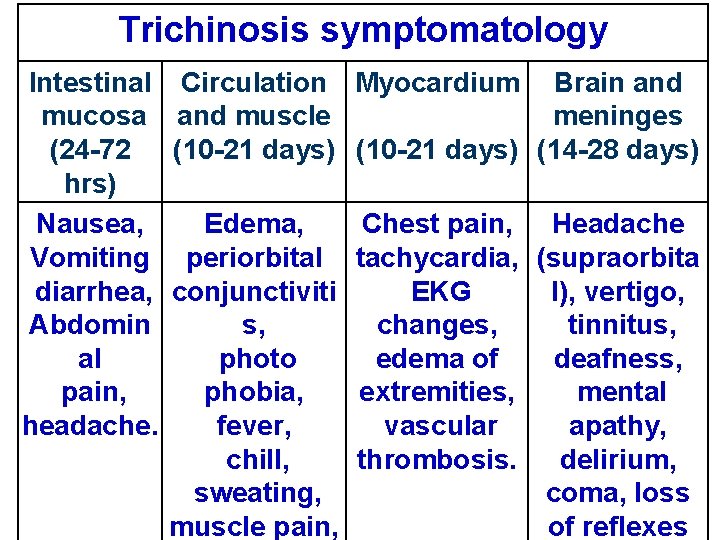
Symptoms depend on severity of infection: qmild infections may be asymptomatic. qheavy infection produces symptoms according to severity and stage of infection and organs involved.
Trichinosis symptomatology Intestinal mucosa (24 -72 hrs) Nausea, Vomiting diarrhea, Abdomin al pain, headache. Circulation Myocardium Brain and muscle meninges (10 -21 days) (14 -28 days) Edema, periorbital conjunctiviti s, photo phobia, fever, chill, sweating, muscle pain, Chest pain, Headache tachycardia, (supraorbita EKG l), vertigo, changes, tinnitus, edema of deafness, extremities, mental vascular apathy, thrombosis. delirium, coma, loss of reflexes
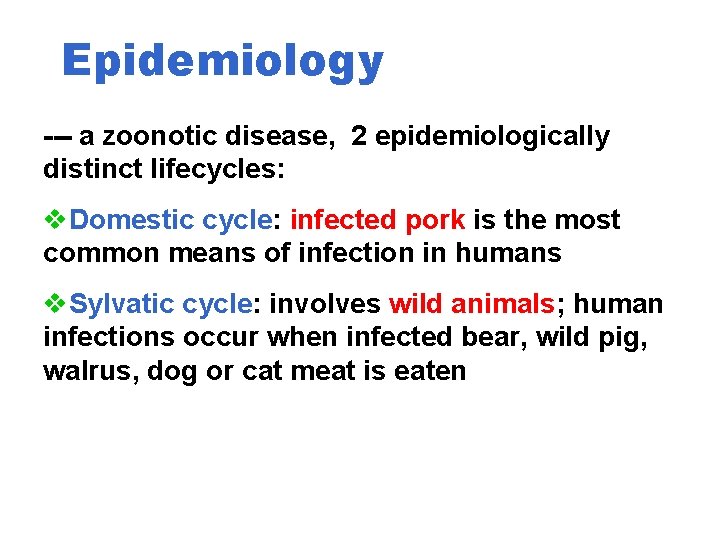
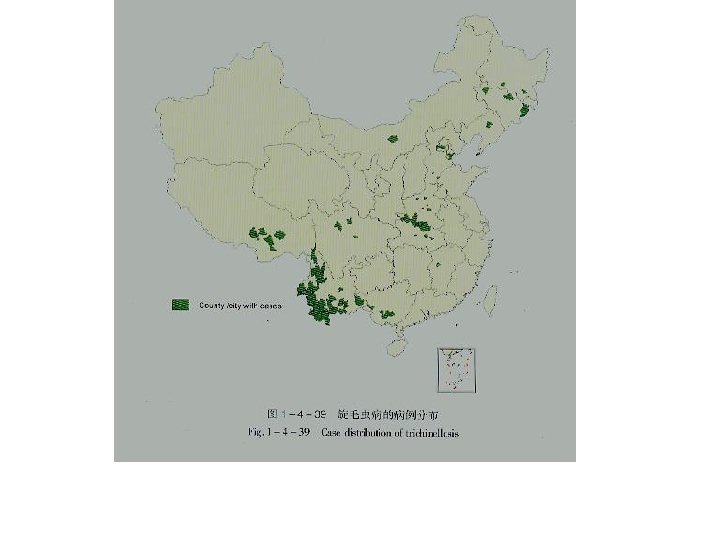
Epidemiology --- a zoonotic disease, 2 epidemiologically distinct lifecycles: v. Domestic cycle: infected pork is the most common means of infection in humans v. Sylvatic cycle: involves wild animals; human infections occur when infected bear, wild pig, walrus, dog or cat meat is eaten
Treatment q. Oral doses of mebendazole or albendazole are effective. q. Bed rest and analgesics help relieve muscle pain. q. Corticosteroids (such as prednisone) are use for treatments of inflammatory symptoms. q. Most people with trichinosis recover fully.
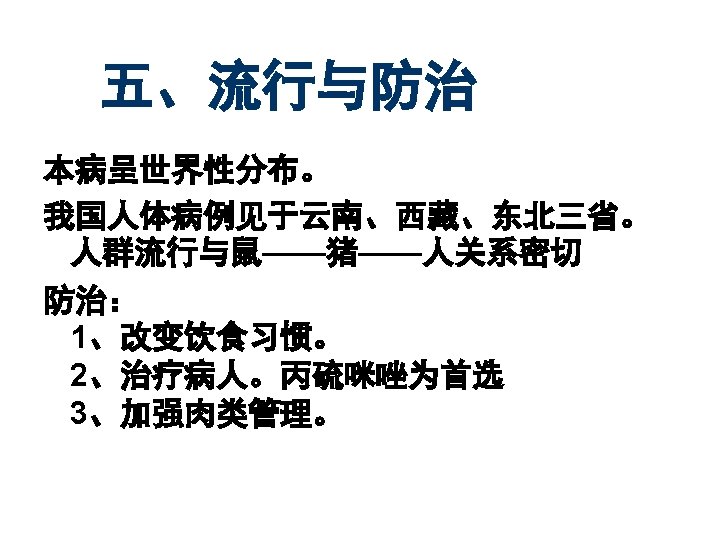
Prevention qelimination of parasite infection in hogs. qthoroughly cooking of meat (until there is no pink in the center). qfreezing meat at -15 °C for 3 weeks at -20 °C for 1 day. Larvae that infect arctic mammals are able to survive these temperatures.