
Tribology Research at TEXAS AM UNIVERSITY Surface and
Tribology Research at TEXAS A&M UNIVERSITY Surface and Interface Science Laboratory Director: Hong Liang, Ph. D
2 Tribological Evaluation Under Extreme Conditions -Carlos Sanchez Ph. D Student Graduate May 2014 Topic: Tribo-surface characterization and electrical engineering BS (2009) and MS (2011) from Texas A&M

Outline • • • Introduction Testing Equipment Testing Methods High Temperature/Pressure Testing Cryogenic Temperature Testing API Friction and Galling Testing Conclusions Acknowledgements Q&A 3
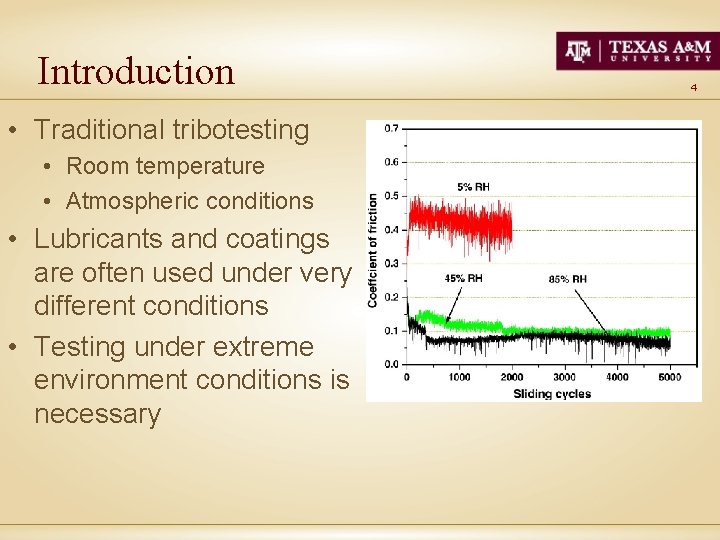
Introduction • Traditional tribotesting • Room temperature • Atmospheric conditions • Lubricants and coatings are often used under very different conditions • Testing under extreme environment conditions is necessary 4
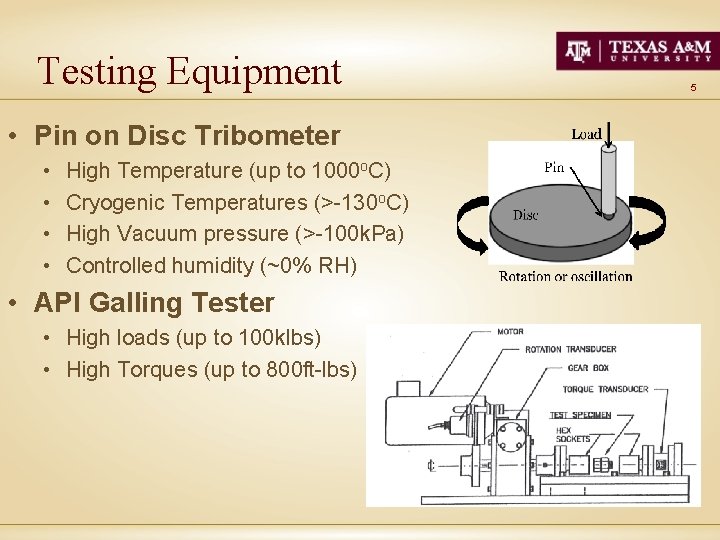
Testing Equipment • Pin on Disc Tribometer • • High Temperature (up to 1000 o. C) Cryogenic Temperatures (>-130 o. C) High Vacuum pressure (>-100 k. Pa) Controlled humidity (~0% RH) • API Galling Tester • High loads (up to 100 klbs) • High Torques (up to 800 ft-lbs) 5

Test Apparatus • API RP 7 A 1 Test • Recommended Practice for Testing of Thread Compounds for Rotary Shouldered Connections • This method is still being revised and newer methods are being developed. 6

Test Apparatus 7

Test Configuration 8
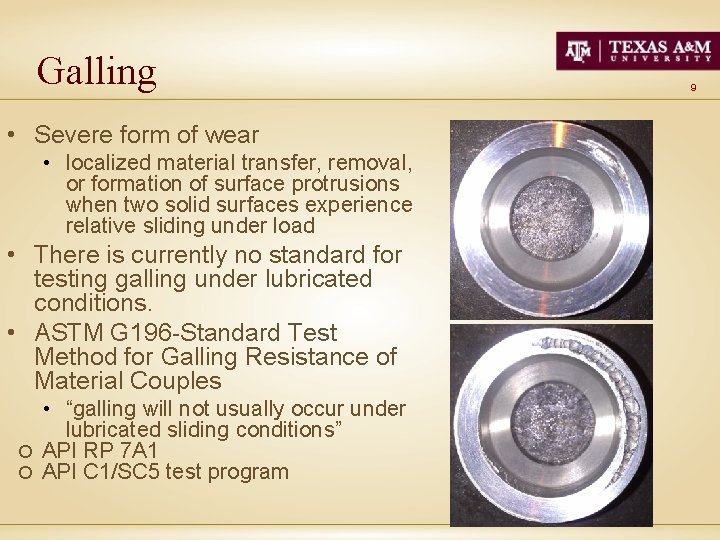
Galling • Severe form of wear • localized material transfer, removal, or formation of surface protrusions when two solid surfaces experience relative sliding under load • There is currently no standard for testing galling under lubricated conditions. • ASTM G 196 -Standard Test Method for Galling Resistance of Material Couples • “galling will not usually occur under lubricated sliding conditions” API RP 7 A 1 API C 1/SC 5 test program 9
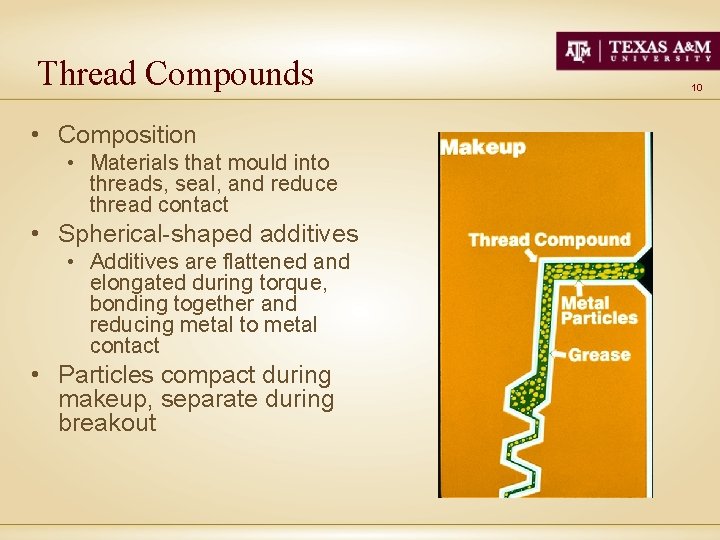
Thread Compounds • Composition • Materials that mould into threads, seal, and reduce thread contact • Spherical-shaped additives • Additives are flattened and elongated during torque, bonding together and reducing metal to metal contact • Particles compact during makeup, separate during breakout 10

Types of Thread Compounds • Metallic • Use metallic particles to seal and protect the threads against galling • Lead, Zinc, and Copper based • Non-Metallic • Use solids such as graphite, and talc to seal and prevent galling • More environment and worker safe • Non-hazardous 11

API Galling & Friction Testing • Thread compounds are used when pipelines are formed • Compounds must: • protect, seal, and lubricate • Traditional compounds contained lead as the primary additive • Legislation was passed to prevent further use of lead based compounds • A method of comparing new compounds to the standard must be established 12

Results: Torque vs. Turns 13
![Tirque [ft-lb] Results: Torque vs. Turns Rotation [deg] 14](http://slidetodoc.com/presentation_image_h/0eed612dc38a0ac6d451e324e526421a/image-14.jpg "Tirque [ft-lb] Results: Torque vs. Turns Rotation [deg] 14")
Tirque [ft-lb] Results: Torque vs. Turns Rotation [deg] 14
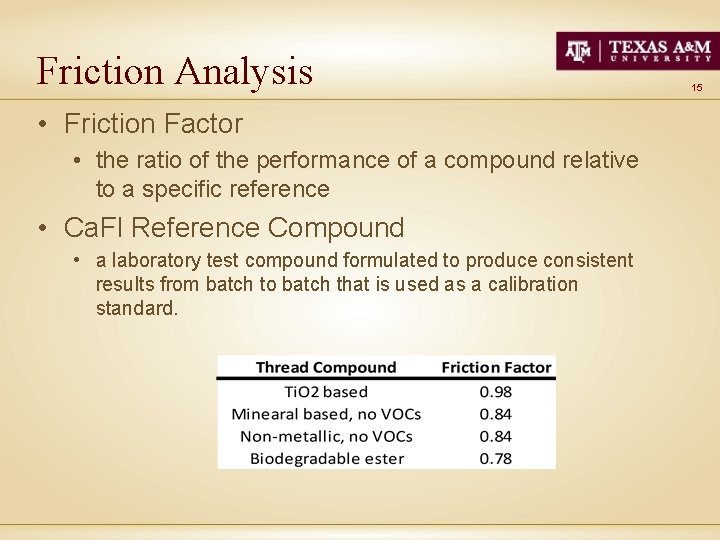
Friction Analysis • Friction Factor • the ratio of the performance of a compound relative to a specific reference • Ca. Fl Reference Compound • a laboratory test compound formulated to produce consistent results from batch to batch that is used as a calibration standard. 15
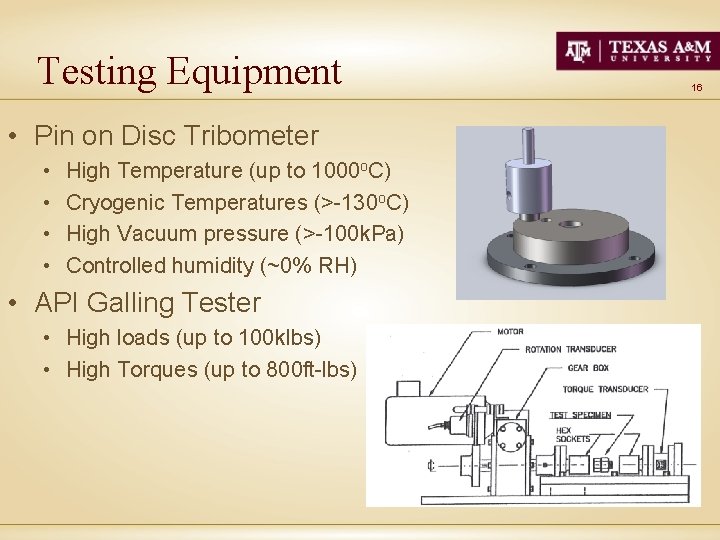
Testing Equipment • Pin on Disc Tribometer • • High Temperature (up to 1000 o. C) Cryogenic Temperatures (>-130 o. C) High Vacuum pressure (>-100 k. Pa) Controlled humidity (~0% RH) • API Galling Tester • High loads (up to 100 klbs) • High Torques (up to 800 ft-lbs) 16
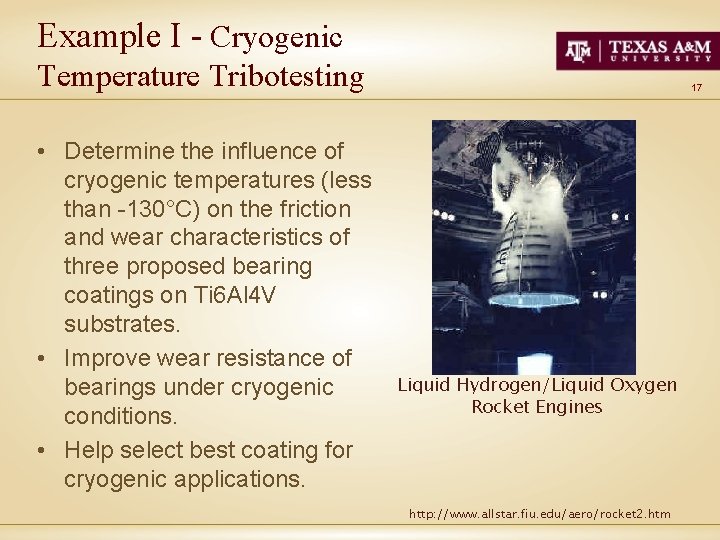
Example I - Cryogenic Temperature Tribotesting • Determine the influence of cryogenic temperatures (less than -130°C) on the friction and wear characteristics of three proposed bearing coatings on Ti 6 Al 4 V substrates. • Improve wear resistance of bearings under cryogenic conditions. • Help select best coating for cryogenic applications. 17 Liquid Hydrogen/Liquid Oxygen Rocket Engines http: //www. allstar. fiu. edu/aero/rocket 2. htm
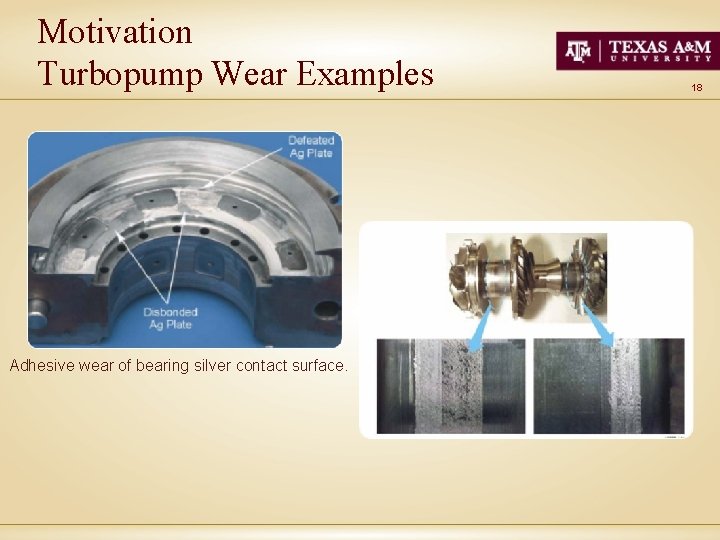
Motivation Turbopump Wear Examples Adhesive wear of bearing silver contact surface. 18
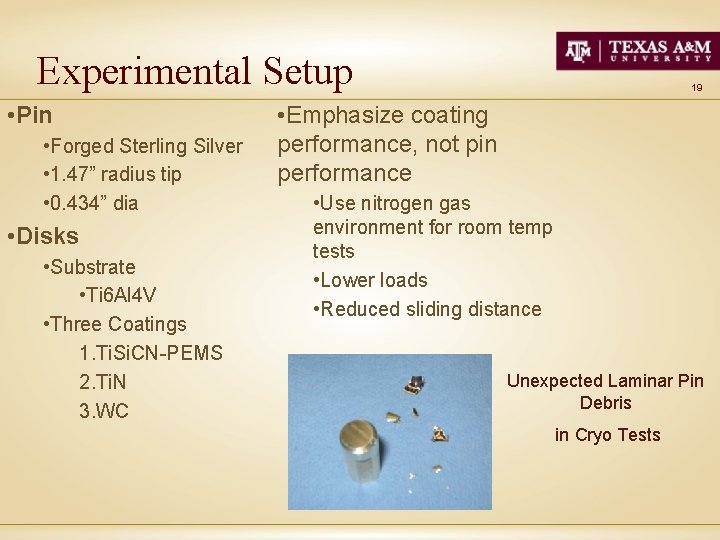
Experimental Setup • Pin • Forged Sterling Silver • 1. 47” radius tip • 0. 434” dia • Disks • Substrate • Ti 6 Al 4 V • Three Coatings 1. Ti. Si. CN-PEMS 2. Ti. N 3. WC 19 • Emphasize coating performance, not pin performance • Use nitrogen gas environment for room temp tests • Lower loads • Reduced sliding distance Unexpected Laminar Pin Debris in Cryo Tests
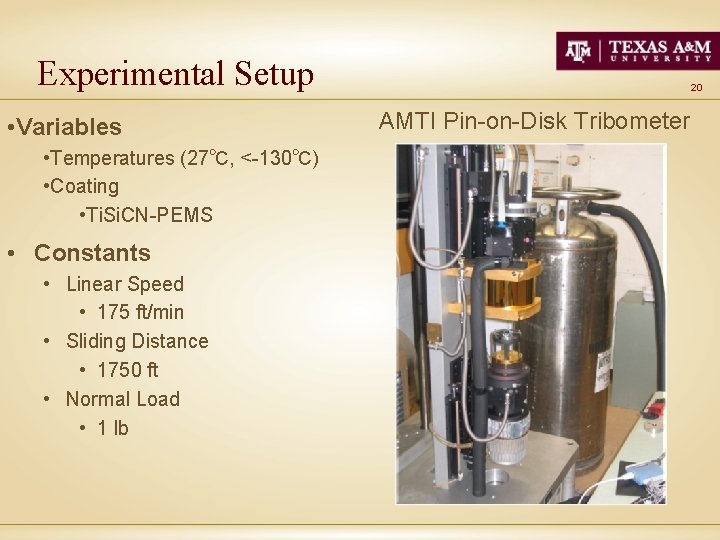
Experimental Setup • Variables • Temperatures (27℃, <-130℃) • Coating • Ti. Si. CN-PEMS • Constants • Linear Speed • 175 ft/min • Sliding Distance • 1750 ft • Normal Load • 1 lb 20 AMTI Pin-on-Disk Tribometer
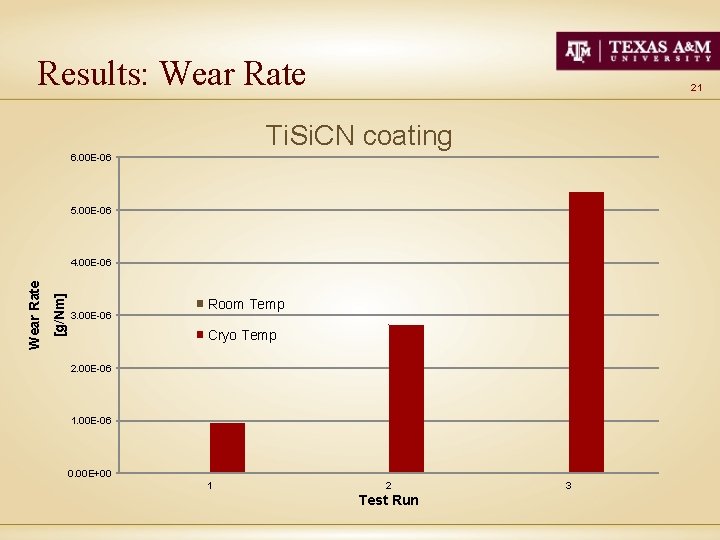
Results: Wear Rate 21 Ti. Si. CN coating 6. 00 E-06 5. 00 E-06 [g/Nm] Wear Rate 4. 00 E-06 3. 00 E-06 Room Temp Cryo Temp 2. 00 E-06 1. 00 E-06 0. 00 E+00 1 2 Test Run 3
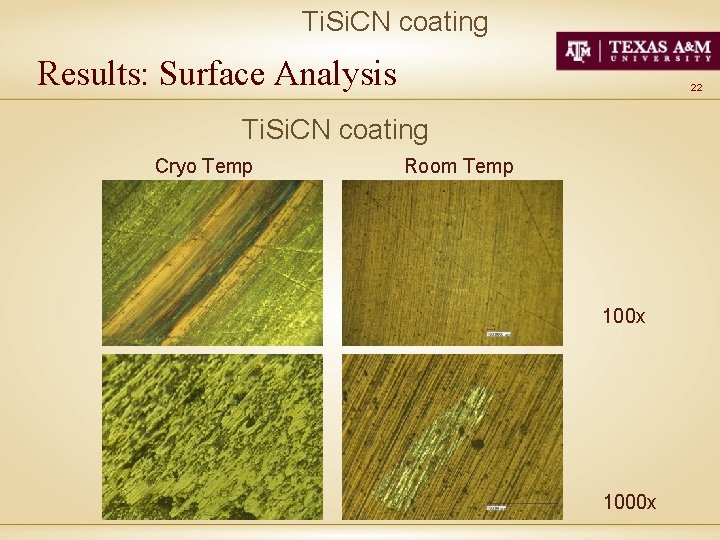
Ti. Si. CN coating Results: Surface Analysis 22 Ti. Si. CN coating Cryo Temp Room Temp 100 x 1000 x
Summary • The test setup can evaluate tribological performance at cryogenic temperatures • The effect of temperature on the coatings is signigicant • Ti. Si. CN appears to have a higher wear rate at lower temperatures 23
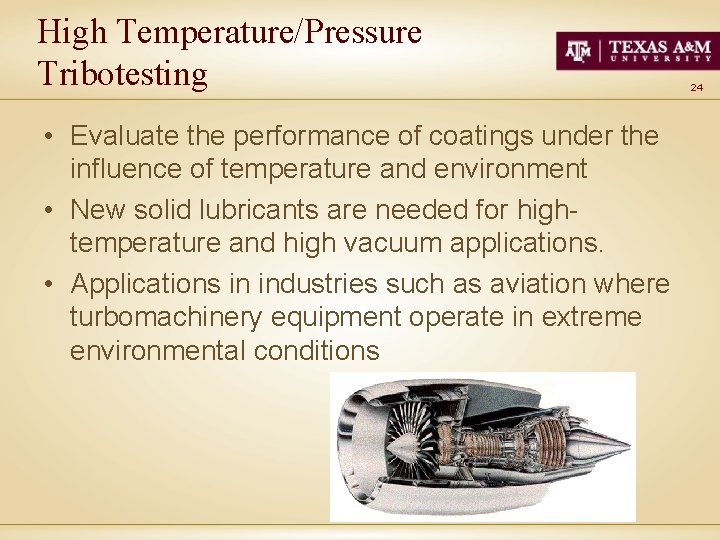
High Temperature/Pressure Tribotesting • Evaluate the performance of coatings under the influence of temperature and environment • New solid lubricants are needed for hightemperature and high vacuum applications. • Applications in industries such as aviation where turbomachinery equipment operate in extreme environmental conditions 24
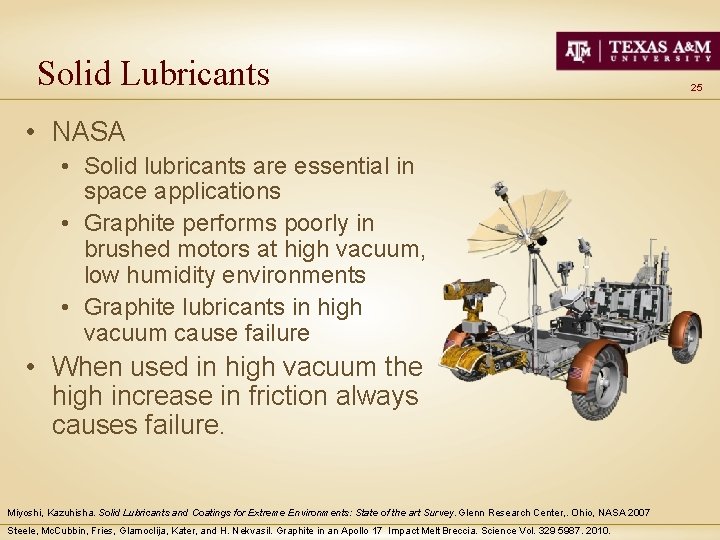
Solid Lubricants • NASA • Solid lubricants are essential in space applications • Graphite performs poorly in brushed motors at high vacuum, low humidity environments • Graphite lubricants in high vacuum cause failure • When used in high vacuum the high increase in friction always causes failure. Miyoshi, Kazuhisha. Solid Lubricants and Coatings for Extreme Environments: State of the art Survey. Glenn Research Center, . Ohio, NASA 2007 Steele, Mc. Cubbin, Fries, Glamoclija, Kater, and H. Nekvasil. Graphite in an Apollo 17 Impact Melt Breccia. Science Vol. 329 5987. 2010. 25
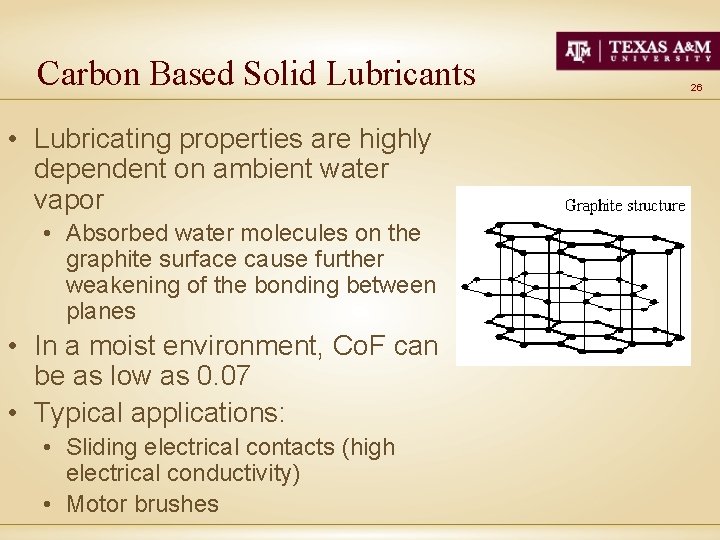
Carbon Based Solid Lubricants • Lubricating properties are highly dependent on ambient water vapor • Absorbed water molecules on the graphite surface cause further weakening of the bonding between planes • In a moist environment, Co. F can be as low as 0. 07 • Typical applications: • Sliding electrical contacts (high electrical conductivity) • Motor brushes 26
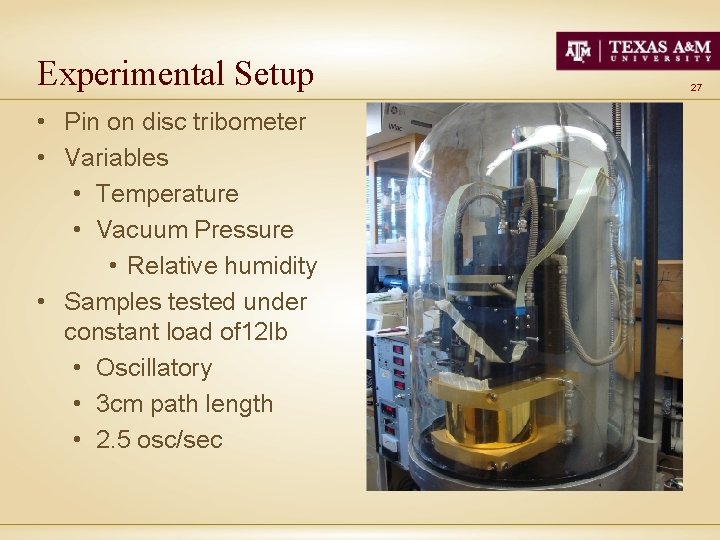
Experimental Setup • Pin on disc tribometer • Variables • Temperature • Vacuum Pressure • Relative humidity • Samples tested under constant load of 12 lb • Oscillatory • 3 cm path length • 2. 5 osc/sec 27
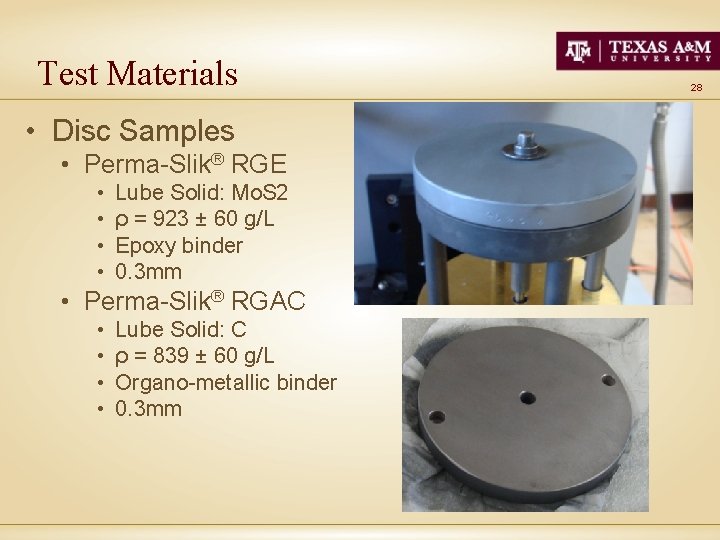
Test Materials • Disc Samples • Perma-Slik® RGE • • Lube Solid: Mo. S 2 ρ = 923 ± 60 g/L Epoxy binder 0. 3 mm • Perma-Slik® RGAC • • Lube Solid: C ρ = 839 ± 60 g/L Organo-metallic binder 0. 3 mm 28
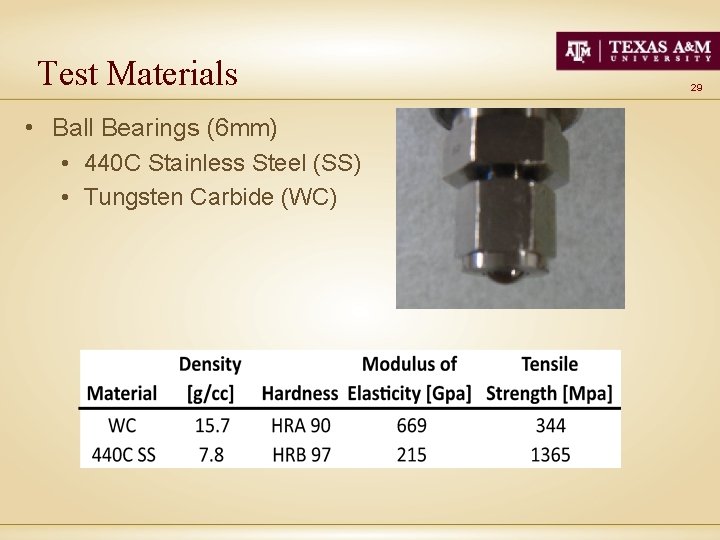
Test Materials • Ball Bearings (6 mm) • 440 C Stainless Steel (SS) • Tungsten Carbide (WC) 29
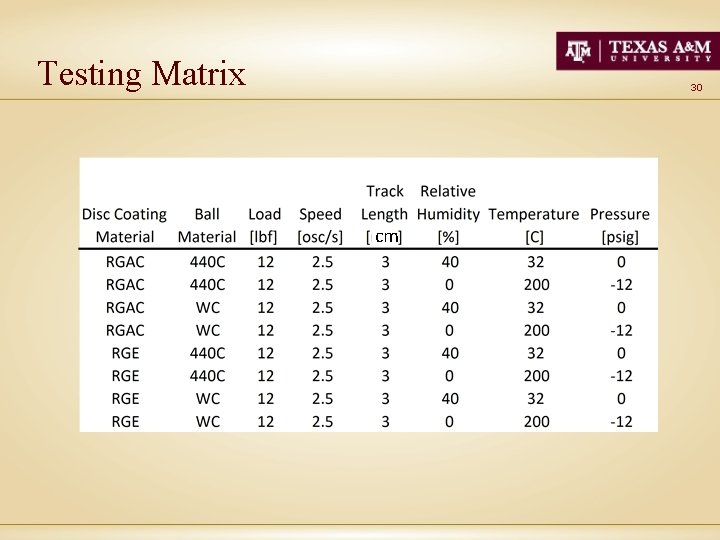
Testing Matrix 30 cm
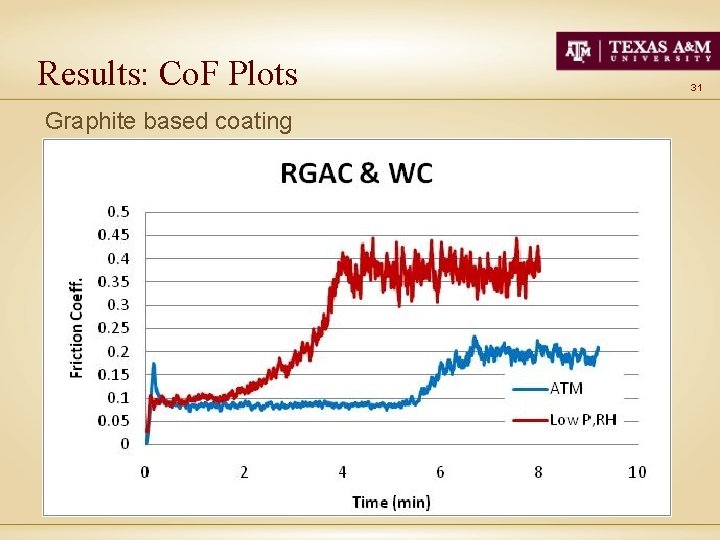
Results: Co. F Plots Graphite based coating 31
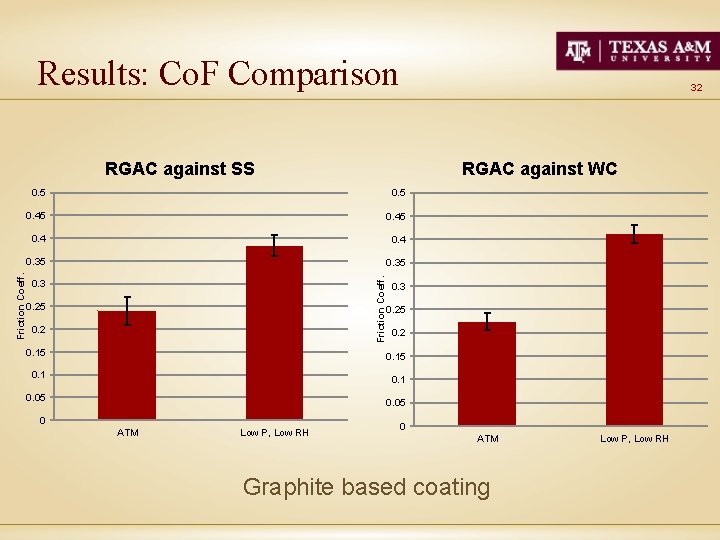
Results: Co. F Comparison 32 RGAC against WC 0. 5 0. 45 0. 4 0. 35 Friction Coeff. RGAC against SS 0. 3 0. 25 0. 2 0. 15 0. 1 0. 05 0 ATM Low P, Low RH 0 ATM Graphite based coating Low P, Low RH
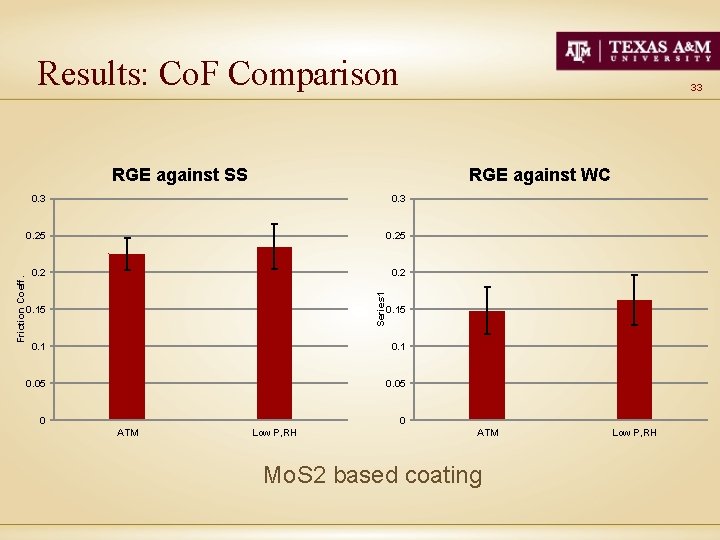
Results: Co. F Comparison 33 RGE against WC 0. 3 0. 25 0. 2 Series 1 Friction Coeff. RGE against SS 0. 15 0. 1 0. 05 0 0 ATM Low P, RH ATM Mo. S 2 based coating Low P, RH
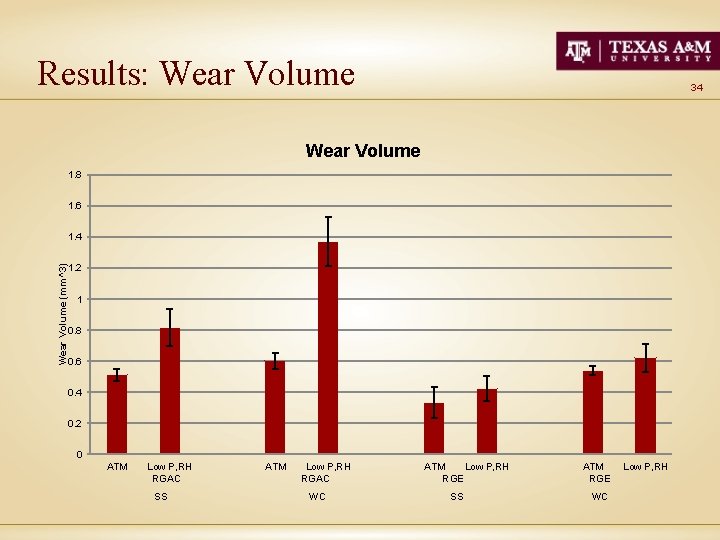
Results: Wear Volume 34 Wear Volume 1. 8 1. 6 Wear Volume (mm^3) 1. 4 1. 2 1 0. 8 0. 6 0. 4 0. 2 0 ATM Low P, RH RGAC SS ATM Low P, RH RGAC WC ATM Low P, RH RGE SS ATM RGE WC Low P, RH
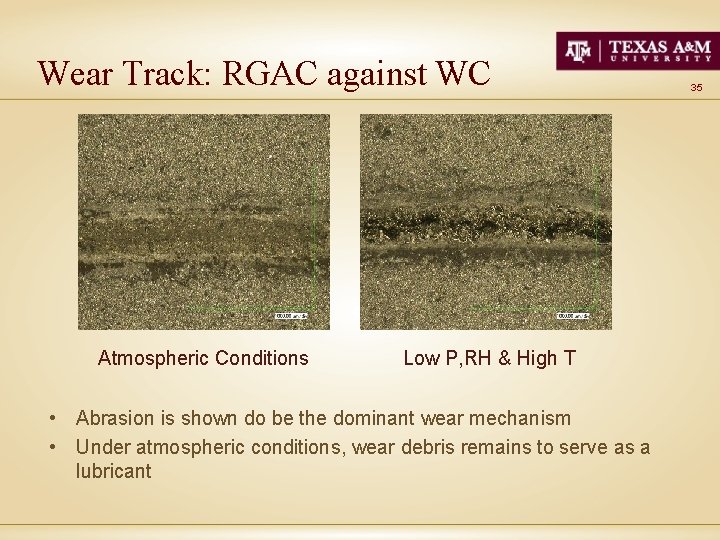
Wear Track: RGAC against WC Atmospheric Conditions Low P, RH & High T • Abrasion is shown do be the dominant wear mechanism • Under atmospheric conditions, wear debris remains to serve as a lubricant 35
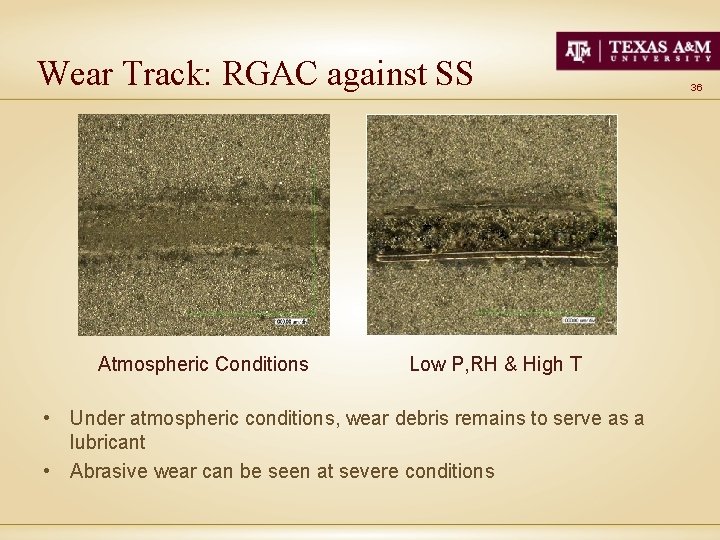
Wear Track: RGAC against SS Atmospheric Conditions Low P, RH & High T • Under atmospheric conditions, wear debris remains to serve as a lubricant • Abrasive wear can be seen at severe conditions 36
Summary • Test setup is effective for evaluating the effects of high temperatures and low pressures • Graphite based lubricant provides higher friction in extreme conditions • Not stable at high T, low P • The durability of the coating is affected by low pressure due to absence of moisture • Abrasive wear is the dominant wear mechanism • Molybdenum disulfide coating performed similar at atmospheric and severe conditions 37
Conclusions • Extreme environment testing is necessary for the proper evaluation of coatings and lubricants • New testing conditions and setups have been developed to better evaluate test samples • Our research has shown significant differences in performance for various coatings and lubricants at such conditions • New testing parameters continue to be developed in our research lab 38
Acknowledgements • Jet-Lube • Stress Engineering • GE Aviation • Houston Chapter STLE 39
Thank You for Your Support!
Q&A 41
- Slides: 41