
TRIBAL FOREST DEVELOPMENT IN CENTRAL INDIA Naresh C
TRIBAL & FOREST DEVELOPMENT IN CENTRAL INDIA Naresh C. Saxena Dec 2010 1
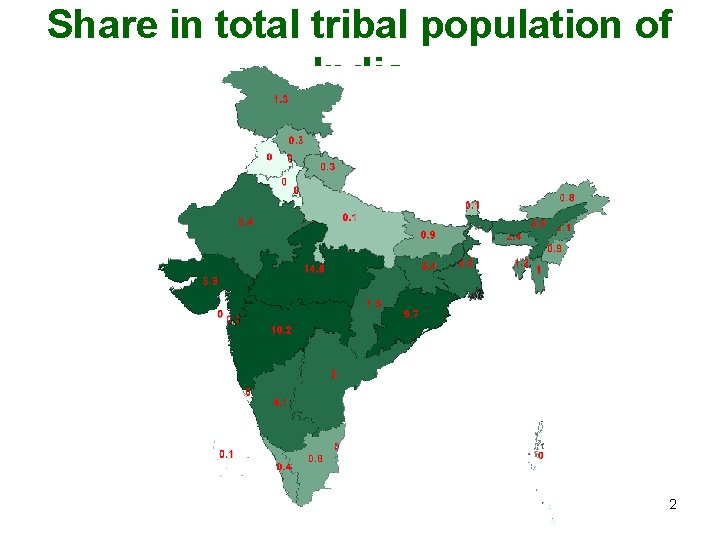
Share in total tribal population of India 2
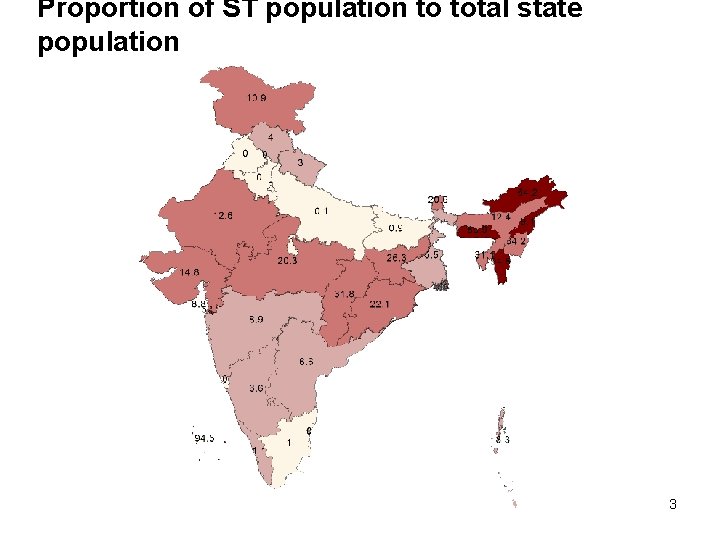
Proportion of ST population to total state population 3
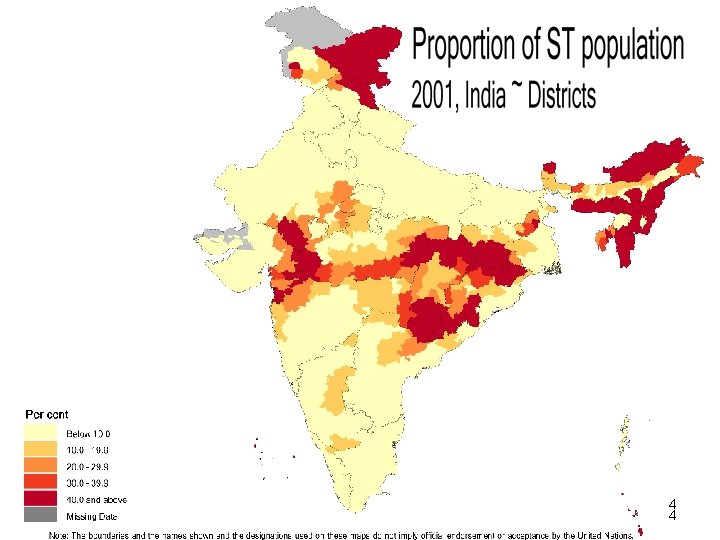
4 4
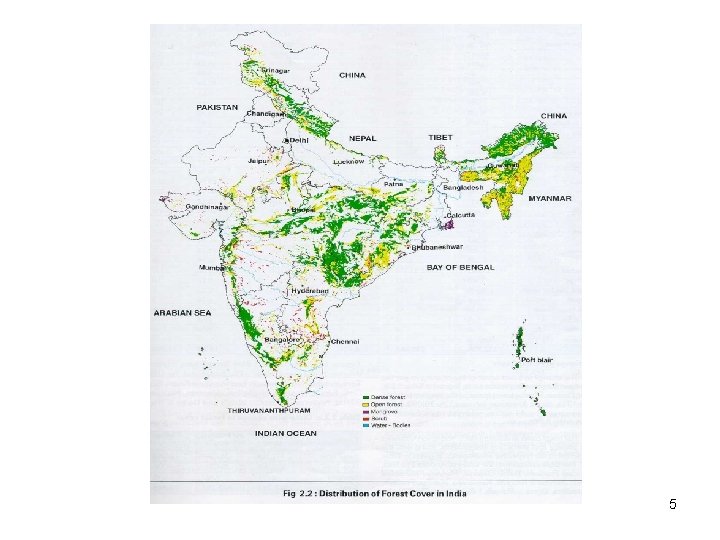
5
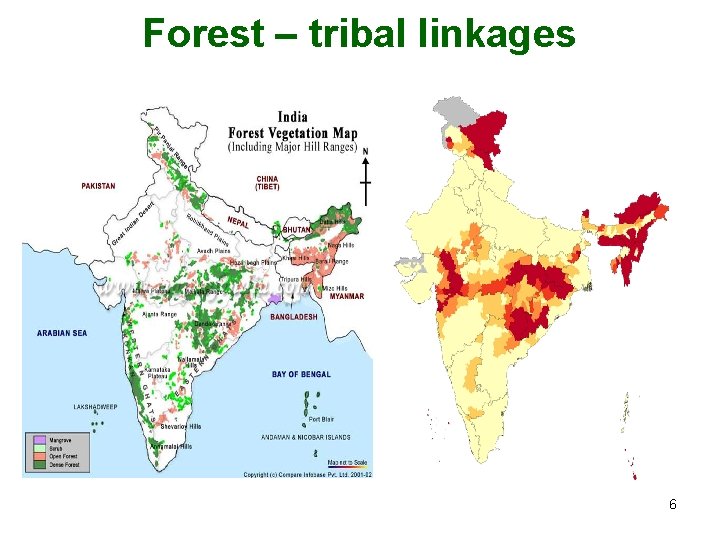
Forest – tribal linkages 6
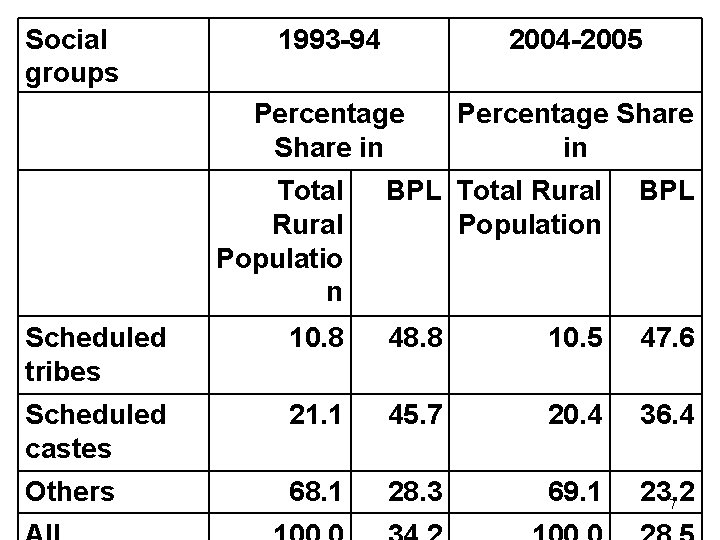
Social groups 1993 -94 2004 -2005 Percentage Share in Percentage Share in Total Rural Populatio n BPL Total Rural Population BPL Scheduled tribes 10. 8 48. 8 10. 5 47. 6 Scheduled castes 21. 1 45. 7 20. 4 36. 4 Others 68. 1 28. 3 69. 1 23. 2 7
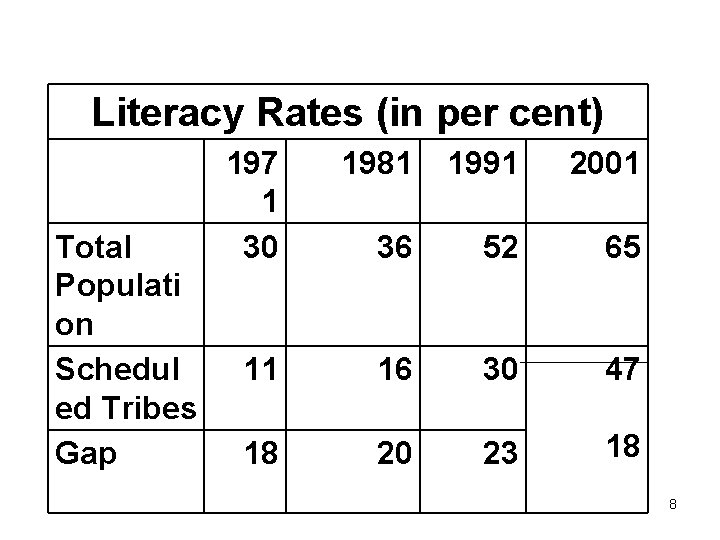
Literacy Rates (in per cent) Total Populati on Schedul ed Tribes Gap 197 1 30 1981 1991 2001 36 52 65 11 16 30 47 18 20 23 18 8
Unresolved Issues • Land alienation & indebtedness • Tribals’ access to forests • Lack of proper rehabilitation after involuntary displacement • Ineffective implementation of the Panchayats (Extension to the Scheduled Areas) Act, 1996 & FRA 2006 • Poor programme delivery, absenteeism • Huge surrenders and diversion of funds Insurgency & Salwa judum Where is the National Tribal Policy? 9
Kendu leaf collection in Orissa • 15 lakh poorest - mostly women • Orissa leaves of a better quality than AP and MP, yet lower wages • Govt gets 150 crores as royalty - for every Rs to plucker royalty is 3 Rs • Royalty on Bauxite is Rs 30 per tonne, on KL 12, 000 Rs per tonne 10
• • • Cashew plantations in Orissa Cashew plantation raised by the Cashew Development Corporation on 120, 000 hectares of “Government Wastelands” on tribal lands Tribals shifted to hills, which led to soil degradation Corporation made losses, it gives annual leases for harvesting of cashew crops to private parties Often such plantations are in a degraded condition It is ironical that these plantations that deprived the tribals of their possession were funded by a scheme called, 11
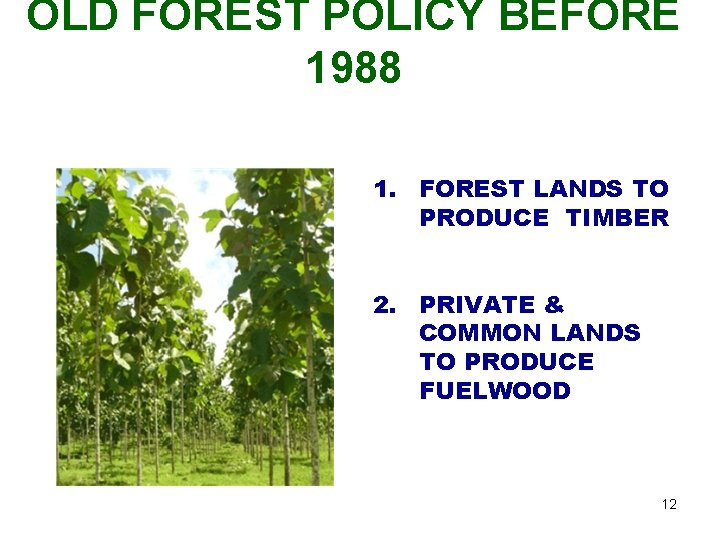
OLD FOREST POLICY BEFORE 1988 1. FOREST LANDS TO PRODUCE TIMBER 2. PRIVATE & COMMON LANDS TO PRODUCE FUELWOOD 12
FOREST POLICY 1988 • Forest lands to produce fuelwood and subsistence goods • Private lands to produce timber and industrial raw material
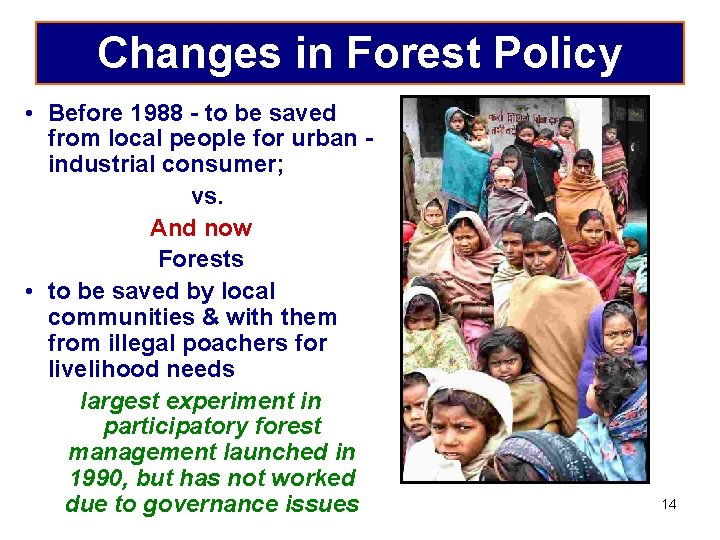
Changes in Forest Policy • Before 1988 - to be saved from local people for urban - industrial consumer; vs. And now Forests • to be saved by local communities & with them from illegal poachers for livelihood needs largest experiment in participatory forest management launched in 1990, but has not worked due to governance issues 14
Forest Policy 1950 -1988 • Scientific, forestry = sustained yield of timber through felling • Convert ‘Low’ value mixed forests into ‘high’ value plantation • Plant species from which people get nothing-teak, eucalypts, pines • Nationalise private forest • Nationalise forest products • Subsidise supplies to Industries Short term leases to industries • Set up commercial corporations • Poor allocation of funds
The New Forest Policy 1988 • Forest lands for environment & to produce fuelwood and subsistence goods • Private lands to produce timber and industrial raw material • Environment and basic needs given highest policy • Economic benefits last priority • Tribals’ needs first charge on forests • Clear felling of natural forests banned • Exotic species cannot be introduced in forests • No Mining leases unless sufficient safeguards • 16 Industry to depend on farmers for raw material 16 • No subsidy to industries
MFPs in Scheduled Areas Act & reality MFPs are to be owned by panchayats & Gram Sabha but • Several MFPs are still ‘nationalised’; • Ownership subjected to existing laws, such as Maharshtra Forest Produce Act, 1997 • Controversy about definition, • ‘MFP should be defined as all gatherable biomass collected from living trees and forest areas on a sustained and non-destructive basis’ 17 17
NTFPs - problems • Monopoly with traders, industry and govt. parastatals • Restriction on self-collection, processing, storage & sale • Distorted markets even for non-nationalised products • Erratic supply of raw material • Exploitation by traders • No arrangement for credit • Women entrepreneurs unable to look for faroff markets • Limited bargaining capacity • 18 Local supply in excess of local demand
Forest Rights Act, 2006 • Seen as a patta giving Act • No focus on community management • Gram Sabha are not being called at village/hamlet level • Community management clause is missing in the claim form • No focus on increasing MFP production or access • Marketing issues ignored 19
Role of the Ministry • Should do periodical assessment of schemes, and put pressure on other Ministries to improve their performance • Ministry should be headed by a high profile Minister, and officials should not view their posting as a punishment posting • Ministry is surrounded by ‘fake’ NGOs, who waste government resources It should at least spend the allocated funds! 20

Thank You 21
- Slides: 21