
Triangles Triangle Inequality Theorem The sum of the
- Slides: 19
Triangles
Triangle Inequality Theorem The sum of the lengths of any two sides of a triangle is greater than the length of the third side
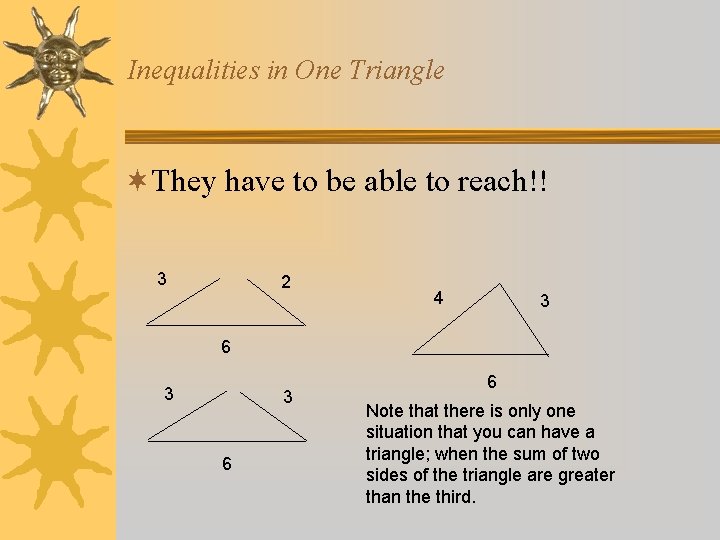
Inequalities in One Triangle ¬They have to be able to reach!! 3 2 4 3 6 3 3 6 6 Note that there is only one situation that you can have a triangle; when the sum of two sides of the triangle are greater than the third.
Triangle Inequality Theorem Cheat code: ¬ If you want a short cut, take the two smallest sides and add them. Then compare them to the biggest side. If the sum is bigger than the set of sides works!
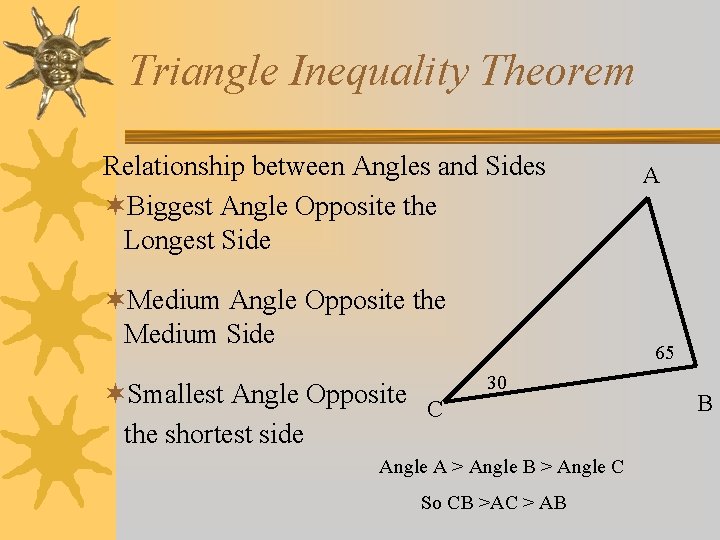
Triangle Inequality Theorem Relationship between Angles and Sides ¬Biggest Angle Opposite the Longest Side ¬Medium Angle Opposite the Medium Side ¬Smallest Angle Opposite C the shortest side A 65 30 Angle A > Angle B > Angle C So CB >AC > AB B
Quadrilateral Inequality ¬The sum of the lengths of any three sides of a quadrilateral is greater than the length of the fourth side ¬Just like the Triangle Inequality theorem!
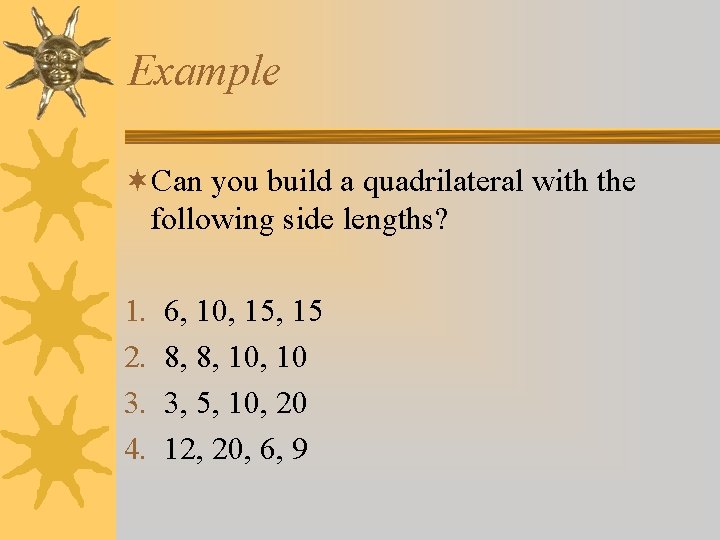
Example ¬Can you build a quadrilateral with the following side lengths? 1. 2. 3. 4. 6, 10, 15 8, 8, 10 3, 5, 10, 20 12, 20, 6, 9
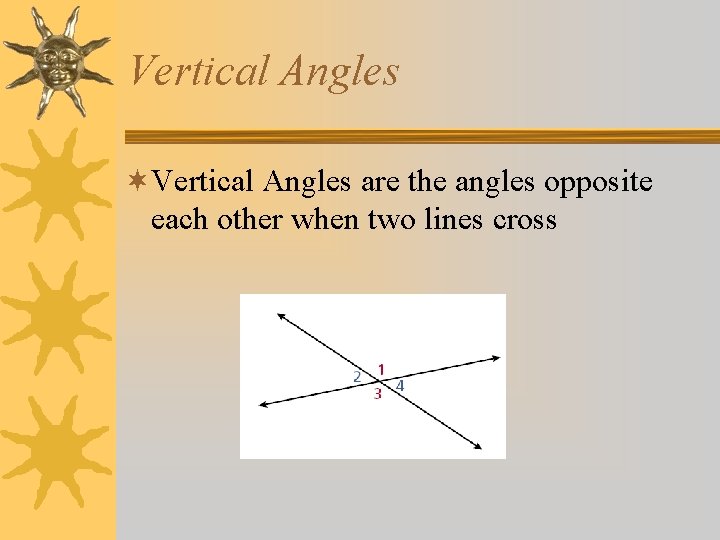
Vertical Angles ¬Vertical Angles are the angles opposite each other when two lines cross
Properties of Parallel Lines and Transversals
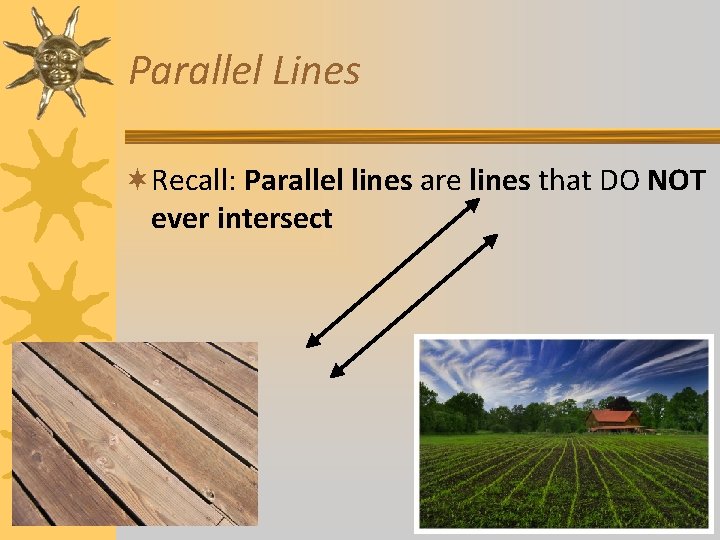
Parallel Lines ¬Recall: Parallel lines are lines that DO NOT ever intersect
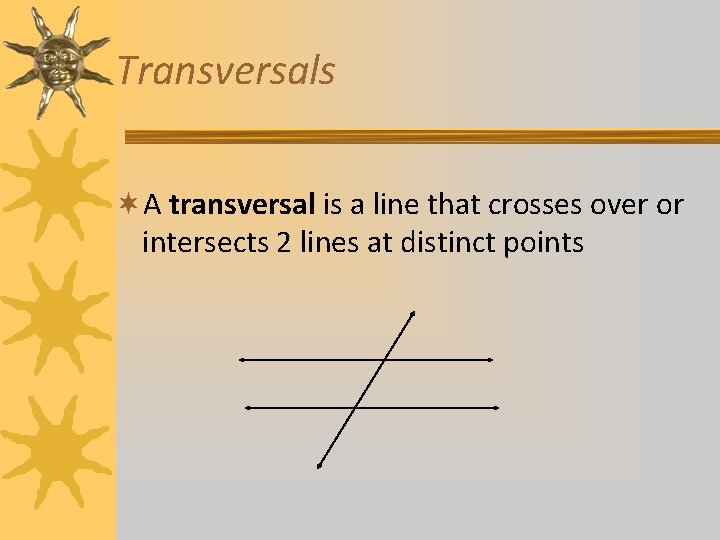
Transversals ¬A transversal is a line that crosses over or intersects 2 lines at distinct points
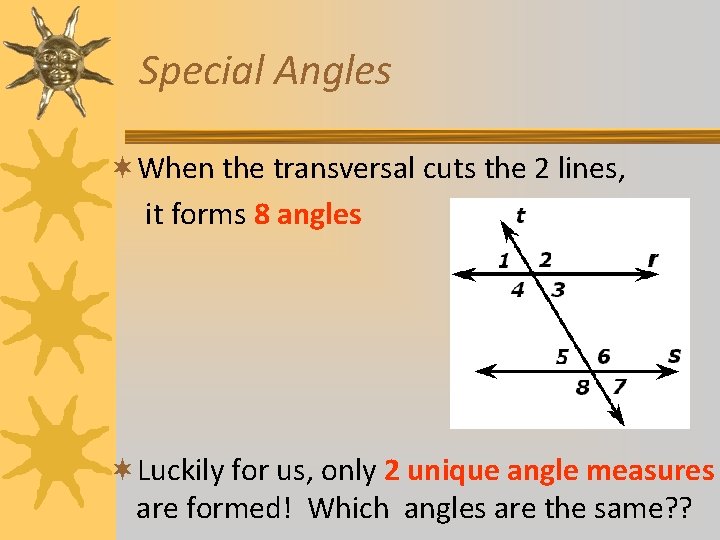
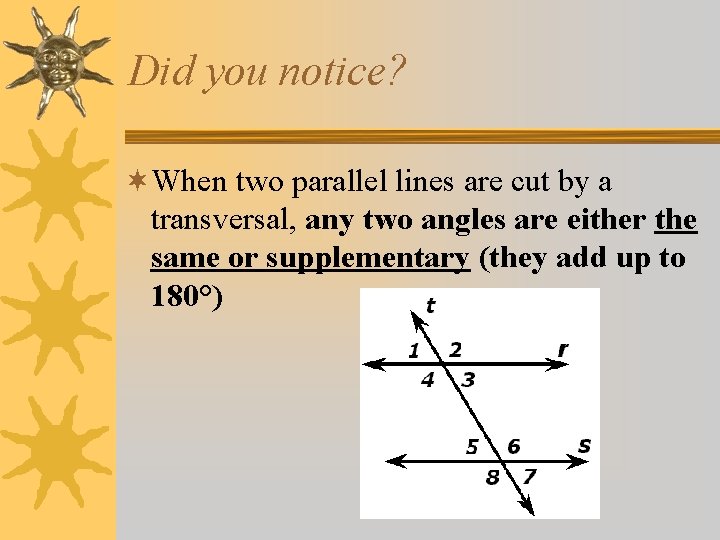
Special Angles ¬When the transversal cuts the 2 lines, it forms 8 angles ¬Luckily for us, only 2 unique angle measures are formed! Which angles are the same? ?
Did you notice? ¬When two parallel lines are cut by a transversal, any two angles are either the same or supplementary (they add up to 180°)
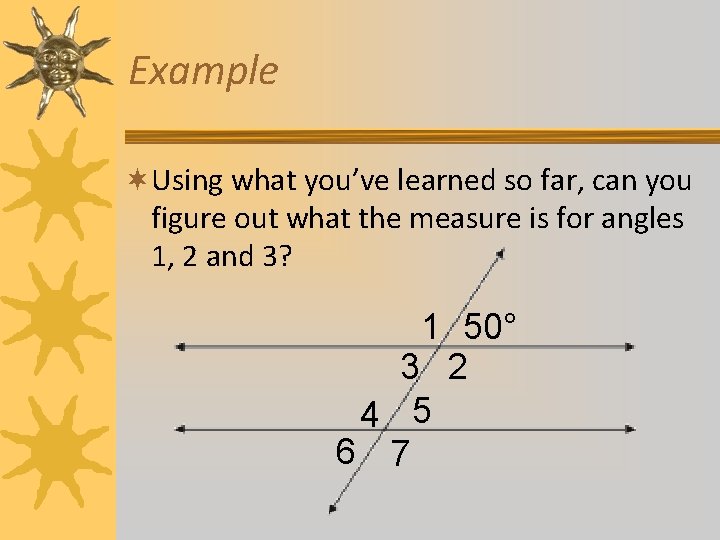
Example ¬Using what you’ve learned so far, can you figure out what the measure is for angles 1, 2 and 3? 1 50° 3 2 4 5 6 7
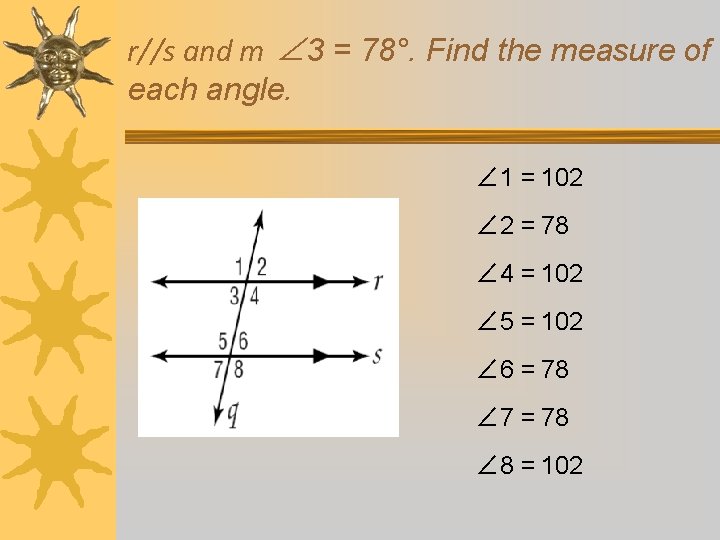
r//s and m ∠ 3 = 78°. Find the measure of each angle. ∠ 1 = 102 ∠ 2 = 78 ∠ 4 = 102 ∠ 5 = 102 ∠ 6 = 78 ∠ 7 = 78 ∠ 8 = 102
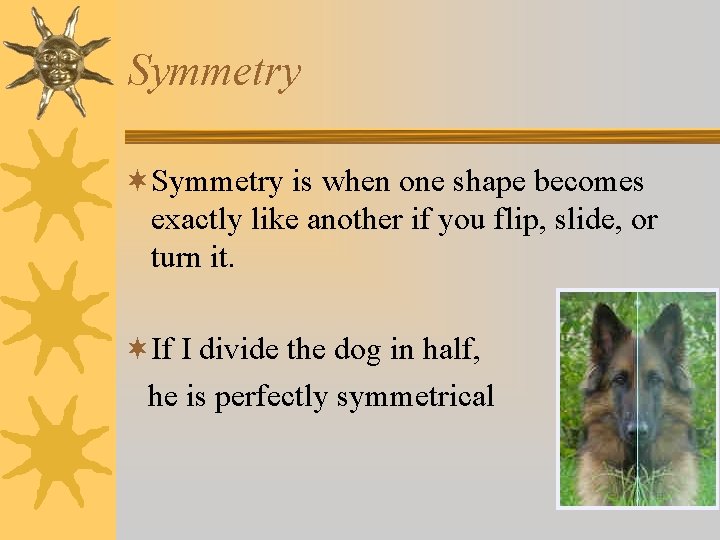
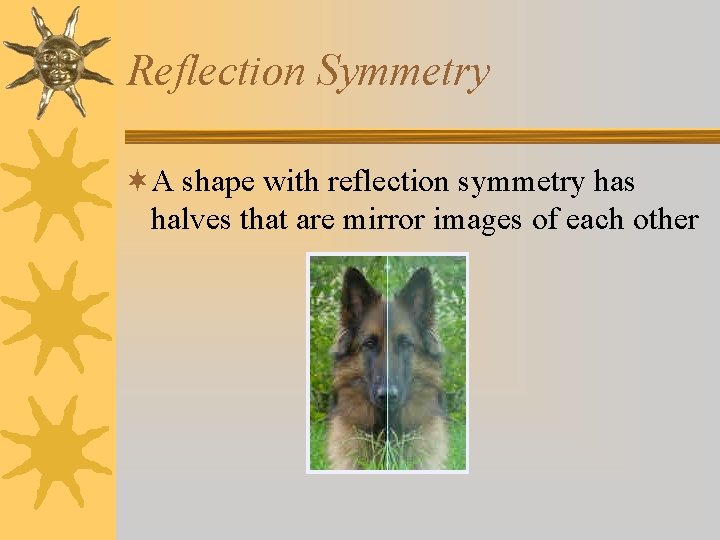
Symmetry ¬Symmetry is when one shape becomes exactly like another if you flip, slide, or turn it. ¬If I divide the dog in half, he is perfectly symmetrical
Reflection Symmetry ¬A shape with reflection symmetry has halves that are mirror images of each other
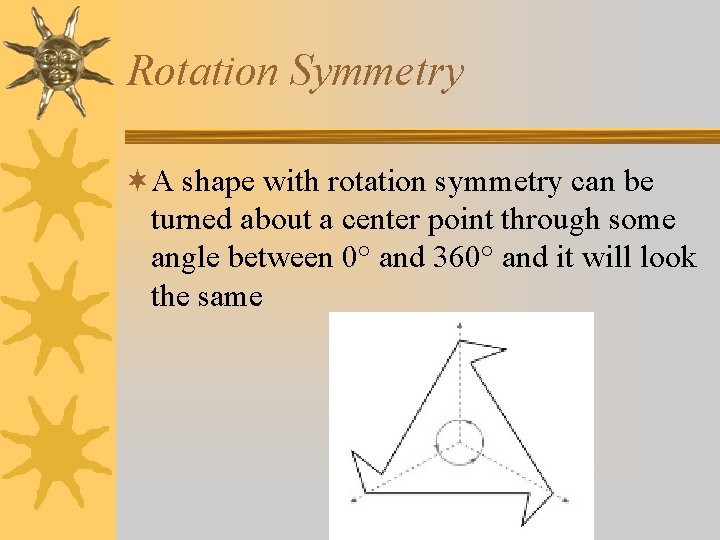
Rotation Symmetry ¬A shape with rotation symmetry can be turned about a center point through some angle between 0° and 360° and it will look the same
Homework ¬Page 76, #’s 1 -5 ¬Page 77 -79, #’s 10 -24 ¬Page 80 -81, #’s 28 -30 ¬Page 83, # 35 ¬Page 86, #’s 45 -49 TEST THIS FRIDAY (1. 1 – 3. 5)