
Trends in the Disability Market Chris Jerome Vice
Trends in the Disability Market Chris Jerome Vice President, Group Underwriting Operations March 21, 2006 1
Trends in Disability Market • Disability Costs • Cyclical and Non-Cyclical Cost Drivers • Workforce Implications of Non-Cyclical Factors • Implications for Our Market • Key Questions to Consider 2
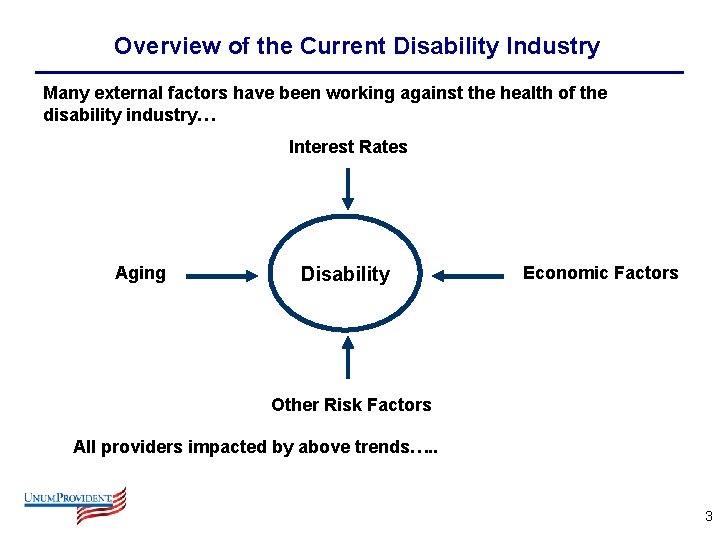
Overview of the Current Disability Industry Many external factors have been working against the health of the disability industry… Interest Rates Aging Disability Economic Factors Other Risk Factors All providers impacted by above trends…. . 3
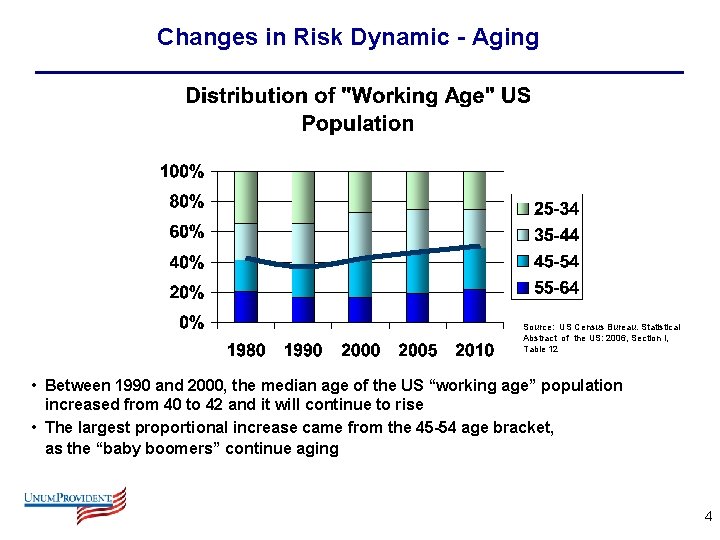
Changes in Risk Dynamic - Aging Source: US Census Bureau. Statistical Abstract of the US: 2006, Section I, Table 12 • Between 1990 and 2000, the median age of the US “working age” population increased from 40 to 42 and it will continue to rise • The largest proportional increase came from the 45 -54 age bracket, as the “baby boomers” continue aging 4
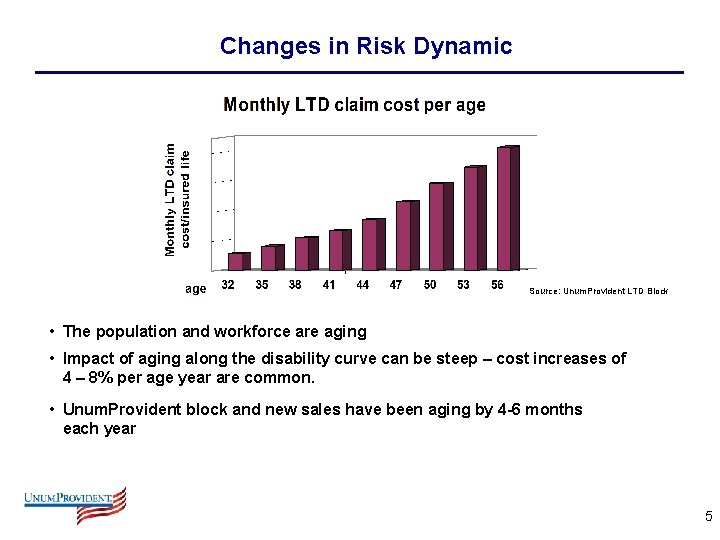
Changes in Risk Dynamic Source: Unum. Provident LTD Block Source: Unum. Provident Rate Basis • The population and workforce are aging • Impact of aging along the disability curve can be steep – cost increases of 4 – 8% per age year are common. • Unum. Provident block and new sales have been aging by 4 -6 months each year 5
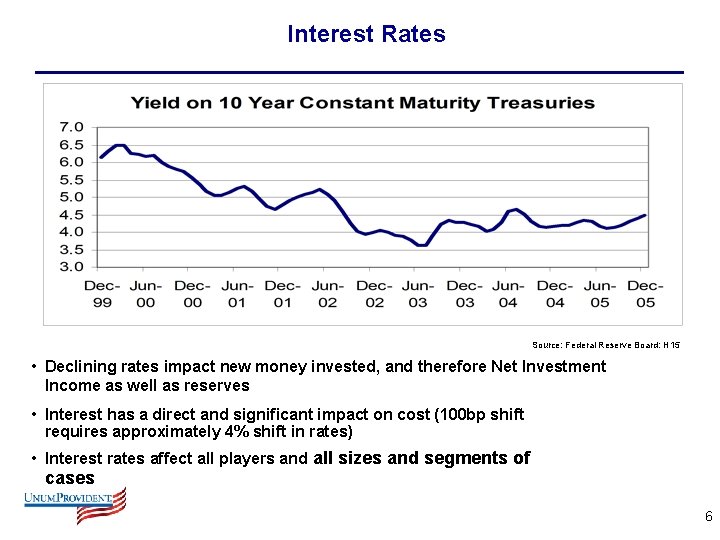
Interest Rates Source: Federal Reserve Board: H 15 • Declining rates impact new money invested, and therefore Net Investment Income as well as reserves • Interest has a direct and significant impact on cost (100 bp shift requires approximately 4% shift in rates) • Interest rates affect all players and all sizes and segments of cases 6
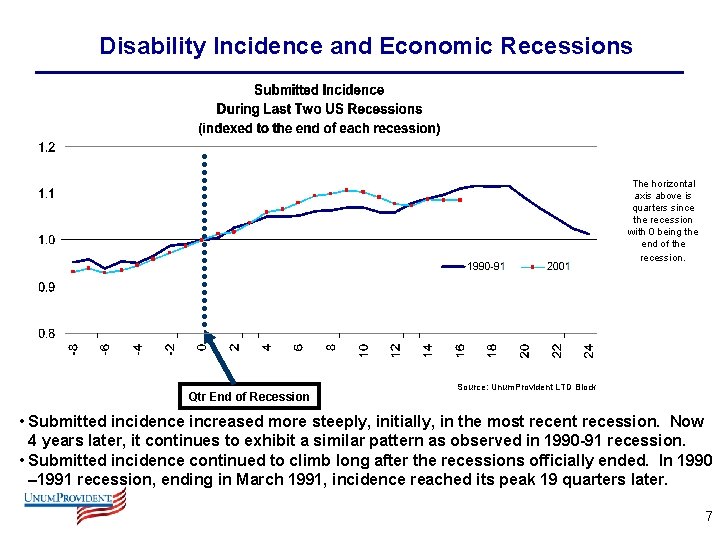
Disability Incidence and Economic Recessions The horizontal axis above is quarters since the recession with 0 being the end of the recession. Qtr End of Recession Source: Unum. Provident LTD Block • Submitted incidence increased more steeply, initially, in the most recent recession. Now 4 years later, it continues to exhibit a similar pattern as observed in 1990 -91 recession. • Submitted incidence continued to climb long after the recessions officially ended. In 1990 – 1991 recession, ending in March 1991, incidence reached its peak 19 quarters later. 7
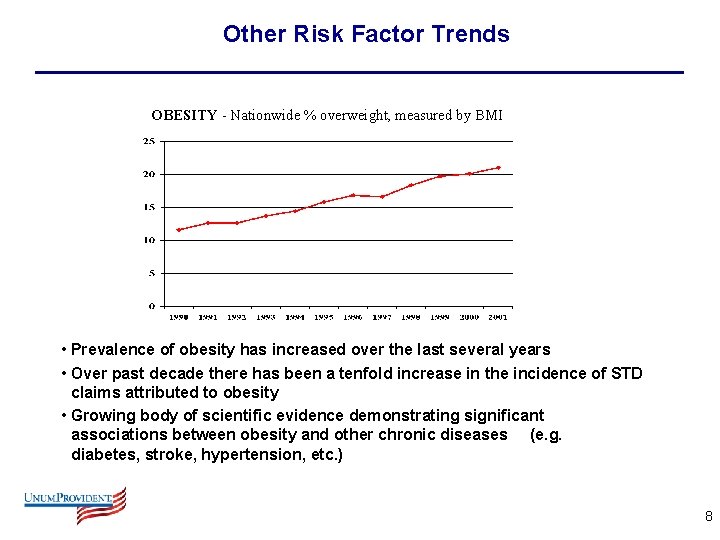
Other Risk Factor Trends OBESITY - Nationwide % overweight, measured by BMI • Prevalence of obesity has increased over the last several years • Over past decade there has been a tenfold increase in the incidence of STD claims attributed to obesity • Growing body of scientific evidence demonstrating significant associations between obesity and other chronic diseases (e. g. diabetes, stroke, hypertension, etc. ) 8
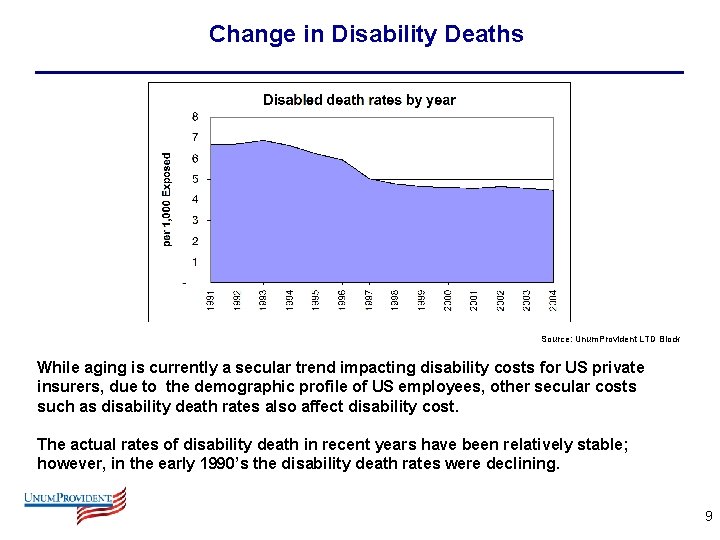
Change in Disability Deaths Source: Unum. Provident LTD Block While aging is currently a secular trend impacting disability costs for US private insurers, due to the demographic profile of US employees, other secular costs such as disability death rates also affect disability cost. The actual rates of disability death in recent years have been relatively stable; however, in the early 1990’s the disability death rates were declining. 9
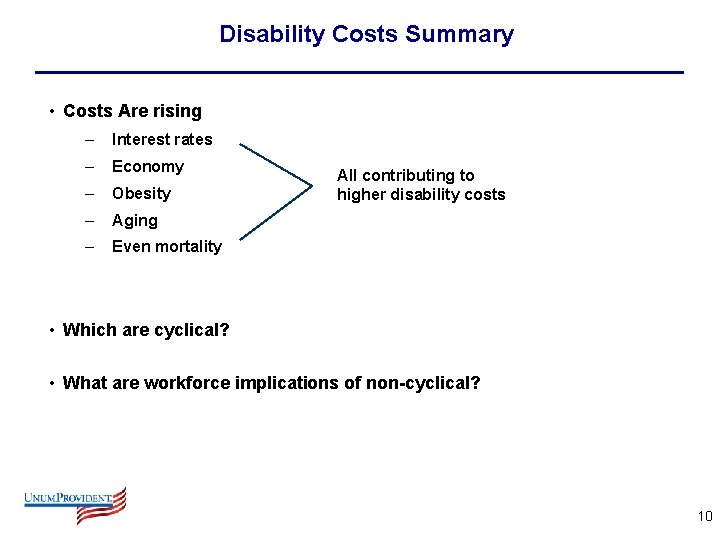
Disability Costs Summary • Costs Are rising – Interest rates – Economy – Obesity – Aging – Even mortality All contributing to higher disability costs • Which are cyclical? • What are workforce implications of non-cyclical? 10
Work Force Dynamics 11
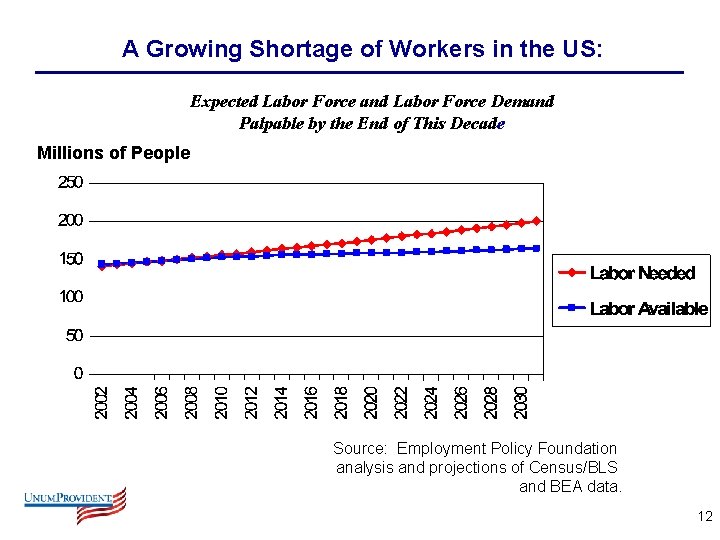
A Growing Shortage of Workers in the US: Expected Labor Force and Labor Force Demand Palpable by the End of This Decade Millions of People Source: Employment Policy Foundation analysis and projections of Census/BLS and BEA data. 12
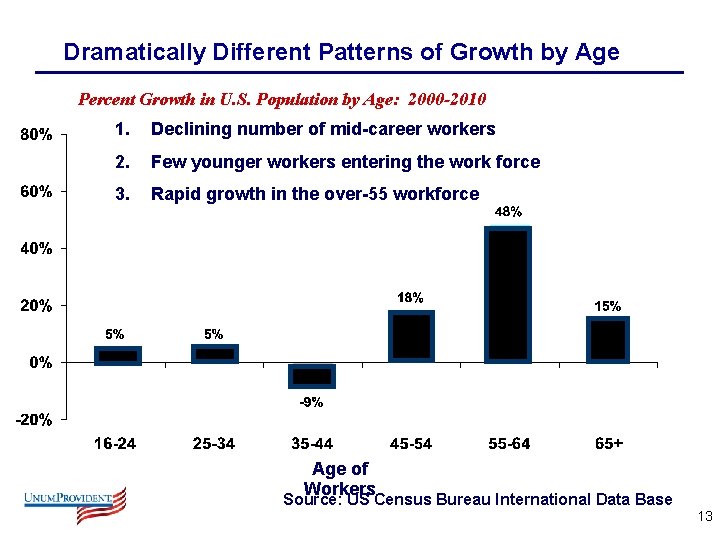
Dramatically Different Patterns of Growth by Age Percent Growth in U. S. Population by Age: 2000 -2010 1. Declining number of mid-career workers 2. Few younger workers entering the work force 3. Rapid growth in the over-55 workforce Age of Workers Source: US Census Bureau International Data Base 13
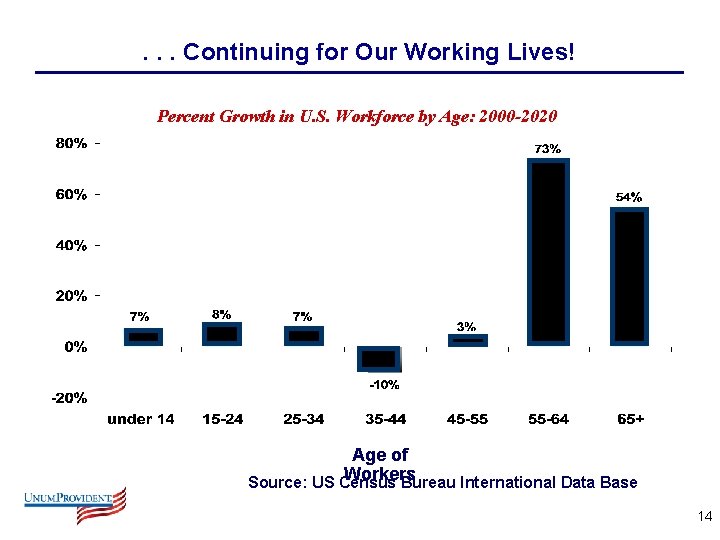
. . . Continuing for Our Working Lives! Percent Growth in U. S. Workforce by Age: 2000 -2020 Age of Workers Source: US Census Bureau International Data Base 14
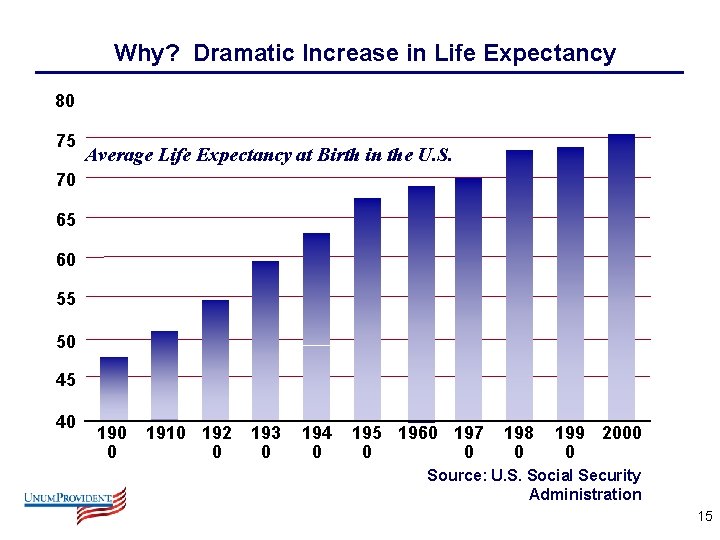
Why? Dramatic Increase in Life Expectancy 80 75 Average Life Expectancy at Birth in the U. S. 70 65 60 55 50 45 40 190 0 1910 192 0 193 0 194 0 195 1960 197 0 0 198 0 199 2000 0 Source: U. S. Social Security Administration 15
Aging, Disability and Healthcare Costs Patterns & Trends 16
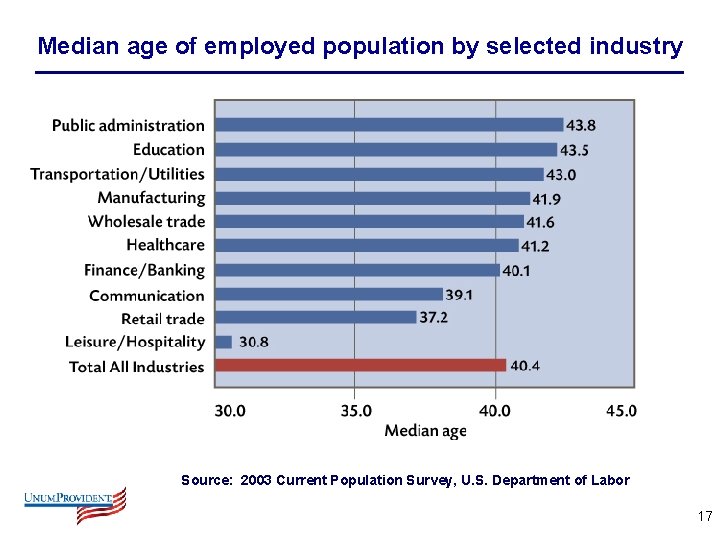
Median age of employed population by selected industry Source: 2003 Current Population Survey, U. S. Department of Labor 17
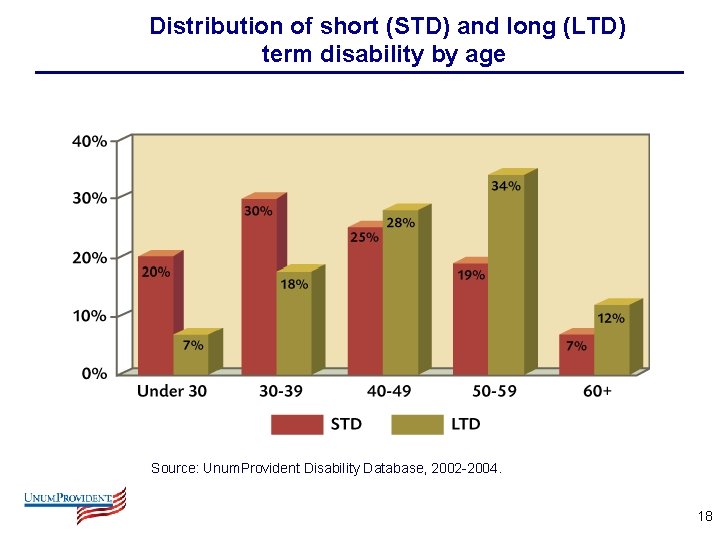
Distribution of short (STD) and long (LTD) term disability by age Source: Unum. Provident Disability Database, 2002 -2004. 18
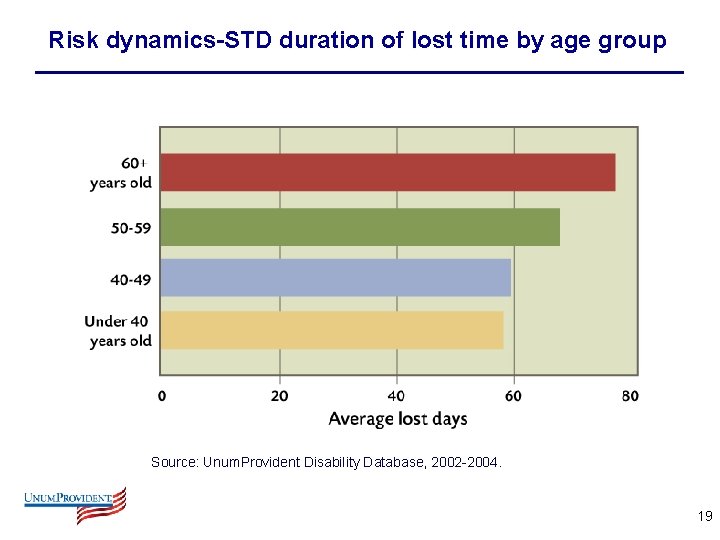
Risk dynamics-STD duration of lost time by age group Source: Unum. Provident Disability Database, 2002 -2004. 19
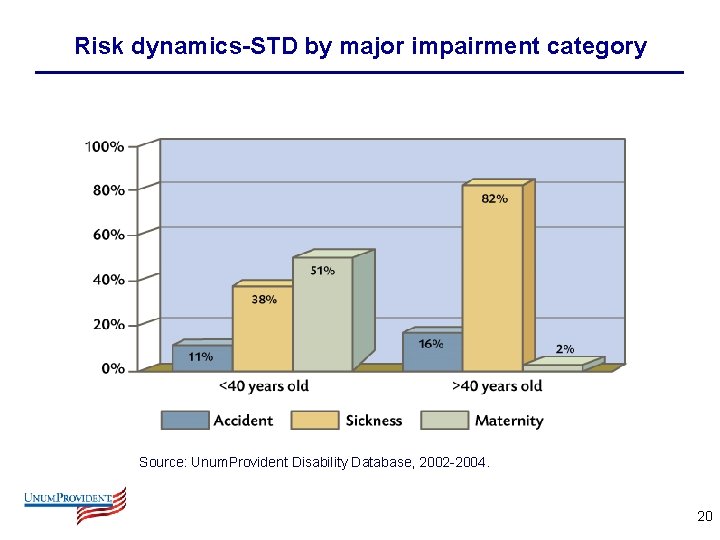
Risk dynamics-STD by major impairment category Source: Unum. Provident Disability Database, 2002 -2004. 20
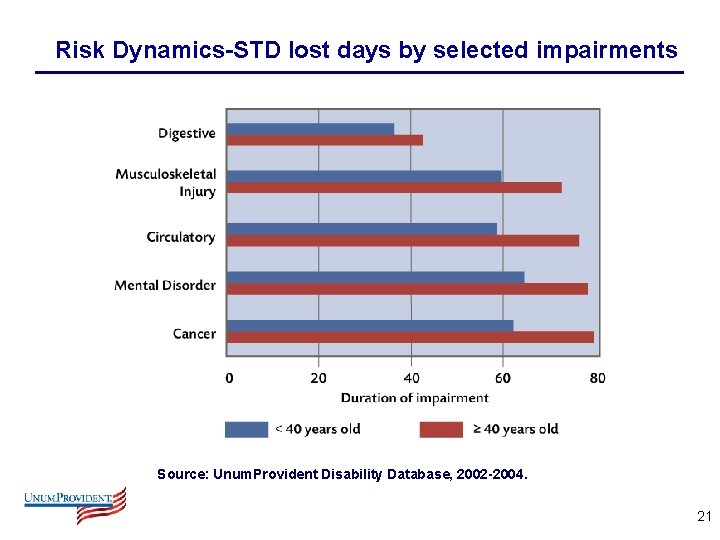
Risk Dynamics-STD lost days by selected impairments Source: Unum. Provident Disability Database, 2002 -2004. 21
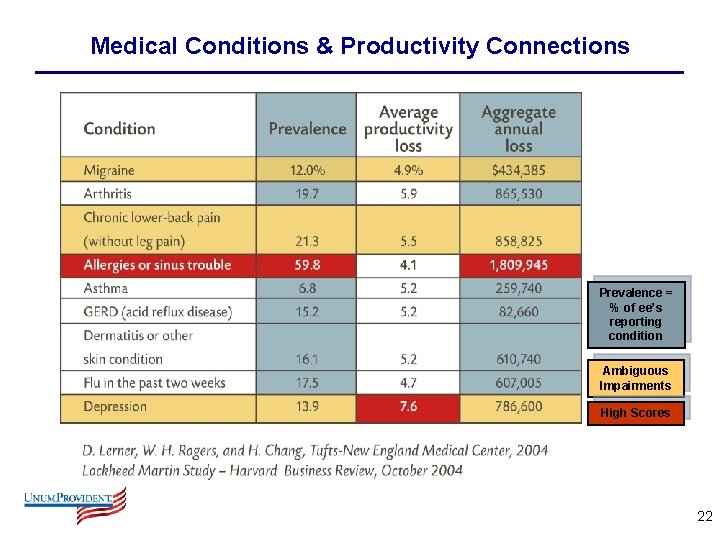
Medical Conditions & Productivity Connections Prevalence = % of ee’s reporting condition Ambiguous Impairments High Scores 22
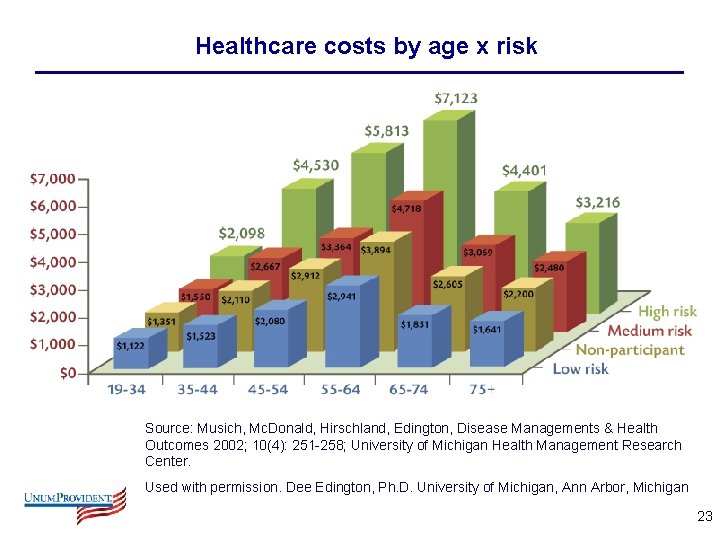
Healthcare costs by age x risk Source: Musich, Mc. Donald, Hirschland, Edington, Disease Managements & Health Outcomes 2002; 10(4): 251 -258; University of Michigan Health Management Research Center. Used with permission. Dee Edington, Ph. D. University of Michigan, Ann Arbor, Michigan 23
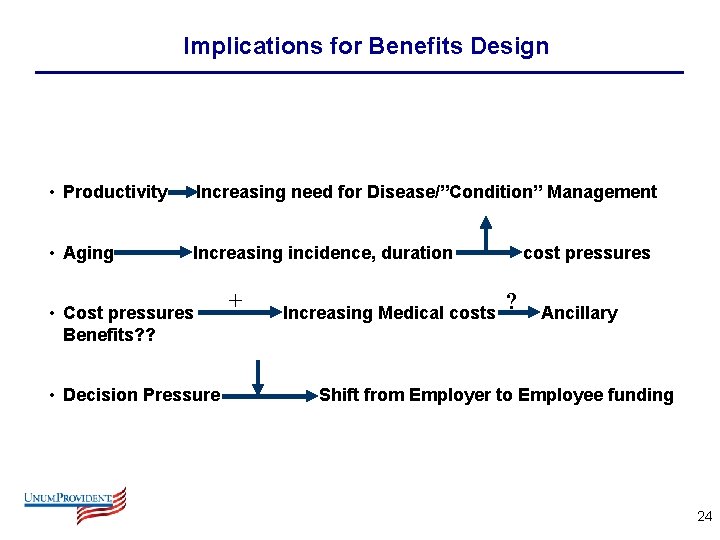
Implications for Benefits Design • Productivity Increasing need for Disease/”Condition” Management • Aging Increasing incidence, duration • Cost pressures Benefits? ? • Decision Pressure + Increasing Medical costs cost pressures ? Ancillary Shift from Employer to Employee funding 24
Things to Consider • What base level of ancillary benefits will employers fund? • What design will “stabilize” employer costs? • What gaps will remain for employees? • How will employees choose what to add? • What will employees consider understandable? • What will employees consider affordable? 25
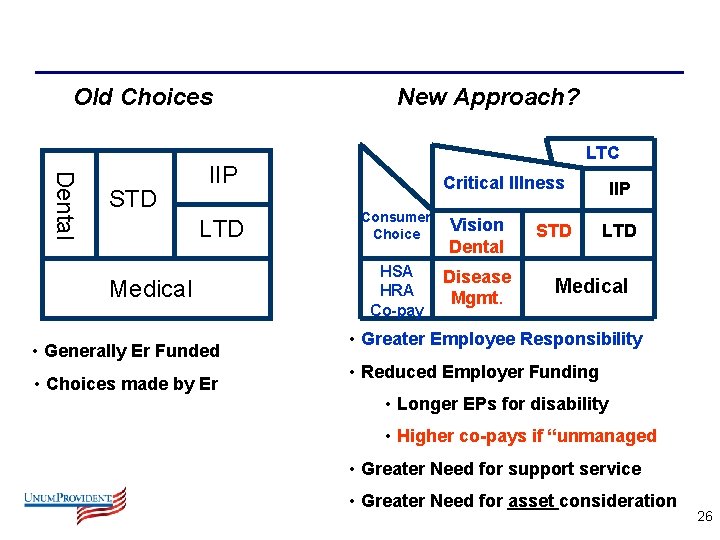
Old Choices Dental STD New Approach? LTC IIP LTD Medical • Generally Er Funded • Choices made by Er Critical Illness Consumer Choice Vision Dental HSA HRA Co-pay Disease Mgmt. STD IIP LTD Medical • Greater Employee Responsibility • Reduced Employer Funding • Longer EPs for disability • Higher co-pays if “unmanaged • Greater Need for support service • Greater Need for asset consideration 26
- Slides: 26