
Trends in OTC Ruble trading An EBS perspective
Trends in OTC Ruble trading: An EBS perspective 10 th International Ruble Settlement Forum Moscow – 1 November 2011 John Schoen Regional FX Product Manager – EMEA ICAP Electronic Broking
Today’s discussion points • • EBS market overview Ruble trading trends on EBS Product innovation Promoting an orderly market 2
EBS market overview 3
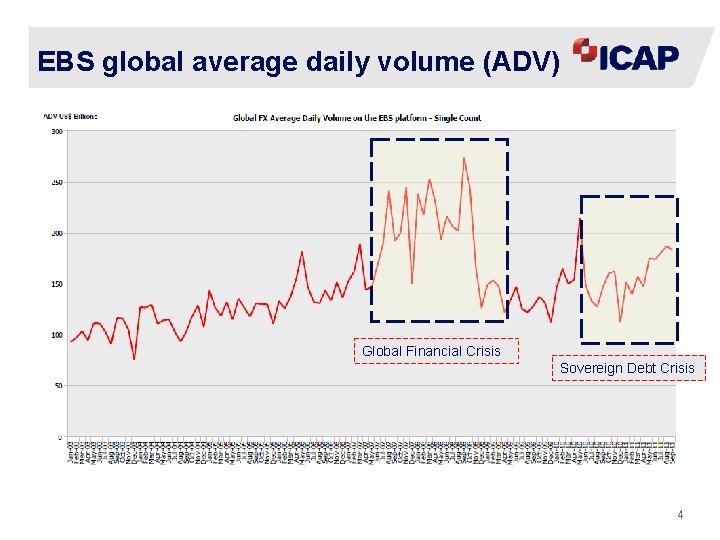
EBS global average daily volume (ADV) Global Financial Crisis Sovereign Debt Crisis 4
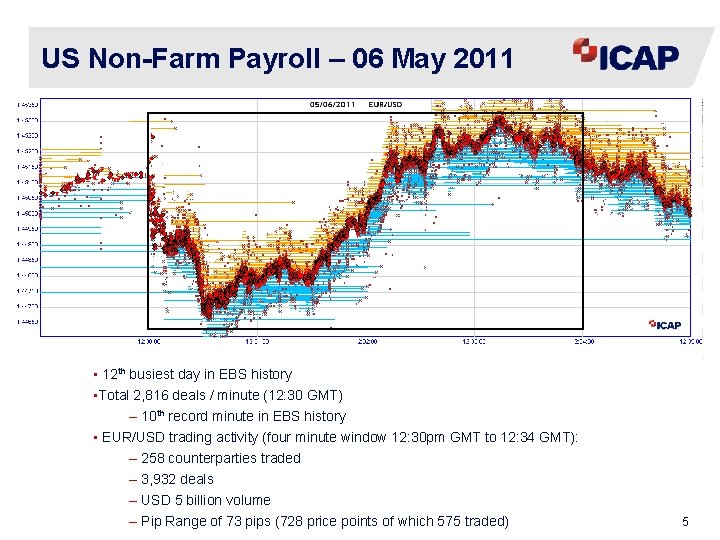
US Non-Farm Payroll – 06 May 2011 • 12 th busiest day in EBS history • Total 2, 816 deals / minute (12: 30 GMT) – 10 th record minute in EBS history • EUR/USD trading activity (four minute window 12: 30 pm GMT to 12: 34 GMT): – 258 counterparties traded – 3, 932 deals – USD 5 billion volume – Pip Range of 73 pips (728 price points of which 575 traded) 5
Ruble trading trends on EBS 6
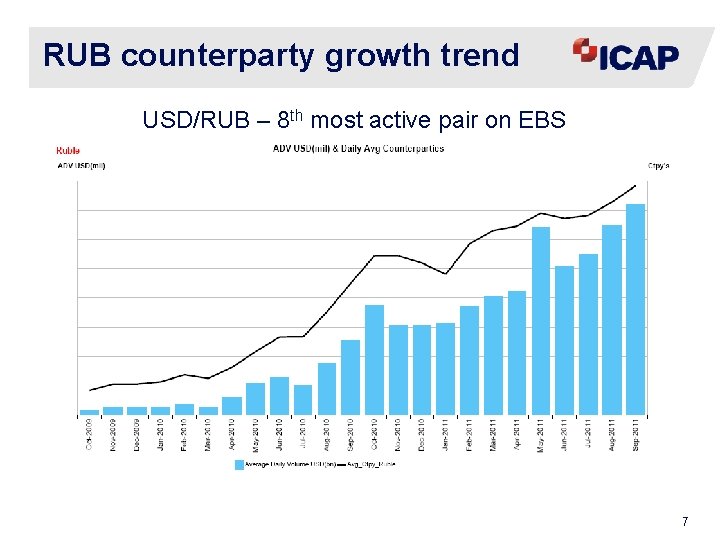
RUB counterparty growth trend USD/RUB – 8 th most active pair on EBS 7
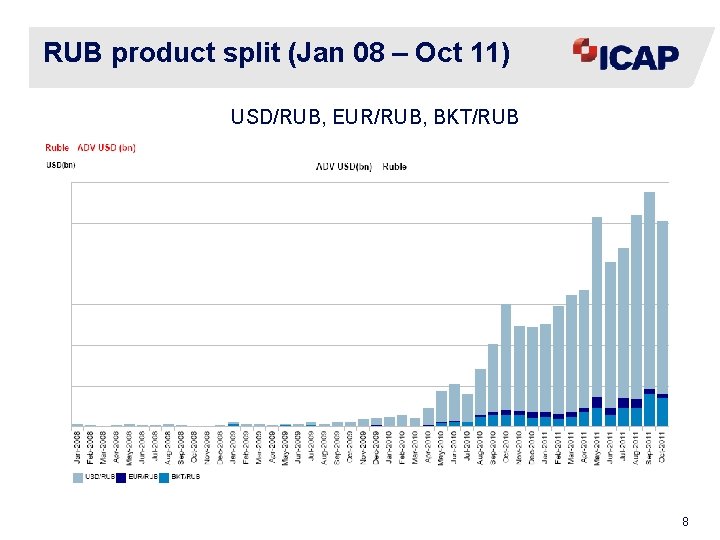
RUB product split (Jan 08 – Oct 11) USD/RUB, EUR/RUB, BKT/RUB 8
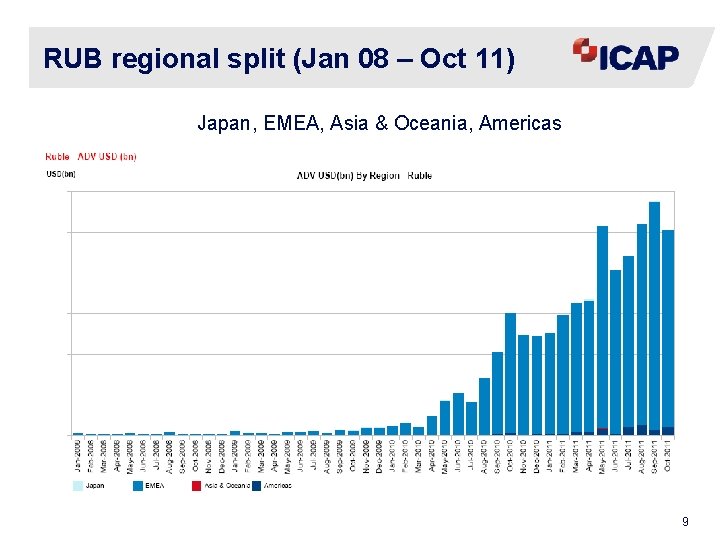
RUB regional split (Jan 08 – Oct 11) Japan, EMEA, Asia & Oceania, Americas 9
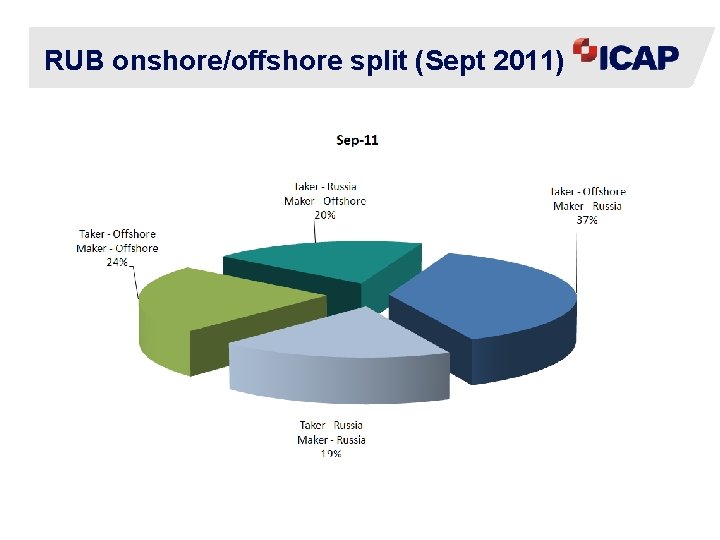
RUB onshore/offshore split (Sept 2011)
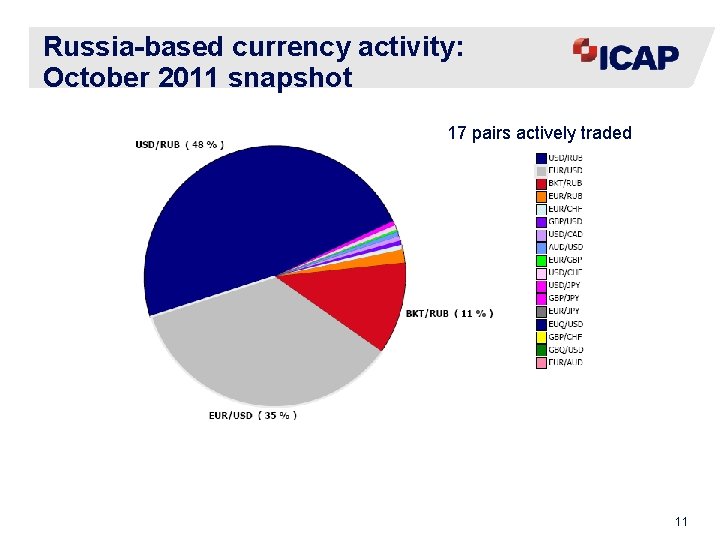
Russia-based currency activity: October 2011 snapshot 17 pairs actively traded 11
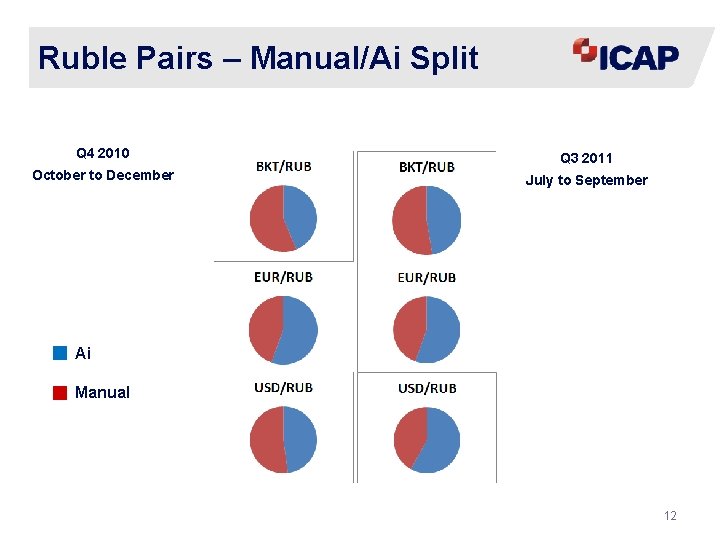
Ruble Pairs – Manual/Ai Split Q 4 2010 Q 3 2011 October to December July to September Ai Manual 12
Product innovation 13
Product innovation • • • BKT/RUB USD/KZT, USD/KZA RUB EMTA Fix Continuous Match in RUB pairs Smalls in RUB pairs – 100 k minimum/increment – 1/100 th kopek granularity (USDRUB = 30. 5708 / 30. 5733) • Emerging Markets: CNH, NDFs • Pip Discretion • “Join or Better” 14
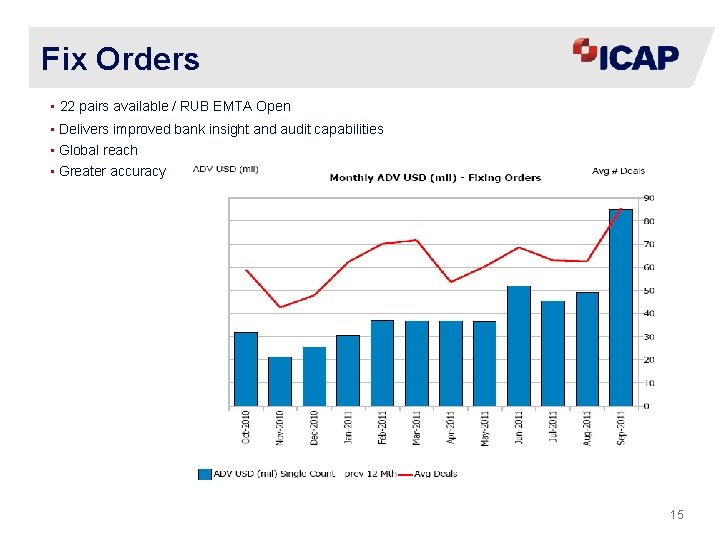
Fix Orders • 22 pairs available / RUB EMTA Open • Delivers improved bank insight and audit capabilities • Global reach • Greater accuracy 15
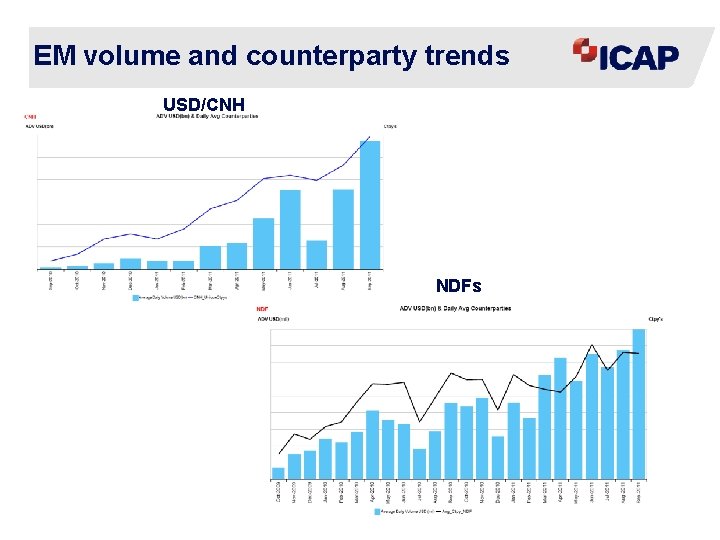
EM volume and counterparty trends USD/CNH NDFs
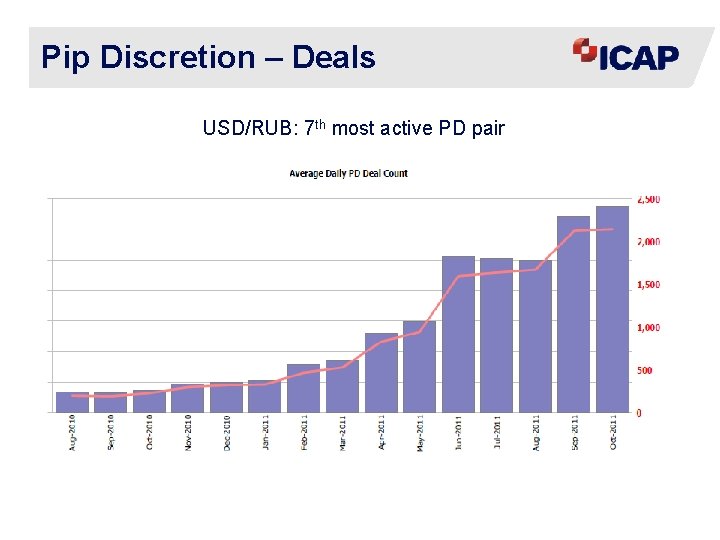
Pip Discretion – Deals USD/RUB: 7 th most active PD pair
Promoting an orderly market 18
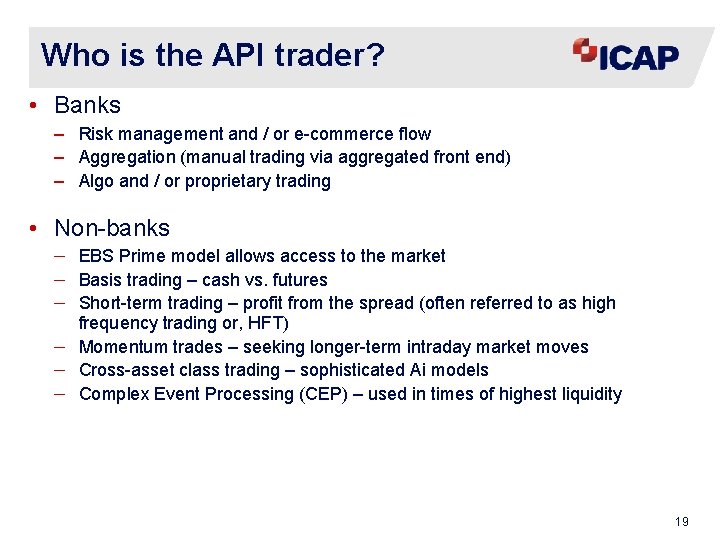
Who is the API trader? • Banks – Risk management and / or e-commerce flow – Aggregation (manual trading via aggregated front end) – Algo and / or proprietary trading • Non-banks – EBS Prime model allows access to the market – Basis trading – cash vs. futures – Short-term trading – profit from the spread (often referred to as high – – – frequency trading or, HFT) Momentum trades – seeking longer-term intraday market moves Cross-asset class trading – sophisticated Ai models Complex Event Processing (CEP) – used in times of highest liquidity 19
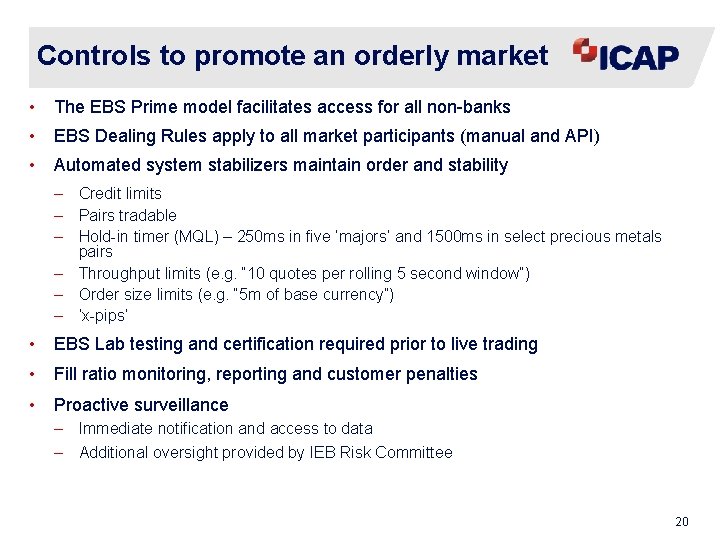
Controls to promote an orderly market • The EBS Prime model facilitates access for all non-banks • EBS Dealing Rules apply to all market participants (manual and API) • Automated system stabilizers maintain order and stability – Credit limits – Pairs tradable – Hold-in timer (MQL) – 250 ms in five ‘majors’ and 1500 ms in select precious metals pairs – Throughput limits (e. g. “ 10 quotes per rolling 5 second window”) – Order size limits (e. g. “ 5 m of base currency”) – ‘x-pips’ • EBS Lab testing and certification required prior to live trading • Fill ratio monitoring, reporting and customer penalties • Proactive surveillance – Immediate notification and access to data – Additional oversight provided by IEB Risk Committee 20
- Slides: 20