
TRENDS IN FOSSIL FUEL CONSUMPTION All the graphs
- Slides: 41
TRENDS IN FOSSIL FUEL CONSUMPTION All the graphs are from the online versions of the BP Statistical Review of World Energy or the EIA International Energy Outlook 2017 Compiled by Robert Lyman
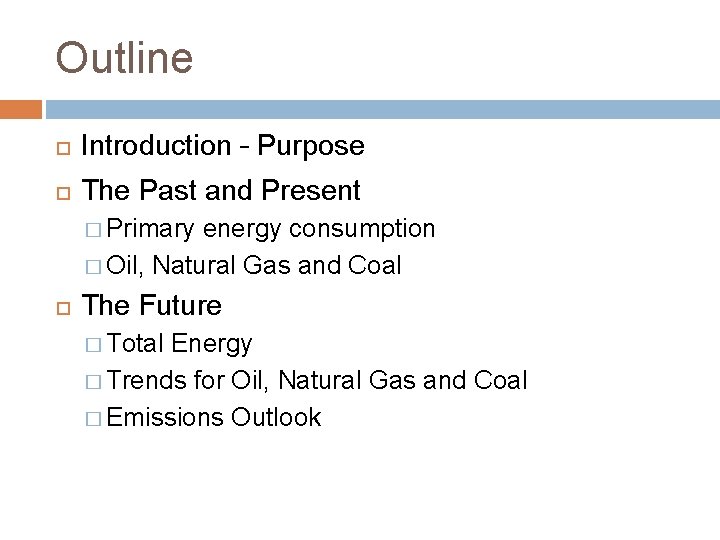
Outline Introduction – Purpose The Past and Present � Primary energy consumption � Oil, Natural Gas and Coal The Future � Total Energy � Trends for Oil, Natural Gas and Coal � Emissions Outlook
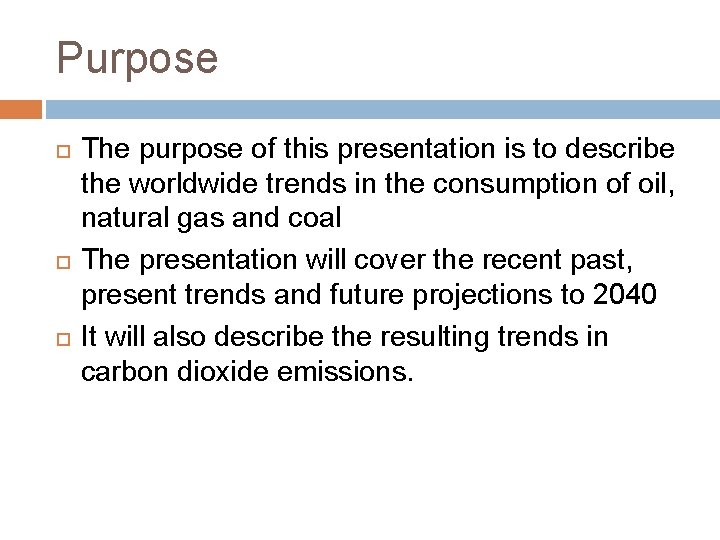
Purpose The purpose of this presentation is to describe the worldwide trends in the consumption of oil, natural gas and coal The presentation will cover the recent past, present trends and future projections to 2040 It will also describe the resulting trends in carbon dioxide emissions.
The Past The following slides show what has actually happened to global supply and demand for fossil fuels over the past few decades as indicated by the British Petroleum Statistical Review of World Energy.
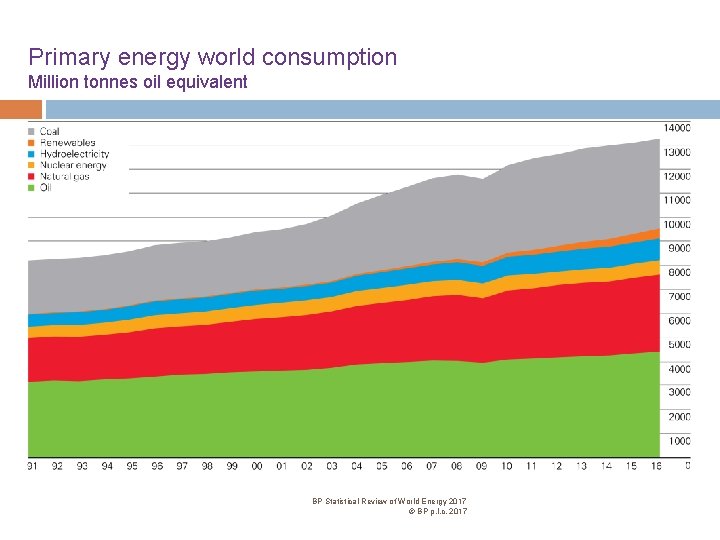
Primary energy world consumption Million tonnes oil equivalent BP Statistical Review of World Energy 2017 © BP p. l. c. 2017
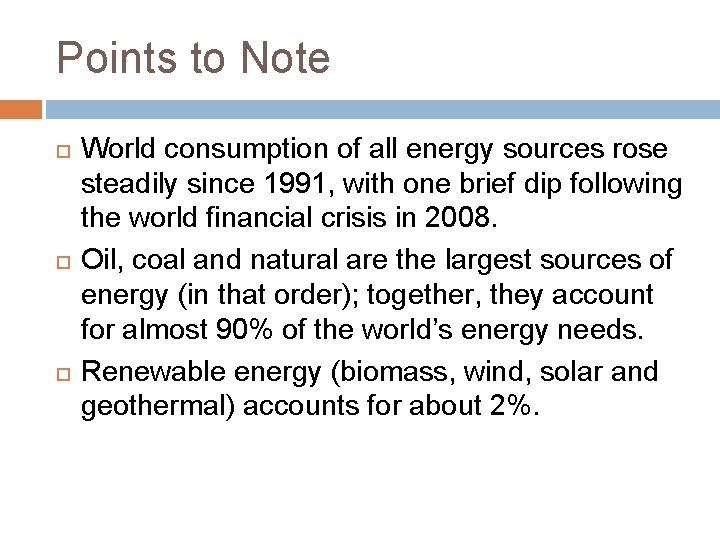
Points to Note World consumption of all energy sources rose steadily since 1991, with one brief dip following the world financial crisis in 2008. Oil, coal and natural are the largest sources of energy (in that order); together, they account for almost 90% of the world’s energy needs. Renewable energy (biomass, wind, solar and geothermal) accounts for about 2%.
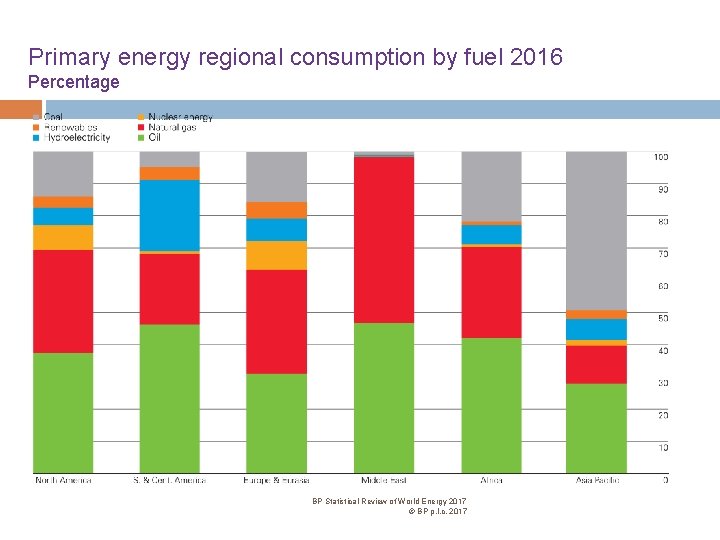
Primary energy regional consumption by fuel 2016 Percentage BP Statistical Review of World Energy 2017 © BP p. l. c. 2017
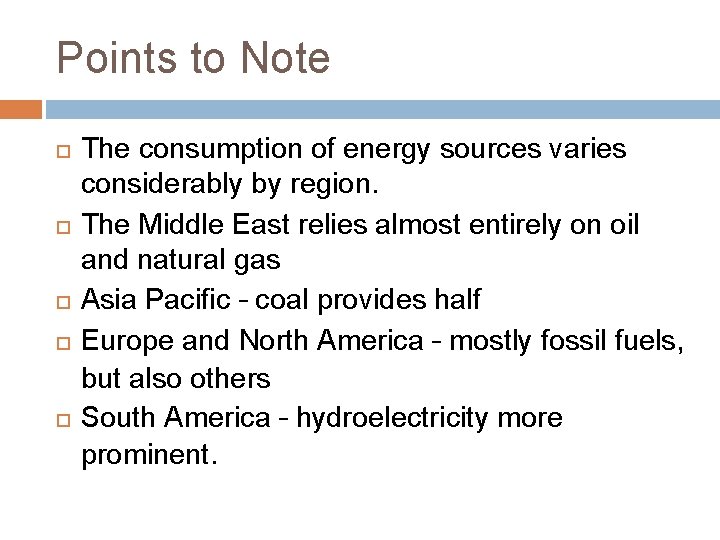
Points to Note The consumption of energy sources varies considerably by region. The Middle East relies almost entirely on oil and natural gas Asia Pacific – coal provides half Europe and North America – mostly fossil fuels, but also others South America – hydroelectricity more prominent.
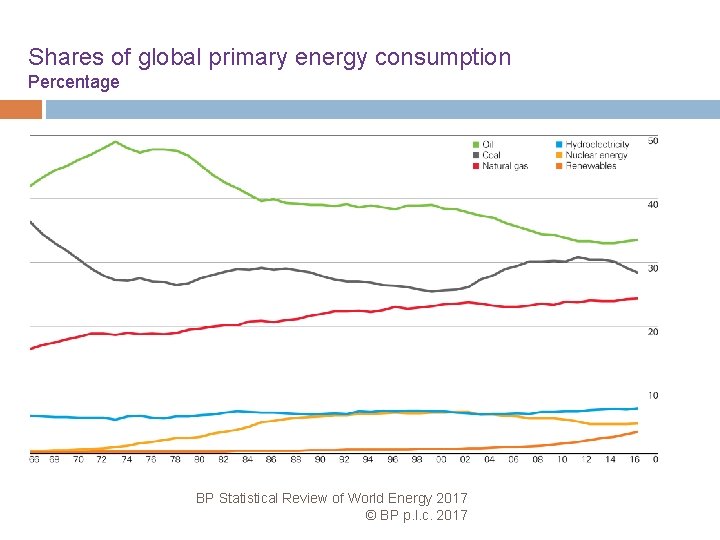
Shares of global primary energy consumption Percentage BP Statistical Review of World Energy 2017 © BP p. l. c. 2017
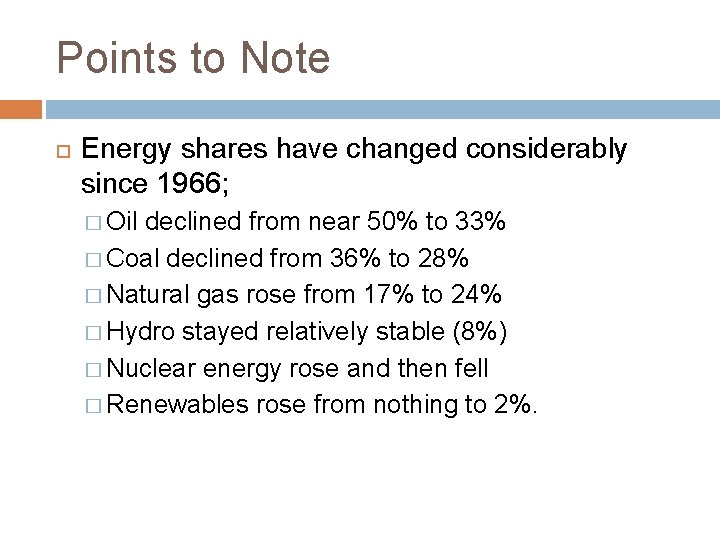
Points to Note Energy shares have changed considerably since 1966; � Oil declined from near 50% to 33% � Coal declined from 36% to 28% � Natural gas rose from 17% to 24% � Hydro stayed relatively stable (8%) � Nuclear energy rose and then fell � Renewables rose from nothing to 2%.
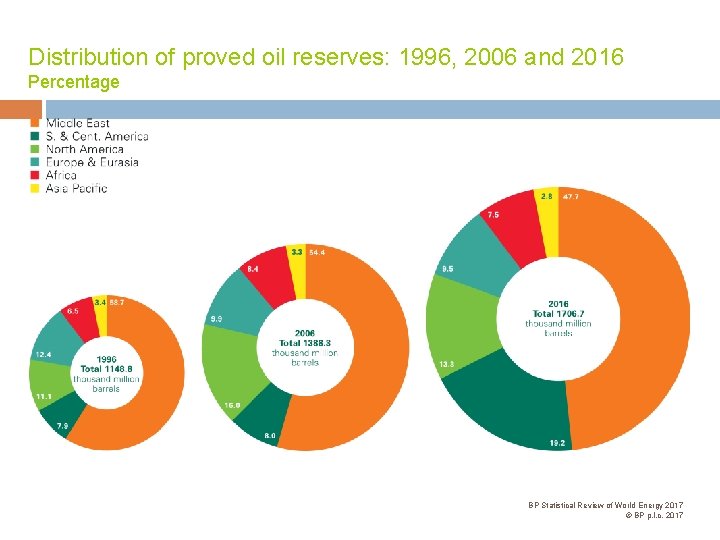
Distribution of proved oil reserves: 1996, 2006 and 2016 Percentage BP Statistical Review of World Energy 2017 © BP p. l. c. 2017
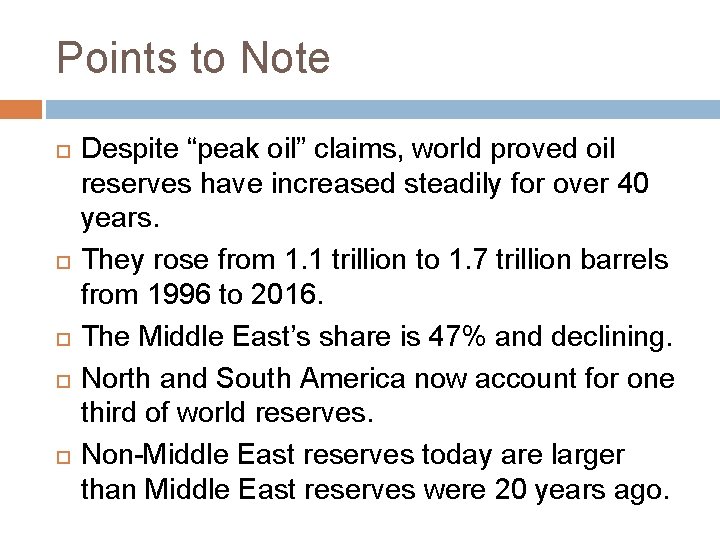
Points to Note Despite “peak oil” claims, world proved oil reserves have increased steadily for over 40 years. They rose from 1. 1 trillion to 1. 7 trillion barrels from 1996 to 2016. The Middle East’s share is 47% and declining. North and South America now account for one third of world reserves. Non-Middle East reserves today are larger than Middle East reserves were 20 years ago.
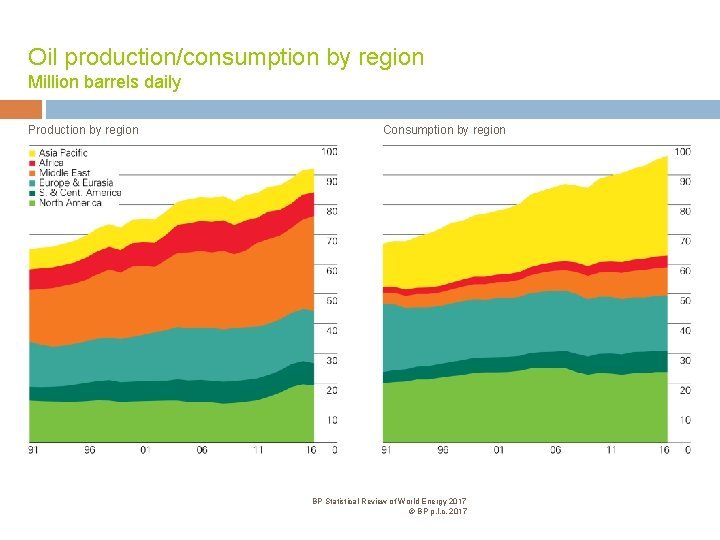
Oil production/consumption by region Million barrels daily Production by region Consumption by region BP Statistical Review of World Energy 2017 © BP p. l. c. 2017
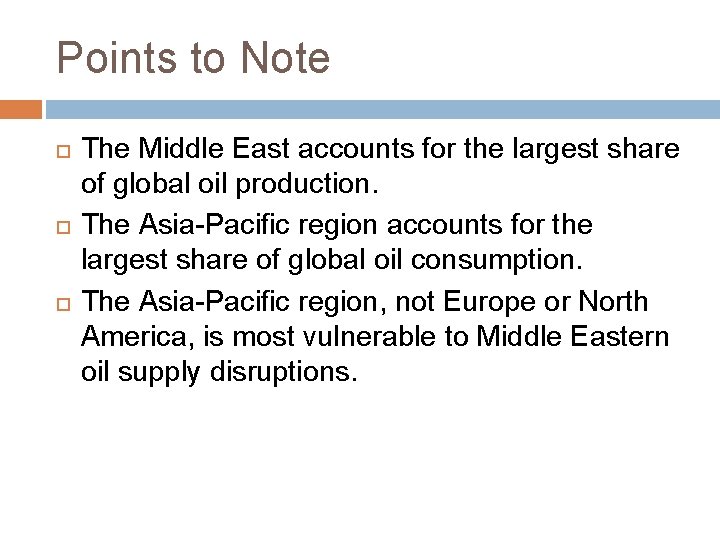
Points to Note The Middle East accounts for the largest share of global oil production. The Asia-Pacific region accounts for the largest share of global oil consumption. The Asia-Pacific region, not Europe or North America, is most vulnerable to Middle Eastern oil supply disruptions.
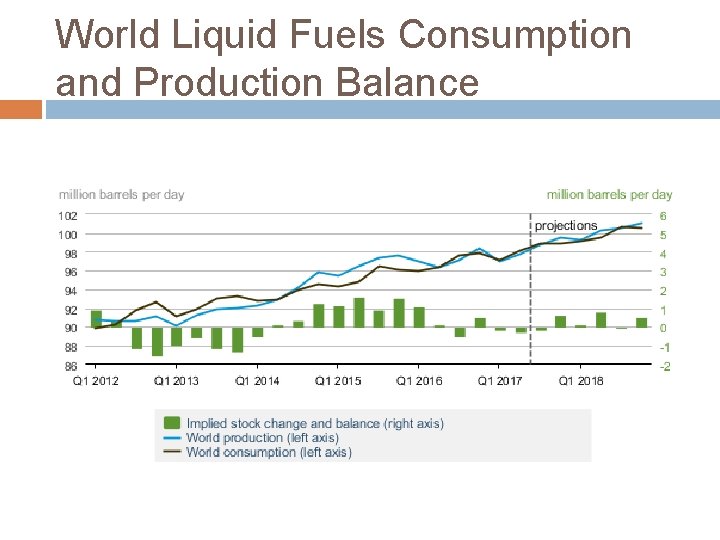
World Liquid Fuels Consumption and Production Balance
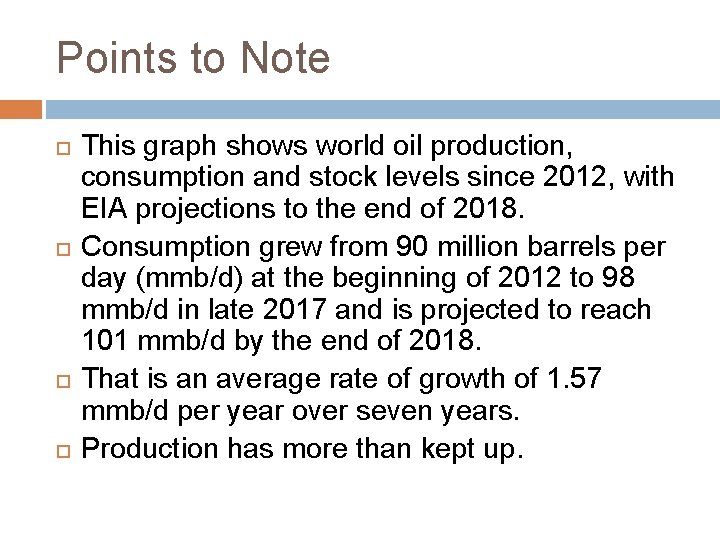
Points to Note This graph shows world oil production, consumption and stock levels since 2012, with EIA projections to the end of 2018. Consumption grew from 90 million barrels per day (mmb/d) at the beginning of 2012 to 98 mmb/d in late 2017 and is projected to reach 101 mmb/d by the end of 2018. That is an average rate of growth of 1. 57 mmb/d per year over seven years. Production has more than kept up.
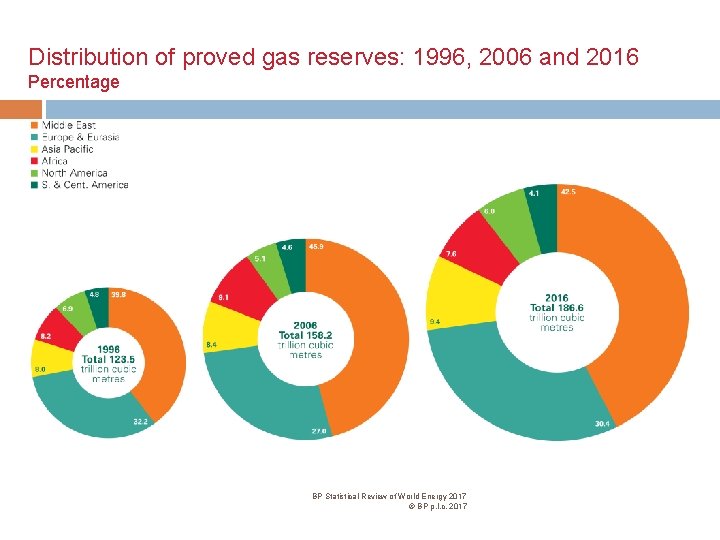
Distribution of proved gas reserves: 1996, 2006 and 2016 Percentage BP Statistical Review of World Energy 2017 © BP p. l. c. 2017
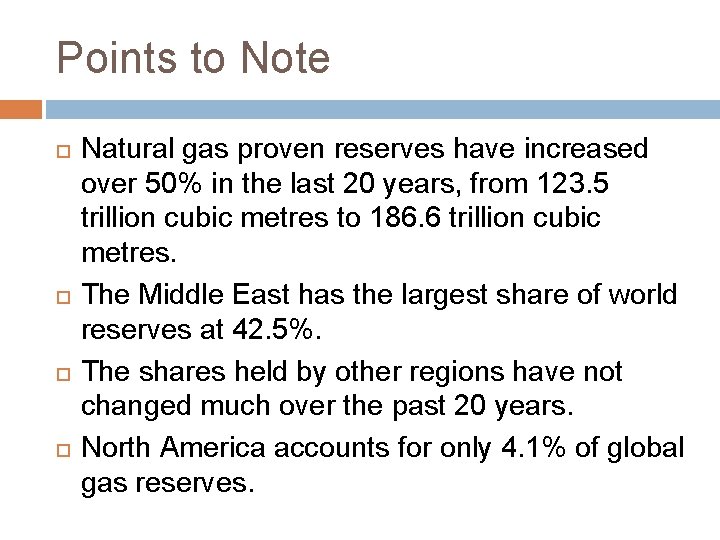
Points to Note Natural gas proven reserves have increased over 50% in the last 20 years, from 123. 5 trillion cubic metres to 186. 6 trillion cubic metres. The Middle East has the largest share of world reserves at 42. 5%. The shares held by other regions have not changed much over the past 20 years. North America accounts for only 4. 1% of global gas reserves.
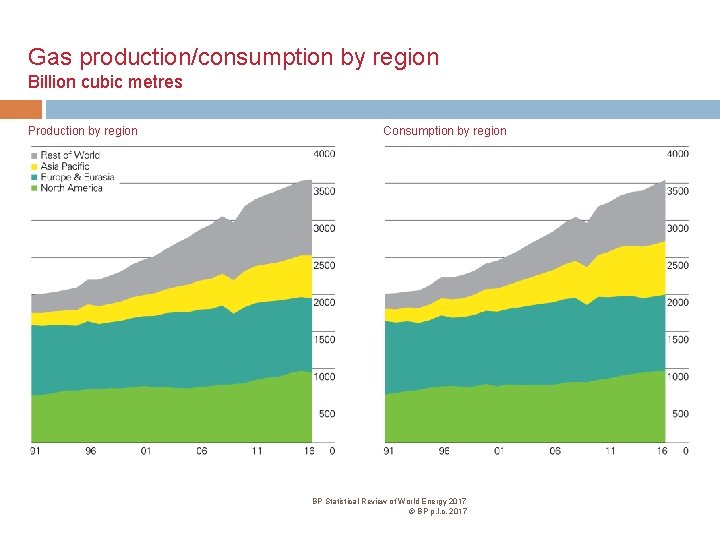
Gas production/consumption by region Billion cubic metres Production by region Consumption by region BP Statistical Review of World Energy 2017 © BP p. l. c. 2017
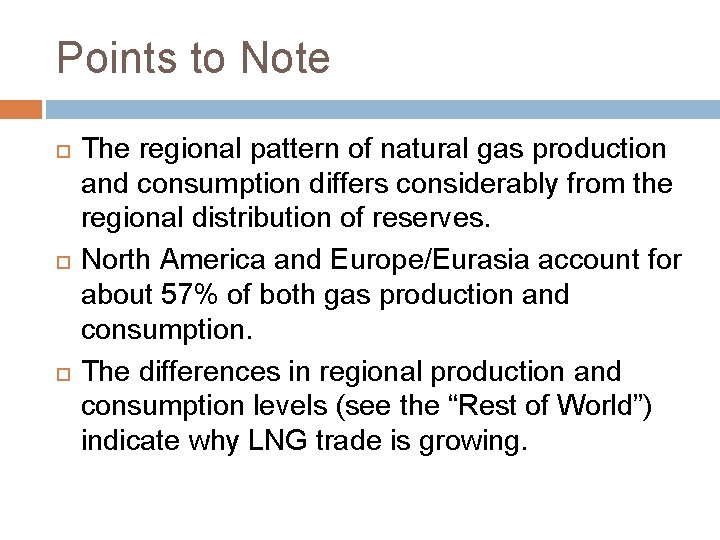
Points to Note The regional pattern of natural gas production and consumption differs considerably from the regional distribution of reserves. North America and Europe/Eurasia account for about 57% of both gas production and consumption. The differences in regional production and consumption levels (see the “Rest of World”) indicate why LNG trade is growing.
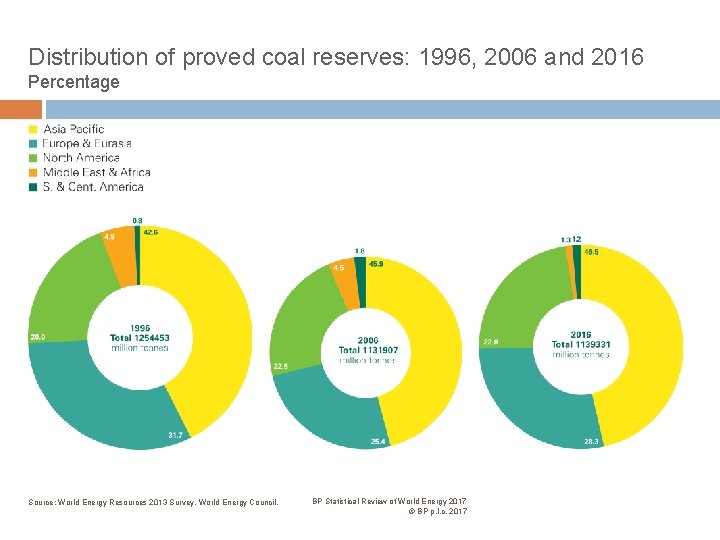
Distribution of proved coal reserves: 1996, 2006 and 2016 Percentage Source: World Energy Resources 2013 Survey, World Energy Council. BP Statistical Review of World Energy 2017 © BP p. l. c. 2017
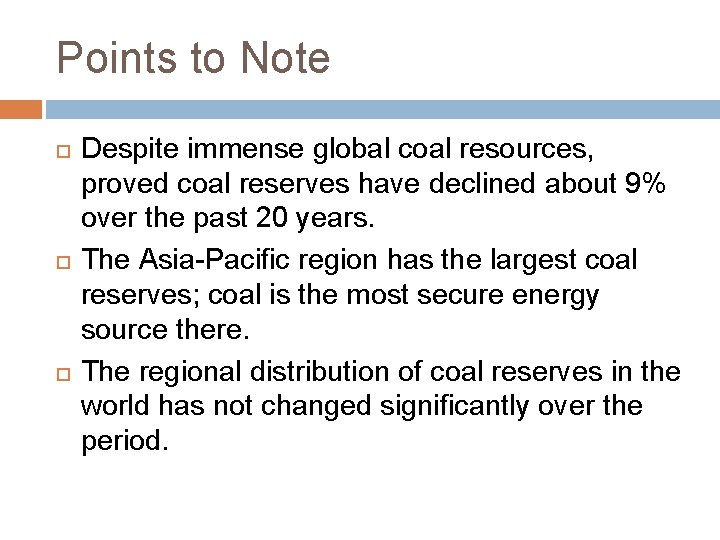
Points to Note Despite immense global coal resources, proved coal reserves have declined about 9% over the past 20 years. The Asia-Pacific region has the largest coal reserves; coal is the most secure energy source there. The regional distribution of coal reserves in the world has not changed significantly over the period.
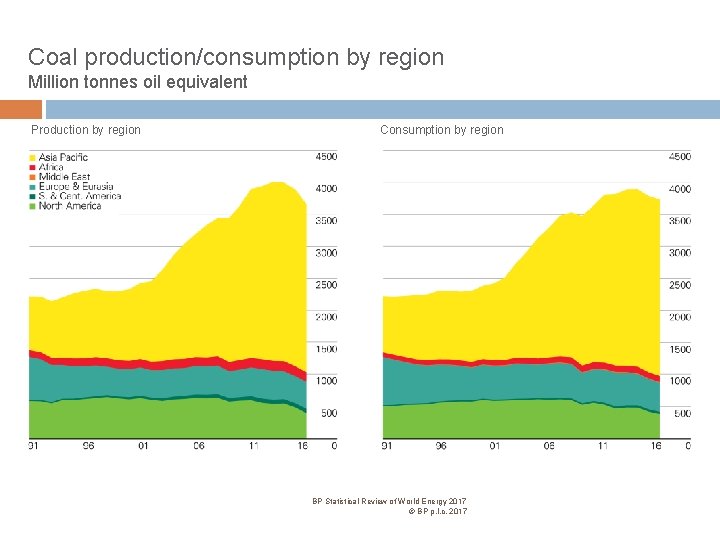
Coal production/consumption by region Million tonnes oil equivalent Production by region Consumption by region BP Statistical Review of World Energy 2017 © BP p. l. c. 2017
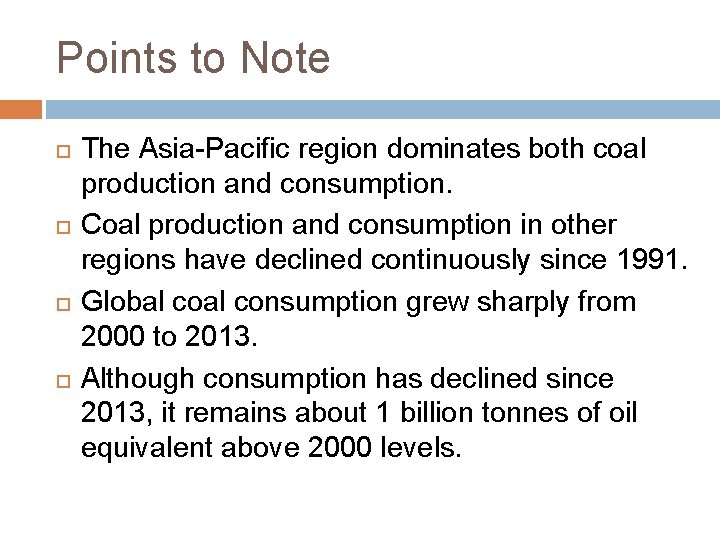
Points to Note The Asia-Pacific region dominates both coal production and consumption. Coal production and consumption in other regions have declined continuously since 1991. Global consumption grew sharply from 2000 to 2013. Although consumption has declined since 2013, it remains about 1 billion tonnes of oil equivalent above 2000 levels.
The Future The following slides indicate the projections of the U. S. Energy Information Administration (EIA) of the most likely (i. e. reference case) trends in energy supply, demand emissions over the period from now to 2040, and some indicative figures for 2050. The data and graphs are from the EIA International Energy Outlook 2017.
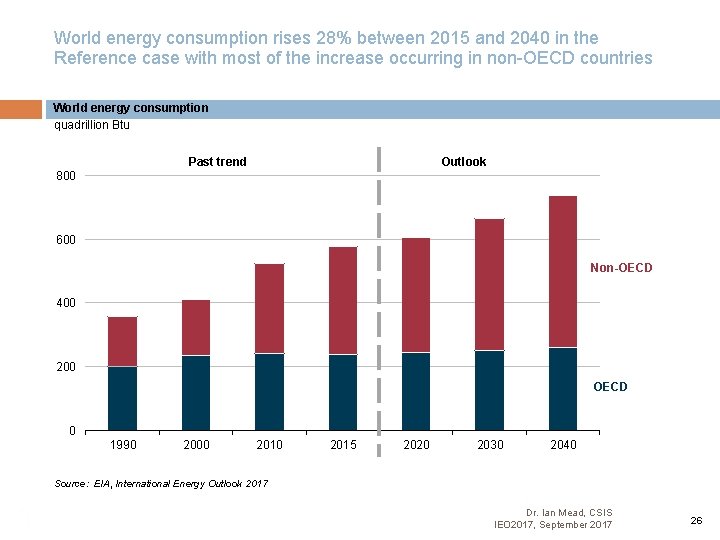
World energy consumption rises 28% between 2015 and 2040 in the Reference case with most of the increase occurring in non-OECD countries World energy consumption quadrillion Btu Past trend Outlook 800 600 Non-OECD 400 200 OECD 0 1990 2000 2015 2020 2030 2040 Source: EIA, International Energy Outlook 2017 Dr. Ian Mead, CSIS IEO 2017, September 2017 26
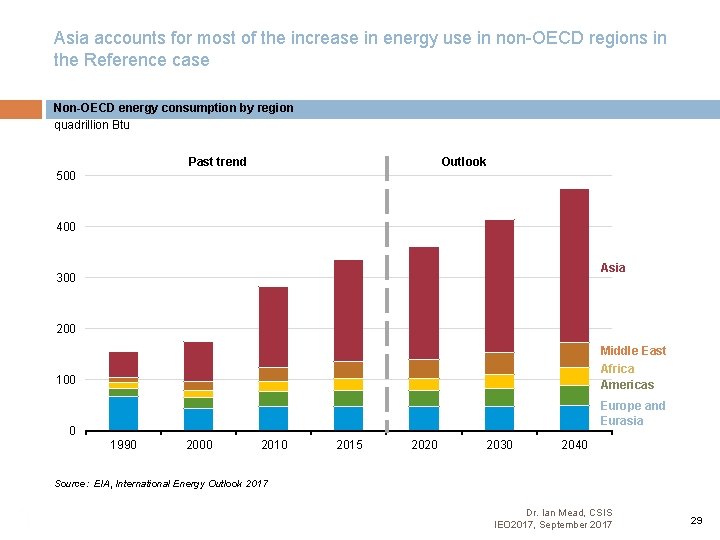
Points to Note World primary energy consumption is projected to grow at slower rates than in the past but to exceed 700 quadrillion Btu by 2040. Consumption in the OECD will barely rise: over 90% of the growth will occur in the non-OECD countries and mainly in Asia.
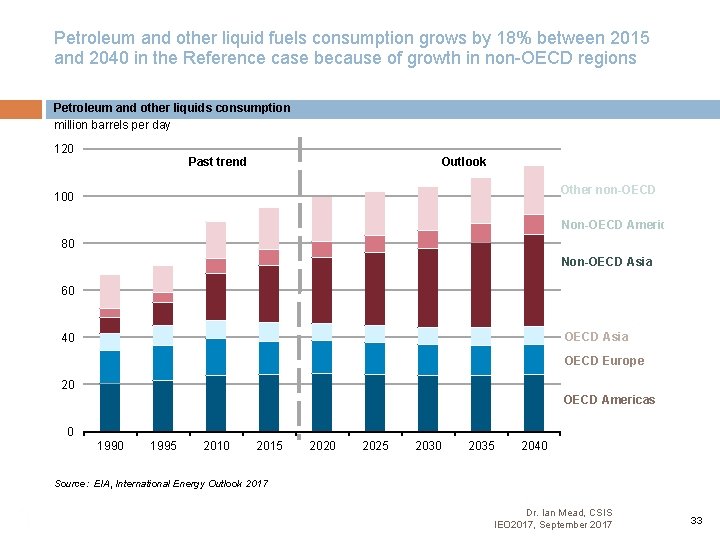
Points to Note Petroleum and liquid fuels consumption is projected to grow by 18% between 2015 and 2040, with all of the growth occurring in the non-OECD area. Consumption is projected to rise to 116 million barrels per day, which sounds like an underestimate, given that consumption will probably exceed 101 million barrels per day at the end of 2018.
Asia accounts for most of the increase in energy use in non-OECD regions in the Reference case Non-OECD energy consumption by region quadrillion Btu Past trend Outlook 500 400 Asia 300 200 Middle East Africa Americas 100 Europe and Eurasia 0 1990 2000 2015 2020 2030 2040 Source: EIA, International Energy Outlook 2017 Dr. Ian Mead, CSIS IEO 2017, September 2017 29
Points to Note This graph shows the breakdown of the growth in primary energy consumption by region, and highlights the role to be played by Asia.
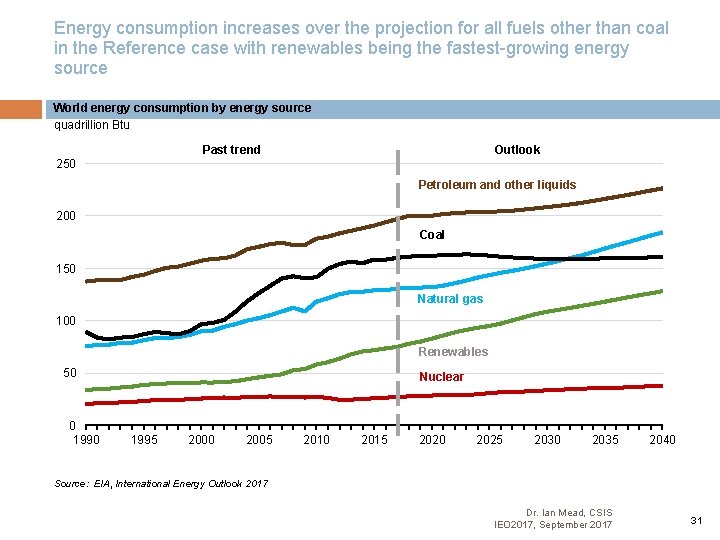
Energy consumption increases over the projection for all fuels other than coal in the Reference case with renewables being the fastest-growing energy source World energy consumption by energy source quadrillion Btu Past trend Outlook 250 Petroleum and other liquids 200 Coal 150 Natural gas 100 Renewables 50 0 1990 Nuclear 1995 2000 2005 2010 2015 2020 2025 2030 2035 2040 Source: EIA, International Energy Outlook 2017 Dr. Ian Mead, CSIS IEO 2017, September 2017 31
Points to Note This graph shows past and projected trends in world energy consumption by energy source. Petroleum and other liquid fuels retain the largest share of the world total until 2040 and beyond. Natural gas’s share rises quickly, surpassing coal by 2030, but coal remains firmly in third place throughout the period. Renewables including hydroelectricity grow to 125 quadrillion Btus by 2040, while nuclear energy barely grows.
Petroleum and other liquid fuels consumption grows by 18% between 2015 and 2040 in the Reference case because of growth in non-OECD regions Petroleum and other liquids consumption million barrels per day 120 Past trend Outlook Other non-OECD 100 Non-OECD Americas 80 Non-OECD Asia 60 OECD Asia 40 OECD Europe 20 OECD Americas 0 1995 2010 2015 2020 2025 2030 2035 2040 Source: EIA, International Energy Outlook 2017 Dr. Ian Mead, CSIS IEO 2017, September 2017 33
Points to Note The non-OECD area will clearly dominate the growth in oil demand.
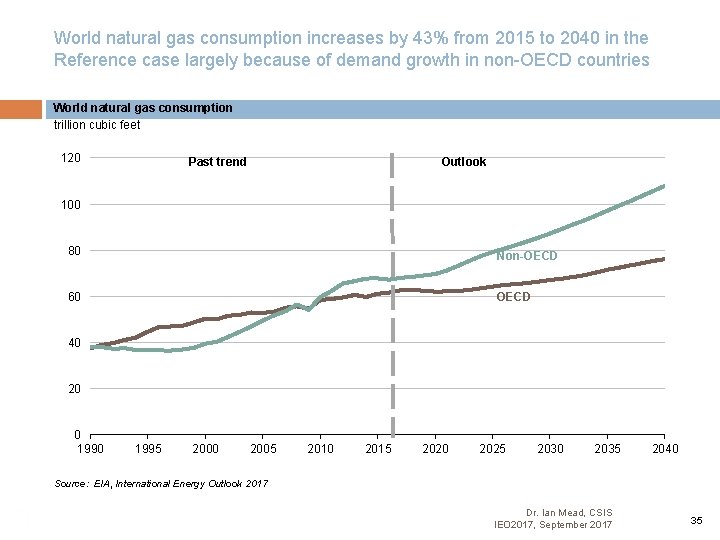
World natural gas consumption increases by 43% from 2015 to 2040 in the Reference case largely because of demand growth in non-OECD countries World natural gas consumption trillion cubic feet 120 Past trend Outlook 100 80 Non-OECD 60 OECD 40 20 0 1995 2000 2005 2010 2015 2020 2025 2030 2035 2040 Source: EIA, International Energy Outlook 2017 Dr. Ian Mead, CSIS IEO 2017, September 2017 35
Points to Note Natural gas consumption rises by 43% from 2015 to 2040. While consumption grows in all areas, in the non-OECD countries it rises from 40 trillion cubic feet (TCF) per year in 1990 to over 105 TCF by 2040.
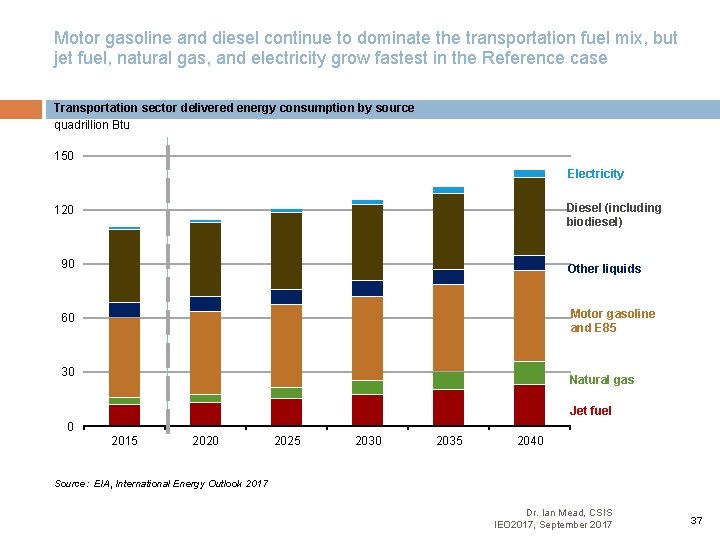
Motor gasoline and diesel continue to dominate the transportation fuel mix, but jet fuel, natural gas, and electricity grow fastest in the Reference case Transportation sector delivered energy consumption by source quadrillion Btu 150 Electricity Diesel (including biodiesel) 120 90 Other liquids 60 Motor gasoline and E 85 30 Natural gas Jet fuel 0 2015 2020 2025 2030 2035 2040 Source: EIA, International Energy Outlook 2017 Dr. Ian Mead, CSIS IEO 2017, September 2017 37
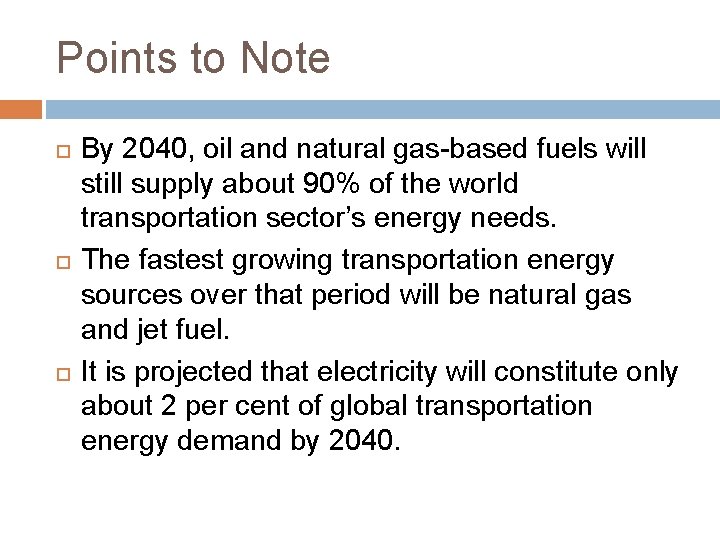
Points to Note By 2040, oil and natural gas-based fuels will still supply about 90% of the world transportation sector’s energy needs. The fastest growing transportation energy sources over that period will be natural gas and jet fuel. It is projected that electricity will constitute only about 2 per cent of global transportation energy demand by 2040.
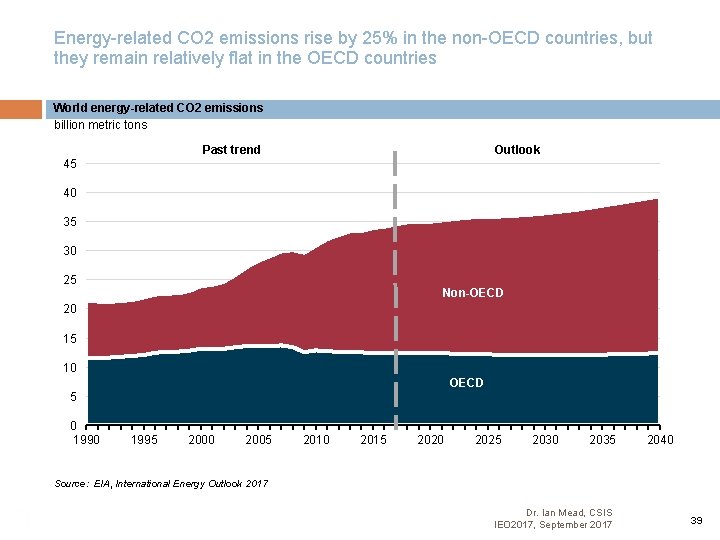
Energy-related CO 2 emissions rise by 25% in the non-OECD countries, but they remain relatively flat in the OECD countries World energy-related CO 2 emissions billion metric tons Past trend Outlook 45 40 35 30 25 Non-OECD 20 15 10 OECD 5 0 1995 2000 2005 2010 2015 2020 2025 2030 2035 2040 Source: EIA, International Energy Outlook 2017 Dr. Ian Mead, CSIS IEO 2017, September 2017 39
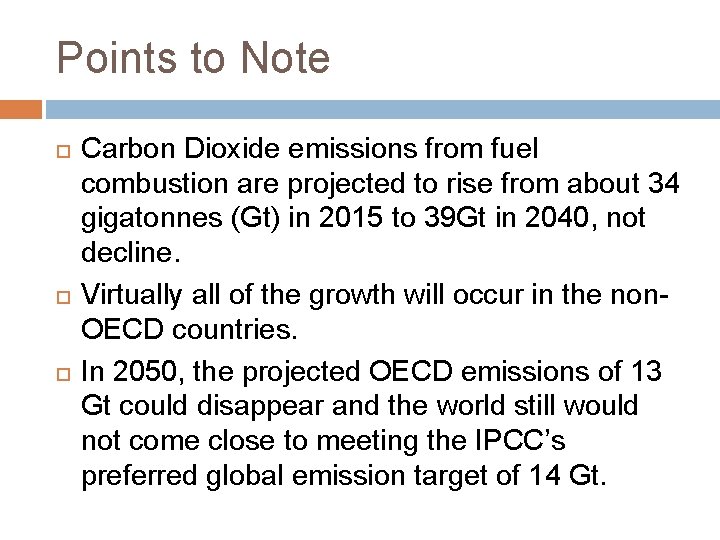
Points to Note Carbon Dioxide emissions from fuel combustion are projected to rise from about 34 gigatonnes (Gt) in 2015 to 39 Gt in 2040, not decline. Virtually all of the growth will occur in the non. OECD countries. In 2050, the projected OECD emissions of 13 Gt could disappear and the world still would not come close to meeting the IPCC’s preferred global emission target of 14 Gt.
Conclusion Past, present and future trends in the consumption of fossil fuels are entirely different from the claims of those who think the world is embarked on a massive transformation of the energy system towards renewables. In a world in which significantly increasing carbon dioxide emissions is virtually inevitable, what justification is there for massive economy -destroying reductions in Canada?