
Trench Warfare Trench Warfare Fighting from trenches was
- Slides: 17
Trench Warfare
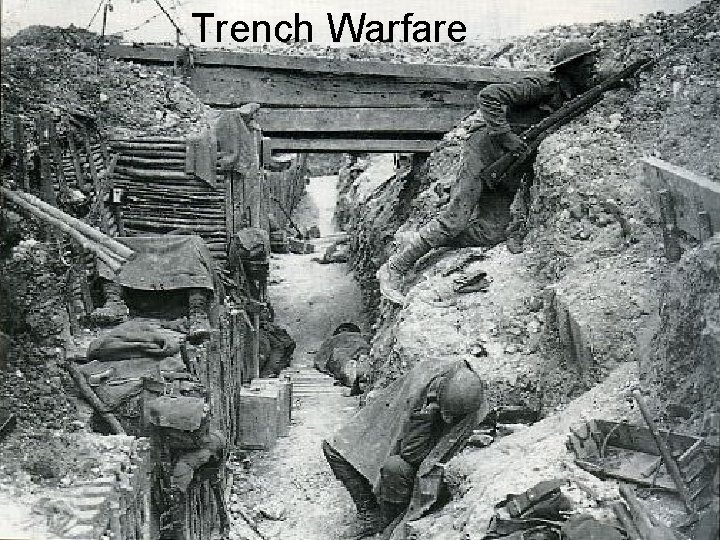
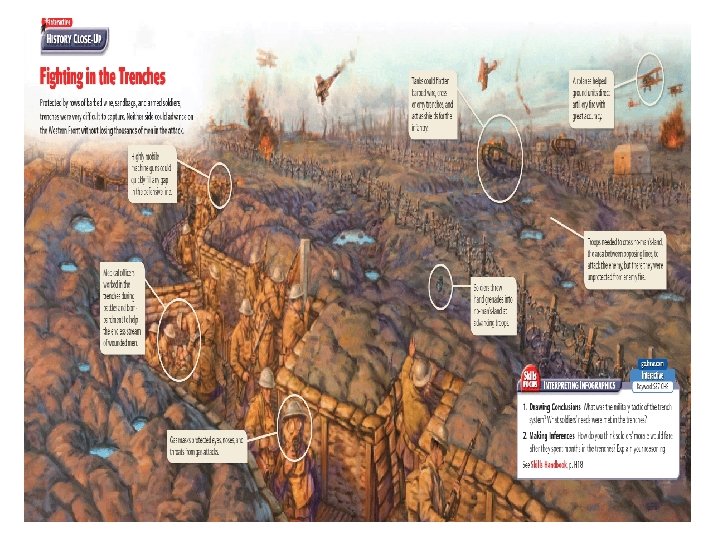
Trench Warfare • Fighting from trenches, was an old strategy that had been used in Africa, Asia, and the Americas. • This trench warfare, however, was different because of its scale. – Soldiers lived in trenches, surrounded by machine-gun fire, flying grenades, and exploding artillery shells. – Opposing forces had machine guns pointed at enemy trenches at all times, firing whenever a helmet or rifle appeared over the top. – Thousands of men that ran into the area between the trenches, known as “no-man’s-land, ” were chopped down by enemy fire. • Neither the Allies nor the Germans were able to make significant advances, creating a stalemate, or deadlock.
Life in the Trenches • • • Daily Death in the Trenches Death was a constant companion to those serving in the line, even when no raid or attack was launched or defended against. In busy sectors the constant shellfire directed by the enemy brought random death, whether their victims were lounging in a trench or lying in a dugout (many men were buried as a consequence of such large shellbursts). Many men died on their first day in the trenches as a consequence of a precisely aimed sniper’s bullet Rat Infestation • • • Rats in their millions infested trenches. There were two main types, the brown and the black rat. Both were despised but the brown rat was especially feared. Gorging themselves on human remains (grotesquely disfiguring them by eating their eyes and liver) they could grow to the size of a cat. Men, exasperated and afraid of these rats (which would even scamper across their faces in the dark), would attempt to rid the trenches of them by various methods: gunfire or clubbing them to death. A single rat couple could produce up to 900 offspring in a year, spreading infection and contaminating food. The rat problem remained for the duration of the war
Life in the Trenches Frogs, Lice and Worse • • Lice were a never-ending problem, breeding in the seams of filthy clothing and causing men to itch unceasingly. Lice caused Trench Fever, a particularly painful disease that began suddenly with severe pain followed by high fever. Frogs by the score were found in shell holes covered in water; they were also found in the base of trenches. Trench Foot was another medical condition peculiar to trench life. It was a fungal infection of the feet caused by cold, wet and unsanitary trench conditions. It could turn gangrenous and result in amputation. Daily Routines • • • Duties began one hour before dawn. Cleaning of their riffle Breakfast would then be served Assigned chores to each man (Included refilling of sandbags, the repair of the duckboards on the floor of the trench and the draining of trenches) Trenches quickly accumulated muddy waters Pumping equipment was available for the draining of trenches
Life in the Trenches Daily Boredom • Given that each side's front line was constantly under watch by snipers and look-outs during daylight, movement was logically restricted until night fell. Thus, once men had concluded their assigned tasks they were free to attend to more personal matters, such as the reading and writing of letters home. • Meals were also prepared. Sleep was snatched wherever possible - although it was seldom that men were allowed sufficient time to grab more than a few minutes rest before they were detailed to another task.
Patrolling No Man's Land • Some men would be tasked with repairing or adding barbed wire to the front line. Others however would go out to assigned listening posts, hoping to pick up valuable information from the enemy lines. • Sometimes enemy patrols would meet in No Man's Land. They were then faced with the option of hurrying on their separate ways or else engaging in hand to hand fighting. • They could not afford to use their handguns while patrolling in No Man's Land, for fear of the machine gun fire it would inevitably attract, deadly to all members of the patrol.
…And the Smell • Rotting bodies lay around in their thousands. For example, approximately 200, 000 men were killed on the Somme battlefields, many of which lay in shallow graves. • Overflowing latrines (toilets) would similarly give off a most offensive stench. • Men who had not been afforded the luxury of a bath in weeks or months would offer the pervading odor of dried sweat. The feet were generally accepted to give off the worst odor. • Trenches would also smell of creosol or chloride of lime, used to stave off the constant threat of disease and infection. • Add to this the smell of cordite, the lingering odor of poison gas, rotting sandbags, stagnant mud, cigarette smoke and cooking food. . . yet men grew used to it, while it thoroughly overcame first-time visitors to the front.
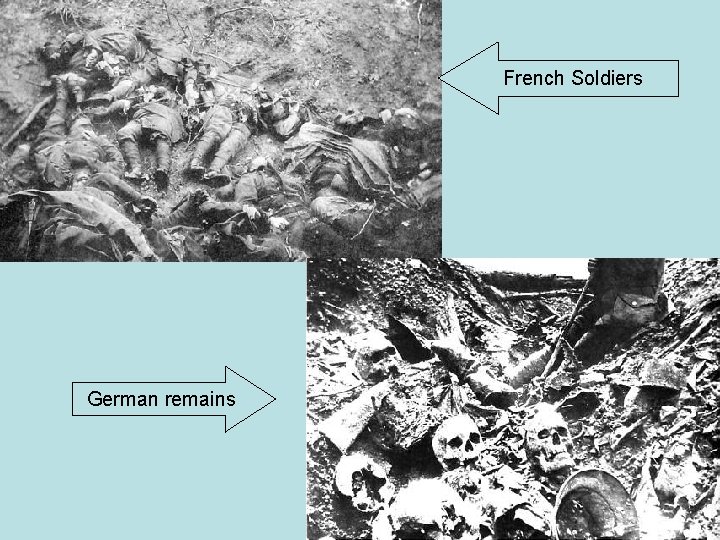
Dead French soldiers French Soldiers German remains
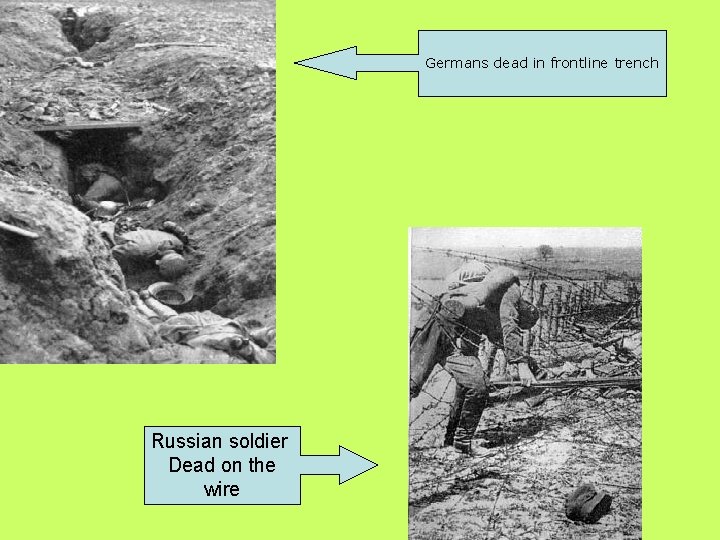
Germans dead in frontline trench Russian soldier Dead on the wire
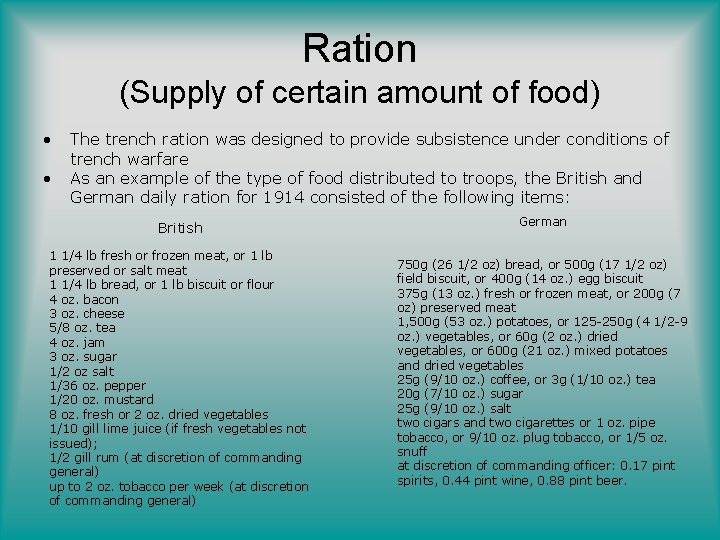
Ration (Supply of certain amount of food) • • The trench ration was designed to provide subsistence under conditions of trench warfare As an example of the type of food distributed to troops, the British and German daily ration for 1914 consisted of the following items: British 1 1/4 lb fresh or frozen meat, or 1 lb preserved or salt meat 1 1/4 lb bread, or 1 lb biscuit or flour 4 oz. bacon 3 oz. cheese 5/8 oz. tea 4 oz. jam 3 oz. sugar 1/2 oz salt 1/36 oz. pepper 1/20 oz. mustard 8 oz. fresh or 2 oz. dried vegetables 1/10 gill lime juice (if fresh vegetables not issued); 1/2 gill rum (at discretion of commanding general) up to 2 oz. tobacco per week (at discretion of commanding general) German 750 g (26 1/2 oz) bread, or 500 g (17 1/2 oz) field biscuit, or 400 g (14 oz. ) egg biscuit 375 g (13 oz. ) fresh or frozen meat, or 200 g (7 oz) preserved meat 1, 500 g (53 oz. ) potatoes, or 125 -250 g (4 1/2 -9 oz. ) vegetables, or 60 g (2 oz. ) dried vegetables, or 600 g (21 oz. ) mixed potatoes and dried vegetables 25 g (9/10 oz. ) coffee, or 3 g (1/10 oz. ) tea 20 g (7/10 oz. ) sugar 25 g (9/10 oz. ) salt two cigars and two cigarettes or 1 oz. pipe tobacco, or 9/10 oz. plug tobacco, or 1/5 oz. snuff at discretion of commanding officer: 0. 17 pint spirits, 0. 44 pint wine, 0. 88 pint beer.
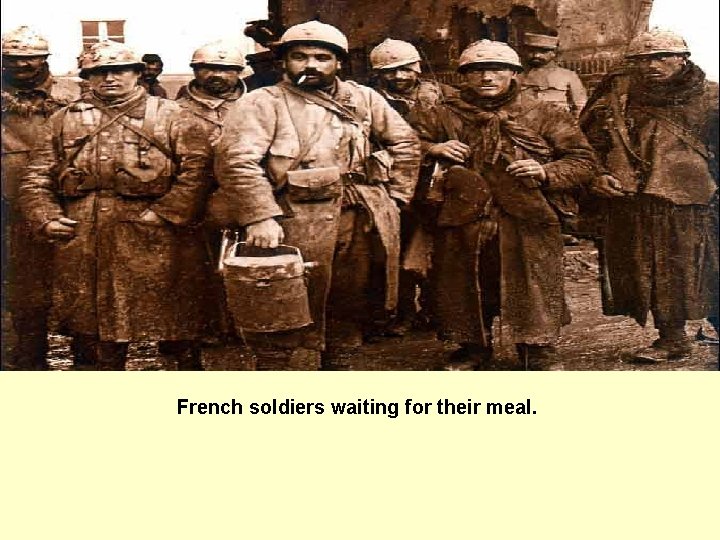
French soldiers waiting for their meal.
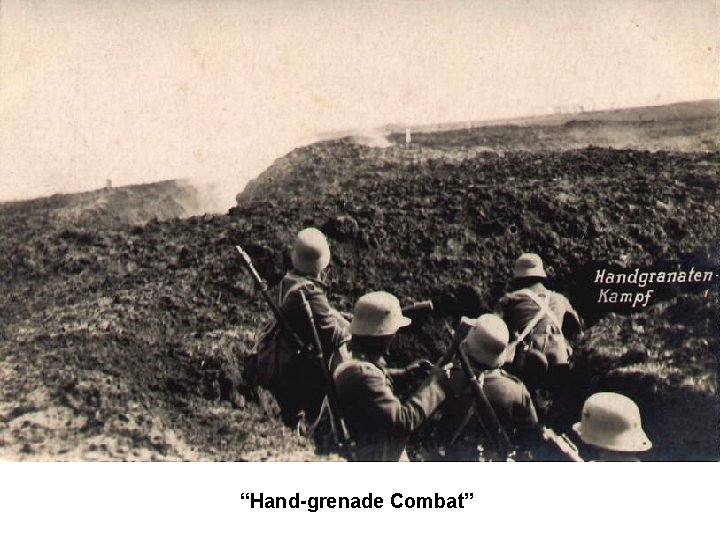
“Hand-grenade Combat”
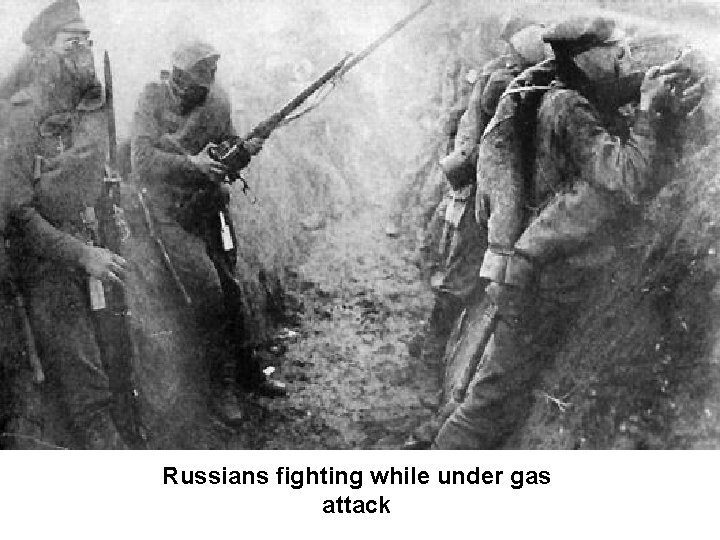
Russians fighting while under gas attack
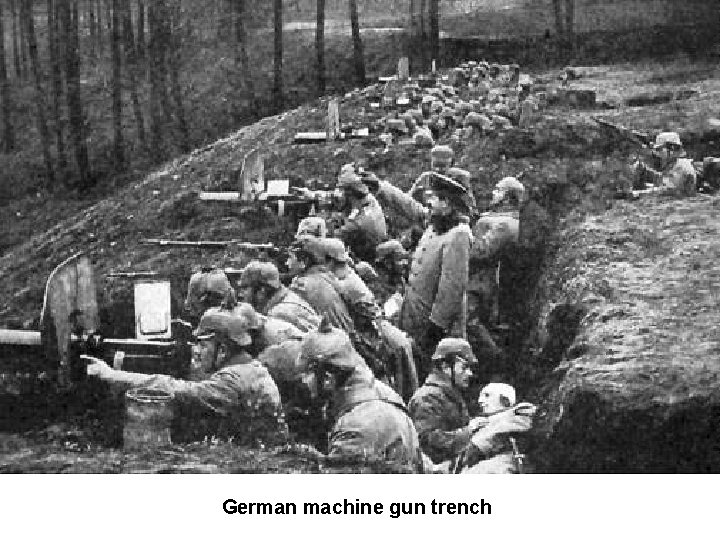
German machine gun trench
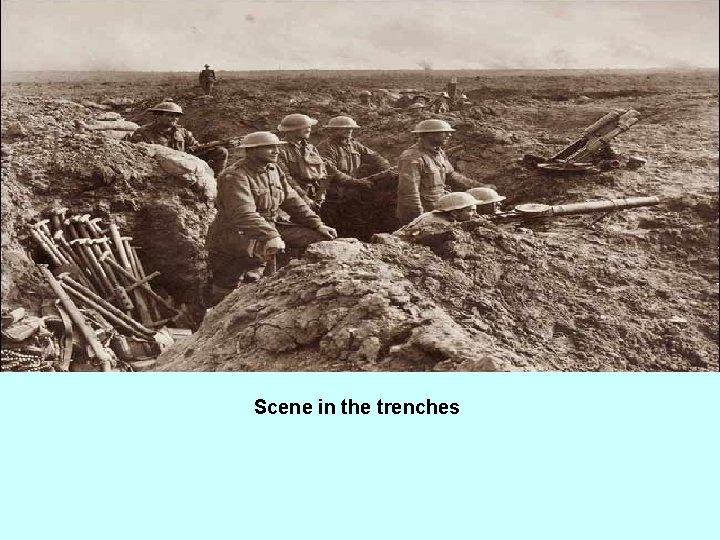
Scene in the trenches
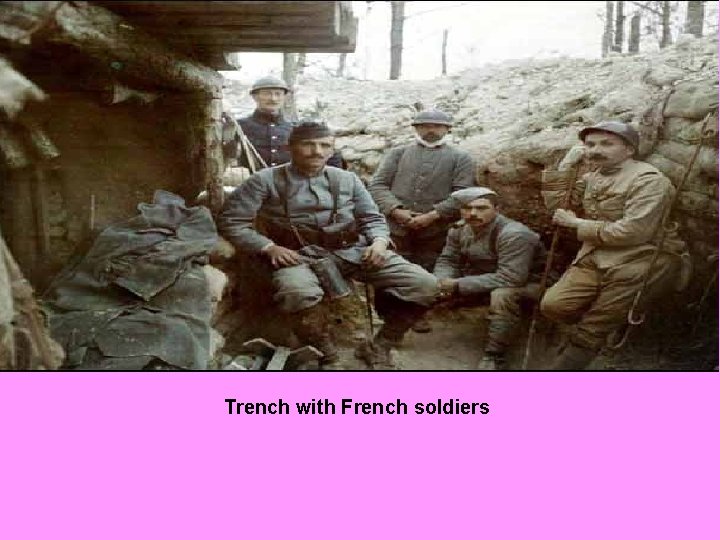
Trench with French soldiers