
Tree structure By Edward F Gilman Department of
Tree structure By Edward F. Gilman Department of Environmental Horticulture University of Florida http: //hort. ufl. edu/woody/planting
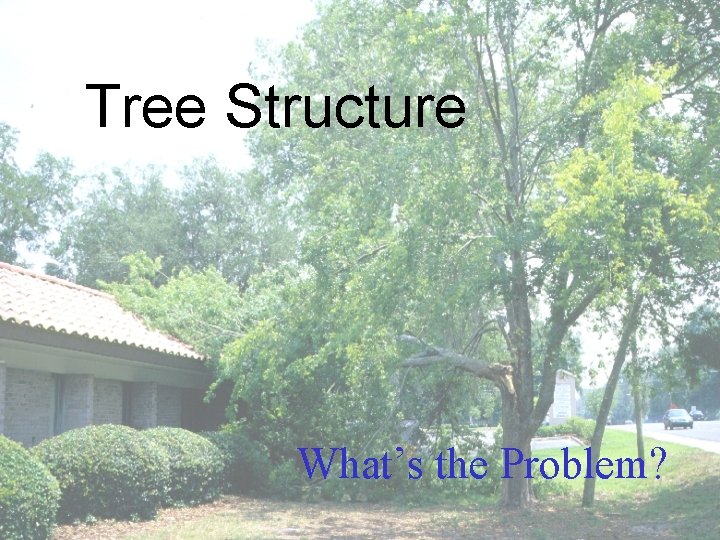
Tree Structure What’s the Problem?
What is good structure? Outline of topics 1. Forest grown vs. open grown tree 2. Codominant stems 3. Good branch attachment 4. Structurally sound tree
1. Forest grown tree vs. . Open grown tree • How do they develop on their own?

Trees in the forest grow with one trunk, and codominant stems toward the top of the tree
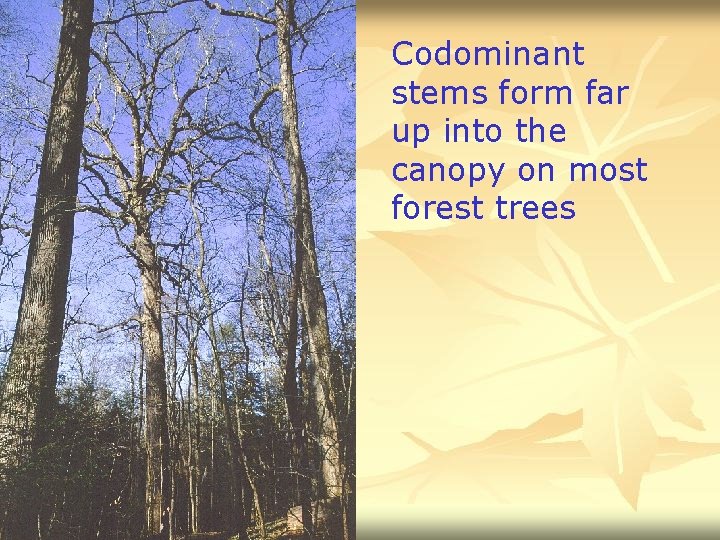
Codominant stems form far up into the canopy on most forest trees
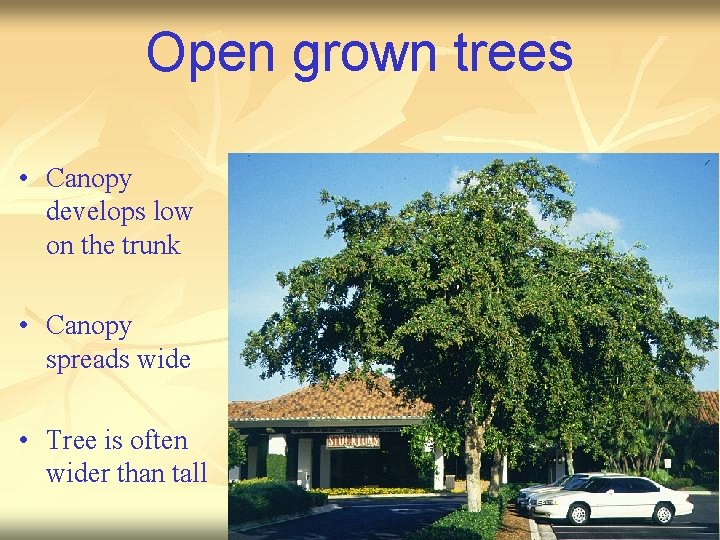
Open grown trees • Canopy develops low on the trunk • Canopy spreads wide • Tree is often wider than tall
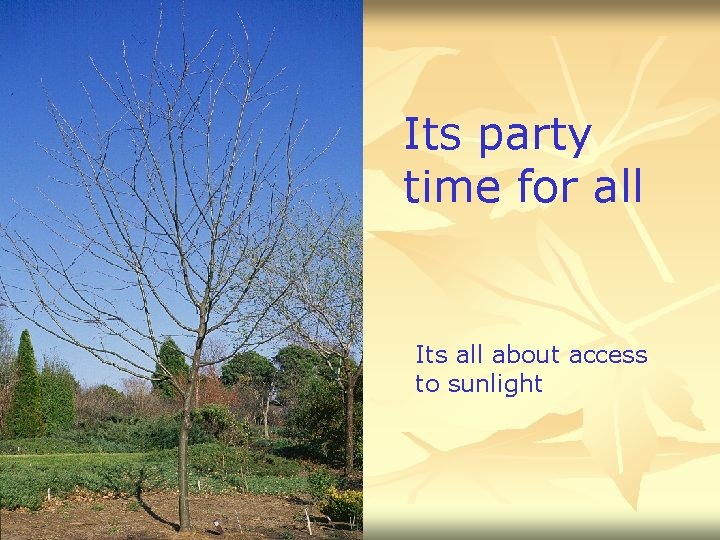
Its party time for all Its all about access to sunlight
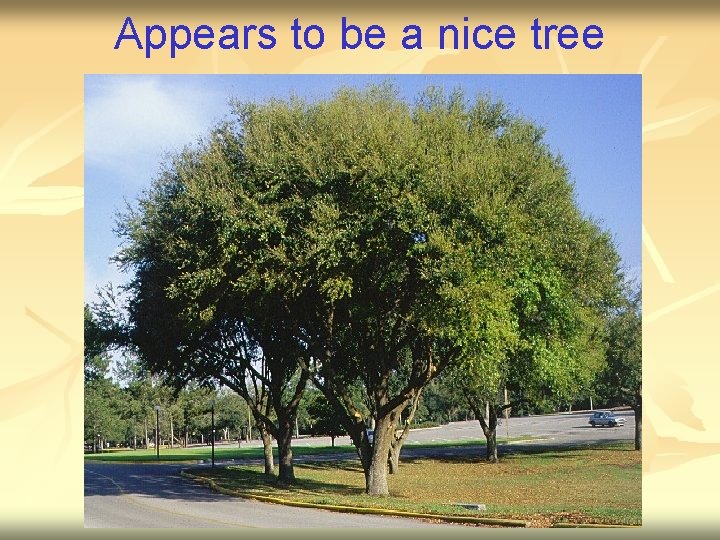
Appears to be a nice tree
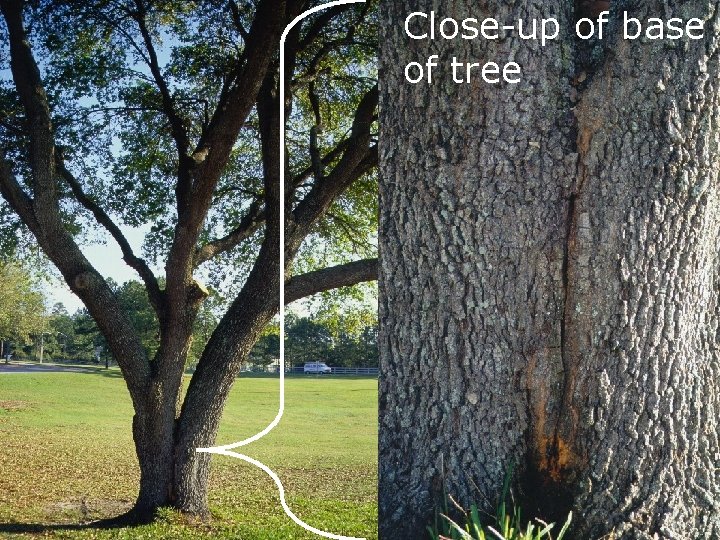
Close-up of base of tree
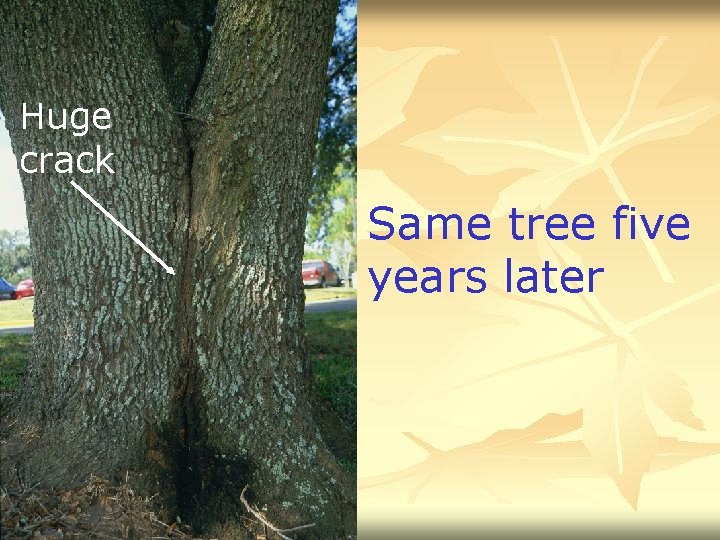
Huge crack Same tree five years later
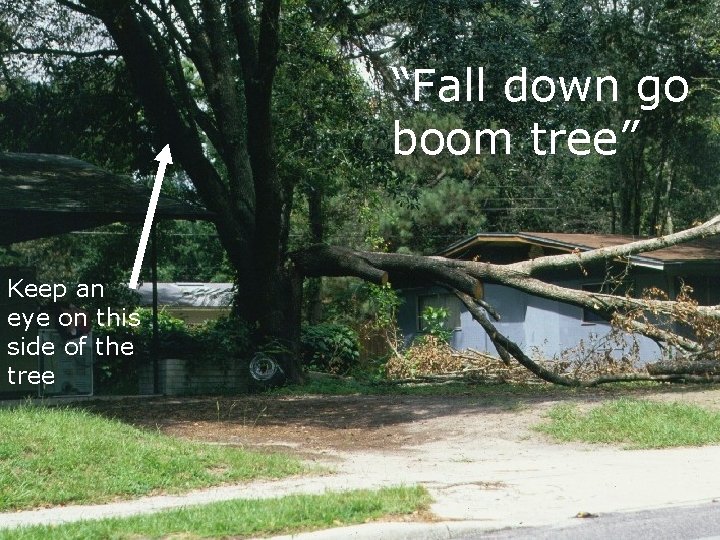
“Fall down go boom tree” Keep an eye on this side of the tree
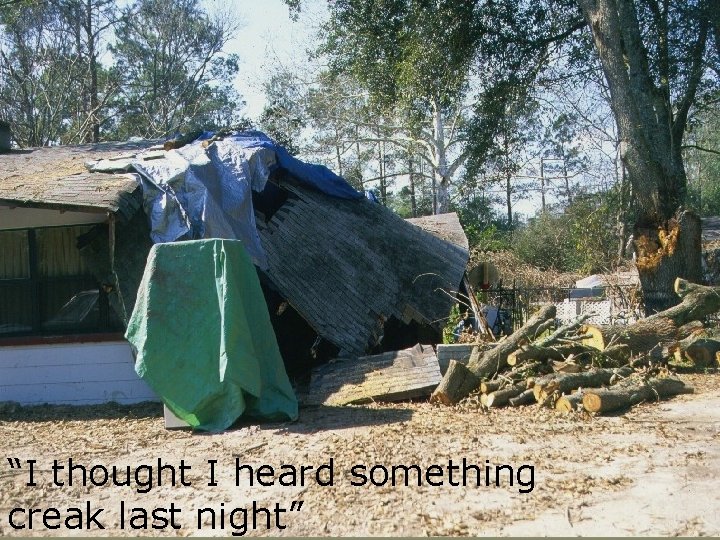
“I thought I heard something creak last night”
What is good structure? Outline of topics 1. Forest grown vs. open grown tree 2. Codominant stems 3. Good branch attachment 4. Structurally sound tree
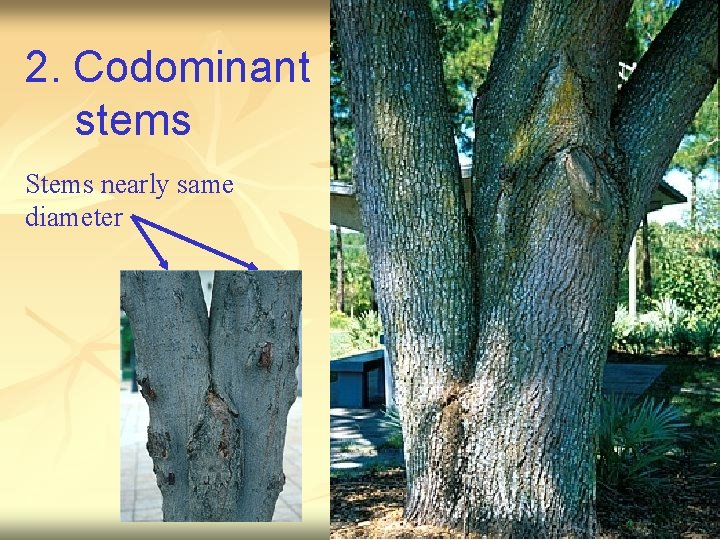
2. Codominant stems Stems nearly same diameter
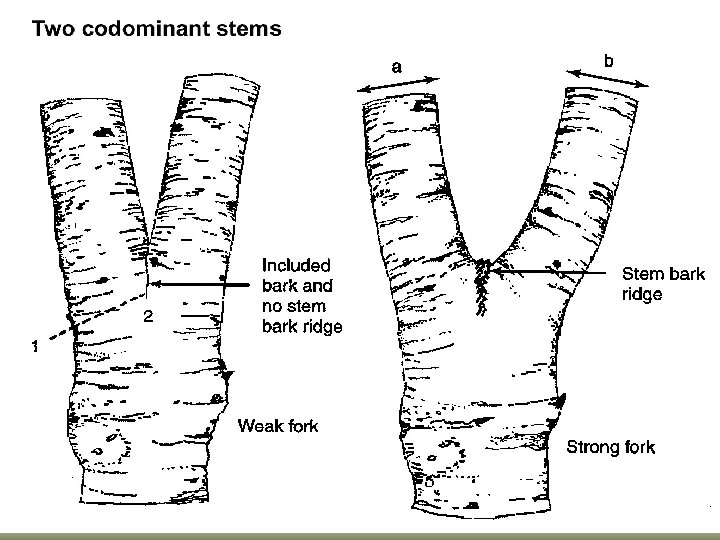
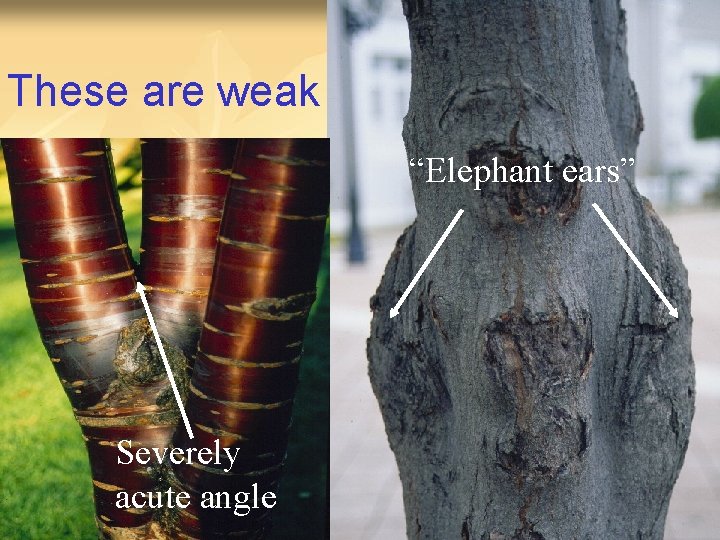
These are weak “Elephant ears” Severely acute angle
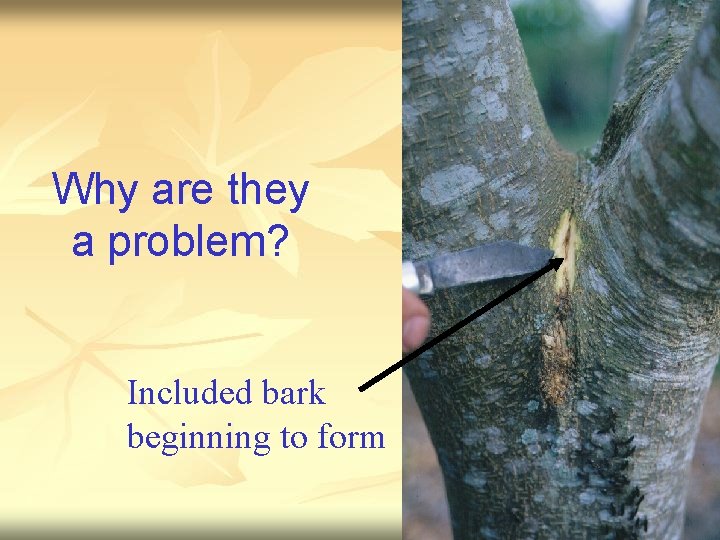
Why are they a problem? Included bark beginning to form
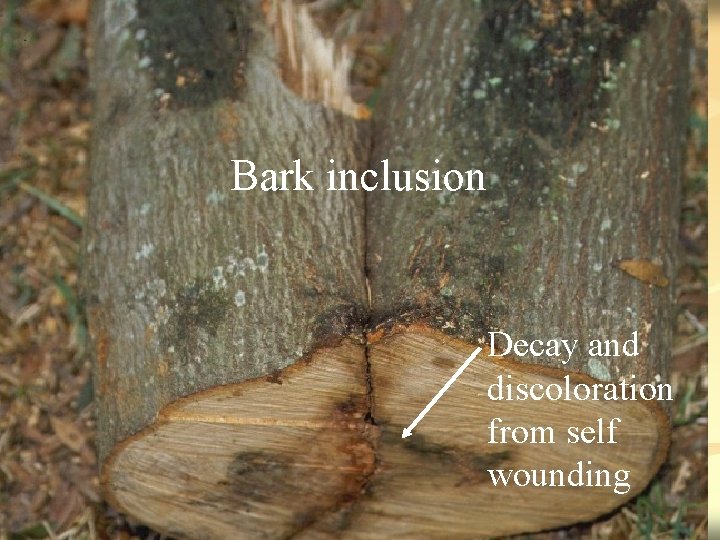
Bark inclusion Decay and discoloration from self wounding
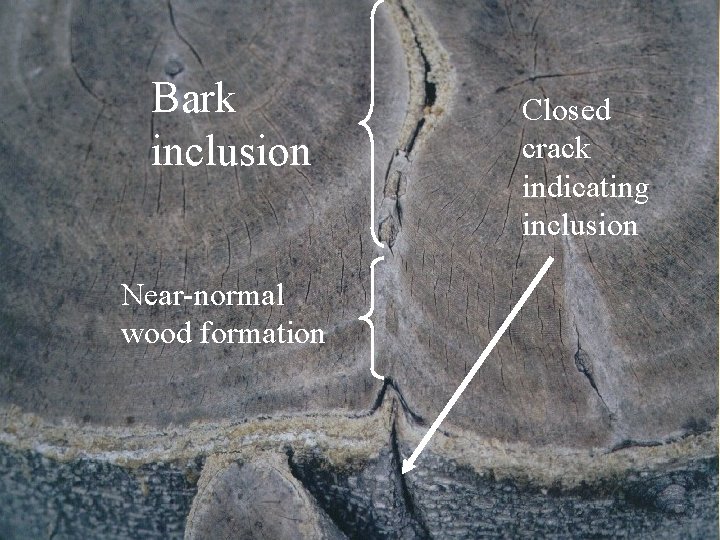
Bark inclusion Near-normal wood formation Closed crack indicating inclusion
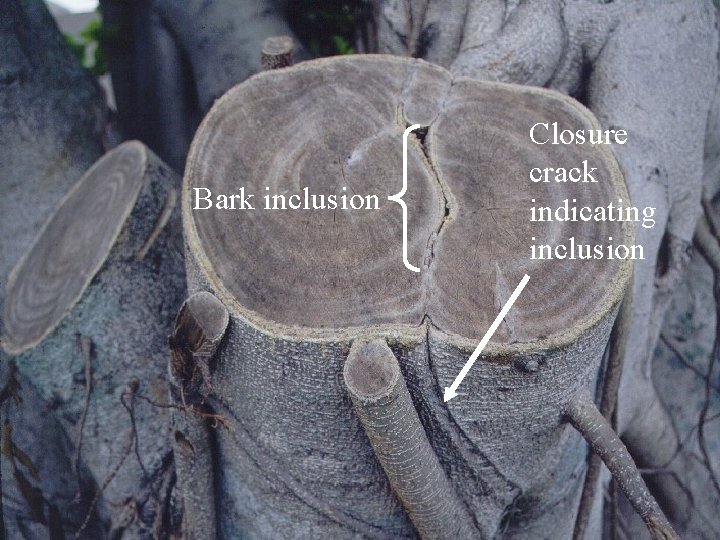
Bark inclusion Closure crack indicating inclusion
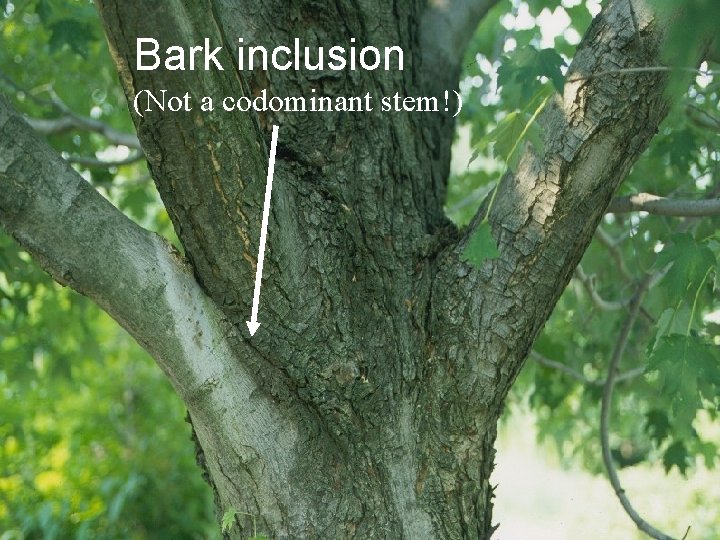
Bark inclusion (Not a codominant stem!)
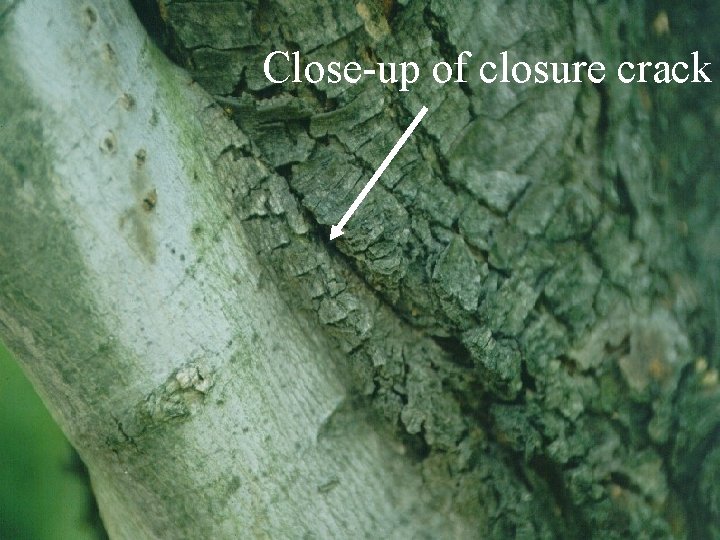
Close-up of closure crack
What is good structure? Outline of topics 1. Forest grown vs. open grown tree 2. Codominant stems 3. Good branch attachment 4. Structurally sound tree
3. Good branch attachment • How does a BRANCH form? • What are the indicators?
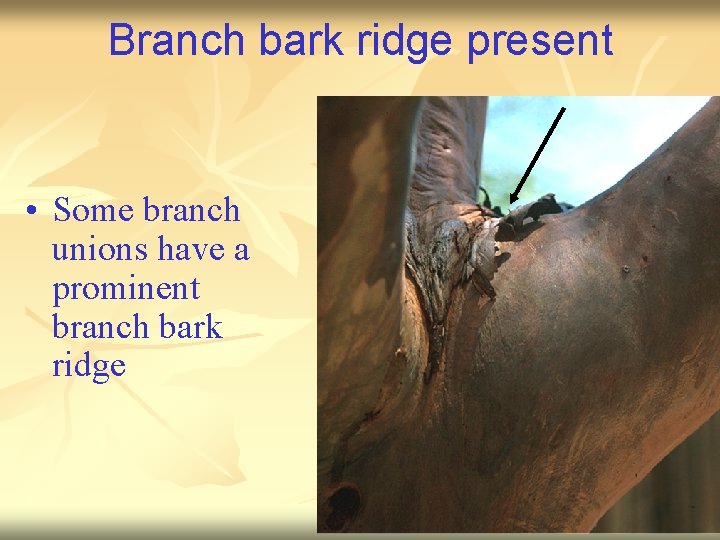
Branch bark ridge present • Some branch unions have a prominent branch bark ridge
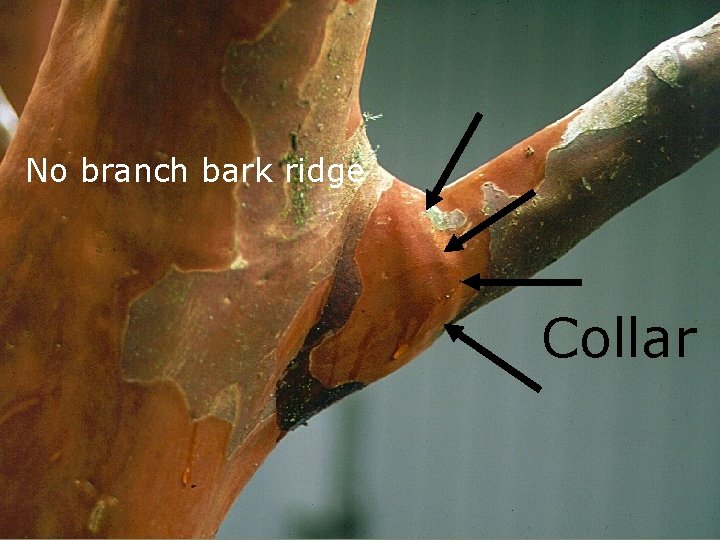
No branch bark ridge Collar
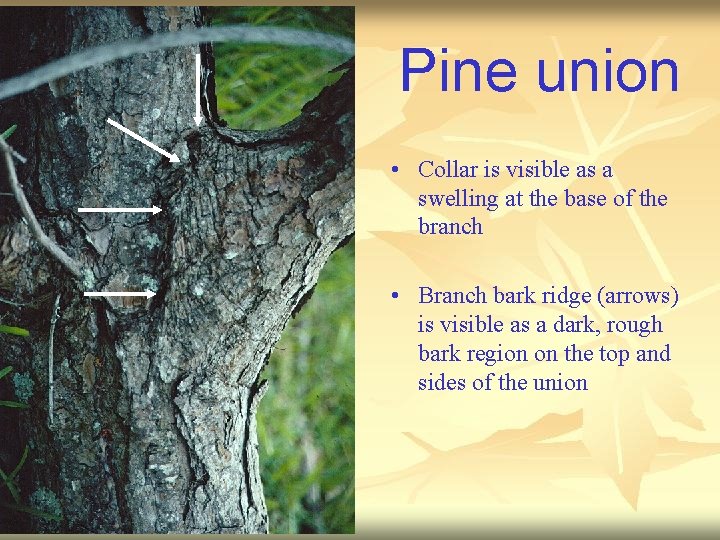
Pine union • Collar is visible as a swelling at the base of the branch • Branch bark ridge (arrows) is visible as a dark, rough bark region on the top and sides of the union
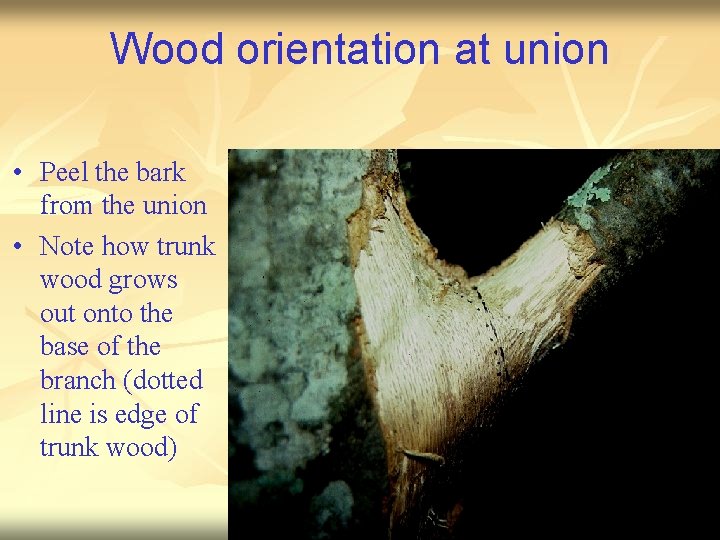
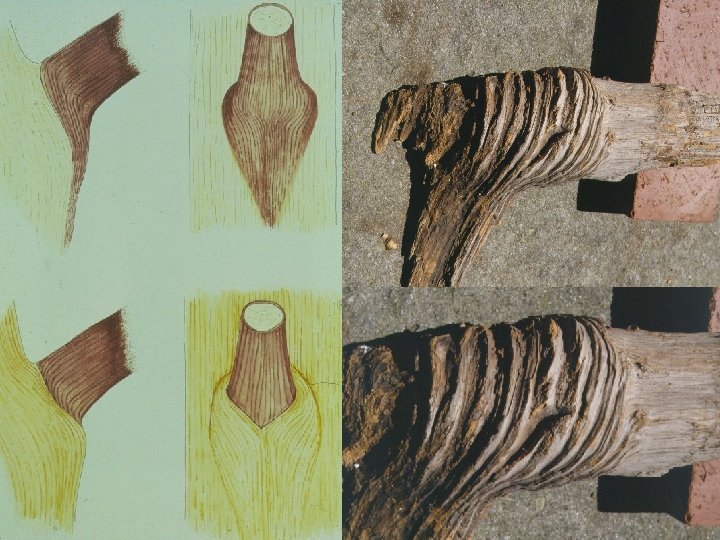
Wood orientation at union • Peel the bark from the union • Note how trunk wood grows out onto the base of the branch (dotted line is edge of trunk wood)
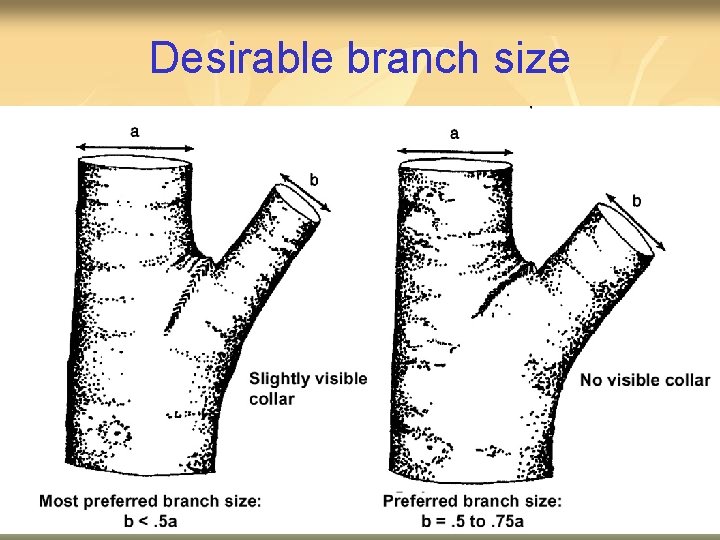
Desirable branch size
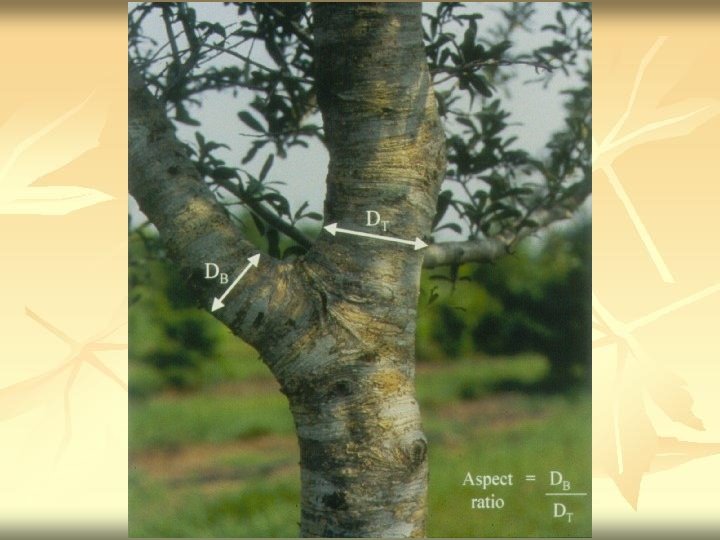
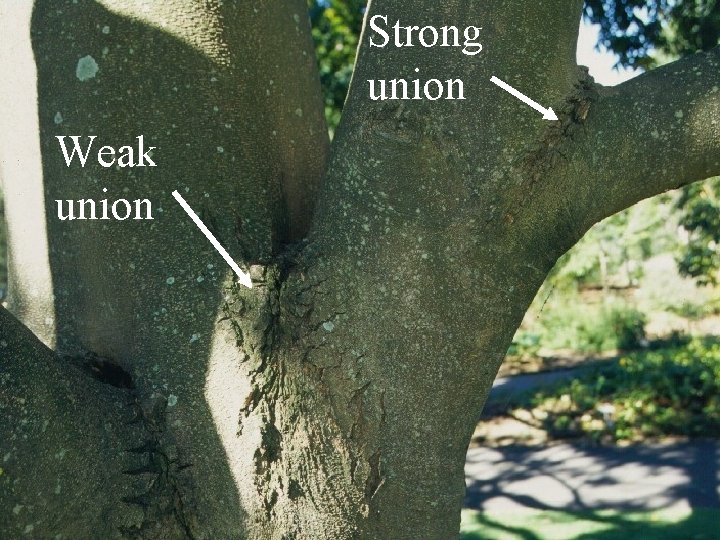
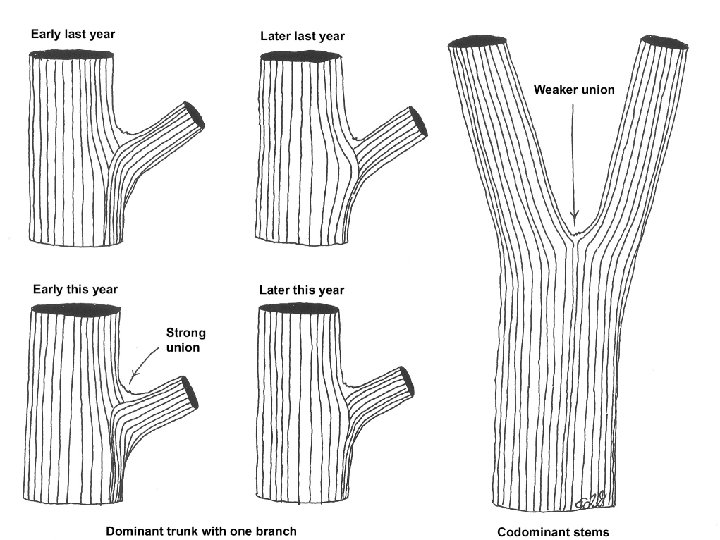
Strong union Weak union
What is good structure? Outline of topics 1. Forest grown vs. open grown tree 2. Codominant stems 3. Good branch attachment 4. Structurally sound tree
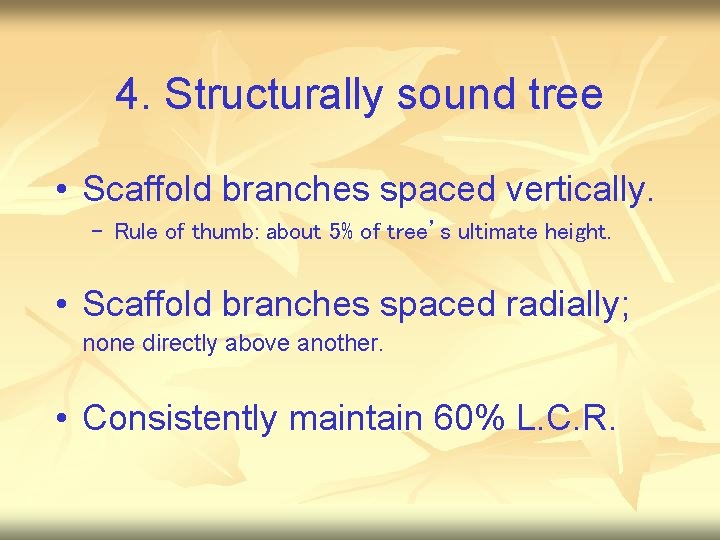
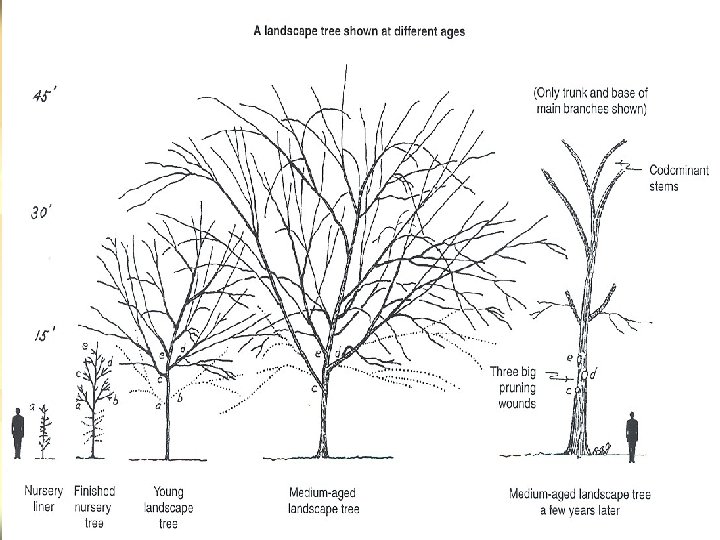
4. Structurally sound tree • Scaffold branches spaced vertically. – Rule of thumb: about 5% of tree’s ultimate height. • Scaffold branches spaced radially; none directly above another. • Consistently maintain 60% L. C. R.
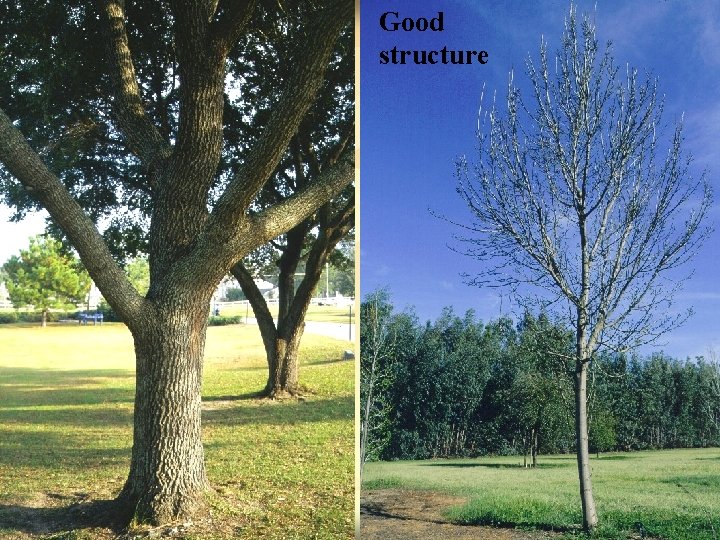
Good structure
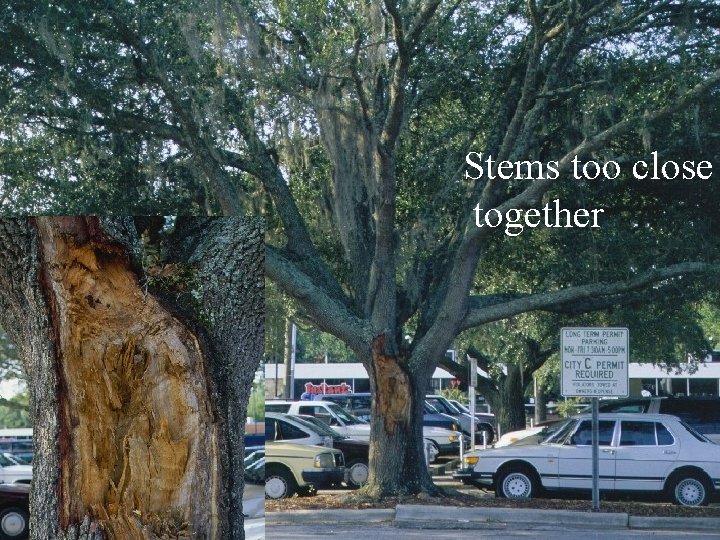
Stems too close together
Pruning – Is a solution that will be discussed in another presentation.
Tree structure By Edward F. Gilman Department of Environmental Horticulture University of Florida http: //hort. ufl. edu/woody/planting
- Slides: 41