
Tree Injections and Insects State of the art
- Slides: 38
Tree Injections and Insects: State of the art research Dan Herms Department of Entomology The Ohio State University Ohio Agricultural Research and Development Center Wooster, OH herms. 2@osu. edu
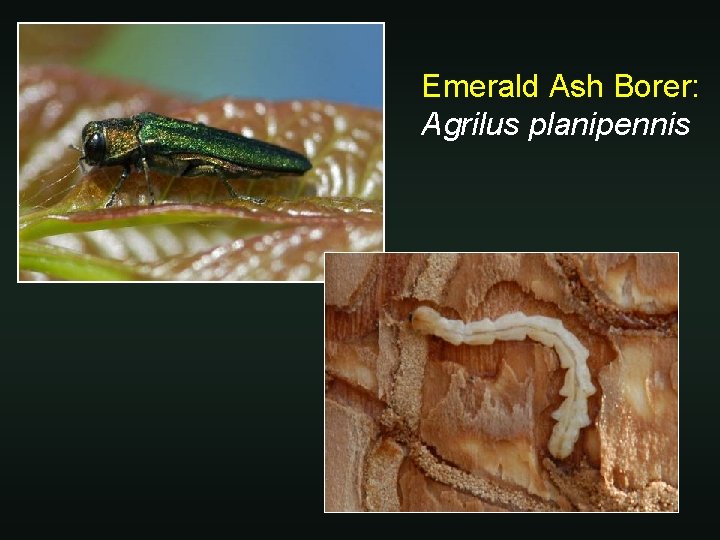
Emerald Ash Borer: Agrilus planipennis
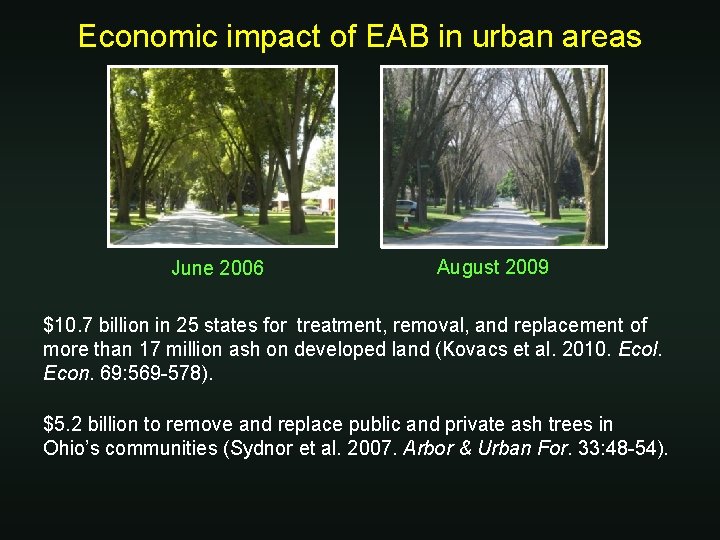
Economic impact of EAB in urban areas June 2006 August 2009 $10. 7 billion in 25 states for treatment, removal, and replacement of more than 17 million ash on developed land (Kovacs et al. 2010. Ecol. Econ. 69: 569 -578). $5. 2 billion to remove and replace public and private ash trees in Ohio’s communities (Sydnor et al. 2007. Arbor & Urban For. 33: 48 -54).
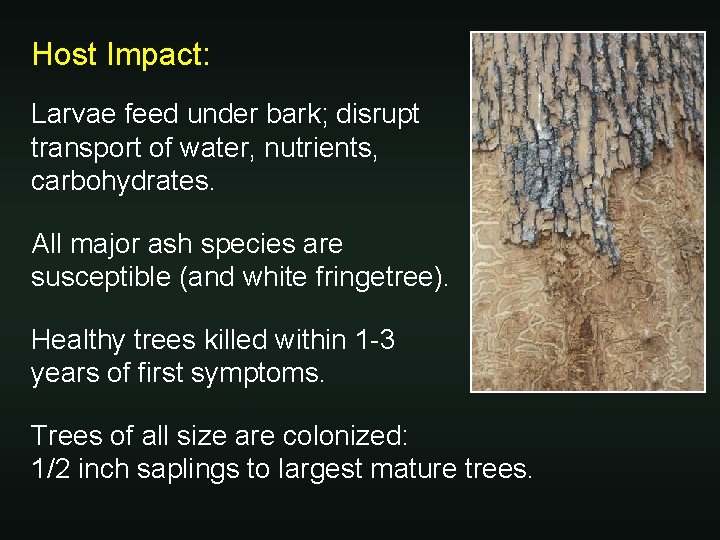
Host Impact: Larvae feed under bark; disrupt transport of water, nutrients, carbohydrates. All major ash species are susceptible (and white fringetree). Healthy trees killed within 1 -3 years of first symptoms. Trees of all size are colonized: 1/2 inch saplings to largest mature trees.
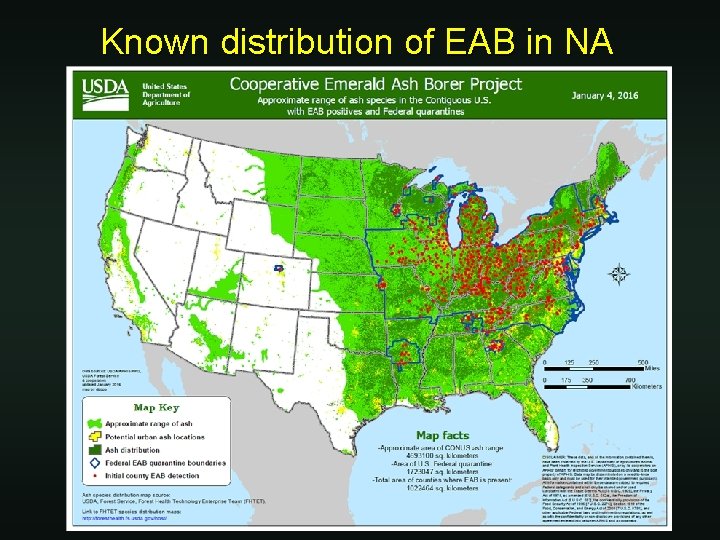
Known distribution of EAB in NA
Outline: 1. 2. 3. 4. 5. Misconceptions regarding EAB control. Results of multi-year insecticide trials. A role for insecticides in ash conservation. EAB treatments and honeybees. Questions.
EAB management options: 1. Do nothing, let nature take its course. 2. Removal, replacement (tree inventories are critical for planning / preparation). 3. Sustained insecticide treatments. 4. Integration of all of the above.
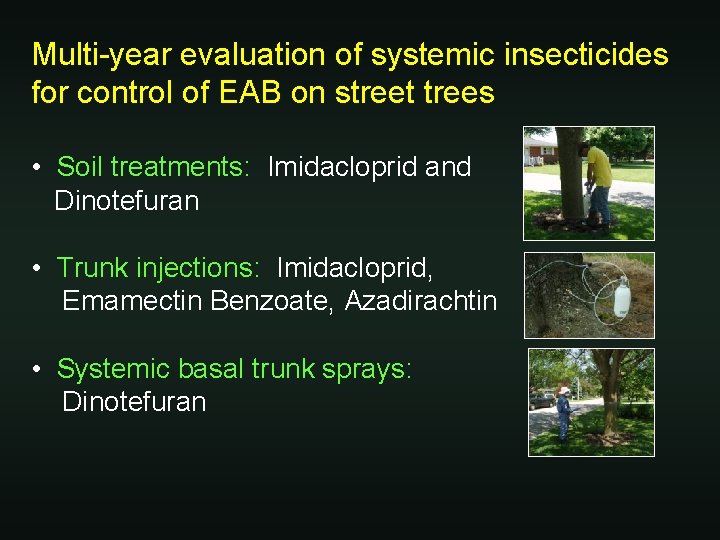
Multi-year evaluation of systemic insecticides for control of EAB on street trees • Soil treatments: Imidacloprid and Dinotefuran • Trunk injections: Imidacloprid, Emamectin Benzoate, Azadirachtin • Systemic basal trunk sprays: Dinotefuran
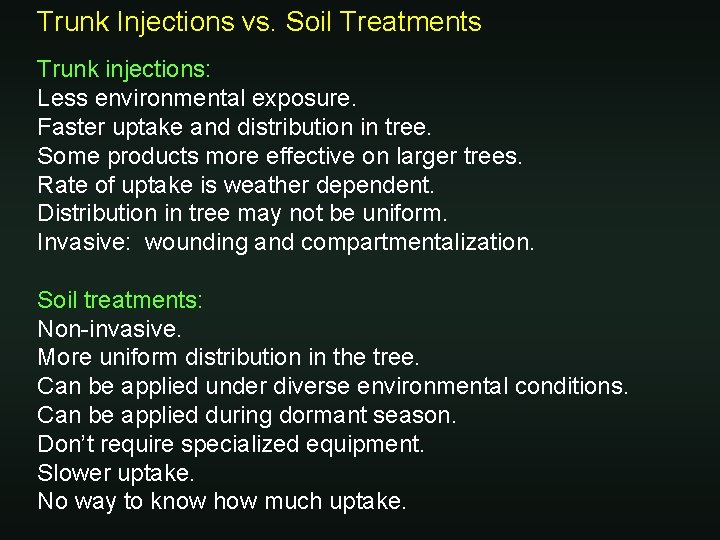
Trunk Injections vs. Soil Treatments Trunk injections: Less environmental exposure. Faster uptake and distribution in tree. Some products more effective on larger trees. Rate of uptake is weather dependent. Distribution in tree may not be uniform. Invasive: wounding and compartmentalization. Soil treatments: Non-invasive. More uniform distribution in the tree. Can be applied under diverse environmental conditions. Can be applied during dormant season. Don’t require specialized equipment. Slower uptake. No way to know how much uptake.
Key questions: Will systemic treatments work on larger trees? What are optimal application rates? Are fall treatments effective? How long will treatments remain effective? How do various products compare?
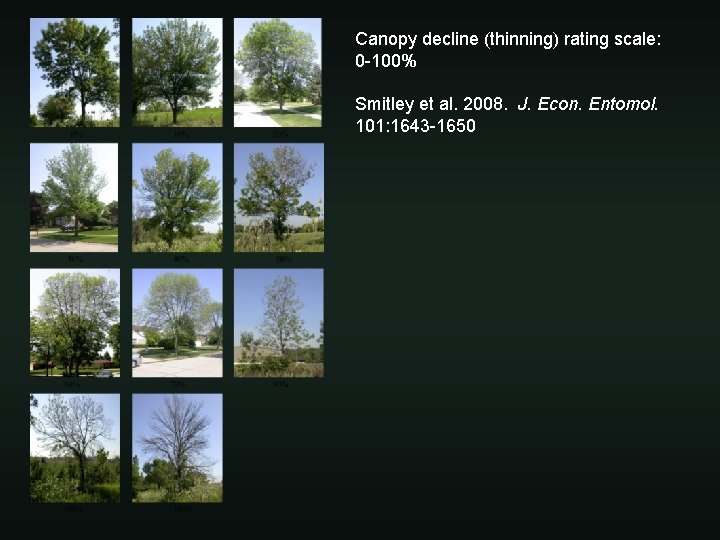
Canopy decline (thinning) rating scale: 0 -100% Smitley et al. 2008. J. Econ. Entomol. 101: 1643 -1650
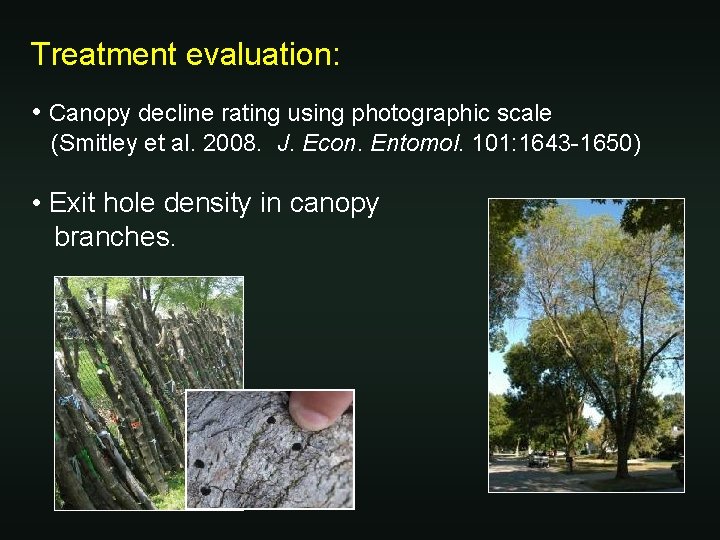
Treatment evaluation: • Canopy decline rating using photographic scale (Smitley et al. 2008. J. Econ. Entomol. 101: 1643 -1650) • Exit hole density in canopy branches.
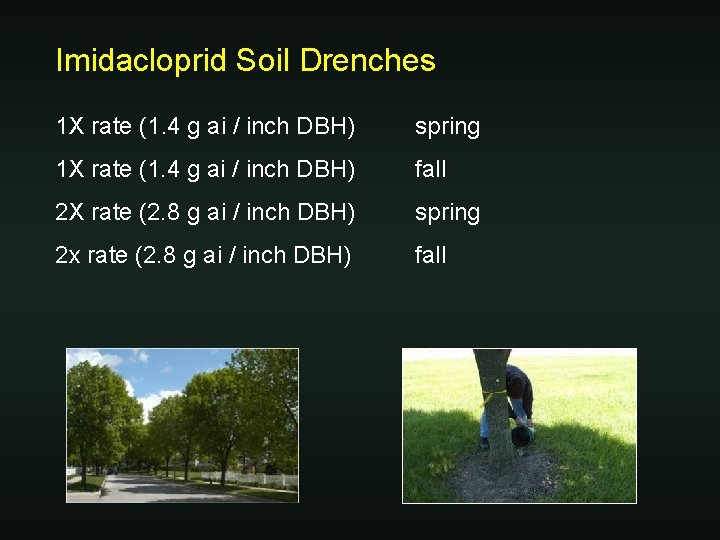
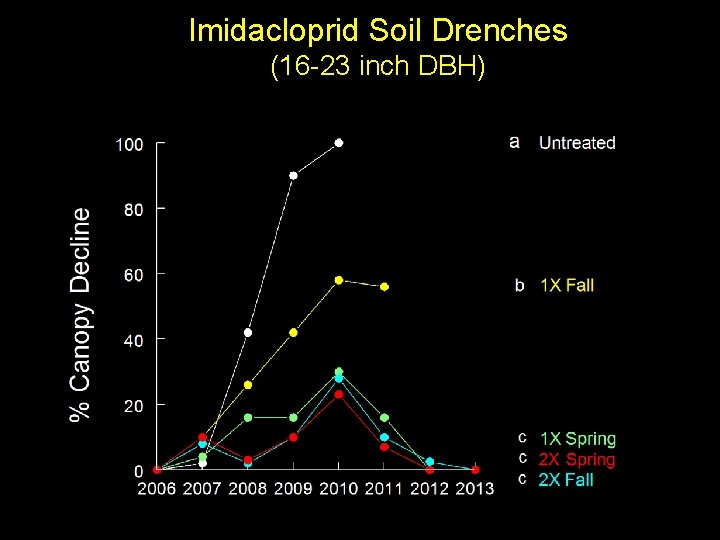
Imidacloprid Soil Drenches 1 X rate (1. 4 g ai / inch DBH) spring 1 X rate (1. 4 g ai / inch DBH) fall 2 X rate (2. 8 g ai / inch DBH) spring 2 x rate (2. 8 g ai / inch DBH) fall
Imidacloprid Soil Drenches (16 -23 inch DBH)
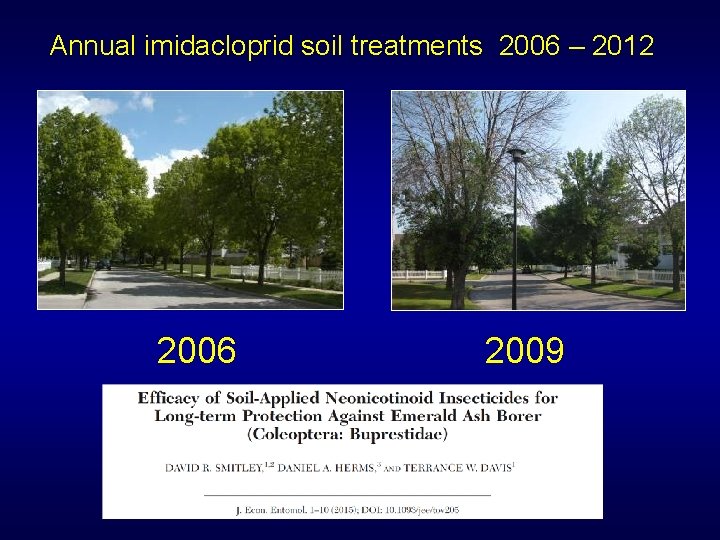
Annual imidacloprid soil treatments 2006 – 2012 2006 2009
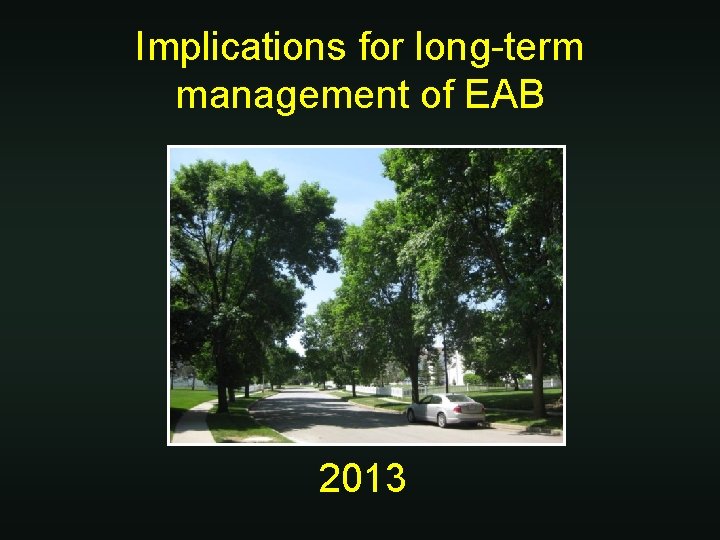
Implications for long-term management of EAB 2013
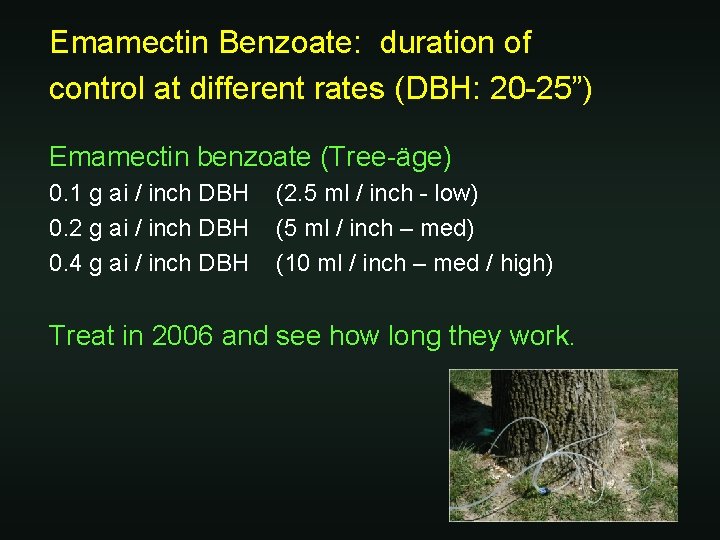
Emamectin Benzoate: duration of control at different rates (DBH: 20 -25”) Emamectin benzoate (Tree-äge) 0. 1 g ai / inch DBH 0. 2 g ai / inch DBH 0. 4 g ai / inch DBH (2. 5 ml / inch - low) (5 ml / inch – med) (10 ml / inch – med / high) Treat in 2006 and see how long they work.
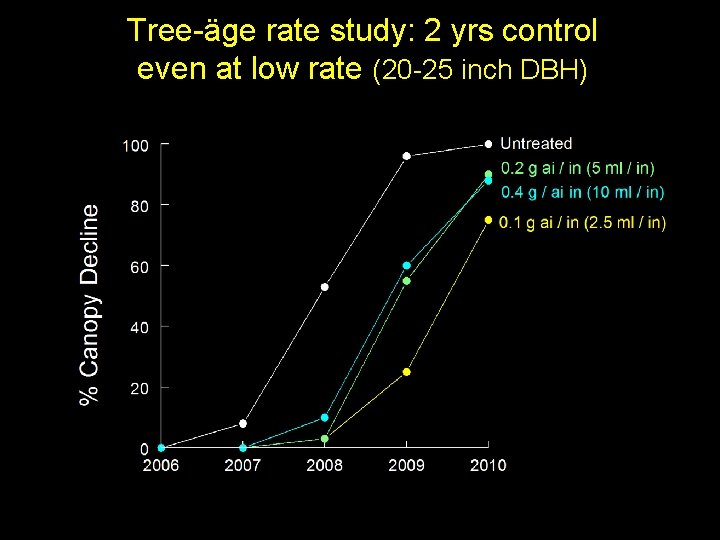
Tree-äge rate study: 2 yrs control even at low rate (20 -25 inch DBH)
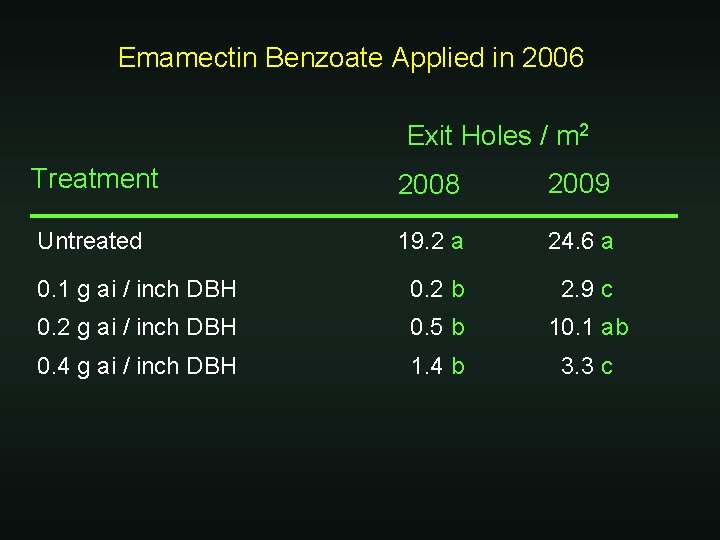
Emamectin Benzoate Applied in 2006 Exit Holes / m 2 Treatment 2008 2009 Untreated 19. 2 a 24. 6 a 0. 1 g ai / inch DBH 0. 2 b 2. 9 c 0. 2 g ai / inch DBH 0. 5 b 10. 1 ab 0. 4 g ai / inch DBH 1. 4 b 3. 3 c
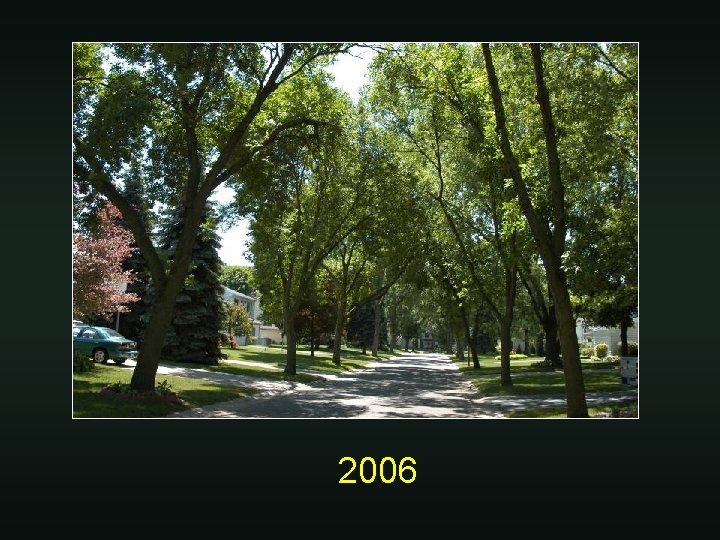
2006
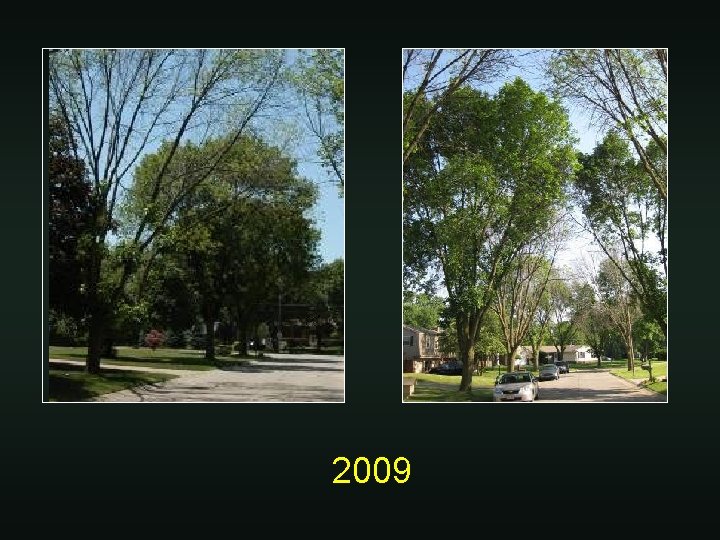
2009
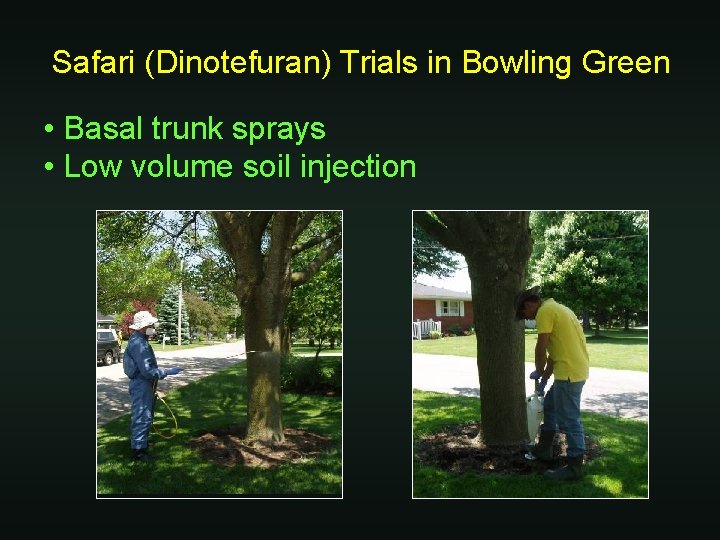
Safari (Dinotefuran) Trials in Bowling Green • Basal trunk sprays • Low volume soil injection
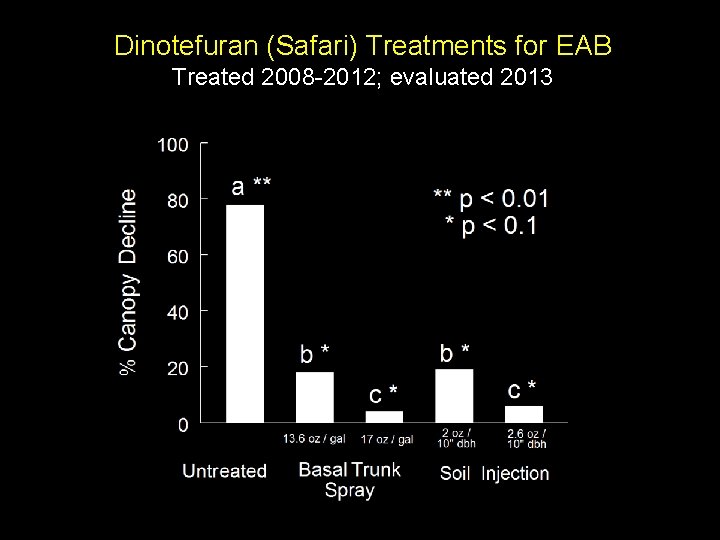
Dinotefuran (Safari) Treatments for EAB Treated 2008 -2012; evaluated 2013
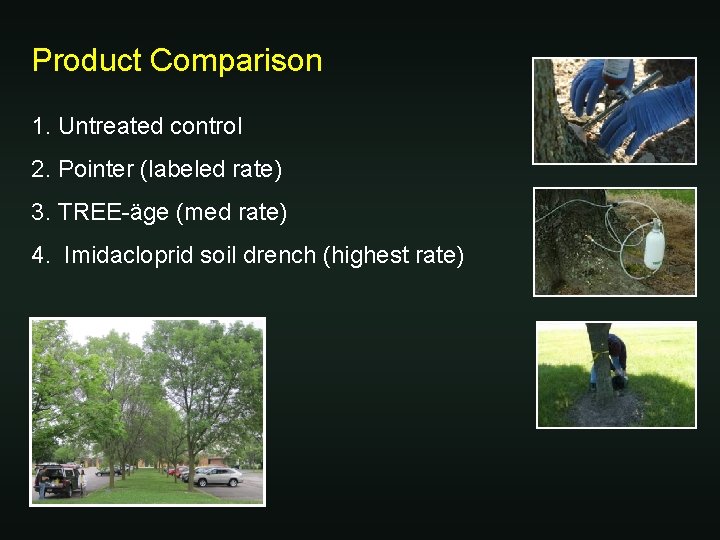
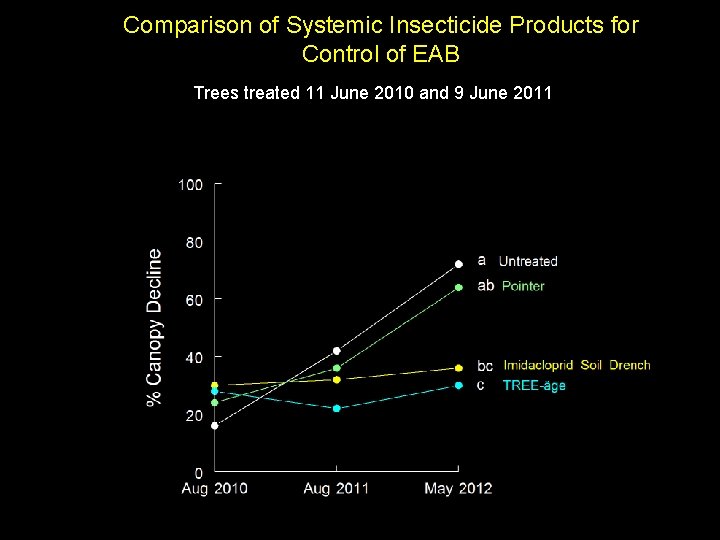
Product Comparison 1. Untreated control 2. Pointer (labeled rate) 3. TREE-äge (med rate) 4. Imidacloprid soil drench (highest rate)
Comparison of Systemic Insecticide Products for Control of EAB Trees treated 11 June 2010 and 9 June 2011
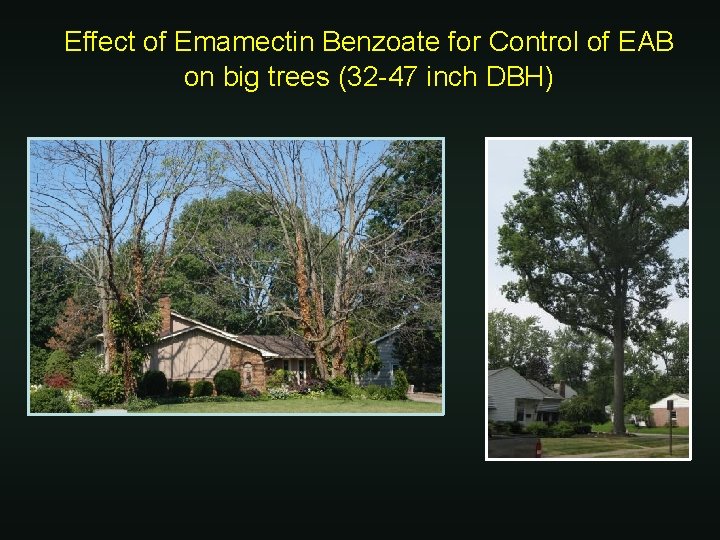
Effect of Emamectin Benzoate for Control of EAB on big trees (32 -47 inch DBH)
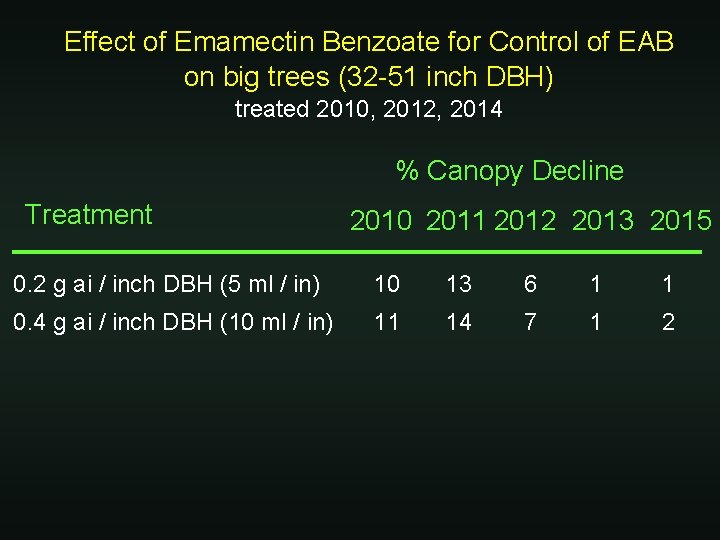
Effect of Emamectin Benzoate for Control of EAB on big trees (32 -51 inch DBH) treated 2010, 2012, 2014 % Canopy Decline Treatment 2010 2011 2012 2013 2015 0. 2 g ai / inch DBH (5 ml / in) 10 13 6 1 1 0. 4 g ai / inch DBH (10 ml / in) 11 14 7 1 2
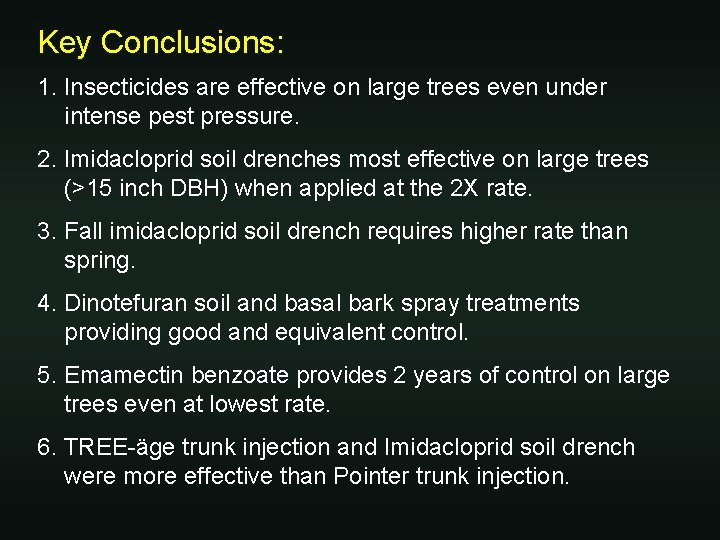
Key Conclusions: 1. Insecticides are effective on large trees even under intense pest pressure. 2. Imidacloprid soil drenches most effective on large trees (>15 inch DBH) when applied at the 2 X rate. 3. Fall imidacloprid soil drench requires higher rate than spring. 4. Dinotefuran soil and basal bark spray treatments providing good and equivalent control. 5. Emamectin benzoate provides 2 years of control on large trees even at lowest rate. 6. TREE-äge trunk injection and Imidacloprid soil drench were more effective than Pointer trunk injection.
Ideal Timing of Treatments • Soil treatments: in spring allowing time for uptake before adults begin feeding and eggs begin to hatch. • Trunk injections: in spring just after the canopy has fully developed. What about summer and fall treatments?
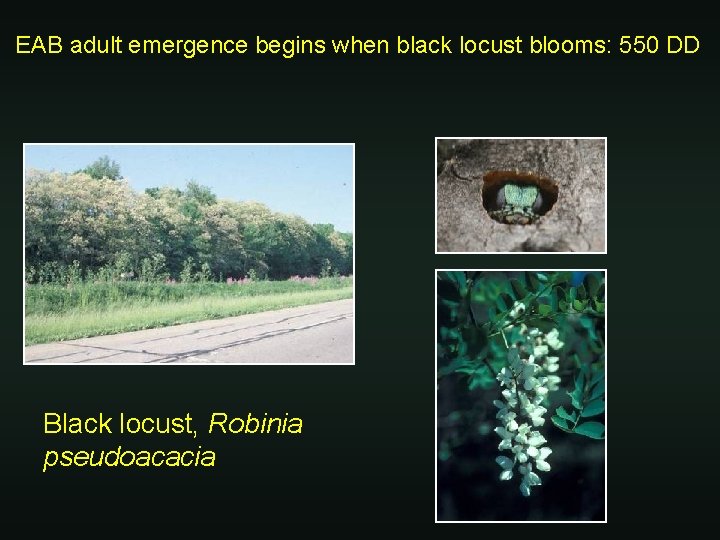
EAB adult emergence begins when black locust blooms: 550 DD Black locust, Robinia pseudoacacia
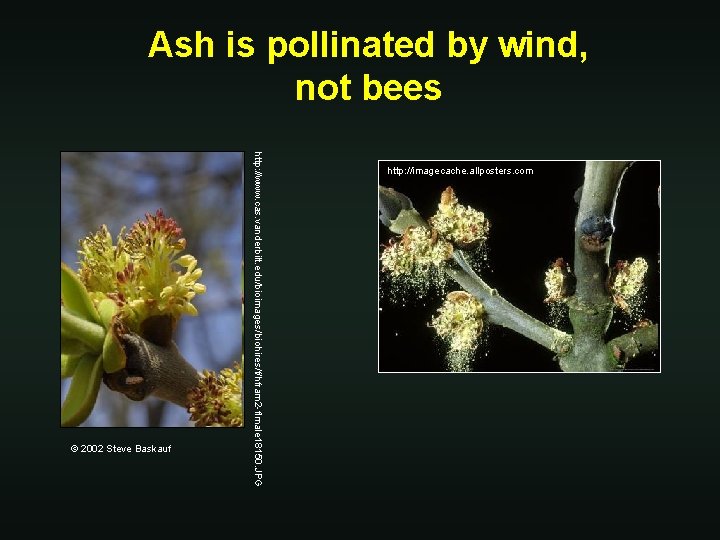
Ash is pollinated by wind, not bees http: //www. cas. vanderbilt. edu/bioimages/biohires/f/hfram 2 -flmale 18150. JPG © 2002 Steve Baskauf http: //imagecache. allposters. com
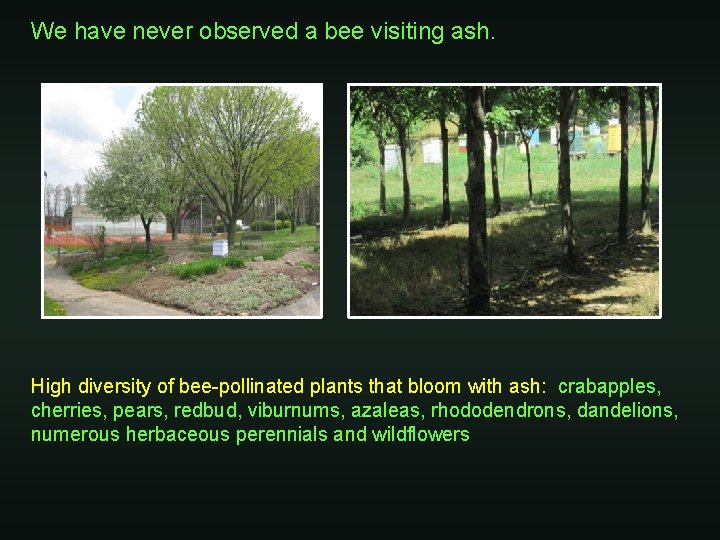
We have never observed a bee visiting ash. High diversity of bee-pollinated plants that bloom with ash: crabapples, cherries, pears, redbud, viburnums, azaleas, rhododendrons, dandelions, numerous herbaceous perennials and wildflowers
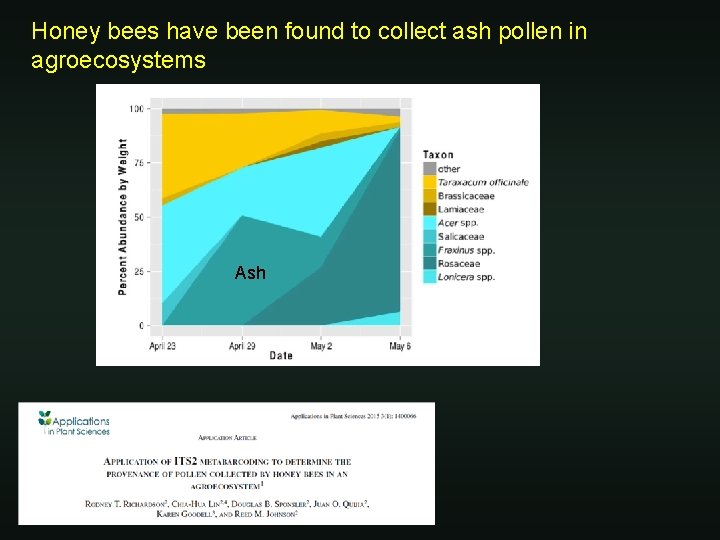
Honey bees have been found to collect ash pollen in agroecosystems Ash
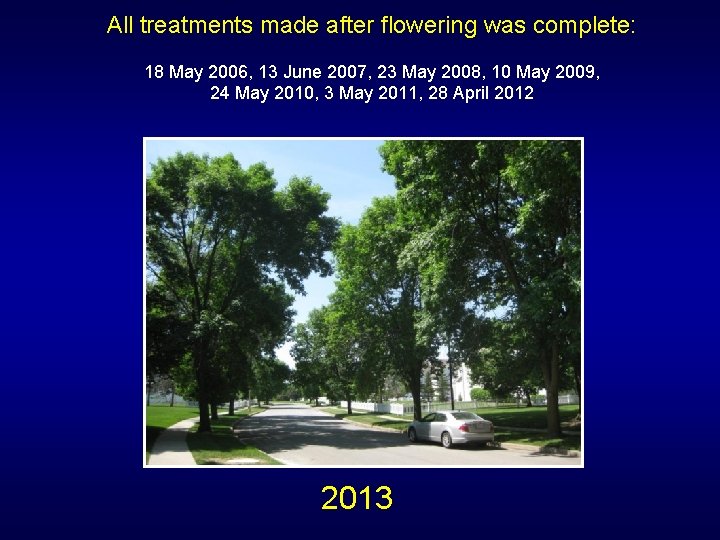
All treatments made after flowering was complete: 18 May 2006, 13 June 2007, 23 May 2008, 10 May 2009, 24 May 2010, 3 May 2011, 28 April 2012 2013
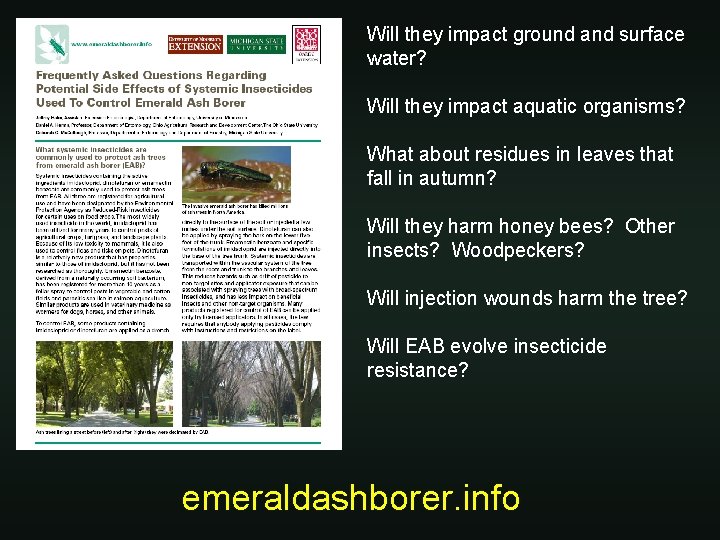
Will they impact ground and surface water? Will they impact aquatic organisms? What about residues in leaves that fall in autumn? Will they harm honey bees? Other insects? Woodpeckers? Will injection wounds harm the tree? Will EAB evolve insecticide resistance? emeraldashborer. info
emeraldashborer. info
Special thanks to: Craig Scharr, City of Toledo Ron Howell, Howell Tree Service Dave Bienemann, City of Bowling Green Amy Stone & Master Gardeners, OSU Extension, Lucas County
herms. 2@osu. edu Google “Dan Herms Lab” http: //oardc. osu. edu/hermslab/