
Tree growth and juvenile wood formation 1 Mature
- Slides: 13
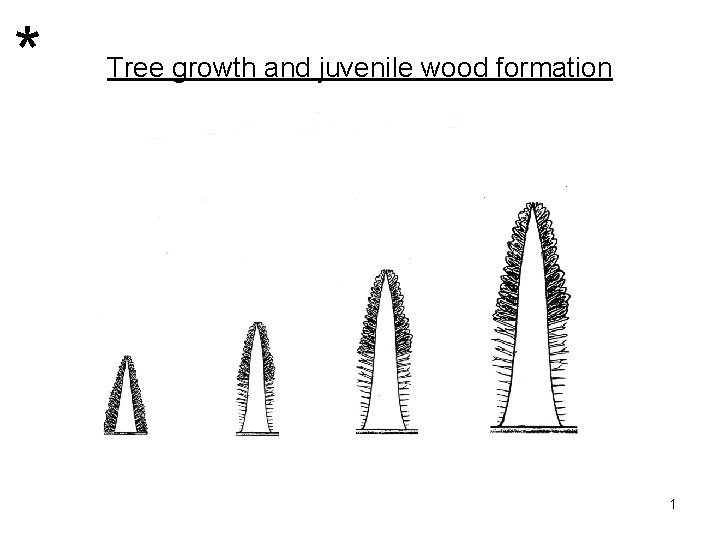
* Tree growth and juvenile wood formation 1
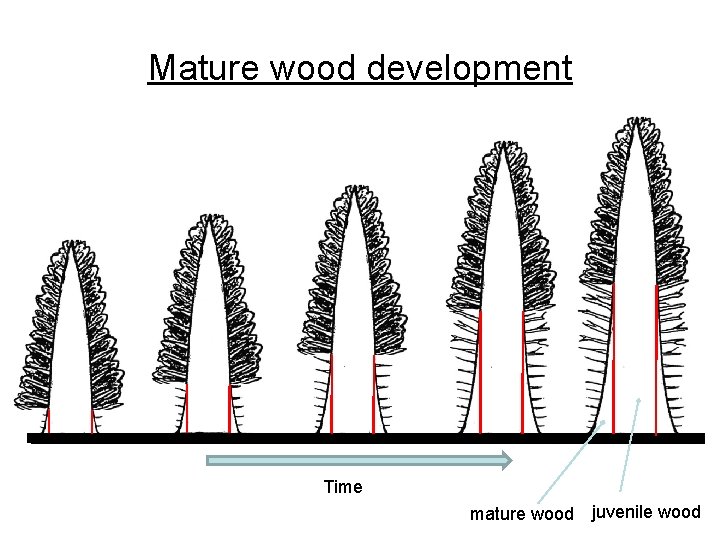
Mature wood development Time mature wood juvenile wood
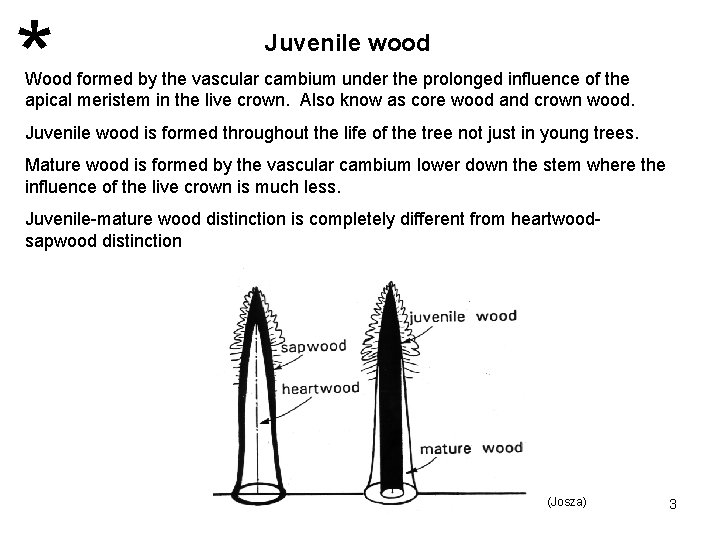
* Juvenile wood Wood formed by the vascular cambium under the prolonged influence of the apical meristem in the live crown. Also know as core wood and crown wood. Juvenile wood is formed throughout the life of the tree not just in young trees. Mature wood is formed by the vascular cambium lower down the stem where the influence of the live crown is much less. Juvenile-mature wood distinction is completely different from heartwoodsapwood distinction (Josza) 3
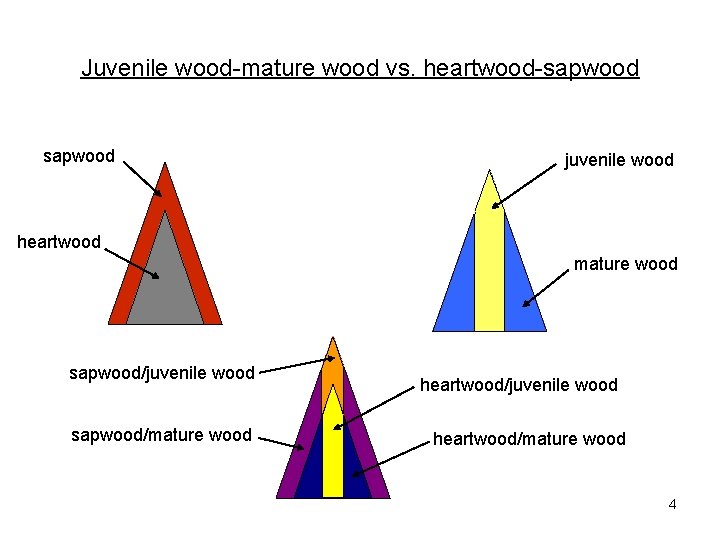
Juvenile wood-mature wood vs. heartwood-sapwood juvenile wood heartwood mature wood sapwood/juvenile wood sapwood/mature wood heartwood/juvenile wood heartwood/mature wood 4
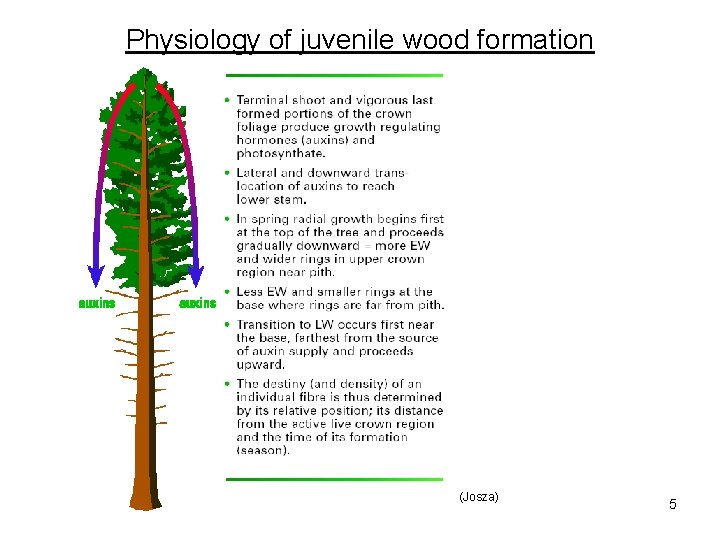
Physiology of juvenile wood formation (Josza) 5
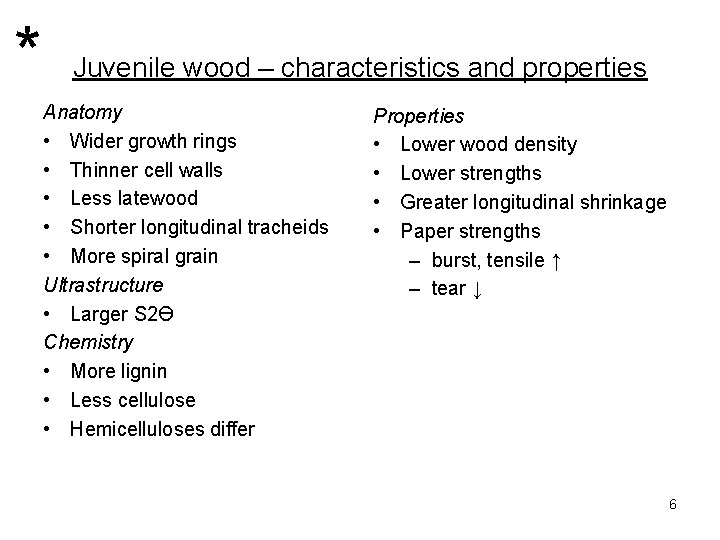
* Juvenile wood – characteristics and properties Anatomy • Wider growth rings • Thinner cell walls • Less latewood • Shorter longitudinal tracheids • More spiral grain Ultrastructure • Larger S 2Ө Chemistry • More lignin • Less cellulose • Hemicelluloses differ Properties • Lower wood density • Lower strengths • Greater longitudinal shrinkage • Paper strengths – burst, tensile ↑ – tear ↓ 6
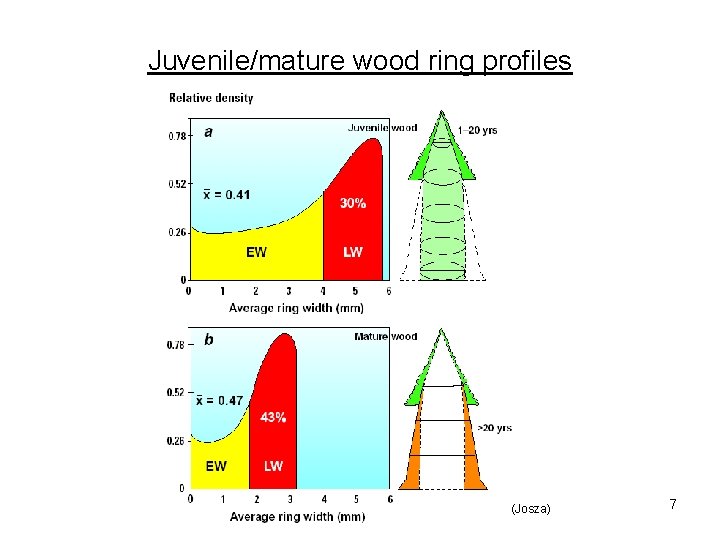
Juvenile/mature wood ring profiles (Josza) 7
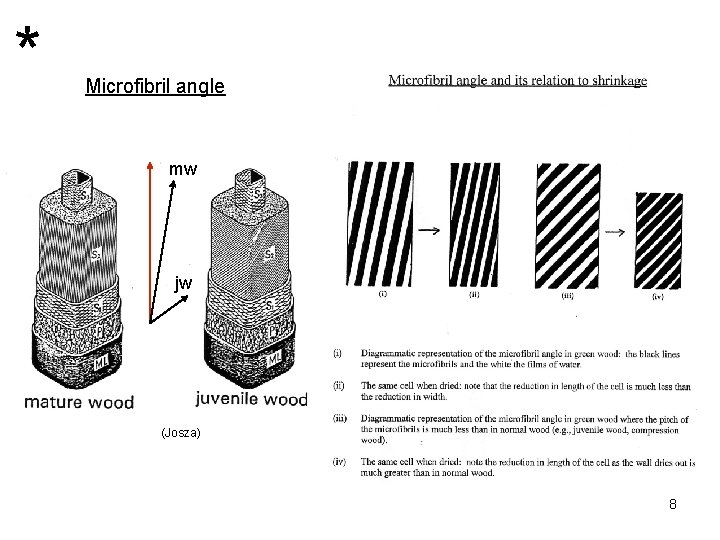
* Microfibril angle mw jw (Josza) 8
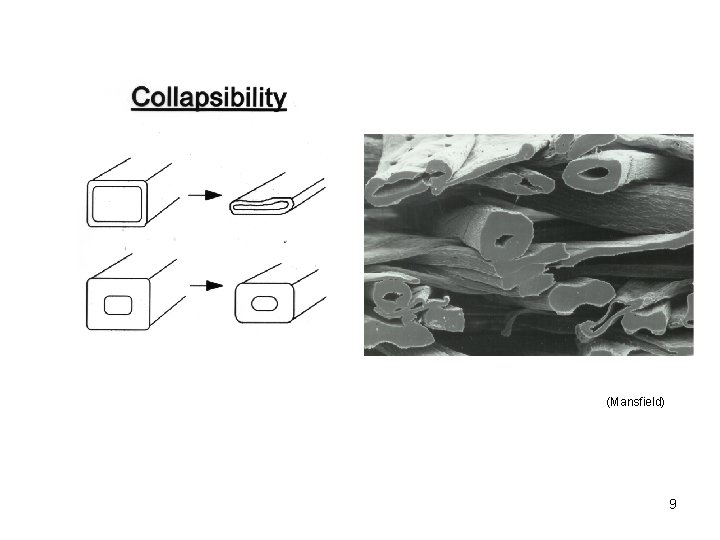
(Mansfield) 9
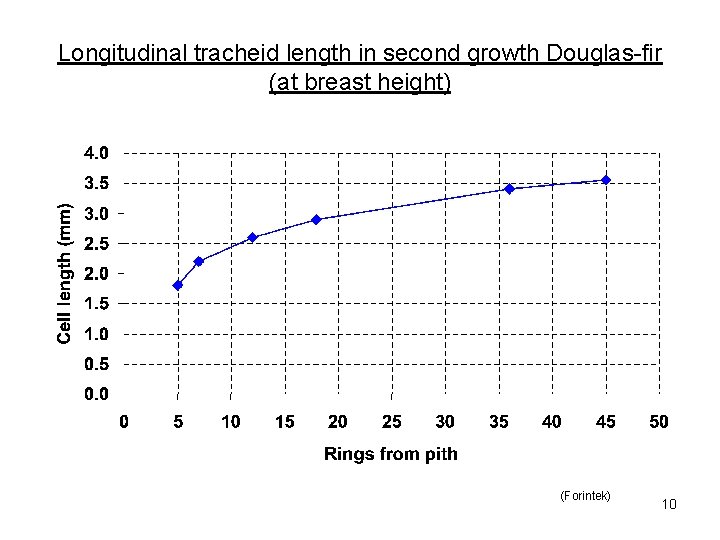
Longitudinal tracheid length in second growth Douglas-fir (at breast height) (Forintek) 10
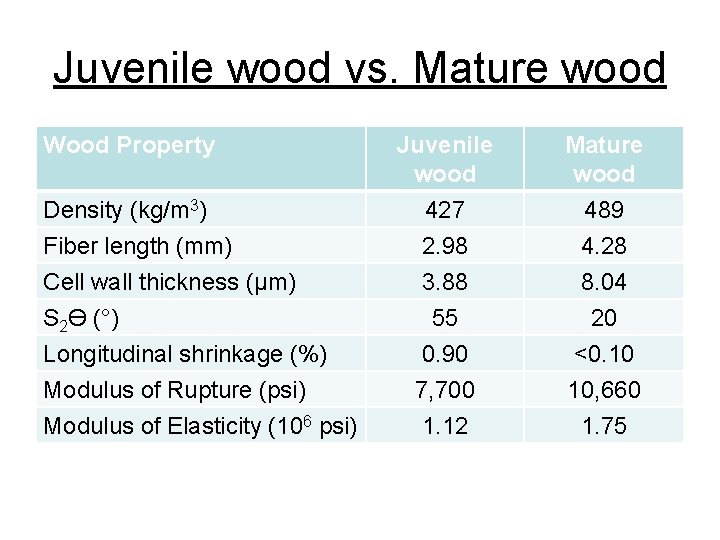
Juvenile wood vs. Mature wood Wood Property Density (kg/m 3) Fiber length (mm) Cell wall thickness (µm) S 2Ɵ (°) Longitudinal shrinkage (%) Modulus of Rupture (psi) Modulus of Elasticity (106 psi) Juvenile wood 427 2. 98 3. 88 55 0. 90 7, 700 Mature wood 489 4. 28 8. 04 20 <0. 10 10, 660 1. 12 1. 75
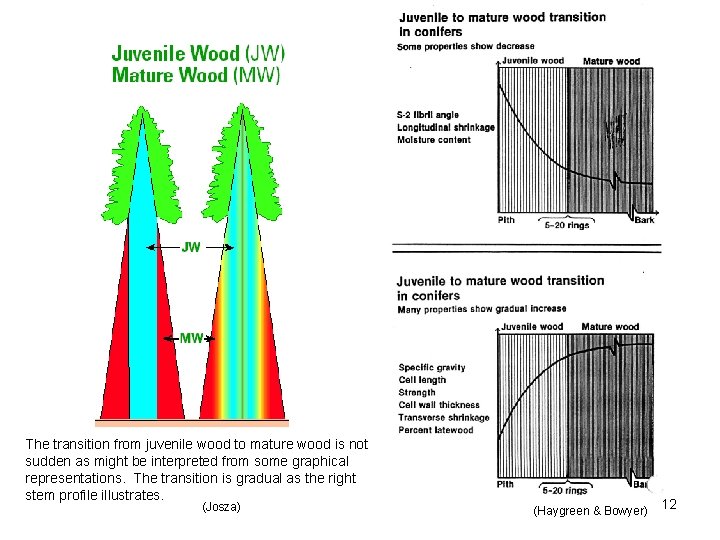
The transition from juvenile wood to mature wood is not sudden as might be interpreted from some graphical representations. The transition is gradual as the right stem profile illustrates. (Josza) (Haygreen & Bowyer) 12
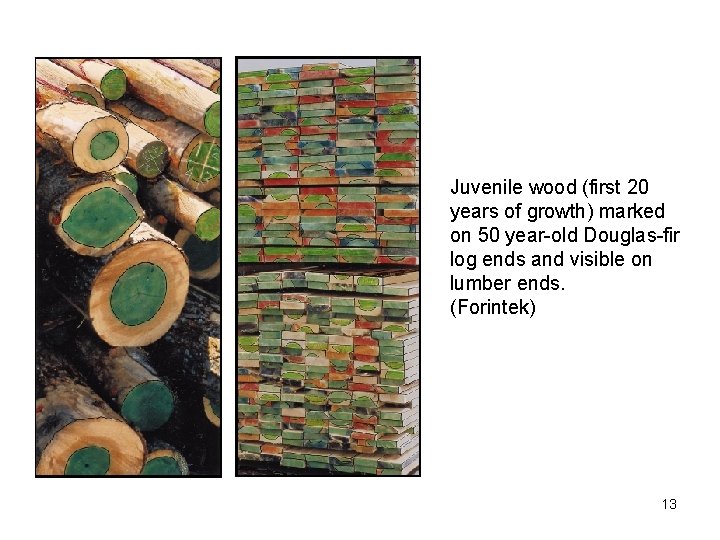
Juvenile wood (first 20 years of growth) marked on 50 year-old Douglas-fir log ends and visible on lumber ends. (Forintek) 13