
Tree bark Commercialisation implications forest management and sustainability
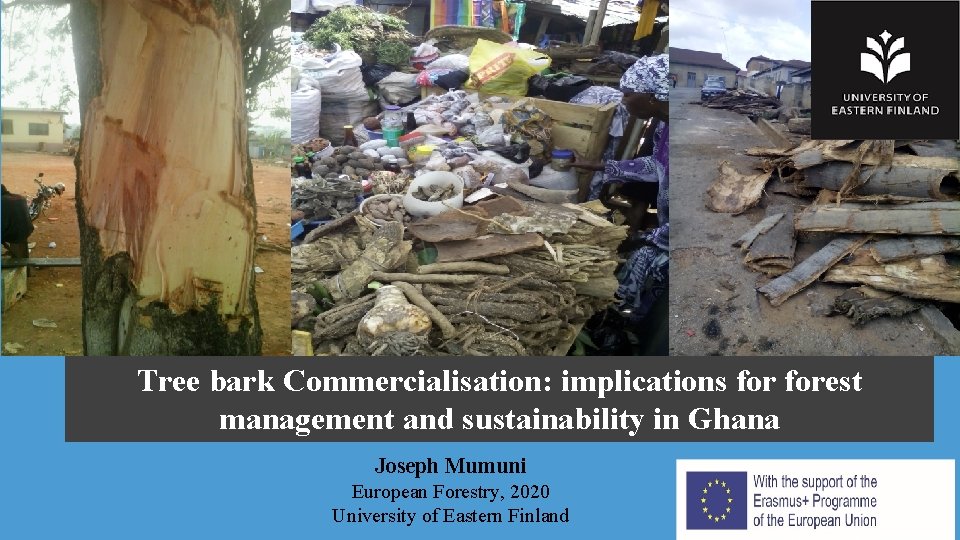
Tree bark Commercialisation: implications forest management and sustainability in Ghana Joseph Mumuni European Forestry, 2020 University of Eastern Finland
At a glance Could tree bark commercialization be as unsustainable as illegal logging in Ghana’s forest management? • Debarking trees has detrimental consequences on forest growth and productivity • A shift from subsistence use of bark to commercialization; a concern for conservation and sustainability in Ghana • Collaboration among actors could foster livelihoods and sustainable forest management nexuses 2
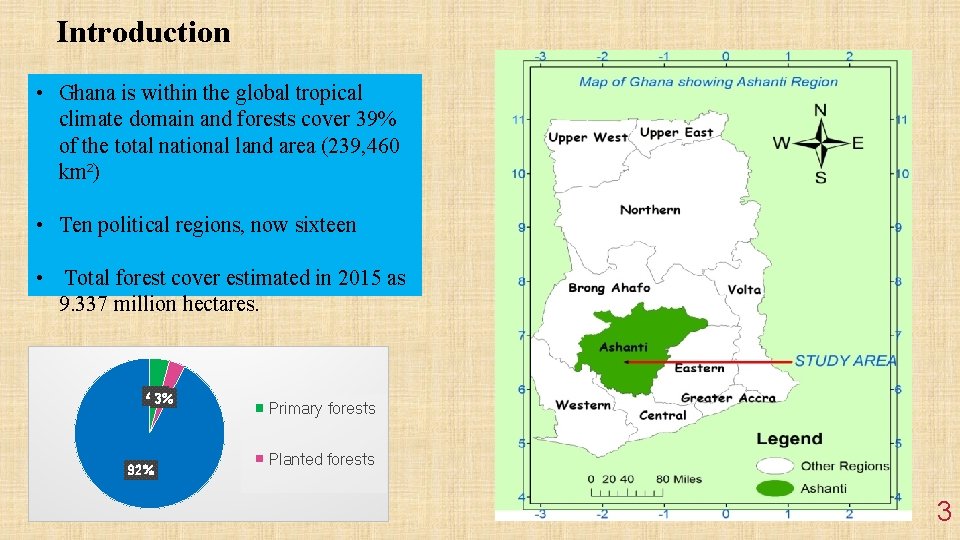
Introduction • Ghana is within the global tropical climate domain and forests cover 39% of the total national land area (239, 460 km²) • Ten political regions, now sixteen • Total forest cover estimated in 2015 as 9. 337 million hectares. 4% 3% 92% Primary forests Planted forests 3

Research Background and Methods Bark anatomy • In forest management, a healthy bark of tree species is critical for growth and productivity • In the past, rural communities in Ghana harvested bark for subsistence use • Currently, there have been a spike in demand of tree bark in the domestic market and international markets Strip harvesting Ring barking/girdling • This study explored the implications of the shift to commercialization on forest conservation and sustainability • Interviews, participant observation and a desk study were used for the study 4 This Photo by Unknown Author is licensed under CC BY-NC-ND
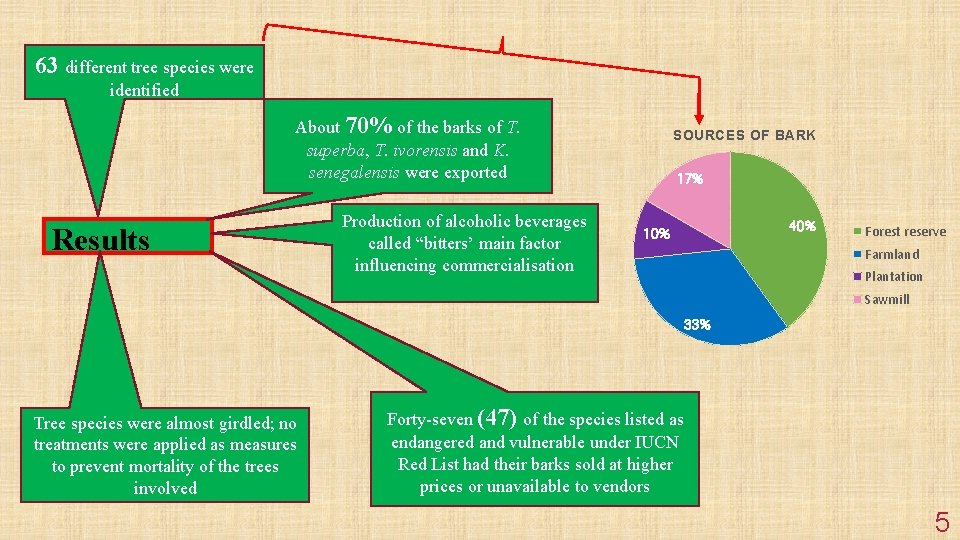
63 different tree species were identified About 70% of the barks of T. superba, T. ivorensis and K. senegalensis were exported Results Production of alcoholic beverages called “bitters’ main factor influencing commercialisation SOURCES OF BARK 17% 40% 10% Forest reserve Farmland Plantation Sawmill 33% Tree species were almost girdled; no treatments were applied as measures to prevent mortality of the trees involved Forty-seven (47) of the species listed as endangered and vulnerable under IUCN Red List had their barks sold at higher prices or unavailable to vendors 5
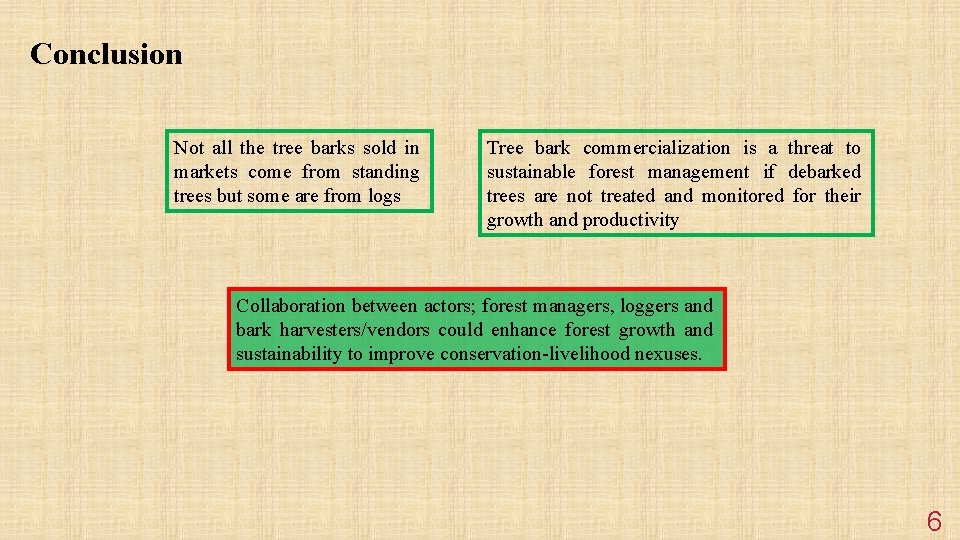
Conclusion Not all the tree barks sold in markets come from standing trees but some are from logs Tree bark commercialization is a threat to sustainable forest management if debarked trees are not treated and monitored for their growth and productivity Collaboration between actors; forest managers, loggers and bark harvesters/vendors could enhance forest growth and sustainability to improve conservation-livelihood nexuses. 6
- Slides: 6