
TREC SCREENING Newborn Screening Characteristics of Disorders Characteristics
TREC SCREENING
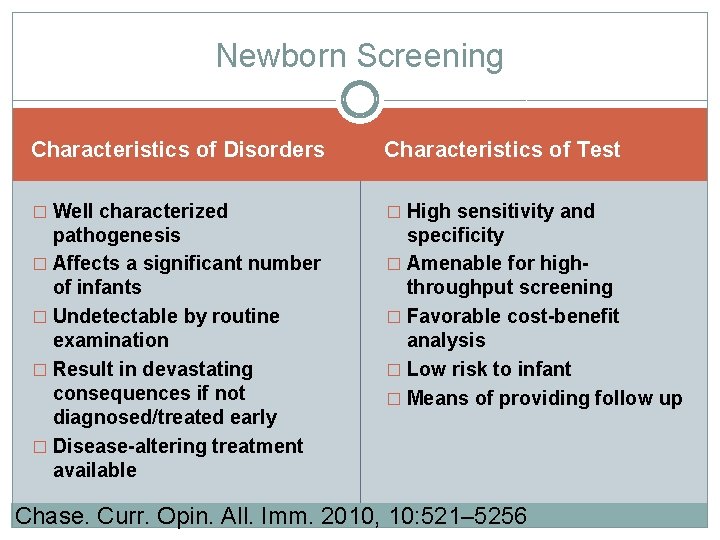
Newborn Screening Characteristics of Disorders Characteristics of Test � Well characterized � High sensitivity and pathogenesis � Affects a significant number of infants � Undetectable by routine examination � Result in devastating consequences if not diagnosed/treated early � Disease-altering treatment available specificity � Amenable for highthroughput screening � Favorable cost-benefit analysis � Low risk to infant � Means of providing follow up Chase. Curr. Opin. All. Imm. 2010, 10: 521– 5256

T-Cell Receptor Excision Circles (TRECs) �Generation of a unique T -cell receptor (TCR) clone begins by random selection and combination of TCR regions in germ line DNA �The excised DNA sequences form a nonreplicating episome �TREC-positive cells are recent thymic emigrants Chase. Curr. Opin. All. Imm. 2010, 10: 521– 5256

T-Cell Receptor Excision Circles (TRECs) �TRECs can be detected in peripheral blood by quantitative PCR �TREC levels correlate with numbers of naïve Tcells Low TREC levels associated with SCID, di. George syndrome, congenital lymphopenia Hazenberg. J. Mol. Med. 2001, 79: 631– 640

T-Cell Receptor Excision Circles (TRECs) � 2008: Wisconsin became first state to include TREC quantitation in the newborn screen � 2009: The first infant with SCID identified in Massachusetts* � 2010: TREC assay added to New York newborn screen * Hale. J. All. Clin. Immunol. 2010, 126: 1073– 4

Chase. Curr. Opin. All. Imm. 2010, 10: 521– 5256

TREC Assay Pitfalls and Future Directions �Reference ranges have not been established for neonates < 37 weeks corrected gestation �Many abnormal TREC results have lead to diagnosis of undefined T-cell immunodeficiencies; without identifying underlying genetic defect optimal management remains uncertain �Multi-plex quantitative PCR methods are being developed to screen for additional genetic diseases
- Slides: 7