
Treatment of Velopharyngeal Inadequacy in Dysarthric Speakers Motor

- Slides: 35
Treatment of Velopharyngeal Inadequacy in Dysarthric Speakers Motor Speech Conference Antwerp University Hospital October 24, 2019 Joe Duffy, Ph. D. , BC-NCD Mayo Clinic Rochester, MN
Overview • • VP function & speech Clinical features of VPI Management issues & principles Treatments – Medical – Prosthetic – Behavioral
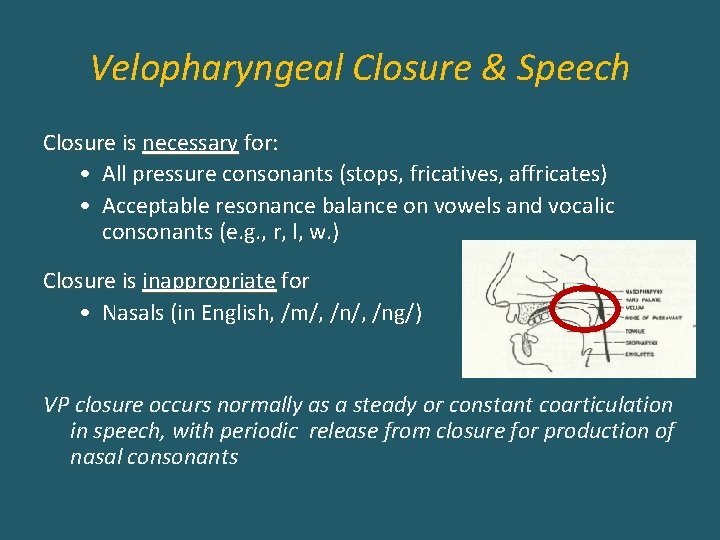
Velopharyngeal Closure & Speech Closure is necessary for: • All pressure consonants (stops, fricatives, affricates) • Acceptable resonance balance on vowels and vocalic consonants (e. g. , r, l, w. ) Closure is inappropriate for • Nasals (in English, /m/, /ng/) VP closure occurs normally as a steady or constant coarticulation in speech, with periodic release from closure for production of nasal consonants
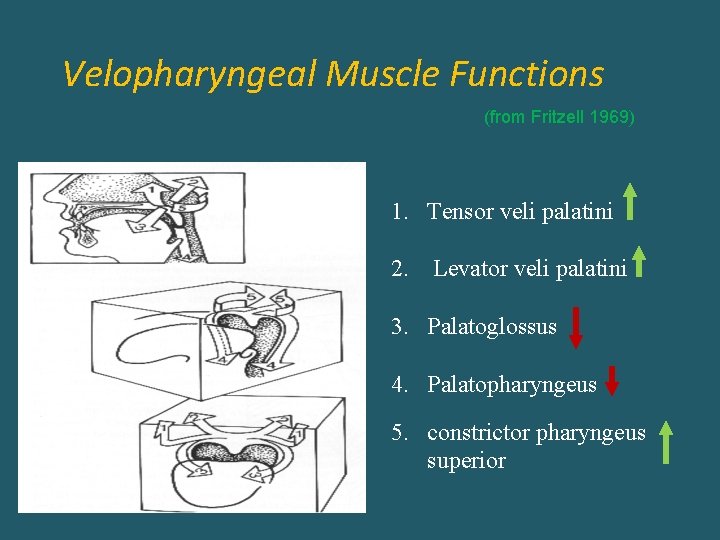
Velopharyngeal Muscle Functions (from Fritzell 1969) 1. Tensor veli palatini 2. Levator veli palatini 3. Palatoglossus 4. Palatopharyngeus 5. constrictor pharyngeus superior
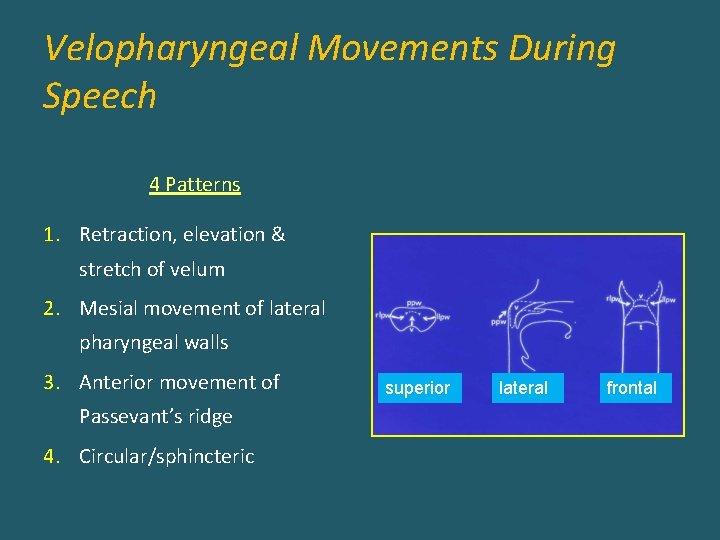
Velopharyngeal Movements During Speech 4 Patterns 1. Retraction, elevation & stretch of velum 2. Mesial movement of lateral pharyngeal walls 3. Anterior movement of Passevant’s ridge 4. Circular/sphincteric superior lateral frontal
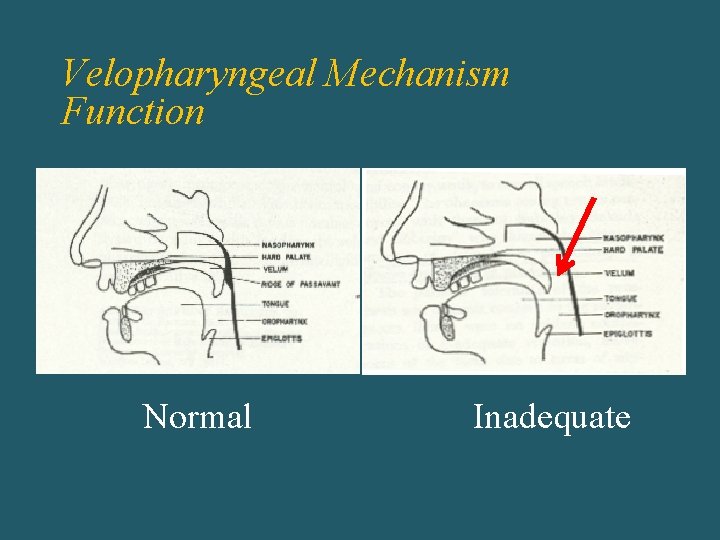
Velopharyngeal Mechanism Function Normal Inadequate
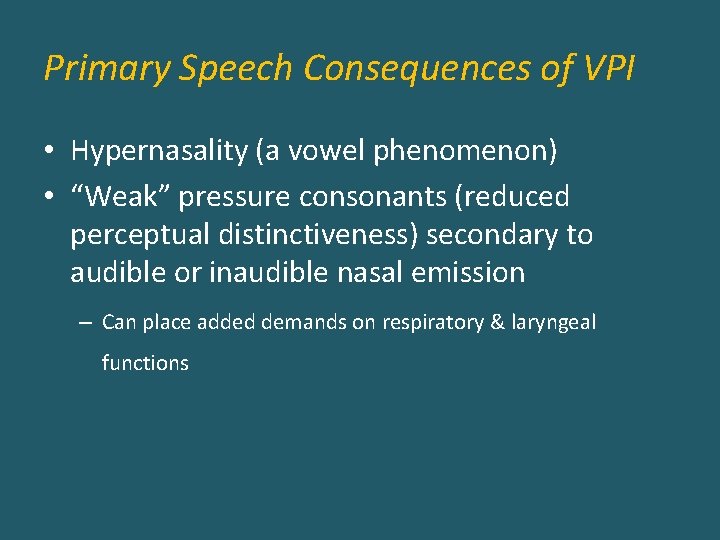
Primary Speech Consequences of VPI • Hypernasality (a vowel phenomenon) • “Weak” pressure consonants (reduced perceptual distinctiveness) secondary to audible or inaudible nasal emission – Can place added demands on respiratory & laryngeal functions
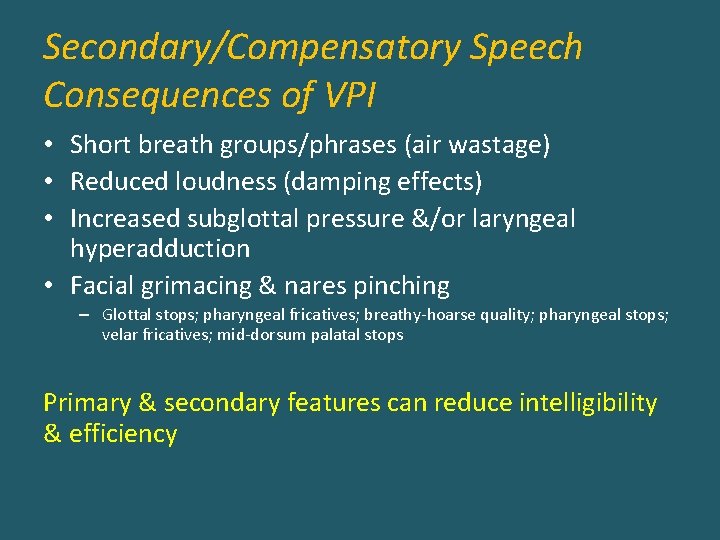
Secondary/Compensatory Speech Consequences of VPI • Short breath groups/phrases (air wastage) • Reduced loudness (damping effects) • Increased subglottal pressure &/or laryngeal hyperadduction • Facial grimacing & nares pinching – Glottal stops; pharyngeal fricatives; breathy-hoarse quality; pharyngeal stops; velar fricatives; mid-dorsum palatal stops Primary & secondary features can reduce intelligibility & efficiency
Management
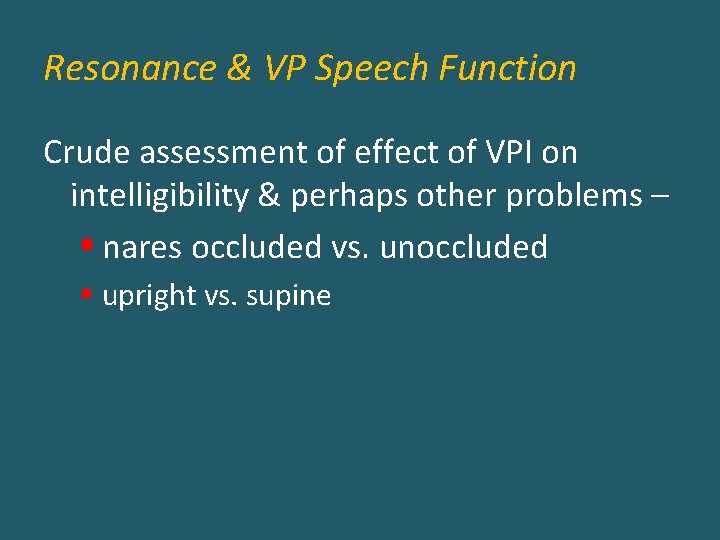
Resonance & VP Speech Function Crude assessment of effect of VPI on intelligibility & perhaps other problems – § nares occluded vs. unoccluded § upright vs. supine
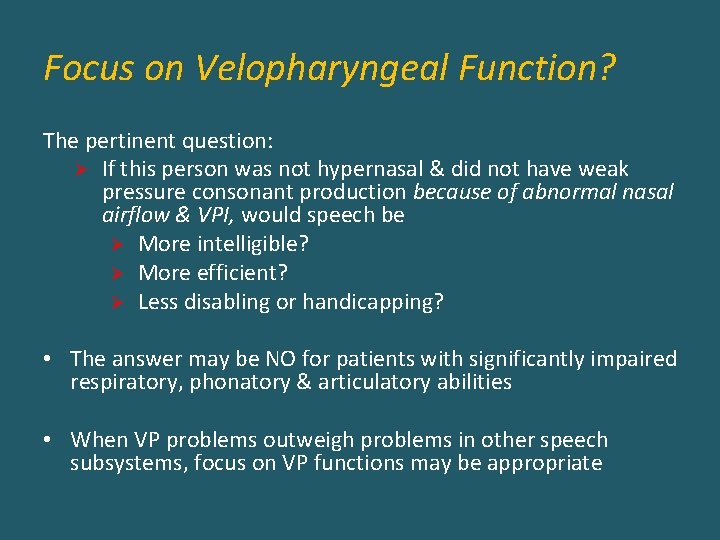
Focus on Velopharyngeal Function? The pertinent question: Ø If this person was not hypernasal & did not have weak pressure consonant production because of abnormal nasal airflow & VPI, would speech be Ø More intelligible? Ø More efficient? Ø Less disabling or handicapping? • The answer may be NO for patients with significantly impaired respiratory, phonatory & articulatory abilities • When VP problems outweigh problems in other speech subsystems, focus on VP functions may be appropriate
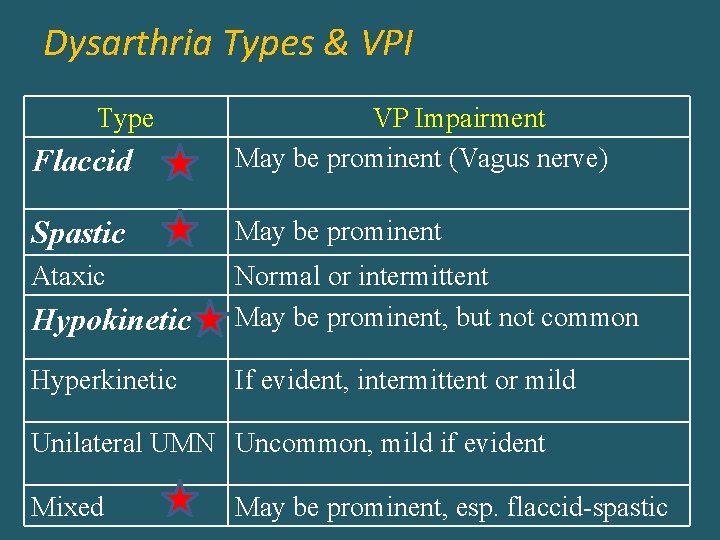
Dysarthria Types & VPI Type Flaccid VP Impairment May be prominent (Vagus nerve) Spastic May be prominent Ataxic Hypokinetic Normal or intermittent May be prominent, but not common Hyperkinetic If evident, intermittent or mild Unilateral UMN Uncommon, mild if evident Mixed May be prominent, esp. flaccid-spastic
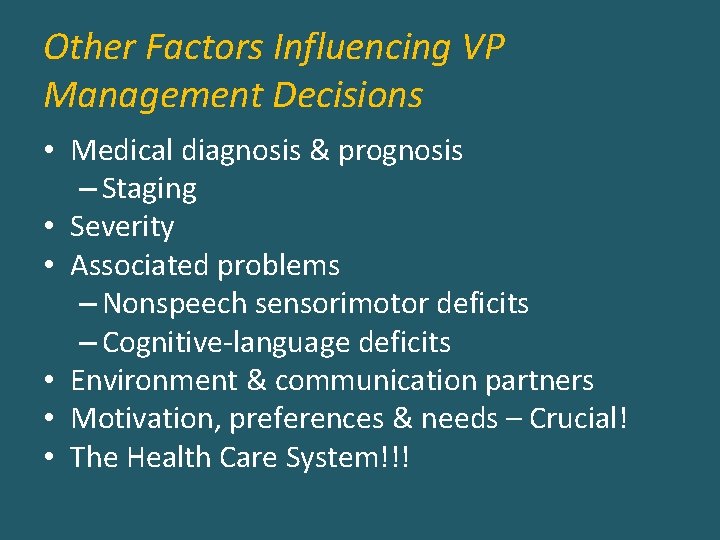
Other Factors Influencing VP Management Decisions • Medical diagnosis & prognosis – Staging • Severity • Associated problems – Nonspeech sensorimotor deficits – Cognitive-language deficits • Environment & communication partners • Motivation, preferences & needs – Crucial! • The Health Care System!!!
Yorkston KM et al. : Evidence-based practice guidelines for dysarthria: Management of velopharyngeal dysfunction. J Med Speech-Lang Pathol, 9: 257, 2001. – Provides information useful to clinical decision making for surgical, prosthetic & behavioral interventions for VP problems associated with dysarthria – See Academy of Neurologic Communication Disorders & Sciences website
Approaches to Treatment • Medical – Pharmacologic – Surgical • Prosthetic • Behavioral None are mutually exclusive!
Approaches to Treatment • Medical – Pharmacologic – Surgical • Prosthetic • Behavioral
Pharmacologic? No meds that target VPI in any dysarthria type but … • Flaccid dysarthria (myasthenia gravis) – Mestinon (pyridostigmine bromide) – myasthenia gravis • Hypokinetic dysarthria (PD) – L-Dopa (levodopa) – Sinemet (carbidopa-levodopa)
Surgical Pharyngeal flap or sphincter pharyngoplasty – Generally less favorable than prosthetic management; no recent +/- reports – Insufficient evidence to permit recommending surgical interventions for VPI in dysarthria (Yorkston et al. , 2001)
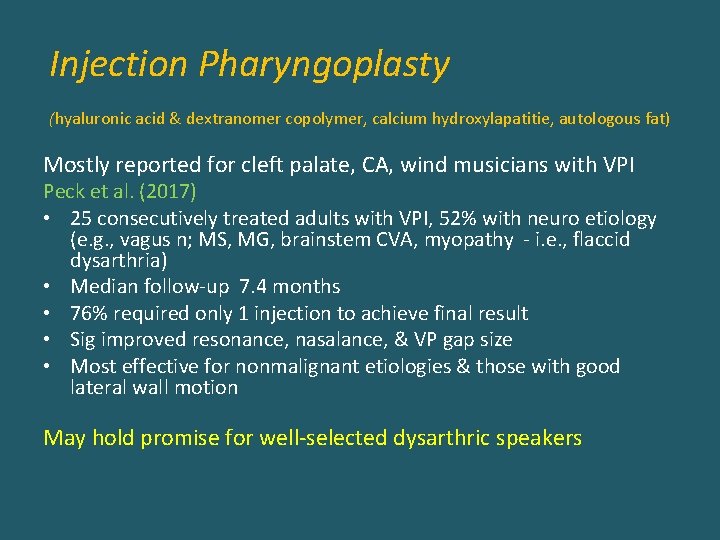
Injection Pharyngoplasty (hyaluronic acid & dextranomer copolymer, calcium hydroxylapatitie, autologous fat) Mostly reported for cleft palate, CA, wind musicians with VPI Peck et al. (2017) • 25 consecutively treated adults with VPI, 52% with neuro etiology (e. g. , vagus n; MS, MG, brainstem CVA, myopathy - i. e. , flaccid dysarthria) • Median follow-up 7. 4 months • 76% required only 1 injection to achieve final result • Sig improved resonance, nasalance, & VP gap size • Most effective for nonmalignant etiologies & those with good lateral wall motion May hold promise for well-selected dysarthric speakers
Approaches to Treatment • Medical – Pharmacologic – Surgical • Prosthetic • Behavioral
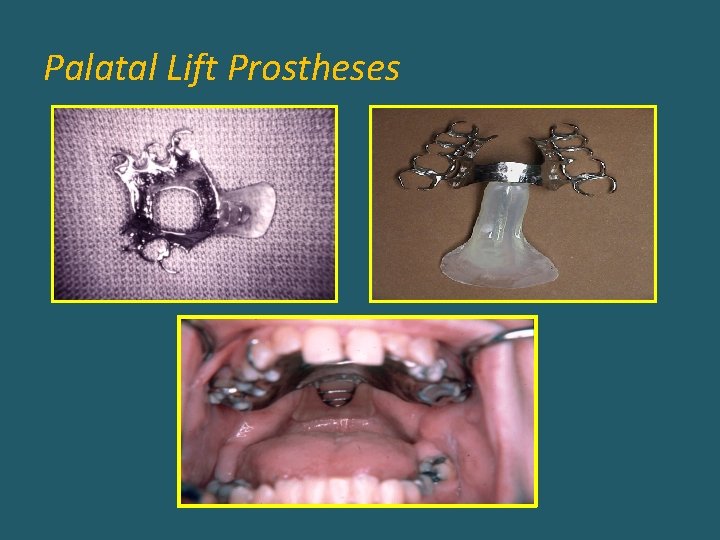
Palatal Lift Prostheses
Palatal Lift Prostheses – evidence composite Esposito et al. (2000) • retrospective study - 25 Ss with ALS – 84% had reduced hypernasality – 76% benefitted for at least 6 months Yorkston KM et al. (2001) • 33 articles reviewed – Concluded that palatal lift is effective treatment for well-selected individuals with dysarthria
Palatal Lift Prostheses (cont. ) In general, “effective” means • increased intelligibility • decreased hypernasality • improved clarity of articulation Most often reported for patients with flaccid >, spastic, & mixed F-S dysarthrias Some with stable VPI may develop improved palatal function without lift, perhaps through lift stimulation of neuromuscular responses
Palatal lift prostheses (cont. ) Best candidates – stable or not declining/improving rapidly – less significant/minimal deficits @ other levels – adequate dentition – no significant spasticity (e. g. , gag) – motivated, patient, & good self-care ability
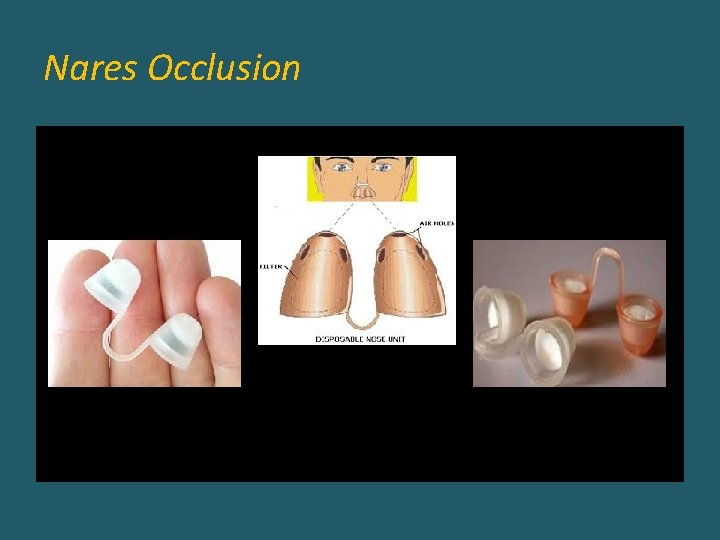
“Minor” Prostheses (nares occlusion) When? • Interim while awaiting more substantial intervention • Rapid changes - decline or improvement • Patient uninterested or not candidate for other intervention What? • Nasal obturator, nose clip, one-way nasal speaking valves (Hakel et al. , 2004; Suwaki et al. , 2008) • Manually occluding nares – Maybe not for constant use, but helpful for breakdown repairs
Nares Occlusion
Approaches to Treatment • Medical – Pharmacologic – Surgical • Prosthetic • Behavioral (modify pattern of speech)
Principles of Motor Learning “Specificity of training” - Improving speech requires speaking! – Training should be as specific as possible to movement patterns, ROM, velocity, force, etc. of ultimate goals of TX “Drill” – systematic practice of selected, ordered exercises – Frequent (e. g. , twice or more per day) – Frequent brief periods probably better than infrequent lengthy practice
Behavioral Treatment - VPI • Four general behavioral approaches (Yorkston et al. , 2001) – Techniques focused on nonspeech activities – Resistance training during speech – Online “instrumental” feedback – Modifying the pattern of speaking • Limited evidence. Mixed opinions. – Generally felt that dysarthria-based severe & chronic VPI do not benefit from behavioral intervention
Behavioral Treatment - Nonspeech • Facilitation techniques - pressure, brushing, icing, stroking, vibratory. • Inhibition techniques - prolonged icing, pressure stim. , vibration • Motor control tasks to modify breath stream (e. g. , blowing bubbles, cotton balls, whistles) • Nonspeech strengthening exercise (blowing, sucking) “The general consensus…these exercises are disappointing and generally ineffective” (Johns, ‘ 85, p. 158) Nonspeech VP strengthening exercise for dysarthria not justified (Yorkston et al. , 2001)
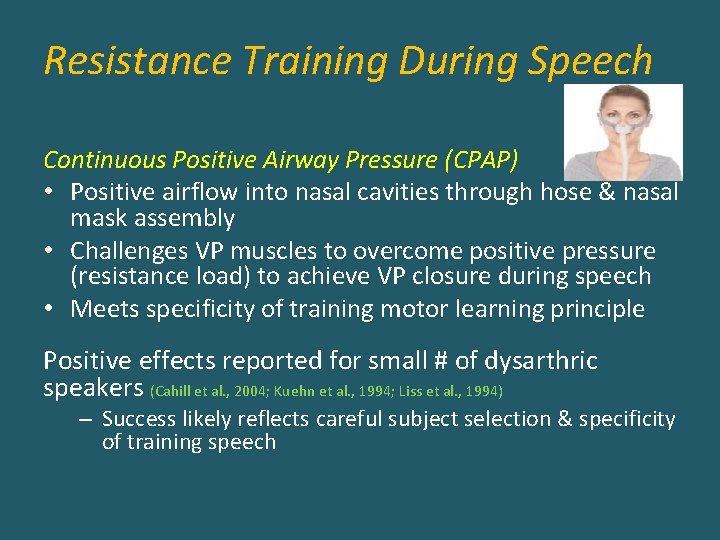
Resistance Training During Speech Continuous Positive Airway Pressure (CPAP) • Positive airflow into nasal cavities through hose & nasal mask assembly • Challenges VP muscles to overcome positive pressure (resistance load) to achieve VP closure during speech • Meets specificity of training motor learning principle Positive effects reported for small # of dysarthric speakers (Cahill et al. , 2004; Kuehn et al. , 1994; Liss et al. , 1994) – Success likely reflects careful subject selection & specificity of training speech
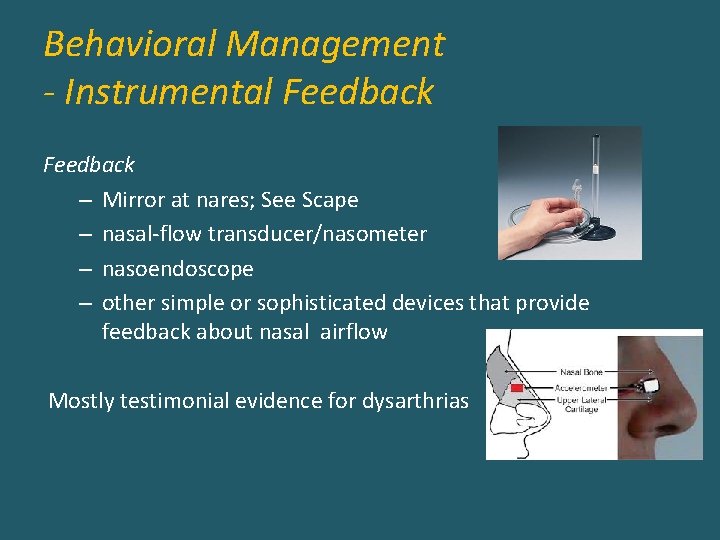
Behavioral Management - Instrumental Feedback – Mirror at nares; See Scape – nasal-flow transducer/nasometer – nasoendoscope – other simple or sophisticated devices that provide feedback about nasal airflow Mostly testimonial evidence for dysarthrias
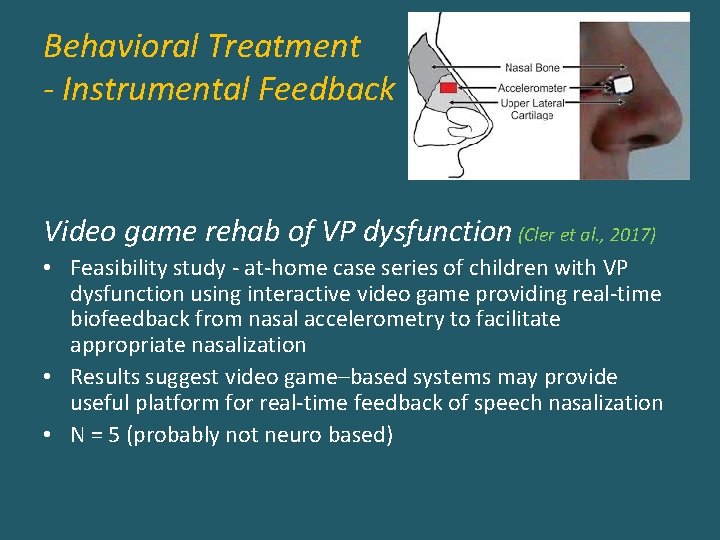
Behavioral Treatment - Instrumental Feedback Video game rehab of VP dysfunction (Cler et al. , 2017) • Feasibility study - at-home case series of children with VP dysfunction using interactive video game providing real-time biofeedback from nasal accelerometry to facilitate appropriate nasalization • Results suggest video game–based systems may provide useful platform for real-time feedback of speech nasalization • N = 5 (probably not neuro based)
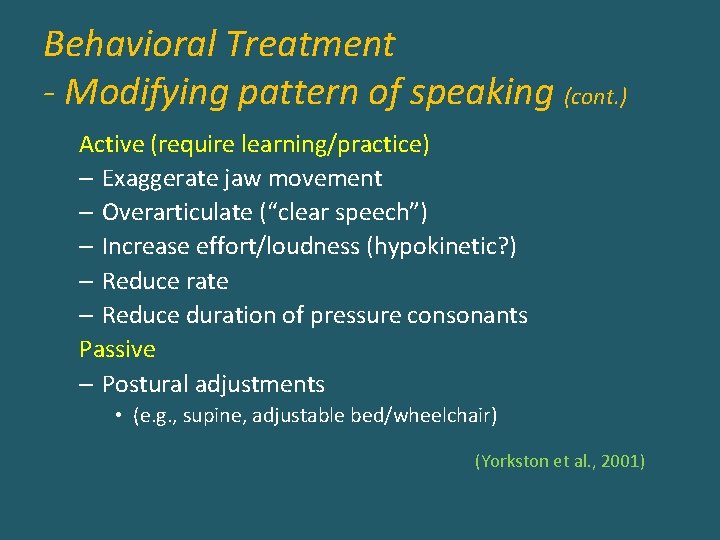
Behavioral Treatment - Modifying pattern of speaking (cont. ) Active (require learning/practice) – Exaggerate jaw movement – Overarticulate (“clear speech”) – Increase effort/loudness (hypokinetic? ) – Reduce rate – Reduce duration of pressure consonants Passive – Postural adjustments • (e. g. , supine, adjustable bed/wheelchair) (Yorkston et al. , 2001)
References • • • Duffy, J. R. (2013) Motor speech disorders: substrates, differential diagnosis, and management (3 rd edition), St. Louis: Mosby Elsevier. Guyton KB et al. Acquired velopharyngeal dysfunction: survey, literature review, and clinical recommendations. Am J Speech-Lang Pathol; 27: 15721597, 2018. Kuehn DP. The development of a new technique for treating hypernasality: CPAP. Am J Speech Lang Pathol. 6: 5, 1997. Mc. Neil, M. R. (Ed. ) (2009). Clinical Management of Sensorimotor Speech Disorders. (2 nd ed. ) New York: Thieme Medical Publishers. Peck BW, Baas BS, Cofer SA Injection pharyngoplasty with a hyaluronic acid and dextranomer copolymer to treat velopharyngeal insufficiency in adults. Mayo Clin Proc Inn Qual Out 2017; 1(2): 176 -184. Yorkston KM et al. : Evidence-based practice guidelines for dysarthria: Management of velopharyngeal dysfunction. J Med Speech-Lang Pathol 9: 257, 2001.