
Treatment of ST Elevation MI in the ED





- Slides: 58
Treatment of ST Elevation MI in the ED: Fibrinolytics, Antiplatelets and Antithrombins James Hoekstra, MD Professor and Chair Department of Emergency Medicine Wake Forest University
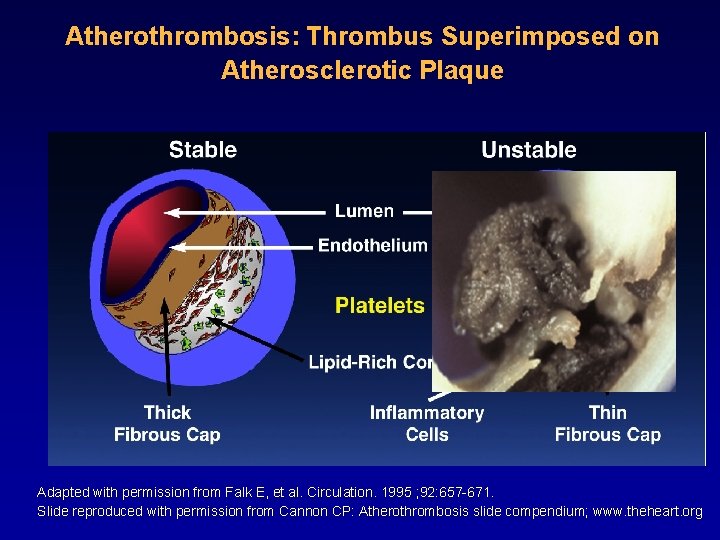
Atherothrombosis: Thrombus Superimposed on Atherosclerotic Plaque Adapted with permission from Falk E, et al. Circulation. 1995 ; 92: 657 -671. Slide reproduced with permission from Cannon CP: Atherothrombosis slide compendium; www. theheart. org
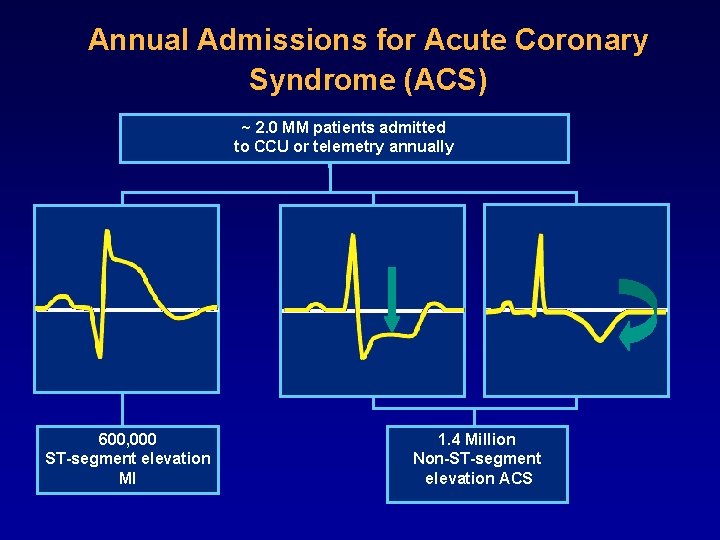
Annual Admissions for Acute Coronary Syndrome (ACS) ~ 2. 0 MM patients admitted to CCU or telemetry annually 600, 000 ST-segment elevation MI 1. 4 Million Non-ST-segment elevation ACS
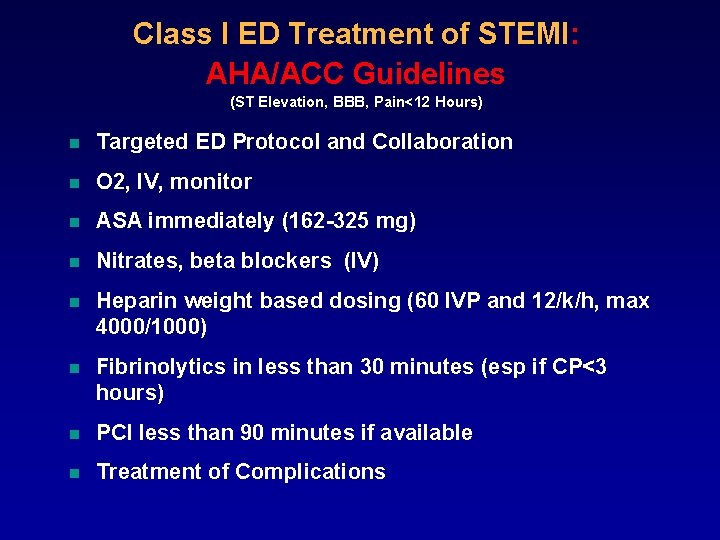
Class I ED Treatment of STEMI: AHA/ACC Guidelines (ST Elevation, BBB, Pain<12 Hours) n Targeted ED Protocol and Collaboration n O 2, IV, monitor n ASA immediately (162 -325 mg) n Nitrates, beta blockers (IV) n Heparin weight based dosing (60 IVP and 12/k/h, max 4000/1000) n Fibrinolytics in less than 30 minutes (esp if CP<3 hours) n PCI less than 90 minutes if available n Treatment of Complications
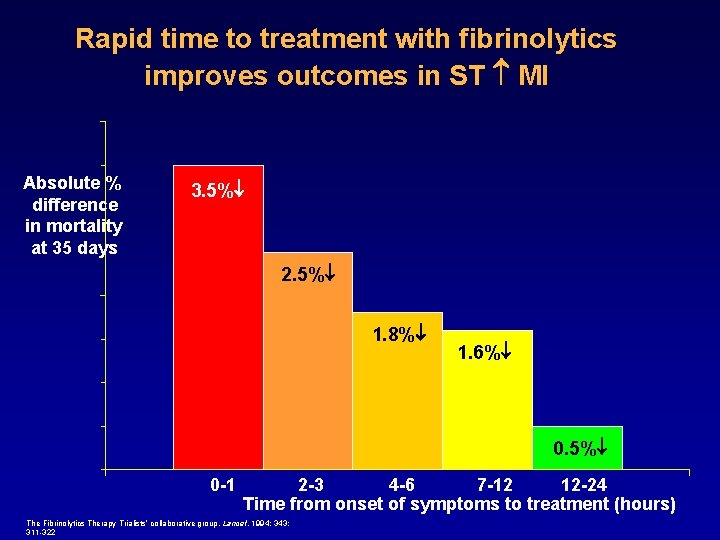
Rapid time to treatment with fibrinolytics improves outcomes in ST MI Absolute % difference in mortality at 35 days 3. 5% 2. 5% 1. 8% 1. 6% 0. 5% 0 -1 2 -3 4 -6 7 -12 12 -24 Time from onset of symptoms to treatment (hours) The Fibrinolytics Therapy Trialists’ collaborative group. Lancet. 1994; 343: 311 -322
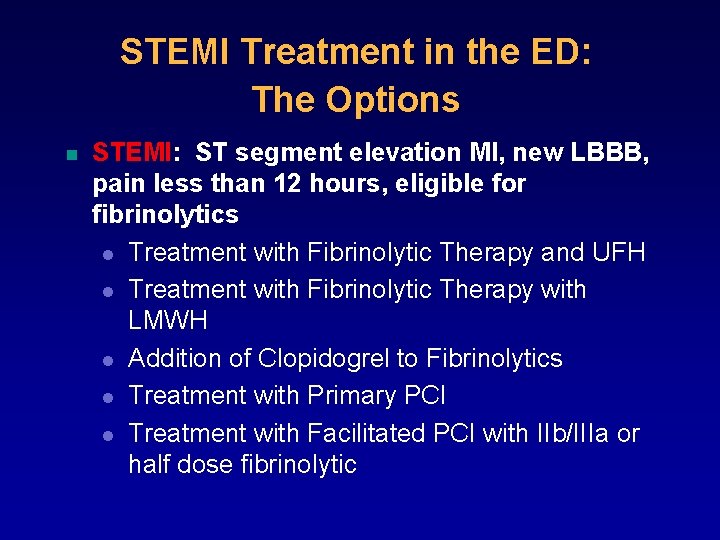
STEMI Treatment in the ED: The Options n STEMI: ST segment elevation MI, new LBBB, pain less than 12 hours, eligible for fibrinolytics l Treatment with Fibrinolytic Therapy and UFH l Treatment with Fibrinolytic Therapy with LMWH l Addition of Clopidogrel to Fibrinolytics l Treatment with Primary PCI l Treatment with Facilitated PCI with IIb/IIIa or half dose fibrinolytic
STEMI Treatment with Fibrinolytic Therapy
Reperfusion Guidelines n STEMI patients presenting to a facility without PCI capability should undergo fibrinolysis unless contraindicated (class I)
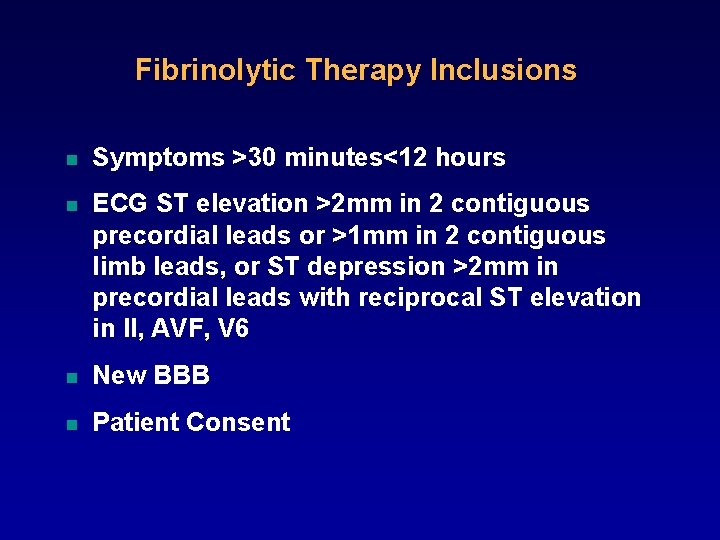
Fibrinolytic Therapy Inclusions n Symptoms >30 minutes<12 hours n ECG ST elevation >2 mm in 2 contiguous precordial leads or >1 mm in 2 contiguous limb leads, or ST depression >2 mm in precordial leads with reciprocal ST elevation in II, AVF, V 6 n New BBB n Patient Consent
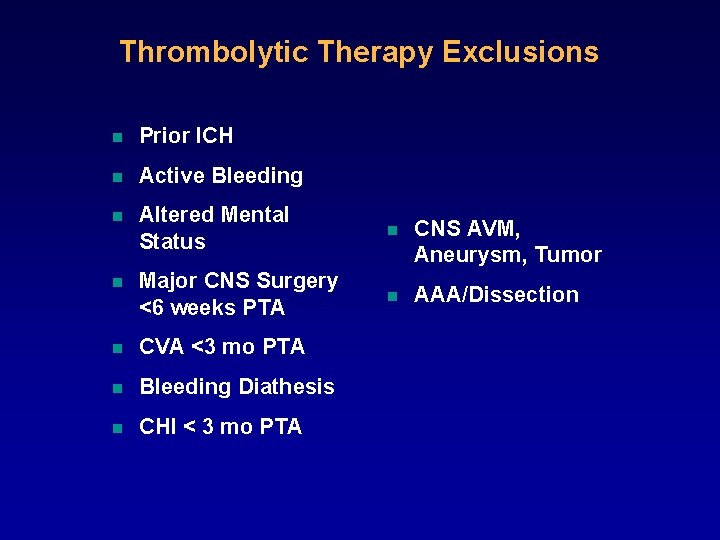
Thrombolytic Therapy Exclusions n Prior ICH n Active Bleeding n Altered Mental Status n CNS AVM, Aneurysm, Tumor n Major CNS Surgery <6 weeks PTA n AAA/Dissection n CVA <3 mo PTA n Bleeding Diathesis n CHI < 3 mo PTA
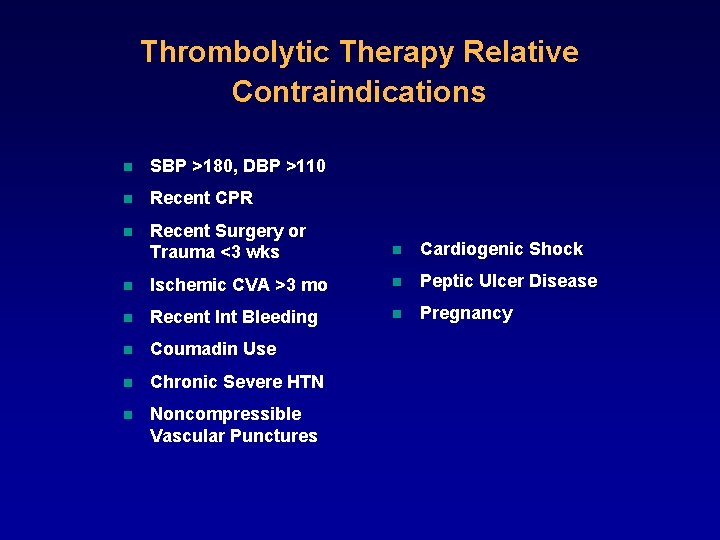
Thrombolytic Therapy Relative Contraindications n SBP >180, DBP >110 n Recent CPR n Recent Surgery or Trauma <3 wks n Cardiogenic Shock n Ischemic CVA >3 mo n Peptic Ulcer Disease n Recent Int Bleeding n Pregnancy n Coumadin Use n Chronic Severe HTN n Noncompressible Vascular Punctures
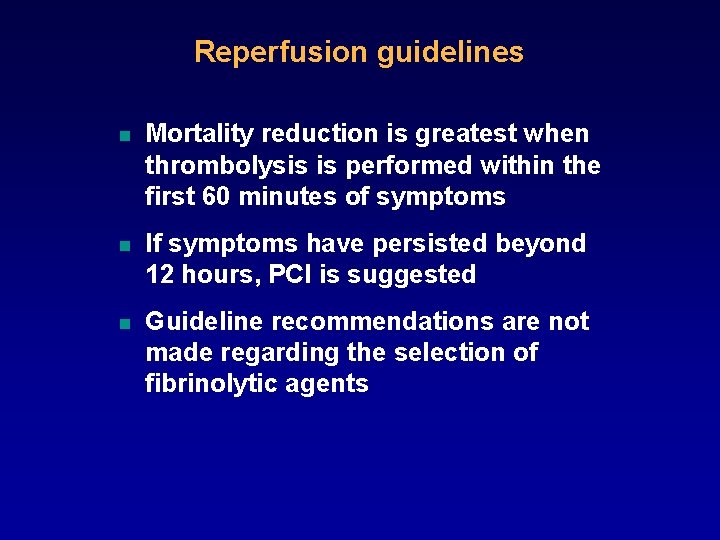
Reperfusion guidelines n Mortality reduction is greatest when thrombolysis is performed within the first 60 minutes of symptoms n If symptoms have persisted beyond 12 hours, PCI is suggested n Guideline recommendations are not made regarding the selection of fibrinolytic agents
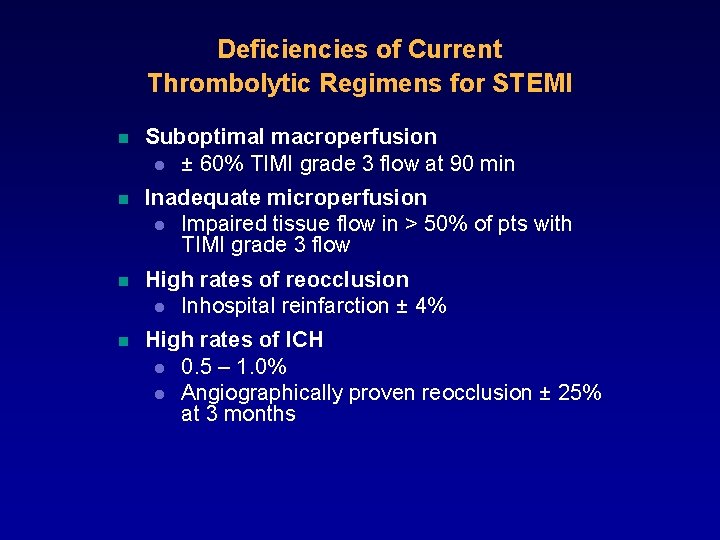
Deficiencies of Current Thrombolytic Regimens for STEMI n Suboptimal macroperfusion l ± 60% TIMI grade 3 flow at 90 min n Inadequate microperfusion l Impaired tissue flow in > 50% of pts with TIMI grade 3 flow n High rates of reocclusion l Inhospital reinfarction ± 4% n High rates of ICH l 0. 5 – 1. 0% l Angiographically proven reocclusion ± 25% at 3 months
STEMI Treatment with LMWH and Fibrinolytic Therapy
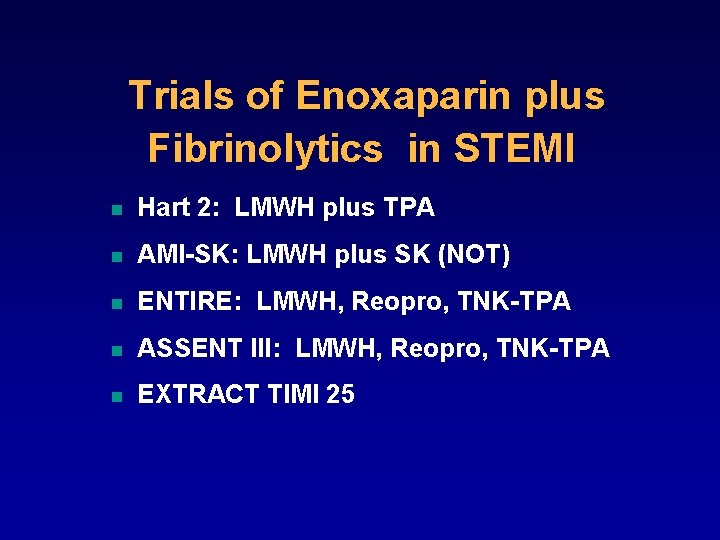
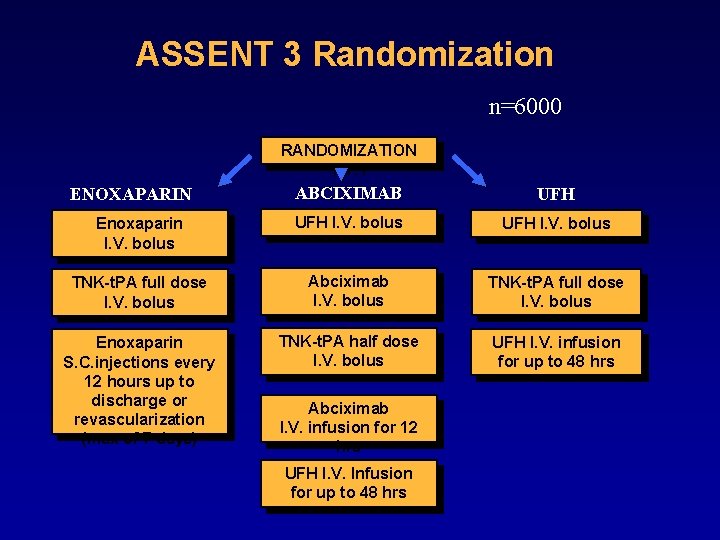
Trials of Enoxaparin plus Fibrinolytics in STEMI n Hart 2: LMWH plus TPA n AMI-SK: LMWH plus SK (NOT) n ENTIRE: LMWH, Reopro, TNK-TPA n ASSENT III: LMWH, Reopro, TNK-TPA n EXTRACT TIMI 25
ASSENT 3 Randomization n=6000 RANDOMIZATION 1: 1: 1 ABCIXIMAB UFH Enoxaparin I. V. bolus UFH I. V. bolus TNK-t. PA full dose I. V. bolus Abciximab I. V. bolus TNK-t. PA full dose I. V. bolus Enoxaparin S. C. injections every 12 hours up to discharge or revascularization (max of 7 days) TNK-t. PA half dose I. V. bolus UFH I. V. infusion for up to 48 hrs ENOXAPARIN Abciximab I. V. infusion for 12 hrs UFH I. V. Infusion for up to 48 hrs
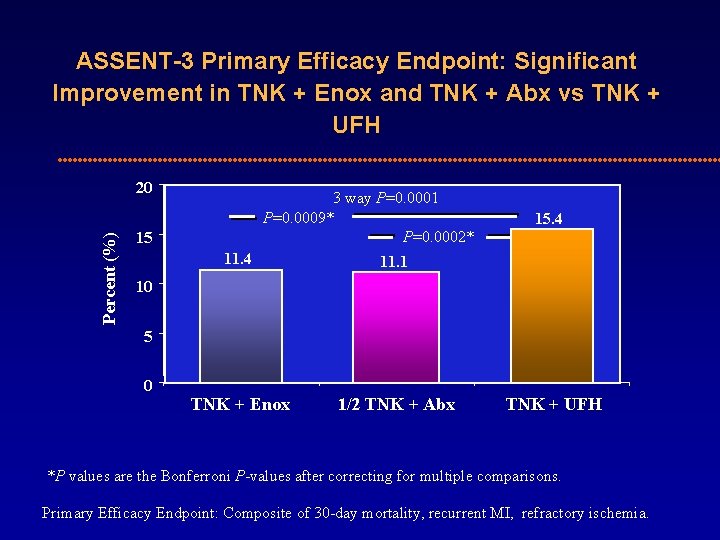
ASSENT-3 Primary Efficacy Endpoint: Significant Improvement in TNK + Enox and TNK + Abx vs TNK + UFH Percent (%) 20 3 way P=0. 0001 P=0. 0009* P=0. 0002* 15 11. 4 11. 1 TNK + Enox 1/2 TNK + Abx 15. 4 10 5 0 TNK + UFH *P values are the Bonferroni P-values after correcting for multiple comparisons. Primary Efficacy Endpoint: Composite of 30 -day mortality, recurrent MI, refractory ischemia.
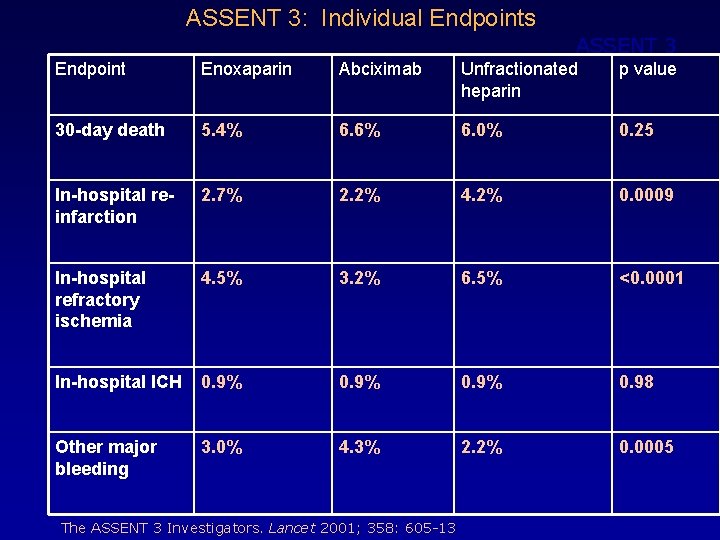
ASSENT 3: Individual Endpoints ASSENT 3 Endpoint Enoxaparin Abciximab Unfractionated heparin p value 30 -day death 5. 4% 6. 6% 6. 0% 0. 25 In-hospital reinfarction 2. 7% 2. 2% 4. 2% 0. 0009 In-hospital refractory ischemia 4. 5% 3. 2% 6. 5% <0. 0001 In-hospital ICH 0. 9% 0. 98 Other major bleeding 3. 0% 4. 3% 2. 2% 0. 0005 The ASSENT 3 Investigators. Lancet 2001; 358: 605 -13
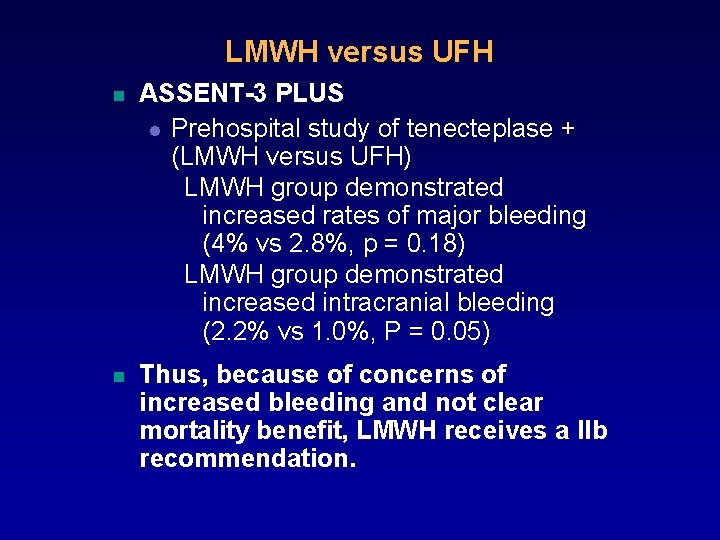
LMWH versus UFH n ASSENT-3 PLUS l Prehospital study of tenecteplase + (LMWH versus UFH) LMWH group demonstrated increased rates of major bleeding (4% vs 2. 8%, p = 0. 18) LMWH group demonstrated increased intracranial bleeding (2. 2% vs 1. 0%, P = 0. 05) n Thus, because of concerns of increased bleeding and not clear mortality benefit, LMWH receives a IIb recommendation.
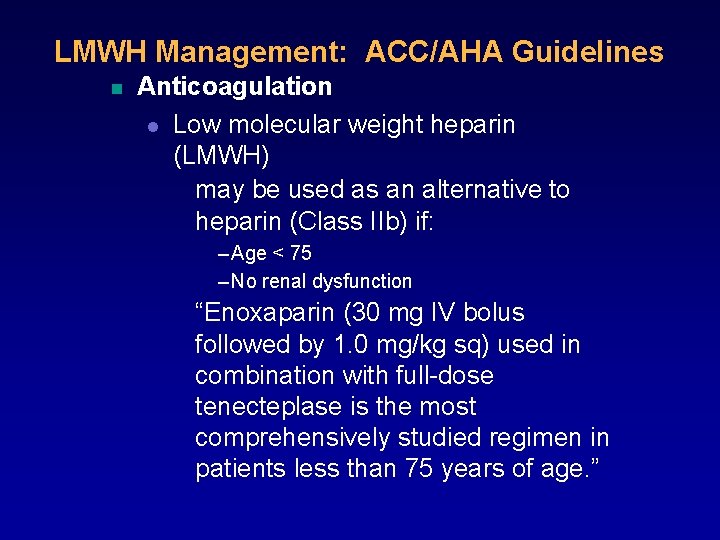
LMWH Management: ACC/AHA Guidelines n Anticoagulation l Low molecular weight heparin (LMWH) may be used as an alternative to heparin (Class IIb) if: – Age < 75 – No renal dysfunction “Enoxaparin (30 mg IV bolus followed by 1. 0 mg/kg sq) used in combination with full-dose tenecteplase is the most comprehensively studied regimen in patients less than 75 years of age. ”
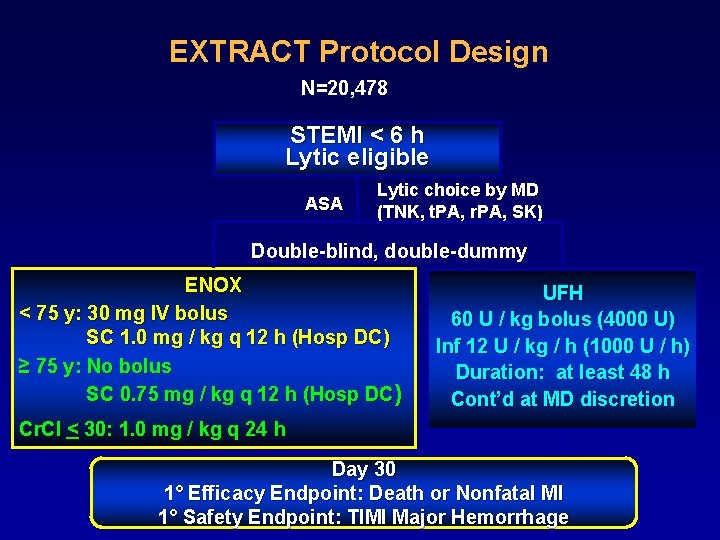
EXTRACT Protocol Design N=20, 478 STEMI < 6 h Lytic eligible ASA Lytic choice by MD (TNK, t. PA, r. PA, SK) Double-blind, double-dummy ENOX < 75 y: 30 mg IV bolus SC 1. 0 mg / kg q 12 h (Hosp DC) ≥ 75 y: No bolus SC 0. 75 mg / kg q 12 h (Hosp DC) UFH 60 U / kg bolus (4000 U) Inf 12 U / kg / h (1000 U / h) Duration: at least 48 h Cont’d at MD discretion Cr. Cl < 30: 1. 0 mg / kg q 24 h Day 30 1° Efficacy Endpoint: Death or Nonfatal MI 1° Safety Endpoint: TIMI Major Hemorrhage
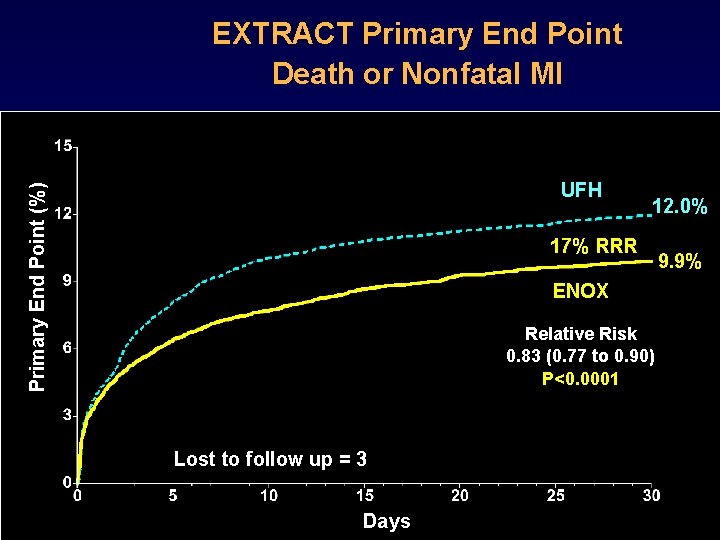
EXTRACT Primary End Point Death or Nonfatal MI Primary End Point (%) UFH 12. 0% 17% RRR ENOX Relative Risk 0. 83 (0. 77 to 0. 90) P<0. 0001 Lost to follow up = 3 Days 9. 9%
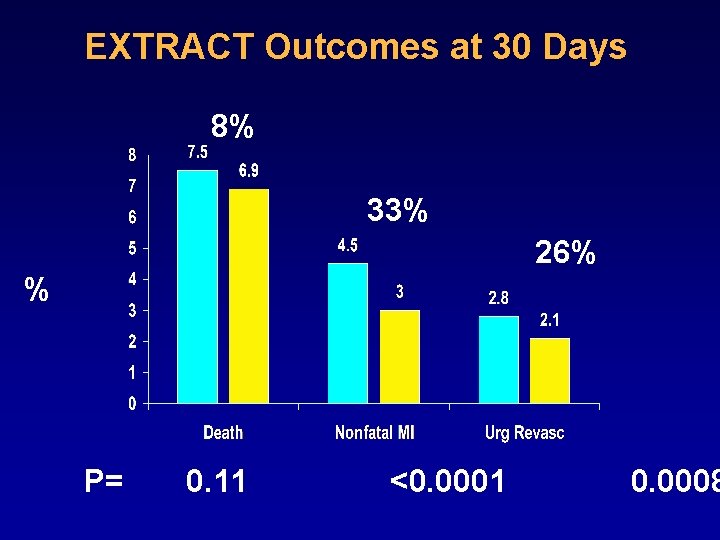
EXTRACT Outcomes at 30 Days 8% 33% 26% % P= 0. 11 <0. 0001 0. 0008
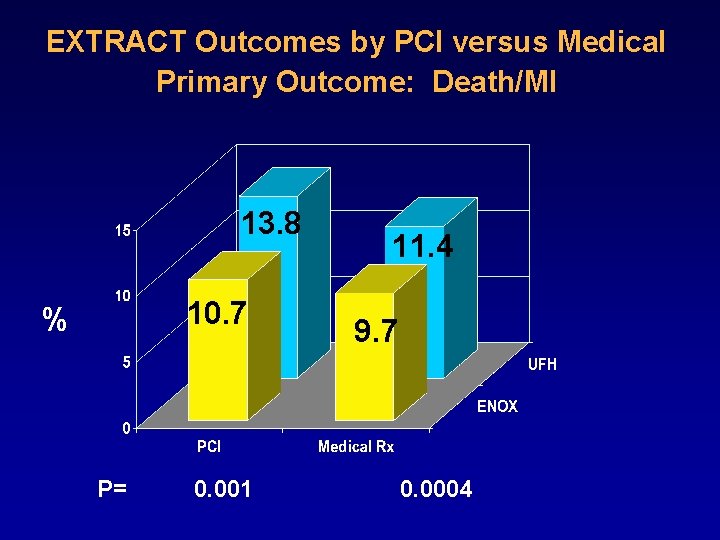
EXTRACT Outcomes by PCI versus Medical Primary Outcome: Death/MI 13. 8 10. 7 % P= 0. 001 11. 4 9. 7 0. 0004
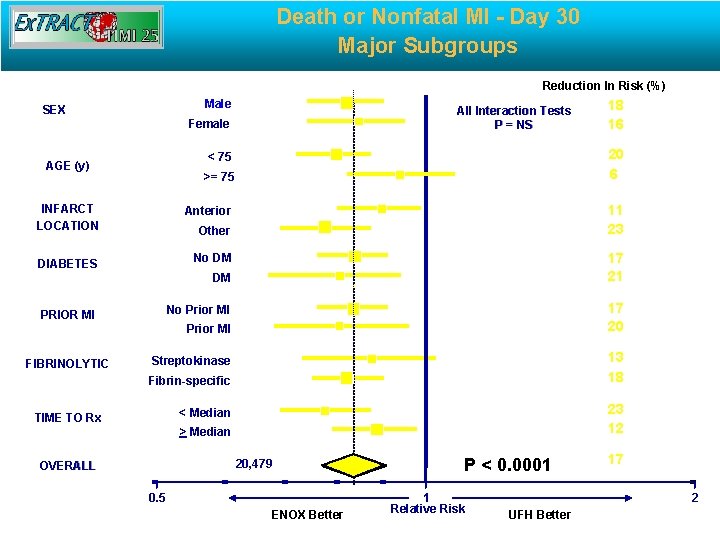
Death or Nonfatal MI - Day 30 Major Subgroups Reduction In Risk (%) Male SEX All Interaction Tests P = NS Female 20 6 < 75 AGE (y) >= 75 INFARCT LOCATION Anterior DIABETES No DM 11 23 Other B 17 21 B 17 20 DM No Prior MI PRIOR MI Prior MI FIBRINOLYTIC 13 18 Streptokinase Fibrin-specific 23 12 < Median TIME TO Rx > Median B 20, 479 OVERALL 18 16 0. 5 ENOX Better P < 0. 0001 1 Relative Risk 17 2 UFH Better
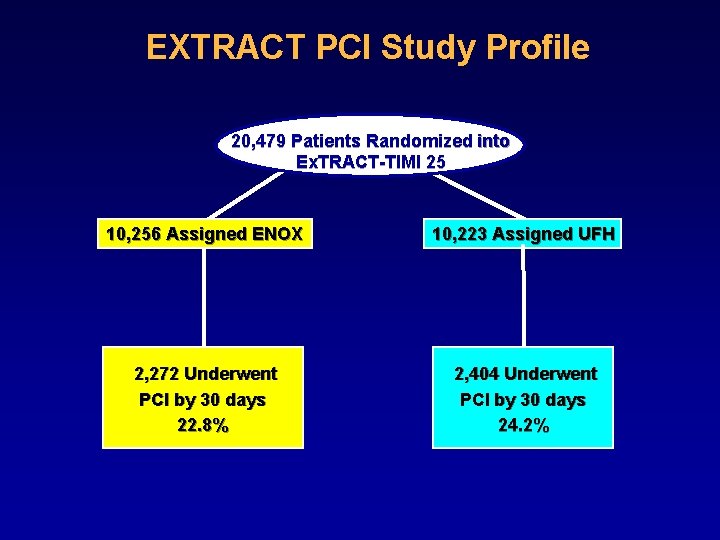
EXTRACT PCI Study Profile 20, 479 Patients Randomized into Ex. TRACT-TIMI 25 10, 256 Assigned ENOX 10, 223 Assigned UFH 2, 272 Underwent PCI by 30 days 22. 8% 2, 404 Underwent PCI by 30 days 24. 2%
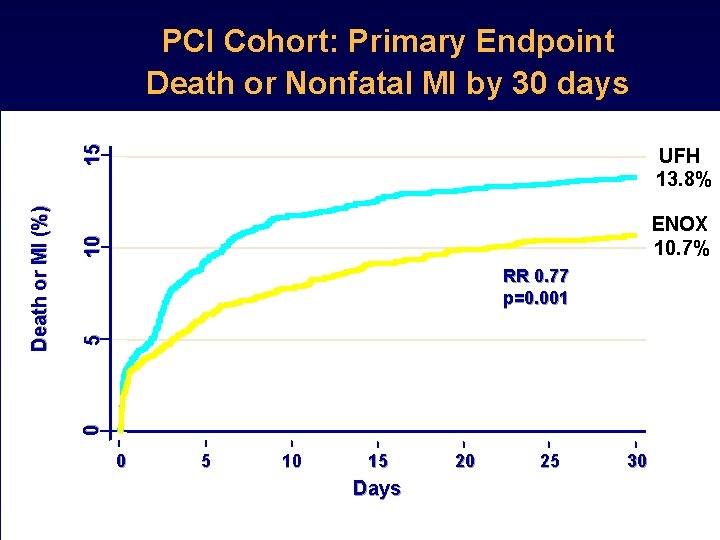
UFH 13. 8% 10 ENOX 10. 7% 5 RR 0. 77 p=0. 001 0 Death or MI (%) 15 PCI Cohort: Primary Endpoint Death or Nonfatal MI by 30 days 0 5 10 15 Days 20 25 30
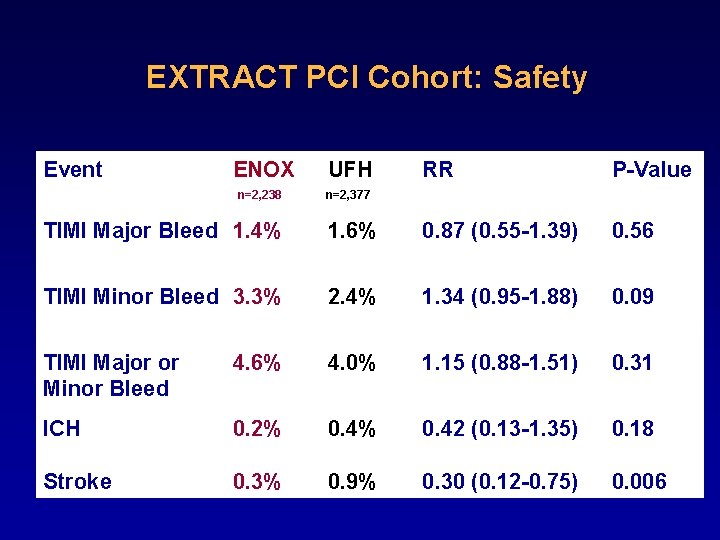
EXTRACT PCI Cohort: Safety Event ENOX n=2, 238 UFH RR P-Value n=2, 377 TIMI Major Bleed 1. 4% 1. 6% 0. 87 (0. 55 -1. 39) 0. 56 TIMI Minor Bleed 3. 3% 2. 4% 1. 34 (0. 95 -1. 88) 0. 09 TIMI Major or Minor Bleed 4. 6% 4. 0% 1. 15 (0. 88 -1. 51) 0. 31 ICH 0. 2% 0. 42 (0. 13 -1. 35) 0. 18 Stroke 0. 3% 0. 9% 0. 30 (0. 12 -0. 75) 0. 006
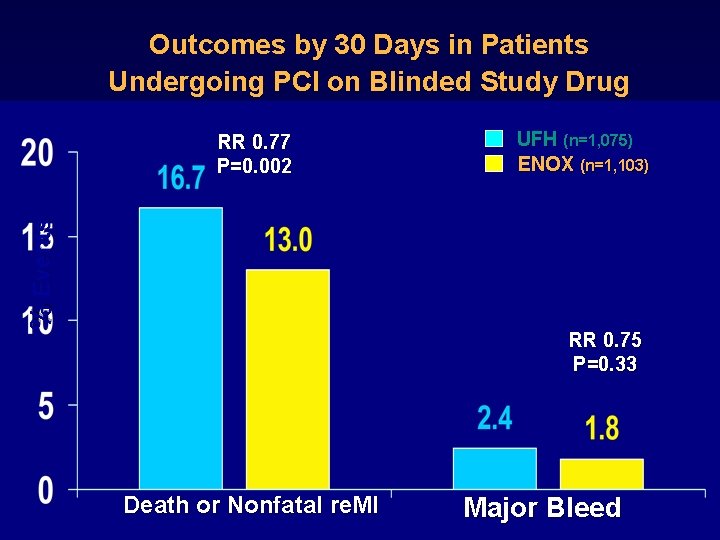
Outcomes by 30 Days in Patients Undergoing PCI on Blinded Study Drug % Events RR 0. 77 P=0. 002 UFH (n=1, 075) ENOX (n=1, 103) RR 0. 75 P=0. 33 Death or Nonfatal re. MI Major Bleed
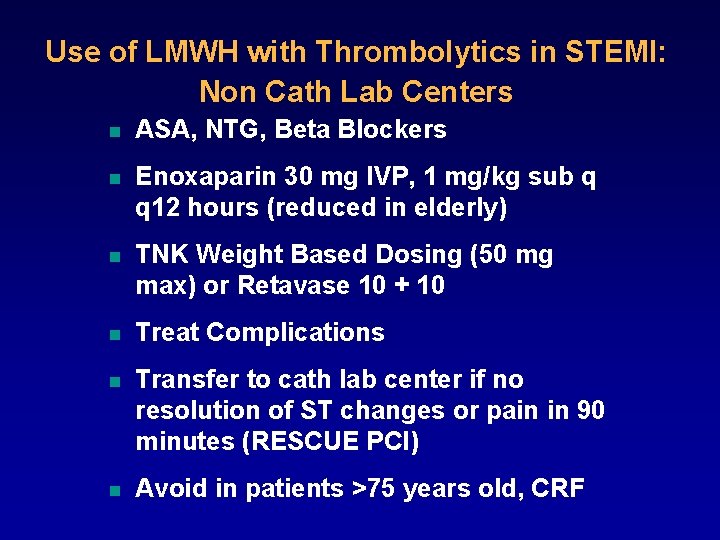
Use of LMWH with Thrombolytics in STEMI: Non Cath Lab Centers n ASA, NTG, Beta Blockers n Enoxaparin 30 mg IVP, 1 mg/kg sub q q 12 hours (reduced in elderly) n TNK Weight Based Dosing (50 mg max) or Retavase 10 + 10 n Treat Complications n Transfer to cath lab center if no resolution of ST changes or pain in 90 minutes (RESCUE PCI) n Avoid in patients >75 years old, CRF
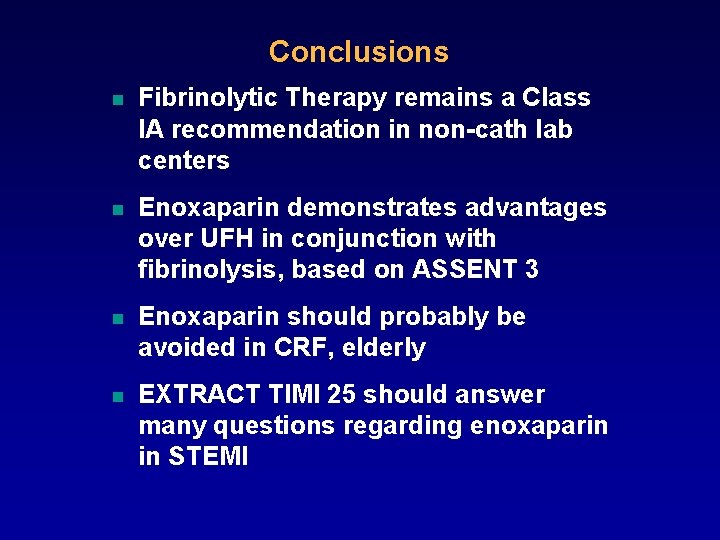
Conclusions n Fibrinolytic Therapy remains a Class IA recommendation in non-cath lab centers n Enoxaparin demonstrates advantages over UFH in conjunction with fibrinolysis, based on ASSENT 3 n Enoxaparin should probably be avoided in CRF, elderly n EXTRACT TIMI 25 should answer many questions regarding enoxaparin in STEMI
Utilization of Clopidogrel in STEMI
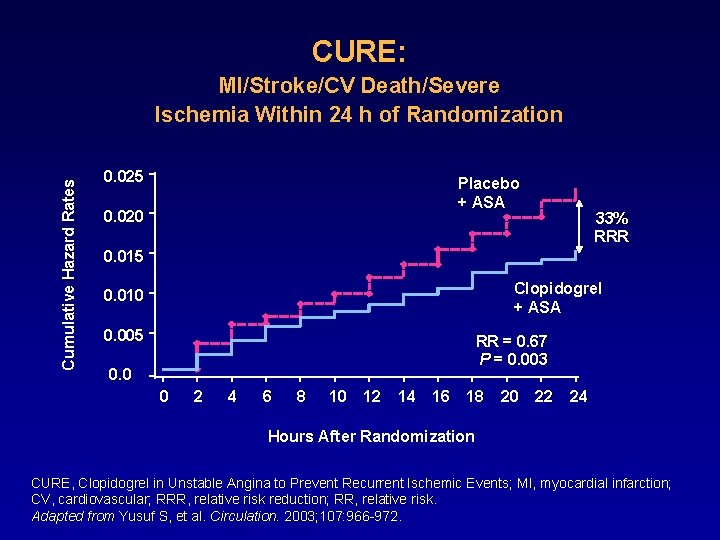
CURE: Cumulative Hazard Rates MI/Stroke/CV Death/Severe Ischemia Within 24 h of Randomization 0. 025 Placebo + ASA 0. 020 33% RRR 0. 015 Clopidogrel + ASA 0. 010 0. 005 RR = 0. 67 P = 0. 003 0. 0 0 2 4 6 8 10 12 14 16 18 20 22 24 Hours After Randomization CURE, Clopidogrel in Unstable Angina to Prevent Recurrent Ischemic Events; MI, myocardial infarction; CV, cardiovascular; RRR, relative risk reduction; RR, relative risk. Adapted from Yusuf S, et al. Circulation. 2003; 107: 966 -972.
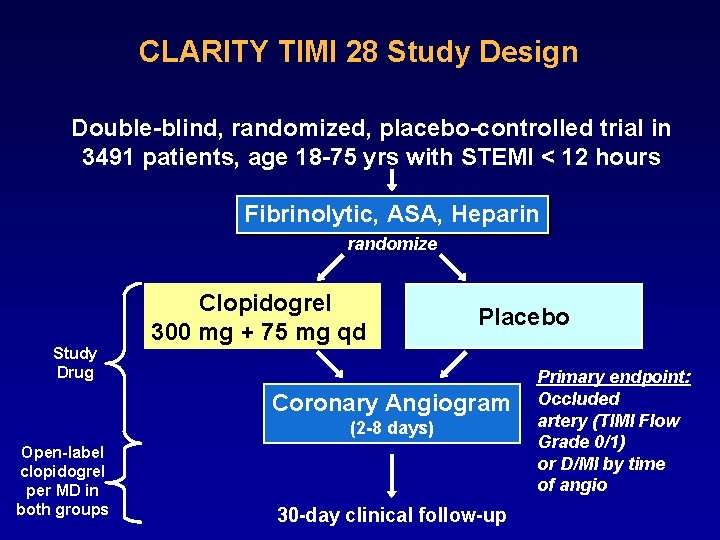
CLARITY TIMI 28 Study Design Double-blind, randomized, placebo-controlled trial in 3491 patients, age 18 -75 yrs with STEMI < 12 hours Fibrinolytic, ASA, Heparin randomize Study Drug Clopidogrel 300 mg + 75 mg qd Placebo Coronary Angiogram (2 -8 days) Open-label clopidogrel per MD in both groups 30 -day clinical follow-up Primary endpoint: Occluded artery (TIMI Flow Grade 0/1) or D/MI by time of angio
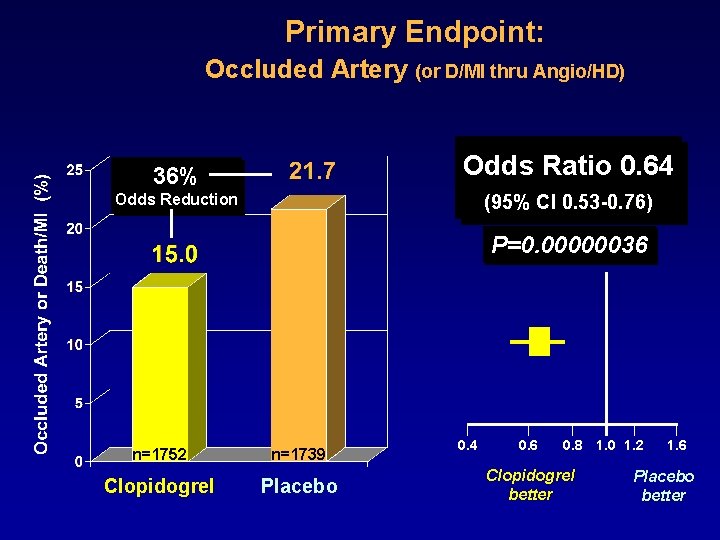
Primary Endpoint: Occluded Artery (or D/MI thru Angio/HD) 36% Odds Ratio 0. 64 Odds Reduction (95% CI 0. 53 -0. 76) P=0. 00000036 n=1752 n=1739 Clopidogrel Placebo 0. 4 0. 6 0. 8 1. 0 1. 2 Clopidogrel better 1. 6 Placebo better
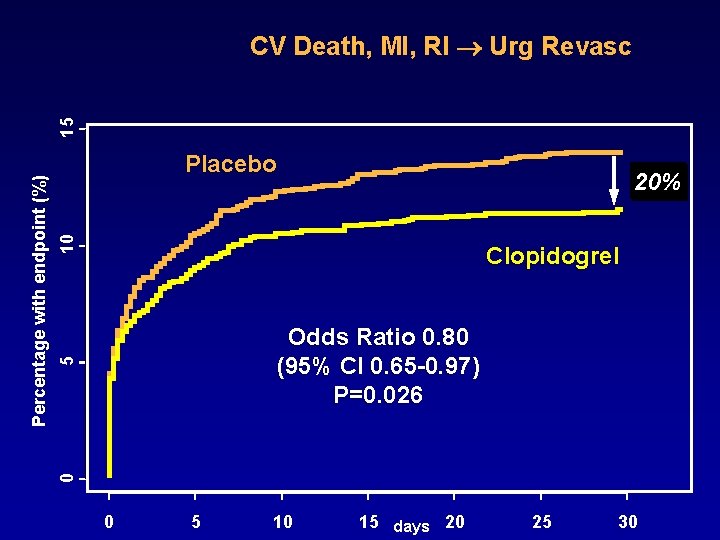
Placebo 10 20% Clopidogrel 5 Odds Ratio 0. 80 (95% CI 0. 65 -0. 97) P=0. 026 0 Percentage with endpoint (%) 15 CV Death, MI, RI Urg Revasc 0 5 10 15 days 20 25 30
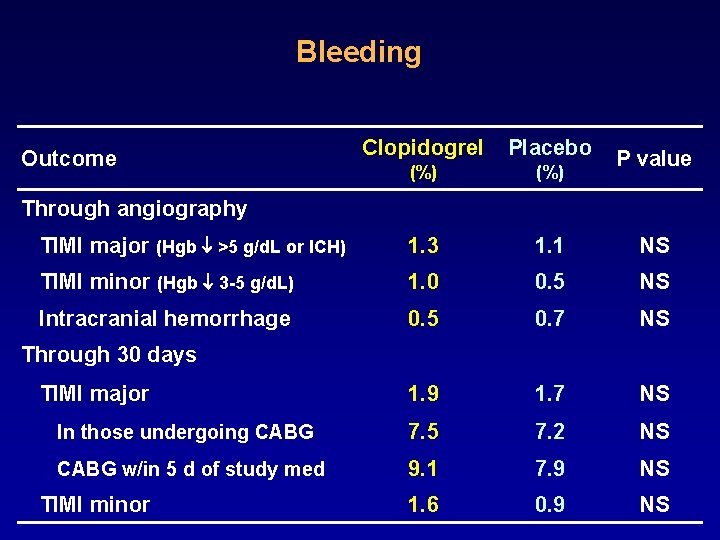
Bleeding Clopidogrel Placebo (%) TIMI major (Hgb >5 g/d. L or ICH) 1. 3 1. 1 NS TIMI minor (Hgb 3 -5 g/d. L) 1. 0 0. 5 NS Intracranial hemorrhage 0. 5 0. 7 NS 1. 9 1. 7 NS In those undergoing CABG 7. 5 7. 2 NS CABG w/in 5 d of study med 9. 1 7. 9 NS 1. 6 0. 9 NS Outcome P value Through angiography Through 30 days TIMI major TIMI minor
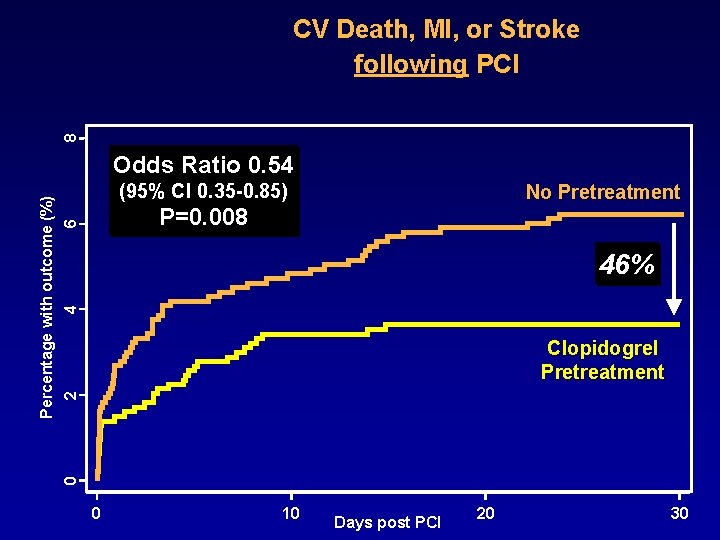
8 CV Death, MI, or Stroke following PCI Odds Ratio 0. 54 Percentage with outcome (%) 2 4 6 (95% CI 0. 35 -0. 85) No Pretreatment P=0. 008 46% 0 Clopidogrel Pretreatment 0 10 Days post PCI 20 30
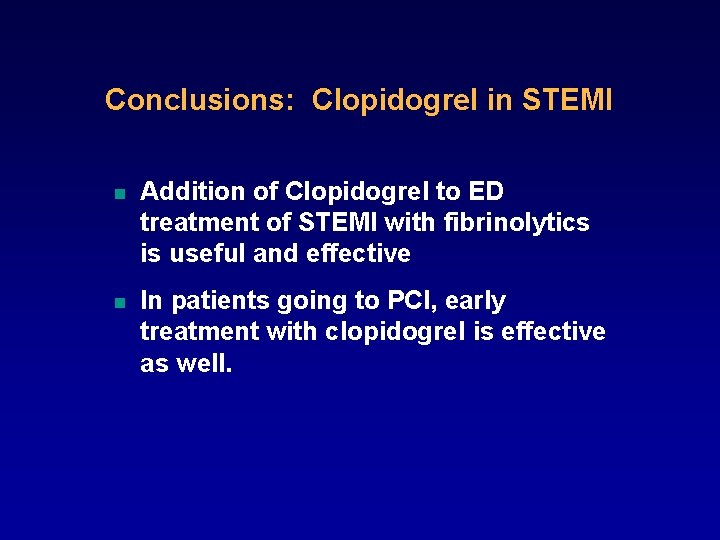
Conclusions: Clopidogrel in STEMI n Addition of Clopidogrel to ED treatment of STEMI with fibrinolytics is useful and effective n In patients going to PCI, early treatment with clopidogrel is effective as well.
Reperfusion Guidelines: Fibrinolytics Versus PCI
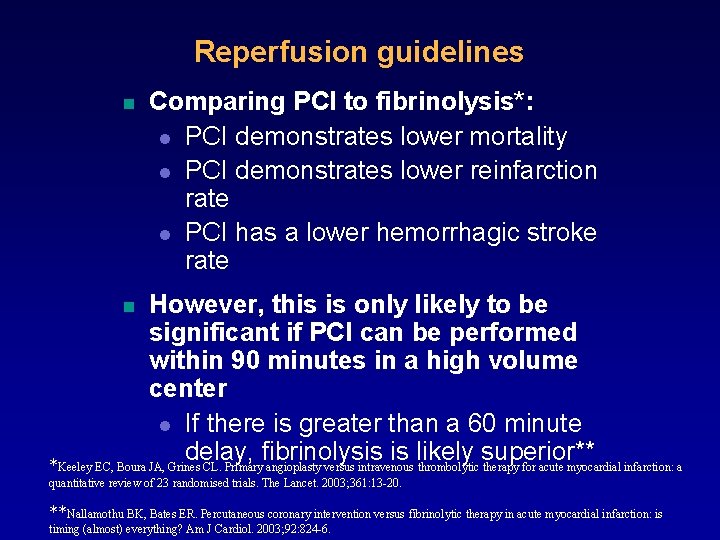
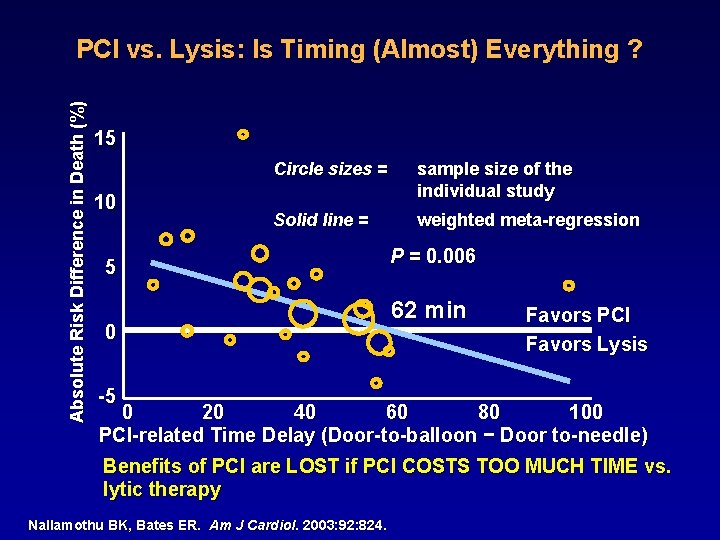
Reperfusion guidelines n Comparing PCI to fibrinolysis*: l PCI demonstrates lower mortality l PCI demonstrates lower reinfarction rate l PCI has a lower hemorrhagic stroke rate However, this is only likely to be significant if PCI can be performed within 90 minutes in a high volume center l If there is greater than a 60 minute delay, fibrinolysis is likely superior** *Keeley EC, Boura JA, Grines CL. Primary angioplasty versus intravenous thrombolytic therapy for acute myocardial infarction: a n quantitative review of 23 randomised trials. The Lancet. 2003; 361: 13 -20. **Nallamothu BK, Bates ER. Percutaneous coronary intervention versus fibrinolytic therapy in acute myocardial infarction: is timing (almost) everything? Am J Cardiol. 2003; 92: 824 -6.
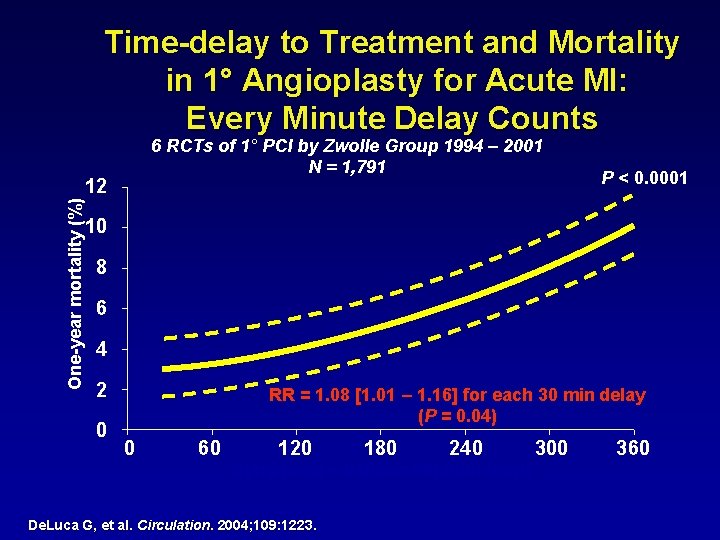
Time-delay to Treatment and Mortality in 1° Angioplasty for Acute MI: Every Minute Delay Counts 6 RCTs of 1° PCI by Zwolle Group 1994 – 2001 N = 1, 791 One-year mortality (%) 12 P < 0. 0001 10 8 6 4 2 0 RR = 1. 08 [1. 01 – 1. 16] for each 30 min delay (P = 0. 04) 0 60 120 180 240 Symptoms – balloon inflation (min) De. Luca G, et al. Circulation. 2004; 109: 1223. 300 360
Absolute Risk Difference in Death (%) PCI vs. Lysis: Is Timing (Almost) Everything ? 15 10 Circle sizes = sample size of the individual study Solid line = weighted meta-regression 5 0 P = 0. 006 62 min Favors PCI Favors Lysis -5 0 20 100 40 60 80 PCI-related Time Delay (Door-to-balloon − Door to-needle) Benefits of PCI are LOST if PCI COSTS TOO MUCH TIME vs. lytic therapy Nallamothu BK, Bates ER. Am J Cardiol. 2003: 92: 824.
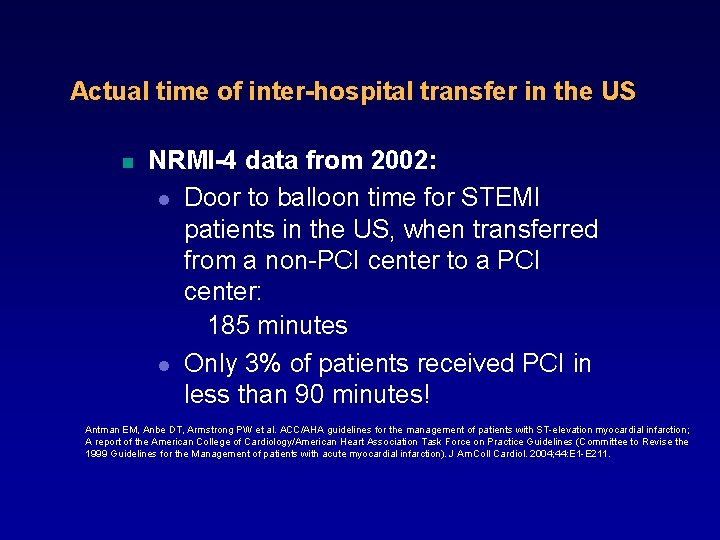
Actual time of inter-hospital transfer in the US n NRMI-4 data from 2002: l Door to balloon time for STEMI patients in the US, when transferred from a non-PCI center to a PCI center: 185 minutes l Only 3% of patients received PCI in less than 90 minutes! Antman EM, Anbe DT, Armstrong PW et al. ACC/AHA guidelines for the management of patients with ST-elevation myocardial infarction; A report of the American College of Cardiology/American Heart Association Task Force on Practice Guidelines (Committee to Revise the 1999 Guidelines for the Management of patients with acute myocardial infarction). J Am Coll Cardiol. 2004; 44: E 1 -E 211.
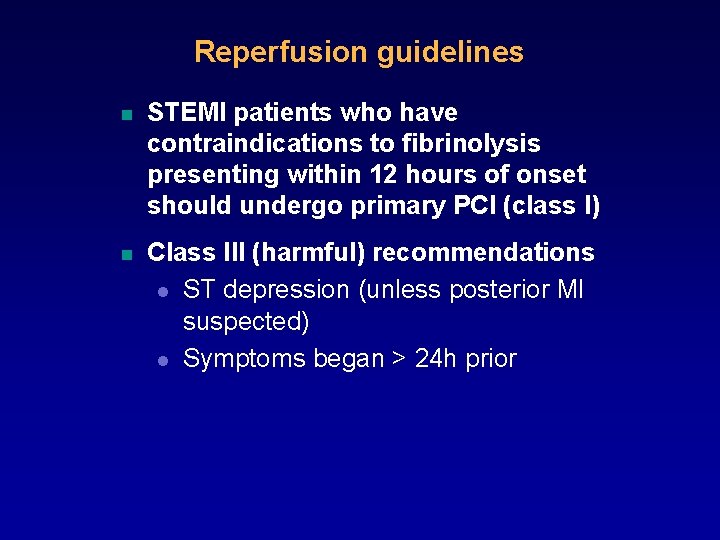
Reperfusion guidelines n STEMI patients who have contraindications to fibrinolysis presenting within 12 hours of onset should undergo primary PCI (class I) n Class III (harmful) recommendations l ST depression (unless posterior MI suspected) l Symptoms began > 24 h prior
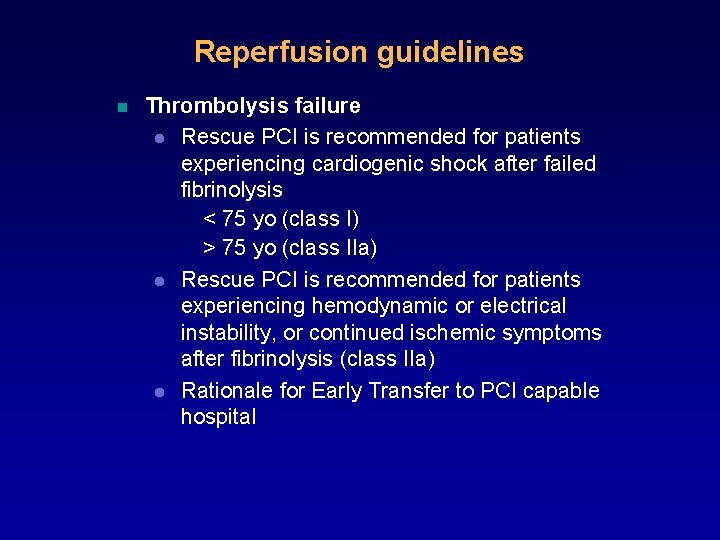
Reperfusion guidelines n Thrombolysis failure l Rescue PCI is recommended for patients experiencing cardiogenic shock after failed fibrinolysis < 75 yo (class I) > 75 yo (class IIa) l Rescue PCI is recommended for patients experiencing hemodynamic or electrical instability, or continued ischemic symptoms after fibrinolysis (class IIa) l Rationale for Early Transfer to PCI capable hospital
Facilitated PCI Can the use of early antiplatelet and antithrombin agents make PCI easier?
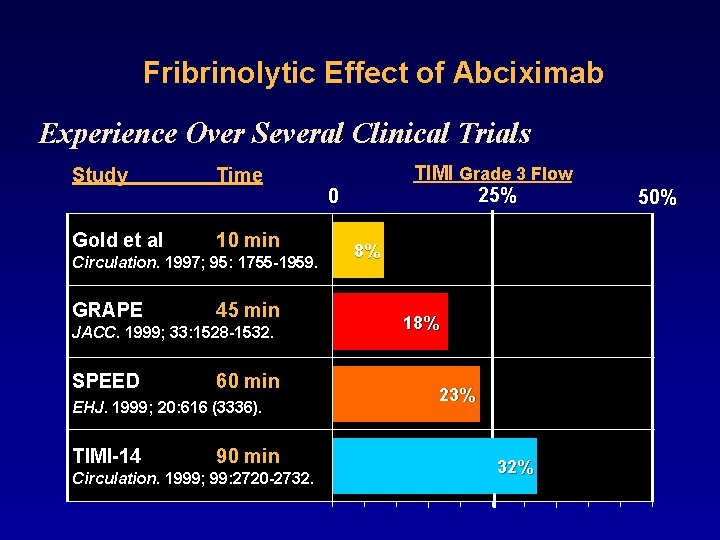
Fribrinolytic Effect of Abciximab Experience Over Several Clinical Trials Study Gold et al Time 10 min Circulation. 1997; 95: 1755 -1959. GRAPE 45 min JACC. 1999; 33: 1528 -1532. SPEED 60 min EHJ. 1999; 20: 616 (3336). TIMI-14 90 min Circulation. 1999; 99: 2720 -2732. TIMI Grade 3 Flow 25% 0 8% 18% 23% 32% 50%
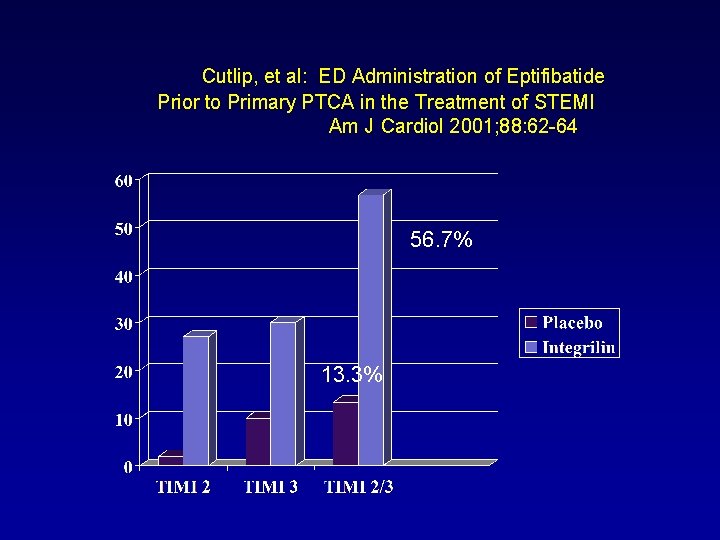
Cutlip, et al: ED Administration of Eptifibatide Prior to Primary PTCA in the Treatment of STEMI Am J Cardiol 2001; 88: 62 -64 56. 7% 13. 3%
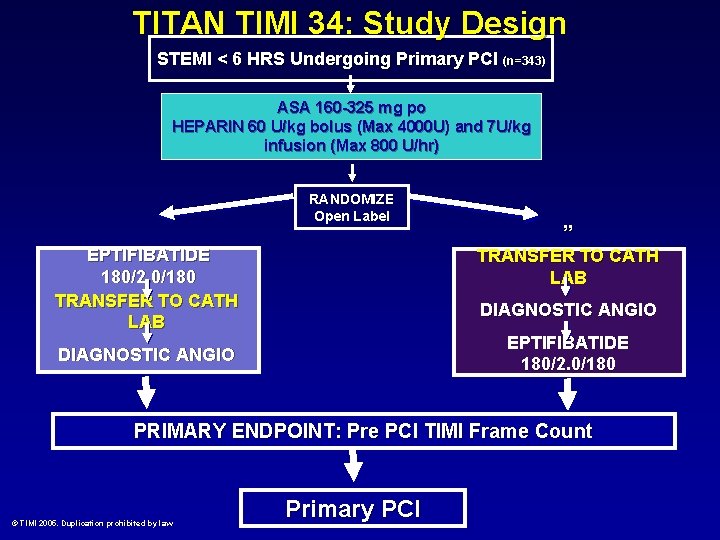
TITAN TIMI 34: Study Design STEMI < 6 HRS Undergoing Primary PCI (n=343) ASA 160 -325 mg po HEPARIN 60 U/kg bolus (Max 4000 U) and 7 U/kg infusion (Max 800 U/hr) RANDOMIZE Open Label EPTIFIBATIDE 180/2. 0/180 TRANSFER TO CATH LAB ” TRANSFER TO CATH LAB DIAGNOSTIC ANGIO EPTIFIBATIDE 180/2. 0/180 DIAGNOSTIC ANGIO PRIMARY ENDPOINT: Pre PCI TIMI Frame Count © TIMI 2005. Duplication prohibited by law Primary PCI
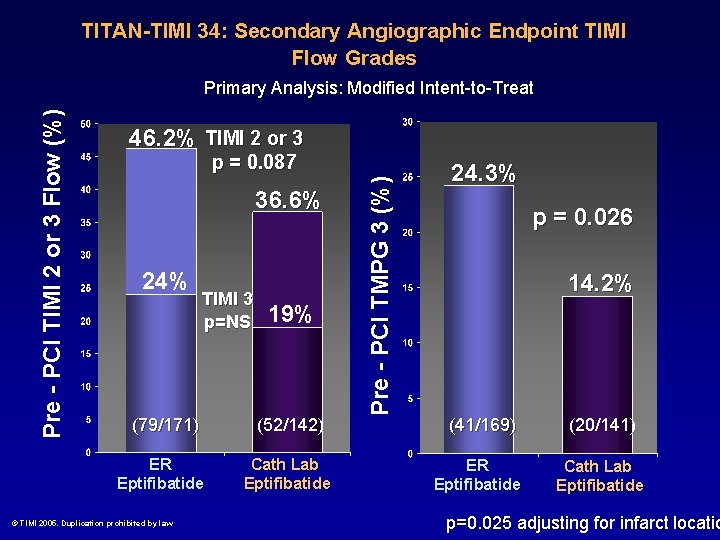
TITAN-TIMI 34: Secondary Angiographic Endpoint TIMI Flow Grades 46. 2% TIMI 2 or 3 p = 0. 087 36. 6% 24% TIMI 3 p=NS (79/171) ER Eptifibatide © TIMI 2005. Duplication prohibited by law 19% (52/142) Cath Lab Eptifibatide Pre - PCI TMPG 3 (%) Pre - PCI TIMI 2 or 3 Flow (%) Primary Analysis: Modified Intent-to-Treat 24. 3% p = 0. 026 14. 2% (41/169) ER Eptifibatide (20/141) Cath Lab Eptifibatide p=0. 025 adjusting for infarct locatio
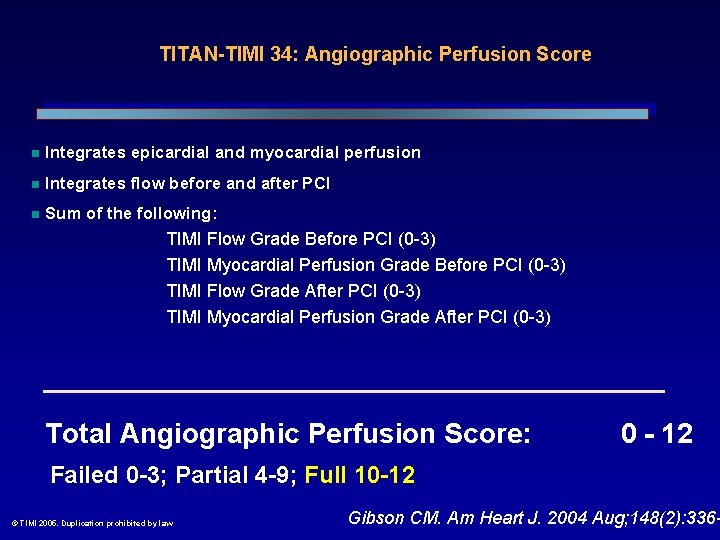
TITAN-TIMI 34: Angiographic Perfusion Score n Integrates epicardial and myocardial perfusion n Integrates flow before and after PCI n Sum of the following: TIMI Flow Grade Before PCI (0 -3) TIMI Myocardial Perfusion Grade Before PCI (0 -3) TIMI Flow Grade After PCI (0 -3) TIMI Myocardial Perfusion Grade After PCI (0 -3) Total Angiographic Perfusion Score: 0 - 12 Failed 0 -3; Partial 4 -9; Full 10 -12 © TIMI 2005. Duplication prohibited by law Gibson CM. Am Heart J. 2004 Aug; 148(2): 336 -
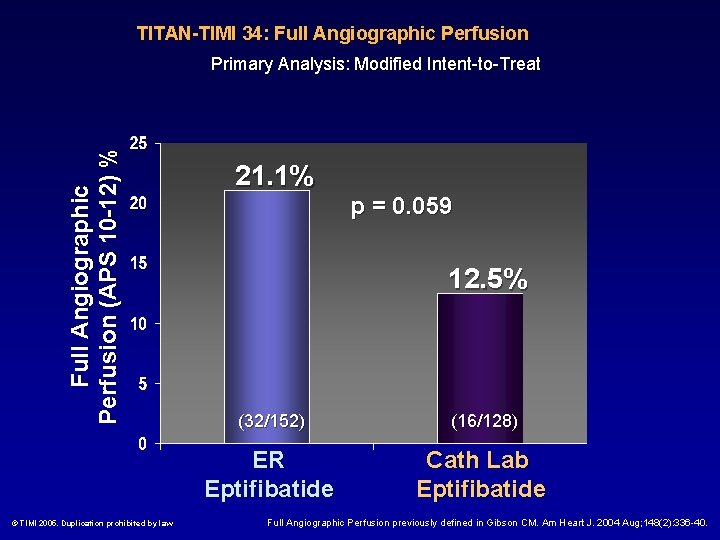
TITAN-TIMI 34: Full Angiographic Perfusion (APS 10 -12) % Primary Analysis: Modified Intent-to-Treat © TIMI 2005. Duplication prohibited by law 21. 1% p = 0. 059 12. 5% (32/152) (16/128) ER Eptifibatide Cath Lab Eptifibatide Full Angiographic Perfusion previously defined in Gibson CM. Am Heart J. 2004 Aug; 148(2): 336 -40.
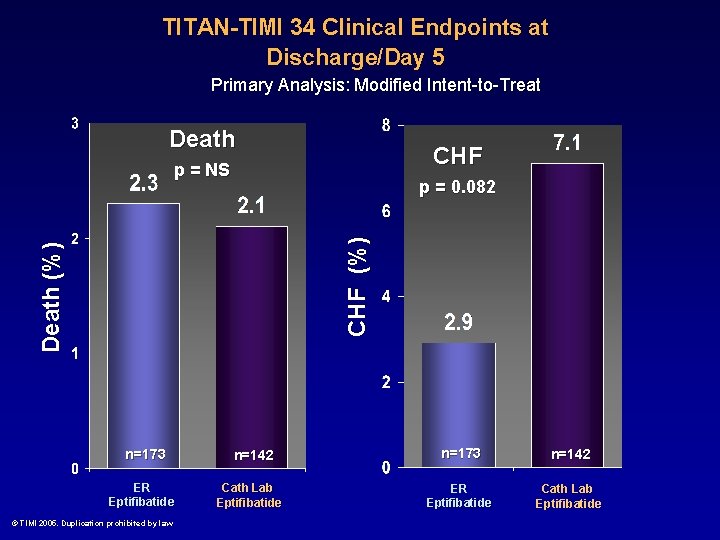
TITAN-TIMI 34 Clinical Endpoints at Discharge/Day 5 Primary Analysis: Modified Intent-to-Treat Death CHF p = NS Death (%) CHF (%) p = 0. 082 n=173 ER Eptifibatide © TIMI 2005. Duplication prohibited by law n=142 Cath Lab Eptifibatide n=173 n=142 ER Eptifibatide Cath Lab Eptifibatide
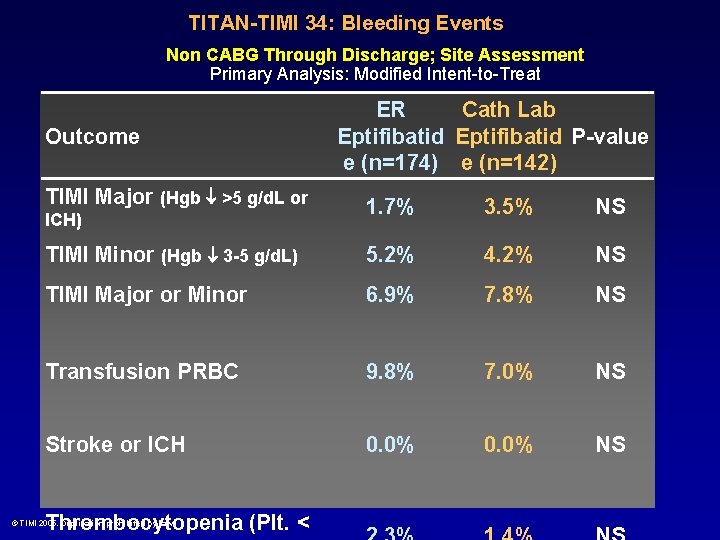
TITAN-TIMI 34: Bleeding Events Non CABG Through Discharge; Site Assessment Primary Analysis: Modified Intent-to-Treat Outcome TIMI Major (Hgb >5 g/d. L or ER Cath Lab Eptifibatid P-value e (n=174) e (n=142) 1. 7% 3. 5% NS TIMI Minor (Hgb 3 -5 g/d. L) 5. 2% 4. 2% NS TIMI Major or Minor 6. 9% 7. 8% NS Transfusion PRBC 9. 8% 7. 0% NS Stroke or ICH 0. 0% NS ICH) Thrombocytopenia (Plt. < © TIMI 2005. Duplication prohibited by law
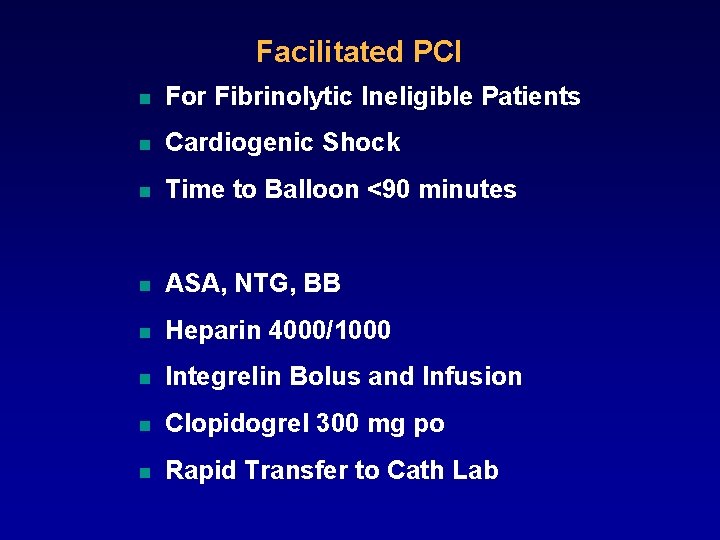
Facilitated PCI n For Fibrinolytic Ineligible Patients n Cardiogenic Shock n Time to Balloon <90 minutes n ASA, NTG, BB n Heparin 4000/1000 n Integrelin Bolus and Infusion n Clopidogrel 300 mg po n Rapid Transfer to Cath Lab
Facilitated PCI n Primary angioplasty or stent placement is the gold standard treatment of STEMI in cath lab centers. n ASA, NTG, Heparin weight based dosing n IIb/IIIa inhibitor either prior to or at the same time as PCI decreases reocclusion and has some fibrinolytic effects equal to streptokinase. n Benefits of cath over thrombolytics lost if time from door to cath lab greater than 90 minutes.
QUESTIONS? ?