
TREATMENT OF RHINITIS COUGH IL Os Classify types

- Slides: 18
TREATMENT OF RHINITIS & COUGH IL Os Classify types of rhinitis Specify preventive versus pharmacotherapeutic strategies Expand on the pharmacology of different drug groups used in treatment as antihistamines, anti-allergics, corticosteriods, decongestants and anti-cholinergics Differentiate between productive versus dry irritant cough
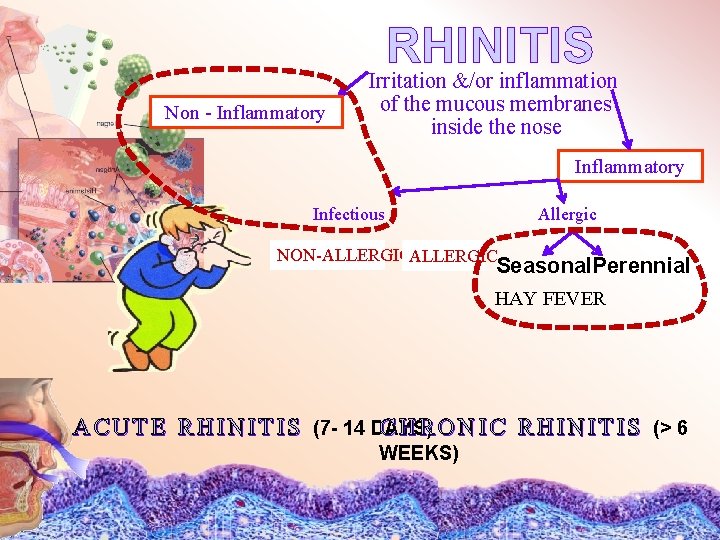
RHINITIS Non - Inflammatory Irritation &/or inflammation of the mucous membranes inside the nose Inflammatory Infectious Allergic NON-ALLERGIC Seasonal. Perennial HAY FEVER A C U T E R H I N I T I S (7 - 14 DAYS) C H R O N I C R H I N I T I S (> 6 WEEKS)
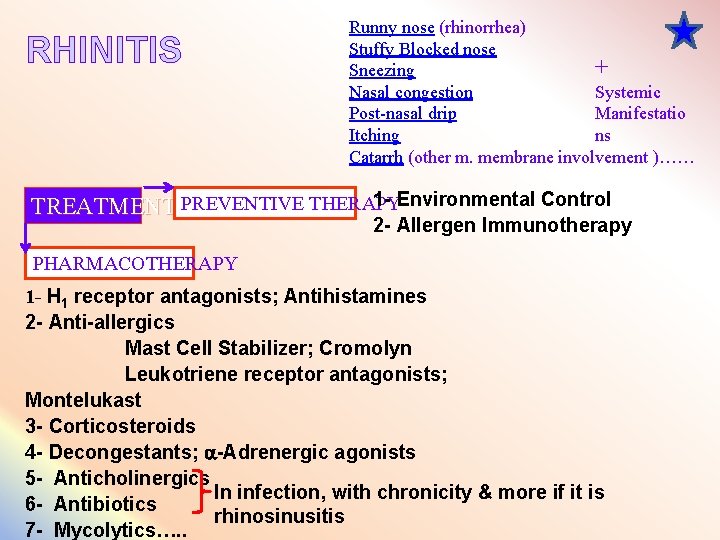
RHINITIS Runny nose (rhinorrhea) Stuffy Blocked nose + Sneezing Systemic Nasal congestion Post-nasal drip Manifestatio Itching ns Catarrh (other m. membrane involvement )…… 1 - Environmental Control TREATMENT PREVENTIVE THERAPY 2 - Allergen Immunotherapy PHARMACOTHERAPY 1 - H 1 receptor antagonists; Antihistamines 2 - Anti-allergics Mast Cell Stabilizer; Cromolyn Leukotriene receptor antagonists; Montelukast 3 - Corticosteroids 4 - Decongestants; -Adrenergic agonists 5 - Anticholinergics In infection, with chronicity & more if it is 6 - Antibiotics rhinosinusitis 7 - Mycolytics…. .
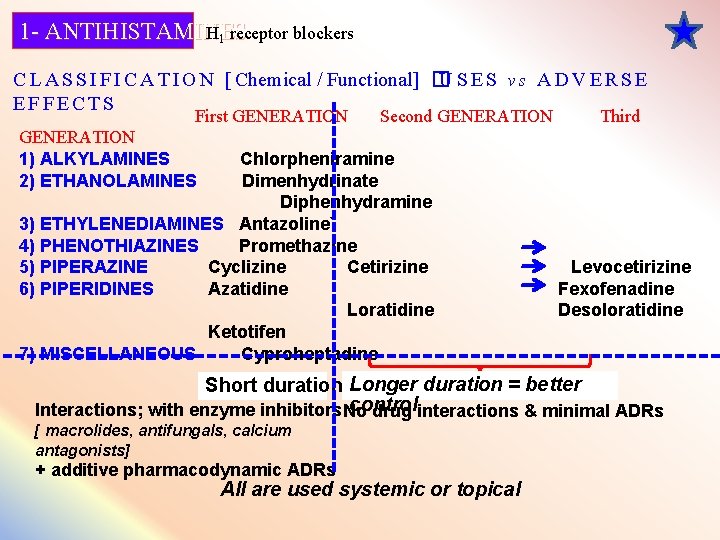
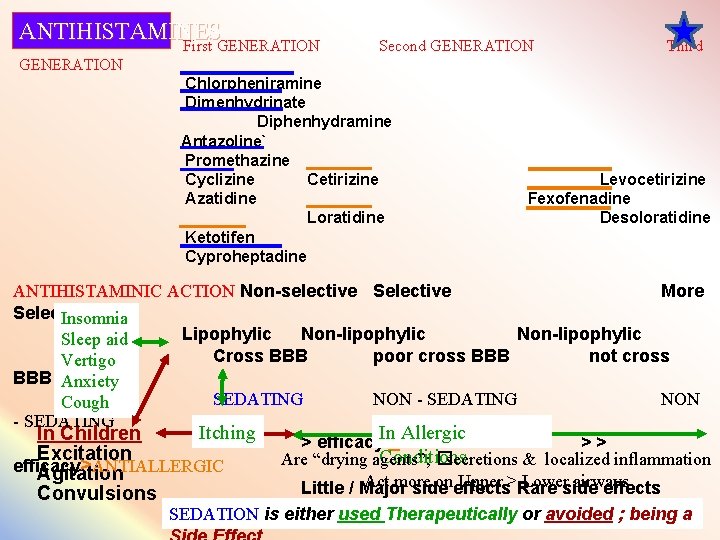
1 - ANTIHISTAMINES H 1 receptor blockers C L A S S I F I C A T I O N [ Chemical / Functional] � USES vs ADVERSE EFFECTS First GENERATION Second GENERATION Third GENERATION 1) ALKYLAMINES Chlorpheniramine 2) ETHANOLAMINES Dimenhydrinate Diphenhydramine 3) ETHYLENEDIAMINES Antazoline` 4) PHENOTHIAZINES Promethazine 5) PIPERAZINE Cyclizine Cetirizine Levocetirizine 6) PIPERIDINES Azatidine Fexofenadine Loratidine Desoloratidine Ketotifen 7) MISCELLANEOUS Cyproheptadine Short duration Longer duration = better control Interactions; with enzyme inhibitors No drug interactions & minimal ADRs [ macrolides, antifungals, calcium antagonists] + additive pharmacodynamic ADRs All are used systemic or topical
ANTIHISTAMINES First GENERATION Second GENERATION Third GENERATION Chlorpheniramine Dimenhydrinate Diphenhydramine Antazoline` Promethazine Cyclizine Cetirizine Azatidine Loratidine Ketotifen Cyproheptadine Levocetirizine Fexofenadine Desoloratidine ANTIHISTAMINIC ACTION Non-selective Selective More Selective Insomnia Lipophylic Non-lipophylic Sleep aid Cross BBB poor cross BBB not cross Vertigo BBB Anxiety SEDATING NON - SEDATING NON Cough - SEDATING Itching In Allergic In Children > efficacy +ANTIALLERGIC > > Excitation Conditions Are “drying agents”; � secretions & localized inflammation efficacy > ANTIALLERGIC Agitation Act more on Upper > Lower airways Little / Major side effects Rare side effects Convulsions SEDATION is either used Therapeutically or avoided ; being a
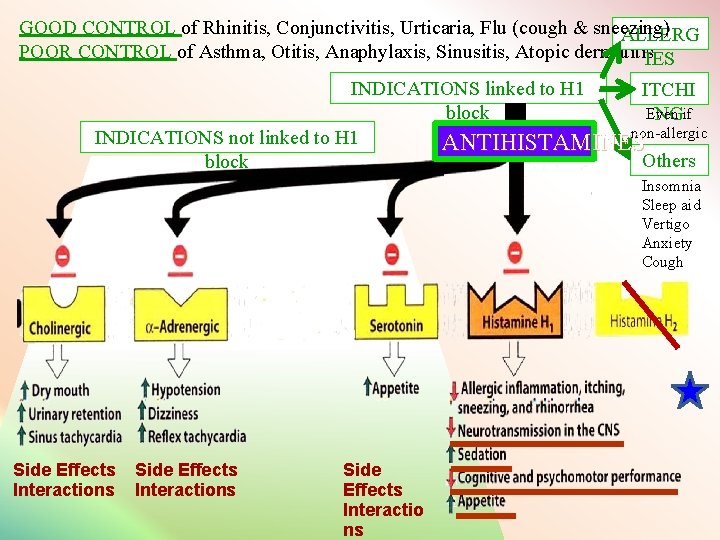
GOOD CONTROL of Rhinitis, Conjunctivitis, Urticaria, Flu (cough & sneezing) ALLERG POOR CONTROL of Asthma, Otitis, Anaphylaxis, Sinusitis, Atopic dermatitis IES INDICATIONS linked to H 1 ITCHI block Even if NG non-allergic INDICATIONS not linked to H 1 ANTIHISTAMINES Others block Insomnia Sleep aid Vertigo Anxiety Cough Side Effects Interactions Side Effects Interactio ns
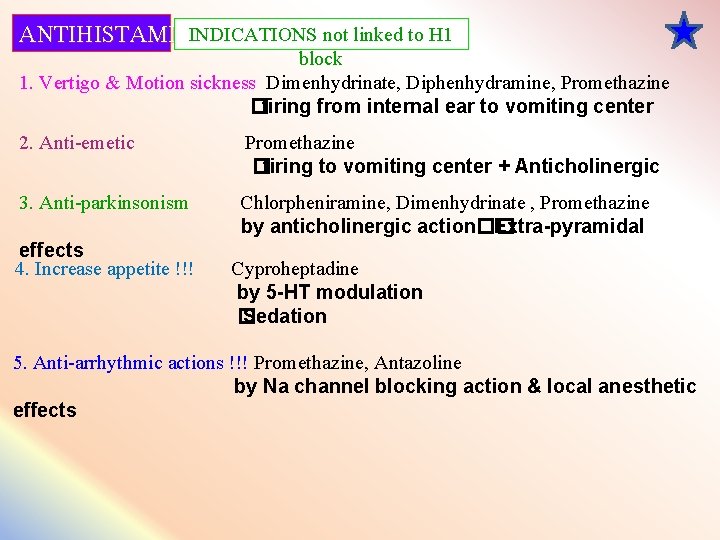
INDICATIONS not linked to H 1 ANTIHISTAMINES block 1. Vertigo & Motion sickness Dimenhydrinate, Diphenhydramine, Promethazine � firing from internal ear to vomiting center 2. Anti-emetic Promethazine � firing to vomiting center + Anticholinergic 3. Anti-parkinsonism effects 4. Increase appetite !!! Chlorpheniramine, Dimenhydrinate , Promethazine by anticholinergic action�� Extra-pyramidal Cyproheptadine by 5 -HT modulation � Sedation 5. Anti-arrhythmic actions !!! Promethazine, Antazoline by Na channel blocking action & local anesthetic effects
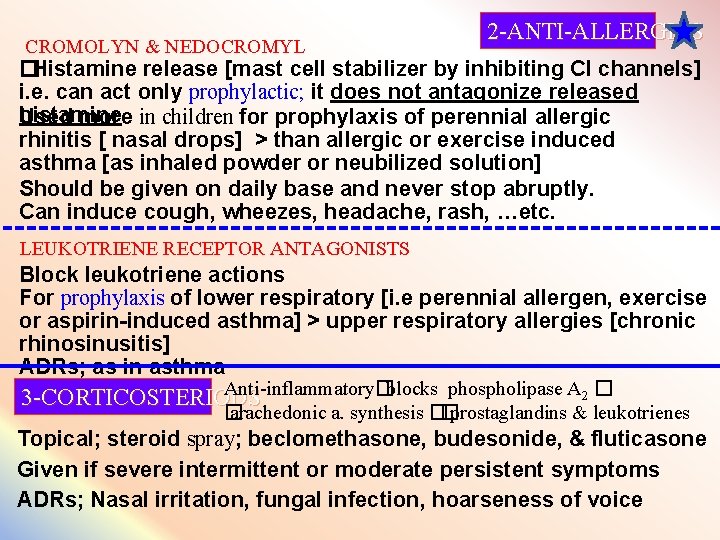
CROMOLYN & NEDOCROMYL 2 -ANTI-ALLERGICS � Histamine release [mast cell stabilizer by inhibiting Cl channels] i. e. can act only prophylactic; it does not antagonize released histamine Used more in children for prophylaxis of perennial allergic rhinitis [ nasal drops] > than allergic or exercise induced asthma [as inhaled powder or neubilized solution] Should be given on daily base and never stop abruptly. Can induce cough, wheezes, headache, rash, …etc. LEUKOTRIENE RECEPTOR ANTAGONISTS Block leukotriene actions For prophylaxis of lower respiratory [i. e perennial allergen, exercise or aspirin-induced asthma] > upper respiratory allergies [chronic rhinosinusitis] ADRs; as in asthma Anti-inflammatory� blocks phospholipase A 2 � 3 -CORTICOSTERIODS � arachedonic a. synthesis � � prostaglandins & leukotrienes Topical; steroid spray; beclomethasone, budesonide, & fluticasone Given if severe intermittent or moderate persistent symptoms ADRs; Nasal irritation, fungal infection, hoarseness of voice
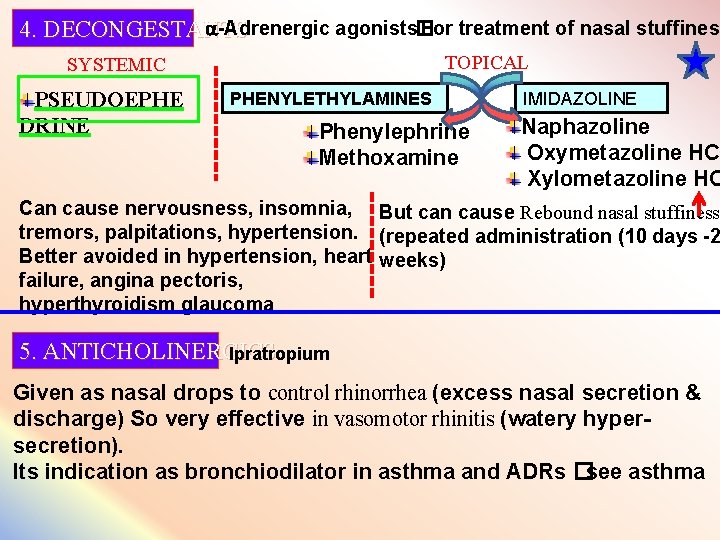
-Adrenergic agonists� For treatment of nasal stuffiness 4. DECONGESTANTS TOPICAL SYSTEMIC PSEUDOEPHE DRINE PHENYLETHYLAMINES Phenylephrine Methoxamine IMIDAZOLINE Naphazoline Oxymetazoline HC Xylometazoline HC Can cause nervousness, insomnia, But can cause Rebound nasal stuffiness tremors, palpitations, hypertension. (repeated administration (10 days -2 Better avoided in hypertension, heart weeks) failure, angina pectoris, hyperthyroidism glaucoma 5. ANTICHOLINERGICS Ipratropium Given as nasal drops to control rhinorrhea (excess nasal secretion & discharge) So very effective in vasomotor rhinitis (watery hypersecretion). Its indication as bronchiodilator in asthma and ADRs � see asthma
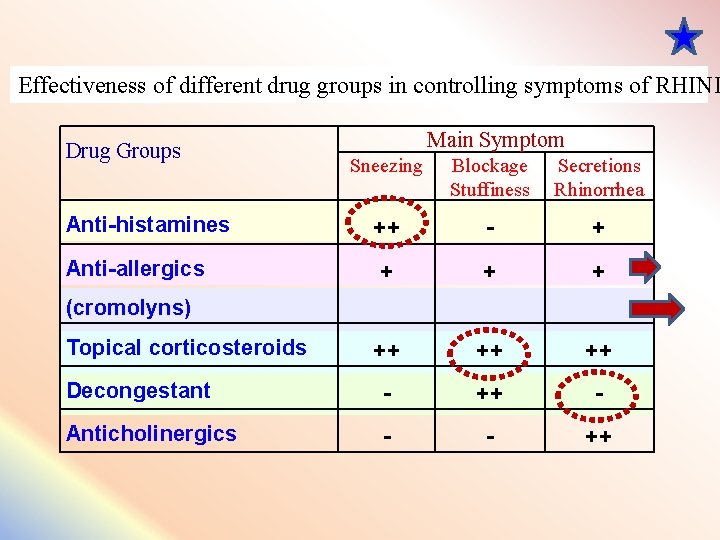
Effectiveness of different drug groups in controlling symptoms of RHINI Main Symptom Drug Groups Sneezing Blockage Stuffiness Secretions Rhinorrhea ++ - + + ++ ++ ++ Decongestant - ++ - Anticholinergics - - ++ Anti-histamines Anti-allergics (cromolyns) Topical corticosteroids
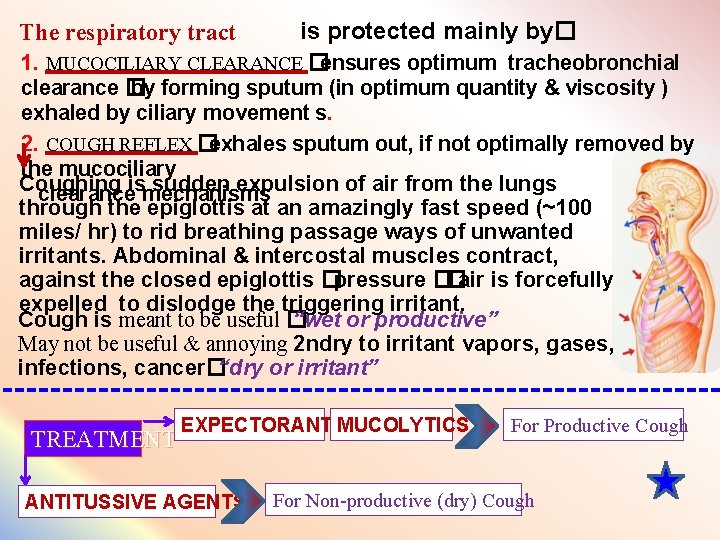
The respiratory tract is protected mainly by� 1. MUCOCILIARY CLEARANCE � ensures optimum tracheobronchial clearance � by forming sputum (in optimum quantity & viscosity ) exhaled by ciliary movement s. 2. COUGH REFLEX � exhales sputum out, if not optimally removed by the mucociliary Coughing is sudden expulsion of air from the lungs clearance mechanisms through the epiglottis at an amazingly fast speed (~100 miles/ hr) to rid breathing passage ways of unwanted irritants. Abdominal & intercostal muscles contract, against the closed epiglottis � pressure � � air is forcefully expelled to dislodge the triggering irritant. Cough is meant to be useful � “wet or productive” May not be useful & annoying 2 ndry to irritant vapors, gases, infections, cancer� “dry or irritant” TREATMENT EXPECTORANTSMUCOLYTICS ANTITUSSIVE AGENTS For Productive Cough For Non-productive (dry) Cough
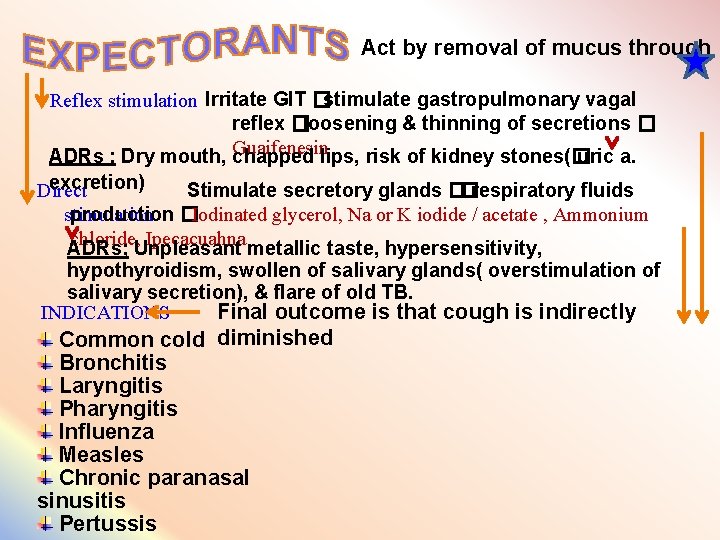
Act by removal of mucus through stimulate gastropulmonary vagal Reflex stimulation Irritate GIT � reflex � loosening & thinning of secretions � Guaifenesin ADRs ; Dry mouth, chapped lips, risk of kidney stones(� uric a. excretion) Direct Stimulate secretory glands � � respiratory fluids stimulation production � Iodinated glycerol, Na or K iodide / acetate , Ammonium chloride, Ipecacuahna ADRs; Unpleasant metallic taste, hypersensitivity, hypothyroidism, swollen of salivary glands( overstimulation of salivary secretion), & flare of old TB. INDICATIONS Final outcome is that cough is indirectly Common cold diminished Bronchitis Laryngitis Pharyngitis Influenza Measles Chronic paranasal sinusitis Pertussis
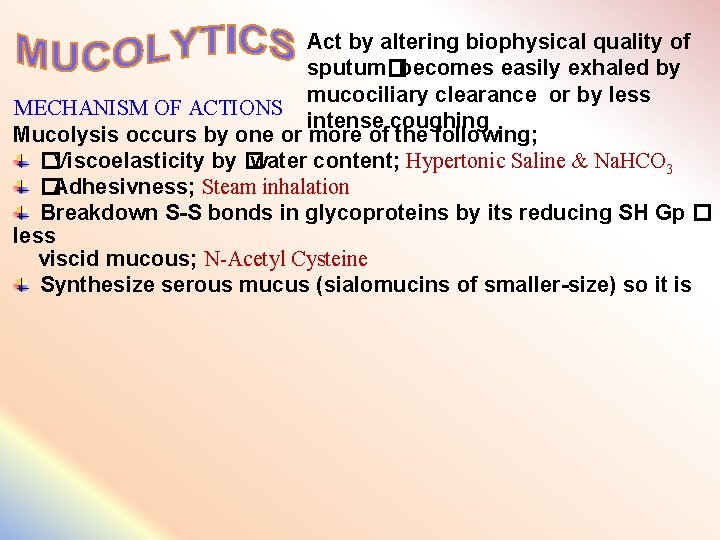
Act by altering biophysical quality of sputum� becomes easily exhaled by mucociliary clearance or by less MECHANISM OF ACTIONS intense coughing Mucolysis occurs by one or more of the following; �Viscoelasticity by � water content; Hypertonic Saline & Na. HCO 3 � Adhesivness; Steam inhalation Breakdown S-S bonds in glycoproteins by its reducing SH Gp � less viscid mucous; N-Acetyl Cysteine Synthesize serous mucus (sialomucins of smaller-size) so it is
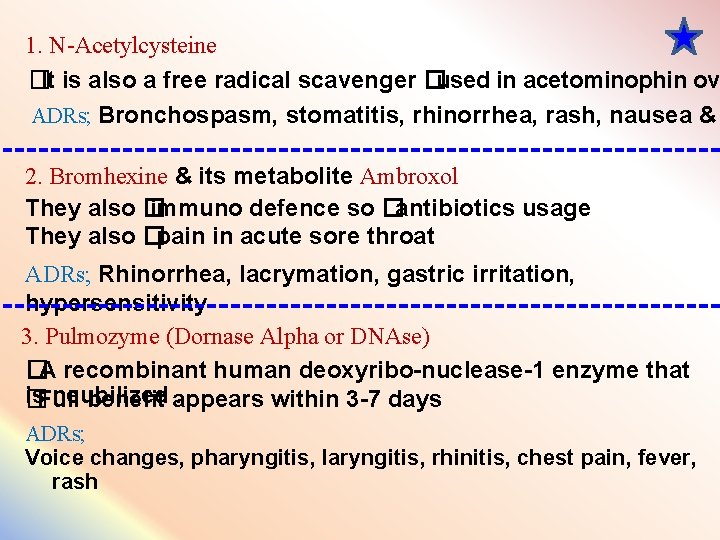
1. N-Acetylcysteine �It is also a free radical scavenger � used in acetominophin ove ADRs; Bronchospasm, stomatitis, rhinorrhea, rash, nausea & 2. Bromhexine & its metabolite Ambroxol They also � immuno defence so � antibiotics usage They also � pain in acute sore throat ADRs; Rhinorrhea, lacrymation, gastric irritation, hypersensitivity 3. Pulmozyme (Dornase Alpha or DNAse) � A recombinant human deoxyribo-nuclease-1 enzyme that is neubilized. �Full benefit appears within 3 -7 days ADRs; Voice changes, pharyngitis, laryngitis, rhinitis, chest pain, fever, rash
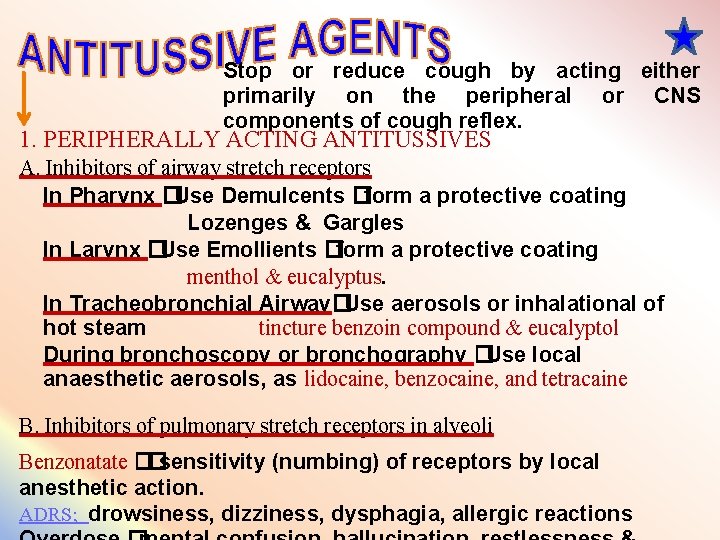
Stop or reduce cough by acting either primarily on the peripheral or CNS components of cough reflex. 1. PERIPHERALLY ACTING ANTITUSSIVES A. Inhibitors of airway stretch receptors In Pharynx � Use Demulcents � form a protective coating Lozenges & Gargles In Larynx � Use Emollients � form a protective coating menthol & eucalyptus. In Tracheobronchial Airway� Use aerosols or inhalational of hot steam tincture benzoin compound & eucalyptol During bronchoscopy or bronchography � Use local anaesthetic aerosols, as lidocaine, benzocaine, and tetracaine B. Inhibitors of pulmonary stretch receptors in alveoli Benzonatate � � sensitivity (numbing) of receptors by local anesthetic action. ADRS; drowsiness, dizziness, dysphagia, allergic reactions
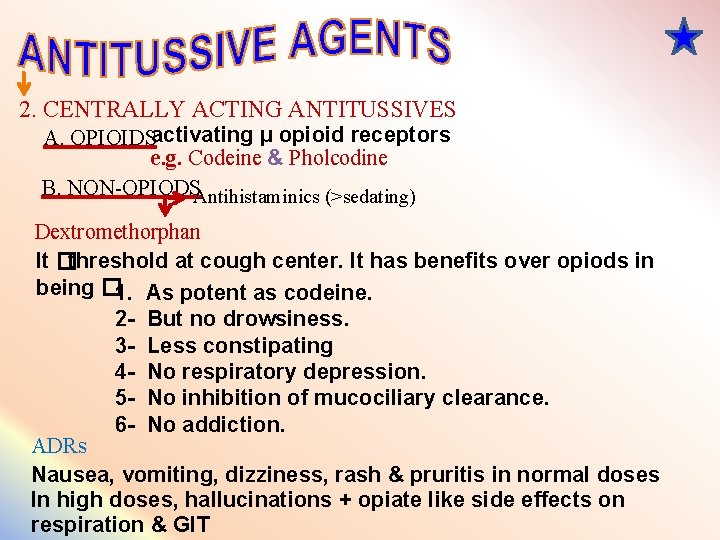
2. CENTRALLY ACTING ANTITUSSIVES A. OPIOIDSactivating µ opioid receptors e. g. Codeine & Pholcodine B. NON-OPIODSAntihistaminics (>sedating) Dextromethorphan It � threshold at cough center. It has benefits over opiods in being � 1. As potent as codeine. 2 - But no drowsiness. 3 - Less constipating 4 - No respiratory depression. 5 - No inhibition of mucociliary clearance. 6 - No addiction. ADRs Nausea, vomiting, dizziness, rash & pruritis in normal doses In high doses, hallucinations + opiate like side effects on respiration & GIT
GOOD LUCK