
Treatment of nonHodgkin Lymphomas Over 40 different types












- Slides: 34
Treatment of non-Hodgkin Lymphomas
Over 40 different types of NHL: reflection of the complex growth and differentatition of normal (B) lymphocytes
Treatment of non-Hodgkin lymphoma general principles § It is (still ) not possible to select a specific treatment for each type of NHL § Therefore NHL are divided into major subgroups: – Indolent types (follicular lymphoma) – Aggressive types (diffuse large B cell lymphoma) – Very aggressive types (Burkitt)
Treatment of non-Hodgkin lymphoma considerations as to choice of therapy • Type of lymphoma (WHO classification) • Ann Arbor stage (I to IV) • localizations • Risk profile/prognostic score of the patient • Which treatment is possible?
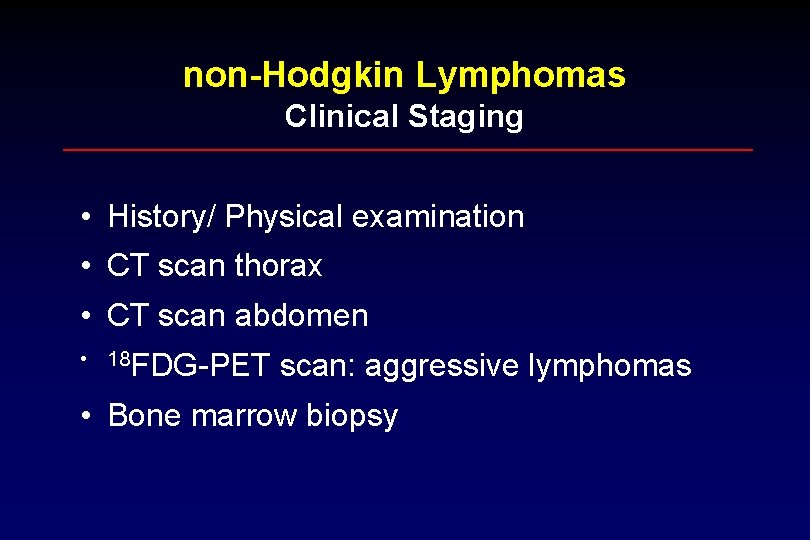
non-Hodgkin Lymphomas Clinical Staging • History/ Physical examination • CT scan thorax • CT scan abdomen • 18 FDG-PET scan: aggressive lymphomas • Bone marrow biopsy
CT scans in lymphoma
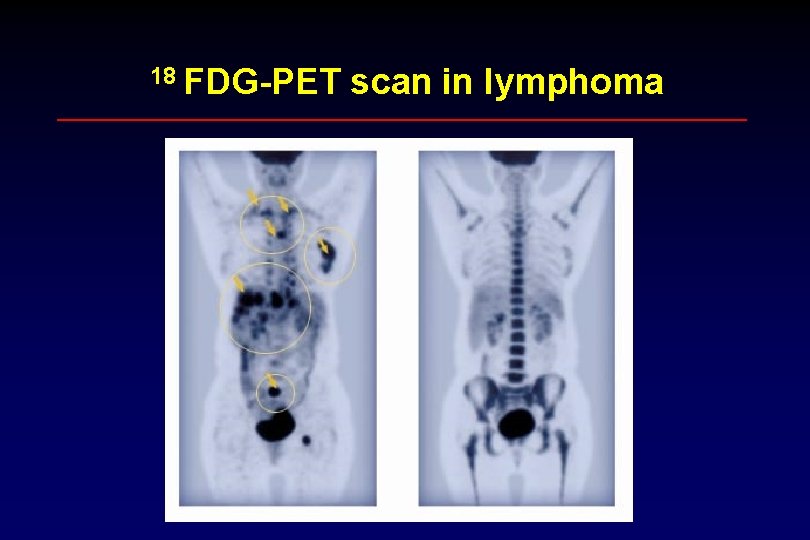
18 FDG-PET scan in lymphoma
non-Hodgkin Lymphoma Ann Arbor Staging A= no symptoms B= fever (unexplained) night sweats weight loss >10%
Treatment of non-Hodgkin lymphoma approach till 2004 Indolent (stage II-IV)* • “Wait and see” Aggressive (stage II-IV) ** • CHOP chemotherapy 1 x / 3 weeks, 8 x • (mild) chemotherapy • (low dose) radiotherapy * Stage I(II): high dose radiotherpy ** Stage I: 3 x CHOP + radiotherapy
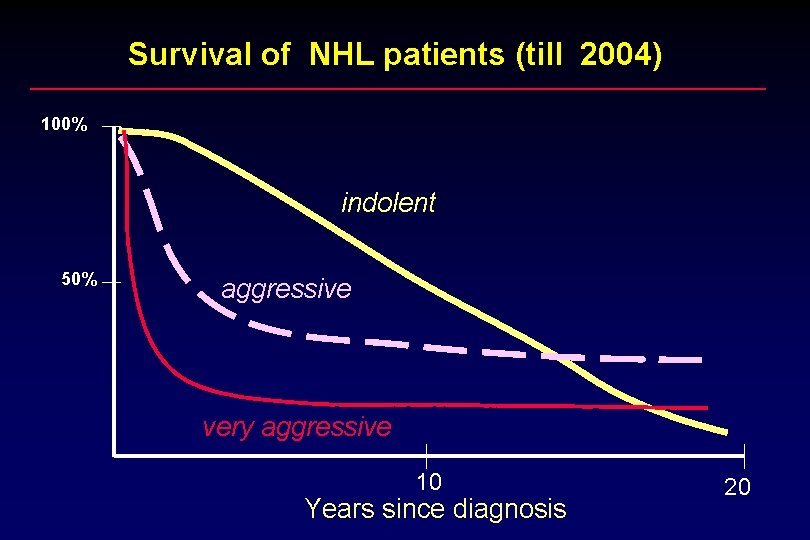
Survival of NHL patients (till 2004) 100% indolent 50% aggressive very aggressive 10 Years since diagnosis 20
The results of the treatment of patients with NHL have been improved impressively by the use of antibodies directed against the lymphoma cells
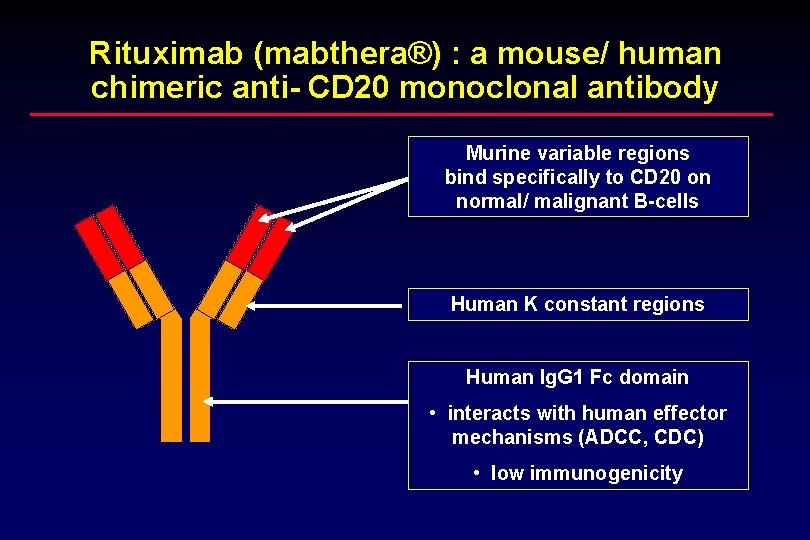
Rituximab (mabthera®) : a mouse/ human chimeric anti- CD 20 monoclonal antibody Murine variable regions bind specifically to CD 20 on normal/ malignant B-cells Human K constant regions Human Ig. G 1 Fc domain • interacts with human effector mechanisms (ADCC, CDC) • low immunogenicity
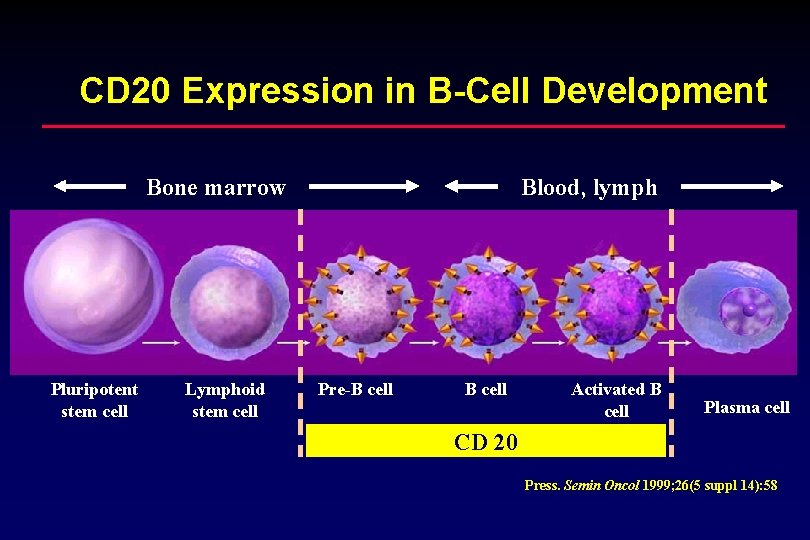
CD 20 Expression in B-Cell Development Bone marrow Pluripotent stem cell Lymphoid stem cell Blood, lymph Pre-B cell Activated B cell Plasma cell CD 20 Press. Semin Oncol 1999; 26(5 suppl 14): 58
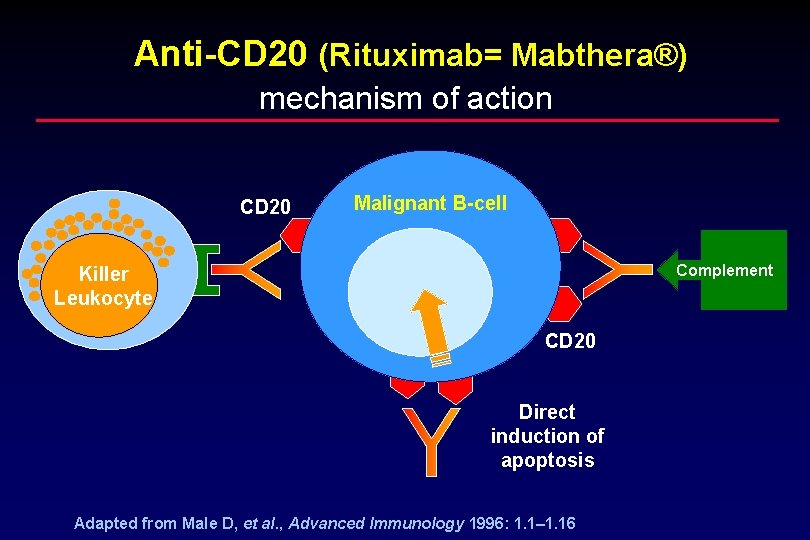
Anti-CD 20 (Rituximab= Mabthera®) mechanism of action CD 20 Malignant B-cell Complement Killer Leukocyte CD 20 Direct induction of apoptosis Adapted from Male D, et al. , Advanced Immunology 1996: 1. 1– 1. 16
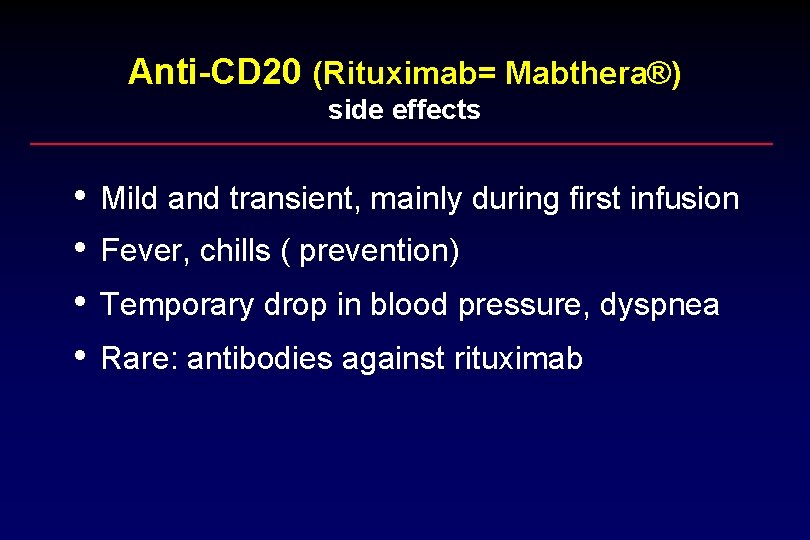
Anti-CD 20 (Rituximab= Mabthera®) side effects • • Mild and transient, mainly during first infusion Fever, chills ( prevention) Temporary drop in blood pressure, dyspnea Rare: antibodies against rituximab
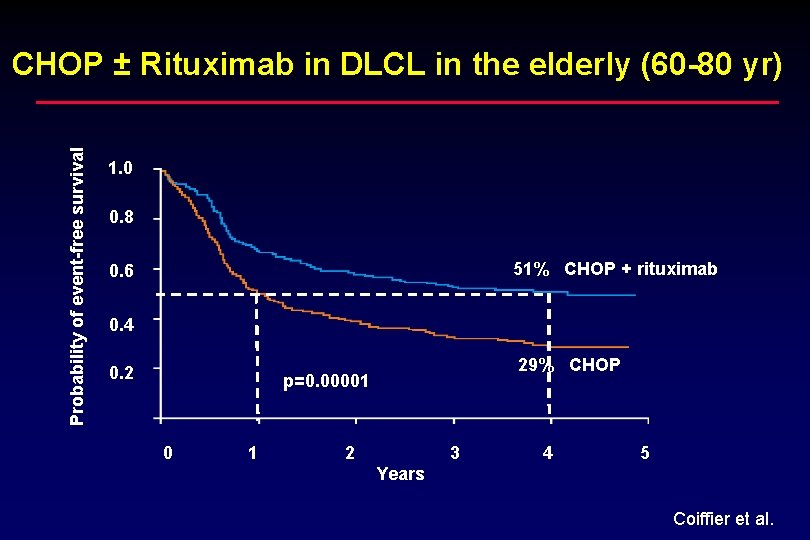
Probability of event-free survival CHOP ± Rituximab in DLCL in the elderly (60 -80 yr) 1. 0 0. 8 51% CHOP + rituximab 0. 6 0. 4 0. 2 29% CHOP p=0. 00001 0 1 2 3 4 5 Years Coiffier et al.
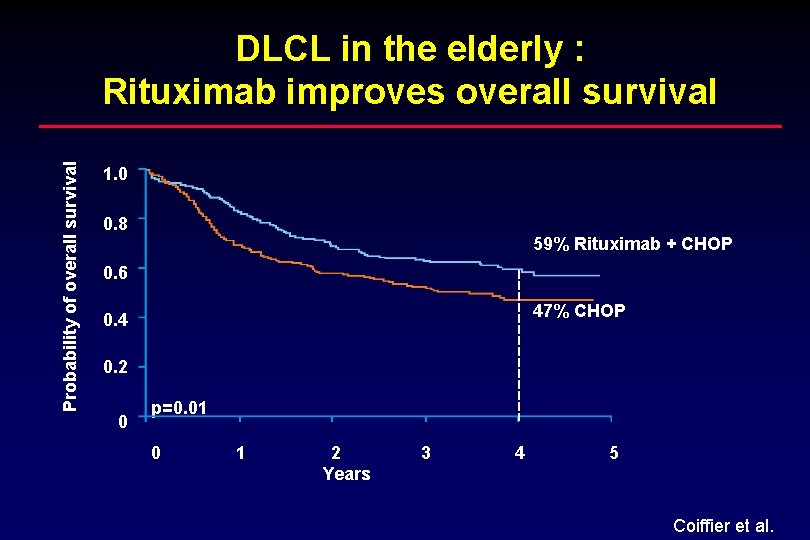
Probability of overall survival DLCL in the elderly : Rituximab improves overall survival 1. 0 0. 8 59% Rituximab + CHOP 0. 6 47% CHOP 0. 4 0. 2 0 p=0. 01 0 1 2 Years 3 4 5 Coiffier et al.
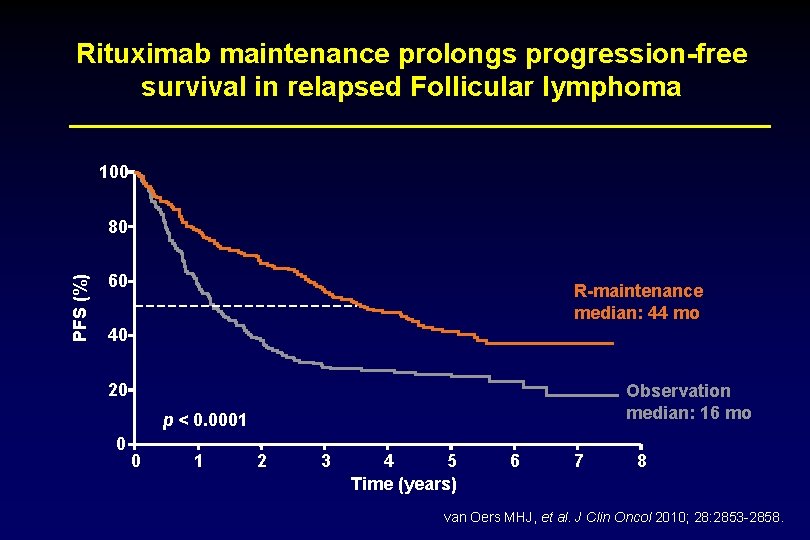
Rituximab maintenance prolongs progression-free survival in relapsed Follicular lymphoma 100 PFS (%) 80 60 R-maintenance median: 44 mo 40 20 Observation median: 16 mo p < 0. 0001 0 0 1 2 3 4 5 Time (years) 6 7 8 van Oers MHJ, et al. J Clin Oncol 2010; 28: 2853 -2858.
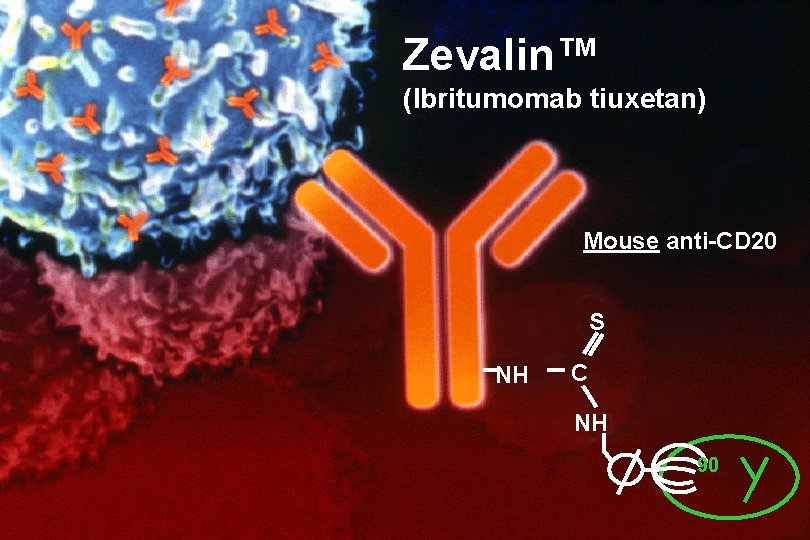
Zevalin™ (Ibritumomab tiuxetan) Mouse anti-CD 20 S NH C NH 90
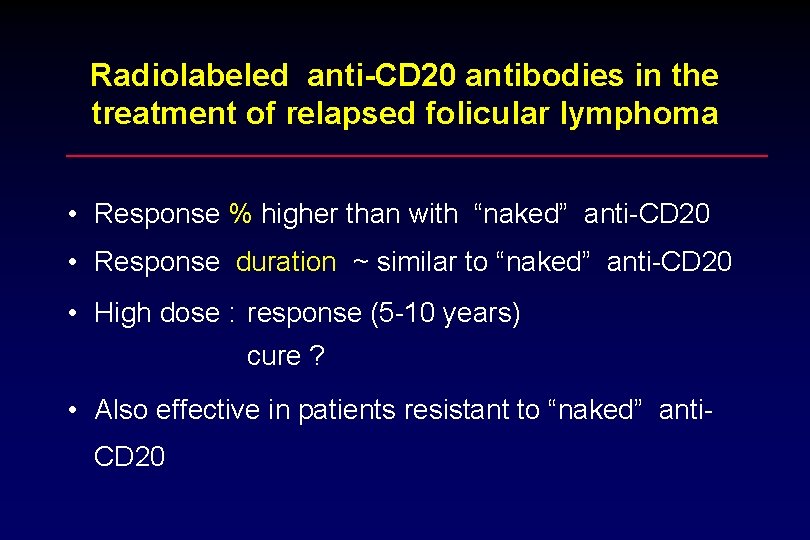
Radiolabeled anti-CD 20 antibodies in the treatment of relapsed folicular lymphoma • Response % higher than with “naked” anti-CD 20 • Response duration ~ similar to “naked” anti-CD 20 • High dose : response (5 -10 years) cure ? • Also effective in patients resistant to “naked” anti. CD 20
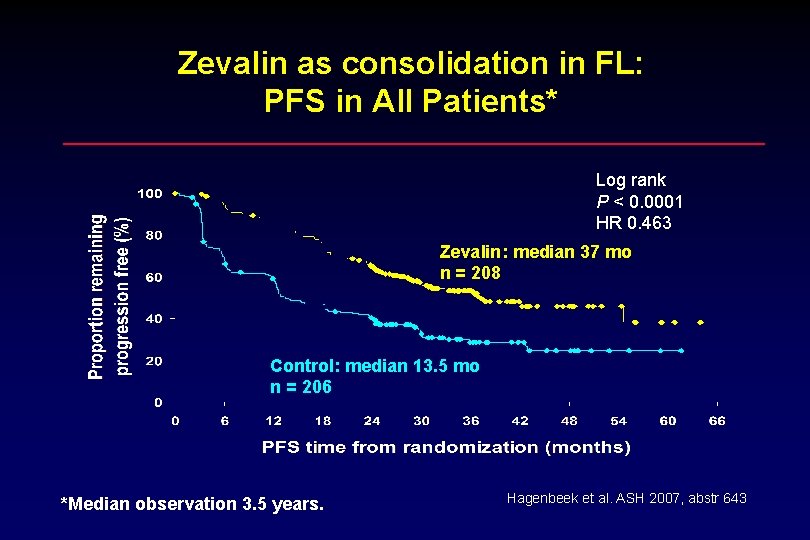
Zevalin as consolidation in FL: PFS in All Patients* Log rank P < 0. 0001 HR 0. 463 Zevalin: median 37 mo n = 208 Control: median 13. 5 mo n = 206 *Median observation 3. 5 years. Hagenbeek et al. ASH 2007, abstr 643
New targets lymphoma treatment
non-Hodgkin’s Lymphomas Treatment • Surgery: NEVER !! • Wait and see (indolente lymfomen) • Radiotherapy: stage I indolent stage I aggressive (+CT!) • (poly) chemotherapy • Immunotherapy: monoclonal antibodies • Immuno-chemotherapy
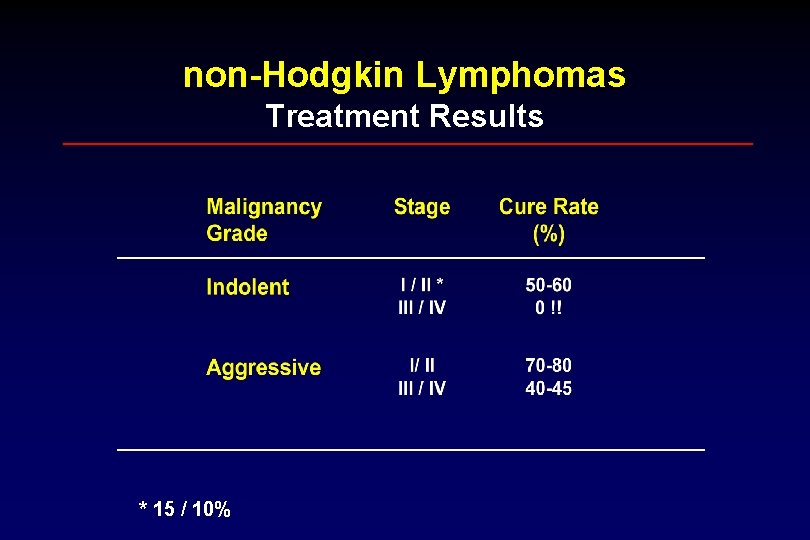
non-Hodgkin Lymphomas Treatment Results * 15 / 10%
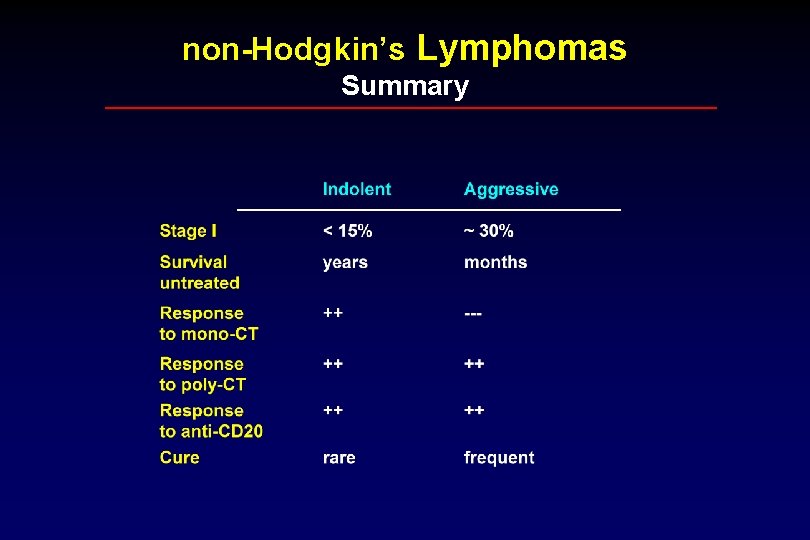
non-Hodgkin’s Lymphomas Summary
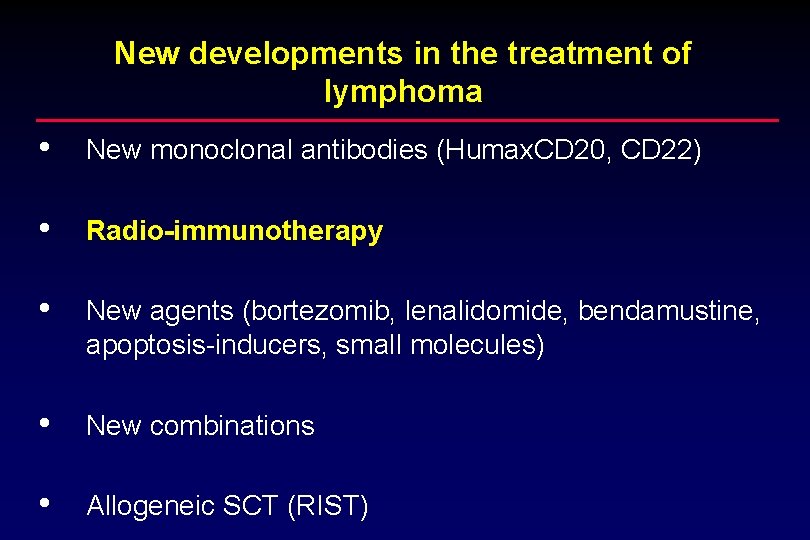
New developments in the treatment of lymphoma • New monoclonal antibodies (Humax. CD 20, CD 22) • Radio-immunotherapy • New agents (bortezomib, lenalidomide, bendamustine, apoptosis-inducers, small molecules) • New combinations • Allogeneic SCT (RIST)
Unconjugated anti-CD 20 -m. Abs in lymphoma (Rituximab ) • Monotherapy in relapsed indolent lymphoma – ORR ~ 50 % (6% CR) – Response duration ~1 year • Combination with chemotherapy (induction) – Indolent lymphoma – Aggressive lymphoma • Maintenance treatment : Indolent lymphoma
CVP ± Rituximab in first line stage III/ IV follicular NHL Marcus et al Blood 2004
EORTC 20981 phase III trial: R-CHOP versus CHOP in relapsed follicular NHL R A N D O M I S E D CHOP every 21 days maximum six cycles Rituximab + CHOP every 21 days maximum six cycles R A N D O M I S E D Observation Rituximab maintenance* 2 *375 mg/m every 3 months for 2 years or until relapse Van Oers et al ASH 2005
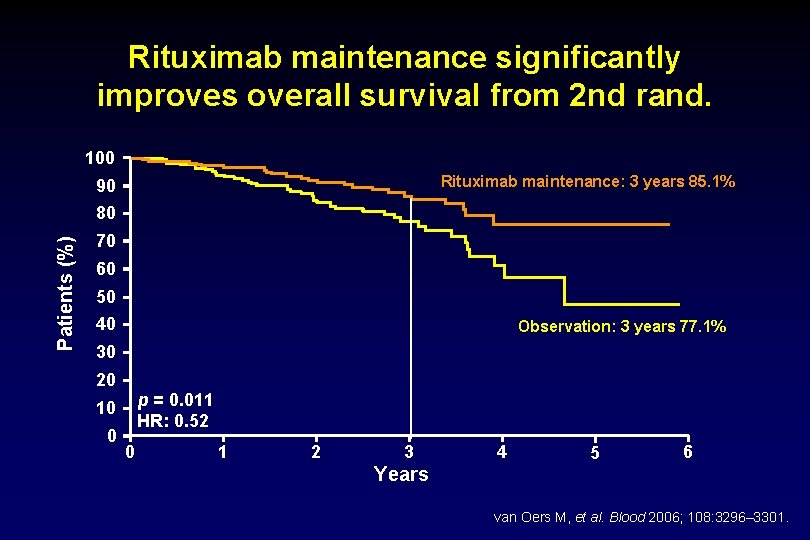
Rituximab maintenance significantly improves overall survival from 2 nd rand. 100 Rituximab maintenance: 3 years 85. 1% 90 Patients (%) 80 70 60 50 40 Observation: 3 years 77. 1% 30 20 p = 0. 011 HR: 0. 52 10 0 0 1 2 3 Years 4 5 6 van Oers M, et al. Blood 2006; 108: 3296– 3301.
Therapy of aggressive NHL • polychemotherapy • golden standard till 2004 : CHOP Drug Dose Route Day Cyclophosphamide 750 mg/m 2 i. v. 1 Doxorubicin (hydroxydaunorubicine) 50 mg/ m 2 i. v. 1 Vincristine (oncovin) 1. 4 mg/ m 2 * i. v. 1 Predniso(lo)ne 100 mg p. o. 1 -5 * max. dose per cycle: 2 mg
non-Hodgkin’s lymphoma Why treatment with antibodies? • With present chemotherapy no or insufficient cure • Treatment of minimal residual disease after chemotherapy might improve prognosis • Antibodies are more specific than cytostatic drugs • Antibodies are less toxic • Antibodies have a different mechanism of action
Conclusions • Monoclonal antibodies have become an important component of treatment of malignant lymphomas • Combination of Rituximab and chemotherapy : new standard for untreated and relapsed indolent and aggressive lymphoma • After induction (in relapsed FL): Rituximab maintenance • Radio-immunotherapy has yielded promising results