
Treatment of faecal sludge From traditional to emergency
- Slides: 57
Treatment of faecal sludge From traditional to emergency to innovative approaches Webinar Via. Water, 18 February 2016 Jan Spit
2 Contents Definition Aim of FSM Design criteria Overview systems Discussion per system Webinar February 2016 Faecal Sludge Treatment
3 Definition (Eawag) Faecal Sludge Management deals with the management of sludges from on-site sanitation systems, while wastewater management deals with sewered sanitation. Faecal sludge may be treated in separate treatment works or co-treated with sludges produced in wastewater treatment plants. Webinar February 2016 Faecal Sludge Treatment
4 Aim FSM Produce safe sludge • Free from pathogens • Free from smell • Safe to reuse Webinar February 2016 Faecal Sludge Treatment
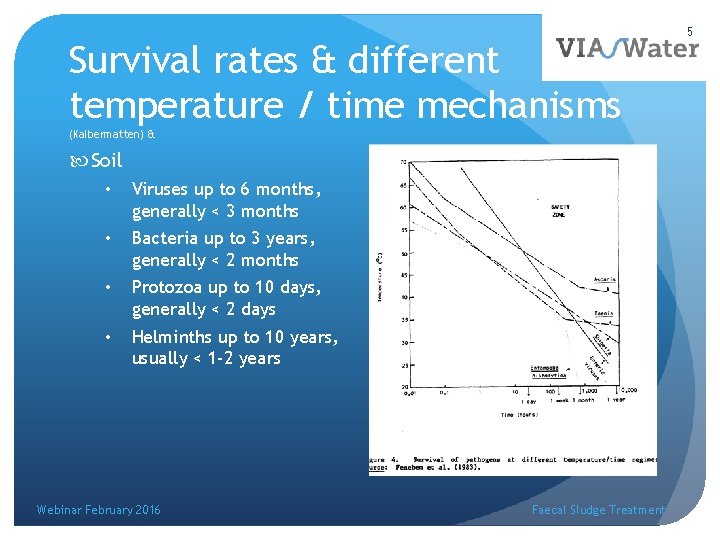
Survival rates & different temperature / time mechanisms (Kalbermatten) & Soil • Viruses up to 6 months, generally < 3 months • Bacteria up to 3 years, generally < 2 months • Protozoa up to 10 days, generally < 2 days • Helminths up to 10 years, usually < 1 -2 years Webinar February 2016 Faecal Sludge Treatment 5
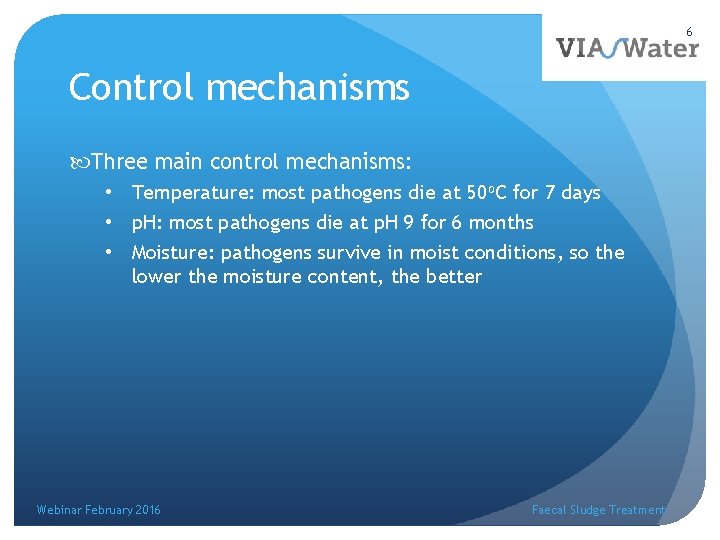
6 Control mechanisms Three main control mechanisms: • Temperature: most pathogens die at 50 o. C for 7 days • p. H: most pathogens die at p. H 9 for 6 months • Moisture: pathogens survive in moist conditions, so the lower the moisture content, the better Webinar February 2016 Faecal Sludge Treatment
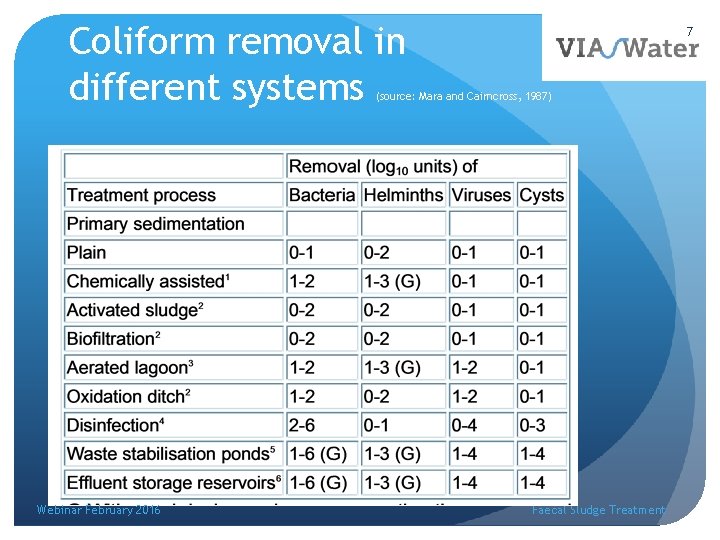
Coliform removal in different systems 7 (source: Mara and Cairncross, 1987) Webinar February 2016 Faecal Sludge Treatment
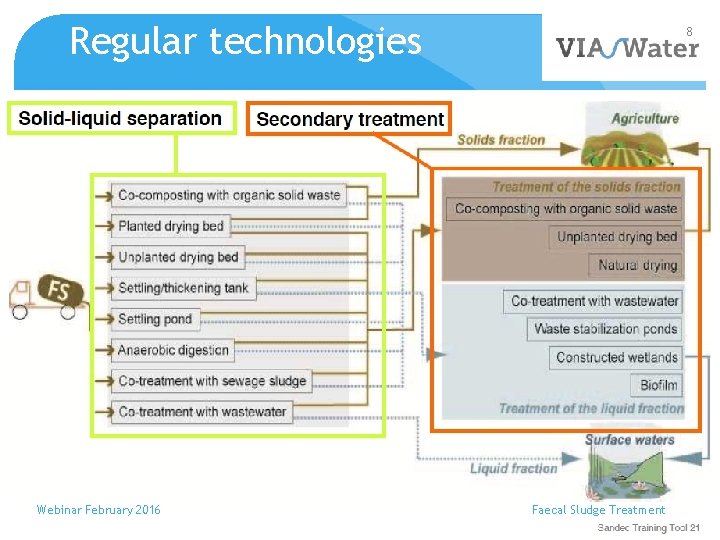
Regular technologies 8 Source: STRAUSS & MONTANGERO (2002) Source: STRAUSS & MONTANEGRO 2004 Webinar February 2016 Faecal Sludge Treatment
9 Complete overview Webinar February 2016 Faecal Sludge Treatment
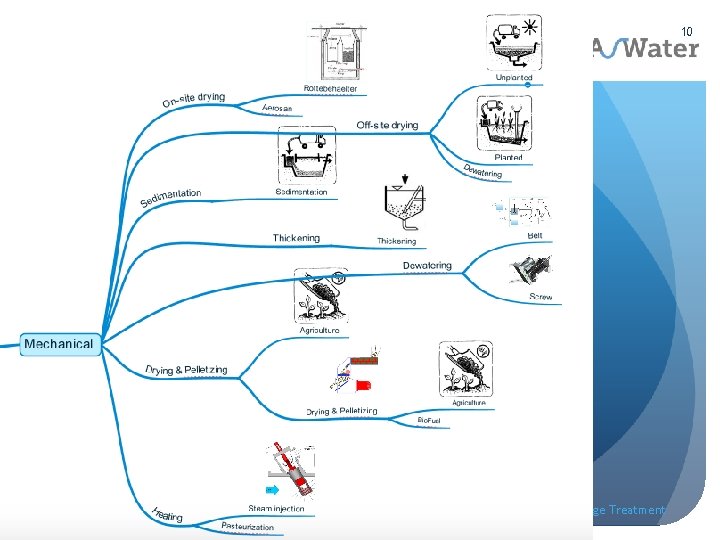
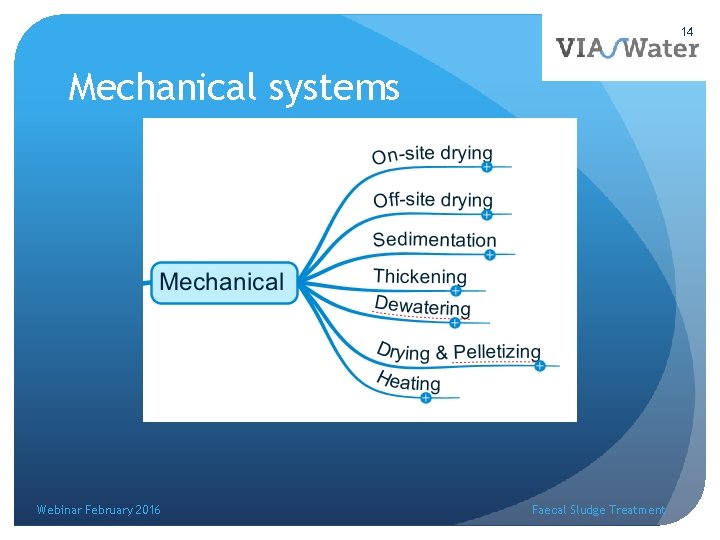
10 Mechanical systems Webinar February 2016 Faecal Sludge Treatment
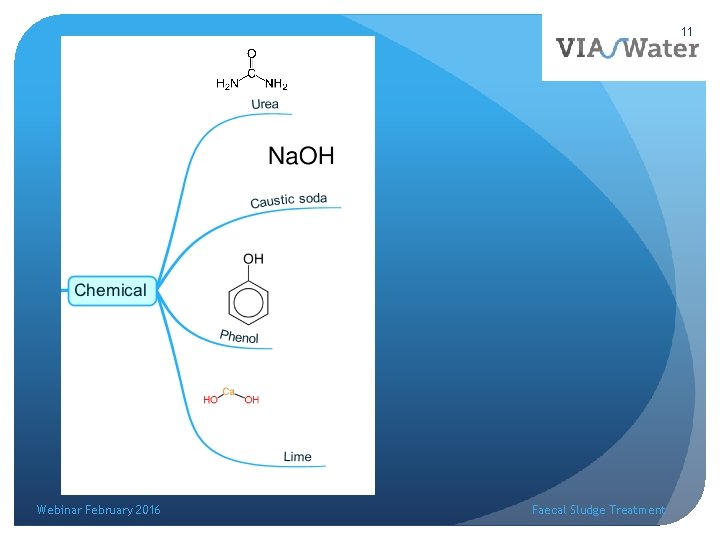
11 Chemical systems Webinar February 2016 Faecal Sludge Treatment
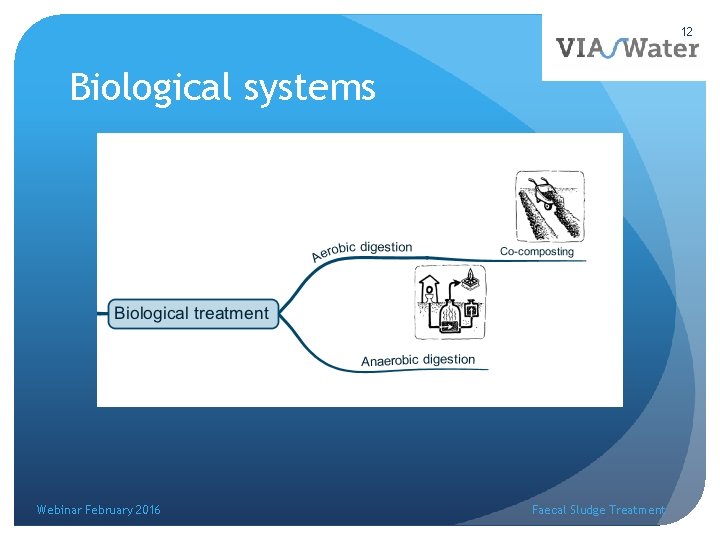
12 Biological systems Webinar February 2016 Faecal Sludge Treatment
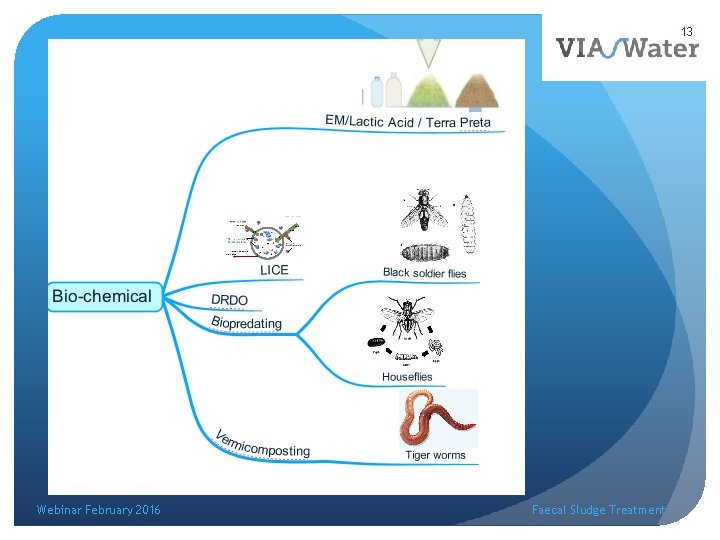
13 Mechanical systems Webinar February 2016 Faecal Sludge Treatment
14 Mechanical systems Webinar February 2016 Faecal Sludge Treatment
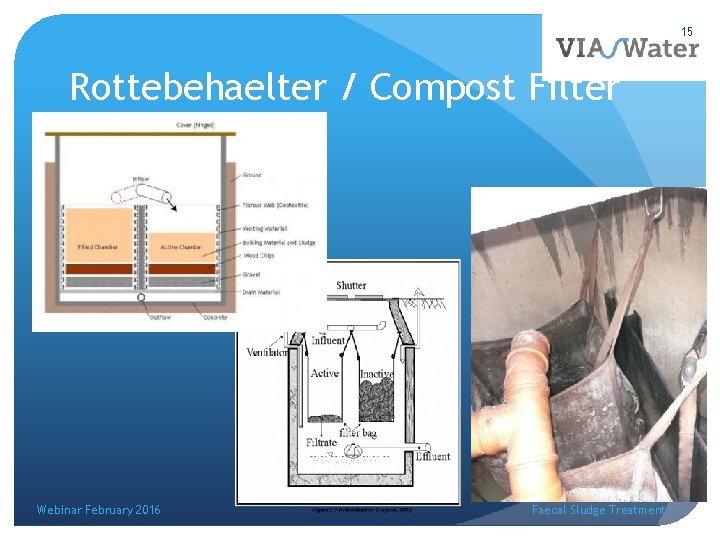
15 Rottebehaelter / Compost Filter Webinar February 2016 Faecal Sludge Treatment
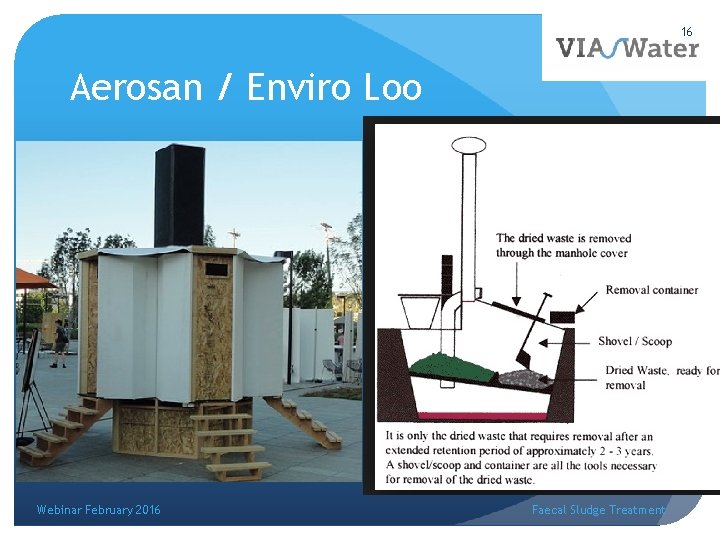
16 Aerosan / Enviro Loo Webinar February 2016 Faecal Sludge Treatment
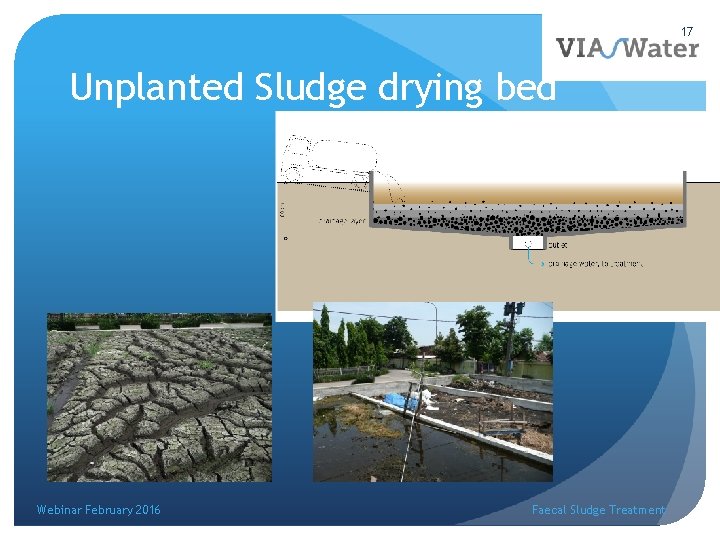
17 Unplanted Sludge drying bed Webinar February 2016 Faecal Sludge Treatment
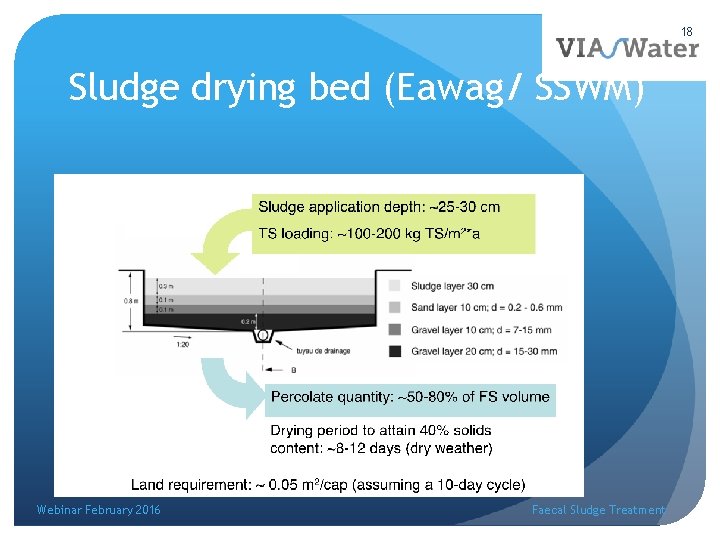
18 Sludge drying bed (Eawag/ SSWM) Webinar February 2016 Faecal Sludge Treatment
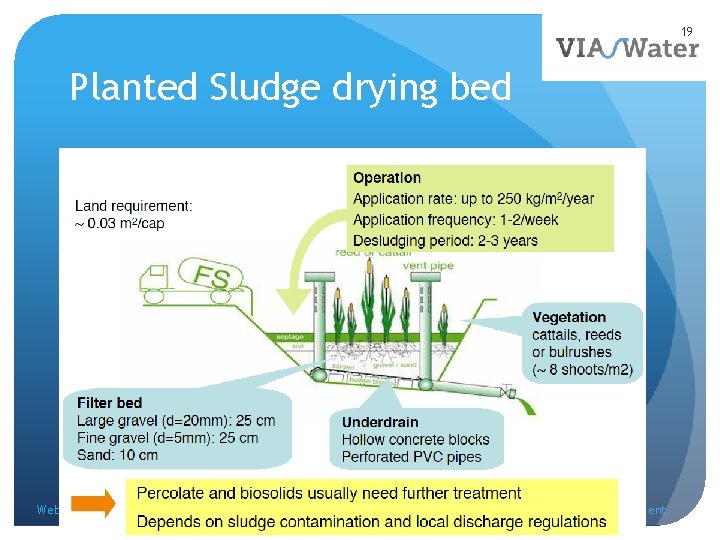
19 Planted Sludge drying bed Webinar February 2016 Faecal Sludge Treatment
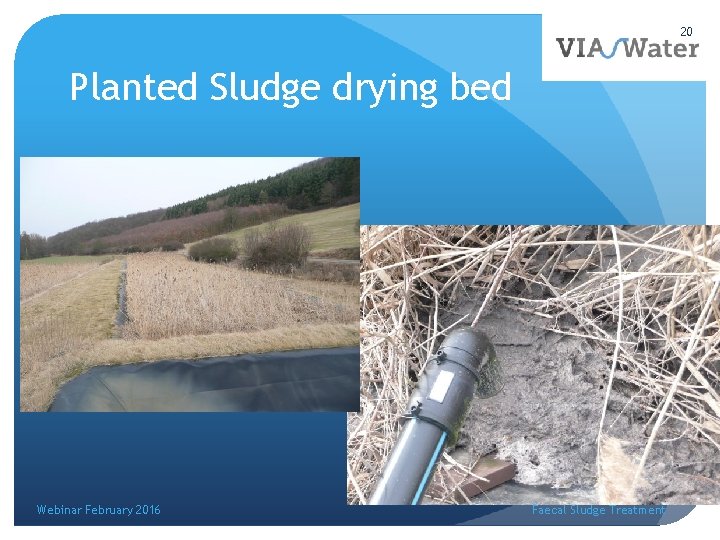
20 Planted Sludge drying bed Webinar February 2016 Faecal Sludge Treatment
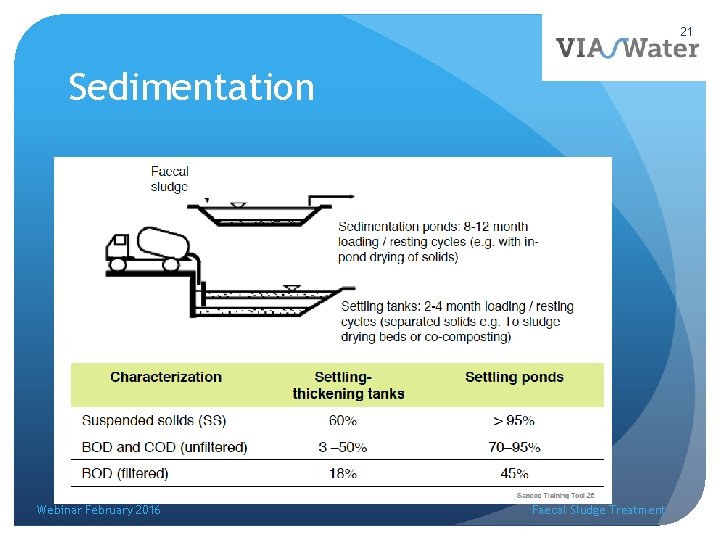
21 Sedimentation Webinar February 2016 Faecal Sludge Treatment
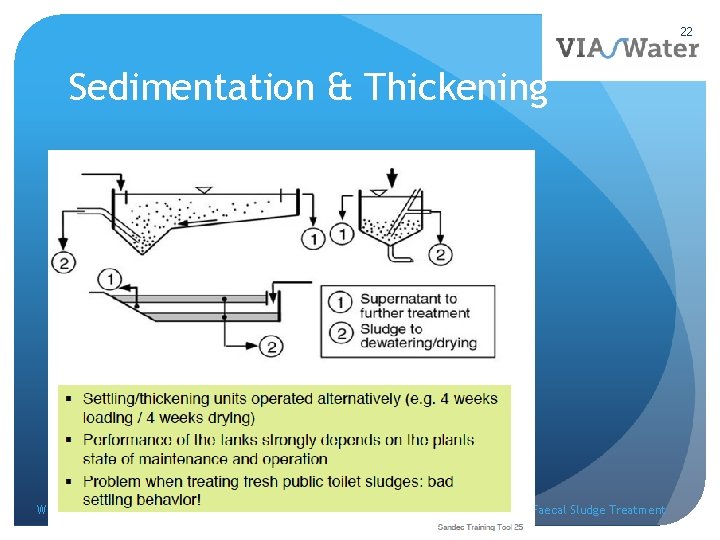
22 Sedimentation & Thickening Webinar February 2016 Faecal Sludge Treatment
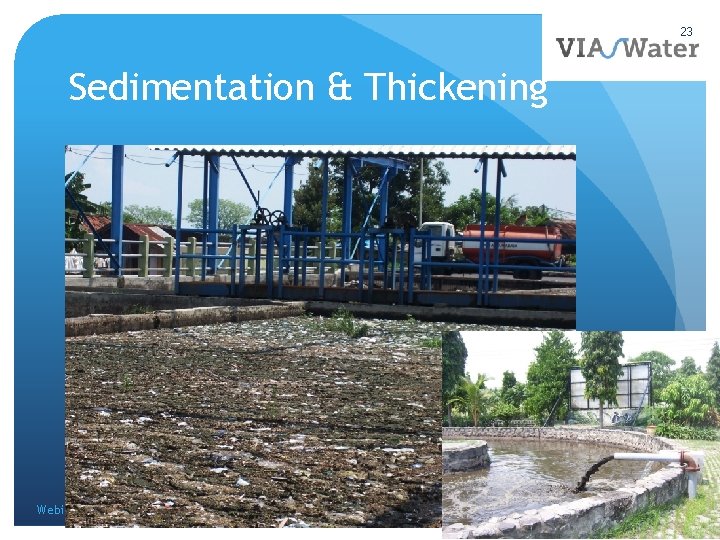
23 Sedimentation & Thickening Webinar February 2016 Faecal Sludge Treatment
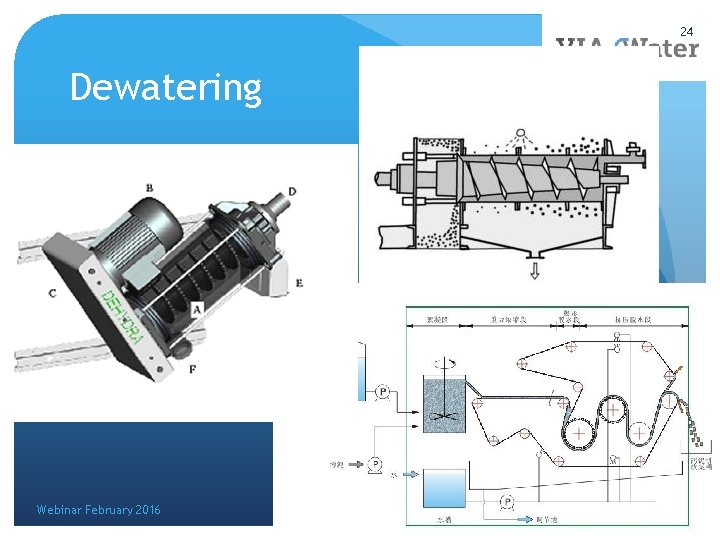
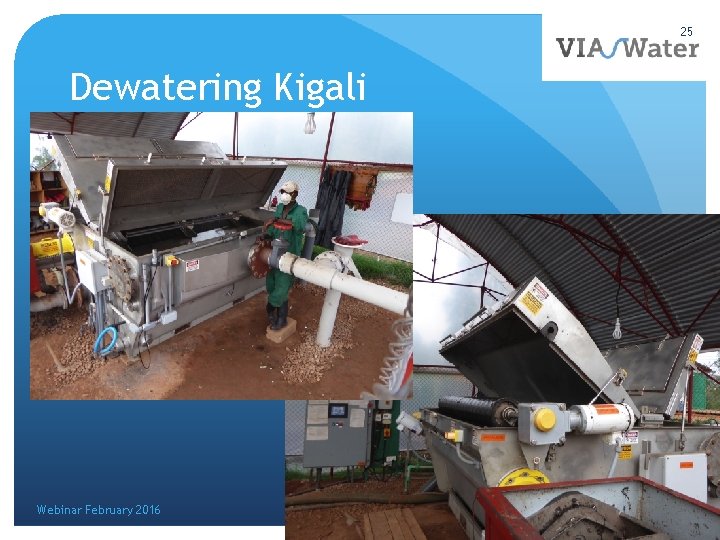
24 Dewatering Webinar February 2016 Faecal Sludge Treatment
25 Dewatering Kigali Webinar February 2016 Faecal Sludge Treatment
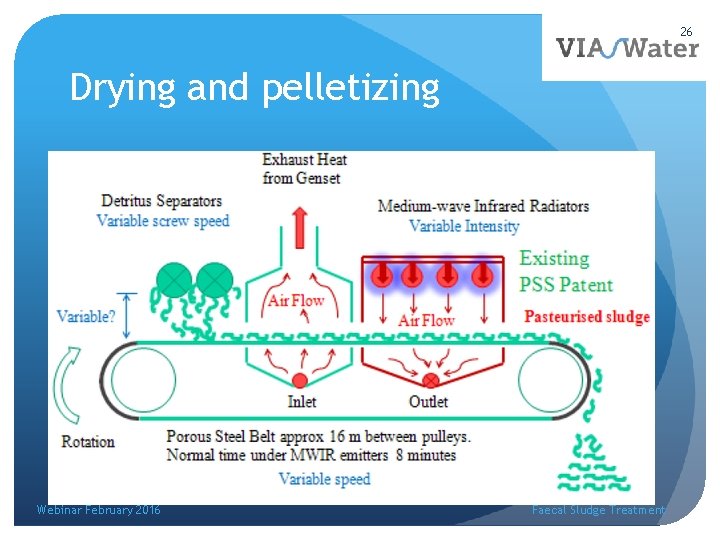
26 Drying and pelletizing Webinar February 2016 Faecal Sludge Treatment
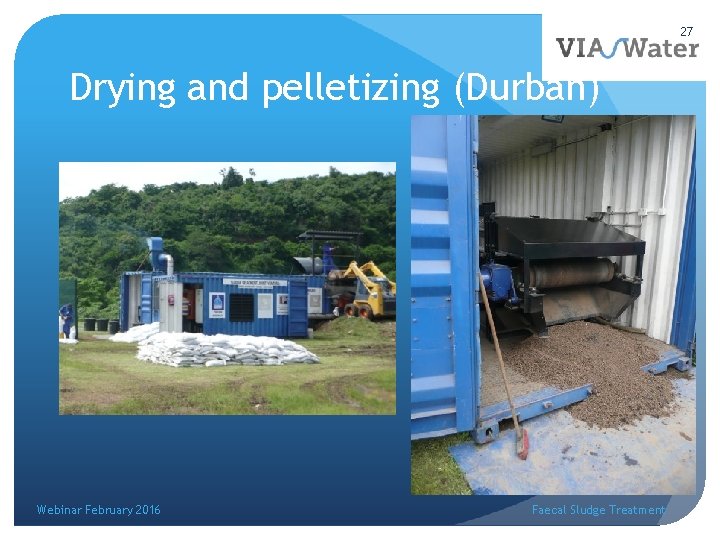
27 Drying and pelletizing (Durban) Webinar February 2016 Faecal Sludge Treatment
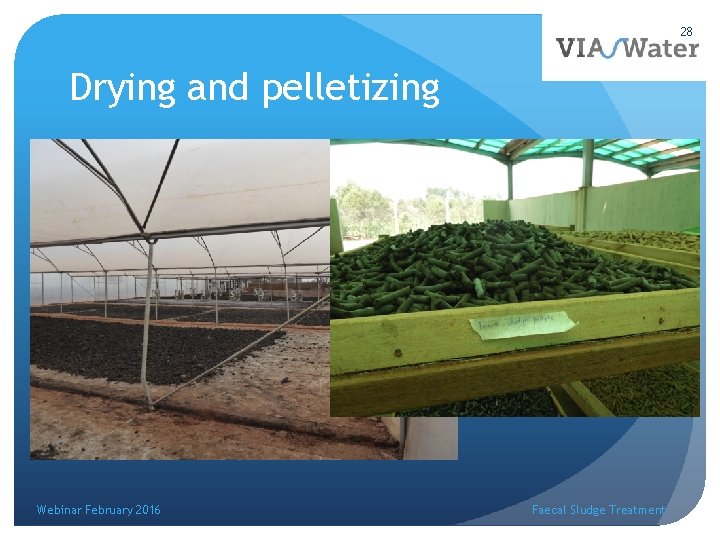
28 Drying and pelletizing Webinar February 2016 Faecal Sludge Treatment
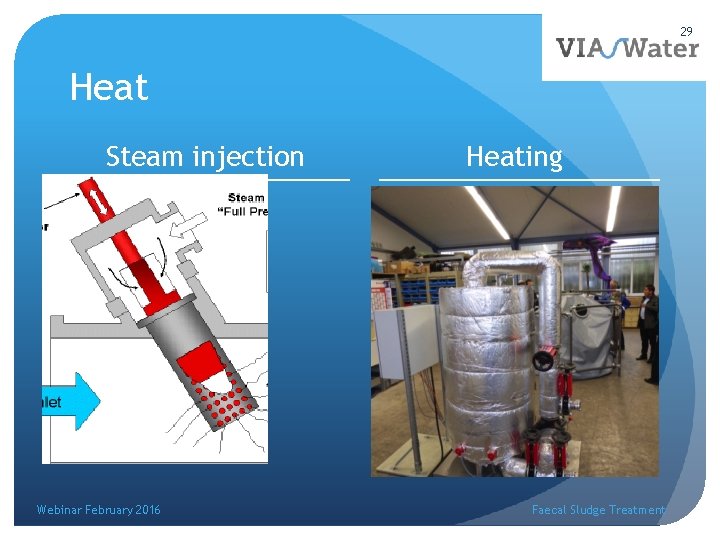
29 Heat Steam injection Webinar February 2016 Heating Faecal Sludge Treatment
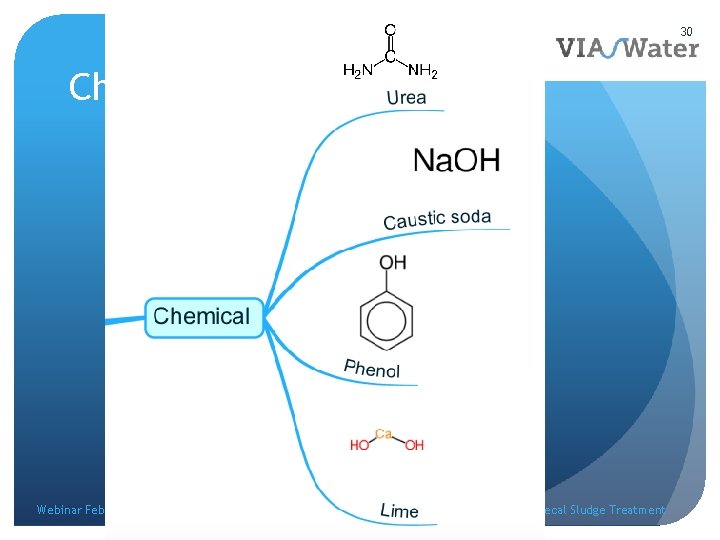
30 Chemical Webinar February 2016 Faecal Sludge Treatment
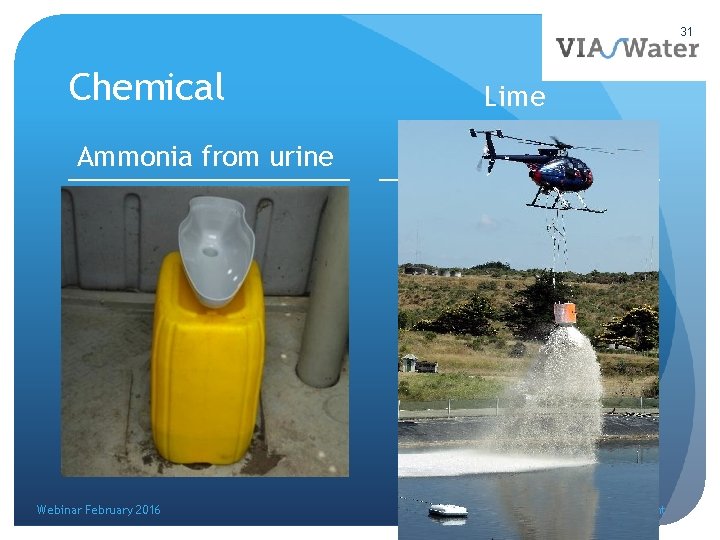
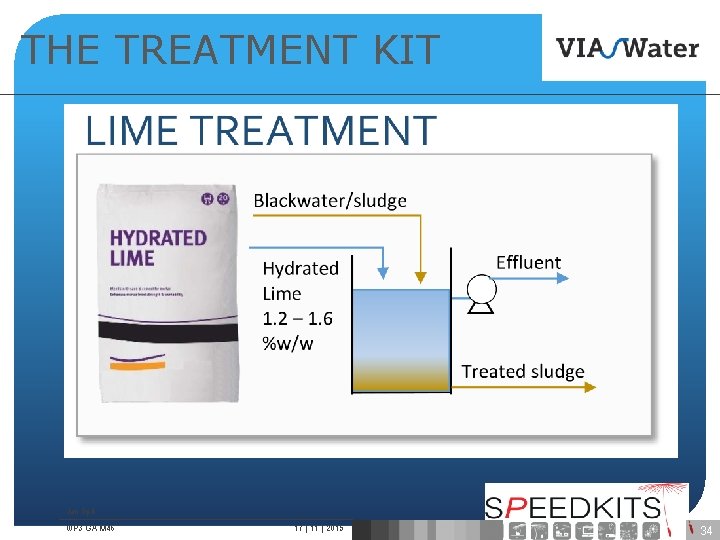
31 Chemical Lime Ammonia from urine Webinar February 2016 Faecal Sludge Treatment
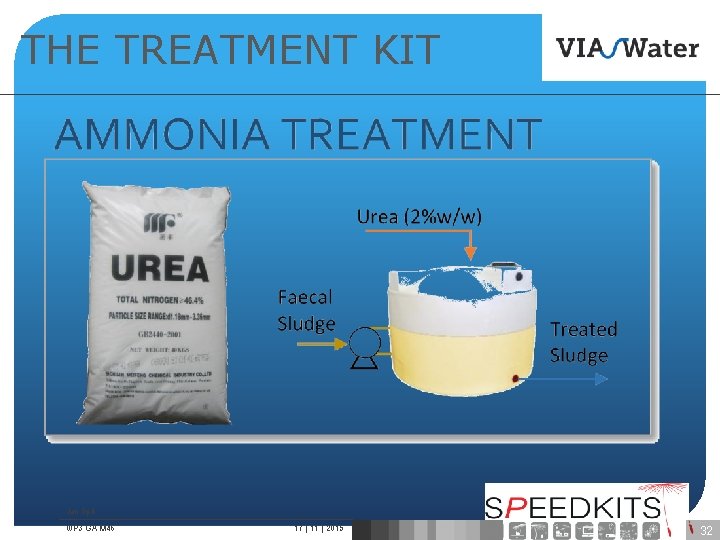
THE TREATMENT KIT Jan Spit WP 3 GA M 46 17 | 11 | 2015 32
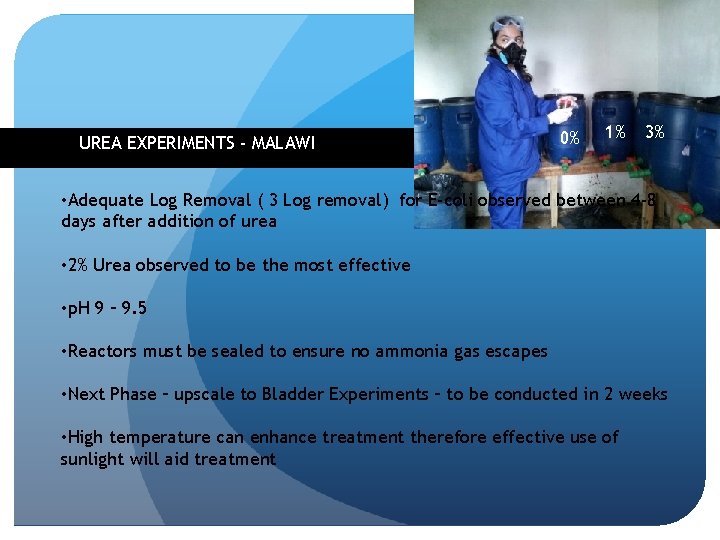
UREA EXPERIMENTS - MALAWI 0% 1% 3% • Adequate Log Removal ( 3 Log removal) for E-coli observed between 4 -8 days after addition of urea • 2% Urea observed to be the most effective • p. H 9 – 9. 5 • Reactors must be sealed to ensure no ammonia gas escapes • Next Phase – upscale to Bladder Experiments – to be conducted in 2 weeks • High temperature can enhance treatment therefore effective use of sunlight will aid treatment
THE TREATMENT KIT Jan Spit WP 3 GA M 46 17 | 11 | 2015 34
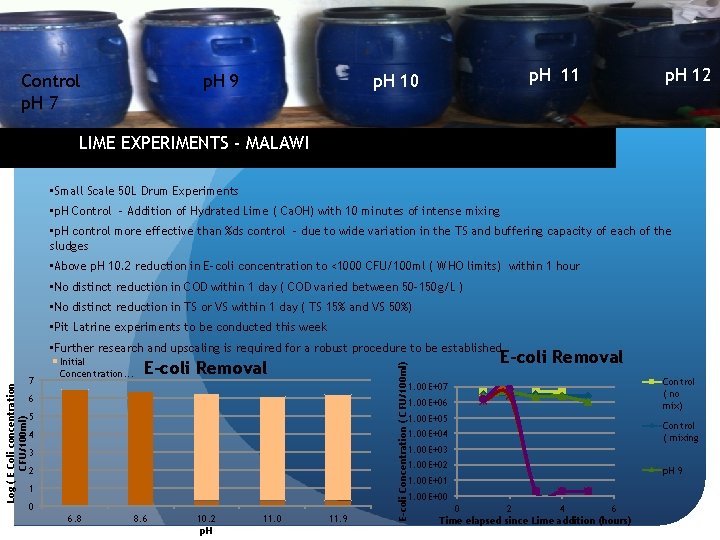
Control p. H 7 p. H 9 p. H 11 p. H 10 p. H 12 LIME EXPERIMENTS - MALAWI • Small Scale 50 L Drum Experiments • p. H Control - Addition of Hydrated Lime ( Ca. OH) with 10 minutes of intense mixing • p. H control more effective than %ds control - due to wide variation in the TS and buffering capacity of each of the sludges • Above p. H 10. 2 reduction in E-coli concentration to <1000 CFU/100 ml ( WHO limits) within 1 hour • No distinct reduction in COD within 1 day ( COD varied between 50 -150 g/L ) • No distinct reduction in TS or VS within 1 day ( TS 15% and VS 50%) • Pit Latrine experiments to be conducted this week 7 Initial Concentration. . . E-coli Removal 6 5 4 3 2 1 0 6. 8 8. 6 10. 2 p. H 11. 0 11. 9 E-coli Concentration ( CFU/100 ml) Log ( E Coli concentration CFU/100 ml) • Further research and upscaling is required for a robust procedure to be established E-coli Removal 1. 00 E+07 1. 00 E+06 1. 00 E+05 1. 00 E+04 1. 00 E+03 1. 00 E+02 1. 00 E+01 1. 00 E+00 0 2 4 6 Time elapsed since Lime addition (hours) Control ( no mix) Control ( mixing p. H 9
THE TREATMENT KIT Jan Spit WP 3 GA M 46 17 | 11 | 2015 36
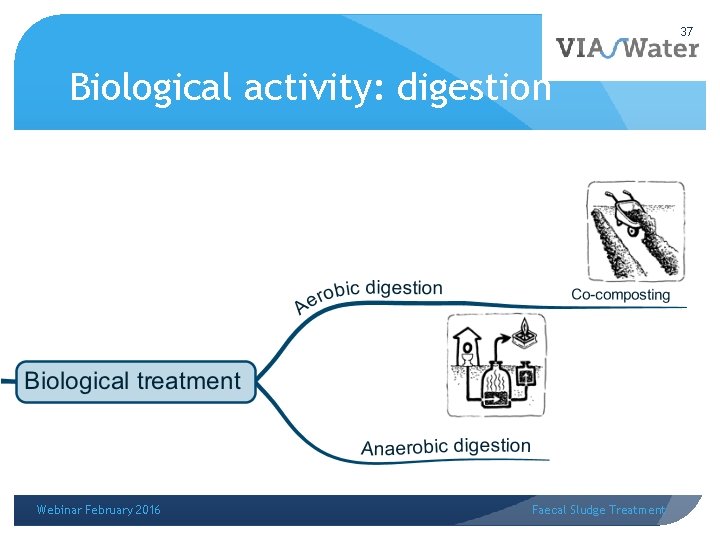
37 Biological activity: digestion Webinar February 2016 Faecal Sludge Treatment
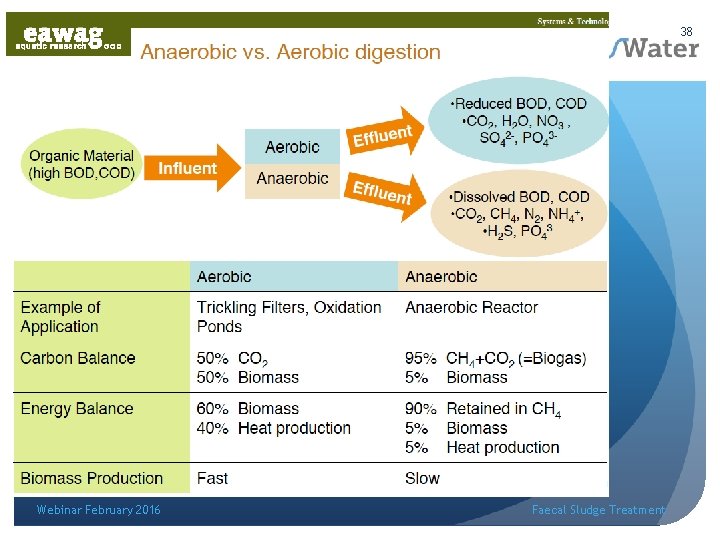
38 Biological activity Webinar February 2016 Faecal Sludge Treatment
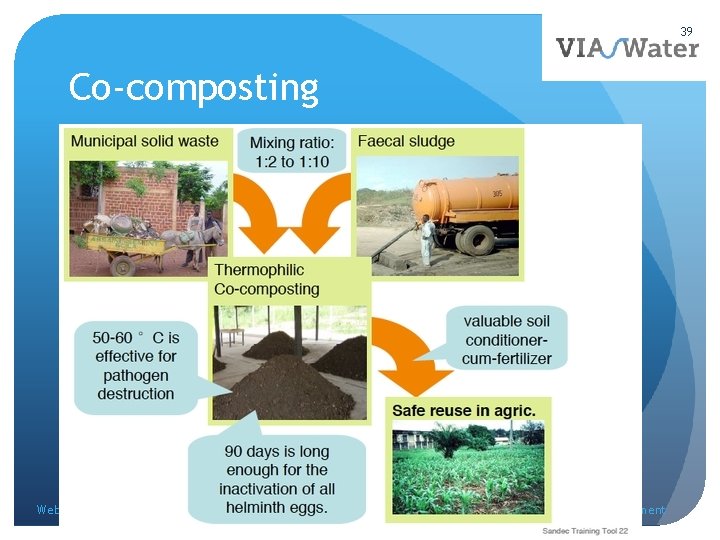
39 Co-composting Webinar February 2016 Faecal Sludge Treatment
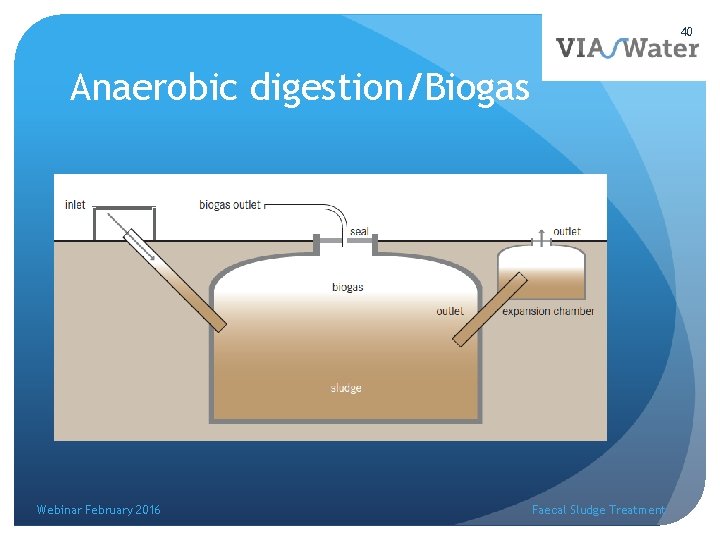
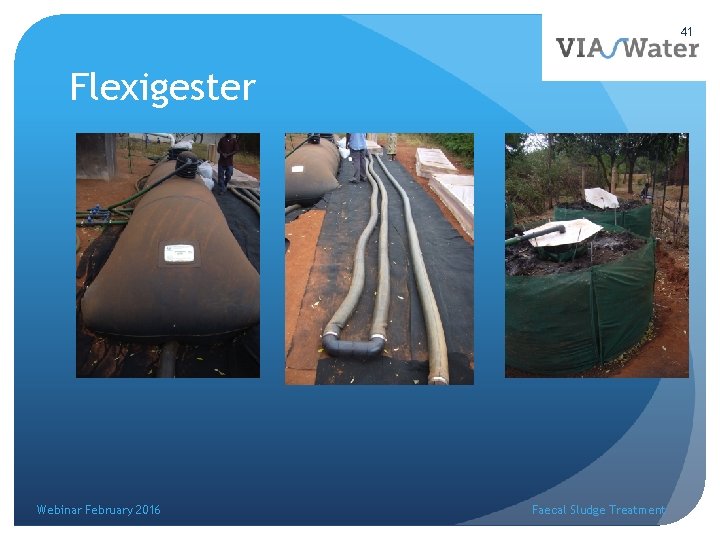
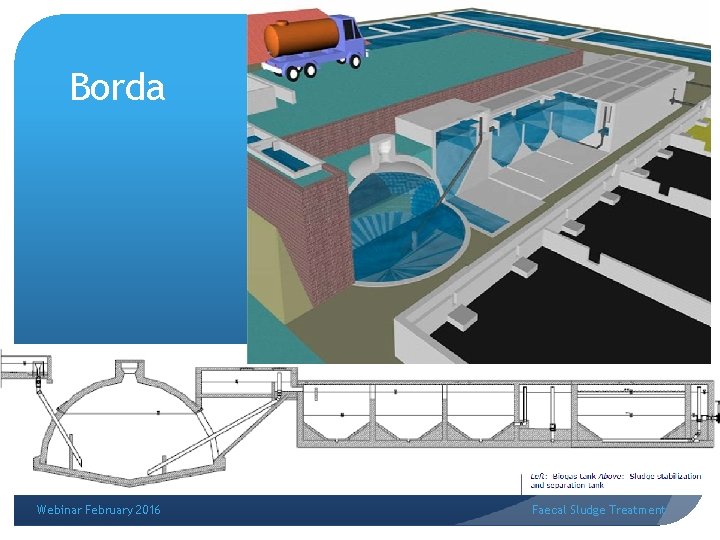
40 Anaerobic digestion/Biogas Webinar February 2016 Faecal Sludge Treatment
41 Flexigester Webinar February 2016 Faecal Sludge Treatment
42 Borda Webinar February 2016 Faecal Sludge Treatment
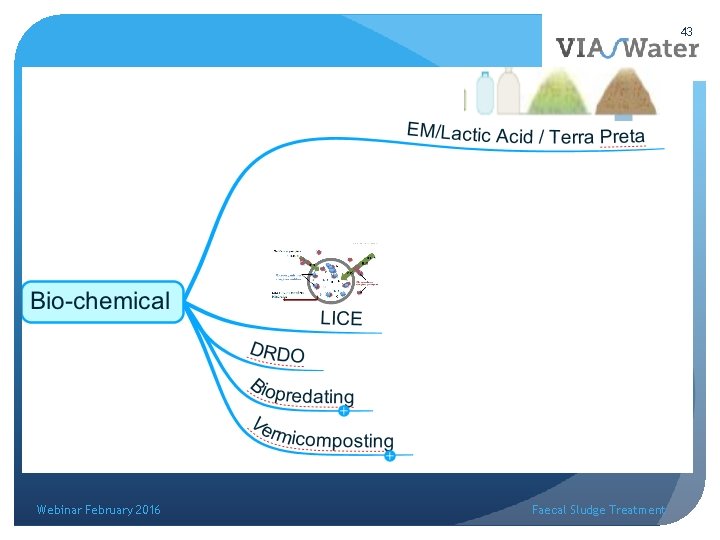
43 Bio-chemical Webinar February 2016 Faecal Sludge Treatment
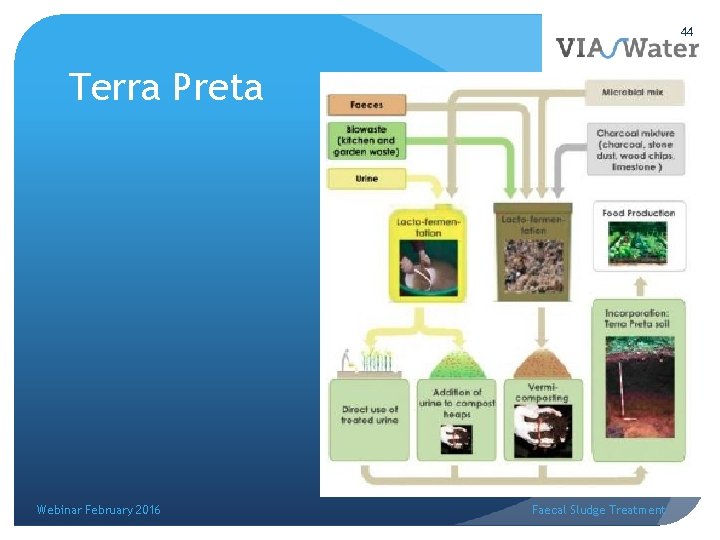
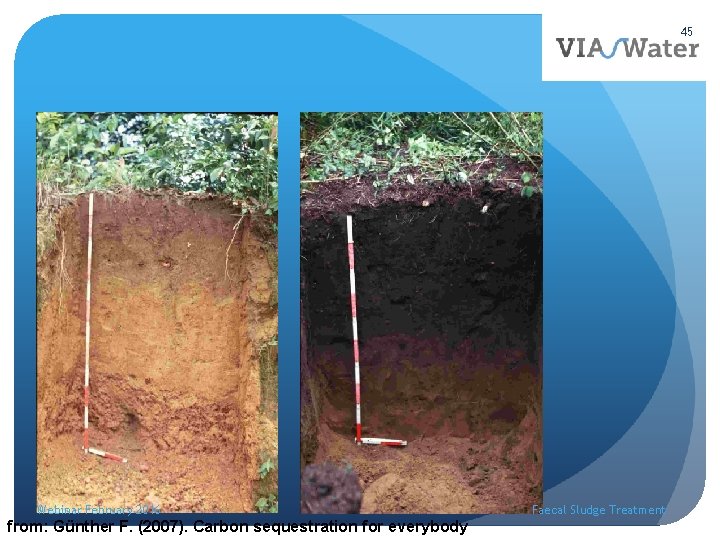
44 Terra Preta Webinar February 2016 Faecal Sludge Treatment
45 Webinar February 2016 from: Günther F. (2007). Carbon sequestration for everybody Faecal Sludge Treatment
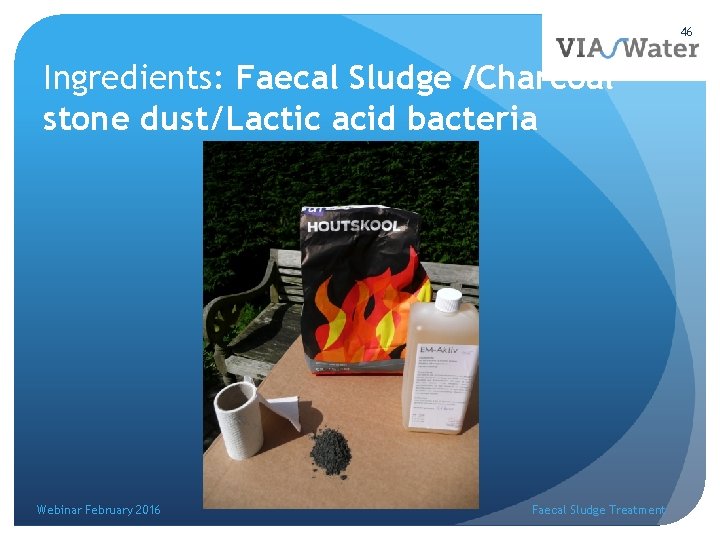
46 Ingredients: Faecal Sludge /Charcoalstone dust/Lactic acid bacteria Webinar February 2016 Faecal Sludge Treatment
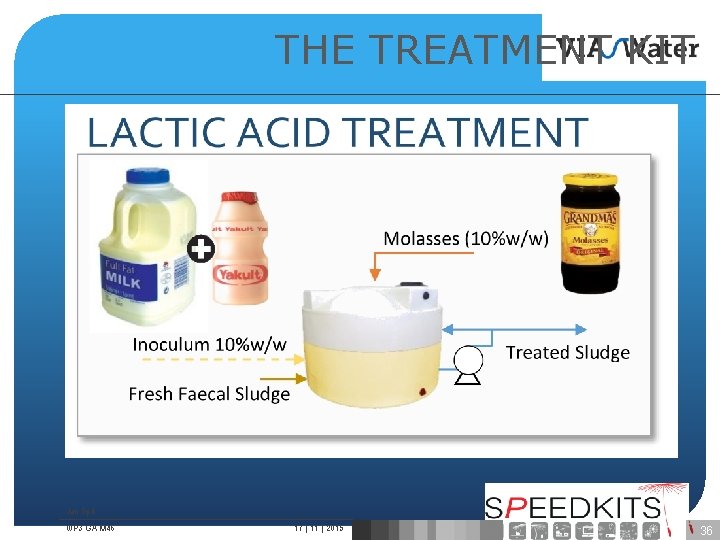
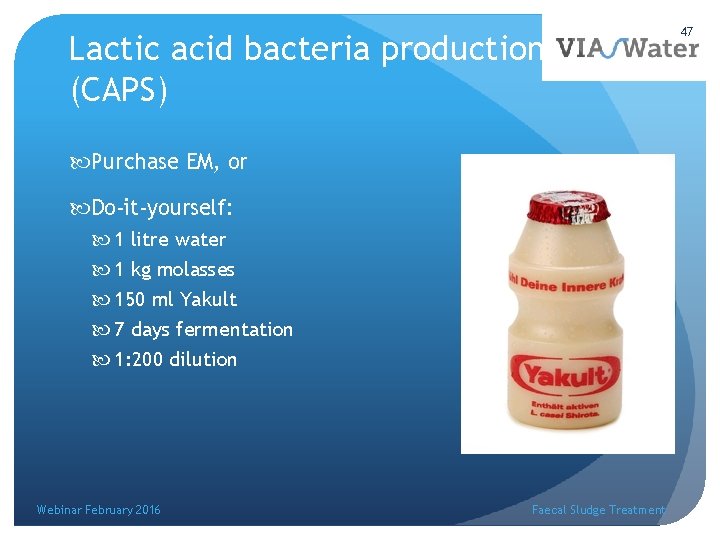
Lactic acid bacteria production (CAPS) Purchase EM, or Do-it-yourself: 1 litre water 1 kg molasses 150 ml Yakult 7 days fermentation 1: 200 dilution Webinar February 2016 Faecal Sludge Treatment 47
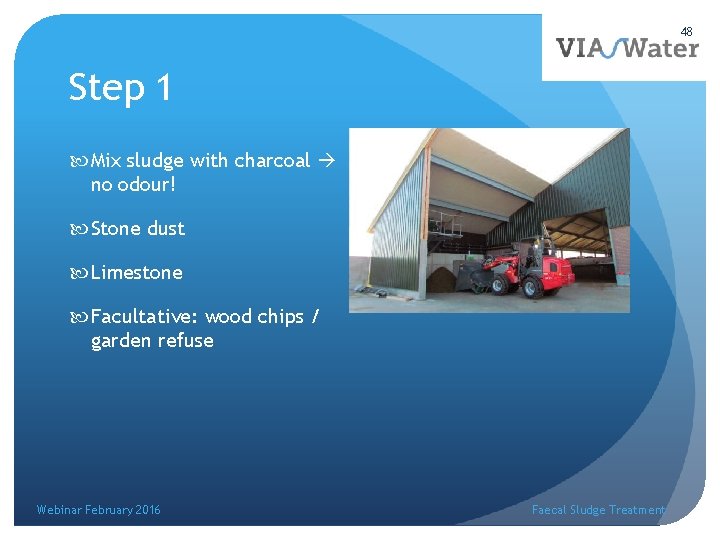
48 Step 1 Mix sludge with charcoal no odour! Stone dust Limestone Facultative: wood chips / garden refuse Webinar February 2016 Faecal Sludge Treatment
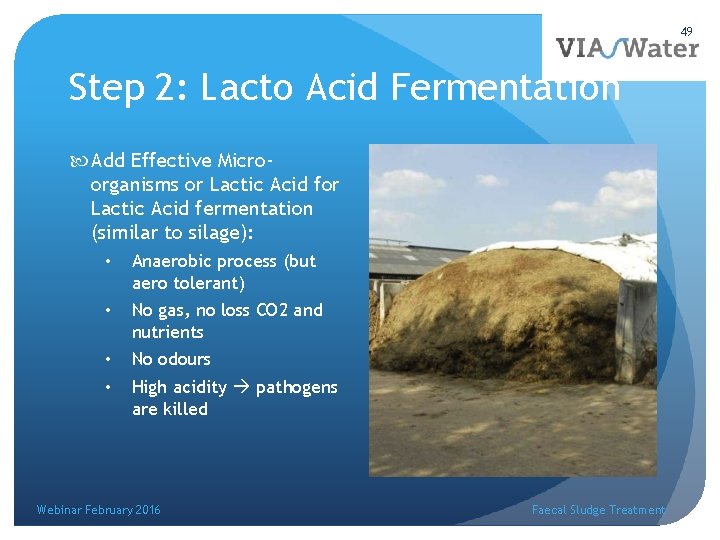
49 Step 2: Lacto Acid Fermentation Add Effective Microorganisms or Lactic Acid fermentation (similar to silage): • Anaerobic process (but aero tolerant) • No gas, no loss CO 2 and nutrients • • No odours High acidity pathogens are killed Webinar February 2016 Faecal Sludge Treatment
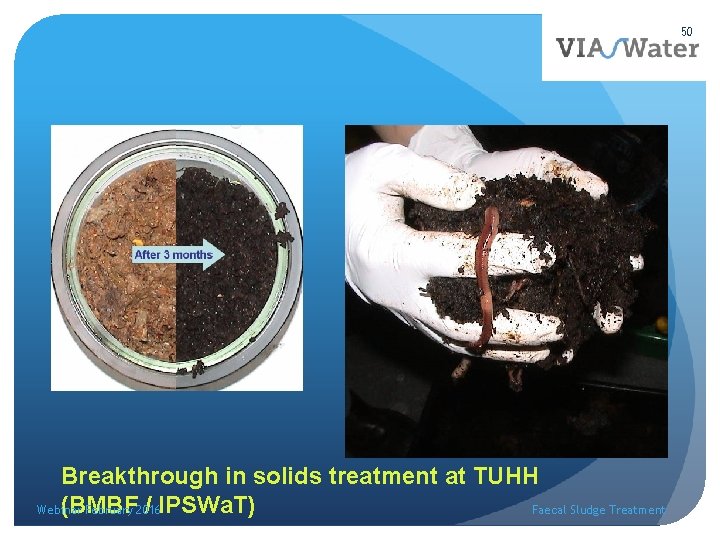
50 Breakthrough in solids treatment at TUHH (BMBF / IPSWa. T) Webinar February 2016 Faecal Sludge Treatment
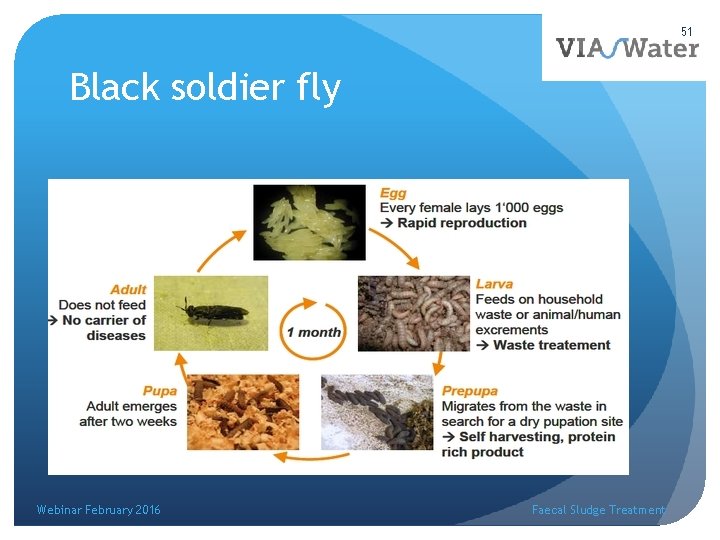
51 Black soldier fly Webinar February 2016 Faecal Sludge Treatment
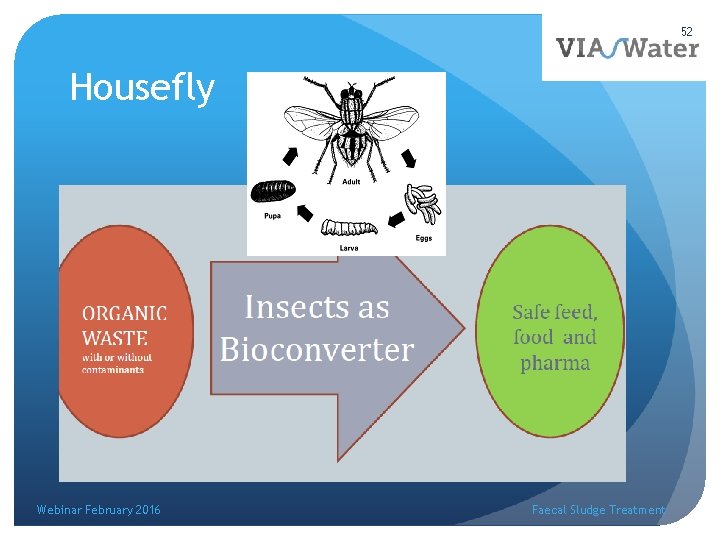
52 Housefly Webinar February 2016 Faecal Sludge Treatment
53 Housefly Webinar February 2016 Faecal Sludge Treatment
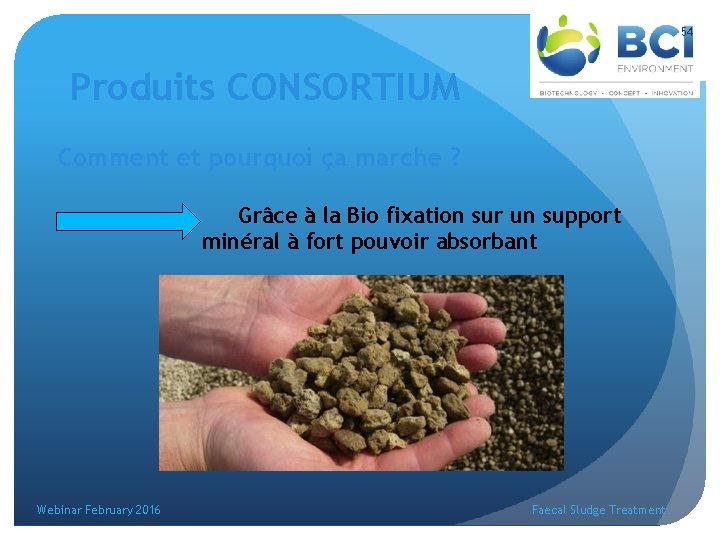
54 Produits CONSORTIUM Comment et pourquoi ça marche ? Grâce à la Bio fixation sur un support minéral à fort pouvoir absorbant Webinar February 2016 Faecal Sludge Treatment
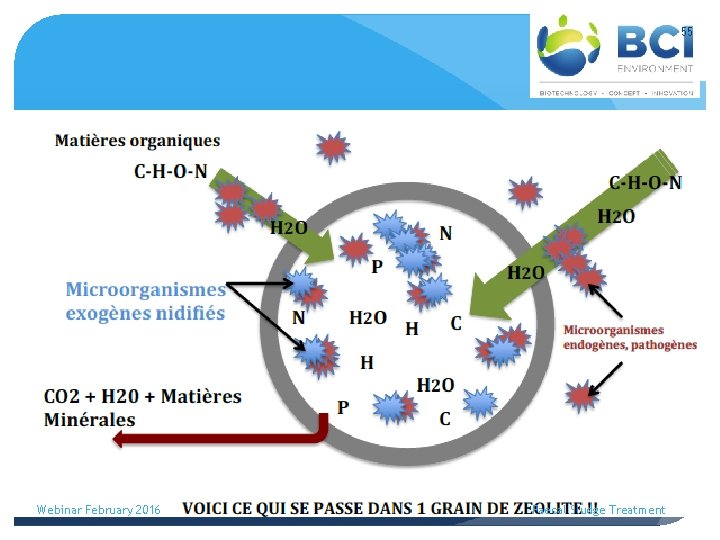
55 Webinar February 2016 Faecal Sludge Treatment
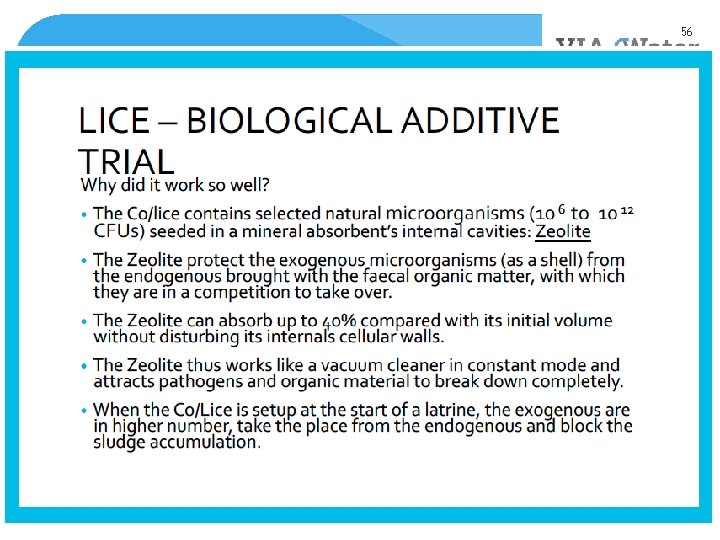
56 LICE Experiments UNHCR Webinar February 2016 Faecal Sludge Treatment
57 Thank you! Jan Spit Jan. spit. delft@gmail. com www. waste. nl www. janspitcsdelft. nl Ph: +31 -6 -57 -99 -78 -74 Webinar February 2016 Faecal Sludge Treatment