
Treatment of Alcohol Use Disorder www hivguidelines org
- Slides: 14
Treatment of Alcohol Use Disorder www. hivguidelines. org
Purpose of This Guideline • Increase the number of clinicians in outpatient settings offering evidencebased treatment to individuals with alcohol use disorder (AUD). • Increase the number of NYS residents with AUD who are engaged in treatment. • Reduce the number of alcohol-related deaths in NYS. • Promote a harm reduction approach to treatment of AUD, which involves practical strategies and ideas aimed at reducing the negative consequences associated with alcohol use. 2/19/2021 NYSDOH AIDS Institute Clinical Guidelines Program
Goals of AUD Treatment • Staying engaged in care, which can also facilitate prevention, diagnosis, and treatment of other conditions. • Reducing alcohol use. • Reducing high-risk behaviors (e. g. , driving while intoxicated, alcohol-related unprotected sex). • Improving quality of life and other social indicators, such as employment, stable housing, and risk of incarceration. • Improving mental health. 2/19/2021 NYSDOH AIDS Institute Clinical Guidelines Program
Recommendation: Treatment Options þ Clinicians should inform patients with AUD about all available pharmacologic and behavioral treatment options and all available treatment settings, including outpatient primary care and addiction specialty treatment (intensive outpatient, inpatient, and residential treatments). (A 3) þ Clinicians should recommend pharmacologic treatment for individuals with moderate-to-severe AUD. (A 1) þ Clinicians should recommend oral acamprosate or oral or injectable extendedrelease (XR) naltrexone as the preferred medications for treating AUD. (A 1) þ Clinicians should recommend behavioral treatment for individuals with AUD. (A 1) 2/19/2021 NYSDOH AIDS Institute Clinical Guidelines Program
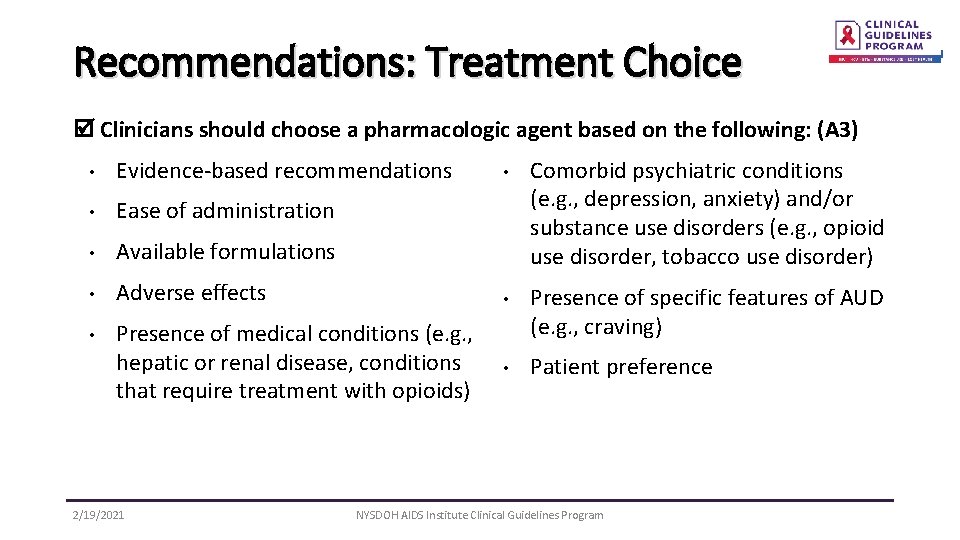
Recommendations: Treatment Choice Clinicians should choose a pharmacologic agent based on the following: (A 3) • Evidence-based recommendations • Comorbid psychiatric conditions (e. g. , depression, anxiety) and/or substance use disorders (e. g. , opioid use disorder, tobacco use disorder) • Ease of administration • Available formulations • Adverse effects • Presence of medical conditions (e. g. , hepatic or renal disease, conditions that require treatment with opioids) Presence of specific features of AUD (e. g. , craving) • • Patient preference 2/19/2021 NYSDOH AIDS Institute Clinical Guidelines Program
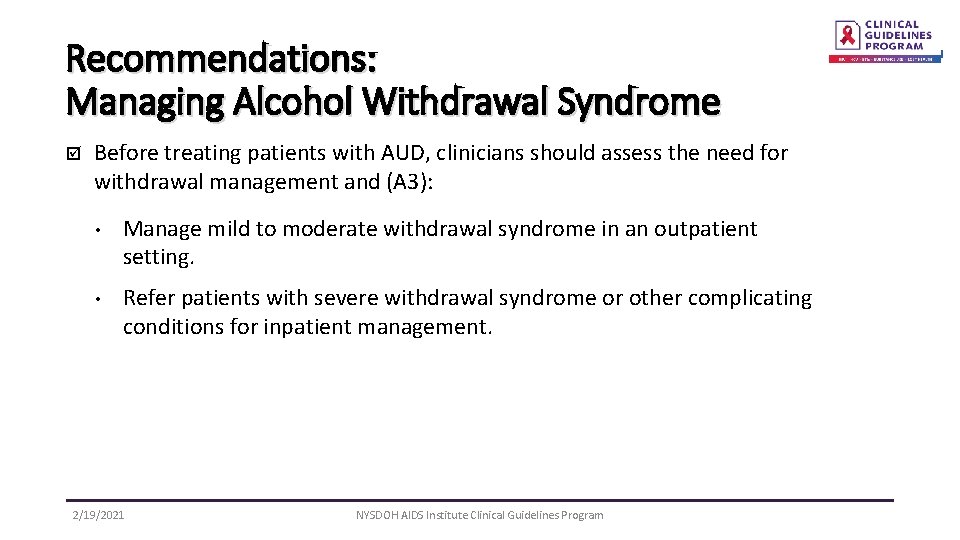
Recommendations: Managing Alcohol Withdrawal Syndrome þ Before treating patients with AUD, clinicians should assess the need for withdrawal management and (A 3): • Manage mild to moderate withdrawal syndrome in an outpatient setting. • Refer patients with severe withdrawal syndrome or other complicating conditions for inpatient management. 2/19/2021 NYSDOH AIDS Institute Clinical Guidelines Program
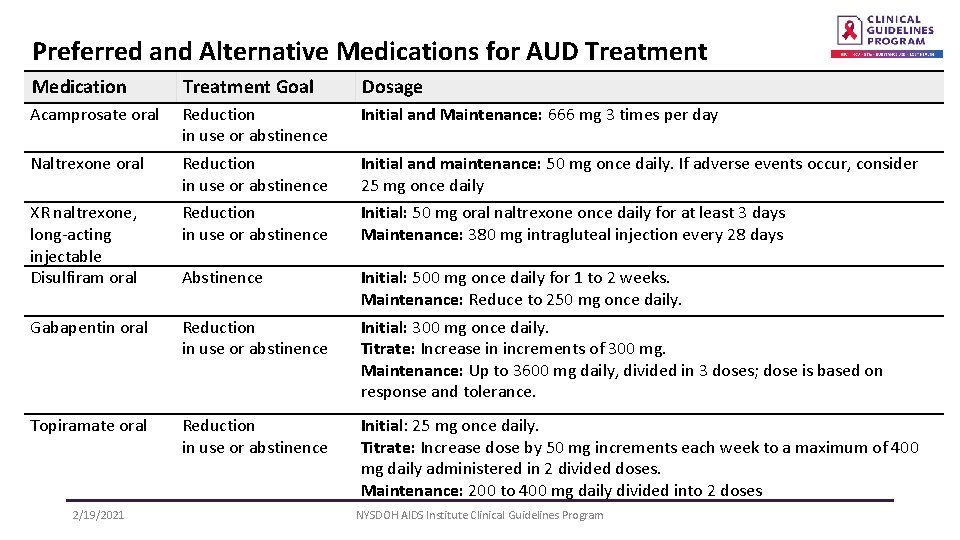
Preferred and Alternative Medications for AUD Treatment Medication Treatment Goal Dosage Acamprosate oral Reduction in use or abstinence Initial and Maintenance: 666 mg 3 times per day Naltrexone oral Reduction in use or abstinence Initial and maintenance: 50 mg once daily. If adverse events occur, consider 25 mg once daily XR naltrexone, long-acting injectable Disulfiram oral Reduction in use or abstinence Initial: 50 mg oral naltrexone once daily for at least 3 days Maintenance: 380 mg intragluteal injection every 28 days Abstinence Initial: 500 mg once daily for 1 to 2 weeks. Maintenance: Reduce to 250 mg once daily. Gabapentin oral Reduction in use or abstinence Initial: 300 mg once daily. Titrate: Increase in increments of 300 mg. Maintenance: Up to 3600 mg daily, divided in 3 doses; dose is based on response and tolerance. Topiramate oral Reduction in use or abstinence Initial: 25 mg once daily. Titrate: Increase dose by 50 mg increments each week to a maximum of 400 mg daily administered in 2 divided doses. Maintenance: 200 to 400 mg daily divided into 2 doses 2/19/2021 NYSDOH AIDS Institute Clinical Guidelines Program
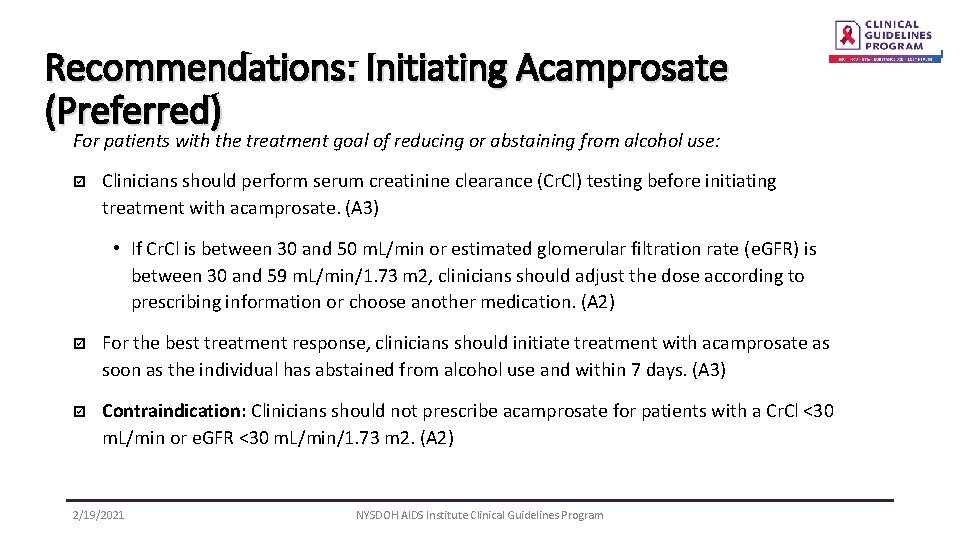
Recommendations: Initiating Acamprosate (Preferred) For patients with the treatment goal of reducing or abstaining from alcohol use: þ Clinicians should perform serum creatinine clearance (Cr. Cl) testing before initiating treatment with acamprosate. (A 3) • If Cr. Cl is between 30 and 50 m. L/min or estimated glomerular filtration rate (e. GFR) is between 30 and 59 m. L/min/1. 73 m 2, clinicians should adjust the dose according to prescribing information or choose another medication. (A 2) þ For the best treatment response, clinicians should initiate treatment with acamprosate as soon as the individual has abstained from alcohol use and within 7 days. (A 3) þ Contraindication: Clinicians should not prescribe acamprosate for patients with a Cr. Cl <30 m. L/min or e. GFR <30 m. L/min/1. 73 m 2. (A 2) 2/19/2021 NYSDOH AIDS Institute Clinical Guidelines Program
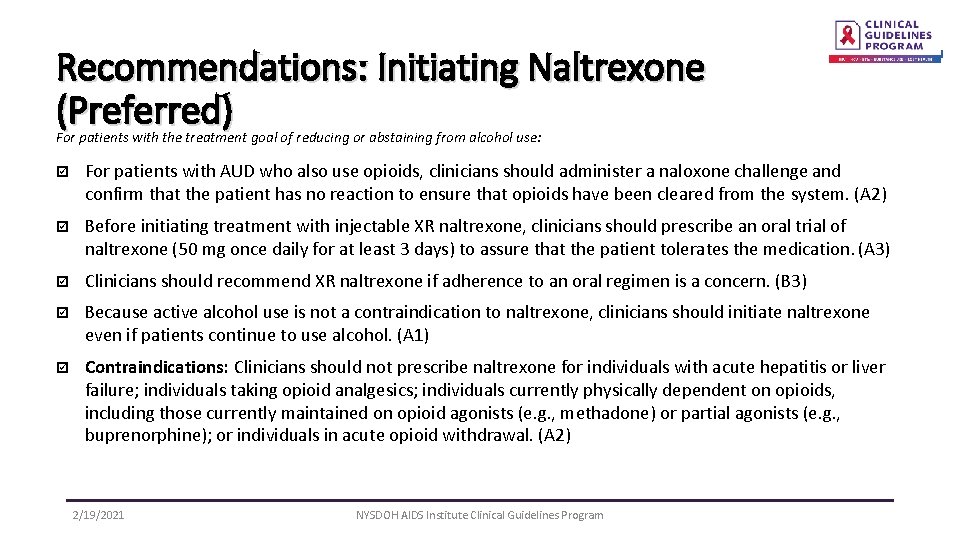
Recommendations: Initiating Naltrexone (Preferred) For patients with the treatment goal of reducing or abstaining from alcohol use: þ For patients with AUD who also use opioids, clinicians should administer a naloxone challenge and confirm that the patient has no reaction to ensure that opioids have been cleared from the system. (A 2) þ Before initiating treatment with injectable XR naltrexone, clinicians should prescribe an oral trial of naltrexone (50 mg once daily for at least 3 days) to assure that the patient tolerates the medication. (A 3) þ Clinicians should recommend XR naltrexone if adherence to an oral regimen is a concern. (B 3) þ Because active alcohol use is not a contraindication to naltrexone, clinicians should initiate naltrexone even if patients continue to use alcohol. (A 1) þ Contraindications: Clinicians should not prescribe naltrexone for individuals with acute hepatitis or liver failure; individuals taking opioid analgesics; individuals currently physically dependent on opioids, including those currently maintained on opioid agonists (e. g. , methadone) or partial agonists (e. g. , buprenorphine); or individuals in acute opioid withdrawal. (A 2) 2/19/2021 NYSDOH AIDS Institute Clinical Guidelines Program
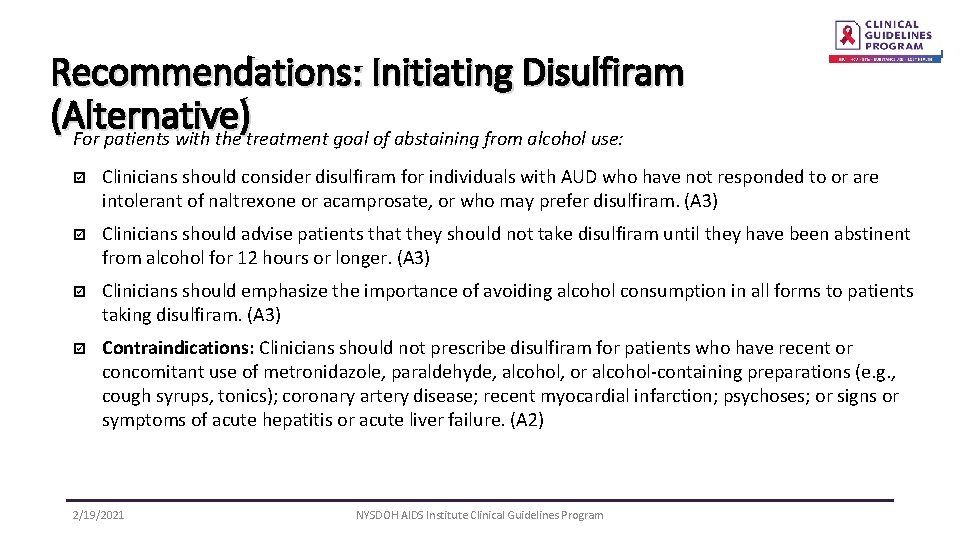
Recommendations: Initiating Disulfiram (Alternative) For patients with the treatment goal of abstaining from alcohol use: þ Clinicians should consider disulfiram for individuals with AUD who have not responded to or are intolerant of naltrexone or acamprosate, or who may prefer disulfiram. (A 3) þ Clinicians should advise patients that they should not take disulfiram until they have been abstinent from alcohol for 12 hours or longer. (A 3) þ Clinicians should emphasize the importance of avoiding alcohol consumption in all forms to patients taking disulfiram. (A 3) þ Contraindications: Clinicians should not prescribe disulfiram for patients who have recent or concomitant use of metronidazole, paraldehyde, alcohol, or alcohol-containing preparations (e. g. , cough syrups, tonics); coronary artery disease; recent myocardial infarction; psychoses; or signs or symptoms of acute hepatitis or acute liver failure. (A 2) 2/19/2021 NYSDOH AIDS Institute Clinical Guidelines Program
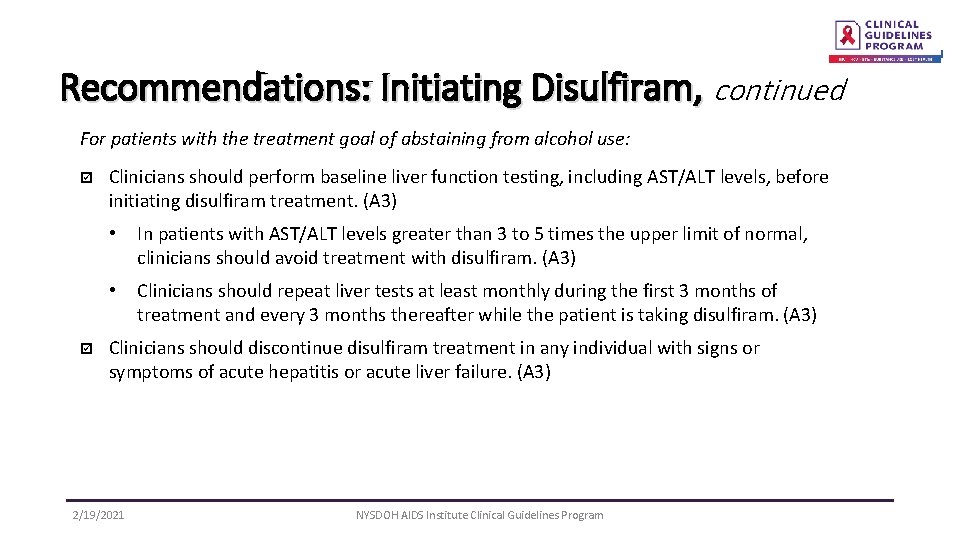
Recommendations: Initiating Disulfiram, continued For patients with the treatment goal of abstaining from alcohol use: þ þ Clinicians should perform baseline liver function testing, including AST/ALT levels, before initiating disulfiram treatment. (A 3) • In patients with AST/ALT levels greater than 3 to 5 times the upper limit of normal, clinicians should avoid treatment with disulfiram. (A 3) • Clinicians should repeat liver tests at least monthly during the first 3 months of treatment and every 3 months thereafter while the patient is taking disulfiram. (A 3) Clinicians should discontinue disulfiram treatment in any individual with signs or symptoms of acute hepatitis or acute liver failure. (A 3) 2/19/2021 NYSDOH AIDS Institute Clinical Guidelines Program
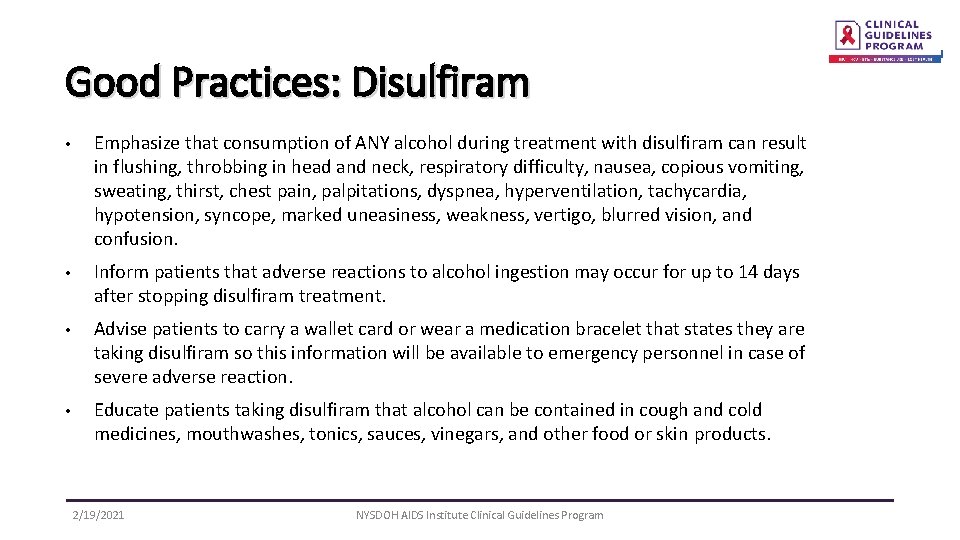
Good Practices: Disulfiram • Emphasize that consumption of ANY alcohol during treatment with disulfiram can result in flushing, throbbing in head and neck, respiratory difficulty, nausea, copious vomiting, sweating, thirst, chest pain, palpitations, dyspnea, hyperventilation, tachycardia, hypotension, syncope, marked uneasiness, weakness, vertigo, blurred vision, and confusion. • Inform patients that adverse reactions to alcohol ingestion may occur for up to 14 days after stopping disulfiram treatment. • Advise patients to carry a wallet card or wear a medication bracelet that states they are taking disulfiram so this information will be available to emergency personnel in case of severe adverse reaction. • Educate patients taking disulfiram that alcohol can be contained in cough and cold medicines, mouthwashes, tonics, sauces, vinegars, and other food or skin products. 2/19/2021 NYSDOH AIDS Institute Clinical Guidelines Program
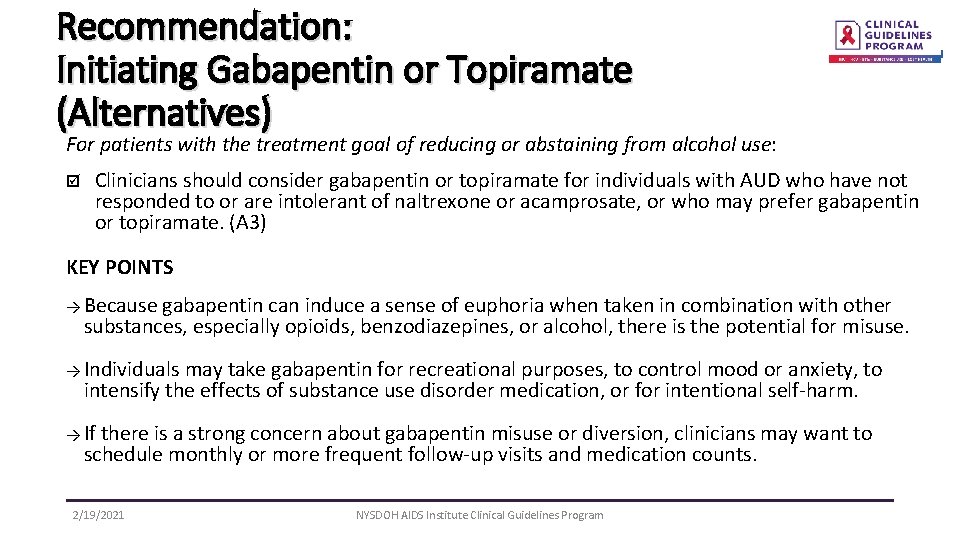
Recommendation: Initiating Gabapentin or Topiramate (Alternatives) For patients with the treatment goal of reducing or abstaining from alcohol use: þ Clinicians should consider gabapentin or topiramate for individuals with AUD who have not responded to or are intolerant of naltrexone or acamprosate, or who may prefer gabapentin or topiramate. (A 3) KEY POINTS → Because gabapentin can induce a sense of euphoria when taken in combination with other substances, especially opioids, benzodiazepines, or alcohol, there is the potential for misuse. → Individuals may take gabapentin for recreational purposes, to control mood or anxiety, to intensify the effects of substance use disorder medication, or for intentional self-harm. → If there is a strong concern about gabapentin misuse or diversion, clinicians may want to schedule monthly or more frequent follow-up visits and medication counts. 2/19/2021 NYSDOH AIDS Institute Clinical Guidelines Program
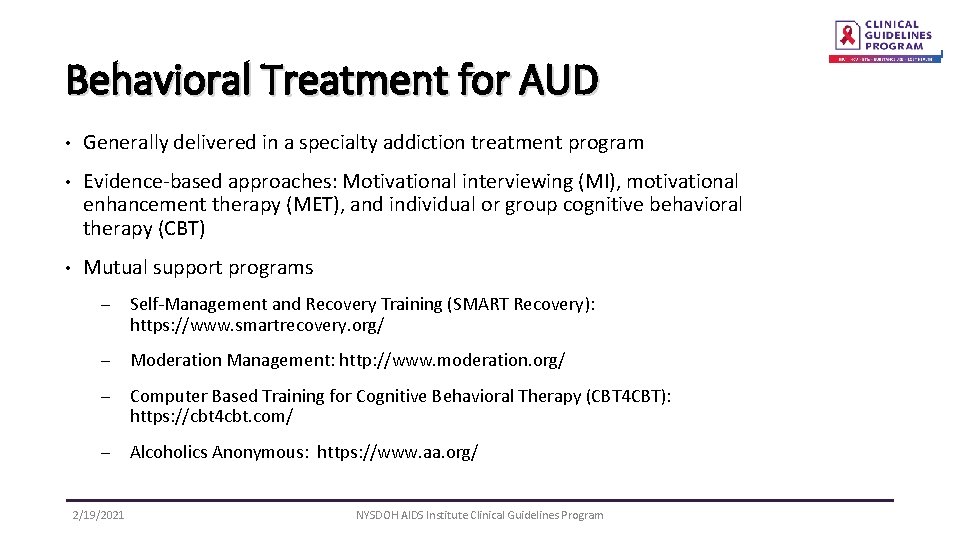
Behavioral Treatment for AUD • Generally delivered in a specialty addiction treatment program • Evidence-based approaches: Motivational interviewing (MI), motivational enhancement therapy (MET), and individual or group cognitive behavioral therapy (CBT) • Mutual support programs - Self-Management and Recovery Training (SMART Recovery): https: //www. smartrecovery. org/ - Moderation Management: http: //www. moderation. org/ - Computer Based Training for Cognitive Behavioral Therapy (CBT 4 CBT): https: //cbt 4 cbt. com/ - Alcoholics Anonymous: https: //www. aa. org/ 2/19/2021 NYSDOH AIDS Institute Clinical Guidelines Program